Daylight Saving Time 2026: The Gear That Actually Helps
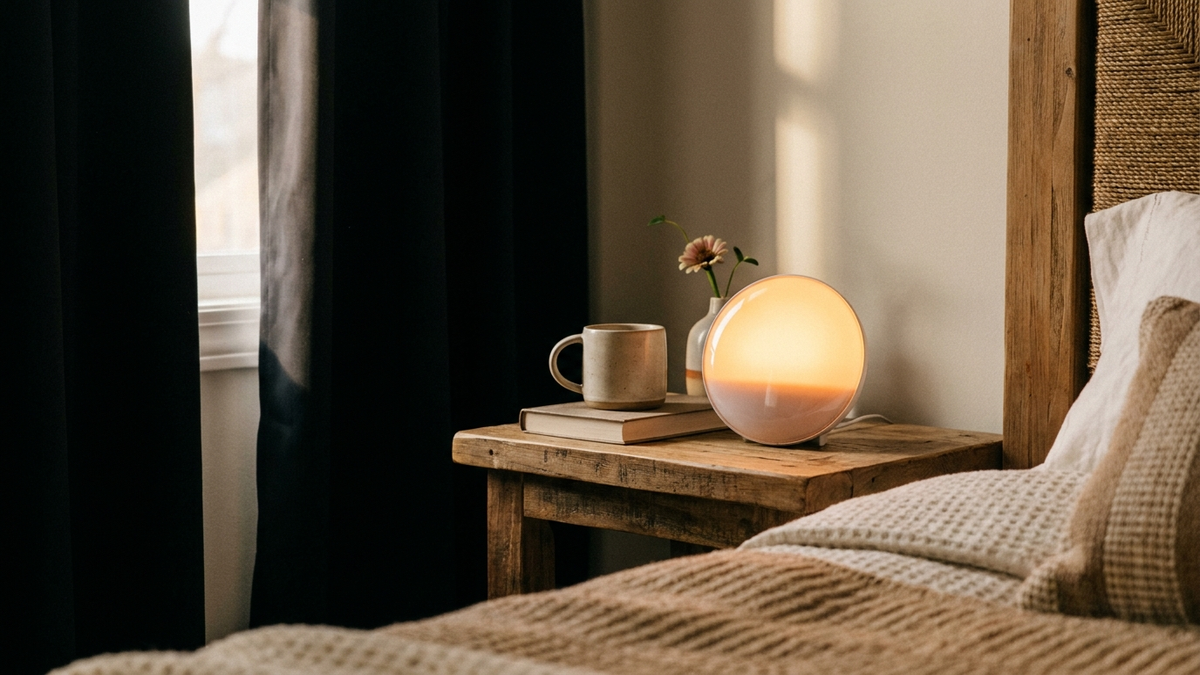
TL;DR. Daylight Saving Time ends at 2:00 a.m. on Sunday, November 1, 2026, and the switch creates two separate problems: mornings that are suddenly darker (worse motivation to get up) and evenings that go dark an hour earlier (harder to wind down on the old schedule). A sunrise alarm clock like the Hatch Restore 3 (~$169.99) or Philips SmartSleep HF3520 (~$108.95) addresses the morning problem; blackout curtains (NICETOWN, ~$13-27) address the evening/early-sunrise problem for anyone whose bedroom now gets light at the wrong hours. Blue-light-blocking glasses are a cheap optional add-on with genuinely mixed clinical evidence — we don’t rank them as essential.
A note on links and methodology
As an Amazon Associate, Arekore earns from qualifying purchases. The Amazon product links in this article include our affiliate tracking ID and may earn us a commission if you buy through them, at no additional cost to you. See our Links Policy for details on how we select products and how commissions do not influence our recommendations.
We also did not personally test these products — every claim is an editorial synthesis of public data. This article is a companion piece to our light therapy lamp guide, which covers bright-light-therapy boxes for seasonal mood dips in depth; here we focus on the sleep-schedule side of the DST transition: waking up in the dark and adjusting to an earlier sunset.
Methodology
This is an editorial analysis based on publicly available data collected in September 2026, not a hands-on lab test. We synthesized:
- Independent lab and hands-on tests — RTINGS’ lux measurement of the Hatch Restore 2 at the bedside distance where people actually sleep, Tom’s Guide’s hands-on reviews of the Hatch Restore 3 and Philips SmartSleep HF3520, and OptimizeYourBiology’s independent light-meter test of 15 sunrise alarm clocks.
- Customer reviews on amazon.com — the “Top reviews” and AI “Customers say” summary block on each product’s page. We do not report a precise sample size N because Amazon’s review panels do not expose a stable count, and NICETOWN’s blackout curtains alone span well over 100,000 aggregated ratings across colorway/size listings, making a single N meaningless.
- Peer-reviewed sleep research — a 2026 systematic review and meta-analysis of blue-light-blocking-glasses trials, and clinical guidance from Harvard Health and Northwestern Medicine on the physiological effects of the clock change.
- Manufacturer specifications — official lux, dimensions, and light-blocking percentages published by Hatch, Philips, and NICETOWN.
We deliberately do not simulate first-person product experience, fabricate reviewer personas, or invent precise statistics we cannot verify. Nothing in this article is medical advice.
1. Why the fall clock change creates two different problems
Daylight Saving Time ends at 2:00 a.m. on Sunday, November 1, 2026. Clocks fall back an hour, and sunrise and sunset both shift about an hour earlier overnight — then keep creeping earlier through December regardless of the clock change. That produces two distinct, almost opposite complaints:
- Mornings get harder. If you were waking up to daylight in October, you’re now waking up in the dark, which removes the natural light cue that normally helps your body stop producing melatonin and feel alert. Research on the fall transition has found the switch is associated with fewer acute events for anxiety, cardiovascular disease, and sleep disorders in the week after, unlike the more disruptive spring-forward change — but the subjective complaint of “it’s dark and I don’t want to get up” is still the single most common seasonal comment sleep researchers hear every November.
- Evenings get darker sooner, and light leaks in at the wrong times. A 5:30 p.m. sunset can become a 4:30 p.m. sunset within days, and depending on your bedroom’s exposure, morning light can now hit your windows earlier or later than it did before, disrupting whatever blackout setup you had dialed in for summer.
These aren’t the same problem, and they don’t have the same fix. A sunrise alarm clock helps with the first; blackout curtains help with the second. Buying only one when you need both is the most common miss we see in aggregated review complaints — several Hatch Restore reviewers, for instance, mention still fighting a too-bright 6 a.m. window even after the alarm clock solved their wake-up problem.
2. Two technical approaches, plus one optional add-on
| Approach | What it does | Represented by | Evidence strength |
|---|---|---|---|
| Dawn simulation (sunrise alarm clock) | Gradually brightens a light over 20-30 minutes before your alarm time, mimicking a natural sunrise to suppress melatonin ahead of wake-up | Hatch Restore 3, Philips SmartSleep HF3520 | Established — dawn simulation is a recognized (if narrower) cousin of bright-light therapy, and RTINGS/Tom’s Guide independently confirm meaningful lux output at bedside distance |
| Light blocking (blackout curtains) | Physically blocks 85-99%+ of outside light so your bedroom stays dark regardless of when the sun rises or sets | NICETOWN thermal blackout curtains | Well-established — this is passive, mechanical light control, not a physiological intervention, so there’s little to dispute about whether it “works” |
| Blue-light reduction (glasses) | Filters blue wavelengths in the 2-3 hours before bed to reduce melatonin suppression from screens | Generic blue-light-blocking glasses (e.g., ANRRI) | Mixed — a 2026 systematic review and meta-analysis of randomized crossover trials found effects on objective sleep outcomes were inconsistent across studies, and a schoolchildren trial found behavioral improvements without any measurable change in melatonin secretion |
We rank the first two as legitimate DST-prep purchases and the third as an optional, low-stakes add-on rather than something we’d tell you to prioritize.
3. Hatch Restore 3: the smart-home pick for a gradual wake-up
The Hatch Restore 3 is Hatch’s current flagship sunrise alarm clock, combining a dawn-simulation light with a white-noise sound machine and app-based scheduling. It launched at $169.99 and has occasionally dropped to around $139.99 during sales events.
Independent testing gives a useful data point: RTINGS measured the previous-generation Hatch Restore 2 at 226 lux at typical bedside distance — above the roughly 200-lux threshold the Sleep Foundation cites as meaningful for circadian signaling — and Tom’s Guide’s own hands-on review of the Restore 3 reports 285 lux at 18 inches, up from the Restore 2’s 209 lux at the same distance in that outlet’s testing.
What customer reviews tend to praise:
- The gradual sunrise-to-full-brightness ramp, which multiple reviewers describe as noticeably gentler than a traditional beeping alarm
- Sound machine quality — Tom’s Guide’s comparison of sunrise alarm clocks notes the Restore’s forward-facing speaker as among the loudest and best-sounding of the clocks it tested
- The screen-free design, which parents and people trying to reduce bedroom screen time cite specifically
Where reviews push back:
- Hatch+ subscription. Full feature access (multiple custom routines, extended sound library) requires a $4.99/month or $49.99/year subscription — a common point of friction in reviews from buyers who expected everything unlocked at the hardware price.
- Price relative to simpler alternatives — reviewers comparing it to the Philips SmartSleep frequently note the Hatch costs more for features (app control, smart-home integration) some buyers never use.
Best for: households that want app-based scheduling, a sound machine bundled in, and don’t mind an optional subscription for the full feature set.
4. Philips SmartSleep HF3520: the no-subscription value pick
The Philips SmartSleep HF3520/60 is the long-running category leader — Philips has sold wake-up lights under this line for years, and it’s backed by a Philips-sponsored clinical study in which 92% of participants reported feeling more alert after using it. It’s priced around $108.95 and requires no app or subscription to use every feature.
OptimizeYourBiology’s independent light-meter comparison of the Philips SmartSleep line measured the HF3520 at up to roughly 300 lux at 45 cm (about 17.7 inches) from where a sleeper’s head would rest, and noted that the Philips line’s larger diffuser panel spreads more total light across a room than smaller point-source competitors, even when a narrower-beam competitor reads higher on a directional lux meter at close range.
What customer reviews tend to praise:
- No subscription required — every clinically-tested feature works out of the box
- Larger light panel producing more even room illumination, according to hands-on comparisons
- FM radio and multiple natural-sound options as alarm sounds, alongside the light
Where reviews push back:
- No smart-home or app integration — reviewers who want phone-based schedule changes or smart-speaker control find the physical-button interface dated
- Bulkier footprint than compact alarm clocks, a recurring complaint from small-nightstand owners
Best for: buyers who want the clinically-tested core feature (sunrise simulation) without any ongoing subscription cost, and don’t need smart-home integration.
5. NICETOWN blackout curtains: the low-cost fix for light leaking in at the wrong hour
NICETOWN’s thermal blackout curtains are one of Amazon’s best-selling home textile products, with an aggregated rating around 4.6 out of 5 stars and well over 100,000 combined ratings across its size and color variants. A standard two-panel set (42 x 63 inches) runs around $13-16, with larger sizes (up to 100+ inches wide or 84+ inches long) priced up to roughly $27.
The construction uses a three-layer weave — the middle layer is a black yarn liner — that manufacturer specifications and aggregated reviews both describe as blocking 85-99% of incoming light, depending on panel size, window fit, and color (darker colors and wider panels with less gap at the edges block more).
What customer reviews tend to praise:
- Genuine darkness — a frequently repeated phrase in reviews is that the room gets dark enough that reviewers “forget what time of day it is”
- Thermal insulation as a secondary benefit — several reviewers mention lower energy bills alongside the light-blocking effect
- Price relative to blackout curtains from bedding-specific brands, which often cost 3-5x as much for comparable coverage
Where reviews push back:
- Light leaks around the edges on wider windows unless you buy a size that meaningfully overlaps the window frame — a recurring theme in critical reviews is buying too small a panel for the window
- Rod-pocket vs. grommet styles fit different curtain rods; reviewers occasionally order the wrong style for their existing hardware
Best for: anyone whose bedroom now gets early-morning or lingering-evening light at the wrong time post-DST, especially renters who want an inexpensive fix that requires no drilling.
6. Blue-light-blocking glasses: an optional add-on, not a must-buy
Generic blue-light-blocking glasses (inexpensive options like ANRRI run around $15-17) are frequently marketed as a DST-adjustment tool because filtering blue wavelengths in the evening should, in theory, reduce melatonin suppression from screens and help you wind down on an earlier schedule.
The evidence is genuinely mixed. A 2026 systematic review and meta-analysis of randomized crossover trials found effects on objective (actigraphy-measured) sleep outcomes were inconsistent across studies, and a separate trial in schoolchildren found that partial blue-light-blocking glasses advanced sleep timing and reduced daytime irritability without any measurable change in salivary melatonin — suggesting some of the benefit, where it exists, may not work through the mechanism the glasses are marketed around. A pregnancy-focused trial did find an earlier melatonin rise with blue-blocking glasses, so results likely depend on the population and protocol.
Our take: this is a low-cost, low-risk purchase if you’re curious, but we don’t rank it alongside a sunrise alarm clock or blackout curtains as something the data clearly supports. If your budget is limited, spend it on the curtains or the alarm clock first.
7. A simple daily light-timing protocol
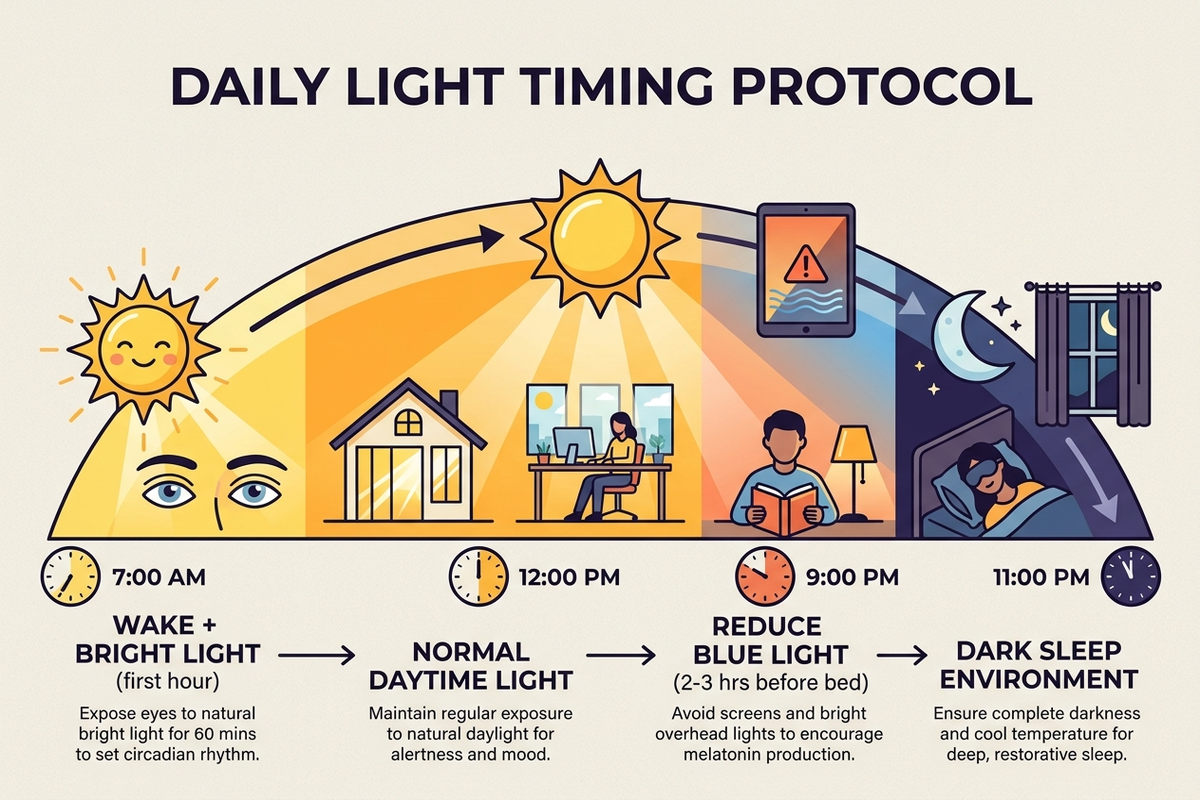
Regardless of which product you buy, sleep clinicians’ general guidance for adjusting to the fall clock change converges on the same pattern:
- Get bright light within the first hour of waking — natural sunlight if available, or a sunrise alarm clock/light therapy lamp if it’s still dark. This is the single biggest lever for resetting your circadian rhythm after the clock shifts.
- Keep your bedroom fully dark during sleep, especially once mornings and evenings both start shifting — this is where blackout curtains matter more in November than they did in July.
- Reduce blue light exposure 2-3 hours before bed if you’re sensitive to screen-driven sleep delay — via device night-shift settings, dimmer lighting, or optionally blue-light-blocking glasses.
- Keep meal and exercise timing consistent with the new clock rather than the old one — clinicians at Northwestern Medicine and Harvard Health both note that shifting all your daily anchors at once, not just sleep, speeds adjustment.
- Give it about a week. Most clinical guidance suggests the body adapts to a one-hour shift within several days to a week; if morning grogginess or evening restlessness persists much longer, that’s worth discussing with a doctor rather than assuming it’s just the clock change.
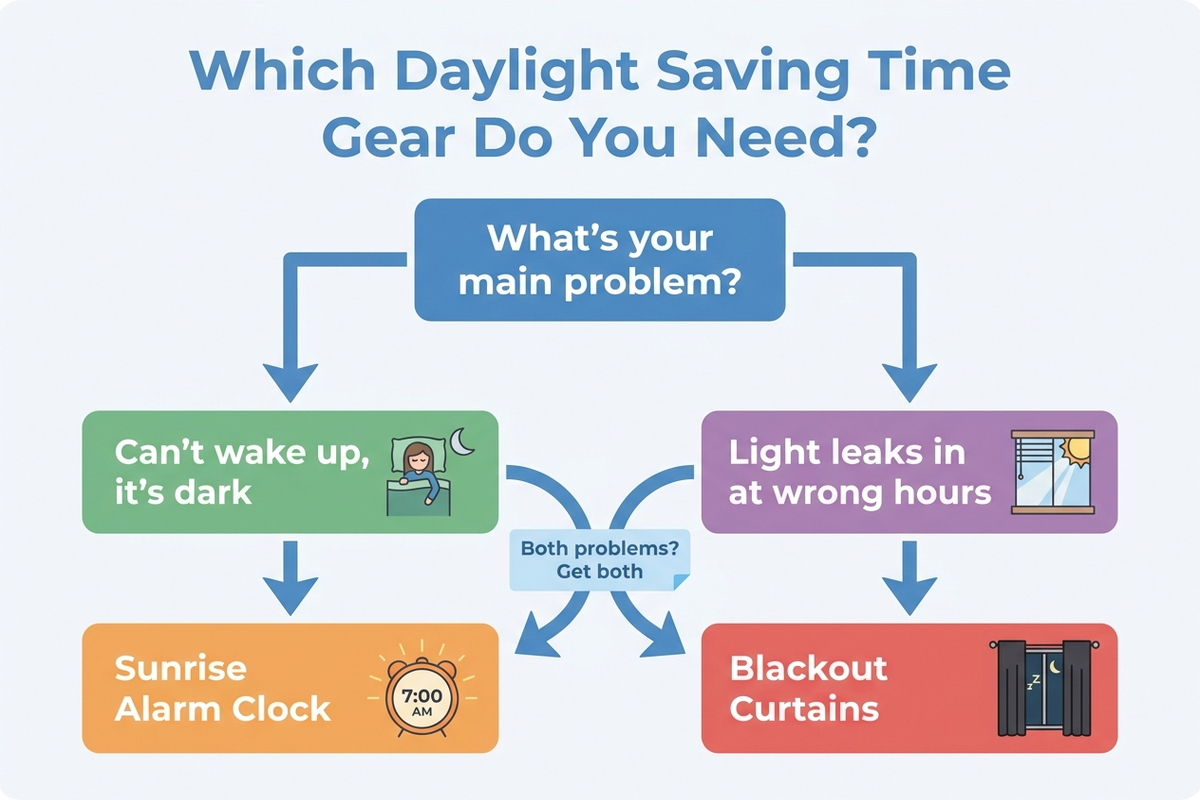
8. Which gear do you actually need?
| Question | Answer | Pick |
|---|---|---|
| Is your main complaint “I can’t wake up because it’s dark”? | Yes | Hatch Restore 3 if you want app/sound-machine features, or Philips SmartSleep HF3520 if you want no subscription |
| Is your main complaint “light comes in at the wrong hour and wakes me up or keeps me up”? | Yes | NICETOWN blackout curtains |
| Do you have both complaints? | Yes | Buy both — they solve different, unrelated problems, and reviewers who bought only one product often mention still fighting the other issue |
| Already sorted on both, want a cheap experimental extra? | Yes | Blue-light-blocking glasses, with realistic expectations given the mixed evidence |
| Is your main complaint a persistent low mood or lack of energy through the whole season, not just the week of the switch? | Yes | See our dedicated light therapy lamp guide instead — that’s a different category solving a different problem |
9. Warranty and return notes
| Product | Manufacturer warranty | Notes |
|---|---|---|
| Hatch Restore 3 | 1 year | Hatch support is tied to the companion app; hardware issues are handled through Hatch directly. |
| Philips SmartSleep HF3520 | 2 years (typical for Philips personal-care electronics) | No app dependency, so support is limited to the physical unit. |
| NICETOWN curtains | Manufacturer-stated satisfaction guarantee via Amazon; no multi-year mechanical warranty since there are no electronic parts | Returns are handled through standard Amazon return policy given the low price point. |
10. The bottom line
There’s no single “DST survival kit” — the right purchase depends on which half of the problem you actually have:
| Best for | Pick | Approx price | Key data point |
|---|---|---|---|
| Waking up in the dark, want smart features | Hatch Restore 3 | ~$169.99 | 285 lux at 18 in (Tom’s Guide), sound machine included, optional subscription |
| Waking up in the dark, want no subscription | Philips SmartSleep HF3520 | ~$108.95 | 92% of clinical-study participants reported feeling more alert; no app required |
| Light leaking in at the wrong hour | NICETOWN blackout curtains | ~$13-27 | 85-99% light blocking, 100,000+ aggregated ratings |
| Curious, low-stakes extra step | Blue-light-blocking glasses | ~$15-17 | Mixed clinical evidence; treat as optional |
If you only buy one thing this year, match it to your actual complaint from Section 8 rather than buying the most-hyped product — a sunrise alarm clock won’t fix a room that’s too bright at 6 a.m., and blackout curtains won’t help you feel motivated to get up in a pitch-dark bedroom.
Limitations of this analysis
- We did not personally test any of these products. Every claim is sourced from independent third-party publications (RTINGS, Tom’s Guide, OptimizeYourBiology), aggregated amazon.com customer reviews, manufacturer specifications, and peer-reviewed sleep research.
- Lux measurements come from different reviewers testing different (sometimes prior-generation) models at possibly different distances; we’ve noted the specific model and distance for each figure rather than implying they’re directly comparable across all four products.
- Sample size. We read top reviews and AI-summary blocks on each ASIN’s amazon.com page in September 2026. We do not report a precise N because Amazon does not expose a stable review count for those panels.
- Blue-light-blocking-glasses evidence is genuinely mixed in the peer-reviewed literature; we’ve represented that uncertainty rather than picking a side.
- This is not medical advice. If sleep disruption persists well beyond a week or significantly affects daily functioning, consult a doctor rather than relying on consumer gear alone.
- Pricing fluctuates with promotions; confirm current pricing on the linked product page before purchase. Prices in this article are as of 2026-09-19.