Video Doorbells 2026: 3 Homes That Don't Need One

Video doorbells are one of the most consistently recommended smart-home purchases, and the market reflects it: the global video doorbell category is estimated at roughly $2.8–$3.96 billion in 2026, growing at a double-digit CAGR, according to multiple market-research firms including Persistence Market Research and Research Nester. The pitch is simple — see who’s at the door, catch porch pirates, get a recording if something goes wrong.
But the data behind that pitch is specific to a type of home: a street-facing entry, a package that can sit unattended, and a lease or HOA that allows exterior hardware. Flip any of those three conditions and a video doorbell either can’t legally go up, duplicates coverage you already have, or solves a theft risk that’s close to zero for your building. This isn’t an argument against the category — it’s an argument that three common home situations fall outside the use case the data actually supports.
As an Amazon Associate, Arekore earns from qualifying purchases. The Amazon product links in this article may include our affiliate tracking ID and may earn us a commission if you buy through them, at no additional cost to you. See our Links Policy for details on how we select products and how commissions do not influence our recommendations.
TL;DR / Quick Verdict
- Doorman and package-room buildings carry a much lower porch-theft risk — the specific risk a video doorbell is marketed to solve — because deliveries aren’t left exposed at the unit door.
- Many leases and HOAs restrict exterior hardware on hallway or building-owned doorframes, so a hardwired or drilled video doorbell may not be an option at all for some renters and condo owners, independent of whether they want one.
- Homes with an existing professionally monitored alarm system that already covers the entry point are often paying for redundant coverage — and a second camera usually means a second monthly subscription.
- Three setups where the data says skip it: secure multi-unit buildings with staffed delivery handling, rentals or condos barred from exterior modifications, and households whose existing monitored security system already covers the front door.
How We Reached These Conclusions (Methodology)
This is an editorial analysis, not a hands-on test. We did not personally test the products covered here. This guide synthesizes: (a) 2026 market-size and growth data from Persistence Market Research, Research Nester, and Coherent Market Insights; (b) independent product testing from Wirecutter (New York Times) and Consumer Reports covering the Ring, Google Nest, and eufy Security doorbell lineups; (c) package-theft incidence and location data from Security.org’s 2025 Package Theft Annual Report; (d) legal analysis of HOA and condo video-doorbell installation rules from the National Law Review and property-law publications; (e) subscription-pricing data published directly by Ring and Google Nest, sampled in October 2026; and (f) aggregated Amazon customer-review sentiment on amazon.com for the specific products linked below. Where a figure is a manufacturer’s own claim rather than an independently measured result, it is labeled as such. Prices are amazon.com figures at the time of writing and change frequently.
Why “Everyone Should Get One” Doesn’t Hold Up
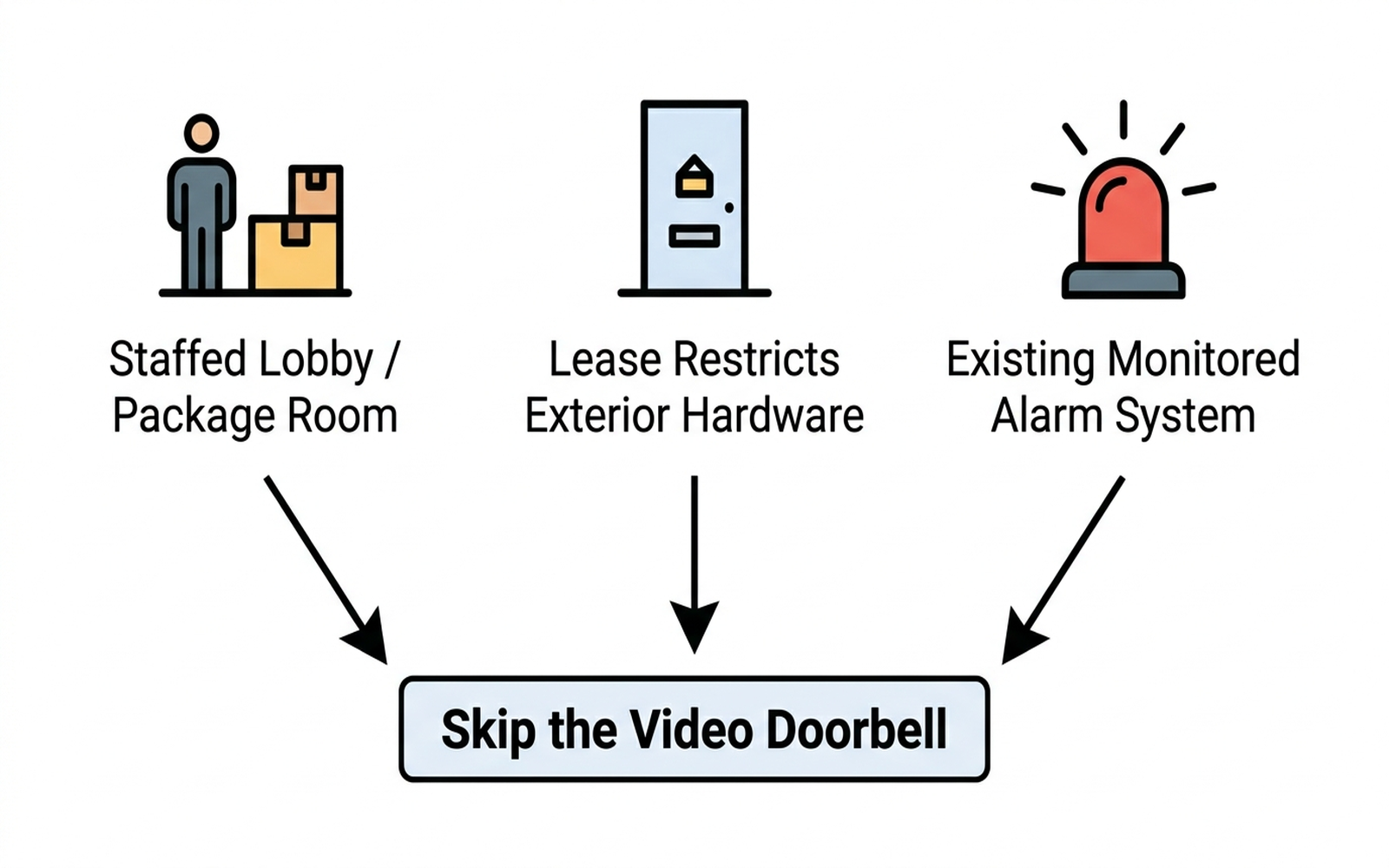
Video doorbell marketing treats “a door that gets knocked on” as the universal use case, but three pieces of data complicate that framing:
- Theft risk is concentrated in a specific physical setup, not evenly spread across all homes. Security.org’s 2025 Package Theft Annual Report found that 98% of stolen packages were visible from the street and 61% were located within 25 feet of the curb — a profile that describes a single-family home’s front porch far more than a unit behind a staffed lobby or a package room.
- Installation isn’t guaranteed to be allowed. Legal analysis from the National Law Review notes that while most HOAs can’t fully ban a basic doorbell camera on an owner’s own doorframe, they can require approval — or deny it outright — when the mounting surface is a shared hallway wall, gate, or exterior the HOA maintains, which is common in condo and apartment construction.
- A second subscription on top of an existing one is a real, recurring cost. Ring Protect Basic starts at $5.99/month per device as of its February 2026 price increase (or $9.99/month for unlimited devices at one location), and Google’s Nest Aware starts at $10/month ($100/year) following its August 2025 price increase, for extended event history — fees that stack on top of whatever a household is already paying for a monitored alarm system.
The Three Homes Where the Data Says Skip It
1. Doorman, package-room, and staffed-lobby buildings
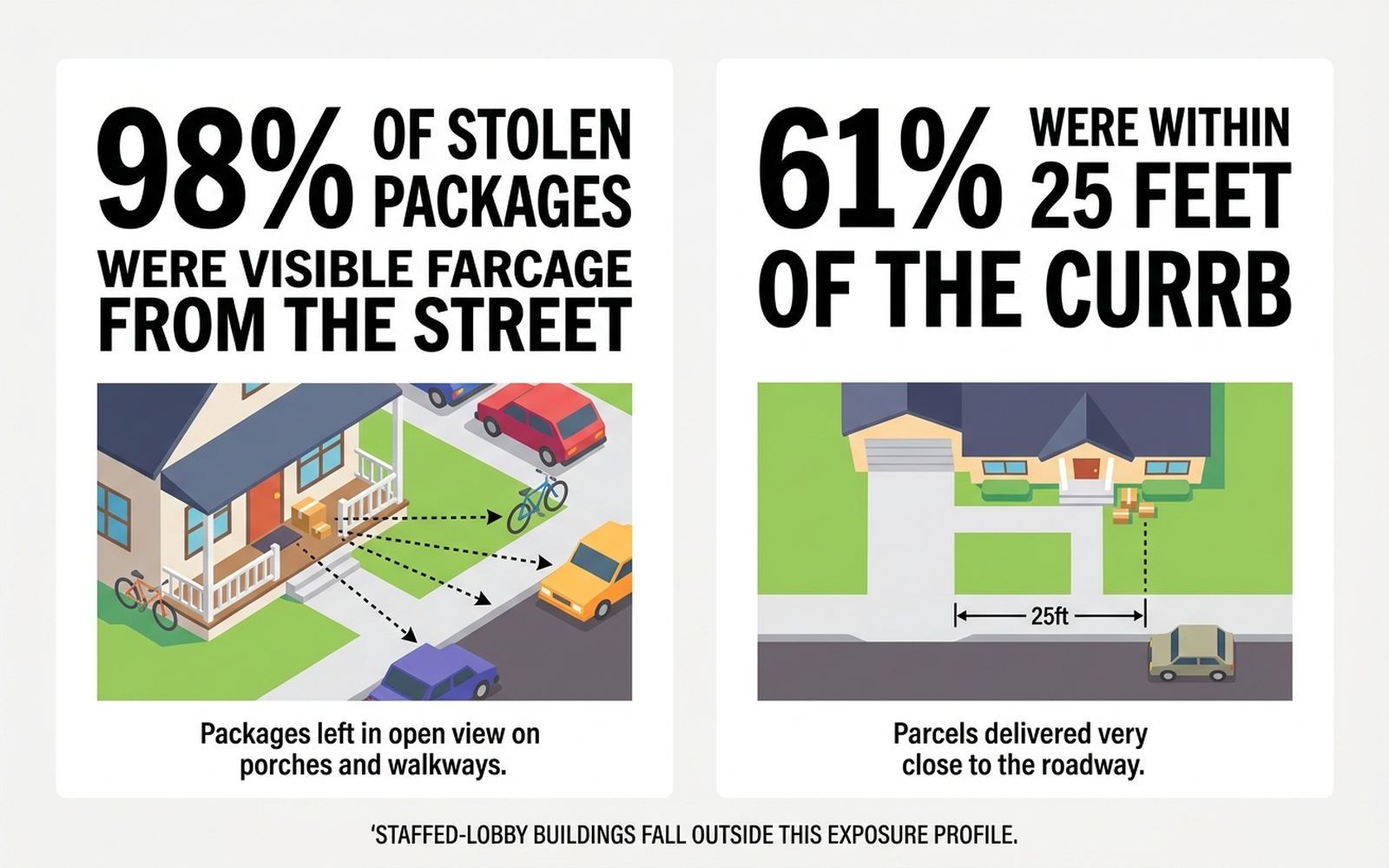
Security.org’s 2025 Package Theft Annual Report puts the national picture in stark terms: an estimated 41.8 million Americans (31%) were victims of package theft over a 12-month period, and apartment residents without a mailroom or doorman face roughly 3.5x higher theft rates than homeowners. The operative phrase is “without a mailroom or doorman” — in a building where deliveries go to a staffed desk, a locked parcel room, or a locker bank, the package never sits exposed at the unit door in the first place, which is the exact exposure the 98%-visible-from-street and 61%-within-25-feet statistics describe.
For this setup, the knock-and-see-who’s-there function of a video doorbell is also typically redundant with a building intercom or lobby buzzer system already in place. Skipping the purchase here isn’t a compromise — the risk the product is built to address largely doesn’t apply.
If a resident in this situation still wants a simple way to know someone’s at the unit door without a camera or subscription, a basic wireless door chime like the SadoTech Wireless Doorbell (ASIN B00FR4YQYK) covers that narrower need for under $20, with no installation beyond sticking two battery-powered units in place.
Check the SadoTech Wireless Doorbell on Amazon
2. Renters and condo owners barred from exterior modifications
Property-law coverage of HOA and condo doorbell-camera disputes is consistent on one point: while an owner’s own door and doorframe are usually fair game, the surrounding hallway wall, gate, or shared exterior is frequently classified as common area the HOA or landlord controls — and approval can be denied for a hardwired or drilled installation there. For a renter without a landlord’s written sign-off, or a condo owner in a building that has already restricted exterior hardware, buying a video doorbell before confirming the mounting surface is allowed risks a purchase that can’t legally go up where it’s needed.
For this setup, an indoor camera placed on a shelf or window ledge facing the entry door sidesteps the installation restriction entirely, since nothing is mounted to a shared or exterior surface. The WYZE Cam v4 (ASIN B0CJWJ8RYR) is a widely reviewed indoor/outdoor camera with no subscription required for basic motion clips, and can be repositioned without leaving any mounting hardware behind when a lease ends.
Check the WYZE Cam v4 on Amazon
3. Homes with an existing monitored alarm system covering the entry
Independent testing cited by Wirecutter found the Google Nest Doorbell (Wired, 3rd Gen) to be the most accurate motion detector among the doorbells it evaluated, while Consumer Reports rates the eufy Security S330 highly for video quality and notes it stores footage locally with no monthly fee by design — but both of those product strengths are solving a problem a household may have already paid to solve. A professionally monitored alarm system with entry-point door/window sensors and an exterior camera covering the front approach already delivers the core promise of a video doorbell (knowing when someone’s at the door, having a recorded event if something happens) without adding a second piece of hardware or a second recurring bill.
The subscription math makes the overlap concrete: Ring Protect Basic runs $5.99–$9.99/month (as of February 2026) and Nest Aware runs $10–$20/month (as of August 2025), each billed independently of whatever a household’s existing monitoring provider already charges. For a home where the alarm system’s camera and sensors already face the entry, adding a video doorbell typically means paying twice for the same event.
For this setup, the data-backed move is to first confirm the existing system’s camera field of view actually includes the front door — most monitored-alarm installers will do this during a service visit at no extra cost — rather than buying a second standalone device before checking for the overlap.
When a Video Doorbell Still Makes Sense
None of this is a case against the category broadly. The data supports buying one specifically when: the entry is a street-facing single-family porch where packages sit exposed (the 98%-visible-from-street profile Security.org documents), there’s no existing monitored camera already covering that approach, and the mounting surface is confirmed to be the owner’s or tenant’s own doorframe rather than HOA- or landlord-controlled common area. That describes a large share of US households — it just isn’t every household with a front door.
Comparison Table
Prices are approximate amazon.com figures at the time of writing (October 2026) and fluctuate.
| Your setup | What the data suggests | Alternative product | Typical cost |
|---|---|---|---|
| Doorman / package-room building | Theft risk the product targets largely doesn’t apply | SadoTech Wireless Doorbell | ~$15–$20 |
| Renter/condo owner barred from exterior hardware | Install location may not be legally available | WYZE Cam v4 (indoor placement) | ~$35–$45 |
| Already has a monitored alarm system covering the door | Duplicate coverage, duplicate subscription | Confirm existing system’s field of view | $0 |
| Street-facing single-family porch, no existing door coverage | Video doorbell fits the documented use case | Ring, Nest, or eufy video doorbell | ~$100–$250 + optional subscription |
Decision Flowchart
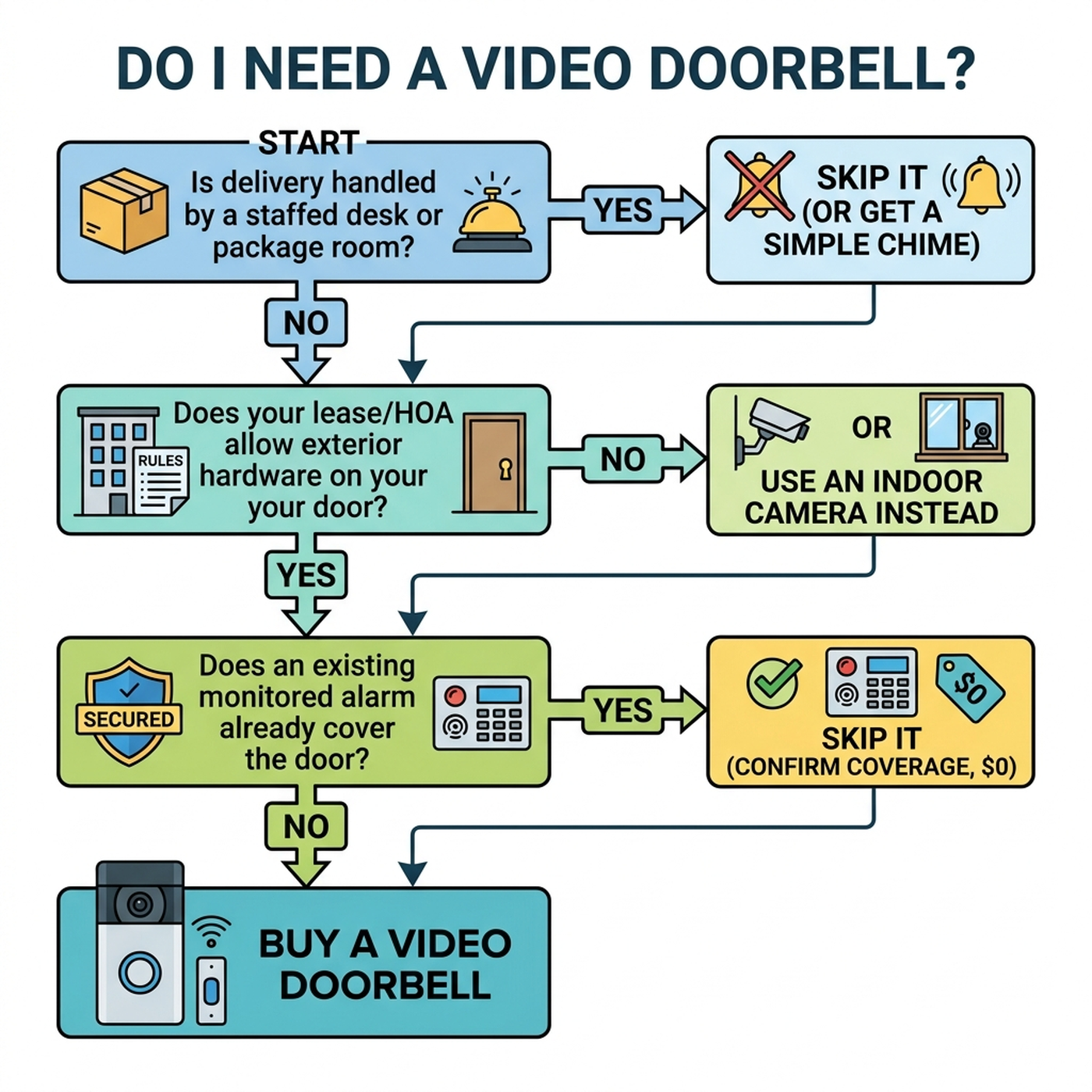
Start with the building: if deliveries go through a staffed desk, locked package room, or locker bank, the theft risk the product targets is already largely addressed — skip it unless a simple non-camera chime is wanted instead. If that doesn’t apply, check the lease or HOA rules for the specific mounting surface; if it’s hallway or building-owned common area and approval isn’t confirmed, an indoor camera avoids the restriction. If installation is allowed, check whether an existing monitored alarm system’s camera already covers the front entry — if it does, confirming the field of view costs nothing and avoids a second subscription. Only when none of those three conditions apply does a street-facing porch with no existing coverage point toward buying one.
Limitations
This analysis relies on aggregated industry statistics (Security.org’s Package Theft Annual Report, market-sizing firms), independent testing from Wirecutter and Consumer Reports, and general legal reporting on HOA and lease restrictions rather than a review of any individual household’s specific lease, HOA bylaws, or insurance policy. HOA and condo rules on exterior hardware vary significantly by state, building, and governing documents — a renter or owner should confirm their own building’s rules directly rather than relying on the general pattern described here. The package-theft statistics describe national averages and may not reflect theft risk in a specific neighborhood or building. Subscription pricing for Ring and Nest changes periodically and should be confirmed on the providers’ current pricing pages before purchase.
Bottom Line
Video doorbells solve a real, well-documented problem — but the problem is specific to homes where packages sit exposed at a street-facing door with no existing camera coverage. Staffed buildings with secure package handling, renters and condo owners who can’t get exterior hardware approved, and households already paying for monitored coverage of the same door are three common situations where the data points toward skipping the purchase rather than adding a redundant device and a second monthly bill.
Before you buy, paste the product link into Arekore — our AI assistant checks review authenticity, surfaces what the one-star reviews actually complain about, and compares prices, free, in about five minutes.