Sous Vide Cookers 2026: 3 Home Cooks Who Should Skip One
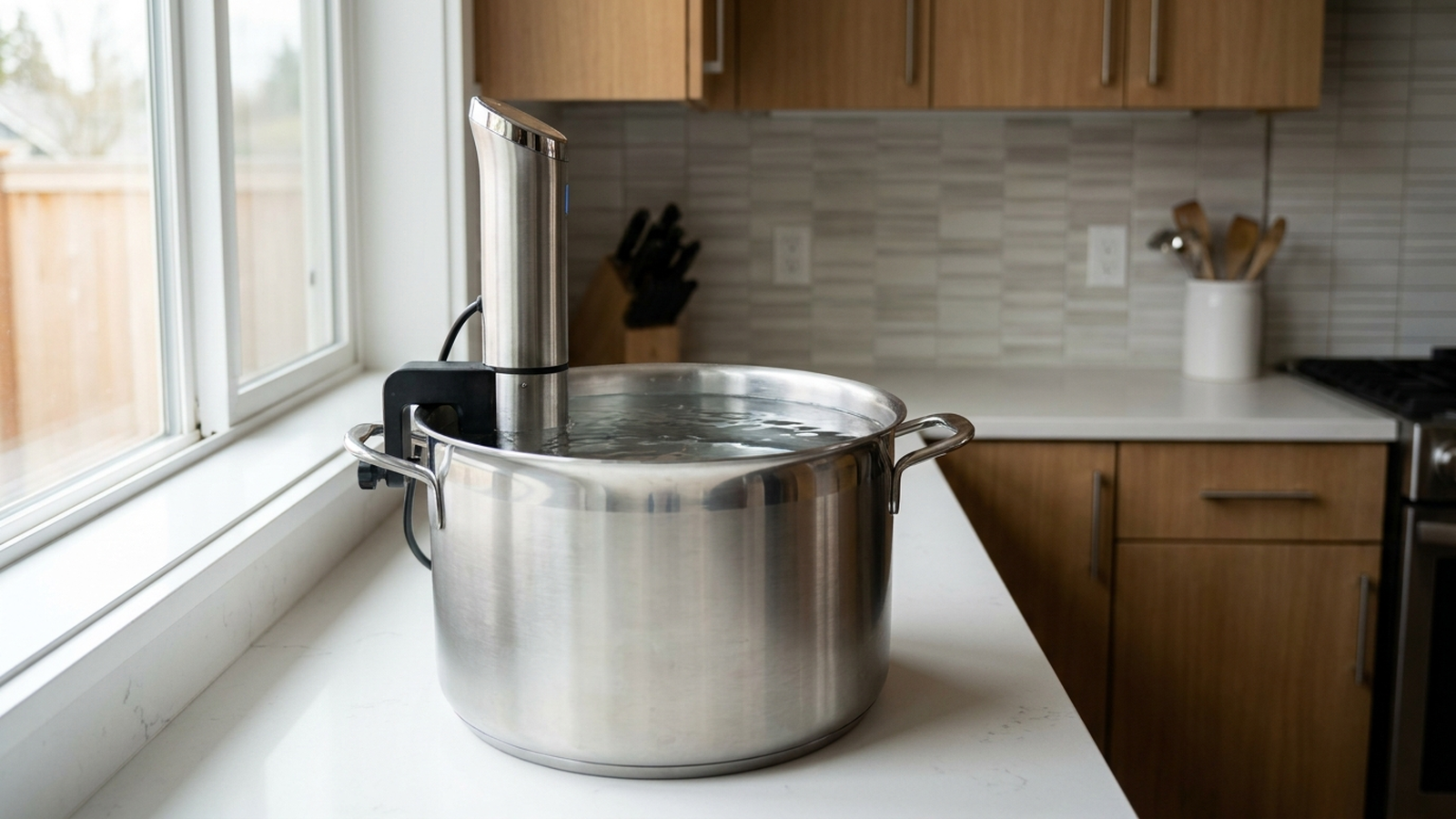
Sous vide has moved a long way past its restaurant-kitchen origins. Immersion circulators from Anova and Breville now sell for well under $200, and independent testers consistently confirm they deliver more even doneness than a stovetop pan or oven ever will. None of that is in dispute. What the underlying time-investment, food-safety, and materials data shows is that a meaningful share of home cooks fall into profiles where a sous vide setup doesn’t solve the problem they actually have — and in one case adds a new one. This isn’t an argument that sous vide is overrated as a cooking method. It’s an argument that three specific kinds of home cooks should look at the data before assuming the circulator on their wish list is the right fit.
As an Amazon Associate, Arekore earns from qualifying purchases. The Amazon product links in this article may include our affiliate tracking ID and may earn us a commission if you buy through them, at no additional cost to you. See our Links Policy for details on how we select products and how commissions do not influence our recommendations.
TL;DR / Quick Verdict
- Weeknight cooks who need dinner on the table fast get little benefit from a method that requires 1-24 hours of bath time before the food is even ready to sear. America’s Test Kitchen’s own testing notes cook times for common sous vide dishes ranging from 12 minutes for eggs up to 20 hours for tougher cuts — timelines built around planning ahead, not a 6pm-to-7pm dinner window.
- Cooks who don’t want a second cooking step get a real dealbreaker: sous vide almost always still requires a pan sear afterward. Equipment reviewers and long-term users note that meat, poultry, and fish need a finishing sear for browning and crust, which means an extra pan, extra heat, and extra cleanup on top of the circulator itself.
- Cooks who do very long, high-temperature cooks (24-hour short ribs, held above 149°F) in cheap single-use plastic bags face a materials question worth taking seriously. Published research on sous vide bags found measurable polymer degradation and microplastic release specifically in the high-temperature, long-duration zone — a risk profile that doesn’t apply to a quick 130°F steak but does apply to all-day braises.
- Three profiles where the data favors skipping a sous vide purchase: time-constrained weeknight cooks, cooks who want a one-pan process without a finishing sear, and cooks doing frequent long high-temperature cooks who’d rather avoid single-use plastic bags entirely.
How We Reached These Conclusions (Methodology)
This is an editorial analysis, not a hands-on test. We did not personally test the products covered here. This guide synthesizes: (a) America’s Test Kitchen’s published equipment testing of immersion circulators, including documented cook-time ranges by dish type; (b) USDA and food-safety literature on sous vide time-and-temperature requirements for pasteurization and Clostridium botulinum risk in vacuum-sealed, low-temperature cooking; (c) published research on plastic-bag polymer degradation and microplastic release at sous vide cooking temperatures; (d) equipment-review commentary and long-term user feedback on the finishing-sear step required after circulator cooking; (e) market-research estimates on sous vide household adoption in North America; and (f) manufacturer-published specifications and amazon.com pricing at the time of writing. Prices are approximate amazon.com figures as of 2026-09-26 and change frequently.
Why “Best Immersion Circulator” Isn’t the Same Question as “Right for You”
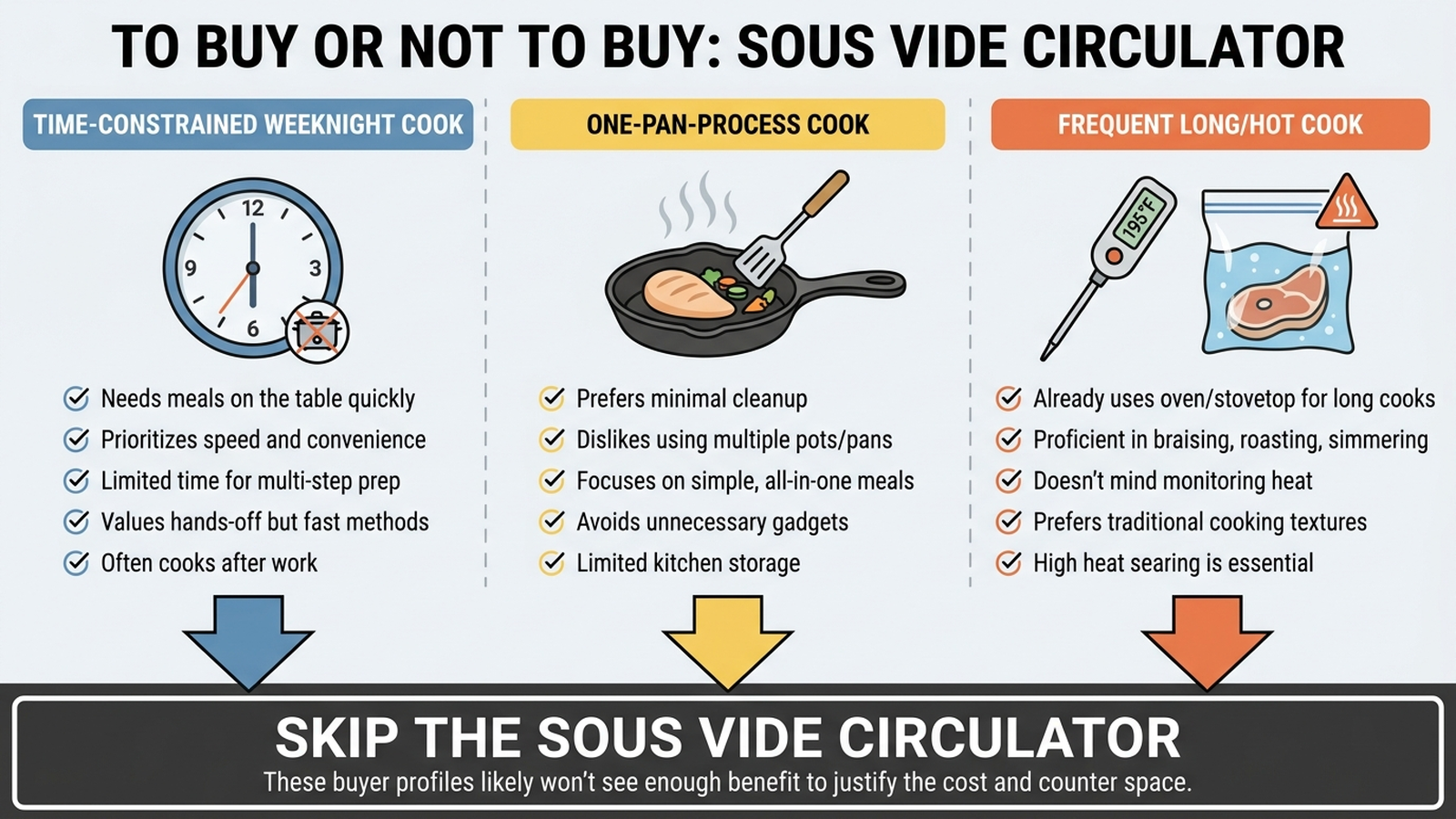
Sous vide reviews mostly answer one question: which circulator holds the most precise temperature with the least fuss. That’s the right question for someone who wants restaurant-consistent doneness and has already built the extra time and the extra searing step into how they cook. But three separate factors in the underlying data mean sous vide doesn’t generalize to every home cook:
- The core appeal of sous vide — long, gentle, hands-off cooking — is also its biggest time cost. A method built around hours of unattended bath time is a poor match for anyone who decides what’s for dinner at 5:30pm and wants to eat by 6:30.
- A sous vide bath doesn’t finish the dish; it starts it. The vacuum-sealed, low-temperature environment that makes sous vide precise also means meat, poultry, and fish come out of the bag gray and unbrowned, requiring a hot skillet or torch afterward for crust and flavor — a second cooking step most competing methods (a cast-iron reverse sear, a pressure cooker) don’t require.
- Long-duration, high-temperature cooks push single-use plastic bags into a degradation zone that quick cooks don’t reach. Research on sous vide bag materials found the leaching risk is low in the typical 130-140°F, 1-4 hour range, but rises specifically when cooks run above roughly 149°F for many hours — a combination common in short-rib and pulled-pork recipes, less common in a quick steak or egg.
The Three Cooks Where the Data Says Skip It
1. Weeknight cooks who need dinner on the table fast
Sous vide’s core selling point — long, even, low-temperature cooking — is structurally at odds with a fast weeknight dinner. America’s Test Kitchen’s own equipment testing documents cook times spanning from about 12 minutes for eggs up to 20 hours for tougher braising cuts, with a typical steak or chicken breast landing in the 1-4 hour range before it’s even ready for its finishing sear. That’s a method built for planning a meal at lunchtime for dinner, or starting a Sunday braise for a Tuesday reheat — not for a cook who decides what’s for dinner after getting home from work.
For this cook, the fix isn’t a faster circulator — water-bath physics don’t compress much no matter which brand you buy. The more reliable alternative is a countertop multi-cooker that gets a comparable braised or tender result in a fraction of the time. The Instant Pot Duo 6 Qt (ASIN B00FLYWNYQ) is a widely sold pressure cooker that can turn a cut that takes hours in a sous vide bath into a meal in under 45 minutes of active pressure-cook time.
Check the Instant Pot Duo 6 Qt on Amazon
2. Cooks who don’t want a second cooking step
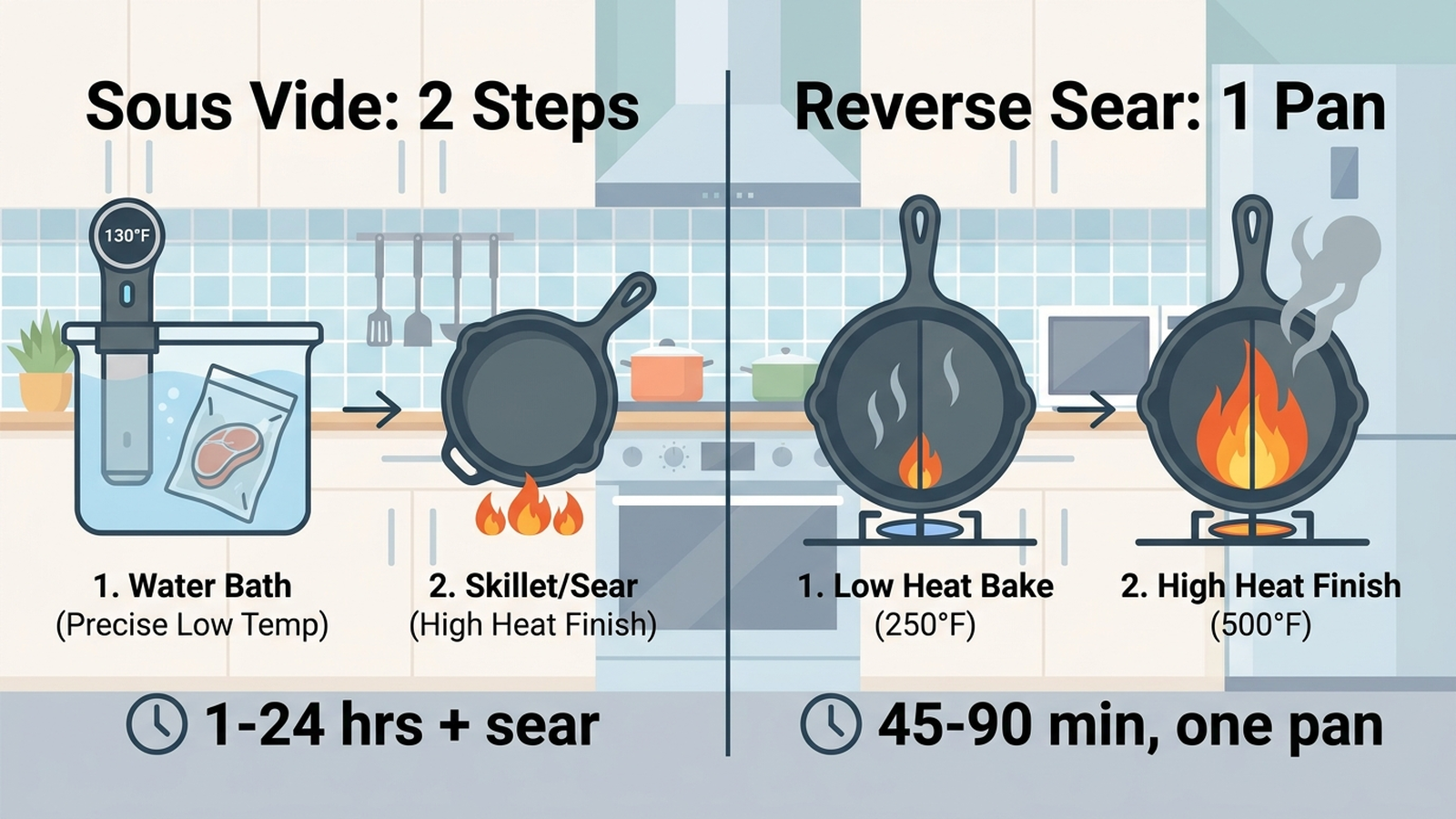
The most consistent complaint from long-term sous vide users and equipment reviewers isn’t accuracy — circulators are good at holding a set temperature. It’s that the bath doesn’t finish the job. Meat, poultry, and fish come out of the bag pale and unbrowned, so a hot skillet, cast-iron pan, or torch sear is still required afterward for crust and flavor. That’s a second pan, a second burst of stovetop heat, and a second round of cleanup, on top of the circulator, the vacuum bag or sealer, and the water container. Reviewers also note a secondary loss: the browned fond that a single-pan sear produces — the base for a pan sauce — mostly isn’t there after a water bath, since there’s no direct-heat contact until the very end.
For this cook, the data points toward a method that gets browning and doneness in one pan, one step. A reverse sear in a cast-iron skillet — low oven or low stovetop heat until the interior hits target temperature, then a hot sear at the end — delivers a similar edge-to-edge doneness result to sous vide without a second appliance or a second pan. The Lodge Pre-Seasoned Cast Iron Skillet, 12 Inches (ASIN B00006JSUB) is a widely sold option that handles both the low-heat and high-heat sides of a reverse sear in the same pan.
Check the Lodge 12-Inch Cast Iron Skillet on Amazon
3. Cooks who do frequent long, high-temperature cooks in single-use bags
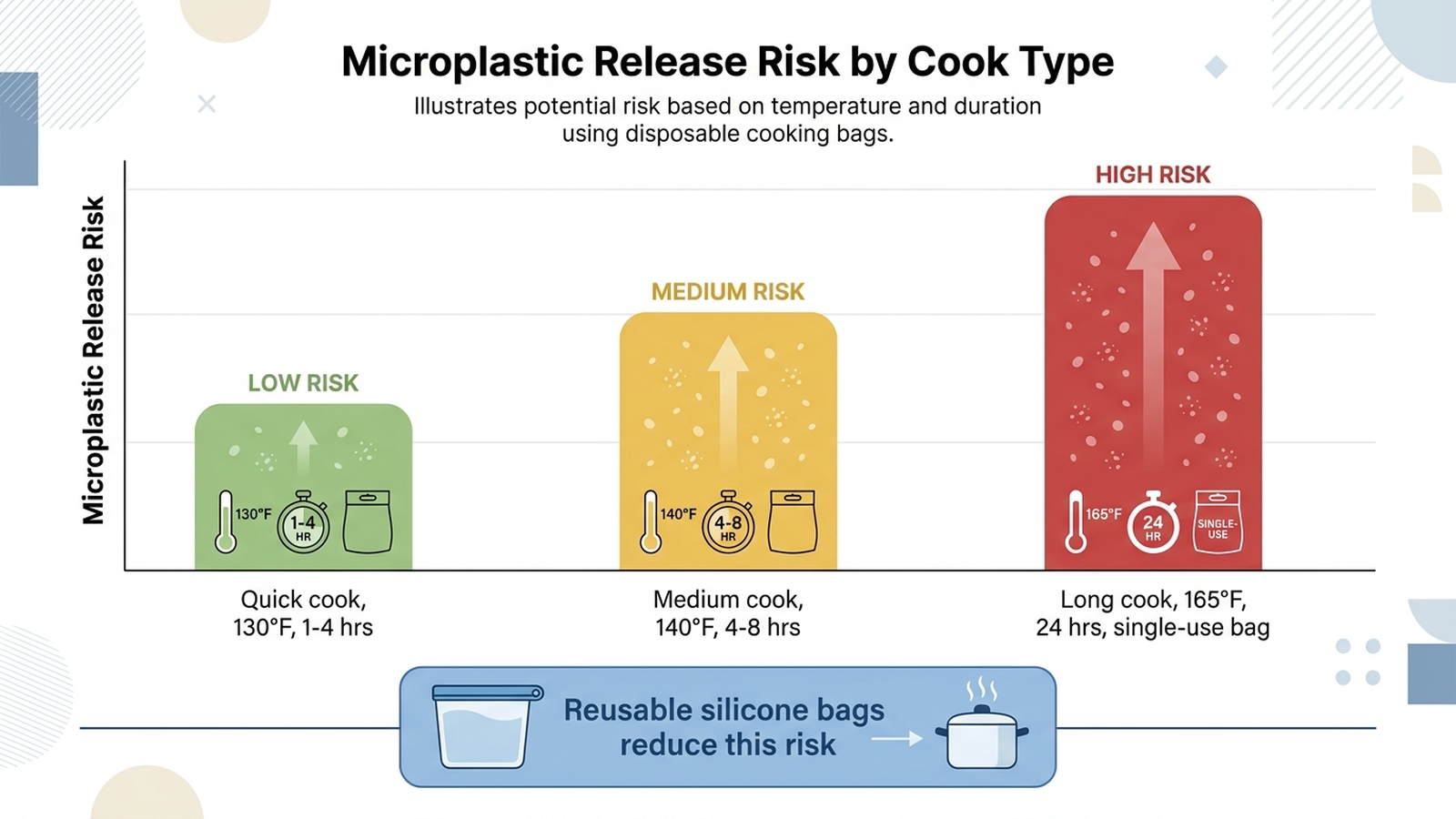
Sous vide’s food-safety math is well established: USDA-aligned guidance holds that most cooks below 131°F should run no more than about two hours before bacterial risk rises, and that meat and poultry need to reach a minimum pasteurization temperature and hold time — commonly cited as 140°F for at least 30 minutes on thinner cuts — to be safe at low temperatures. That part isn’t a reason to skip sous vide; it’s a reason to follow the published times, which most recipes already build in. The materials question is separate: published research on sous vide bags found that heating plastic above roughly 149°F, especially over many hours, promotes polymer degradation and measurable microplastic release, with a published rainbow trout sous vide study finding an average of about 1.27 microplastic particles per gram in bags heated in that higher, longer-duration zone. A quick 130°F egg or steak cook stays well clear of that range. A 24-hour short rib or pulled-pork cook at 165°F does not.
For a cook who frequently runs those long, hot cooks, the safer move if still using a circulator is to switch from cheap single-use polyethylene bags to a reusable silicone bag rated for sous vide, which is more chemically stable at sustained high heat. The Stasher Premium Reusable Silicone Sandwich Bag (ASIN B01DZQT9CU) is explicitly labeled sous-vide-safe and dishwasher-safe, and avoids the single-use-bag-per-cook cost and waste that stacks up with frequent long braises.
Check the Stasher Reusable Silicone Bag on Amazon
When a Sous Vide Circulator Still Makes Sense
None of this argues against sous vide as a method. The data supports buying a circulator specifically when: you regularly plan meals hours or a day ahead rather than deciding at 5:30pm, you don’t mind a finishing sear as a normal part of the process, and your typical cooks stay in the shorter, lower-temperature range (or you’re willing to use reusable silicone bags for the long, hot ones). That’s a real and common profile among people who prize consistent doneness on steak, chicken breast, or eggs — it just isn’t every home cook with $150 to spend on kitchen gear.
Manufacturer-published wattage, heating-speed, and app-connectivity figures for individual circulator models are manufacturer-reported claims rather than figures this analysis independently verified; treat them as directional rather than exact.
Comparison Table
Prices are approximate amazon.com figures as of 2026-09-26 and fluctuate.
| Your situation | What the data suggests | Alternative product | Typical price |
|---|---|---|---|
| Need dinner fast on weeknights | Skip the multi-hour water bath | Instant Pot Duo 6 Qt | ~$79-99 |
| Don’t want a second pan/searing step | Skip the two-step bath-then-sear process | Lodge 12-Inch Cast Iron Skillet | ~$20-25 |
| Frequent long, high-temp cooks (24hr+, 149°F+) | Skip single-use plastic bags at minimum | Stasher Reusable Silicone Bag | ~$14-20 |
| Want restaurant-consistent doneness and don’t mind planning ahead | Sous vide still fits | Anova or Breville immersion circulator | ~$99-199 |
Decision Flowchart
Start with your typical dinner timeline: if you decide what’s for dinner within an hour of eating it most nights, skip sous vide — the water-bath time doesn’t compress, no matter the brand. If your timeline allows for it but you don’t want a second pan and a finishing sear afterward, skip it in favor of a one-pan reverse sear. If neither of those rules you out but you frequently run long cooks above roughly 149°F, at minimum switch to reusable silicone bags rather than single-use plastic before buying a circulator. Only when your schedule allows advance planning, you’re fine with the finishing-sear step, and your bag choice matches your typical cook temperature does a sous vide purchase consistently pay off.
Limitations
This analysis relies on America’s Test Kitchen’s published equipment testing, USDA-aligned food-safety guidance on sous vide time and temperature, published research on plastic-bag degradation at sous vide temperatures, and equipment-review commentary on the finishing-sear requirement, rather than our own side-by-side test of any specific circulator model. Microplastic-release studies to date have focused on specific fish and bag samples rather than the full range of commercial sous vide bags on the market, so figures should be read as directional, not universal. Individual cook times vary by cut thickness and recipe, and food-safety minimums should always be checked against current USDA guidance rather than this article alone. Pricing and product availability change frequently; figures here reflect the time of writing.
Bottom Line
Sous vide earned its reputation honestly — for a cook who plans ahead and wants edge-to-edge doneness, a $150 circulator delivers results a stovetop pan can’t match on its own. But the same time-cost, workflow, and materials data that explains sous vide’s appeal also explains why the purchase is the wrong call for three specific groups: weeknight cooks on a tight timeline, cooks who don’t want a second pan-searing step, and cooks running frequent long, hot bags who haven’t switched to reusable silicone. If any of those describe your kitchen, the data points toward a pressure cooker, a cast-iron reverse sear, or at minimum a reusable bag swap — not a new immersion circulator.
Before you buy, paste the product link into Arekore — our AI assistant checks review authenticity, surfaces what the one-star reviews actually complain about, and compares prices, free, in about five minutes.