Food Processors 2026: 3 Home Cooks Who Should Skip One
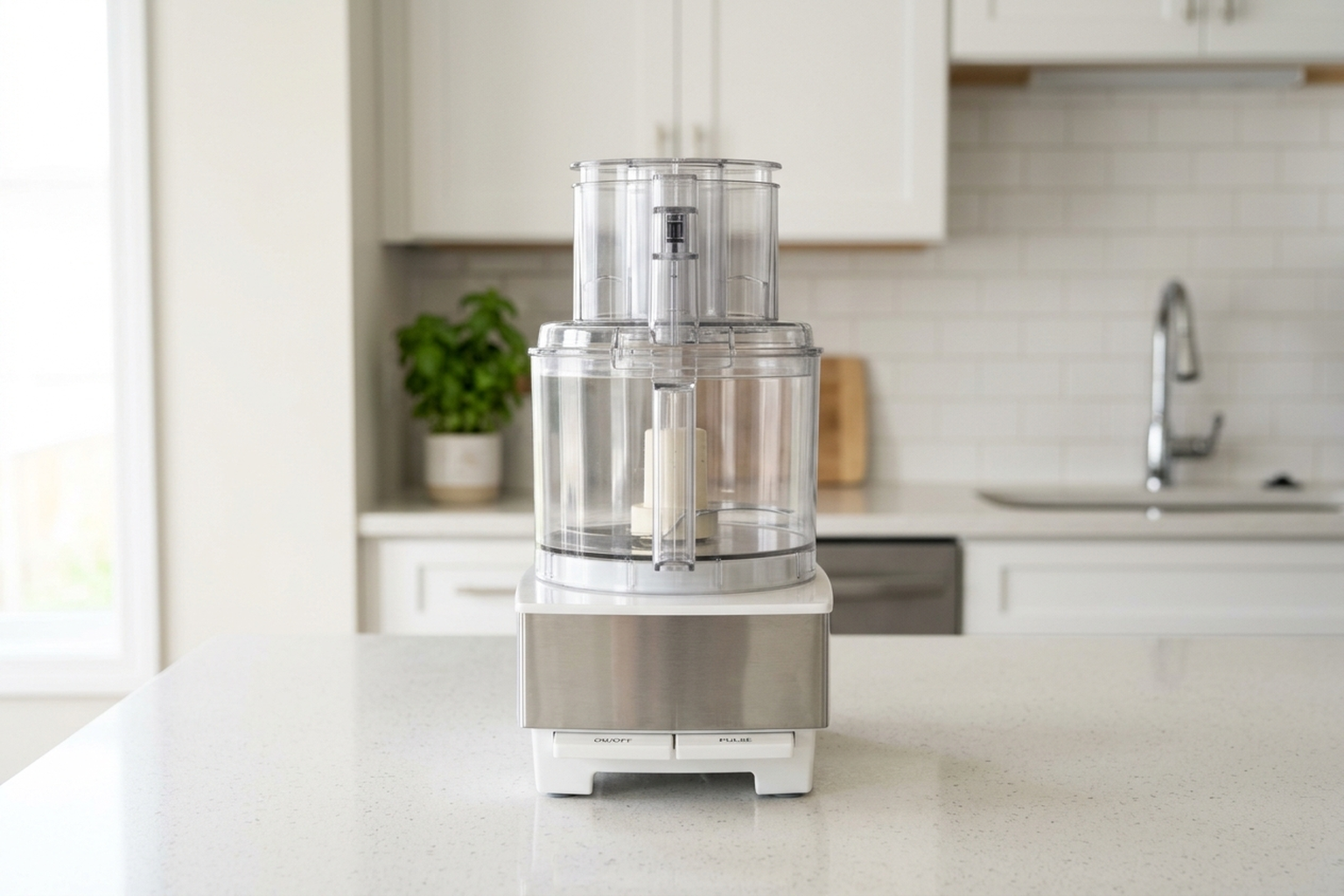
A full-size food processor shows up on nearly every “essential kitchen appliance” list, and the lab data backs that reputation up: Consumer Reports’ 2026 testing puts models from Breville, Cuisinart, and KitchenAid at the top of its ratings for chopping, shredding, slicing, and kneading, and Wirecutter has recommended the same Cuisinart 14-cup model as its top pick since 2013. None of that is in dispute. What the lab tests don’t measure is how often the appliance actually comes out of the cabinet once the novelty wears off — and on that question, the survey data tells a less flattering story than the buying guides do.
This isn’t an argument that food processors are bad appliances. It’s an argument that the case for a full-size, 14-cup model depends on how often you do heavy prep, how much counter and storage space you have, and what you already own — and for a specific, common set of home cooks, a smaller tool covers the same real-world tasks without the $250 price tag or the drawer it never leaves.
As an Amazon Associate, Arekore earns from qualifying purchases. The Amazon product links in this article may include our affiliate tracking ID and may earn us a commission if you buy through them, at no additional cost to you. See our Links Policy for details on how we select products and how commissions do not influence our recommendations.
TL;DR / Quick Verdict
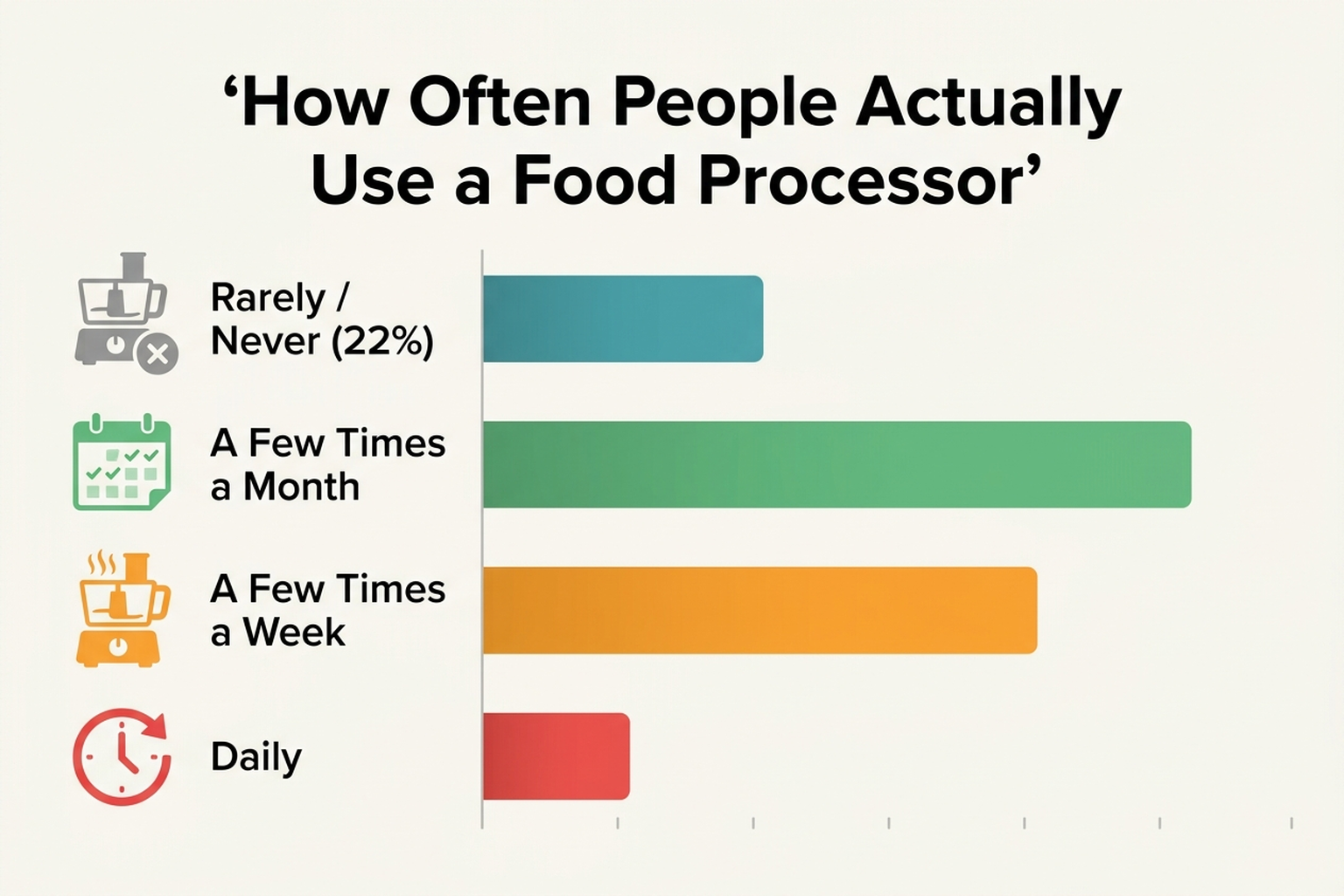
- Food processors rank among the most-neglected kitchen gadgets in US surveys: 22% of respondents in one kitchen-gadget survey named the food processor a “one-hit-wonder” they rarely use, and a separate Consumer Reports-cited survey found 40% of adults admit to buying kitchen gadgets they rarely or never use.
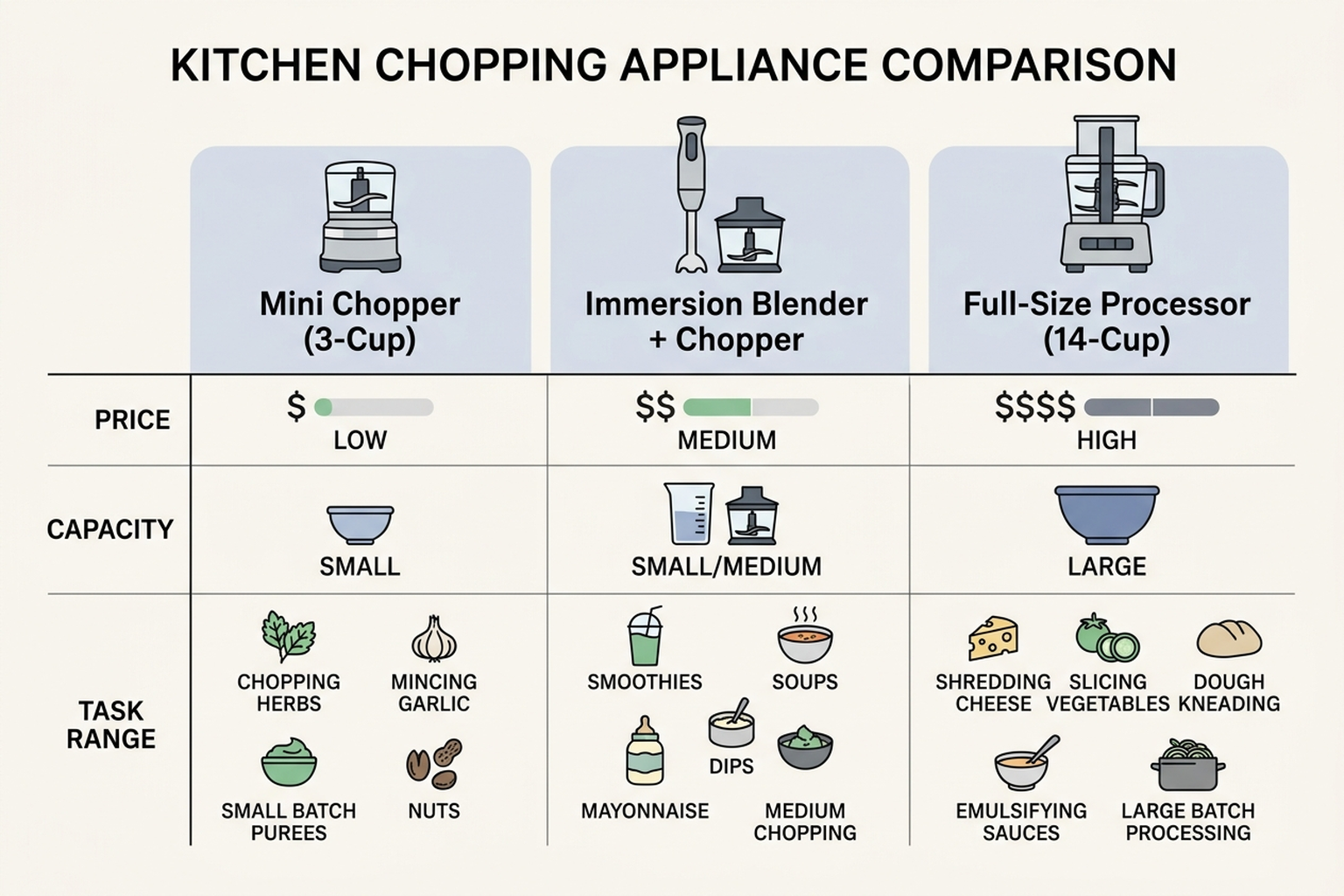
- Occasional choppers rarely need 14 cups of capacity. A 3-cup mini chopper handles onions, garlic, herbs, and small-batch salsa — the tasks that make up most home cooking — without the bulk of a full-size bowl, disk set, and base.
- If you already own an immersion blender, you may already own a chopper. Several immersion blender kits ship with a dedicated chopper attachment that covers the same light-duty jobs as a mini processor.
- Small kitchens pay a real storage cost for a 14-cup unit. A full-size processor’s bowl, lid, pusher, and three-plus disks take up more cabinet space than most apartment kitchens have to spare for an appliance used a few times a month.
- The exception that still justifies a full-size processor: regular batch cooking, dough kneading, slicing and shredding in volume, or meal-prepping for a household of four or more — tasks where a 3-cup bowl simply can’t keep up.
How We Reached These Conclusions (Methodology)
This is an editorial analysis, not a hands-on test. We did not personally test the products covered here. This guide synthesizes: (a) Consumer Reports’ 2026 lab-testing methodology and published ratings for full-size and mini food processors and choppers, which evaluate chopping uniformity, shredding, slicing, puréeing, dough kneading, and emulsifying; (b) Wirecutter’s and America’s Test Kitchen’s independent testing and long-running top-pick recommendations for full-size models; (c) aggregated amazon.com customer review sentiment for mini choppers and immersion-blender chopper attachments, sampled in October 2026; (d) third-party survey data on kitchen-gadget usage frequency and US food processor market/ownership estimates; and (e) manufacturer specifications for the specific models named below. Where a figure is a manufacturer’s own claim rather than an independently measured result, it is labeled as such. Prices are amazon.com figures as of October 28, 2026 and fluctuate.
What a Full-Size Processor Actually Gets You
Consumer Reports’ 2026 lab tests are consistent on where full-size processors earn their reputation: the top-rated models — the Breville Paradice 9 (manufacturer-listed 625-watt motor, 9-cup bowl), the Cuisinart Core Custom FP-130, and the KitchenAid KFP0718ER among them — are tested on chopping hazelnuts, herbs, and onions uniformly, grating cheese, puréeing cooked vegetables smooth, shredding raw carrots and cheddar, slicing potatoes, blending cake and pancake batter, kneading dough, and emulsifying mayonnaise. Wirecutter’s long-standing top pick, the Cuisinart Custom 14-Cup (DFP-14BCNY, 720-watt motor, manufacturer-rated), has held that recommendation since 2013 specifically because its 14-cup capacity and simple two-button design handle large-batch prep — a full head of cabbage, a double batch of pie dough, a family-sized batch of hummus — in one pass.
What that same testing doesn’t speak to is frequency of use. US market research estimates roughly 60–70 million food processor units are active in American kitchens in 2026, with around 65% of households owning at least one — yet kitchen-gadget surveys consistently place the food processor alongside slow cookers and bread makers on the list of least-used small appliances, with 22% of one survey’s respondents naming it a gadget they rarely touch. The gap between “rates highest in the lab” and “gets used every week” is exactly where the case for a smaller tool starts.
Three Home Cooks Who Don’t Need a Full-Size Processor
1. Occasional choppers — onions, garlic, and herbs a few times a week
If most of your “food processor” tasks are really just chopping an onion, mincing garlic, or pulsing herbs for a sauce, a 3-cup mini chopper covers that ground without the bowl, lid, pusher tube, and multiple disks a full-size unit requires. The Hamilton Beach Electric Vegetable Chopper & Mini Food Processor (ASIN B06Y2GZWCJ), a 350-watt (manufacturer-rated) 3-cup model using a stack-and-press lid design, typically lists around $24.95 on amazon.com and carries aggregated customer reviews above 27,000 ratings with an average around 4.6 out of 5 stars. Reviewers’ recurring praise centers on how quickly it handles everyday chopping and basic puréeing for one or two servings; the appliance simply doesn’t offer — and most light users don’t need — the slicing disks, shredding disks, or dough-blade attachments that come standard on a 14-cup model.
For someone chopping a single onion or a handful of garlic cloves a few times a week, the extra capacity and attachment set of a full-size processor goes largely unused, which lines up with the survey finding that the food processor is a frequent “one-hit-wonder” purchase.
Check the Hamilton Beach Mini Food Chopper on Amazon
2. Households that already own an immersion blender
A food processor and an immersion blender solve overlapping problems — puréeing soup, blending sauces, light chopping — and several immersion blender kits already include a dedicated chopper attachment for exactly that overlap. The Braun MultiQuick 7 3-in-1 Immersion Blender & Food Processor (ASIN B085FRKBMF), a 500-watt (manufacturer-rated) hand blender that ships with a beaker, whisk, and roughly 1.5–2-cup chopper bowl attachment, typically lists in the $75–$110 range on amazon.com depending on promotions. For a household that already reaches for an immersion blender to purée soup or blend a smoothie, the bundled chopper attachment handles onions, nuts, and herbs without buying a second, separate appliance whose core job — chopping and light puréeing — the immersion blender set already performs.
Aggregated customer reviews for 3-in-1 immersion blender kits consistently cite the single-appliance convenience and compact storage as the main draw over owning both a stick blender and a standalone food processor.
Check the Braun MultiQuick 7 on Amazon
3. Small kitchens with limited cabinet space
A 14-cup food processor’s bowl, lid, feed tube, pusher, and three-or-more disks take up a meaningful chunk of cabinet real estate — space that’s scarce in a lot of apartment and small-condo kitchens. The Ninja Food Chopper Express Chop (ASIN B00HL3TBDQ, 200-watt manufacturer-rated motor, 16-ounce bowl), which typically lists around $27–$45 on amazon.com, is built to store flat in a single drawer rather than a dedicated cabinet shelf, and carries aggregated customer reviews above 15,000 ratings at roughly 4.7 out of 5 stars, with reviewers praising it for cubing vegetables, mincing garlic, and chopping nuts quickly. The recurring complaint in aggregated reviews — bowl cracking or motor failure after months of heavy, repeated use — is the scenario a full-size processor’s sturdier build is actually designed for, which is also the clearest signal that heavy daily users should look at a bigger machine instead.
For a kitchen with limited storage and a lighter prep workload, the compact footprint matters as much as the price.
Check the Ninja Express Chop on Amazon
When a Full-Size Processor Actually Earns Its Price
None of this is a case against the Breville Paradice 9, the KitchenAid KFP0718ER, or the Cuisinart Custom 14-Cup. The data supports buying a full-size model when you regularly batch-cook for a household of four or more, knead bread or pizza dough by machine rather than by hand, slice or shred vegetables and cheese in volume for meal prep, or want one machine that can also emulsify mayonnaise and mix cake batter. That’s a real and common profile for anyone who cooks from scratch several times a week — the Cuisinart Custom 14-Cup Food Processor (ASIN B01AXM4WV2, roughly $230–$250 on amazon.com) is the model independent reviewers most consistently point to for that use case, and Wirecutter’s decade-plus top pick reflects how well it holds up under that kind of regular, heavy-duty use.
Comparison Table
Prices as of October 28, 2026 are approximate amazon.com figures and fluctuate.
| Your usage pattern | What the data suggests | Model | Typical price |
|---|---|---|---|
| Occasional chopping (a few times/week), onions and herbs | 3-cup mini chopper covers the same tasks | Hamilton Beach Mini Food Chopper | ~$24.95 |
| Already own an immersion blender | Bundled chopper attachment replaces a standalone unit | Braun MultiQuick 7 | ~$75–$110 |
| Small kitchen, limited storage, light prep | Compact chopper stores flat in a drawer | Ninja Express Chop | ~$27–$45 |
| Daily batch cooking, dough, slicing/shredding in volume | Full-size capacity and attachment set pay for themselves | Cuisinart Custom 14-Cup | ~$230–$250 |
Decision Flowchart
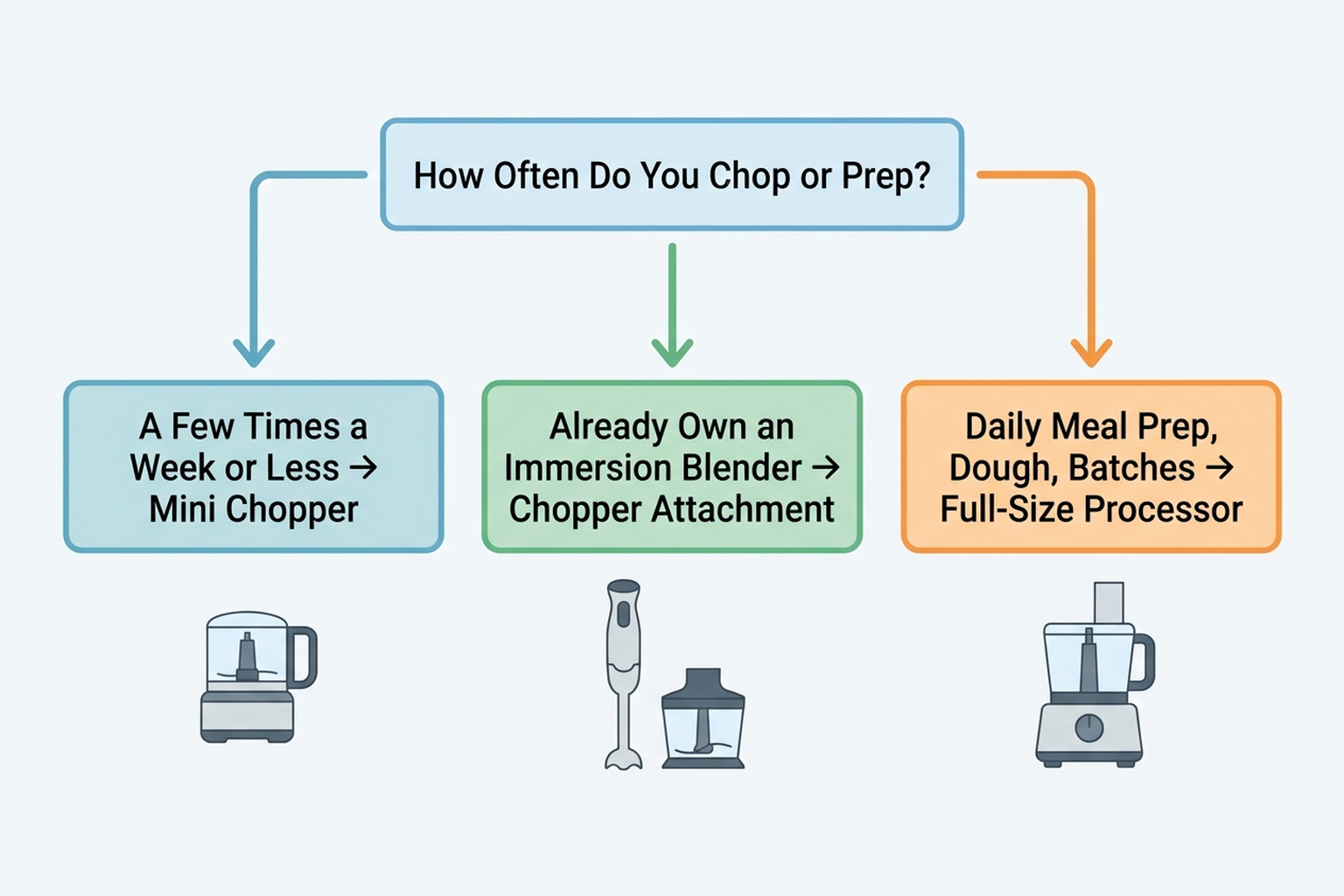
Start with how often you actually chop or prep. If it’s a few times a week or less — an onion here, a handful of garlic there — a $25 mini chopper handles it without the storage footprint of a full-size unit. If you already own an immersion blender, check whether it came with (or can be bought with) a chopper attachment before adding a second appliance. If your kitchen has limited cabinet space and your prep workload is light to moderate, a compact chopper that stores flat in a drawer is the better fit. Only when you’re batch-cooking, kneading dough, or slicing and shredding in volume on a regular basis does the 14-cup processor’s price and footprint clearly pay for itself.
Limitations
This analysis relies on Consumer Reports’ 2026 published lab-testing conclusions, Wirecutter’s and America’s Test Kitchen’s independent reporting, aggregated amazon.com customer review sentiment, third-party survey data on kitchen-gadget usage, and manufacturer specifications, rather than our own side-by-side test of any specific model. Survey figures on how often households use a food processor come from aggregated consumer-research sources rather than a single controlled study, and individual results vary with cooking habits, household size, and unit-to-unit manufacturing variance. Durability complaints cited for compact choppers are based on aggregated reviewer reports rather than a controlled longevity test. Prices fluctuate on amazon.com and should be verified on the current product page before buying.
Bottom Line
Full-size food processors win the lab tests for real reasons — more capacity, more attachments, and the horsepower to knead dough or shred a pound of cheese in one pass. But the survey data on actual usage tells a different story than the “must-have appliance” framing: a meaningful share of households buy one and barely touch it. Occasional choppers, households that already own an immersion blender, and small kitchens with limited storage all get most of the practical result from a $25–$110 tool, based on Consumer Reports’ own testing conclusions and aggregated review data. If daily batch cooking, dough kneading, or volume slicing and shredding don’t describe your kitchen, the data points toward skipping the 14-cup model and keeping (or buying) the smaller one instead.
Before you buy either one, it pays to check that the listing’s reviews are genuine and the price is competitive. That is exactly what Arekore does: paste the Amazon URL and our AI analyzes review authenticity, surfaces what the one-star reviews actually complain about, and compares pricing in about five minutes — so you end up with the tool that fits how often you actually cook, not the one the algorithm pushes hardest.