Smartwatches 2026: 3 People Who Don't Need One
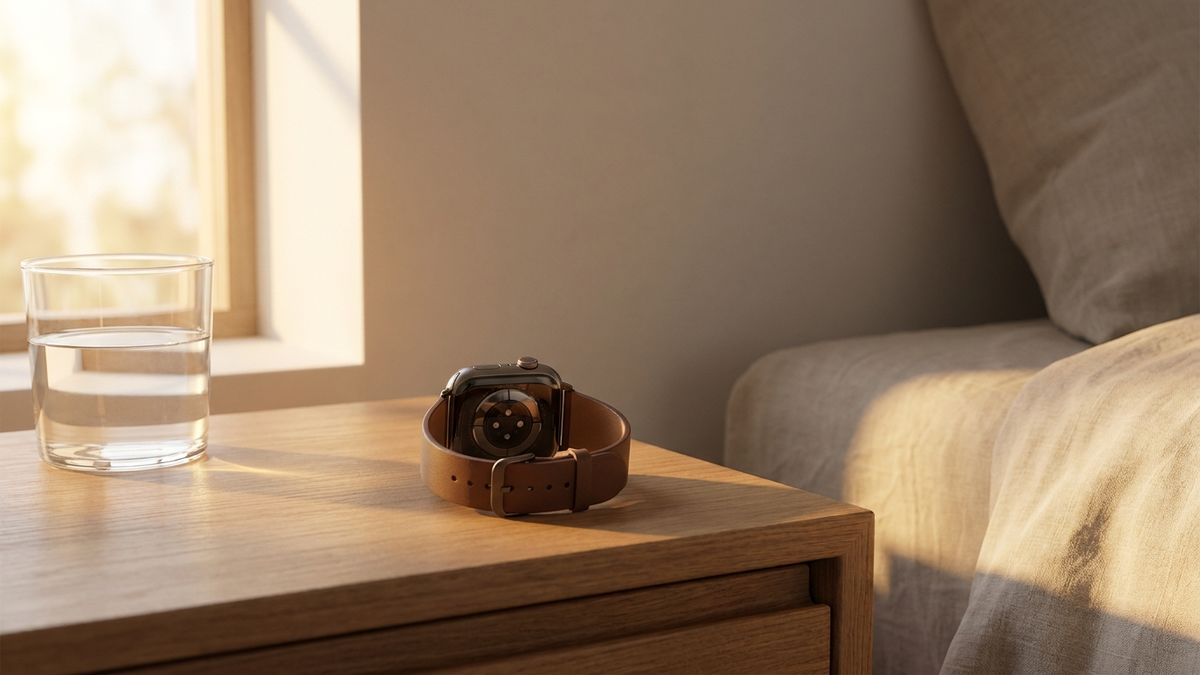
The smartwatch category keeps adding capability every year — blood-oxygen sensors, on-wrist ECG, sleep staging, always-on displays. None of that is in dispute. What the underlying dermatology, accuracy, and behavioral-distraction data does show is that a meaningful share of would-be buyers fall into profiles where a $250-450 smartwatch purchase doesn’t actually solve their problem, and in one case can create a new one. This isn’t an argument that smartwatches are overrated as a category. It’s an argument that three specific buyer types should look at the data before assuming the newest model is the right fit.
As an Amazon Associate, Arekore earns from qualifying purchases. The Amazon product links in this article may include our affiliate tracking ID and may earn us a commission if you buy through them, at no additional cost to you. See our Links Policy for details on how we select products and how commissions do not influence our recommendations.
TL;DR / Quick Verdict
- People with nickel or metal-contact sensitivity face a documented dermatology risk from smartwatch casebacks and band hardware. A published Contact Dermatitis journal study using the dimethylglyoxime (DMG) spot test on 47 popular smartwatch models found more than 60% released detectable nickel above the EU Nickel Directive’s 0.5 µg/cm²/week threshold — the level shown to provoke reactions in sensitized wearers.
- People who already track sleep and activity with a smart ring get little added value from a smartwatch. Wirecutter’s 90-day panel test found the Oura Ring 4 delivered the most consistent sleep-stage agreement with user-reported sleep of any consumer wearable tested, in part because a finger-worn ring avoids the wrist motion artifacts that reduce smartwatch sleep-tracking accuracy.
- People who mainly want the time and light notifications, not health metrics, are paying for — and getting distracted by — features they don’t use. Eye-tracking research on driver distraction has found smartwatches produce more frequent glances than checking a phone, and notification-behavior studies report that unbatched, always-on alerts increase felt distraction relative to batched or absent notifications.
- Three profiles where the data favors skipping a smartwatch purchase: nickel/metal-sensitive skin, existing smart-ring or dedicated-tracker owners, and light users who mainly want time and occasional alerts rather than continuous health tracking.
How We Reached These Conclusions (Methodology)
This is an editorial analysis, not a hands-on test. We did not personally test the products covered here. This guide synthesizes: (a) a peer-reviewed Contact Dermatitis journal study testing nickel release from 47 smartwatch models against the EU Nickel Directive threshold; (b) case reports on smartwatch-related allergic contact dermatitis published in the Journal of Allergy and Clinical Immunology: In Practice and Contact Dermatitis; (c) Wirecutter’s long-term sleep-tracker panel testing comparing the Oura Ring 4 against smartwatch-based sleep tracking; (d) 2026 US smartwatch ownership and market-revenue statistics from market.us and Demand Sage; (e) published research on smartwatch notification behavior and driver-distraction eye-tracking studies; and (f) manufacturer-published specifications and amazon.com pricing at the time of writing. Prices are approximate amazon.com figures as of September 2026 and change frequently.
Why “Best Smartwatch” Isn’t the Same Question as “Right for You”
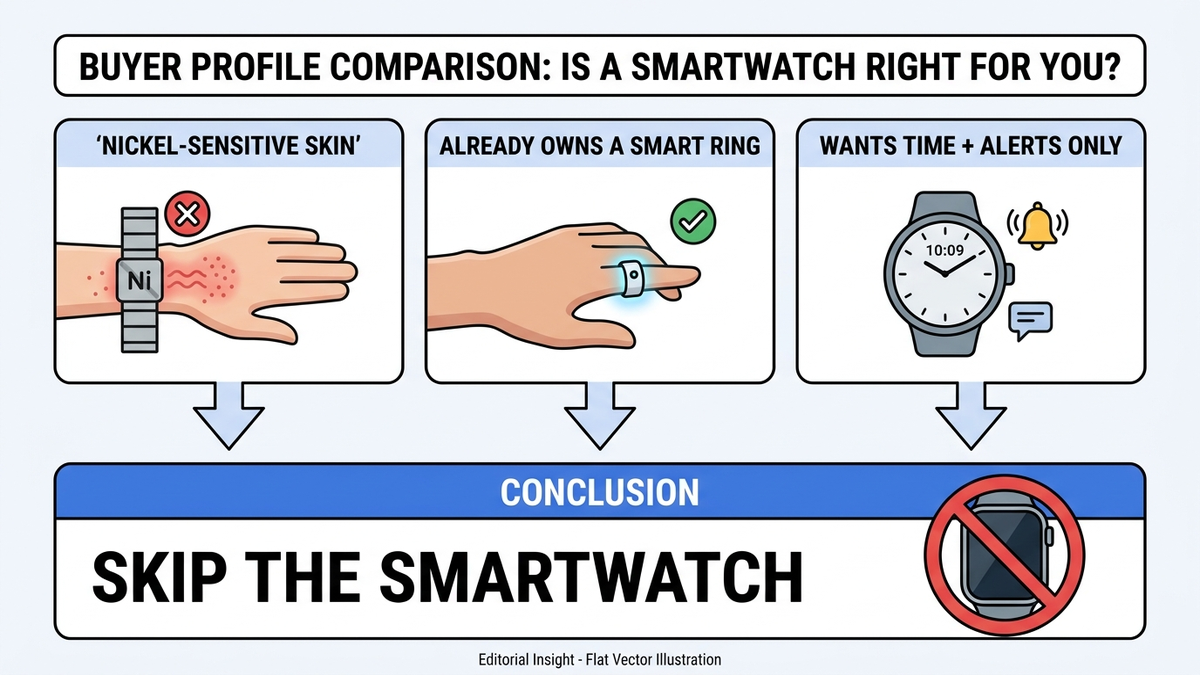
Smartwatch reviews mostly answer one question: which model packs the most accurate sensors into the smallest case. That’s the right question for someone who wants continuous, on-wrist health tracking and doesn’t have a reason to avoid it. But three separate factors in the underlying data mean a smartwatch doesn’t generalize to every buyer:
- The casebacks and band hardware that make a smartwatch a smartwatch are also common allergen sources. Stainless-steel and aluminum-alloy casebacks, plus buckles and quick-release pins, are frequent carriers of free nickel. The under-band environment — trapped moisture, heat, and friction — increases transepidermal water loss and skin permeability, which raises the odds of a reaction in anyone already nickel-sensitive.
- A smartwatch’s sleep and activity tracking duplicates what a smart ring or dedicated tracker already does, often less accurately. Wrist-worn optical sensors pick up more motion artifact during sleep than a finger-worn ring positioned closer to the radial artery, which is part of why ring-form sleep tracking has tested more consistently in independent panels.
- Continuous notifications on the wrist add a distraction surface that a phone-only setup doesn’t have. Driver-distraction eye-tracking research has found more frequent glances toward a smartwatch than toward a phone, and notification-behavior studies report that unbatched, on-wrist alerts correlate with higher felt distraction than batched or suppressed notifications — a cost that only pays off if the wearer actually wants that level of connectivity.
The Three Buyers Where the Data Says Skip It
1. People with nickel or metal-contact skin sensitivity
Nickel is the most common cause of allergic contact dermatitis worldwide, affecting an estimated 10-20% of the general population and up to 25% of women, largely due to earlier and more frequent nickel exposure through jewelry. A published Contact Dermatitis study applying the dimethylglyoxime (DMG) spot test — a validated method for detecting free nickel — to 47 popular smartwatch models found more than 60% released nickel above the EU Nickel Directive’s 0.5 µg/cm²/week limit, the threshold documented to provoke reactions in sensitized wearers. Case reports published in the Journal of Allergy and Clinical Immunology: In Practice and in Contact Dermatitis document real instances of smartwatch-induced allergic contact dermatitis, including one case of contact leukoderma (skin depigmentation) following a nickel reaction to a smartwatch caseback.
For this buyer, the safer fix isn’t hunting for a “hypoallergenic” smartwatch — that term is an unregulated marketing claim in the US with no legal definition, and verifying true nickel-free construction requires manufacturer ISO 10993 biocompatibility documentation that most consumer smartwatch listings don’t provide. The more reliable alternative is a resin-cased watch with no metal skin contact at all. The Casio F-91W-1 (ASIN B000GAWSDG) is a widely sold digital watch with a resin case and resin band — no stainless-steel caseback or metal buckle touching the skin.
Check the Casio F-91W-1 on Amazon
2. People who already track sleep and activity with a smart ring
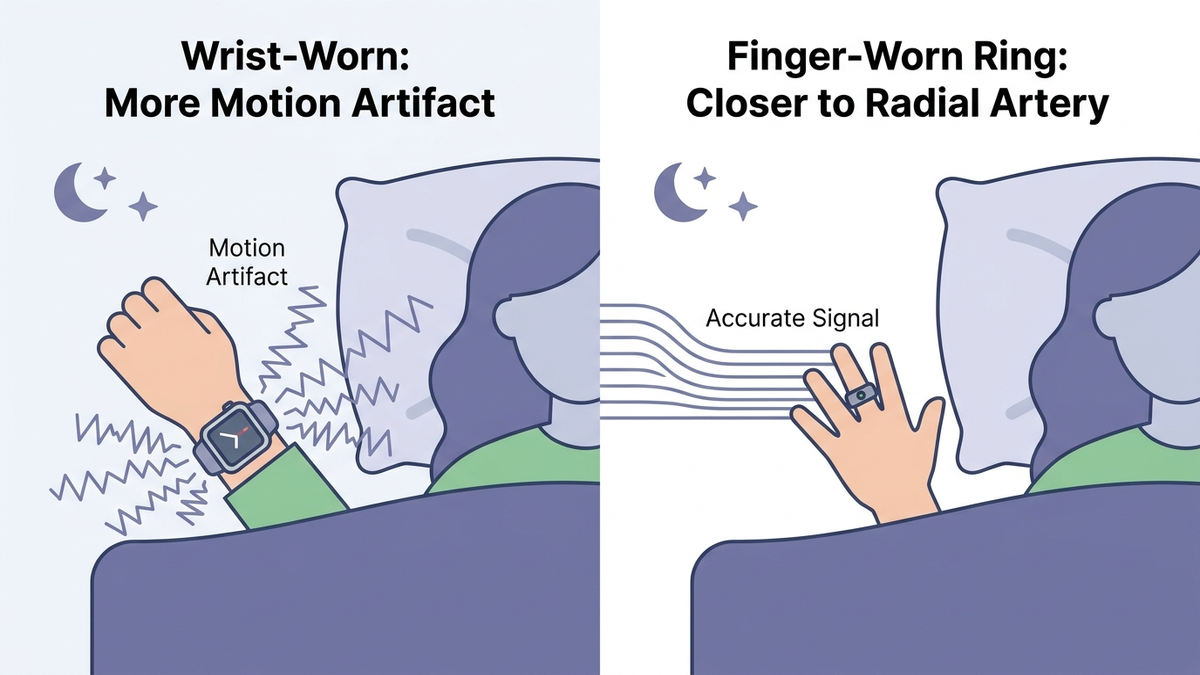
Optical heart-rate and motion sensors on a wrist-worn device pick up more movement artifact during sleep than a ring positioned on the finger, closer to the radial artery. Wirecutter’s 90-day sleep-tracker panel test found the Oura Ring 4 delivered the most consistent sleep-stage agreement with user-reported sleep of any consumer wearable in the test, ahead of wrist-worn alternatives. For someone who already owns a smart ring or a dedicated chest-strap tracker for health metrics, adding a smartwatch on top doesn’t improve tracking accuracy — it duplicates a job already being done, on a less accurate sensor location, for another $250-450.
For this buyer, the data doesn’t point to buying a different product — it points to not buying a second one. If a ring-based tracker isn’t already in the picture, the Oura Ring 4 (ASIN B0D9WVSZ56) is the widely tested option that covers sleep and activity tracking without the wrist form factor or the notification surface a smartwatch adds.
Check the Oura Ring 4 on Amazon
3. Light users who mainly want the time and occasional alerts
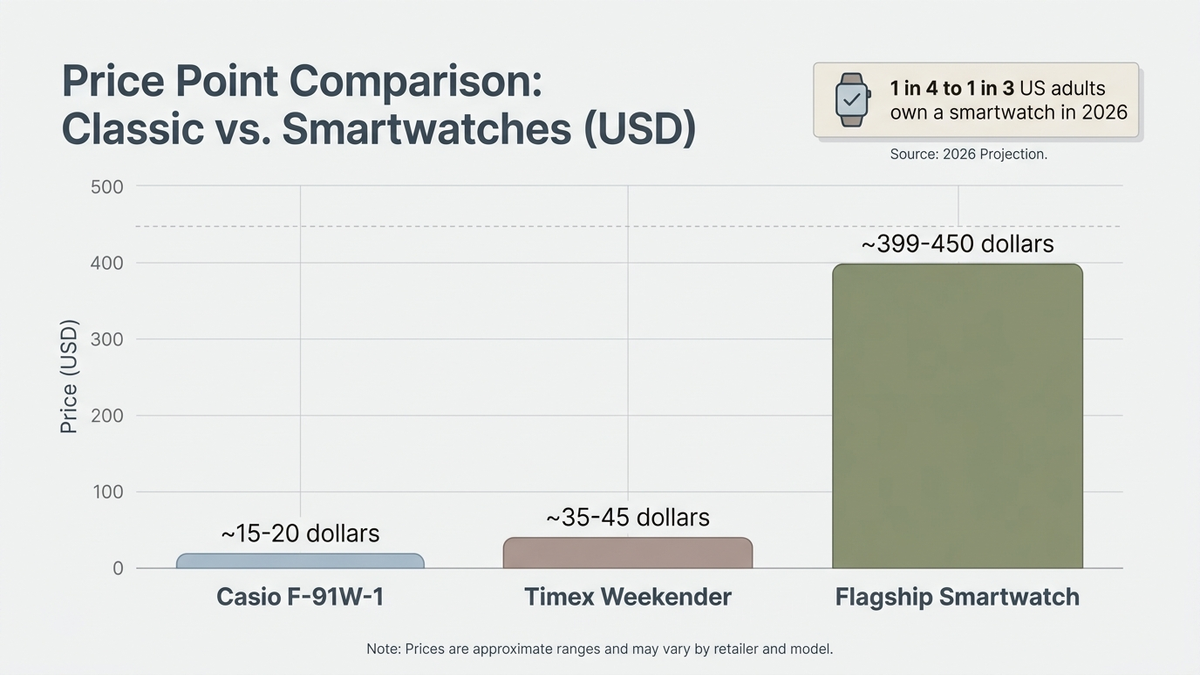
Roughly one in four to one in three US adults owns a smartwatch as of 2026, per market.us and Demand Sage estimates, with the US the single largest national smartwatch market at an estimated $10.9 billion in 2026 revenue. That ownership is concentrated among buyers who want continuous health tracking or hands-free notifications. For someone who mainly checks the time and would be fine glancing at a phone for anything else, the on-wrist notification feed is a cost, not a benefit: driver-distraction eye-tracking studies have found more frequent glances toward smartwatches than toward phones, and notification-behavior research reports that unbatched, always-on alerts correlate with higher felt distraction than batched or suppressed ones — a pattern a screen-off analog watch avoids entirely by design.
For this buyer, a basic analog watch covers the actual use case — telling time, no charging cable, no notification surface to manage. The Timex Weekender (ASIN B004VR9GCQ) is a widely sold analog watch with a multi-year battery and no smart features to pay for or get distracted by.
Check the Timex Weekender on Amazon
When a Smartwatch Still Makes Sense
None of this argues against smartwatches as a category. The data supports a smartwatch purchase specifically when: you want continuous, on-wrist health and fitness tracking as your primary tracking method, you don’t have documented nickel or metal-contact sensitivity, and you actually want hands-free notifications enough to accept the added glance-and-distraction surface. That’s a large and common buyer profile — it just isn’t every buyer with a health-tracking budget.
Manufacturer-published specifications for sensor accuracy and battery life are manufacturer-reported claims rather than figures this analysis independently verified; treat them as directional rather than exact.
Comparison Table
Prices are approximate amazon.com figures at the time of writing (September 2026) and fluctuate.
| Your situation | What the data suggests | Alternative product | Typical price |
|---|---|---|---|
| Nickel or metal-contact skin sensitivity | Skip metal casebacks and buckles entirely | Casio F-91W-1 (resin case, resin band) | ~$15-20 |
| Already track sleep/activity with a smart ring or chest strap | Skip the duplicate wrist device | Oura Ring 4 (if not already owned) | ~$299-349 |
| Mainly want the time and occasional alerts | Skip the notification surface and continuous tracking | Timex Weekender (analog, no smart features) | ~$35-45 |
| Want continuous health tracking and hands-free notifications | Smartwatch still fits | Flagship smartwatch (Apple Watch Series 10-class) | ~$399-450 |
Decision Flowchart
Start with skin history: if you have a known nickel or metal-contact allergy, skip any device with a metal caseback or buckle and choose a resin-cased watch instead — this is a dermatology call, not a feature call. If you already track sleep and activity accurately with a smart ring or chest strap, skip adding a smartwatch on top of it. If neither applies but your main want is checking the time with the occasional alert, a basic analog watch covers it without the distraction surface. Only when continuous on-wrist health tracking and hands-free notifications are both things you actually want does a smartwatch purchase consistently pay off.
Limitations
This analysis relies on published dermatology research on nickel release from smartwatch materials, one long-term consumer sleep-tracker panel test (Wirecutter) comparing ring- and wrist-worn devices, published US smartwatch ownership and market-revenue estimates, and research on notification behavior and driver distraction, rather than our own side-by-side test of any specific model. Individual nickel sensitivity varies, and not everyone who reacts to one smartwatch will react to another — the DMG spot-test study found variation across the 47 models tested, not a uniform result. Sleep-tracking accuracy also varies by firmware version and individual physiology. Pricing and product availability change frequently; figures here reflect the time of writing.
Bottom Line
Smartwatches earned their popularity honestly — for continuous health tracking and hands-free notifications, they solve a real problem well. But the same dermatology, accuracy, and distraction data that explains their appeal also explains why the purchase is the wrong call for three specific groups: nickel-sensitive skin, buyers who already have accurate tracking from a smart ring or chest strap, and light users who mainly want the time. If any of those describe your situation, the data points toward a resin-cased basic watch, keeping the ring you already own, or a simple analog watch — not the newest smartwatch model.
Before you buy, paste the product link into Arekore — our AI assistant checks review authenticity, surfaces what the one-star reviews actually complain about, and compares prices, free, in about five minutes.