Traeger Ironwood 885 Review 2026: Is It Still Worth It?
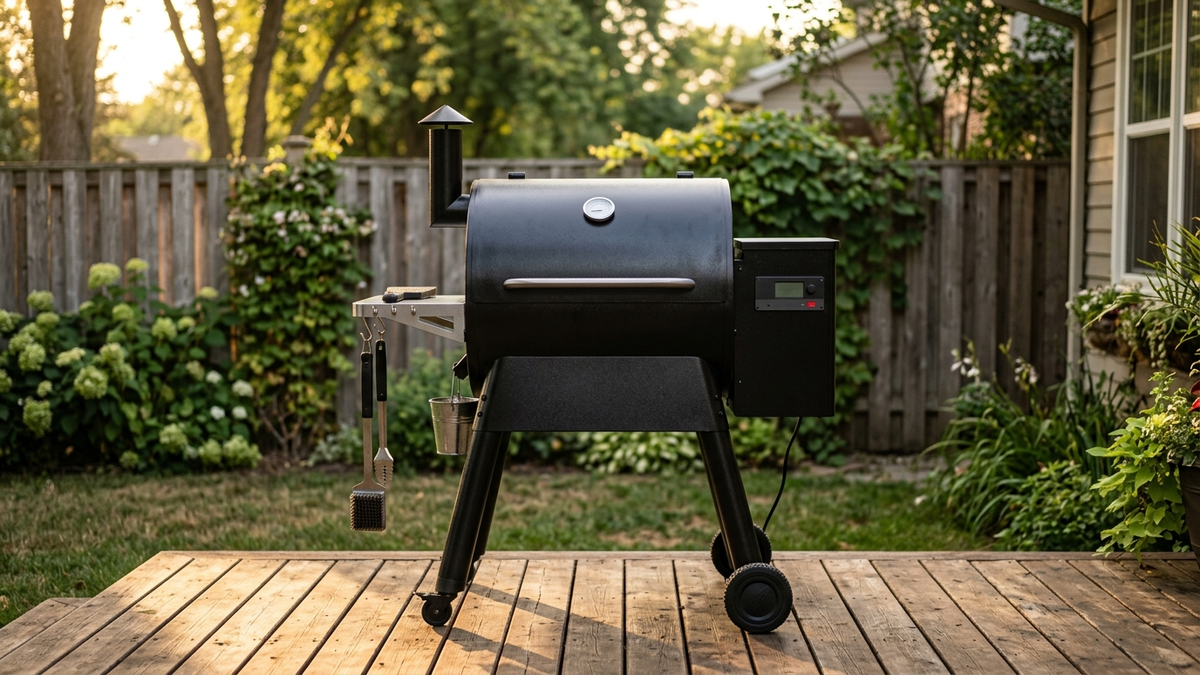
The Traeger Ironwood 885 first launched in 2019, and Traeger has since released the Woodridge, Westwood, and Timberline lines above and alongside it. That raises an obvious question for anyone shopping in late 2026: is a six-year-old design still worth buying, or has it been quietly outclassed by Traeger’s own newer models and by cheaper rivals like Pit Boss and Camp Chef? We pulled apart manufacturer specs, independent lab testing, and aggregated owner feedback to find out.
As an Amazon Associate, Arekore earns from qualifying purchases. The Amazon product links in this article may include our affiliate tracking ID and may earn us a commission if you buy through them, at no additional cost to you. See our Links Policy for details on how we select products and how commissions do not influence our recommendations.
TL;DR / Quick Verdict
- The Ironwood 885’s core cooking performance still holds up. Consumer Reports’ testing methodology — which scores indirect cooking temperature, heat evenness, cleaning ease, and convenience — has ranked the smaller Ironwood 650 (same downdraft design as the 885, smaller cooking area) among the top pellet grills in its category in aggregated coverage of CR’s rankings.
- The value case depends entirely on price. At full MSRP (around $1,399.99), the 885 sits close enough to the newer Ironwood XL that reviewers widely recommend paying the difference for the XL’s full insulation and 10-year warranty instead. At a discounted price near $1,100 or below, reviewers consistently call it strong value.
- Pit Boss and Camp Chef undercut it on price-for-size, often including a front shelf, side shelf, and larger hopper that Traeger charges extra for or omits — but Traeger’s WiFIRE app and build quality still test ahead of both in independent comparisons.
- Recurring owner complaints center on the hopper and downdraft design, not core temperature accuracy: pellet “tunneling” in the hopper, moisture buildup in the downdraft chamber on long cooks, and meat-probe reliability over time.
How We Reached These Conclusions (Methodology)
This is an editorial analysis, not a hands-on review; we did not personally test the Ironwood 885. It synthesizes (a) Traeger’s published manufacturer specifications for the Ironwood 650, 885, and XL, (b) independent third-party testing and scoring from Consumer Reports’ pellet grill testing program and specialty outlets including Pro Tool Reviews and AmazingRibs.com (Meathead’s), and (c) aggregated owner sentiment pulled from long-form reviews, retailer review sections, and BBQ forum threads — we cannot report a precise sample size for this aggregated owner-review pool, since it spans multiple retailer and forum sources rather than a single surveyed dataset. Manufacturer-claimed figures (hopper capacity, temperature range, warranty length) are labeled as such. Prices are amazon.com figures at the time of writing (October 2026) and change frequently, especially around Black Friday and holiday sales events — the 885 has been reported selling as low as the $1,000–$1,100 range during past promotions against its ~$1,399.99 list price.
Why a 2019 Grill Is Still on Shelves in 2026
Traeger has not discontinued the Ironwood line; instead, it sits as the mid-tier option beneath the premium Timberline and above the newer entry-level Woodridge and Westwood lines, which use a simpler button-based controller instead of Ironwood’s touchscreen. The Ironwood’s defining feature is a downdraft convection system: rather than circulating smoke and heat with a single fan the way many budget pellet grills do, air is pulled down through the cooking chamber and out the bottom, which independent testers and owner reports both credit with more even heat distribution across the grates than single-fan competitors in the same price tier.
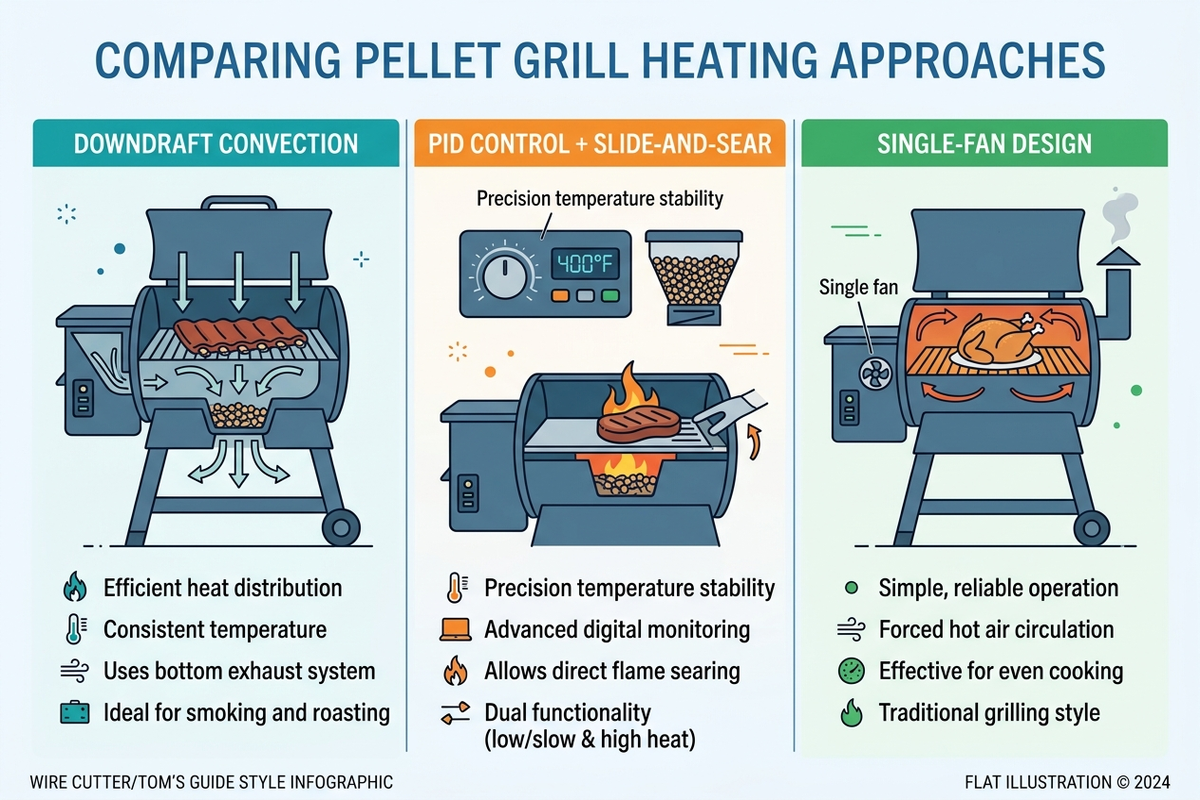
That heating approach is the main technical differentiator from its two closest rivals in aggregated comparisons:
- Camp Chef Woodwind uses a PID (proportional-integral-derivative) controller on every model in its lineup, including entry-level units — a feature Traeger reserves for its Ironwood and Timberline tiers — plus an optional slide-and-sear accessory for direct-flame searing, which no Traeger model offers natively.
- Pit Boss models in the Ironwood’s size and price range typically ship with a larger hopper, a front shelf, a side shelf, and a direct-sear slide plate included at a lower list price, but use a simpler single-fan heating design and a less refined app experience in independent comparisons.
- Traeger’s own WiFIRE app is consistently rated the most polished of the three brands’ companion apps in third-party coverage, which matters for a grill marketed around unattended, app-monitored long cooks.
What Independent Testing and Owner Reviews Say
Consumer Reports tests more than a dozen pellet grill models using thermocouples placed at multiple points on the grate, scoring each on indirect-cooking temperature accuracy, heat evenness at both the lowest and highest settings, hopper/ash cleaning ease, and overall convenience. In aggregated third-party coverage of CR’s rankings, the Ironwood 650 — which shares the 885’s downdraft design and controller, differing mainly in cooking-surface size — has placed at or near the top of CR’s pellet grill category, ahead of the Weber SmokeFire EX6, which CR rates “Very Good” overall but behind the Ironwood on evenness. Pro Tool Reviews’ hands-on coverage of the 885 specifically credits the downdraft system with holding set temperatures within roughly 5–10°F in the 165–250°F range commonly used for low-and-slow smoking, and BBQ-focused reviewer AmazingRibs.com (run by veteran barbecue writer Craig “Meathead” Goldwyn) has rated the Ironwood line highly in its own smoker testing and buying guides for comparable reasons.
Aggregated owner reviews across retailer sites and BBQ forums are broadly positive on core cooking performance but surface a consistent set of design-level complaints that pre-date and don’t disqualify the grill:
- Hopper tunneling: the hopper’s shape doesn’t always let pellets flow evenly to the auger, occasionally interrupting pellet feed mid-cook — a known issue discussed across multiple owner forums rather than an isolated defect.
- Downdraft moisture buildup: a minority of owners report that on long, high-moisture cooks, condensation in the downdraft chamber can affect bark formation on smoked meats.
- Meat-probe reliability: a recurring theme in aggregated reviews is that the included wired meat probes need replacement more frequently than some owners expect, though Traeger sells replacements separately and probe wear is common across the pellet grill category, not unique to Traeger.
- Power cord placement: the cord exits near the base of the unit on this model, which some owners note as a tripping or accidental-disconnection risk in busy patio layouts.
How Super Smoke Mode Works
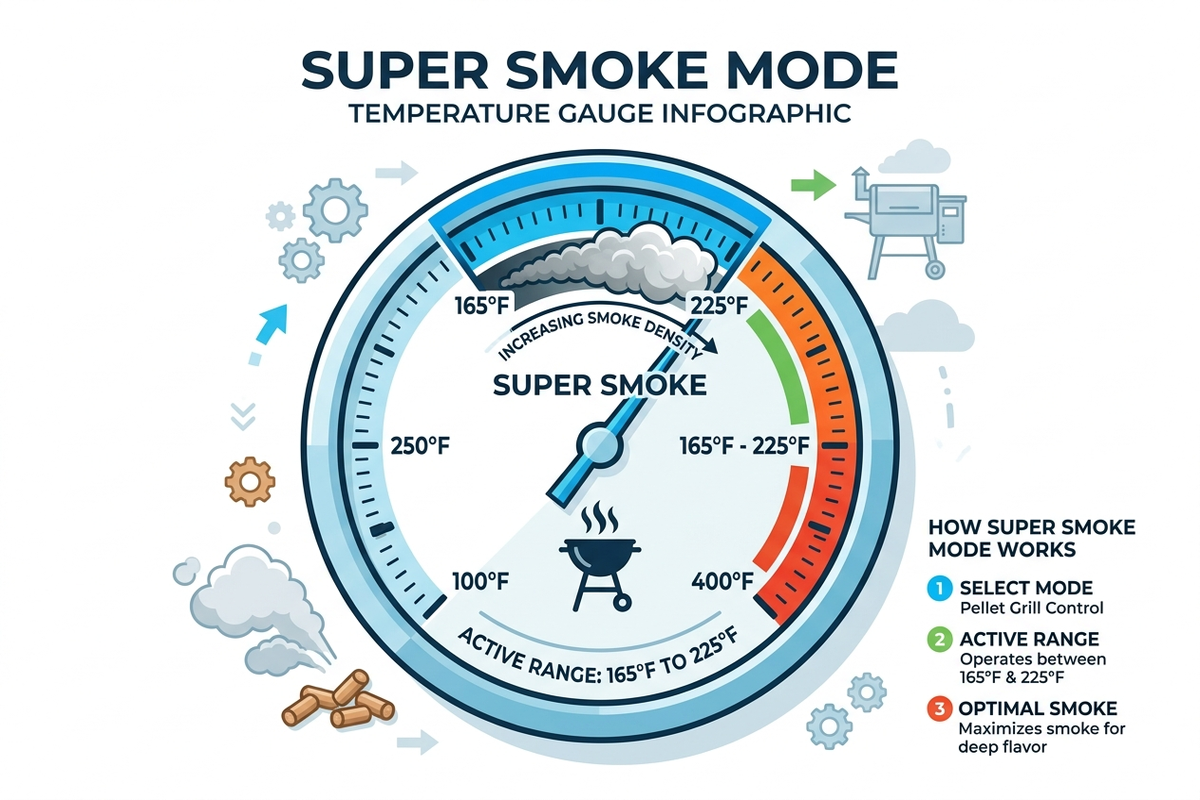
- Set a target temperature between 165°F and 225°F. Super Smoke mode, available on Ironwood and Timberline models, is designed to run within this lower range, where it modulates the auger and fan to maximize smoke output beyond what standard operation produces.
- Expect a longer cook time than standard mode at the same temperature. The tradeoff for denser smoke flavor is a slightly less fuel-efficient burn — manufacturer and owner reports both note somewhat higher pellet consumption in Super Smoke mode than in the grill’s standard smoke setting.
- Monitor remotely via the WiFIRE app rather than lifting the lid, since frequent lid-opening lets heat and smoke escape and extends cook time further — a standard recommendation across pellet grill brands, not specific to Traeger.
Comparison Table
Prices are amazon.com figures at the time of writing (October 2026) and fluctuate significantly around sales events.
| Model | ASIN | Cooking Area | Hopper | Warranty | Best for |
|---|---|---|---|---|---|
| Traeger Ironwood 650 | B08X8G991R | 650 sq in | 20 lb | 3 years | Smaller households wanting the Ironwood’s tested performance at a lower price |
| Traeger Ironwood 885 | B0C1S8FSRK | 885 sq in | 20 lb | 3 years | Buyers who find it discounted near $1,100 or below |
| Traeger Ironwood XL | B0B9ZZ2BGW | 924 sq in | Larger, fully insulated | 10 years | Buyers willing to pay closer to full price for long-term durability |
| Pit Boss (comparable size tier) | — | Similar or larger | Often larger | Typically shorter | Budget-focused buyers who don’t need Traeger’s app or downdraft system |
| Camp Chef Woodwind | — | Similar size tier | 22 lb | Varies by model | Buyers who want PID control and optional direct-sear on every model, including entry-level |
At full MSRP, the gap between the 885 and the Ironwood XL is narrow enough — within a few hundred dollars in most third-party coverage — that reviewers widely recommend the XL’s full insulation and 10-year warranty as the better buy unless the 885 is specifically discounted.
Editorial Recommendation
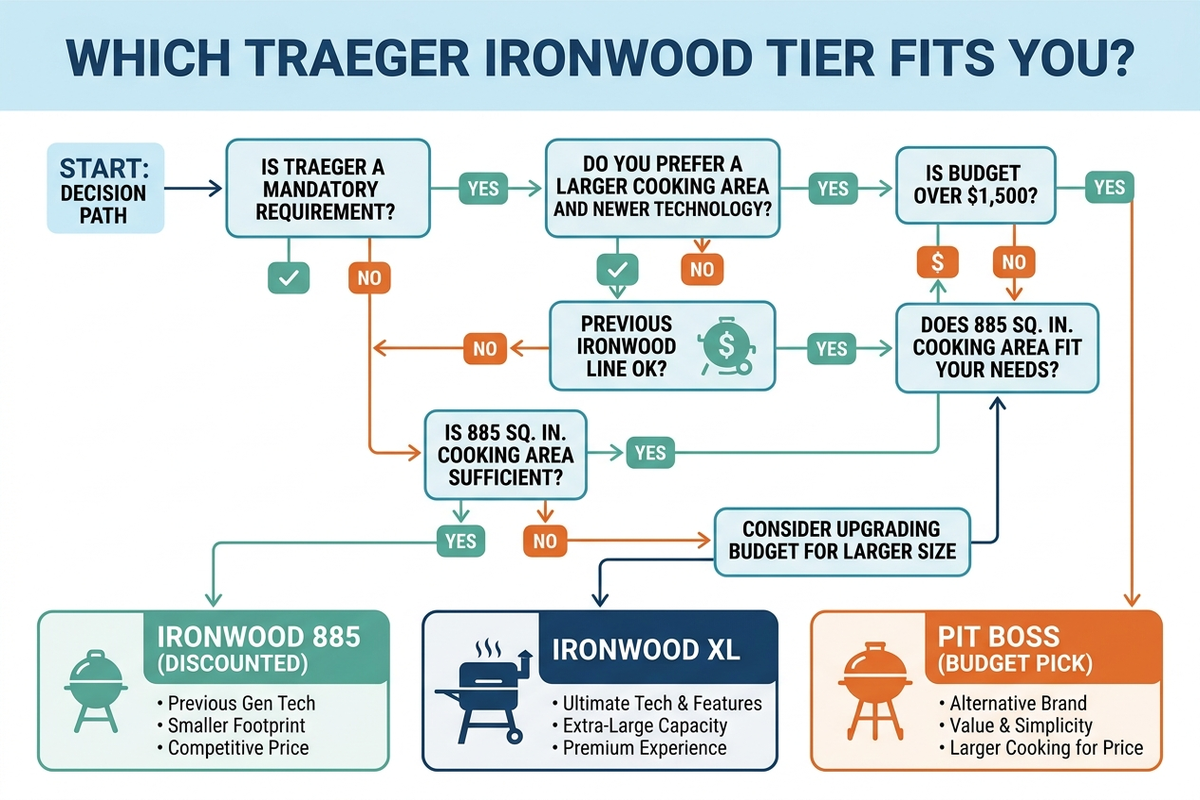
- If you find the Ironwood 885 discounted to around $1,100 or less: reviewers across multiple outlets consider this strong value — put any savings toward accessories like GrillGrates or a cover rather than upgrading to the XL.
- If you’re deciding between the 885 and the XL at close to full price: the XL’s full insulation, larger cooking area, and 10-year warranty (versus 3 years) make it the better long-term buy for most households, per aggregated third-party comparisons.
- If your household is smaller and 650 sq in of cooking area is enough: the Ironwood 650 shares the same downdraft design and controller as the 885 at a lower price and smaller footprint.
- If budget is the primary constraint and you don’t need Traeger’s app ecosystem: a comparably sized Pit Boss model typically includes more accessories at a lower list price, with the tradeoff of a simpler single-fan heating design.
- If you want built-in direct searing without an add-on accessory: Camp Chef’s slide-and-sear system, available on the Woodwind, is a feature no current Traeger model offers natively.
Check the Traeger Ironwood 885 on Amazon
Warranty
Traeger backs the Ironwood 650 and 885 with a standard 3-year manufacturer warranty, while the newer Ironwood XL carries a 10-year warranty — a gap reviewers frequently cite as a reason to favor the XL when price allows. Always confirm current coverage terms on the product listing, since warranty terms are updated periodically and can vary by retailer and promotion.
Limitations of This Analysis
This analysis relies on Traeger’s published manufacturer specifications, third-party testing coverage from Consumer Reports, Pro Tool Reviews, and AmazingRibs.com, and aggregated owner reviews from retailer sites and BBQ forums; we did not personally test any Ironwood model, and individual experience varies with climate, pellet quality, cook frequency, and unit-to-unit variance. Consumer Reports’ rankings referenced here come from third-party summaries of CR’s testing program rather than a direct CR subscription citation, since CR’s full ratings sit behind a paywall; we present the directional ranking rather than a specific numeric score. Pellet grill market-size figures — per IndexBox’s US pellet grill market analysis, the US market was valued at roughly $761.6 million by the end of 2025, with an installed base exceeding an estimated 7–9 million units and projected mid-to-high single-digit annual growth through 2035 — come from a single third-party research firm whose methodology we have not independently audited, so we present them as directional context rather than precise figures specific to this one product. Prices, ASIN availability, and warranty terms change frequently — always confirm current details on the product page before buying.
The Bottom Line
The Ironwood 885’s downdraft heating system and WiFIRE app still test well against newer competitors in 2026, and the hopper and probe complaints that show up in aggregated owner reviews are design quirks rather than dealbreakers. The real decision isn’t whether the 885 still works — it’s whether to pay close to full price for it when the Ironwood XL sits only a few hundred dollars higher with a longer warranty, or to wait for a discount that makes the 885 the clearly better value. Check the current price and read the most recent reviews before buying — and if you want a second opinion on a specific listing, paste the URL into Arekore and let the AI scan the reviews and price history for you in about five minutes.