TP-Link Deco vs Eero: Which Mesh Wi-Fi Wins in 2026?
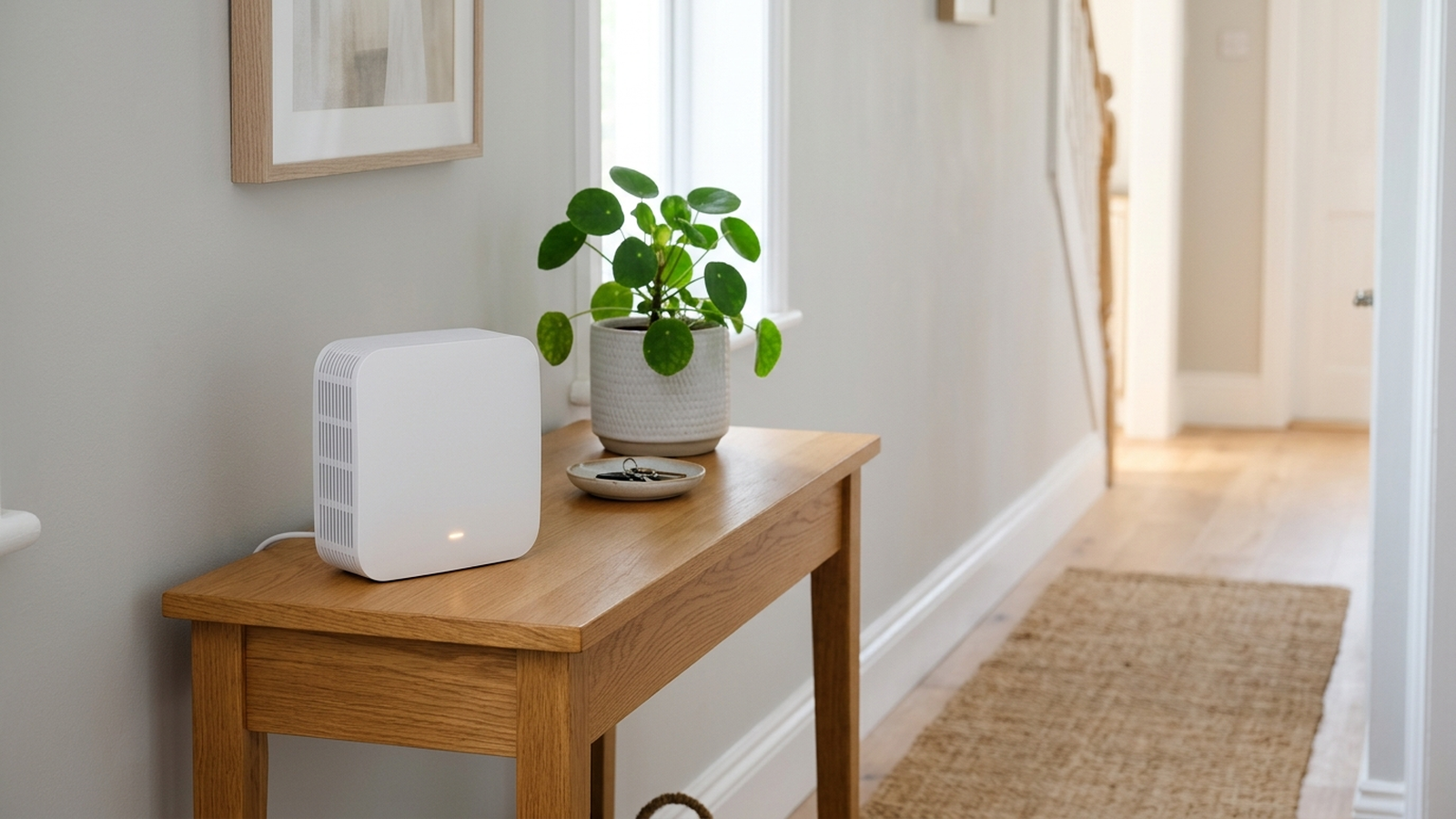
TP-Link’s Deco lineup and Amazon’s Eero are the two mesh systems that show up most often when US shoppers compare whole-home Wi-Fi, and they take opposite approaches to the same problem. TP-Link spreads Deco across a wide range of price points with more configuration options and a free baseline of parental-control features; Eero narrows the lineup, leans on a cleaner app and tighter Alexa and Thread integration, and gates its deeper security features behind a subscription. RTINGS’ direct lab comparison of the current Wi-Fi 7 flagships has the TP-Link Deco 7 Pro BE63 beating the eero Pro 7 on top speed and range on both the 5 GHz and 6 GHz bands, and RTINGS’ broader mesh-system ranking names the Deco 7 Pro BE63 its best overall pick with the eero 6 as its top budget pick. This guide compares the two brands tier-for-tier using independent lab testing, manufacturer specifications, and aggregated Amazon customer data.
As an Amazon Associate, Arekore earns from qualifying purchases. The Amazon product links in this article may include our affiliate tracking ID and may earn us a commission if you buy through them, at no additional cost to you. See our Links Policy for details on how we select products and how commissions do not influence our recommendations.
TL;DR / Quick Verdict
- Best flagship Wi-Fi 7 performance, per RTINGS’ direct comparison: TP-Link Deco 7 Pro BE63. RTINGS found it beats the eero Pro 7 on top speed and range on both the 5 GHz and 6 GHz bands, and it ships four 2.5GbE ports per node versus the eero Pro 7’s two 5GbE ports.
- Best budget-tier pick, per RTINGS’ overall mesh-system ranking: eero 6, RTINGS’ top budget choice; TP-Link’s comparable Deco X55 counters with a faster rated AX3000 spec, three Gigabit Ethernet ports per unit, and Ethernet-backhaul support that the eero 6-series satellites lack.
- Cheaper if you want real security features without a subscription: TP-Link. Deco’s free HomeShield tier already includes content filtering by category, per-device time limits, and an internet pause feature; its paid tiers run roughly $4.99–$5.99/month ($35.99–$69.99/year). Eero gates comparable ad blocking, advanced parental controls, and backup-internet failover behind eero Plus, at $9.99/month or $99.99/year.
- Brand loyalty favors TP-Link in the latest satisfaction data: J.D. Power’s February 2026 U.S. Wireless Router Satisfaction Report found TP-Link retained 71% of customers who upgraded within the same brand, ahead of ASUS (68%) and Netgear (64%); eero’s retention figure was not broken out in the same published results.
- Ecosystem fit still matters: if you’re deep in Alexa, Zigbee, or Thread devices, eero’s tighter hub integration is the more useful out-of-the-box pick; if you want more configuration control and a wider range of price points, TP-Link’s broader Deco lineup covers more ground.
How We Reached These Conclusions (Methodology)
This is an editorial analysis, not a hands-on review; we did not personally test the products covered here. This guide synthesizes three kinds of public information: (a) aggregated amazon.com customer reviews for current-generation TP-Link Deco and Eero hardware, sampled in October 2026; (b) independent third-party lab testing and reporting from RTINGS, Wirecutter, Consumer Reports, and Tom’s Guide/Tom’s Hardware; and (c) manufacturer-published specifications for throughput, coverage area, and subscription pricing. Where we cite a manufacturer figure — coverage square footage, device-connection limits, speed claims — we label it as a manufacturer claim rather than an independently verified result. Prices are amazon.com figures at the time of writing and change frequently, especially around sale events; treat every price below as approximate.
Technical Approach: Broad Lineup and Free Features vs. Narrow Lineup and Ecosystem Polish
The two brands are optimizing for different buyers: TP-Link for configuration depth and a wide price ladder, Eero for a simpler app and tighter smart-home hub integration.
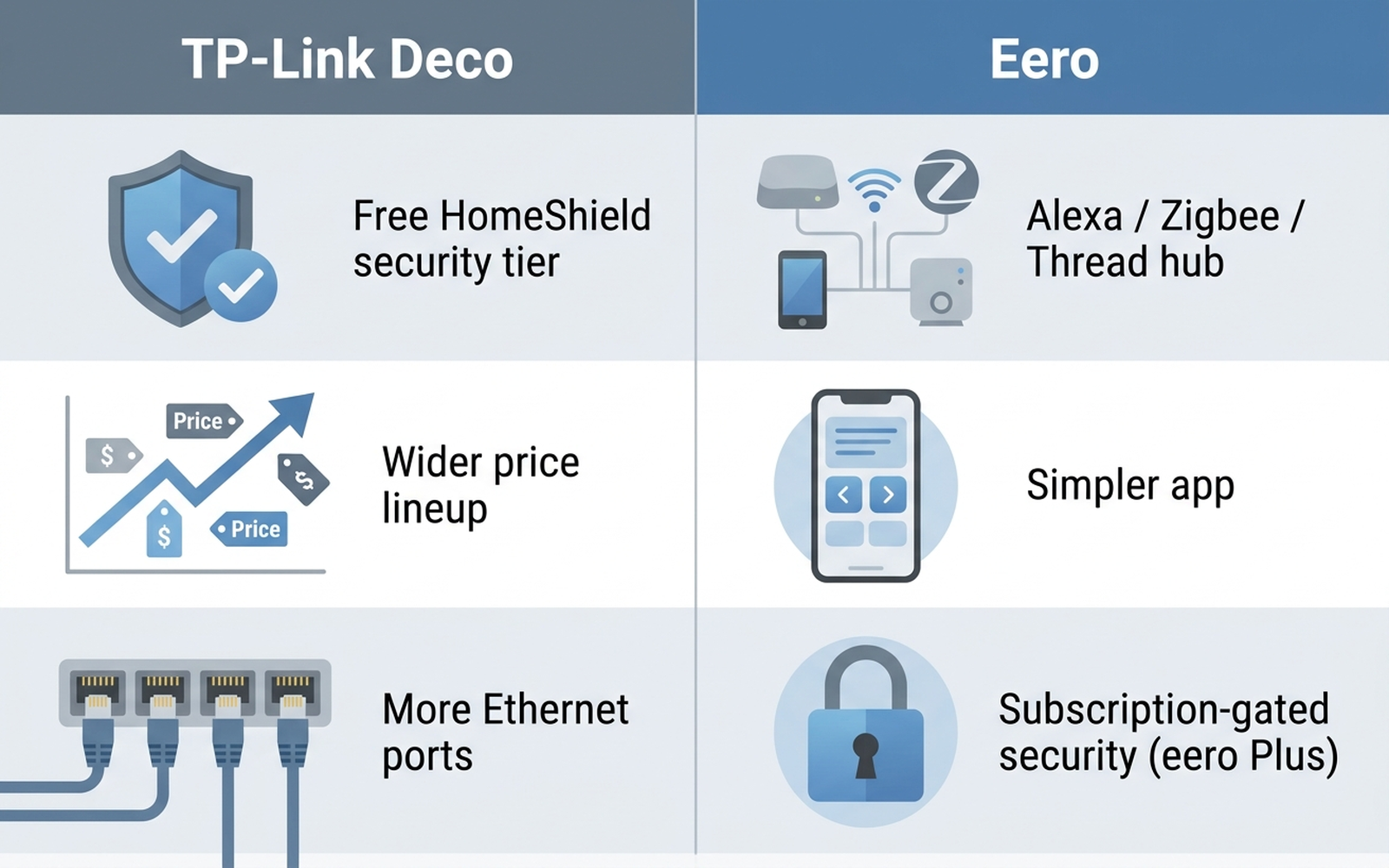
- Free vs. subscription-gated security. TP-Link’s HomeShield free tier already includes content filtering by category, per-device time limits, and an internet pause feature with no subscription required. Eero reserves ad blocking, advanced parental controls, and backup-internet failover for eero Plus subscribers (~$9.99/month or $99.99/year).
- Port selection at the flagship tier. RTINGS’ hardware comparison found the Deco 7 Pro BE63 ships four 2.5GbE ports per node, while the eero Pro 7 ships two 5GbE ports — a different trade-off between port count and per-port speed that matters most if you’re wiring multiple devices directly into a node.
- Ethernet backhaul at the budget tier. TP-Link’s Deco X55 includes three Gigabit Ethernet ports per unit and supports wired Ethernet backhaul between nodes. Eero’s 6-series satellite units are commonly reported to skip a usable backhaul Ethernet port, which can matter in homes with existing wiring.
- Configuration depth vs. app simplicity. Reporting on the two apps has consistently found Eero’s app simpler with fewer configuration options, while TP-Link’s Deco app exposes more granular controls — a trade-off between ease of use and customization that shows up across both companies’ current lineups.
Manufacturer Deep Dive
TP-Link Deco
TP-Link sells the widest mesh lineup of the two brands, spanning budget Wi-Fi 6 systems like the Deco X55 up through the Wi-Fi 7 flagship Deco 7 Pro BE63 (also sold under the BE63/BE65/BE10000 naming TP-Link has used across 2025–2026). RTINGS’ direct comparison of the Deco 7 Pro BE63 against the eero Pro 7 found the TP-Link unit ahead on top speed and range on both the 5 GHz and 6 GHz bands, and RTINGS’ broader “Best Mesh Wi-Fi Systems” ranking names the Deco 7 Pro BE63 its best overall pick for 2026. Consumer Reports’ ratings also include TP-Link’s higher-end Deco BE22000 (marketed in some channels as the Deco BE85 or “Deco 7 Elite”), which Consumer Reports and other outlets describe as among the most powerful mesh systems available to residential buyers. Tom’s Hardware separately highlighted the Deco BE63 as a value standout in the Wi-Fi 7 category, specifically citing its four 2.5GbE ports per node as unusual at its price tier. TP-Link’s HomeShield security suite ships a free tier (content filtering by category, per-device time limits, internet pause) with paid tiers layered on top — Security+ at roughly $4.99/month ($35.99/year) and a Total Security package cited at up to $69.99–$130/year depending on the promotion. TP-Link is widely reported as the top-selling router brand by unit volume globally, though we could not confirm a single authoritative mesh-specific global market-share percentage. J.D. Power’s February 2026 U.S. Wireless Router Satisfaction Report found TP-Link retaining 71% of customers who upgraded within the same brand — the highest figure among the brands broken out in that study.
Eero (Amazon)
Eero, owned by Amazon since 2019, keeps a narrower lineup than TP-Link and leans on tight integration with Alexa, Zigbee, Thread, and (on newer models) Matter. RTINGS names the eero 6 its top budget pick in its overall mesh-system ranking, even as the same RTINGS ranking places TP-Link’s flagship ahead of eero’s flagship on raw performance. Wirecutter’s (New York Times) mesh-system guide recommends the eero 7 as its pick for most people, citing a fast setup window (5–20 minutes, per Wirecutter’s own testing) and broad smart-home protocol support (HomeKit, Matter, Thread, Zigbee); Wirecutter separately recommends the TP-Link Deco BE63 as its upgrade pick for gigabit-or-faster connections and smart-home-heavy households. At the premium end, RTINGS tested the eero Max 7 as faster and longer-range than the Deco 7 Pro BE63/BE67 on raw speed, but concluded it could not justify the eero Max 7’s considerably higher price given how close the cheaper Deco comes on real-world performance. Eero’s subscription, eero Plus, costs roughly $9.99/month (or $99.99/year) and is required to unlock ad blocking, advanced parental controls, and backup-internet failover — features TP-Link includes at least partially for free.
Head-to-Head: Flagship Wi-Fi 7 Tier
TP-Link Deco 7 Pro BE63 (3-pack) is TP-Link’s current Wi-Fi 7 flagship, with a manufacturer-claimed coverage of up to 7,600 sq. ft. and four 2.5GbE ports per node supporting wired backhaul. It typically lists around $799.99 but has been discounted to roughly $322–$397 across multiple 2026 sale events (as of 2026-10-31) — check the live listing, since TP-Link’s pricing on this model has swung widely throughout the year.
Check the TP-Link Deco 7 Pro BE63 (3-pack) on Amazon
eero Pro 7 (3-pack) is eero’s current Wi-Fi 7 flagship, supporting internet plans up to 5 Gbps with a manufacturer-claimed coverage of up to 6,000 sq. ft. and two 5GbE ports per node. It also typically lists around $799.99 and has been discounted to roughly $425–$600 during 2026 sale events, including Amazon’s fall Prime Day promotion in October (as of 2026-10-31).
Check the eero Pro 7 (3-pack) on Amazon
Verdict at this tier: per RTINGS’ direct comparison, the Deco 7 Pro BE63 wins on top speed and range on both the 5 GHz and 6 GHz bands, and its four 2.5GbE ports give it an edge for anyone wiring multiple devices into a node. The eero Pro 7 remains the simpler setup and the stronger pick if you’re already invested in Alexa, Zigbee, Thread, or Matter devices — Wirecutter’s top-pick reasoning for the eero 7 line centers on exactly that broad smart-home protocol support rather than raw throughput.
Head-to-Head: Budget Tier
TP-Link Deco X55 (3-pack) is a Wi-Fi 6 (AX3000) mesh system with a manufacturer-claimed coverage of up to 6,500 sq. ft. and three Gigabit Ethernet ports per unit, supporting wired Ethernet backhaul between nodes. It typically lists around $195.29 and has been discounted to roughly $132.98–$150 in recent Amazon pricing (as of 2026-10-31).
Check the TP-Link Deco X55 (3-pack) on Amazon
eero 6+ (3-pack) supports internet plans up to a Gigabit with a manufacturer-claimed coverage of up to 4,500 sq. ft. and 75+ connected devices. It typically lists around $299.99 but has hit lows near $195 during Prime Day-adjacent sales in 2026 (as of 2026-10-31). Unlike the Deco X55, eero’s 6-series satellite units are commonly reported to lack a usable Ethernet-backhaul port.
Check the eero 6+ (3-pack) on Amazon
Verdict at this tier: the Deco X55 undercuts the eero 6+ on price, rated spec (AX3000 vs. eero’s Gigabit-class hardware), Ethernet port count, and backhaul support. Reporting that has tested both head-to-head generally credits eero with a more polished app and slightly more seamless room-to-room roaming, while crediting TP-Link Deco with better value and stronger wired connectivity for the money.
Customer Sentiment Synthesis
- App polish favors Eero. Aggregated owner feedback and side-by-side reviewer testing repeatedly describe eero’s app as simpler and more polished than TP-Link’s Deco app, with faster device reconnection after a router reboot and smoother room-to-room roaming reported anecdotally.
- Value and configuration depth favor TP-Link. Reviewers and reporters who have tested both brands consistently note that TP-Link Deco costs meaningfully less for comparable coverage and ships more configuration options and Ethernet ports per dollar, at some cost to app simplicity.
- Subscription friction is eero’s most common complaint. As with the Google Nest comparison in our companion mesh-router guide, reviewers repeatedly flag that eero Plus is required to unlock ad blocking, advanced parental controls, and backup-internet failover, while TP-Link ships comparable baseline features free.
- Net read: aggregated sentiment favors Eero on app polish and smart-home ecosystem integration, and favors TP-Link on price, configuration depth, and included security features — neither brand is complaint-free, and buyers should weigh ecosystem fit and budget together rather than picking on brand reputation alone.
Comparison Table
Prices as of 2026-10-31 — Amazon frequently runs short-term discounts on both brands, especially around Black Friday and Cyber Monday; check the live listing before buying.
| Product | Wi-Fi standard | Claimed coverage | Ethernet ports/node | Security features included free | Price |
|---|---|---|---|---|---|
| TP-Link Deco 7 Pro BE63 (3-pack) | Wi-Fi 7 | ~7,600 sq. ft. | 4x 2.5GbE | Yes (HomeShield free tier) | ~$322–$800 |
| eero Pro 7 (3-pack) | Wi-Fi 7 | ~6,000 sq. ft. | 2x 5GbE | No (requires eero Plus) | ~$425–$800 |
| TP-Link Deco X55 (3-pack) | Wi-Fi 6 (AX3000) | ~6,500 sq. ft. | 3x Gigabit | Yes (HomeShield free tier) | ~$133–$195 |
| eero 6+ (3-pack) | Wi-Fi 6 (Gigabit-class) | ~4,500 sq. ft. | Limited/no backhaul port | No (requires eero Plus) | ~$195–$300 |
How to Decide
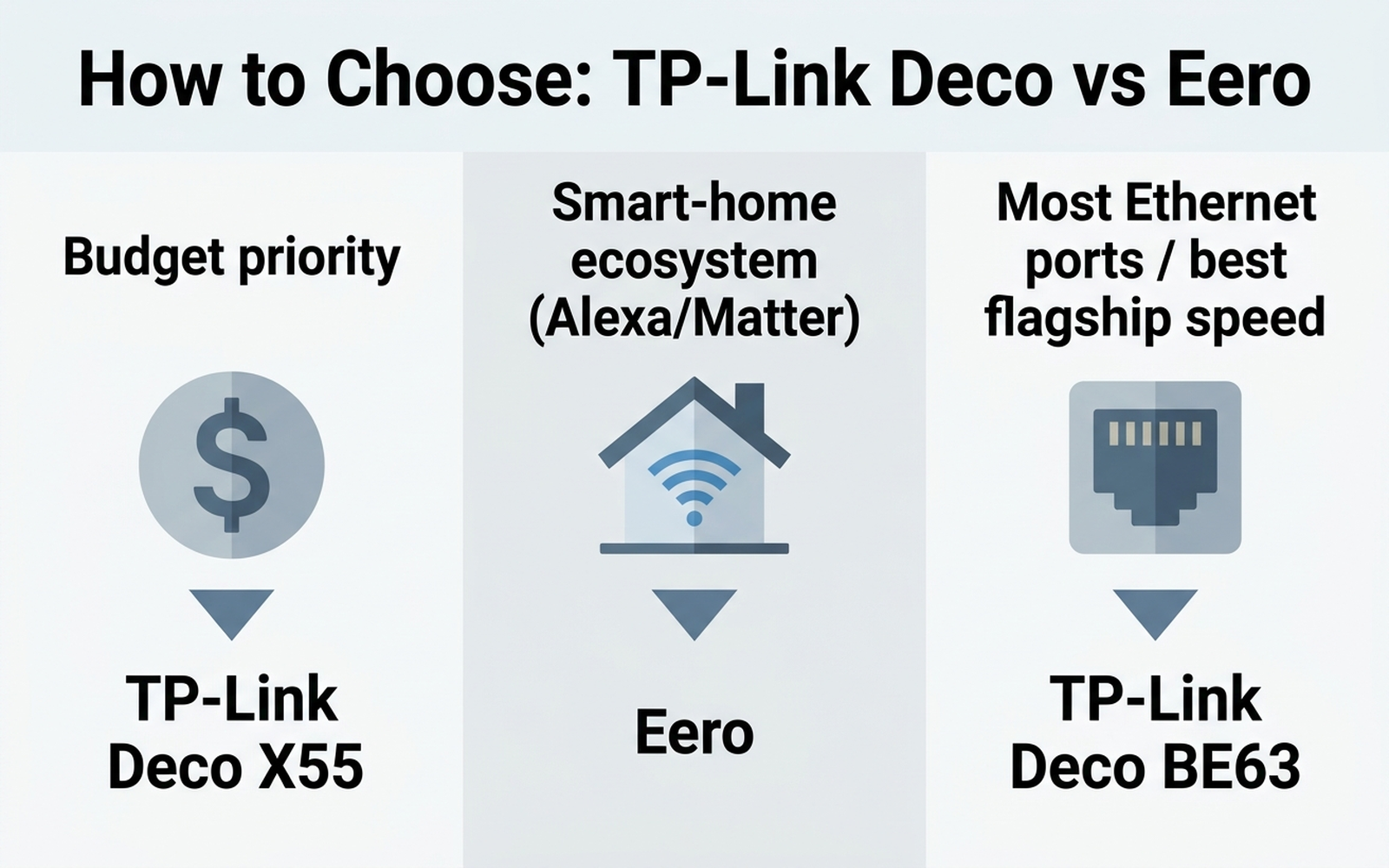
- You want the best independently tested flagship performance and more Ethernet ports: TP-Link Deco 7 Pro BE63, per RTINGS’ direct comparison against the eero Pro 7.
- You’re deep in Alexa, Zigbee, Thread, or Matter devices: eero’s tighter hub integration and simpler app make it the more convenient out-of-the-box pick, even where TP-Link wins on raw lab scores.
- You don’t want to pay a subscription for basic security features: TP-Link’s HomeShield free tier already covers content filtering, time limits, and internet pause; eero gates comparable features behind eero Plus (~$9.99/month).
- You need wired Ethernet backhaul between nodes at the budget tier: the Deco X55 supports it with three Gigabit ports per unit; eero’s 6-series satellites are commonly reported to lack a usable backhaul port.
- Budget is the top priority: the Deco X55 is the cheapest system compared here and still outperforms the eero 6+ on rated spec and Ethernet ports.
Decision Flowchart: Ecosystem, Ports, or Raw Performance
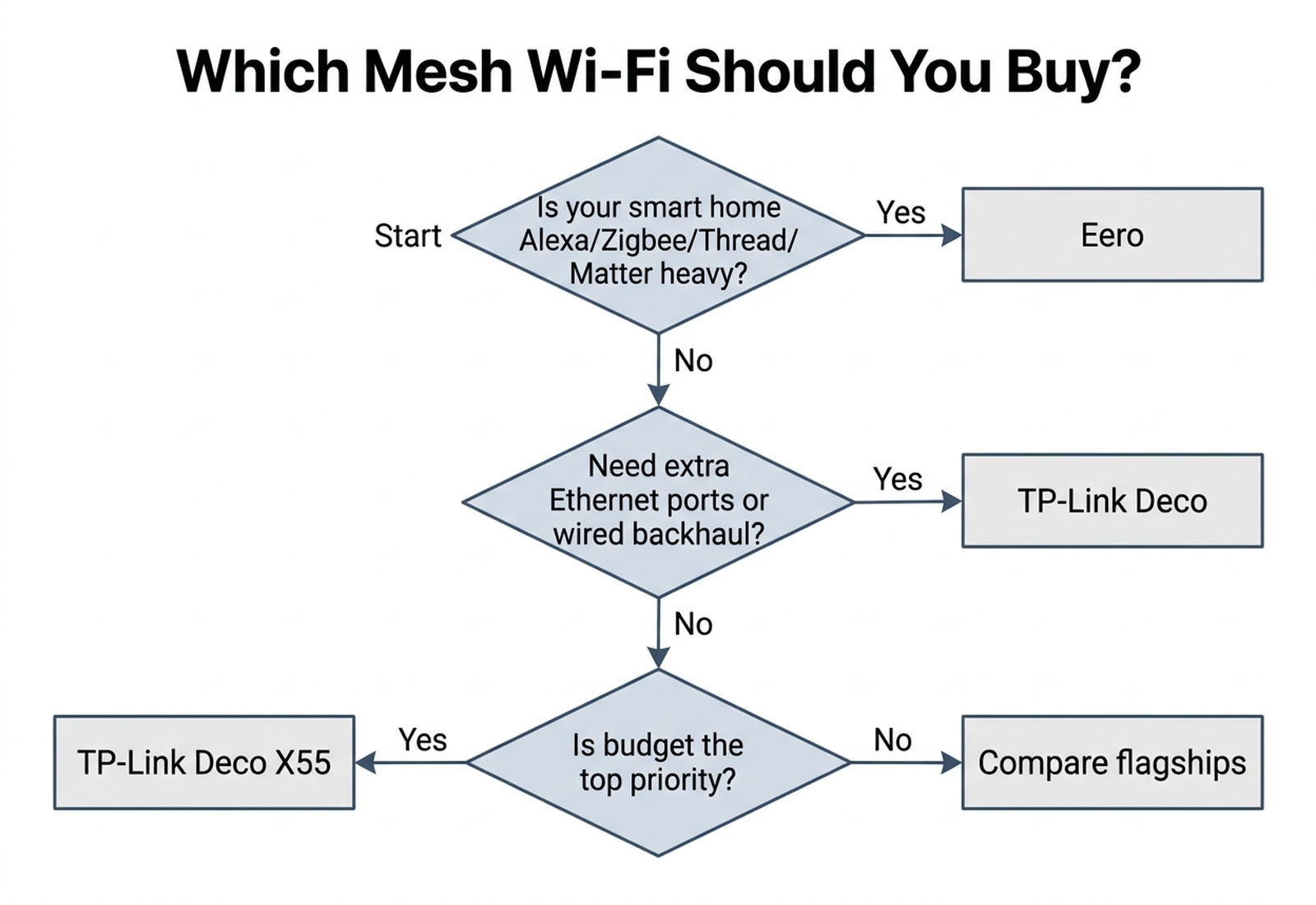
Start with the ecosystem question: if your smart home runs heavily on Alexa, Zigbee, Thread, or Matter devices, eero’s hub integration and simpler app make it the more practical day-to-day pick regardless of raw lab scores. If you’re ecosystem-agnostic or already lean toward more configuration control, move to the hardware question: do you need more Ethernet ports or wired backhaul for a wired-heavy home office or media setup? That points to TP-Link Deco at either price tier. Then weigh the subscription question: do you want security features included free, or are you fine paying ~$9.99/month for eero Plus? “Included free” points to TP-Link; “fine paying, and I prioritize app simplicity” points to eero. If budget is the deciding factor above all else, the Deco X55 undercuts the eero 6+ on price while matching or beating it on rated spec.
Warranty and Support
Both brands offer a standard 1-year limited hardware warranty in the US on new units (manufacturer terms; confirm at purchase), covering manufacturing defects but not damage from misuse or third-party power surges. Neither brand bundles extended hardware coverage into its base subscription tier as of this writing. Coverage-area, device-connection-limit, and port-count figures cited above are manufacturer specifications unless attributed to RTINGS, Wirecutter, Consumer Reports, or Tom’s Hardware/Tom’s Guide by name; actual coverage and throughput vary with home layout, building materials, and the internet plan speed feeding the router.
Editorial Recommendation by Use Case
- You want the best independently tested flagship performance and the most Ethernet ports: the TP-Link Deco 7 Pro BE63 (3-pack), per RTINGS’ direct comparison against the eero Pro 7.
- You’re deep in Alexa, Zigbee, Thread, or Matter smart-home devices: the eero Pro 7 or eero 6+, depending on budget — the simpler app and tighter ecosystem integration are worth the premium for these households.
- You don’t want to pay monthly for parental controls or content filtering: TP-Link Deco ships those features free in HomeShield’s base tier; budget for eero Plus (~$9.99/month) if you go with eero.
- You need wired Ethernet backhaul or extra ports on a tight budget: the TP-Link Deco X55 (3-pack) supports Ethernet backhaul and ships three Gigabit ports per unit, at a lower price than the eero 6+.
- Budget is the top priority and app simplicity matters more than ports: the eero 6+ remains a reasonable, more ecosystem-polished alternative, even at a higher price than the Deco X55.
Limitations
This analysis relies on publicly available reviews, third-party lab testing from RTINGS, Wirecutter, Consumer Reports, and Tom’s Hardware/Tom’s Guide, and manufacturer specifications; we did not independently lab-test these units. Coverage-area, device-connection-limit, and port-count figures are manufacturer claims unless specifically attributed to a named third-party tester. Subscription pricing for eero Plus and TP-Link HomeShield, and hardware pricing for both brands, have changed multiple times in the past year and may change again; confirm current pricing directly with each brand before buying. Prices and availability were accurate to our research at the time of writing and fluctuate frequently on Amazon, especially around sale events — verify the current listing price before buying. Individual experience with coverage, throughput, and reliability varies with home layout, building materials, node placement, and the internet plan feeding the router.
Before you buy either brand’s mesh system, it pays to check that a listing’s reviews are genuine and that a sale price is an actual discount rather than an inflated “was” price. That is exactly what Arekore does: paste the Amazon URL and our AI analyzes review authenticity, surfaces the most useful low-star feedback, and compares pricing in about five minutes — so you end up with the mesh router that actually fits your home and your smart-home ecosystem, not just the one with the biggest brand name on the box.