10 Shopping Questions Answered With Data (October 2026)

October is the month the calendar starts making the decisions for you. Amazon has now confirmed Black Friday falls on November 27 and Cyber Monday on November 30, the Consumer Product Safety Commission has a fresh space-heater recall on the books just as everyone starts shopping for one, and the National Retail Federation’s October holiday-spending survey put per-person spending at the second-highest level on record. Layer in the clocks falling back on November 1, ragweed season peaking, and the furnace kicking on for the first time — and October ends up full of “should I buy this now” questions with genuinely different right answers depending on the product.
We picked 10 of the most common questions people ask heading into fall and answered each against specific CPSC recall data, manufacturer wattage specs, aggregated review patterns, and market surveys — being explicit about which is which.
As an Amazon Associate, Arekore earns from qualifying purchases. The Amazon product links in this article may include our affiliate tracking ID and may earn us a commission if you buy through them, at no additional cost to you. See our Links Policy for details on how we select products and how commissions do not influence our recommendations.
TL;DR / Quick Verdict
- Amazon has confirmed Black Friday for November 27 and Cyber Monday for November 30, 2026 — for most non-urgent electronics, October is still too early to buy at full price.
- CPSC’s recall of roughly 255,000 Vornado space heaters is a reminder to check any heater you already own against the recall list before the first cold night, and to buy new ones with tip-over and overheat protection built in.
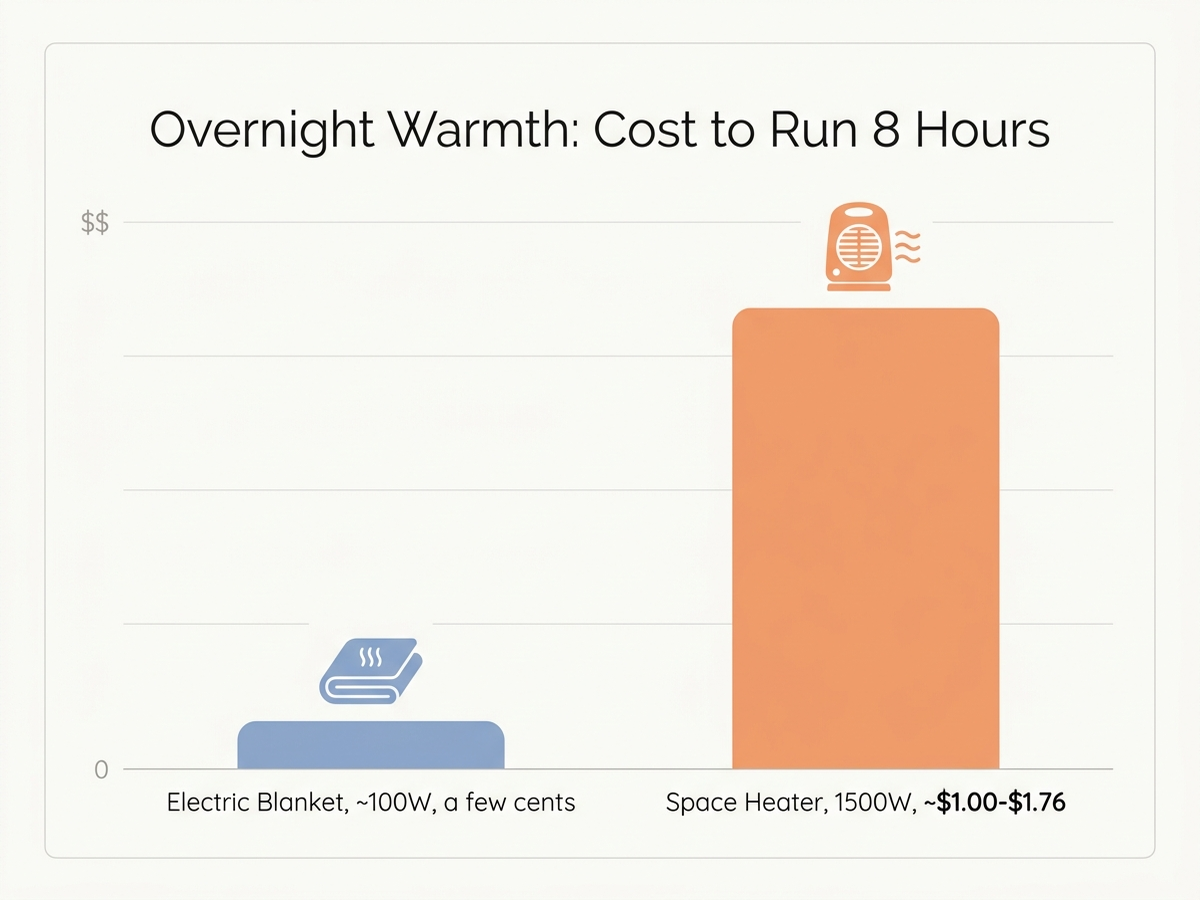
- Electric blankets run on roughly 90% less electricity than a space heater, per manufacturer wattage specs — a real cost difference for anyone heating just the bed rather than the whole room.
- NRF’s October holiday-spending survey put per-person spending at $890.49, the second-highest figure on record, meaning “start your holiday shopping early” pressure this year is backed by real survey data, not just marketing.
- Ragweed pollen is easily captured by a true HEPA filter’s 99.97% efficiency rating, so an air purifier is a legitimate fall-allergy tool, not just a wildfire-season purchase.
How We Reached These Answers (Methodology)
This is an editorial analysis, not a hands-on test — we did not personally test the products named below. Each answer synthesizes: (a) Consumer Product Safety Commission recall notices and fire-safety statistics; (b) the National Retail Federation’s most recently published surveys (Halloween spending, published September 2025 for Halloween 2025, and the winter-holiday spending survey conducted October 1–7, 2025); (c) manufacturer specifications (wattage, filter MERV/MPR ratings, lux output), explicitly labeled as manufacturer claims where they haven’t been independently re-verified; (d) peer-reviewed and clinical-trial research on dawn-simulation light therapy; and (e) aggregated amazon.com customer-review sentiment on the specific listings named, sampled in late August and early September 2026. Every ASIN referenced was confirmed as a live amazon.com listing at the time of writing. Prices are approximate figures captured at the time of writing and fluctuate.
The 10 Questions
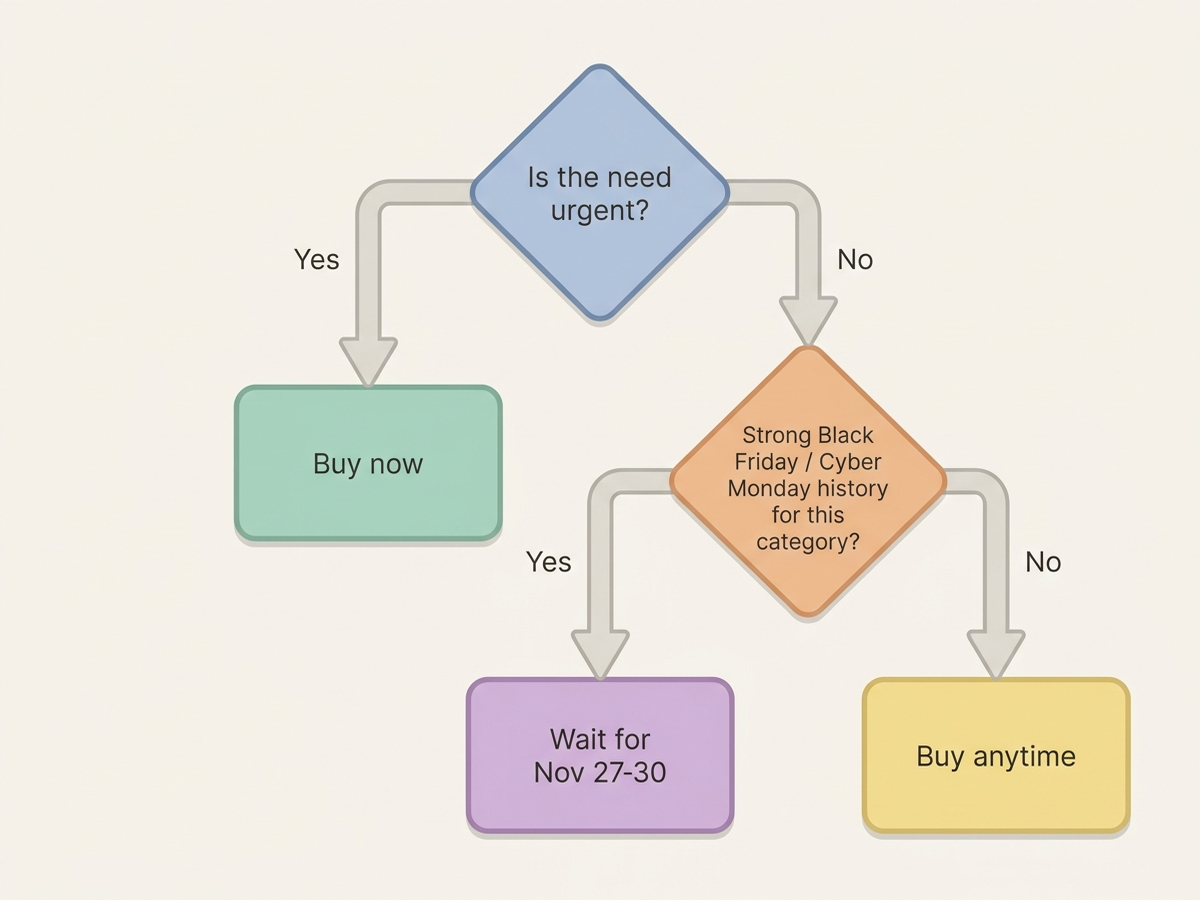
1. Amazon just confirmed Black Friday and Cyber Monday dates — should I buy electronics now or wait?
Wait, for anything that isn’t urgent. Amazon has confirmed its Black Friday period runs through November 27, 2026, with Cyber Monday following on November 30 — both dates fixed against this year’s November 26 Thanksgiving. Smart speakers are one of the most reliably discounted categories in that window: the Echo Dot (5th Gen) has a documented pattern of dropping from its $49.99 list price to as low as $22–$25 during prior Black Friday events, a 50%+ cut that’s hard to justify skipping for a non-urgent purchase made five to eight weeks earlier. The exception is the same one that applies every year — anything solving an active problem right now (a broken smart speaker, a heater needed before the next cold snap) is worth buying at full price rather than waiting on a discount that isn’t guaranteed to repeat.
Check the Echo Dot (5th Gen) on Amazon
2. Is it too late to buy a Halloween costume without paying a premium?
Not yet, but the window is closing. NRF’s most recently published Halloween survey (September 2025, covering Halloween 2025) put total costume spending at $4.3 billion — $1.4 billion on kids’ costumes, $2 billion on adult costumes, and nearly $1 billion on pet costumes — with 79% of shoppers expecting higher prices this year specifically due to tariffs. That tariff exposure is the detail that matters for timing: imported costumes are a category retailers are less likely to discount as the holiday approaches, since demand stays high right up to October 31 regardless of price, unlike a category such as candy that sees deeper markdowns close to the date as retailers work through perishable inventory. Buying a costume in early-to-mid October, before the last-minute rush narrows in-stock sizes, is the safer bet on both price and selection.
3. Does a sunrise alarm clock help with the November 1 time change, or do I need a full light-therapy lamp?
It helps, but it’s a different tool solving a related problem. A 6-week randomized controlled trial of 95 people with seasonal affective disorder found that a 90-minute dawn simulation peaking around 250 lux produced higher response and remission rates than a dim placebo dawn, and an earlier 1993 trial found a 2-hour dawn simulation outperformed both a 30-minute placebo and a separate bright-light protocol on depression and SAD-subscale scores — genuine clinical evidence, not just marketing. The ceiling is intensity: sunrise alarm clocks top out around 200–300 lux, while the clinical bright-light-therapy protocol most SAD research is built around calls for 10,000 lux. That makes a sunrise alarm a reasonable tool for morning alertness and an easier wake-up after the clocks fall back on November 1, but not a substitute for a 10,000-lux light box if the goal is treating moderate-to-severe SAD symptoms. The Hatch Restore 2 is a widely-reviewed sunrise alarm clock built specifically around the dawn-simulation mechanism the trials tested.
Check the Hatch Restore 2 Sunrise Alarm Clock on Amazon
4. Which space heaters are actually safe to buy this year, given the recent recalls?
The recall itself is a useful checklist, not a reason to avoid the category. CPSC’s 2026 recall covers roughly 255,000 Vornado Small Room Tower Heaters (model “TYPE SRTH,” sold on Amazon and Vornado.com from August 2013 through May 2026) after 32 reports of overheating and 8 reported fires tied to the fan blade detaching from the motor shaft — a specific, named failure mode, not a general heater-safety scare. CPSC’s broader data puts space heaters as the second-leading cause of home fire deaths in the US, which is why tip-over shutoff and overheat protection aren’t optional extras but the baseline for any model worth buying. The Lasko 754201 is a widely-reviewed ceramic heater built with both a tip-over safety switch and overheat protection as standard features, and it isn’t part of the current recall.
Check the Lasko 754201 Ceramic Space Heater on Amazon
5. How often do I really need to change my furnace filter once heating season starts?
More often than most people assume once the furnace is actually running daily. ENERGY STAR’s guidance is to check a standard 1-inch filter monthly during winter and replace it at a minimum every three months, since a clogged filter measurably cuts system efficiency by 5–15% — a real energy-cost impact, not just an air-quality one. Thicker filters stretch that interval: 2-inch filters are typically rated for 60–90 days and 4–5-inch filters for around 6 months, so the right cadence depends on which filter your system takes, not a single blanket rule. Early fall, before the heating season is running daily, is the recommended time to put in a fresh filter rather than starting the season on one that’s already partway through its life. The Filtrete 20x25x1 MERV 11 filter is a widely-reviewed pick in the allergen-and-pet-dander tier, sized for the most common residential furnace opening.
Check the Filtrete 20x25x1 MERV 11 Furnace Filter (2-Pack) on Amazon
6. Do air purifiers actually help with fall ragweed allergies?
Yes, and the physics behind it is straightforward. Ragweed pollen grains measure roughly 20 microns — well within the size range a true HEPA filter is rated to capture at 99.97% efficiency — so a HEPA purifier is removing a real share of a major indoor allergy trigger, not offering only placebo relief. Ragweed season itself has gotten measurably worse: EPA-tracked pollen season length has grown at 10 of 11 studied North American locations since 1995, and pollen concentrations rose 21% across North America between 1990 and 2018. Clinical outlets are careful to note that air purifiers complement rather than replace medical allergy treatment, and results for symptom relief specifically are more mixed than the filtration-efficiency numbers alone suggest. The Honeywell HPA160 is a widely-reviewed HEPA tower purifier sized for medium-to-large rooms, built around the same certified HEPA filtration Honeywell’s larger models use for smoke and wildfire filtration.
Check the Honeywell HPA160 HEPA Air Purifier on Amazon
7. Is October the right time to buy a portable power station before winter storm season?
Yes, both for availability and for what it actually replaces during an outage. A portable power station with sufficient capacity can run a space heater for spot heating, keep a refrigerator from spoiling food, and charge multiple devices during a multi-hour outage — exactly the winter-storm scenario that drives demand (and prices) up once the first major storm actually hits. Buying ahead of that demand spike, rather than during it, is the practical argument for October timing over waiting until a storm is already forecast. The Jackery Explorer 1000 v2 is Amazon’s best-selling model in the category, with over 3,000 reviews averaging 4.6 stars, and its 1,500W continuous output (per manufacturer spec) is sized for exactly the space-heater-plus-refrigerator use case a winter outage calls for. Street price has run well below its $799 list price for most of 2026, typically in the $429–$650 range.
Check the Jackery Explorer 1000 v2 on Amazon
8. How much are people actually planning to spend on the holidays this year?
More than most years on record, per NRF’s own survey data. NRF’s winter-holiday consumer survey, conducted October 1–7, 2025 across 8,247 adults, found consumers planned to spend $890.49 per person on gifts, food, decorations, and other seasonal items — the second-highest total on record, just 1.3% below the prior year’s $901.99 record. NRF separately projected November-and-December retail sales growing 3.7–4.2% year over year, translating to $1.01–$1.02 trillion in total holiday spending. The practical takeaway from the survey itself isn’t “spend more” — it’s that the pressure to start shopping in October is backed by a real, published number, not just retailer marketing designed to move up the calendar.
9. Will a humidifier actually help with dry skin and static once the heat comes on?
Yes — the mechanism is direct, not marketing. Forced-air heating systems reduce indoor relative humidity as they run, which is the direct cause of both the static shocks and the dry, itchy skin that show up once a furnace starts cycling regularly for the season; adding moisture back into that air addresses the actual cause rather than treating the skin symptom alone. A cool-mist ultrasonic humidifier is the more common recommendation for everyday dry-air relief, since it doesn’t carry the burn risk of a warm-mist unit and needs no heating element to run. The Levoit Classic 100 is a widely-reviewed ultrasonic humidifier with a 2.4L tank rated for rooms up to roughly 290 sq ft, sized for a single bedroom rather than a whole floor.
Check the Levoit Classic 100 Humidifier on Amazon
10. Is an electric blanket actually cheaper to run than a space heater?
Considerably, if what you’re actually trying to heat is a person in bed rather than a room. Manufacturer wattage specs put a typical electric blanket at roughly 100W, versus 750–1,500W for a typical portable space heater — a difference sustainability groups cite as electric blankets using roughly 90% less energy than a space heater for the same overnight-warmth job. Run for 8 hours, that gap works out to pennies for the blanket versus roughly $0.88–$1.76 for the heater, based on typical per-hour space-heater running-cost estimates. The catch is scope: a space heater is still the right tool for warming an entire room for hours at a time (a home office, a bathroom), while a blanket only heats the person using it — which is exactly why it’s cheaper for the specific case of warming one person overnight in bed. The Sunbeam Royal Ultra queen-size heated blanket is a widely-reviewed model with 12 heat settings and a 12-hour auto shut-off.
Check the Sunbeam Royal Ultra Heated Blanket (Queen) on Amazon
Buy Now or Wait for Black Friday (Nov 27) / Cyber Monday (Nov 30)?
Holiday Spending Per Person, 2023–2025 (NRF, most recent published data)
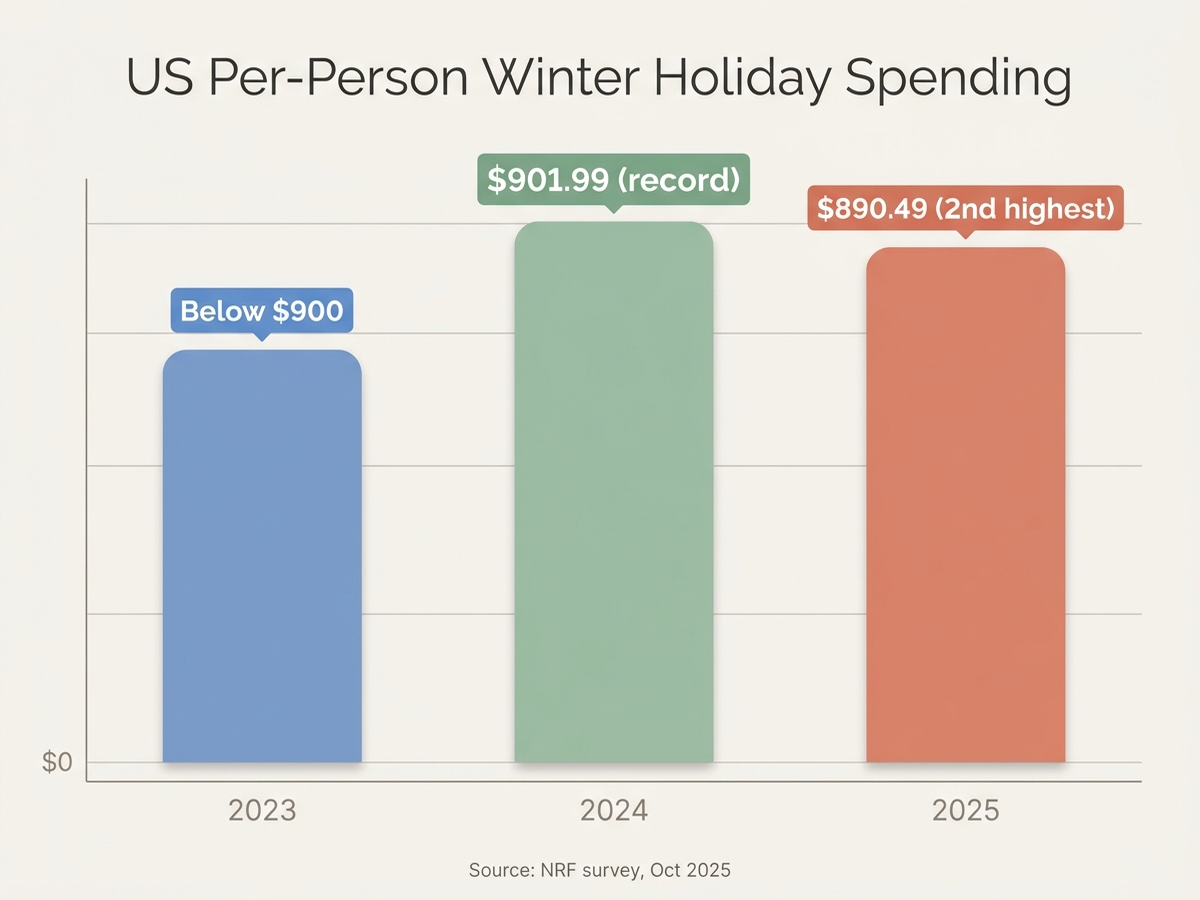
| Year | Per-person winter holiday spending | Notes |
|---|---|---|
| 2023 | Below $900 | Prior years trending upward |
| 2024 | $901.99 | Record at the time |
| 2025 | $890.49 | Second-highest on record; survey conducted Oct 1–7, 2025 |
Electric Blanket vs. Space Heater: Overnight Running Cost
Quick-Reference Table
Prices are approximate amazon.com figures as of 2026-09-03 and fluctuate.
| Question | Recommended pick | Approx. price | Key data point |
|---|---|---|---|
| Buy electronics now or wait | Echo Dot (5th Gen) | ~$25–$50 | Documented Black Friday low: $22–$25 |
| Time-change wake-up help | Hatch Restore 2 | ~$150–$170 | RCT: dawn simulation outperformed placebo dawn |
| Safe space heater | Lasko 754201 Ceramic Heater | ~$35–$45 | Tip-over switch + overheat protection standard |
| Furnace filter for allergens | Filtrete 20x25x1 MERV 11 (2-pack) | ~$20–$30 | Clogged filter cuts efficiency 5–15% (ENERGY STAR) |
| Fall ragweed allergies | Honeywell HPA160 | ~$100–$130 | True HEPA: 99.97% capture at ragweed’s ~20-micron size |
| Winter-storm backup power | Jackery Explorer 1000 v2 | ~$429–$650 | 1,500W continuous output (manufacturer spec) |
| Dry winter-air skin/static | Levoit Classic 100 | ~$40–$50 | 2.4L tank rated for ~290 sq ft |
| Cheap overnight warmth | Sunbeam Royal Ultra (Queen) | ~$45–$65 | ~100W vs. 750–1,500W for a space heater |
Limitations
This analysis relies on Consumer Product Safety Commission recall notices and fire-safety statistics, National Retail Federation surveys (Halloween spending published September 2025 for Halloween 2025; winter-holiday spending surveyed October 1–7, 2025), manufacturer specifications, peer-reviewed light-therapy research, and aggregated amazon.com review sentiment, rather than our own hands-on testing of every product named. Manufacturer-claimed figures (wattage, filter MERV/MPR ratings, lux output, coverage area) are labeled as such where they have not been independently re-verified by a third-party lab. Space-heater running-cost figures are typical per-hour estimates and will vary by local electricity rates and heater setting. CPSC recall status can change; always check a specific unit’s model number against CPSC.gov before use, regardless of what’s stated here. NRF spending figures are survey-based averages across thousands of households and will not match any individual household’s actual spending. Prices fluctuate on Amazon and may differ from the ranges listed by the time you read this. Individual experience may vary based on climate, home size, and unit-to-unit variance.
Bottom Line
October’s shopping questions split cleanly into two kinds: timing questions (wait for Black Friday, don’t wait on a costume) and safety-or-efficiency questions where the right product matters more than the right date (a heater with real overheat protection, a filter that’s actually due for a change). Where a recall or a hard data point changes the answer — the Vornado recall, the 90-lux ceiling on sunrise alarms, the wattage gap between a blanket and a heater — we’ve named the number rather than the vibe.
Before you buy anything, paste the product link into Arekore — our AI assistant checks review authenticity, surfaces what the one-star reviews actually complain about, and compares prices, free, in about five minutes.