10 Shopping Questions Answered With Data (July 2026)
More shoppers are typing questions into a search box or an AI assistant before they type a product name — Capital One Shopping’s 2026 consumer research puts the share of US shoppers who expect to use generative AI tools somewhere in their shopping process at around 80%, and eMarketer’s own reporting on industry-leader surveys describes AI-assisted shopping as a mainstream expectation for 2026, not a niche behavior. But a question like “what mattress firmness is best for back sleepers” or “do I actually need a smart outlet” doesn’t have a single universally-linked answer sitting on one page. It usually means digging through a lab-test PDF, a 40,000-review product listing, and a manufacturer spec sheet, then reconciling all three.
We picked 10 of the most common shopping questions that cut across categories — small appliances, cooling, sleep, smart home, and audio — and answered each one the same way we’d want an assistant to: by pointing to specific lab data, aggregated review patterns, and manufacturer specs, and being explicit about which is which.
TL;DR / Quick Verdict
- Budget robot vacuums for pet hair have closed the gap with premium models. Consumer Reports specifically credits one $190–$250 model for proving “a low price doesn’t equate to low performance” on pet hair pickup.
- A single-window room is the easy case, not the hard one. Window AC units don’t have the venting problem portable units do — a common misconception drives people toward the wrong product.
- BTU numbers on portable AC listings changed in 2023 under a new DOE rating standard, so an old “14,000 BTU” unit and a new “14,000 BTU” unit are not the same cooling power — a detail that trips up a lot of comparison shopping.
- HEPA air purifiers do work on airborne pet dander (99.97% capture at their rated particle size), but they don’t touch dander already settled on carpet or furniture — a distinction aggregated reviews and CADR lab data both support.
- Medium-firm is the data-backed default for back sleepers — not because it’s the safest marketing claim, but because it is what roughly 80% of tested sleepers in Sleep Foundation’s back-sleeper research actually prefer.
How We Reached These Answers (Methodology)
This is an editorial analysis, not a hands-on test — we did not personally test the products named below. Each answer synthesizes: (a) independent lab and testing data from RTINGS, Consumer Reports, Sleep Foundation, SoundGuys, and Tom’s Guide; (b) manufacturer specifications (BTU, CADR, mAh, playtime), explicitly labeled as manufacturer claims where they haven’t been independently verified; (c) aggregated amazon.com customer-review sentiment on the specific listings named, sampled in July 2026; and (d) government and industry reference data (DOE cooling-capacity rating rules, ENERGY STAR sizing guidance) where relevant. Every ASIN referenced was confirmed as a live amazon.com listing at the time of writing. Prices are approximate figures captured at the time of writing and fluctuate.
The 10 Questions
1. What’s the best budget robot vacuum for pet hair?
Consumer Reports’ testing found that a genuinely affordable pick — the eufy C10, which includes a self-emptying base and an edge-extending side brush designed for pet hair — performs well enough on pet hair pickup that CR called it proof “a low price doesn’t equate to low performance.” RTINGS’ pet-hair vacuum rankings echo the same conclusion: brush-roll clogging, the classic budget-vacuum failure mode with pet hair, isn’t a given at this price tier anymore. At roughly $190–$250 at the time of writing, it undercuts most $400+ competitors while still self-emptying.
Check the eufy C10 Robot Vacuum on Amazon
2. I only have one window — is a portable AC or window AC actually going to work?
This is the one question where the “obvious” answer is backwards. A single window is the ideal case for a window AC, not a hard case for a portable one. Portable ACs need an exhaust hose vented to outside air to work at all; without proper venting, they recirculate warm exhaust air back into the room and barely cool it, according to multiple HVAC buying guides and the manufacturers’ own installation instructions. A window unit sits directly in that one window opening and has no separate venting problem to solve.
If the room has an unusual window shape or you want a quieter, WiFi-connected option, U-shaped window units like the Midea U-Shaped line split the window sash around the compressor rather than blocking it entirely, which both RTINGS and TechGearLab independently tested and rated highly for noise (as low as 32 dBA, per Midea’s specs) and cooling speed.
Check the Midea 8,000 BTU U-Shaped Window AC on Amazon
3. Which wireless earbuds actually last all day under $100?
“All day” claims are easy to print and hard to verify, which is exactly what independent testing is for. SoundGuys’ 2026 under-$100 roundup measured real in-ear battery life across several models rather than trusting box copy, and multiple entries in that price tier posted verified single-charge runtimes over 10 hours with 45–60 hours total including the case. The Soundcore P30i by Anker is a solid pick in this range: 45 hours total playtime (case included) is Anker’s own manufacturer figure, with roughly 10 hours in-ear on a single charge and active noise cancellation, at a list price around $40 (frequently on sale closer to $28–30 at the time of writing).
Check the Soundcore P30i on Amazon
4. Is a mini fridge actually worth it for a dorm room or home office?
Worth it for space, not for efficiency — and that distinction matters. Consumer Reports’ mini fridge testing notes that these small units often use nearly as much energy as a full-size, highly efficient top-freezer refrigerator despite being three to four times smaller, so don’t expect a mini fridge to be a frugal choice on your electric bill. What it is genuinely good at: fitting in a dorm room, under a desk, or in a home office where a full-size fridge isn’t an option at all. The BLACK+DECKER BCRK17B, a 1.7 cu. ft. ENERGY STAR-certified unit, is a widely-stocked example built specifically for that footprint, drawing about 70 watts.
Check the BLACK+DECKER 1.7 Cu. Ft. Compact Refrigerator on Amazon
5. What mattress firmness is actually best for back sleepers?
Sleep Foundation’s data-backed sleep-position research puts back sleepers squarely in the medium-firm range — about 5.5 to 7 on a 10-point firmness scale — and notes that roughly 80% of tested sleepers across hundreds of mattress evaluations land somewhere in that 5-to-7 band regardless of position, making medium-firm the single most broadly compatible choice rather than a niche pick. Heavier sleepers should lean toward the firmer end of that range for adequate support. The Zinus Green Tea Memory Foam Mattress (12”, medium-firm, CertiPUR-US certified) is one of Amazon’s best-selling mattresses at this firmness level and price point.
Check the Zinus 12” Green Tea Memory Foam Mattress on Amazon
6. How do I figure out what size AC (BTU) I actually need?
Start from ENERGY STAR’s baseline: roughly 20 BTU per square foot of the room you’re cooling (length × width), then adjust upward — about 10% more for ceilings over 8 feet, and additional capacity for kitchens, direct sun exposure, or poor insulation. As a rough reference: a 150 sq ft bedroom lands around 5,000 BTU, a 350 sq ft living room around 8,000 BTU, and a 550 sq ft open-plan space around 12,000 BTU.
One catch that trips up a lot of comparison shopping: the federal cooling-capacity rating method for portable ACs changed under a 2023 Department of Energy update, so an older-rated “14,000 BTU” portable unit and a new-rated one are not directly comparable — check which standard a listing uses before comparing BTU numbers across products. Window units, including the Midea U-Shaped 8,000 BTU (350 sq ft) and 12,000 BTU (550 sq ft) models referenced above, list capacity under the standard that’s been consistent longer, which is part of why sizing them is more straightforward.
7. Do air purifiers marketed for “pet dander” actually work?
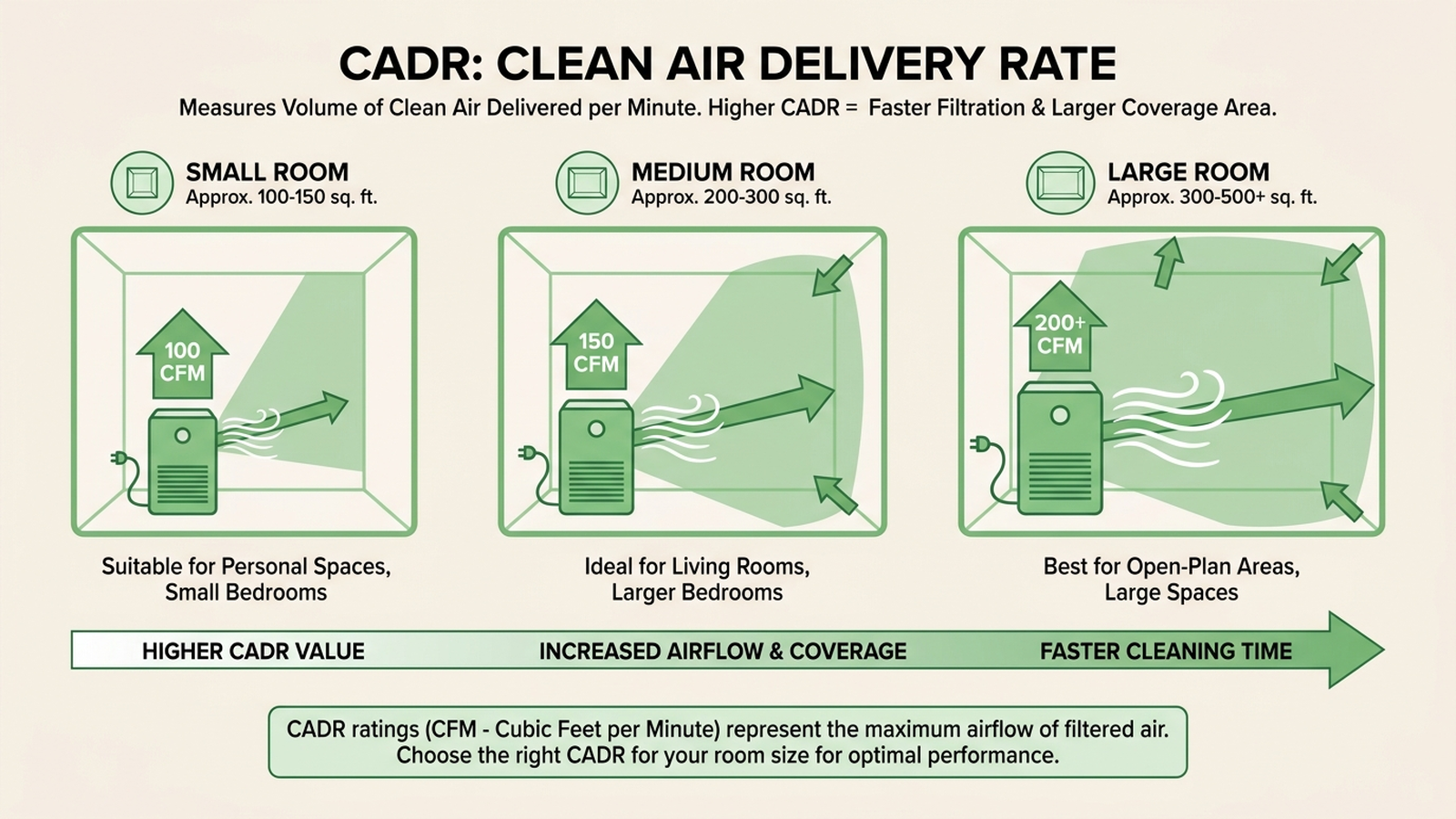
Yes, for the airborne particles — with one real caveat. HEPA filtration, the standard in this category, is independently rated to capture 99.97% of particles at 0.1–0.3 microns, which covers dander-sized particles once they’re airborne. RTINGS maintains an independent lab-tested “Best Air Purifiers for Pets” ranking built around CADR (Clean Air Delivery Rate), which industry sources describe as the only independently verified performance metric in this category — manufacturer square-footage claims not backed by CADR numbers are worth treating skeptically. The LEVOIT Core 300-P carries an AHAM-verified CADR of 143–167 CFM depending on particle type and is rated for roughly 1,073 sq ft at a light air-change rate; it’s also one of the most-reviewed purifiers in its class, with Gizmodo reporting sales in the tens of thousands of units per month during promotional pricing periods. The caveat: air purifiers only address particles already in the air. Dander settled into carpet or upholstery still needs to be vacuumed out — the purifier isn’t a substitute for that.
Check the LEVOIT Core 300-P Air Purifier on Amazon
8. What’s the real difference between a smart plug and a smart outlet — do I need both?
They solve the same problem two different ways, and most people only need one. A smart plug is a portable, plug-and-play adapter you put between an existing outlet and a lamp or appliance — no wiring, no electrician, typically under $20, and it comes with you if you move. A smart outlet replaces the wall outlet itself, which means an electrician or comfortable DIY wiring job, but it looks permanent and built-in once installed. Reviewed (USA Today) frames the decision simply: renters and anyone who doesn’t own the walls they live in should default to smart plugs, while homeowners who want a specific permanent fixture — a switched outlet by the front door, say — are the better fit for a smart outlet. Most households end up using both for different fixtures, not one instead of the other.
9. Are budget video doorbells (not Ring or Nest) actually worth it?
Increasingly, yes. Tom’s Guide’s 2026 video doorbell testing, which independently evaluated Ring, Nest, Blink, Wyze, Eufy, and Arlo side by side, named the Blink Video Doorbell one of the best budget picks specifically because it supports local microSD recording with no required monthly subscription, at a list price around $60 (frequently discounted toward $40). Manufacturer-claimed battery life on the current Blink lineup runs up to 22 months on standard batteries — a manufacturer figure, not independently re-tested by Tom’s Guide, but notably longer than most subscription-based competitors’ battery estimates. The gap between Ring/Nest and budget alternatives, per that same testing, is mostly in detection-algorithm polish and app refinement rather than raw video quality — a real difference, but a smaller one than the price gap suggests.
Check the Blink Video Doorbell on Amazon
10. What’s the best blender for smoothies on a tight budget?
Forbes’ 2026 blender testing recommends the Hamilton Beach Power Elite specifically “for occasional users or budget-minded shoppers, thanks to its under-$50 price tag, sturdy construction, and reliable performance.” It’s a 700-watt, 40 oz. glass-jar blender with stainless-steel blades and a dishwasher-safe jar and lid — not a high-power Vitamix-class machine, but adequate for daily smoothies at a fraction of the price. If portability matters more than power (a gym bag or desk, not a kitchen counter), personal blenders like BlendJet’s line are a common secondary pick, though independent testing has noted they can need two blending cycles to fully break down frozen fruit chunks — a real limitation worth knowing before you buy one as your only blender.
Check the Hamilton Beach Power Elite Blender on Amazon
BTU Sizing at a Glance
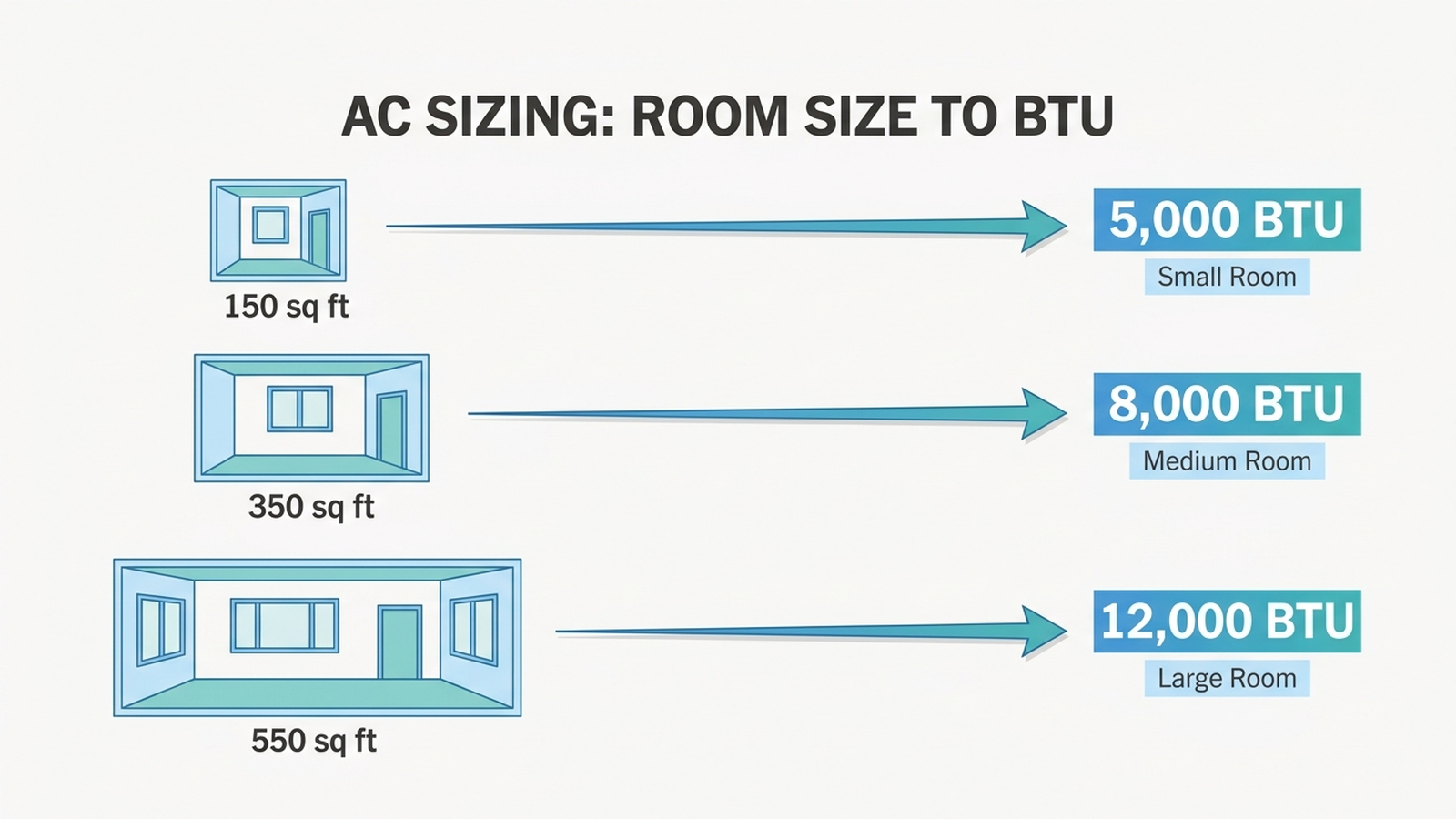
| Room size (sq ft) | Recommended BTU (approx.) | Example use case |
|---|---|---|
| 100–150 | ~5,000 | Small bedroom |
| 250–350 | ~8,000 | Living room, home office |
| 400–550 | ~12,000 | Open-plan or larger living space |
| 550+ / kitchens / high ceilings | 12,000+ (add capacity) | Adjust upward per Energy Star guidance |
Air Purifier Coverage, by CADR
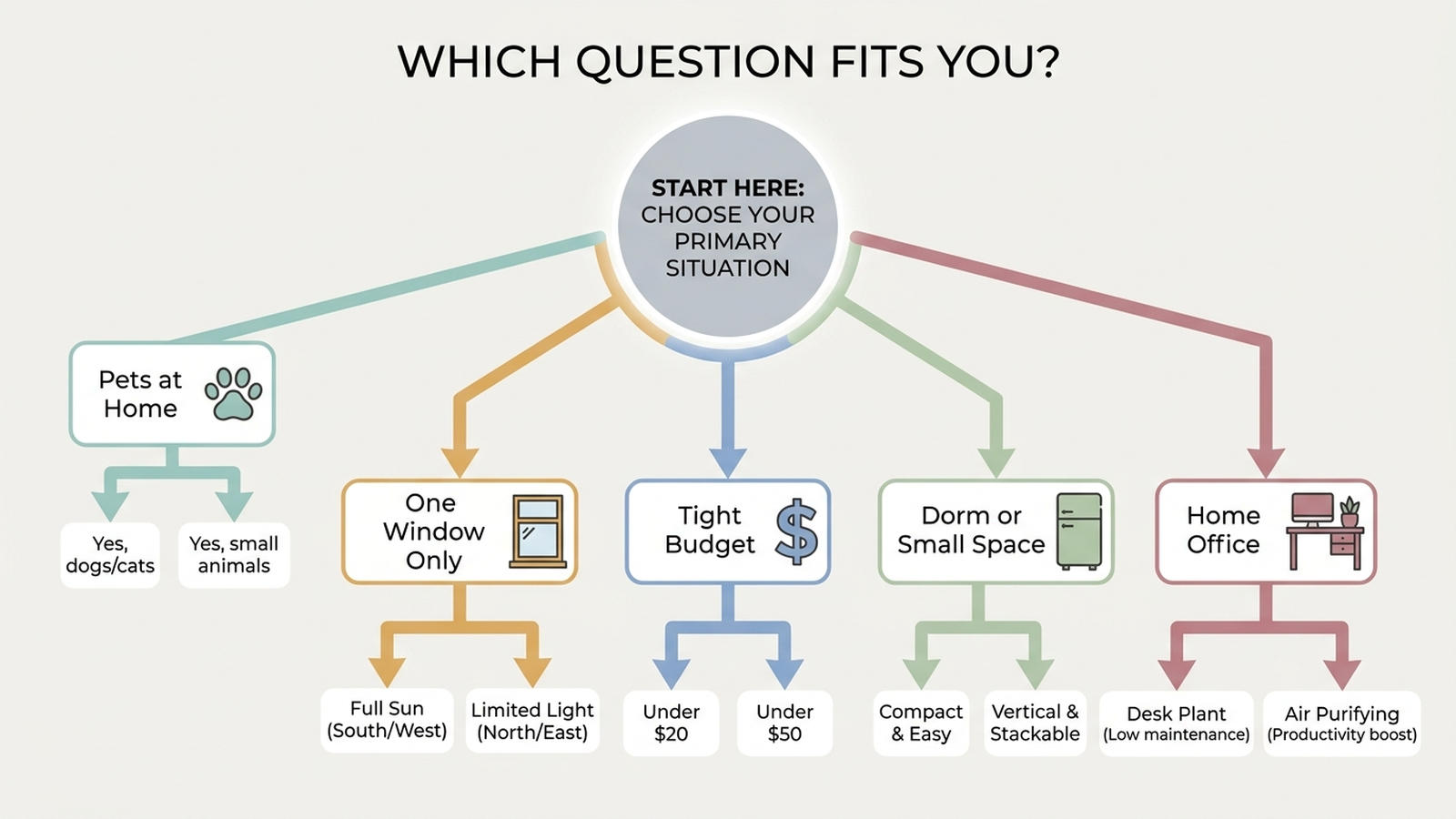
Which Question Matches Your Situation
Quick-Reference Table
Prices are approximate amazon.com figures at the time of writing (July 2026) and fluctuate.
| Question | Recommended pick | Approx. price | Key data point |
|---|---|---|---|
| Budget robot vacuum for pet hair | eufy C10 | $190–$250 | CR: strong pet-hair pickup at budget tier |
| Single window, AC that works | Midea 8,000 BTU U-Shaped | ~$300–$350 | RTINGS/TechGearLab: 32 dBA, fast cooling |
| Earbuds, all-day battery, under $100 | Soundcore P30i | $28–$40 | 45H total playtime (manufacturer) |
| Mini fridge for dorm/office | BLACK+DECKER BCRK17B | ~$130–$160 | ENERGY STAR certified, 70W draw |
| Mattress firmness for back sleepers | Zinus 12” Green Tea | Varies by size | Sleep Foundation: medium-firm fits ~80% of sleepers |
| Air purifier for pet dander | LEVOIT Core 300-P | ~$79–$99 | AHAM CADR 143–167 CFM |
| Budget video doorbell | Blink Video Doorbell | ~$40–$60 | Tom’s Guide: local recording, no subscription required |
| Budget smoothie blender | Hamilton Beach Power Elite | ~$35–$45 | Forbes: recommended pick for budget users |
Limitations
This analysis relies on independent lab testing (RTINGS, Consumer Reports, Sleep Foundation, SoundGuys, Tom’s Guide, Forbes), manufacturer specifications, and aggregated amazon.com review sentiment rather than our own hands-on testing of every product named. Manufacturer-claimed figures (battery life, BTU, CADR under specific conditions) are labeled as such where they have not been independently re-verified by a third-party lab. Market-size and category-growth statistics for these product categories vary significantly by research firm and methodology, so we have avoided citing single hard numbers where sources conflict. Prices fluctuate on Amazon and may differ from the ranges listed by the time you read this. Individual experience may vary based on room conditions, usage patterns, and unit-to-unit variance.
Bottom Line
Most shopping questions don’t actually need a new product — they need one specific fact reconciled against a specific situation: whether your one window is a strength or a weakness, whether your sleep position maps to a real firmness range or a marketing label, whether the BTU number on two listings even mean the same thing. Where a specific product is the right answer, we’ve named the ones with independent data behind them, not just a marketing page.
Before you buy anything, paste the product link into Arekore — our AI assistant checks review authenticity, surfaces what the one-star reviews actually complain about, and compares prices, free, in about five minutes.