10 Fall Shopping Questions Answered With Data (2026)

Fall is the season where a handful of boring, easy-to-postpone tasks quietly turn into either safety problems or wasted money once the first cold snap hits. The CDC’s flu-vaccine window, the CPSC’s clogged-dryer-vent and generator-carbon-monoxide statistics, and Energy.gov’s numbers on thermostat setbacks and weatherstripping all point to the same pattern: the data doesn’t change, but the cost of ignoring it does, once heating season actually starts.
We picked 10 of the most common questions people ask heading into fall and answered each against specific CDC, CPSC, NFPA, Consumer Reports, and Energy.gov / ENERGY STAR data, being explicit about which source backs which claim.
As an Amazon Associate, Arekore earns from qualifying purchases. The Amazon product links in this article include our affiliate tracking ID and may earn us a commission if you buy through them, at no additional cost to you. See our Links Policy for details on how we select products and how commissions do not influence our recommendations.
TL;DR / Quick Verdict
- CDC recommends getting a flu shot in September or October, with everyone vaccinated by the end of October — it takes about two weeks to build antibody protection, and flu can start circulating as early as October.
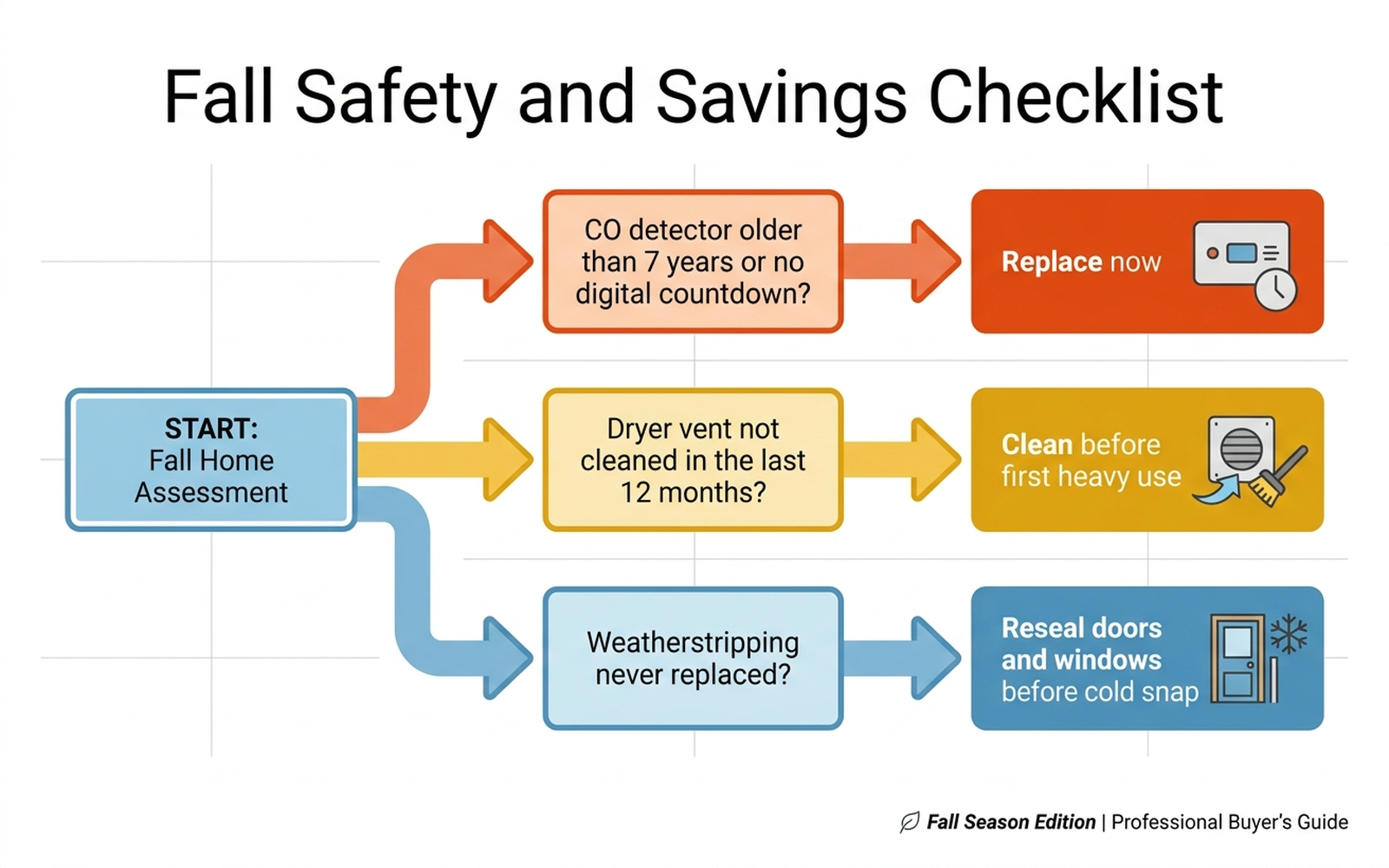
- CPSC and NFPA data credit clogged dryer vents with roughly 15,600 home fires, 400 injuries, and 15 deaths a year, and failure to clean the vent is the single leading cause, at 32% of dryer fires.
- Carbon monoxide detectors have a real expiration date — typically 5-7 years, up to 10 for some models — and every unit sold in the US since 2009 is required to chirp an end-of-life alert once the sensor is spent.
- Nearly half of all portable-generator carbon monoxide deaths happen in the four coldest months (November through February), per CPSC’s two-decade tracking of roughly 1,300 generator-linked deaths.
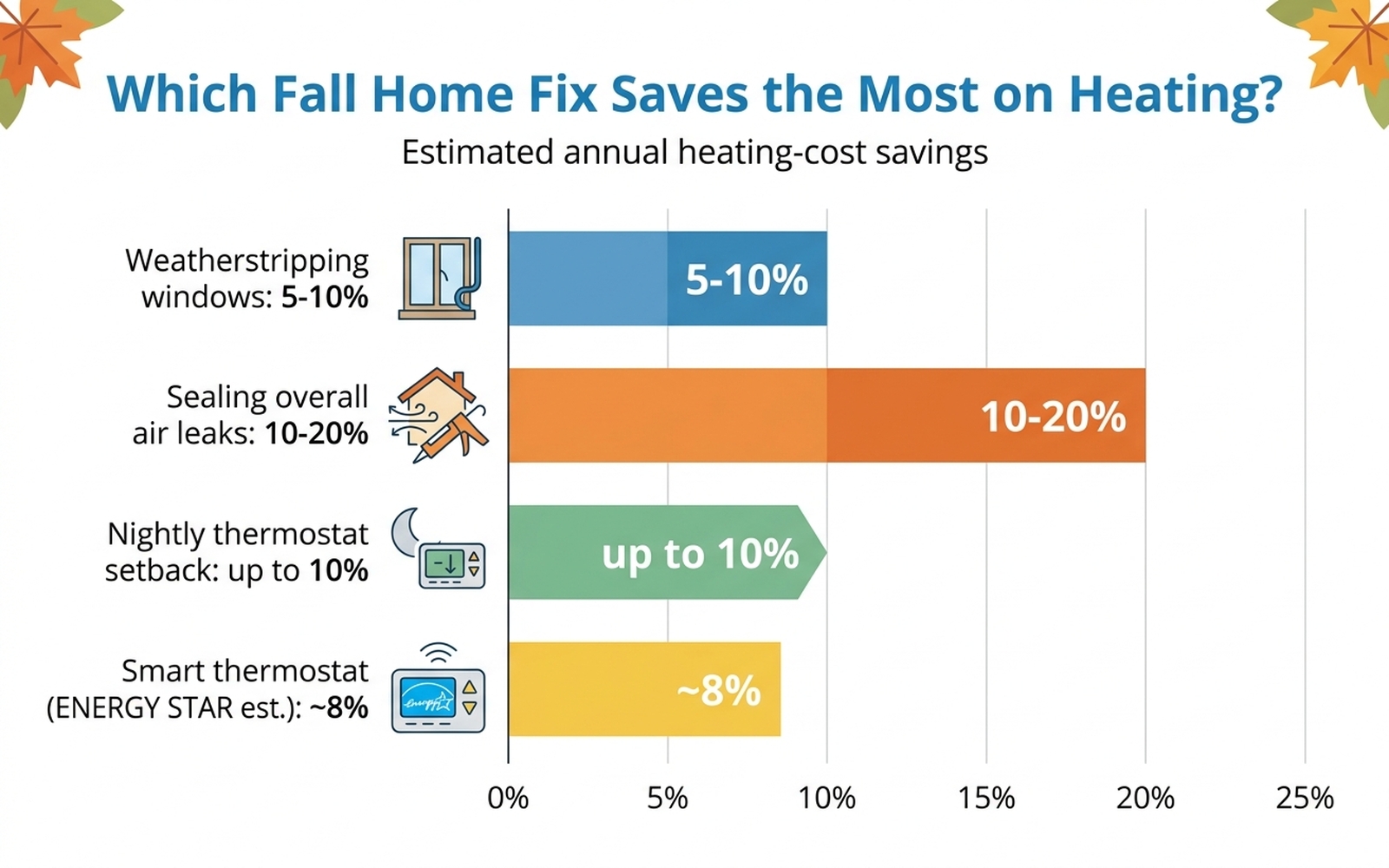
- Weatherstripping alone saves 5-10% on annual heating costs, while sealing all air leaks in a home saves 10-20%, per Energy.gov — a meaningfully bigger number than most homeowners assume for a weekend project.
How We Reached These Answers (Methodology)
This is an editorial analysis, not a hands-on test — we did not personally test the products named below. Each answer synthesizes: (a) CDC’s interim clinical guidance on seasonal influenza vaccine timing; (b) NFPA’s and CPSC’s published statistics on home fires involving clothes dryers; (c) CPSC, UL, and manufacturer data on carbon monoxide detector sensor lifespan and the federally required end-of-life alert; (d) Energy.gov’s published guidance on thermostat setback savings; (e) CPSC’s two-decade tracking of carbon monoxide deaths linked to portable generators, including the concentration of deaths in the coldest months; (f) Consumer Reports’ independent testing of all-season versus dedicated winter and all-weather tires below 45°F; (g) Energy.gov and ENERGY STAR published figures on weatherstripping and whole-home air-sealing savings; (h) ENERGY STAR’s published smart-thermostat rebate program data and average savings estimate; (i) Consumer Reports’ battery testing across lithium, alkaline, and NiMH chemistries in cold-weather use; and (j) EPA and Mayo Clinic guidance on indoor relative humidity ranges. Every ASIN referenced was confirmed as a live amazon.com listing at the time of writing. Prices are approximate figures captured at the time of writing and fluctuate.
The 10 Questions
1. Is it too late to get a flu shot, or should I wait until it’s actually cold out?
Get it now — waiting for cold weather means waiting past the point of best protection. CDC identifies September and October as the best months for most people to get vaccinated, with everyone recommended to be vaccinated by the end of October. It takes roughly two weeks after the shot for antibody protection to fully build, and flu can begin circulating as early as October, typically peaking between December and February. The one exception is older adults, who are generally advised against getting vaccinated as early as July or August, since vaccine effectiveness wanes over 6-8 months and could leave weaker protection during the actual December-to-February peak. If you miss the October window entirely, a later shot in November, December, or even January still provides real benefit, since flu season commonly extends into spring.
2. Do I actually need to clean my dryer vent before I start running it more in cooler weather?
Yes — this is one of the highest-payoff five-minute checks in the entire list. NFPA and CPSC data attribute roughly 15,600 home structure fires, 400 injuries, and 15 deaths a year to clothes dryers, and failure to clean the vent is the single leading cause, responsible for 32% of dryer fires. The most commonly ignited materials are dust, fiber, and lint (27%) and clothing itself (26%) — both are more likely to be present in a vent that has gone uncleaned through a full summer of use. NFPA’s own recommendation is to clean the dryer vent at least once a year, and fall — right as dryer use ramps up with cooler weather and heavier laundry loads — is a reasonable checkpoint if the vent hasn’t been done since last year. A flexible lint-brush kit like the Holikme Dryer Vent Cleaner Kit reaches vent runs a standard vacuum attachment can’t, without having to disconnect the full duct from the wall.
Check the Holikme Dryer Vent Cleaner Kit on Amazon
3. My carbon monoxide detector is a few years old — does it actually expire, or is that a sales gimmick?
It genuinely expires, and it’s not a gimmick — the sensor itself has a limited chemical lifespan, independent of whether the alarm still beeps when you press “test.” CO detectors typically function reliably for 5-7 years, with some models rated up to 10 years depending on the sensor, and CPSC and NFPA both point owners toward the manufacturer’s specific replacement date rather than a single blanket number. Since 2009, every carbon monoxide detector sold in the US has been required to include an end-of-life alert — usually a distinct chirp pattern at 30-60 second intervals, or an “End” or “ERR” message on models with a digital display — specifically so a spent sensor doesn’t fail silently. If your unit doesn’t have a printed manufacture or expiration date on the back, or it’s already past seven years old, CPSC’s practical guidance is to treat that as reason enough to replace it now, before heating season puts more combustion appliances into daily use. A model with a 10-year sealed battery and digital display, like the Kidde C3010D, removes the separate “did I change the battery” variable from the equation.
Check the Kidde C3010D Carbon Monoxide Alarm on Amazon
4. Does actually turning my thermostat down at night save real money, or is that overstated?
It’s real, and Energy.gov puts a specific number on it: roughly 1% savings for every degree of setback, as long as the setback period runs at least eight hours. Concretely, Energy.gov recommends 68°F while awake and at home in winter, then lowering the thermostat 10-15 degrees for at least eight hours while asleep or away — a range that adds up to an estimated 5-15% off annual heating costs, with the savings a bit larger in milder climates than in more severe ones. The catch is the eight-hour minimum: a setback that only lasts two or three hours (a short errand, a late bedtime) doesn’t accumulate the same savings, since the home spends part of that window just drifting down to the lower temperature rather than staying there.
5. Is it too early to worry about a generator before winter storms actually hit?
No — and specifically, the risk with a generator isn’t running out of fuel, it’s carbon monoxide. CPSC has tracked roughly 1,300 deaths linked to portable generators over the past two decades, averaging close to 100 deaths a year, and roughly half of those deaths occur in the four coldest months, November through February, when weather-related power outages are most common. CPSC’s guidance is unambiguous on placement: a generator should never run inside a house, garage, basement, shed, or crawlspace, even with the door open or a fan running, because CO can still accumulate to lethal levels indoors. If a storm-related outage is a realistic risk in your area, buying and testing a generator with a built-in automatic CO shutoff sensor now — rather than during an actual outage — means you’re not learning the safe distance and ventilation setup for the first time under pressure. The Westinghouse WGen5300cv is one example built with this automatic CO sensor as a standard safety feature.
Check the Westinghouse WGen5300cv Portable Generator on Amazon
6. Should I switch to winter tires now, or are all-season tires good enough once it gets cold?
Depends on where you actually drive, and Consumer Reports draws a specific temperature line: all-season tire rubber is formulated to stay flexible above roughly 45°F, and below that threshold the compound begins to harden, which measurably increases stopping distance and reduces grip — independent of whether snow or ice is present at all. Dedicated winter or snow tires, and the newer “all-weather” subcategory carrying the mountain-and-snowflake symbol, are formulated to stay pliable well below that point and are built specifically for sub-freezing traction, braking, and cornering. For drivers in regions that regularly sit below 45°F for weeks at a stretch through winter, Consumer Reports’ testing supports a seasonal tire swap over relying on all-season tires alone; for milder climates where temperatures mostly stay above that line, all-season or all-weather tires remain a reasonable single-set choice. Because tire selection is entirely dependent on your specific vehicle’s size, we’re not naming one SKU here — check your sidewall size and Consumer Reports’ current ratings for that size before buying.
7. Is weatherstripping actually worth the money, or is it a placebo home-improvement task?
It’s a genuinely high-return fix, not a placebo. Energy.gov data shows weatherstripping double-hung windows alone saves 5-10% on annual heating bills, while sealing all of a home’s uncontrolled air leaks — doors, outlets, baseboards, attic penetrations, not just windows — saves a larger 10-20%. Caulking and weatherstripping are specifically called out by Energy.gov as air-sealing techniques that typically pay for themselves within a year, since the materials cost is small relative to the ongoing savings. The gap between the “windows-only” 5-10% figure and the “whole-home” 10-20% figure is the reason a single roll of foam tape on one drafty window is a smaller fix than most homeowners assume — the bigger payoff comes from checking every door, outlet cover, and baseboard gap in the same afternoon. A self-stick EPDM rubber weatherseal kit like Frost King’s V25WA covers the most common gap sizes around doors and double-hung windows without a specialty tool.
Check the Frost King V25WA Weatherseal Tape on Amazon
8. Do smart thermostat utility rebates actually cover a meaningful chunk of the price, or is that mostly marketing?
They typically cover a real fraction of the sticker price, though rarely all of it. Utility rebate programs for ENERGY STAR-certified smart thermostats commonly run $50-$150, on top of a separate federal 25C Energy Efficient Home Improvement Credit that can add up to $150 more for a qualifying unit, depending on the specific program in your ZIP code — the ENERGY STAR Rebate Finder is the fastest way to check what’s actually available in your utility’s territory rather than assuming a number from a different state. Beyond the upfront rebate, ENERGY STAR’s own estimate is that a certified smart thermostat saves an average of about 8% on heating and cooling costs, or roughly $50 a year, which is the ongoing savings that continues well after the one-time rebate is applied. An ENERGY STAR-certified model like the ecobee Smart Thermostat Essential qualifies for both the utility rebate and federal credit categories in most programs, though eligibility should be confirmed against your specific utility’s current list before buying.
Check the ecobee Smart Thermostat Essential on Amazon
9. Is dry indoor air in fall actually worth addressing, or does that only matter once winter really sets in?
It starts mattering earlier than most people expect, right as heating systems begin cycling on for the season. EPA and Mayo Clinic both recommend keeping indoor relative humidity in the 30-50% range, with EPA additionally advising staying below 60% to control mold growth, and the ideal winter-specific range narrows slightly to 30-45%. The problem is that furnace heat pulls humidity down aggressively: heating already-dry, cold outdoor air can drop indoor relative humidity to 15-20%, well under that comfortable range, and the correct humidity target actually shifts lower as outdoor temperatures drop further — roughly 25-35% recommended at 10-20°F outside, and no more than 25% once it hits 0°F, specifically to avoid condensation forming on cold window glass. Below the recommended range, the mucous membranes in your nose and throat dry out and lose some of their ability to filter airborne particles, which is part of why dry fall and winter air correlates with more respiratory irritation. A cool-mist humidifier sized for a bedroom or medium room, like the Honeywell HCM350B, is a reasonable starting point for the humidity drop that begins as soon as the furnace turns on for the season, rather than waiting for a January cold to notice the air is too dry.
Check the Honeywell HCM350B Cool Mist Humidifier on Amazon
10. Should I stock up on batteries before winter storm season, and does the brand actually matter?
Yes to stocking up, and brand and chemistry both matter more than price alone. Consumer Reports rates lithium cells like Energizer’s Ultimate Lithium line as excellent performers for flashlight and high-drain device use, with a manufacturer-rated operating range of -40°F to 140°F — a specification that matters directly for a flashlight or a battery-powered radio during a winter outage. That’s a meaningfully wider range than rechargeable NiMH batteries such as Sanyo’s Eneloop line, which are rated only down to 32°F and lose performance noticeably below that point — a real gap if the power goes out during an actual cold snap rather than a mild-weather test. Standard alkaline batteries sit in between: usable in moderate cold but measurably weaker than lithium once temperatures drop well below freezing. For a storm-prep kit that might sit untouched in a drawer for months before an actual outage, lithium’s combination of cold-weather performance and long shelf life is the more defensible choice over cheaper alkaline cells.
Check Energizer Ultimate Lithium AA Batteries (24-Pack) on Amazon
Fall Safety and Savings Checklist
Generator CO Deaths Are Concentrated in Winter (CPSC, 20-Year Tracking)
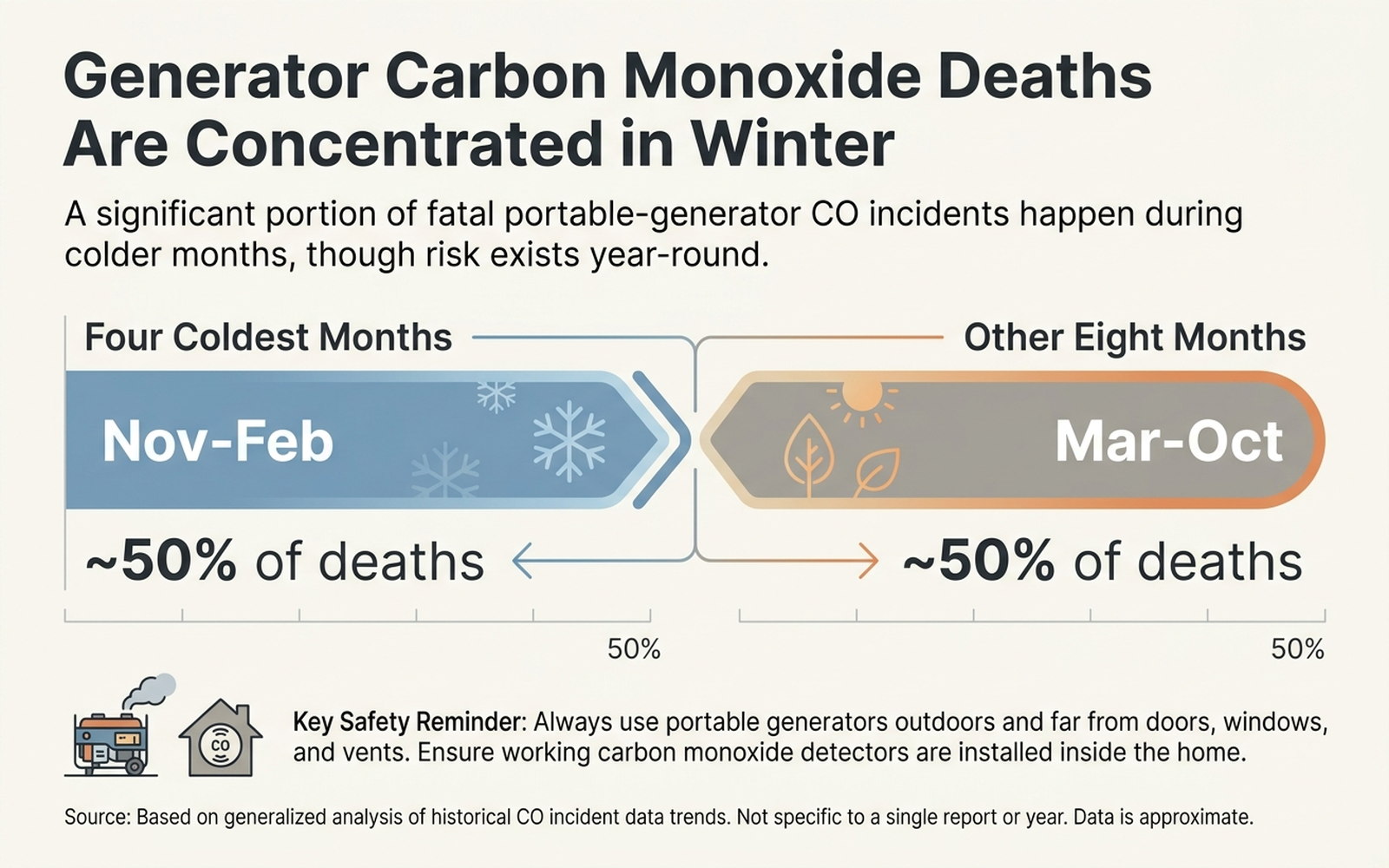
| Timeframe | Share of generator CO deaths (CPSC, 20-year average) |
|---|---|
| November – February (4 months) | ~50% |
| March – October (8 months) | ~50% |
Which Fall Fix Saves the Most on Heating? (Energy.gov / ENERGY STAR)
Quick-Reference Table
Prices are approximate amazon.com figures as of 2026-09-30 and fluctuate.
| Question | Recommended pick | Approx. price | Key data point |
|---|---|---|---|
| Dryer vent cleaning worth it? | Holikme Dryer Vent Cleaner Kit | ~$15–$25 | Failure to clean is the leading cause of 32% of dryer fires (NFPA/CPSC) |
| Does my CO detector expire? | Kidde C3010D CO Alarm | ~$25–$35 | Sensors typically last 5–7 years, up to 10 for some models |
| Generator safety before storms | Westinghouse WGen5300cv | ~$700–$900 | ~50% of generator CO deaths occur Nov–Feb (CPSC) |
| Is weatherstripping worth it? | Frost King V25WA Weatherseal Tape | ~$8–$12 | Saves 5–10% on heating bills; whole-home sealing saves 10–20% |
| Do smart thermostat rebates help? | ecobee Smart Thermostat Essential | ~$130–$150 | Utility rebates commonly $50–$150; ~8% average energy savings (ENERGY STAR) |
| Is dry fall air worth fixing now? | Honeywell HCM350B Humidifier | ~$45–$60 | Furnace heat can drop indoor humidity to 15–20%, below the 30–50% EPA range |
| Stock up on batteries for storms? | Energizer Ultimate Lithium AA (24-pack) | ~$25–$35 | Rated to -40°F, vs. 32°F for common NiMH rechargeables |
Limitations
This analysis relies on published CDC vaccine timing guidance, NFPA and CPSC fire and carbon-monoxide statistics, manufacturer and UL sensor-lifespan data, Energy.gov and ENERGY STAR published savings estimates, Consumer Reports’ independent tire and battery testing, and EPA/Mayo Clinic humidity guidance, rather than our own hands-on testing of every product named. Actual heating-cost savings from thermostat setbacks and weatherstripping vary by climate, home construction, and existing insulation, and should be treated as ranges rather than guarantees for any specific home. CO detector and smart thermostat rebate eligibility should be confirmed against your specific utility program and the product’s own printed expiration or manufacture date rather than assumed from the general figures here. Manufacturer-claimed figures (battery temperature ratings, generator wattage) are labeled as such where they have not been independently re-verified by a third-party lab. Prices fluctuate on Amazon and may differ from the ranges listed by the time you read this. Individual experience may vary based on climate, home layout, and unit-to-unit variance.
Bottom Line
Fall’s questions split the same way December’s did: hard-deadline questions where the calendar sets the answer (get the flu shot by the end of October, clean the dryer vent before heavy use ramps up) and risk questions where the right product changes the odds more than the season does (a CO detector past its sensor life instead of a working one, an all-season tire pushed too far below 45°F instead of the right seasonal set, a battery rated to -40°F instead of one that fails at freezing). Where a CPSC statistic, an NFPA number, or a manufacturer’s own required alert changes the answer, we’ve named the figure rather than the vibe.
Before you buy anything, paste the product link into Arekore — our AI assistant checks review authenticity, surfaces what the one-star reviews actually complain about, and compares prices, free, in about five minutes.