Theragun Review 2026: Is the Massage Gun Worth It?
Therabody’s Theragun line has been the category-defining name in percussive massage since the original launched in 2008, and its current lineup — Mini, Prime, Elite, and Pro — spans roughly $199 to $599 on amazon.com. That’s a wide price range for devices that, on paper, all do the same basic thing: hammer a muscle with a rapidly moving attachment head. Wirecutter’s own testing has repeatedly pointed shoppers toward the cheaper Prime rather than the flagship Pro, which raises the obvious question — does stepping up Therabody’s price ladder actually buy you anything, and does the underlying technology hold up against the clinical evidence on percussive therapy at all? We pulled apart independent lab testing, published studies on percussive massage, and aggregated owner feedback to find out.
As an Amazon Associate, Arekore earns from qualifying purchases. The Amazon product links in this article include our affiliate tracking ID and may earn us a commission if you buy through them, at no additional cost to you. See our Links Policy for details on how we select products and how commissions do not influence our recommendations.
TL;DR / Quick Verdict
- The science behind percussive massage is real but modest: peer-reviewed studies link handheld devices like Theragun to reduced delayed-onset muscle soreness (DOMS), short-term gains in range of motion, and large short-term spikes in local blood flow — but the evidence for lasting strength or performance gains is mixed to weak.
- Wirecutter’s pick is the mid-tier Prime, not the flagship Pro — its testers cite the Prime’s 16mm amplitude (matching the far more expensive Pro Plus), rugged drop-tested build, and lower price as the better value case for most people.
- The jump from Prime ($249.99) to Pro ($599) buys stall force and battery swapping, not dramatically more amplitude — both Prime and Pro now reach 16mm strokes; the Pro’s main advantages are a higher stall-force ceiling for very large or muscular users, a swappable battery, and Bluetooth-guided routines.
- Noise and long-term battery degradation are the most consistently repeated owner complaints across Theragun generations, including reports of Mini units losing charge capacity after roughly two years of light use with no replaceable battery.
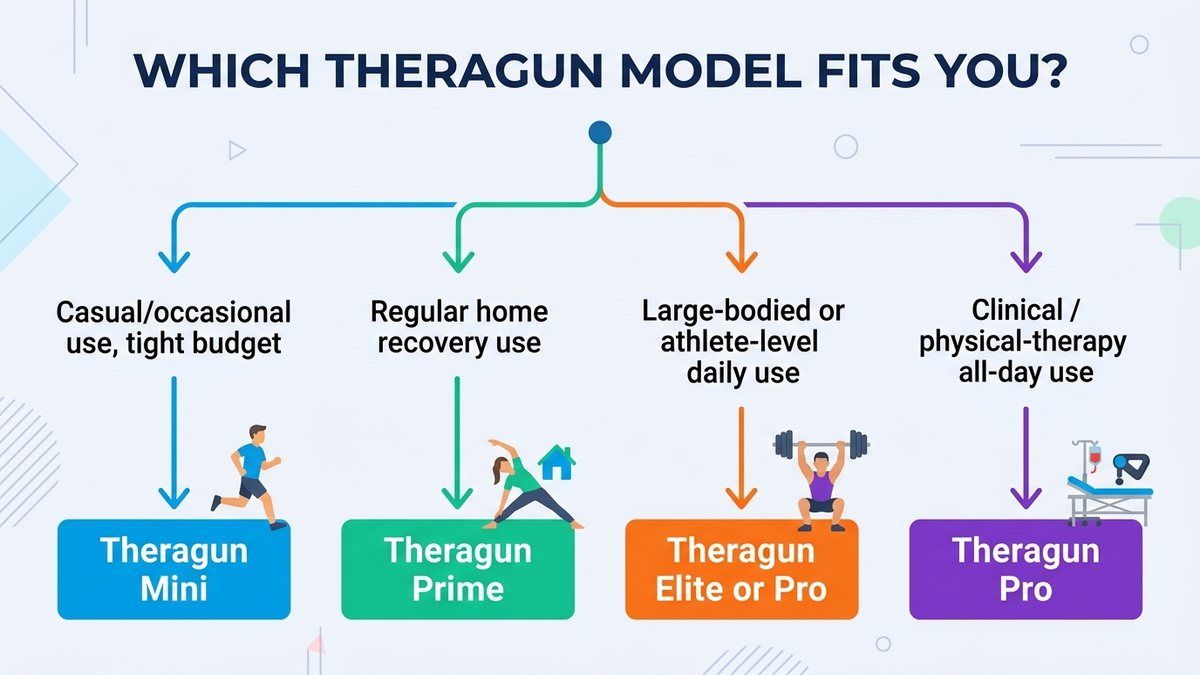
- Best fit: casual and moderately active users are well served by the Prime or Mini; the Pro’s extra stall force mainly matters for larger-bodied athletes, physical therapists, or anyone doing all-day clinical use.
How We Reached These Conclusions (Methodology)
This is an editorial analysis, not a hands-on review; we did not personally test the products covered here. It synthesizes (a) independent testing and buying guidance from Wirecutter, Tom’s Guide, Garage Gym Reviews, and Tech Gear Lab, (b) peer-reviewed research on percussive massage therapy published in sports-medicine and athletic-training journals, (c) Therabody’s own published manufacturer specifications across its current Mini, Prime, Elite, and Pro lines, and (d) aggregated Amazon customer review sentiment for Theragun devices. We did not independently verify a single current Amazon review count across every model and generation, since Therabody frequently updates product listings and review totals vary by generation and bundle. Manufacturer-claimed figures — amplitude in millimeters, stall force in pounds, percussions per minute, and battery life in minutes — are labeled as such throughout. Prices are amazon.com figures at the time of writing (October 2026) and change frequently around sales events.
Does Percussive Massage Actually Work? What the Research Says
Theragun’s marketing leans heavily on “percussive therapy” as a recovery science, so it’s worth separating manufacturer claims from independently published research before looking at any specific model. Peer-reviewed studies on handheld percussive massage devices report that they can reduce delayed-onset muscle soreness (DOMS) when used either immediately after exercise or in the 24-to-72-hour window afterward, and a randomized clinical trial measuring the acute effect of percussive massage on the quadriceps after a fatigue protocol found real short-term gains in muscle flexibility alongside a reduction in reported late muscle pain. Separately, research on microcirculation found muscle blood flow peaking at more than 456% above baseline within five to ten minutes of treatment, with a roughly four-minute treatment protocol producing the strongest measured effect.
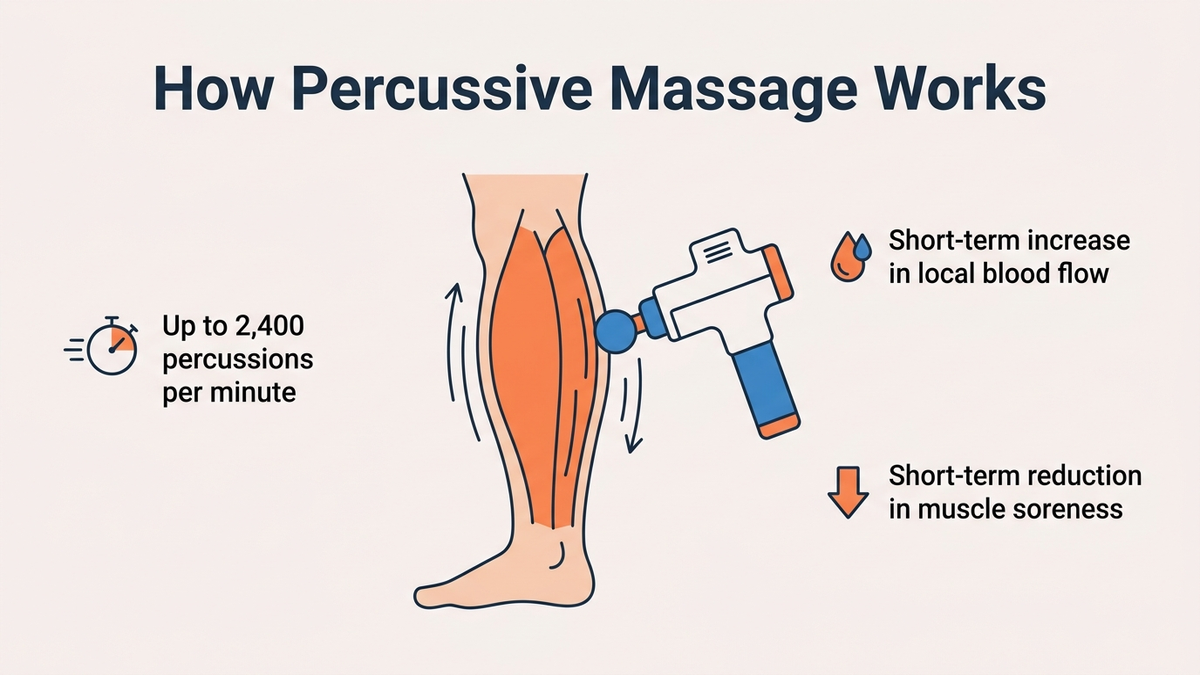
The evidence is weaker on the claims that matter most to serious athletes, though. A systematic literature review published in sports-therapy research (we did not pin down one single definitive study) found no significant increase in muscle activation or force output following percussive-device use in most protocols, even though multiple-treatment regimens were linked to measurable reductions in reported musculoskeletal pain over time. One Theragun-specific comparison reported strength gains among users of the device versus a cold-plunge recovery protocol, but that’s a single comparison rather than a broad consensus finding. The fair summary across the literature: percussive massage is a reasonably well-supported tool for short-term soreness relief, flexibility, and circulation, and a far less settled one for actually improving strength or athletic performance.
The Lineup: What Separates a $199 Mini from a $599 Pro
Therabody’s current four-tier lineup is built around two variables that matter more than anything else in the research above: amplitude (how deep the attachment head travels into the muscle, in millimeters) and stall force (how much resistance the motor can push against before it stalls out, in pounds). Both the Prime and the Pro now reach a 16mm amplitude — the same depth Therabody’s own $649.99-list Pro Plus uses — which narrows the practical gap between Therabody’s mid-tier and flagship devices more than the sticker price suggests.
| Model | ASIN | Amplitude (mfr. claim) | Stall force (mfr. claim) | Battery life (mfr. claim) | Weight | List price |
|---|---|---|---|---|---|---|
| Theragun Mini (2nd Gen) | B0B6QDYSG5 | 12mm | ~20 lbs | Up to 150 min | ~1.0 lb | $199.99 |
| Theragun Prime (5th Gen) | B0C42NZ9FR | 16mm | ~30 lbs | Up to 120 min | ~2.2 lbs | $249.99 |
| Theragun Elite (5th Gen) | B086Z6XSW4 | 16mm | ~40 lbs | Up to 120 min | ~2.4 lbs | $399.99 |
| Theragun Pro (5th Gen) | B0B6RL7NQJ | 16mm | ~60 lbs | Up to 150 min (swappable battery) | ~2.8 lbs | $599.00 |
Prices are amazon.com figures at the time of writing (October 2026) and fluctuate significantly around sales events; always check the current listing before buying.
Check the Theragun Mini on Amazon · Check the Theragun Prime on Amazon · Check the Theragun Elite on Amazon · Check the Theragun Pro on Amazon
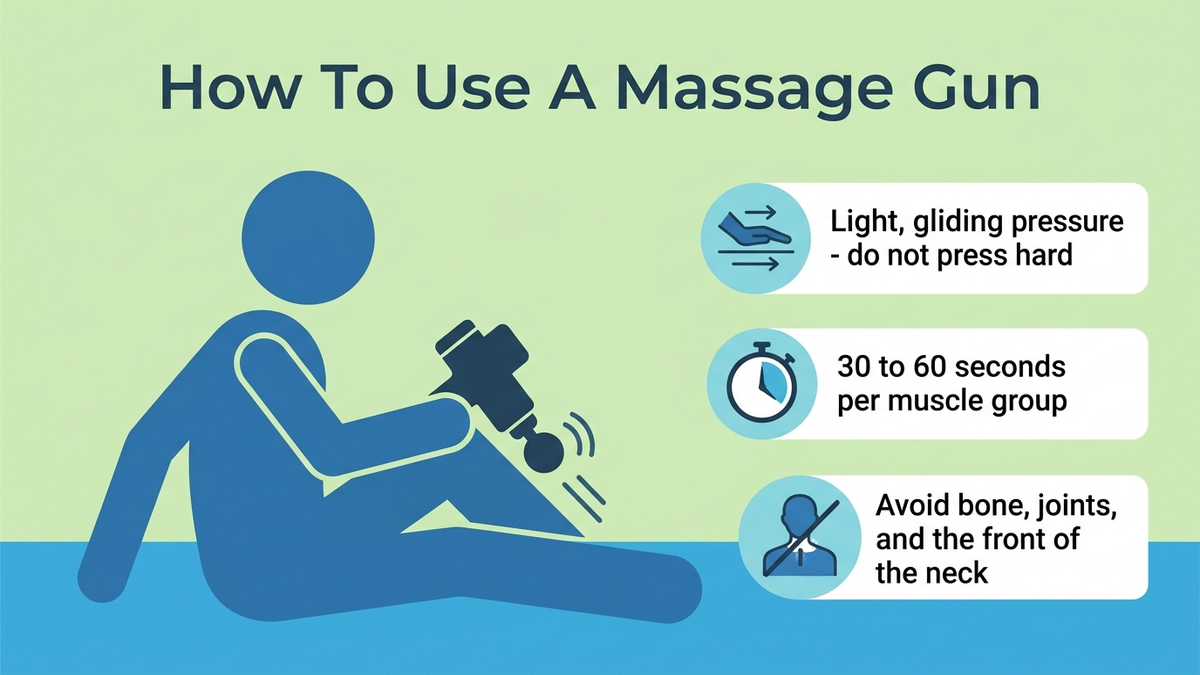
Independent sports-medicine guidance on percussive device use (reflected in the studies cited above) generally recommends light-to-moderate gliding pressure rather than pressing the head hard into tissue, roughly 30 to 60 seconds per muscle group, and avoiding bony areas, joints, and the front of the neck — a usage pattern that also matters when comparing stall-force numbers, since most people rarely need the device’s maximum pressure ceiling in normal use.
With amplitude now matched between the Prime and the Pro, the remaining jump buys mostly stall force — how hard you can press the device into a large muscle group before the motor bogs down — plus a swappable battery on the Pro versus built-in cells on the cheaper tiers, and Bluetooth-guided routines through Therabody’s app on the Elite and Pro. For most users targeting calves, shoulders, and backs at moderate pressure, the Prime’s 30-pound stall force rarely gets tested. Stall force becomes relevant mainly for very large or heavily muscled users, or for professional settings like physical-therapy clinics running the device on patient after patient throughout a workday.
What Independent Reviewers and Wirecutter Actually Recommend
Wirecutter’s recommendation across several review cycles has consistently been the Theragun Prime, describing it as the massage gun most people should buy — citing its 16mm amplitude (matching the far pricier Pro Plus), Therabody’s pioneering pedigree in the category since 2008, and a rugged, 10-foot-drop-tested build. Tom’s Guide’s own testing of the newer Pro Gen 5 calls it “the ultimate massage gun,” crediting a reduced noise level versus the 4th-generation Pro and new on-screen app guidance, while still flagging the device’s 2.8-pound weight as a portability trade-off and its roughly $599 price as “hard to swallow” for casual buyers. Garage Gym Reviews, which tested all five current Theragun models side by side, and Tech Gear Lab, which benchmarked 11 massage guns from multiple brands, both converge on amplitude as the single spec that correlates most closely with how deep and effective a device feels in use — reinforcing why the Prime’s jump to 16mm narrowed the gap with the Pro more than the price tags imply.
What Amazon Owner Reviews Say the Spec Sheet Doesn’t
Aggregated Amazon customer feedback on Theragun devices (sampling discussion across current and recent-generation listings) consistently lands around 4.4 out of 5 stars, with the large majority of ratings at 4 or 5 stars. Noise is the single most frequently repeated complaint across every generation and tier — several reviewers describe the devices as “louder than expected” or specifically call out neck-area use as the loudest, even while adding that they tolerate it because of the pain relief. Long-term battery degradation is the second-most common theme: multiple owners report Mini units losing the ability to hold a charge after roughly two years of light use, with no owner-replaceable battery as a workaround — a meaningful durability concern given the built-in (non-swappable) batteries on the Mini, Prime, and Elite tiers. A smaller number of reports describe build-quality issues on higher-end units after roughly a year of use, including unusual noise changes. Customer-service responsiveness complaints also appear repeatedly across review threads, independent of which model is involved.
Editorial Recommendation: Which Theragun (If Any) Is Worth Buying?
- If you want the best value case backed by independent testing: the Prime is the one multiple outlets, including Wirecutter, consistently point to — it matches the Pro’s 16mm amplitude at under half the price.
- If portability and occasional, light use are the priority: the Mini’s smaller size and lower price make sense, but weigh the reported long-term battery degradation against how long you expect to keep the device.
- If you’re a larger-bodied or heavily muscled user, or run the device on multiple people in a clinical setting: the Pro’s higher stall-force ceiling and swappable battery are the more defensible reasons to pay the premium, not the amplitude figure, which the Prime now matches.
- If your main goal is improved athletic performance or strength rather than short-term soreness and flexibility relief: the published research is considerably less settled, and a percussive massage gun at any price tier shouldn’t be the only recovery tool in your plan.
Warranty
Theragun’s Prime and Prime Plus models carry a 1-year limited warranty with a 30-day return window on new units purchased from Therabody or an authorized retailer; the Pro carries an extended 2-year standard warranty. Therabody-certified refurbished units carry a 1-year warranty but are final sale with no return eligibility. Warranty coverage is honored only for units purchased from Therabody directly or from an authorized retailer — Therabody’s official Amazon storefront qualifies, but third-party Amazon sellers may not, so confirm the specific listing’s seller before buying if warranty coverage matters to you.
Limitations of This Analysis
This analysis relies on third-party testing and buying guidance from Wirecutter, Tom’s Guide, Garage Gym Reviews, and Tech Gear Lab, peer-reviewed research on percussive massage therapy, Therabody’s published manufacturer specifications, and aggregated Amazon owner review sentiment; we did not personally test any Theragun model. Individual results vary by body composition, muscle group, and how consistently a device is used as part of a broader recovery routine, and manufacturer-claimed figures — amplitude, stall force, percussions per minute, and battery life — are not independently re-verified in every source we cite. The U.S. portable massage gun market was valued at roughly $0.9 billion in 2025 by one market-research estimate, projected to grow toward $1.5 billion by 2033, with the U.S. accounting for close to a third of global unit sales; separate industry estimates of total global market size vary widely by methodology (from roughly $530 million to over $1 billion for 2026 alone), so we present these figures as directional market context rather than a single precise number. Prices, ASIN availability, and warranty terms change frequently — always confirm current details on the product page before buying.
The Bottom Line
The clinical evidence behind percussive massage is real for short-term soreness relief, flexibility, and circulation, but far less settled for strength or performance gains — so the technology itself isn’t the reason to pick one Theragun over another. The bigger finding is that Therabody’s own lineup has narrowed the gap between its mid-tier and flagship devices: with the Prime and Pro now sharing the same 16mm amplitude, the extra $350 for a Pro mostly buys stall force and a swappable battery that only a subset of buyers will actually need. Noise and long-term battery life (on the non-swappable tiers) are the most consistently repeated owner frustrations worth weighing against the price tag. Check the current price and recent reviews on the specific listing before buying, and if you want a second opinion, paste the URL into Arekore and let the AI scan the reviews and price history for you in about five minutes.