Stanley Quencher Review 2026: Is It Still Worth Buying?
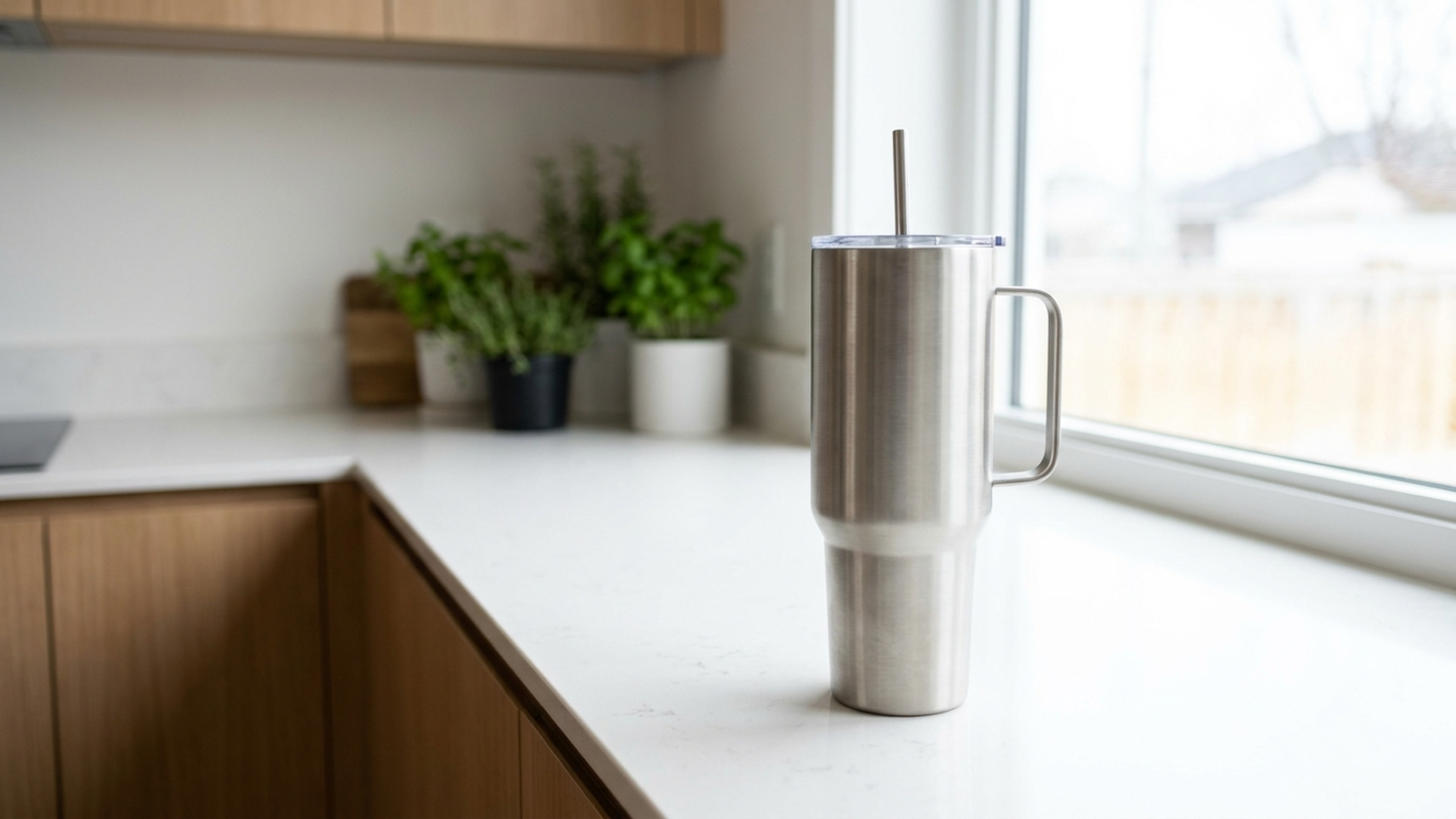
The Stanley Quencher was, by most measures, the defining consumer-product story of 2024: a 113-year-old thermos brand’s cup sold out in minutes, resold for triple its retail price, and briefly made “the hydration category” a phrase people actually used out loud. Two years later, the line at Target is gone, industry trackers show bottle-and-tumbler sales cooling, and a class-action lawsuit over lead in the cup’s base has been dismissed. So is the Quencher still a good $40–$45 cup, or was it always mostly hype? We pulled apart the aggregated review data, the lawsuit outcome, and independent lab testing to answer that without the 2024 noise.
This article is provided by Arekore, an AI shopping assistant. Paste a product URL and our AI checks review authenticity, digs into low-star feedback, and compares prices in about five minutes.
TL;DR / Quick Verdict
- The core product is genuinely good, not just viral. Independent testers and aggregated retailer reviews consistently rate the Quencher H2.0 well above 4 stars for insulation, durability, and cup-holder fit — the hype cycle and the product quality are separate questions.
- The lead scare is resolved, legally. A federal judge dismissed the main class-action lawsuit in January 2025, finding plaintiffs had not shown the sealed lead at the base posed a real exposure risk. It remains a manufacturing detail worth understanding, not an active health case.
- The market has cooled, not collapsed. US drinkware category growth slowed from roughly 38% in 2023 to about 14% in 2024, and Stanley’s direct-to-consumer sales reportedly fell around 20% in 2025 — but the Quencher still outperforms most rivals in aggregated buyer satisfaction.
- It is not the best tumbler for every use case. Owala’s FreeSip line beats it on leakproof design and price; YETI’s Rambler beats it on ruggedness. The Quencher’s advantage is specifically the car cup-holder fit and handle.
How We Reached These Conclusions (Methodology)
This is an editorial analysis, not a hands-on review; we did not personally test the products covered here. It synthesizes three kinds of public information: (a) aggregated customer-review sentiment on amazon.com and other major retailers, including REI’s published tally of 10,803 ratings averaging 4.3 out of 5 for the Quencher H2.0 FlowState tumbler; (b) independent third-party testing and reporting from Consumer Reports, Treeline Review, Quality Logo Products, and consumer-litigation coverage from outlets including the Seattle Times and Time; and (c) manufacturer specifications and legal filings. We deliberately avoid quoting a precise Amazon review count we could not independently verify — where a retailer publishes an exact figure, we cite that retailer by name. Manufacturer figures (temperature-retention hours, capacity, materials) are labeled as such. Prices are amazon.com figures at the time of writing and change frequently, especially around seasonal sales.
Why the Hype Happened — and Why It Cooled
Before judging the cup on its merits, it helps to separate the marketing story from the product story, because they moved on different timelines.
Stanley’s revenue reportedly grew from around $73 million in 2019 to roughly $750 million in 2023, driven almost entirely by the Quencher going viral on TikTok — limited colorways sold out within minutes and resold for markups on secondary markets during the peak of the craze. That is a marketing and scarcity story, not a product-quality one.
The market has since normalized. Circana (an industry data firm) reported that bottle-and-insulated-container sales at sporting-goods retailers fell year-over-year every month from September 2024 through February 2025, and that category growth decelerated from about 38% in 2023 to roughly 14% in 2024 — still growth, just far slower. Reporting on Stanley’s 2025 performance describes US direct-to-consumer spend falling around 20% for the year, with the company’s own leadership describing “a settling of the hydration category in the U.S.” That is consistent with a product moving from viral fad to a more ordinary, mature category — the pattern most breakout consumer products eventually follow.
The Lead Question: What Actually Happened
The other major thread in the Quencher’s post-hype story is the 2024 lead controversy, which is worth resolving with facts rather than leftover social-media anxiety.
In January 2024, Stanley’s parent company, Pacific Market International (PMI), confirmed that its vacuum-insulation manufacturing process uses a small amount of lead as a sealing material at the base of the cup, covered by a layer of stainless steel. That admission followed viral social-media posts showing at-home lead-test strips reacting to the underside of Quencher cups. Two separate proposed class-action lawsuits followed in February 2024, accusing PMI of failing to disclose the lead to consumers.
In January 2025, a federal judge dismissed the primary class-action lawsuit, ruling that the plaintiffs had not sufficiently shown the specific amount of lead used posed a material health risk, given that it is sealed beneath the outer stainless-steel layer and not exposed unless the base is damaged. PMI’s own public position — echoed by outside safety experts quoted in coverage from Time and the Seattle Times — is that the lead is not present on any surface that contacts a beverage or a user’s hand, and poses no meaningful exposure risk in normal use, including if the cup is dropped or dented (only a breach exposing the actual sealing pellet at the base would be relevant, which independent reporting describes as very unlikely in typical use). We flag this as a resolved legal matter rather than a currently open safety question, while noting that the underlying manufacturing choice — using lead as a sealant, even fully enclosed — is a legitimate reason some buyers may prefer a competitor.
For additional context: the European testing organization Stiftung Warentest has separately flagged unrelated materials-safety issues in insulated cups sold in Germany — including naphthalene contamination found on the exterior coating of some non-Stanley models in its most recent published test — a reminder that materials scrutiny in this category is not unique to one brand or one country.
Technical Approach: How the Quencher Compares to Owala and YETI
Three brands dominate the current large-capacity insulated tumbler conversation on Amazon, and each solves the “keep it cold and don’t spill it” problem differently.
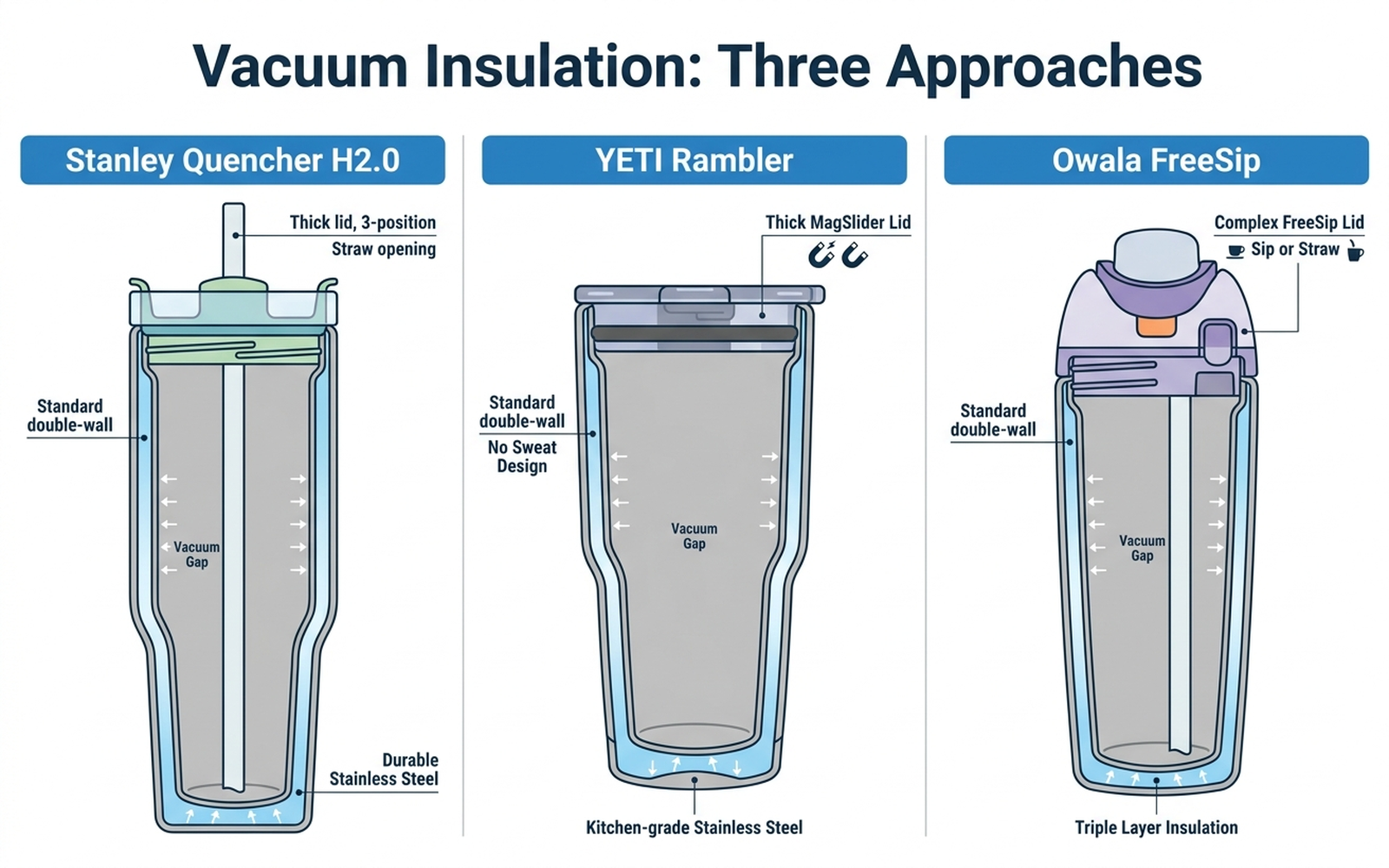
- Stanley Quencher H2.0 FlowState uses double-wall vacuum-insulated 18/8 stainless steel with a wide, tapered base built to fit standard car cup holders, and a 3-position FlowState lid (straw, sip opening closed with the reversible top, or fully open) with a side carrying handle. Stanley (manufacturer figure) rates it to keep water cold for up to 11 hours and ice intact for up to 2 days.
- YETI Rambler uses similarly thick double-wall stainless-steel insulation with YETI’s “Stronghold” lid family, widely regarded — including in Consumer Reports’ insulated-drinkware testing — as one of the most leak-resistant designs in the category, plus a reputation for surviving drops and rough outdoor use that predates the tumbler-craze years.
- Owala FreeSip takes a different approach: a proprietary two-opening lid (a straw on one side, a wider “gulp” spout on the other) that testers at Treeline Review and other independent outdoor-gear reviewers have repeatedly called more genuinely leakproof than Stanley’s twist lid, at a noticeably lower price point.
The practical takeaway: Stanley’s real differentiator is not insulation performance — Consumer Reports’ lab testing and outlets like Quality Logo Products have found several rivals perform comparably or better on pure temperature retention — it is the combination of cup-holder-friendly shape, handle, and the specific FlowState lid ergonomics that made it the default “everyday carry” cup.
How to Use and Maintain It
A large share of the negative aggregated reviews across retailers trace back to care mistakes rather than product defects, so the maintenance routine matters more than it looks.
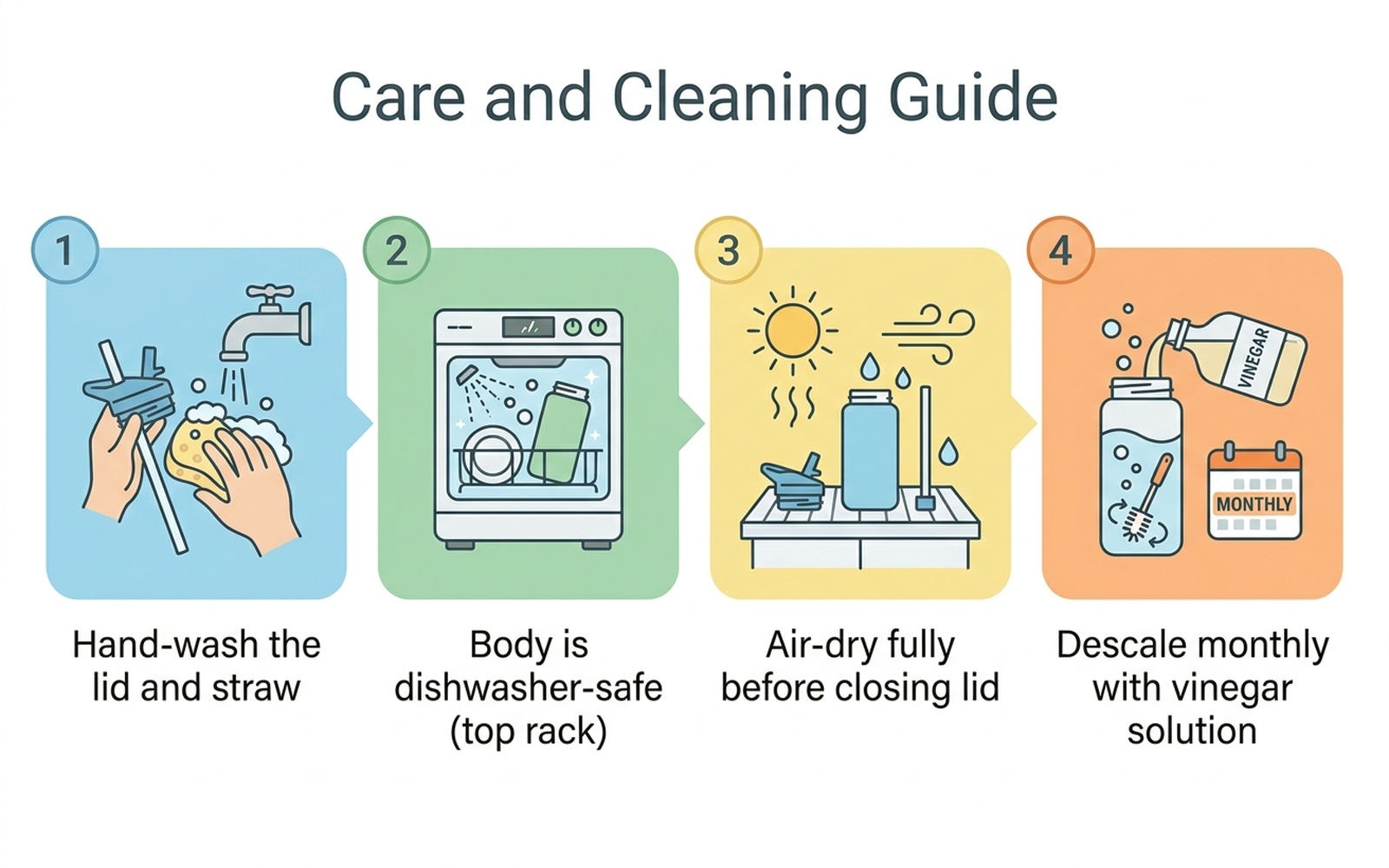
- Hand-wash the lid, straw, and gaskets. These small parts trap residue in the dishwasher’s high heat and detergent, which is the most common source of odor complaints in aggregated reviews.
- The stainless-steel body is dishwasher-safe (top rack recommended by the manufacturer), but hand-washing preserves the exterior finish and any powder-coat color longer.
- Air-dry fully with the lid off before closing it up for storage; trapped moisture is the leading cause of the musty smell reviewers occasionally report.
- Descale monthly with a mild vinegar-and-water soak if you regularly drink coffee, tea, or mineral-heavy water, since mineral buildup around the straw threading is a repeat complaint in longer-term reviews.
- Do not microwave and avoid abrasive scouring pads on the exterior, which can scratch through the powder coat and expose bare steel over time.
Comparison Table
Prices are amazon.com figures at the time of writing (July 2026) and fluctuate, especially during sales events.
| Model | ASIN | Approx. price (40 oz) | Lid style | Claimed cold retention | Best known for |
|---|---|---|---|---|---|
| Stanley Quencher H2.0 FlowState | B0BY4W8BL8 | ~$40–$45 | 3-position twist lid, straw + handle | Up to 11 hrs cold (mfr.) | Cup-holder fit, handle, color variety |
| YETI Rambler (42 oz, handle) | B0DS6JK26N | ~$50–$55 | Stronghold lid, straw + handle | Comparable/longer (independent tests) | Leak resistance, drop durability |
| Owala FreeSip | B0BZY9JJRJ | ~$20–$30 | Dual-opening straw + push-spout | Comparable (independent tests) | Price, leakproof design |
Editorial Recommendations by Use Case
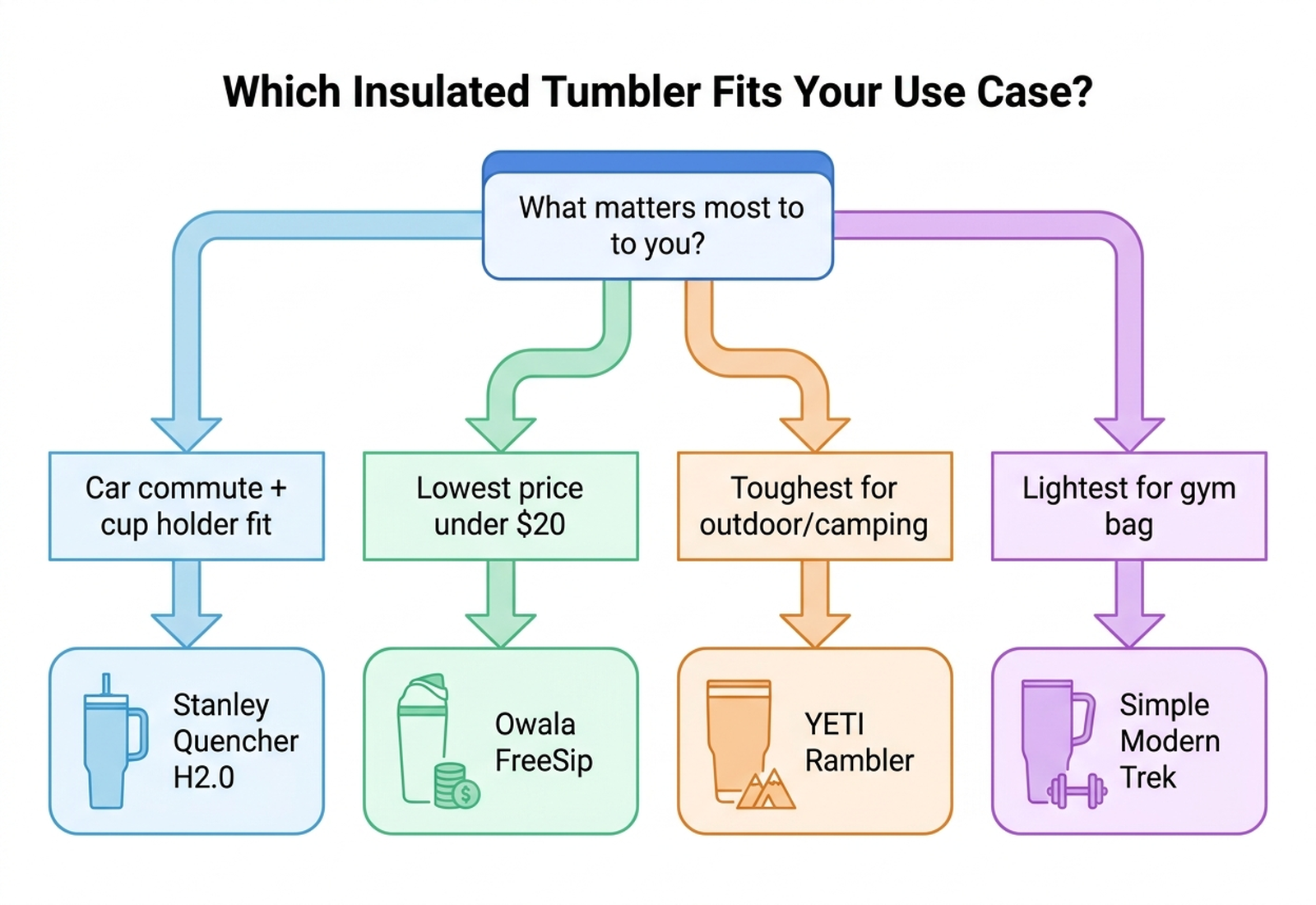
- Best for daily car commuting: the Stanley Quencher H2.0 — its tapered base is specifically shaped for standard cup holders, and the wide handle is easy to grab one-handed while driving. Check the Stanley Quencher H2.0 on Amazon
- Best value and most leakproof: the Owala FreeSip — independent testers rate its dual-opening lid as more spill-resistant than Stanley’s twist lid, at roughly two-thirds the price. Check the Owala FreeSip on Amazon
- Best for outdoor and rough use: the YETI Rambler — a longer track record for surviving drops, and a lid family Consumer Reports and other testers rate highly for leak resistance. Check the YETI Rambler on Amazon
- If you already own a Quencher: aggregated reviews and the resolved lawsuit outcome suggest there is no urgent safety reason to replace it; care mistakes (dishwashing small parts, poor drying) explain most of the negative feedback we found, not the cup itself.
Warranty and Where the Lawsuit Stands Today
Stanley backs its drinkware with a lifetime warranty against manufacturing defects, handled directly through PMI’s customer service; confirm current terms on the product page, as coverage details are occasionally updated. On the legal side, as of this writing the January 2025 dismissal of the primary lead class-action stands; a separate, unrelated November 2025 trademark and trade-dress lawsuit filed by PMI against a competing retailer over “dupe” cup designs is still active but does not concern the safety of Stanley’s own products. Buyers concerned about the sealed lead sealant specifically — rather than about legal risk, which courts have already addressed — may simply prefer a competitor that does not use it; YETI and Owala’s current published materials describe their insulation processes without a lead-based sealant, based on their own marketing materials, which we have not independently lab-verified.
Limitations of This Analysis
This analysis relies on publicly available reviews, third-party testing, and legal-filing coverage; we did not personally test these products, and individual experience varies with unit-to-unit variance, care habits, and climate. Review-platform star ratings and sentiment summaries reflect the retailers that publish them (e.g., REI’s 10,803-review figure) rather than a single unified Amazon count, since exact Amazon review totals fluctuate and are not something we independently verified. Market-size and sales-decline statistics come from third-party research firms and press reporting whose methodologies differ, so we present them as directional rather than precise. The lead-lawsuit summary reflects public court reporting as of this writing and is not legal advice; readers with specific health concerns should consult a medical professional rather than relying on this article. Prices, ASIN availability, and warranty terms change frequently — always confirm current details on the product page before buying.
The Bottom Line
The Stanley Quencher’s 2024 viral moment and its underlying product quality turned out to be two different stories: the hype has cooled and the lawsuit has been dismissed, but aggregated reviews and independent testing still rank the cup well for the specific job it does best — fitting a car cup holder and surviving daily use with a comfortable handle. If that is your use case, it remains a reasonable buy at its current price; if you mainly want the cheapest leakproof option or the toughest outdoor cup, Owala and YETI are better-suited alternatives. Whichever you lean toward, check the current price and read the most recent reviews before buying — and if you want a second opinion on a specific listing, paste the URL into Arekore and let the AI scan the reviews and price history for you in about five minutes.