How to Season New Gas Grill Grates Before First Use
TL;DR
Not every new gas grill grate needs seasoning. Porcelain-enameled grates (most current Weber gas grills) need no oil at all — just a preheat and a brush. Bare cast iron grates need an actual oil-and-heat seasoning cycle, or they’ll rust within days. Stainless steel grates fall in between: no seasoning is required to function, but a light one-time oil wipe makes early cookouts less sticky. Before any of that, every grate type should be washed to remove the manufacturing wax and oil residue applied for shipping — skipping that step is the most common reason a “seasoned” new grill still tastes like smoke and metal on the first cook.
As an Amazon Associate, Arekore earns from qualifying purchases. The Amazon product links in this article include our affiliate tracking ID and may earn us a commission if you buy through them, at no additional cost to you. See our Links Policy for details on how we select products and how commissions do not influence our recommendations.
Methodology
This analysis synthesizes official first-use and seasoning guidance published by Weber, Char-Broil, and Char-Griller for their current gas grill and replacement-grate lines, Consumer Reports’ published grill maintenance guidance, and aggregated customer Q&A and forum discussion describing sticking, rust, and off-tasting first cooks tied to skipped or incorrect seasoning. We also compared smoke-point and seasoning-performance data for the cooking oils most commonly recommended for grate seasoning. We did not run a controlled side-by-side seasoning test ourselves; this is an editorial synthesis of publicly available manufacturer and third-party data, not first-hand testing.
Why “Seasoning” Means Different Things on Different Grates
The word “seasoning” gets used loosely across grill marketing and forum advice, but what it actually requires depends entirely on what the grate is made of — treating all three materials the same is where most first-use mistakes start.
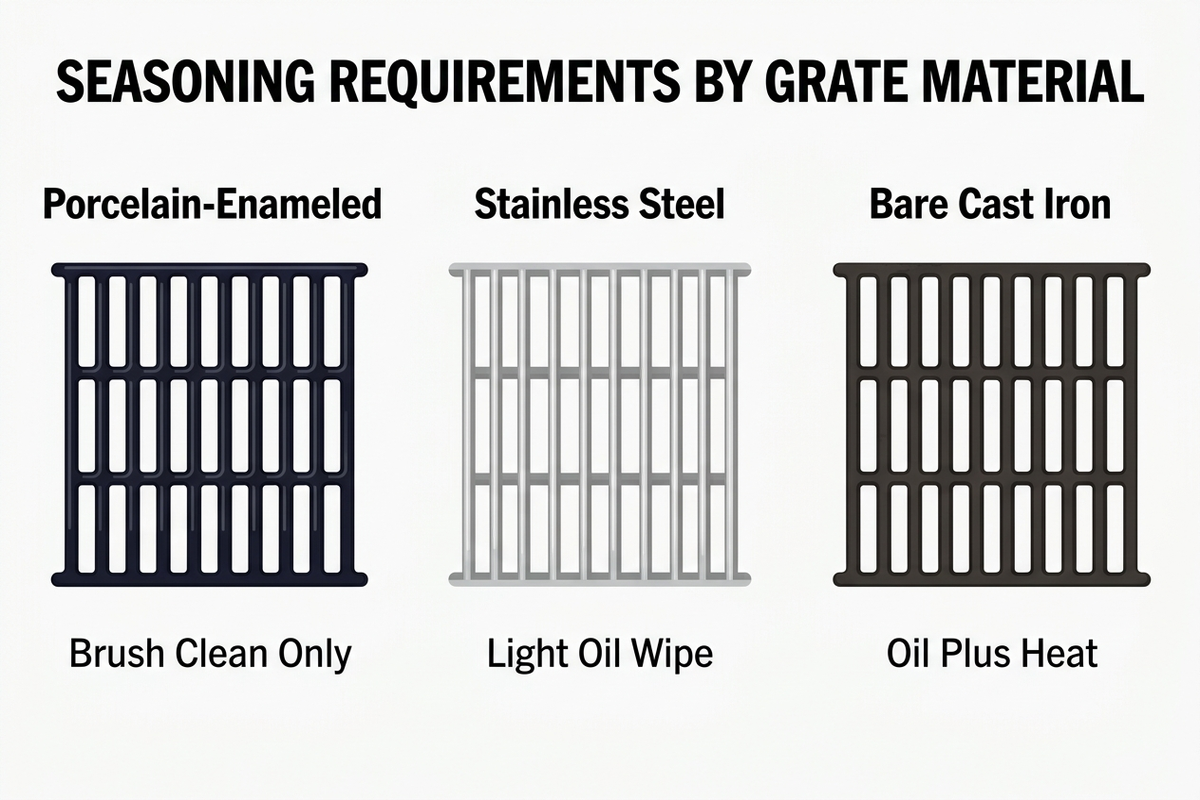
Porcelain-enameled grates (steel or cast iron core with a baked-on glass coating) are designed specifically to eliminate seasoning. The enamel layer is the non-stick and anti-rust surface; adding oil on top of it does nothing useful and can leave a sticky residue. Weber’s own guidance is direct about this for its current porcelain-coated gas grill lines: the grates do not require seasoning or re-seasoning, and the manufacturer’s full first-use instruction is to preheat the grill and brush the grates clean with a bristle brush.
Bare cast iron grates have an exposed, porous metal surface with no protective coating at all. Without an oil seasoning layer, bare cast iron will visibly rust within days of exposure to any moisture, including condensation from a covered grill left outside. Char-Griller’s own cast-iron grate care guidance calls for seasoning before the first use and re-seasoning periodically, not as an optional upgrade step but as the only thing standing between the grate and rust.
Stainless steel grates sit in the middle. They resist rust well without any oil and don’t require seasoning to function safely, but the bare metal surface has more microscopic texture than porcelain, so food can stick more on a completely dry grate during the first few cooks. A light one-time oil wipe smooths that out; it’s a convenience step, not a maintenance requirement the way it is for cast iron.
What Every New Grill Needs First, Regardless of Grate Material
Before deciding whether to season, every new grill — porcelain, stainless, or cast iron — needs the same first step: removing manufacturing residue. New grates ship with a thin protective wax coating plus manufacturing oils, dust, and in some cases metal shavings from the factory and shipping process. Manufacturer first-use guidance, including Char-Broil’s official instructions, calls for washing new grates thoroughly with mild dishwashing liquid, rinsing with hot water, and drying completely before the grate ever touches a flame.
After that wash, every brand’s guidance converges on an initial burn-off: running the grill on high heat for roughly 15–30 minutes with the lid closed, watching until the smoke visibly tapers off. This step exists independent of grate seasoning — it clears any remaining manufacturing residue and factory odors from the burner assembly and firebox, not just the grates, and skipping it is a commonly cited reason a brand-new grill’s first meal tastes like burning plastic or metal.
How to Season Bare Cast Iron Grates (the Only Grate That Actually Needs It)
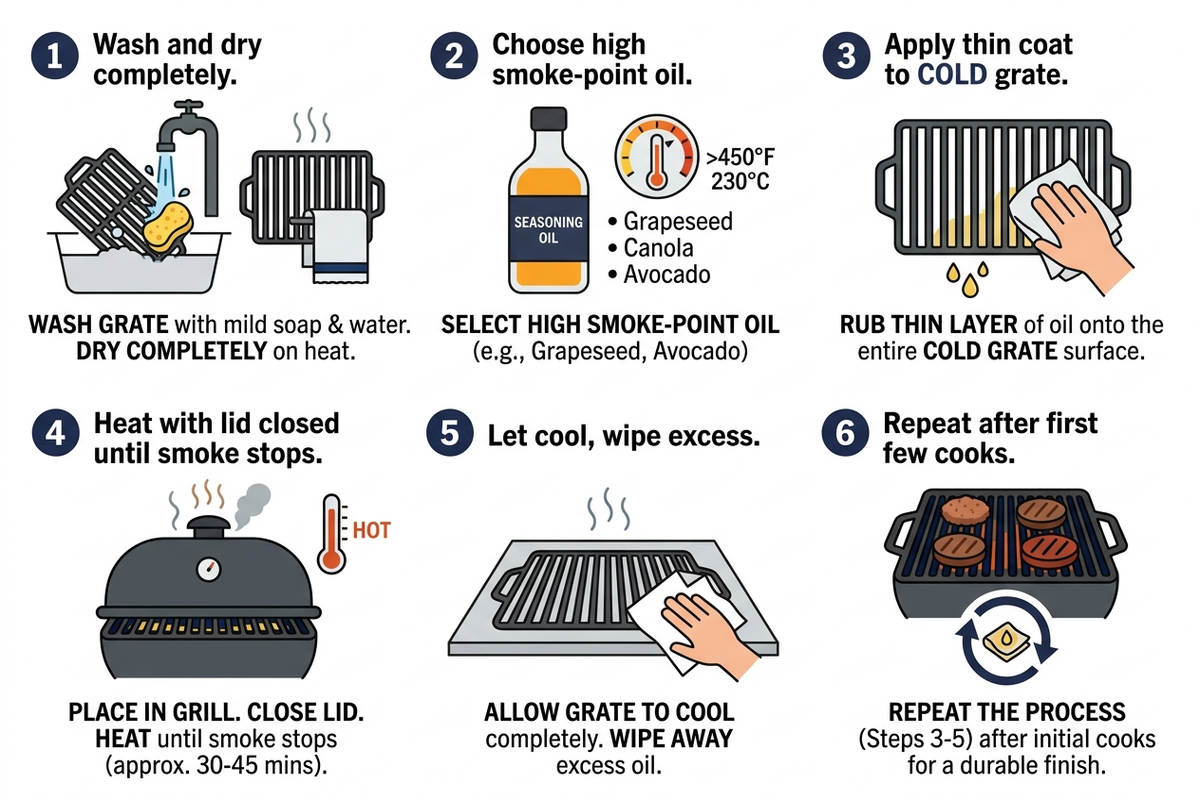
- Wash and dry completely first. Any moisture left on bare cast iron before oiling will cause it to flash-rust under heat instead of seasoning evenly.
- Choose a high-smoke-point oil. Canola oil (smoke point roughly 400–450°F) and vegetable oil (roughly 400°F) are the two most commonly recommended options in manufacturer and cast-iron-care guidance, because they’re affordable, widely available, and can be heated well past typical grilling temperatures without smoking immediately. Flaxseed and grapeseed oil are cited by cast-iron specialists as producing a slightly harder seasoning layer, but they cost more and aren’t necessary for a grill grate.
- Apply a thin, even coat to cold grates — never to a hot grill. Using a paper towel or a spray bottle, coat the entire grate surface including the edges and undersides. Manufacturer safety guidance is explicit that oil should never be sprayed or applied directly onto a hot grate, since vaporizing oil near an open flame is a fire and burn risk.
- Heat the grill with the lid closed until the oil stops smoking. This typically takes 15–20 minutes on high heat. The smoke is the oil polymerizing into a hardened, non-stick layer bonded to the metal surface — this is the actual “seasoning,” not just a coating sitting on top.
- Let it cool, then wipe off any excess. A properly seasoned grate should look matte black or dark gray, not glossy or tacky.
- Repeat after the first few cooks. Cast-iron care guidance consistently recommends re-oiling lightly after the grate cools from each early use, and more generally after any especially wet, acidic, or heavily-scrubbed cook, since that’s when the seasoning layer wears thinest.
Manufacturer Guidance by Brand
Prices as of 2026-10-11. Guidance below reflects each manufacturer’s current published instructions, not independently measured by Arekore.
| Brand / grate type | Seasoning required? | First-use instruction | Ongoing maintenance |
|---|---|---|---|
| Weber (porcelain-enameled, most current gas grills) | No | Preheat, then clean with a bristle brush | Brush after each use; no oiling needed |
| Char-Broil (stainless or coated grates, varies by line) | Light oiling recommended, not required | Wash to remove shipping wax, then apply a thin coat of high-heat oil and burn off 15+ minutes | Light oil coat after cooling, especially early on |
| Char-Griller (bare cast iron grates) | Yes, required | Wash, dry fully, oil cold grates, heat until smoke stops | Re-oil after cooling from each of the first several cooks; periodically after that |
Editorial Recommendation by Grate Type
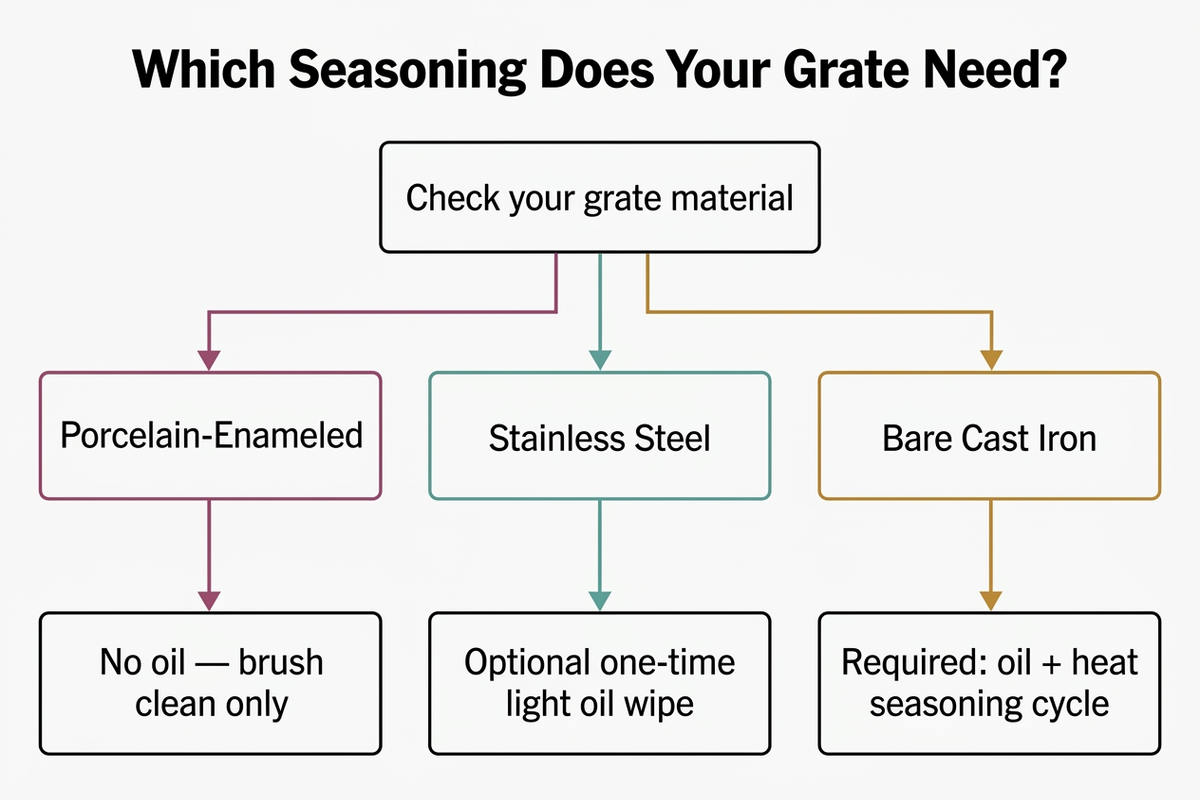
- If your grill has porcelain-enameled grates (check your manual — most current Weber gas grills): skip oiling entirely. Preheat, brush, and start cooking. Adding oil here just creates a sticky film the enamel wasn’t designed to hold.
- If your grill has bare cast iron grates: treat the oil-and-heat seasoning cycle as mandatory, not optional — this is what prevents visible rust within the first week, according to manufacturer cast-iron care guidance.
- If your grill has stainless steel grates: a one-time light oil wipe before the first cook reduces sticking, but don’t feel obligated to re-season repeatedly the way a cast-iron owner would — stainless doesn’t need an oil layer to resist rust.
- If you’re not sure which material your grill has: check the owner’s manual or the manufacturer’s product page before oiling anything. Porcelain and cast iron can look similar in product photos, and applying cast-iron seasoning steps to an enameled grate wastes oil without improving performance.
A Note on Warranties
Manufacturer warranties on grates typically cover material defects — rust-through on a porcelain-enameled grate under normal use, for example — but most exclude damage caused by incorrect care, including skipping manufacturer-recommended seasoning on bare cast iron or using an abrasive cleaning method the manual warns against. Checking your specific grill’s warranty terms for “grate” or “cooking grid” coverage before deciding how aggressively to clean or season is worth the few minutes it takes, since a documented care mistake is one of the more common reasons a grate-replacement warranty claim gets denied.
Limitations
This analysis relies on manufacturer-published first-use and care instructions, aggregated cast-iron-care guidance, and Consumer Reports’ general grill-maintenance reporting, rather than a controlled side-by-side seasoning test Arekore ran itself. Exact smoke-off time, rust risk, and oil absorption vary by specific grate thickness, climate humidity, and how the grill is stored between uses. Market-research estimates put US grill or smoker ownership at roughly 70% of households as of recent survey data, with gas grills representing a large share of that — a scale note on how common this first-use question is, not a claim about any individual product’s performance.
As an Amazon Associate, Arekore earns from qualifying purchases. The Amazon product links in this article include our affiliate tracking ID and may earn us a commission if you buy through them, at no additional cost to you. See our Links Policy for details on how we select products and how commissions do not influence our recommendations.
Seasoning Supplies We Found on Amazon
- Weber Grill’N Spray, Non-Flammable No-Stick Grilling Spray, 6 oz — safe to apply directly to a hot grate, designed for ongoing non-stick touch-ups rather than the initial cold-grate seasoning cycle described above.
- Lodge Cast Iron Seasoning Spray, 100% Canola Oil, 8 oz — an even-coverage spray format suited to the cold-grate oiling step for bare cast iron grates.
- Grillaholics Essentials Stainless Steel Wire Grill Brush — for the post-burn-off brushing step manufacturers recommend before the first cook on any grate material.
Before buying seasoning products, confirm your specific grill’s grate material in the owner’s manual — the product that’s right for a bare cast iron grate can be the wrong choice for a porcelain-enameled one.