Roomba vs Shark: Which Robot Vacuum Wins in 2026?
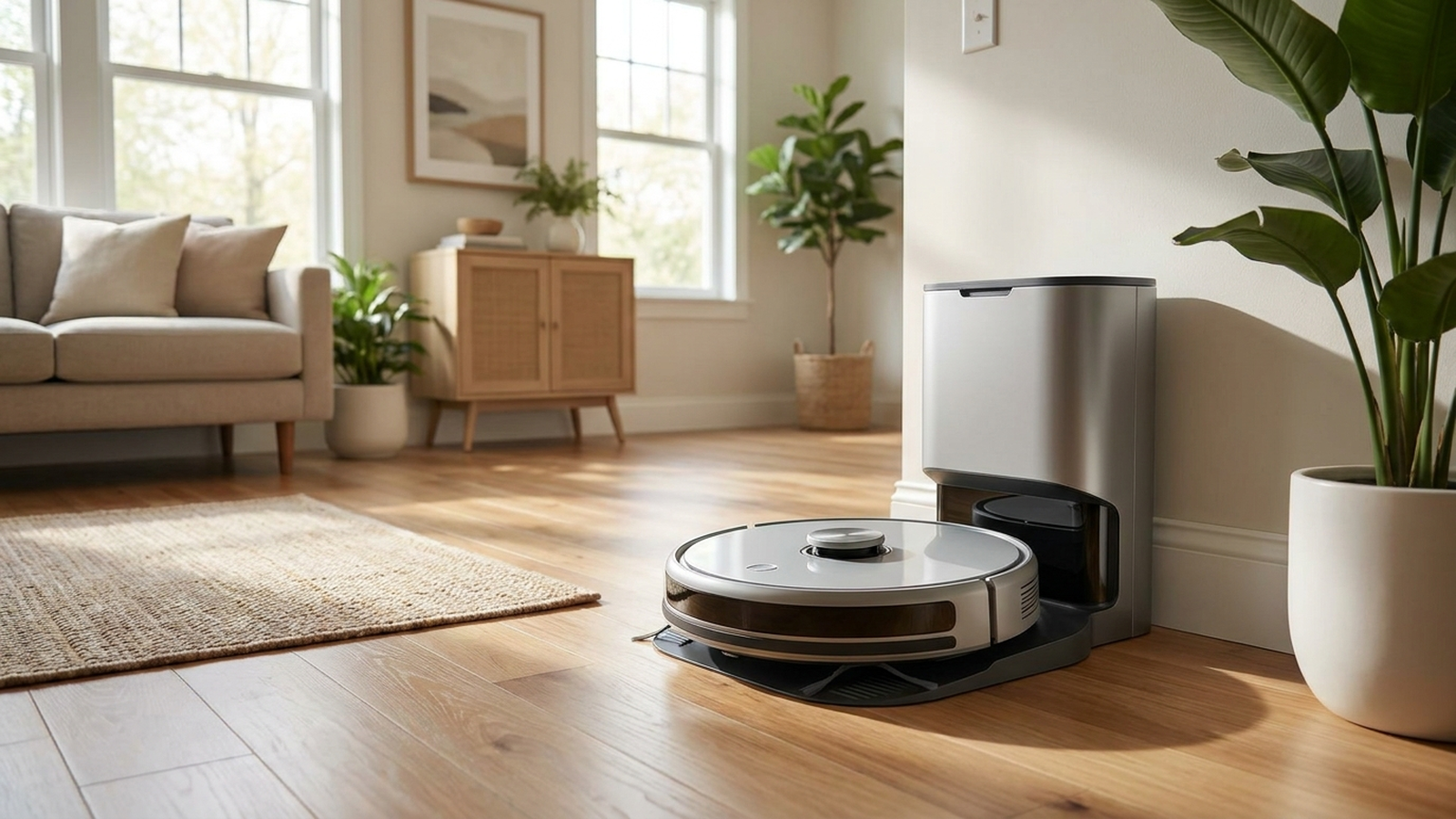
Roomba invented the robot vacuum category in 2002 and, for most of the two decades since, was the default answer to “which robot vacuum should I buy?” Shark, a much newer entrant from appliance maker SharkNinja, has spent the last several years closing that gap from below — undercutting Roomba on price while matching much of its feature set. For 2026 shoppers, the question is no longer “is Shark good enough?” but “which specific tier and use case does each brand actually win?” This guide compares Roomba and Shark model-for-model using aggregated Amazon customer data, independent lab testing, and manufacturer specifications.
As an Amazon Associate, Arekore earns from qualifying purchases. The Amazon product links in this article include our affiliate tracking ID and may earn us a commission if you buy through them, at no additional cost to you. See our Links Policy for details on how we select products and how commissions do not influence our recommendations.
TL;DR / Quick Verdict
- Overall winner for most buyers: it depends on what you weight more. Across the tiers we compare below, Roomba’s premium buys a longer track record on obstacle recognition and carpet/pet-hair performance, while Shark consistently matches most of that feature set — self-emptying, LiDAR mapping, active mopping — at a meaningfully lower price, often several hundred dollars less at the same tier.
- Best flagship: the iRobot Roomba Combo j9+ — a genuine edge on carpet and pet hair from its dual rubber brush design, plus the pet-waste replacement guarantee, at a real premium.
- Best flagship value: the Shark PowerDetect 2-in-1 — self-empties, refills its own water tank, and actively scrubs the floor with sonic mopping, at several hundred dollars less than the Roomba Combo j9+.
- Best budget/mid-tier pick: the Shark Matrix Plus — LiDAR mapping, self-emptying, and basic mopping for well under $500, a segment where Roomba’s comparable Combo Essential lacks self-empty and LiDAR entirely.
- The scenario that favors Roomba regardless of price: thick carpet and shedding pets, where iRobot’s rubber counter-rotating brushes and its pet-waste replacement guarantee remain measurable, tested advantages.
- The nuance CR data adds: Consumer Reports’ own top-rated robot vacuum for 2026 is an iRobot model, the Roomba Max 705 — even though iRobot’s brand-wide reliability and owner-satisfaction survey marks trail the category leaders, a reminder that a single model’s cleaning score and a brand’s aggregate reliability record are separate questions.
How We Reached These Conclusions (Methodology)
This is an editorial analysis, not a hands-on review; we did not personally test the products covered here. This guide synthesizes three kinds of public information: (a) aggregated amazon.com customer ratings and the substance of both positive and critical reviews, sampled in September 2026 — we did not tabulate a precise review count across all four models, so treat “aggregated review data” below as directional rather than a scored sample; (b) independent third-party testing and reporting from Consumer Reports and Tom’s Guide, plus broader industry reporting on navigation and brush-design engineering; and (c) manufacturer specifications from iRobot and SharkNinja. Where we cite a manufacturer figure — suction in pascals (Pa), self-empty capacity in days, runtime — we label it as a manufacturer claim rather than an independently verified result. Prices are amazon.com figures at the time of writing and change frequently, especially around sale events.
Technical Approach: Navigation, Brushes, and Mopping
The performance gap between these brands traces back to a handful of engineering choices, not brand loyalty.
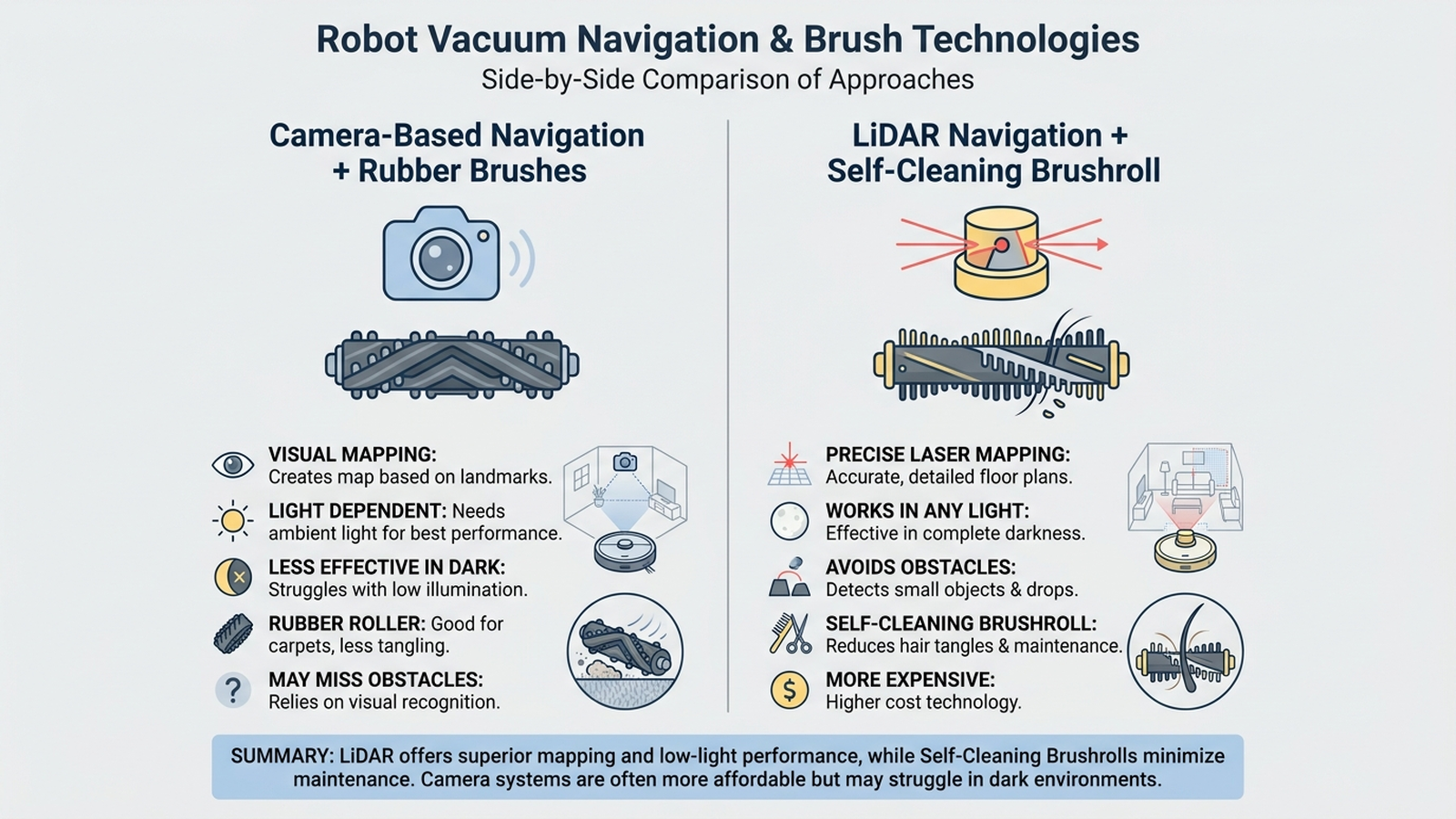
- Navigation. iRobot’s flagship Roombas use camera-based VSLAM navigation paired with object-recognition cameras, which is designed to identify and avoid specific obstacle types — cords, socks, pet waste — rather than just mapping around a generic shape. Shark’s higher-end models (PowerDetect, Matrix Plus) use LiDAR laser mapping, which builds an accurate floor plan quickly and works reliably in low light; Shark’s newer object-detection cameras have narrowed the gap on identifying specific obstacle types, though independent test results on this point are mixed between the brands and change quickly as both companies ship new models.
- Brush design. iRobot’s dual rubber counter-rotating brushes are a real, well-documented advantage on medium-to-thick carpet and for reducing hair tangles versus older bristle-brush designs. Shark’s self-cleaning brushroll uses a comb mechanism to strip wrapped hair automatically; it closes much of the gap on bare floors and light-to-medium carpet, with reviewers split on which brand still leads on deep pile.
- Suction. Manufacturer-claimed suction runs roughly comparable between the two brands’ flagships — both in the 20,000+ Pa-class range on their newest self-empty combo units — though as with any manufacturer figure, treat these as a ceiling rather than a guarantee, since brush design and airflow engineering matter more than the raw number once suction clears roughly 5,000–8,000 Pa.
- Mopping. Shark’s sonic-scrubbing mop technology (used across the PowerDetect and Matrix Plus lines) actively scrubs the floor rather than dragging a damp pad, and Shark markets this as a differentiator against Roomba’s simpler flat mop-pad approach. Independent reviewers are genuinely split on which brand’s real-world mopping result is stronger — treat mopping as a feature to compare model-by-model rather than a fixed brand advantage.
Head-to-Head: Flagship Tier (~$800–$1,400)
iRobot Roomba Combo j9+ self-empties, auto-refills its own water tank, and uses an auto-retracting mop that lifts fully onto the robot’s body when it detects carpet, so it never drags a wet pad onto a rug. Aggregated review data credits it with dependable object recognition and a real edge on carpet and pet hair from its dual rubber brush design. Its mopping is functional but not its strong suit. Listed at $1,399.99, it has been discounted to as low as roughly $999.99 on Amazon in recent sale events (as of 2026-09-24).
Check the iRobot Roomba Combo j9+ on Amazon
Shark PowerDetect 2-in-1 Robot Vacuum & Mop self-empties, washes and dries its own mop, refills its water tank, and uses 360° LiDAR plus 3D object detection to navigate — all for meaningfully less than the Roomba Combo j9+. Its sonic mopping actively scrubs the floor rather than dragging a damp pad, and its “NeverStuck” navigation is designed to reduce the getting-wedged-under-furniture complaints common on older robot vacuums. Listed at $899.99, it has recently sold for as low as roughly $499.99 on Amazon (as of 2026-09-24).
Check the Shark PowerDetect 2-in-1 on Amazon
Verdict at this tier: the PowerDetect delivers most of the Combo j9+‘s hands-free convenience at a price that is often 30–40% lower even before discounts, and its sonic mopping is a genuine differentiator against Roomba’s simpler flat-pad approach. The Roomba remains the stronger pick specifically for heavy carpet and shedding-pet households that value its brush design and the pet-waste guarantee over the price gap.
Head-to-Head: Budget/Mid Tier (~$300–$450)
iRobot Roomba Combo Essential is a genuinely entry-level vacuum-and-mop combo: it uses camera-based smart navigation that cleans in neat rows, but has no self-emptying dock and no LiDAR, so it needs its bin emptied by hand after most runs. It typically sells for around $379.99 on Amazon (as of 2026-09-24), and its main appeal is the Roomba name and app ecosystem at a lower entry price.
Check the iRobot Roomba Combo Essential on Amazon
Shark Matrix Plus undercuts the Combo Essential on features at a comparable or lower price: it adds 360° LiDAR mapping, a self-emptying base rated for up to 60 days of hands-free operation (manufacturer claim), sonic mopping, and an anti-hair-wrap self-cleaning brushroll. Reviewers frequently describe it as an excellent entry point specifically because it doesn’t skip the features that usually get cut at this price. Listed at $449.99, it has recently sold for as low as roughly $299.99 on Amazon (as of 2026-09-24).
Check the Shark Matrix Plus on Amazon
Verdict at this tier: the Matrix Plus is the clear value pick — it adds LiDAR mapping and self-emptying at a price at or below the Combo Essential, which has neither. The Combo Essential’s case rests mainly on buyers who specifically want Roomba’s camera-based navigation and app ecosystem and are willing to trade away self-emptying to get it at this price.
Customer Sentiment and Reliability Synthesis
- Reviewer opinion on obstacle avoidance and mopping is genuinely split between the brands, and shifts quickly as both companies ship new models each year — treat any single outlet’s “winner” call on these two dimensions as a snapshot rather than a settled fact, and check a specific model’s current review scores before assuming a brand-wide edge.
- Consumer Reports’ member reliability surveys give iRobot only middling marks for predicted reliability and owner satisfaction as a brand, yet Consumer Reports’ own top-rated robot vacuum for 2026 is an iRobot model, the Roomba Max 705, which the outlet praises specifically for pet-hair pickup and carpet cleaning. Consumer Reports has separately given some of Shark’s traditional corded vacuums strong reliability marks in its member surveys — a data point about Shark’s non-robot vacuum lineup, not a direct measure of its robot vacuums’ reliability.
- Pet-hair handling splits by mechanism, not just brand. Tom’s Guide’s dedicated Roomba-vs-Shark pet-hair comparison notes that Roomba’s rubber rollers are less likely to trap hair and may be easier to maintain long-term, while Shark’s self-cleaning brushroll uses an automated comb to strip hair — both approaches work, but reviewers give a slight long-term maintenance edge to Roomba’s rubber-roller design.
- App reliability is a recurring complaint on both sides. Aggregated review data references intermittent app freezing and Wi-Fi reconnection issues for both brands; neither is complaint-free, and neither issue tracks cleanly to a specific price tier.
- Net read: aggregated sentiment favors Shark on price-to-feature value, and favors Roomba specifically on carpet/pet-hair performance and its pet-waste guarantee; obstacle avoidance and mopping are close enough between current flagship models that they shouldn’t be the deciding factor on their own — pick based on carpet, pets, and budget first.
Side-by-Side Comparison
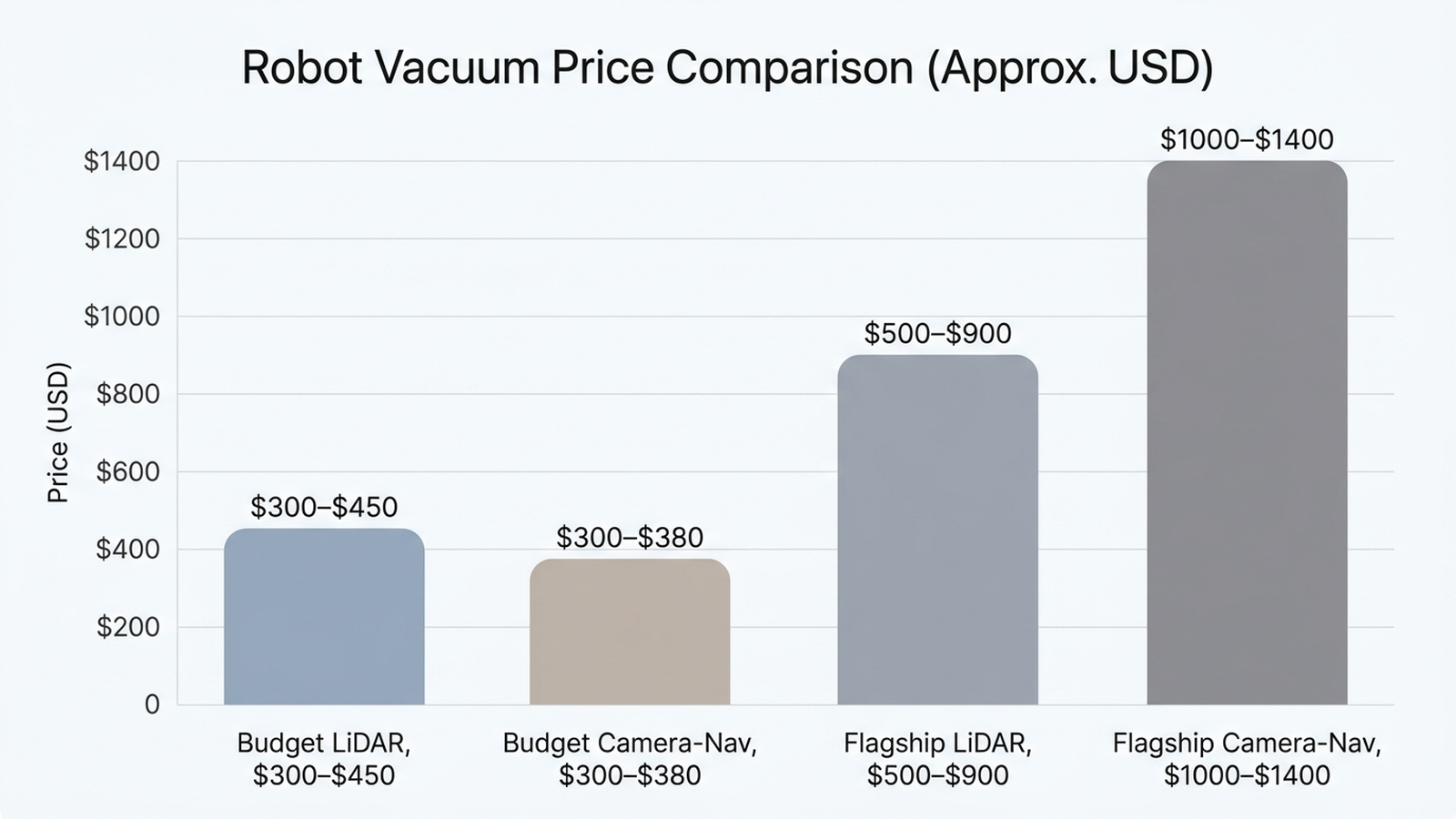
| Model | ASIN | Tier | Navigation | Mopping | Self-empty | Approx. price (as of 2026-09-24) |
|---|---|---|---|---|---|---|
| Shark Matrix Plus | B0B89C8H4Q | Budget/Mid | LiDAR | Yes (sonic) | Yes (~60 day) | $300–$450 |
| iRobot Roomba Combo Essential | B0CNKVHSS9 | Budget/Mid | Camera | Yes (basic) | No | $300–$380 |
| Shark PowerDetect 2-in-1 | B0DCPX2M8N | Flagship | LiDAR + 3D detection | Yes (sonic, self-clean) | Yes (60 day) | $500–$900 |
| iRobot Roomba Combo j9+ | B0C415HQPX | Flagship | Camera/VSLAM | Yes (auto-retract) | Yes (auto-fill) | $1,000–$1,400 |
Suction, runtime, and self-empty capacity figures are manufacturer specifications; Consumer Reports and Tom’s Guide test findings cited elsewhere in this article are independently measured. Prices fluctuate — verify the current amazon.com price before buying.
How to Decide
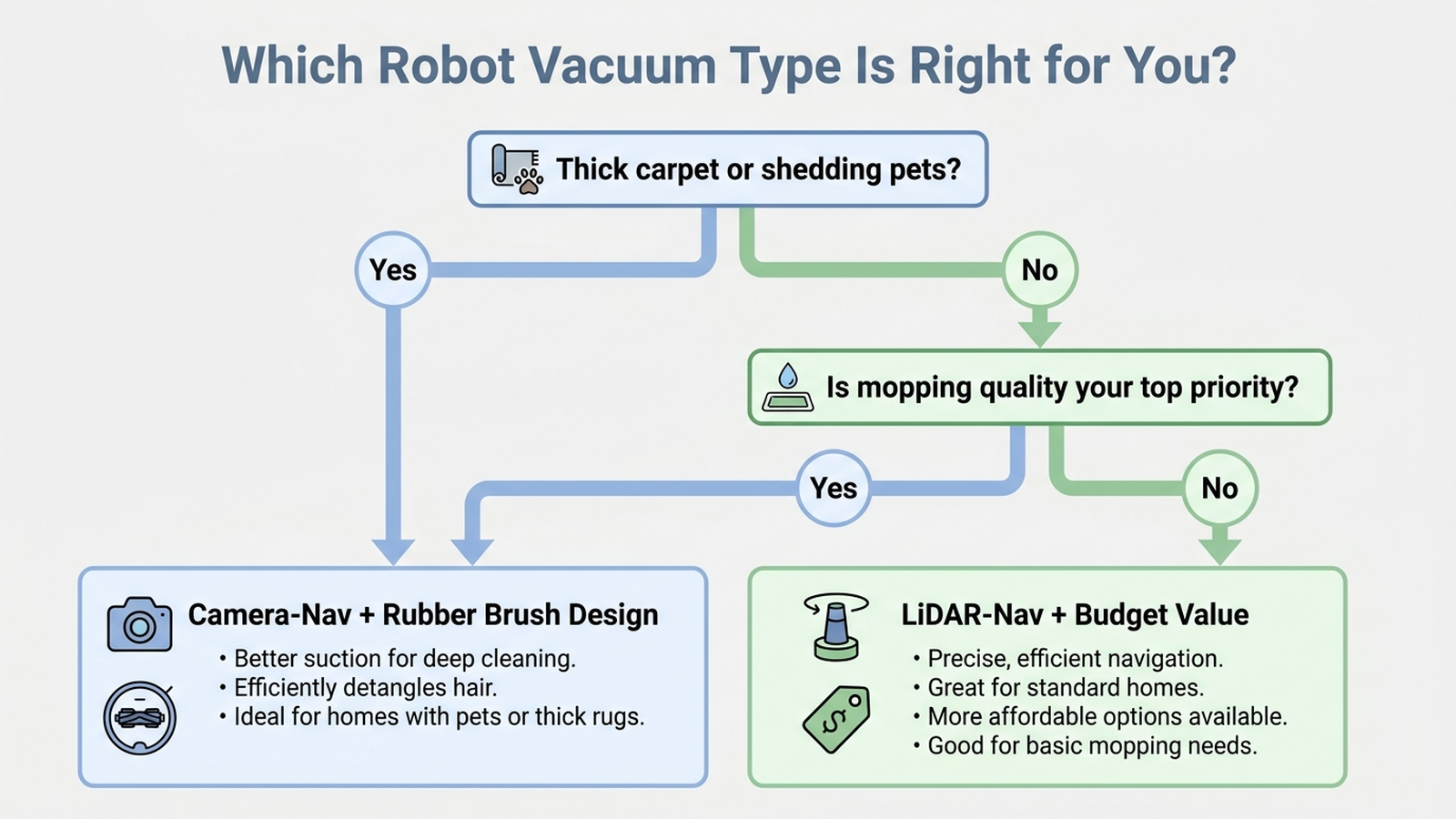
Start with your floors and your budget, not brand loyalty. If your home is mostly bare floors and you care most about dollar-for-dollar value and active mop scrubbing, Shark is the stronger buy at both tiers we compare here. If you have thick carpet, shedding pets, and want the pet-waste replacement guarantee, Roomba’s brush design is a real, tested advantage worth the premium. If you’re shopping the entry-level tier specifically, skip Roomba’s cheapest combo — the Shark Matrix Plus gets you LiDAR and self-emptying that the comparable Roomba lacks at a similar price.
Warranty and Support
Both brands commonly offer a 1-year limited warranty on the robot and its dock (manufacturer terms; confirm at purchase). iRobot’s Roomba lineup includes the P.O.O.P. Guarantee on eligible models — a no-questions-asked replacement if the robot runs over pet waste — which is frequently cited favorably in pet-household reviews and has no direct Shark equivalent. As with any robot vacuum, most warranty claims trace back to routine maintenance issues — tangled brushes, clogged self-empty bins, worn mop pads — rather than manufacturing defects, so registering the unit and following the recommended cleaning schedule matters regardless of brand.
Editorial Recommendation by Use Case
- You want the best overall value at the flagship tier: the Shark PowerDetect 2-in-1.
- You want the best entry-level pick with LiDAR and self-emptying: the Shark Matrix Plus.
- You have thick carpet, shedding pets, and want the pet-waste replacement guarantee: the iRobot Roomba Combo j9+ (flagship) — worth the premium for this use case specifically.
- You want Roomba’s ecosystem at the lowest possible entry price: the Roomba Combo Essential, but understand you’re trading away self-emptying and LiDAR to get there.
- Everyone: clean the brushroll and empty the dock or bin on schedule — maintenance, not brand, is the biggest driver of long-term satisfaction with either company’s robots.
Limitations
This analysis relies on publicly available reviews, third-party test reporting, and manufacturer specifications; we did not independently lab-test these units. Suction, runtime, and self-empty capacity figures are manufacturer claims unless attributed to a named third-party tester such as Consumer Reports or Tom’s Guide, and real-world results vary with floor type, home size, pet shedding, clutter, and unit-to-unit variance. Prices and availability were accurate to our research at the time of writing and change frequently, especially around sale events — verify current specs and pricing on the product page before buying.
Before you buy either brand’s robot, it pays to check that a listing’s reviews are genuine and that a sale price is an actual discount rather than an inflated “was” price. That is exactly what Arekore does: paste the Amazon URL and our AI analyzes review authenticity, surfaces the most useful low-star feedback, and compares pricing in about five minutes — so you end up with the robot vacuum that actually fits your home, not just the one with the biggest suction number on the box.