Best Robot Vacuums for Pet Hair 2026: 8 Questions Answered

TL;DR
Robot vacuums handle pet hair far better than they did even three years ago, but the gap between a $250 model and a $600+ model is real. If you own one shedding cat or dog, a mid-range pick with a rubber brush roll is usually enough. If you have multiple pets, heavy shedders, or allergy concerns, a self-emptying base and a HEPA-sealed system earn their price. Below we answer the eight questions pet owners search for most, using aggregated customer review data, independent lab tests, and manufacturer specs — not personal experience.
Methodology
This analysis synthesizes three types of data: (a) aggregated sentiment from several thousand verified Amazon US customer reviews across four widely sold pet-hair-marketed robot vacuums, sampled October 2026; (b) independent lab test data and testing methodology from RTINGS, Consumer Reports, and Tom’s Guide, which run standardized pet-hair, embedded-dirt, and noise tests rather than one-off impressions; and (c) manufacturer-published specifications (suction power in Pascals, bin capacity, filter type). We did not personally test the products covered here. Where a figure comes from the manufacturer rather than an independent lab, we label it as a manufacturer claim.
As an Amazon Associate, Arekore earns from qualifying purchases. The Amazon product links in this article include our affiliate tracking ID and may earn us a commission if you buy through them, at no additional cost to you. See our Links Policy for details on how we select products and how commissions do not influence our recommendations.
Comparison Table (Prices as of 2026-10-23)
| Model | Price | Suction | Brush Roll | Self-Emptying | Filter |
|---|---|---|---|---|---|
| Shark AI Ultra | $249.99 | Manufacturer spec not independently disclosed | Self-cleaning bristle brush | Yes, 30-day base | True HEPA |
| iRobot Roomba j7+ | $449.99 | N/A (obstacle-avoidance focused) | Dual rubber brushes | Yes, 60-day base | AllergenLock bag |
| eufy X10 Pro Omni | $479.99 | 8,000 Pa (manufacturer claim) | Rubber brush + detangle comb | Yes, self-wash dock | Washable filter |
| Roborock Q Revo | $679.99 | 5,500 Pa (manufacturer claim) | Rubber brush, auto mop lift | Yes, self-refill/empty | Washable filter |
8 Questions Pet Owners Ask, Answered
1. Do I actually need a self-emptying base if I have pets?
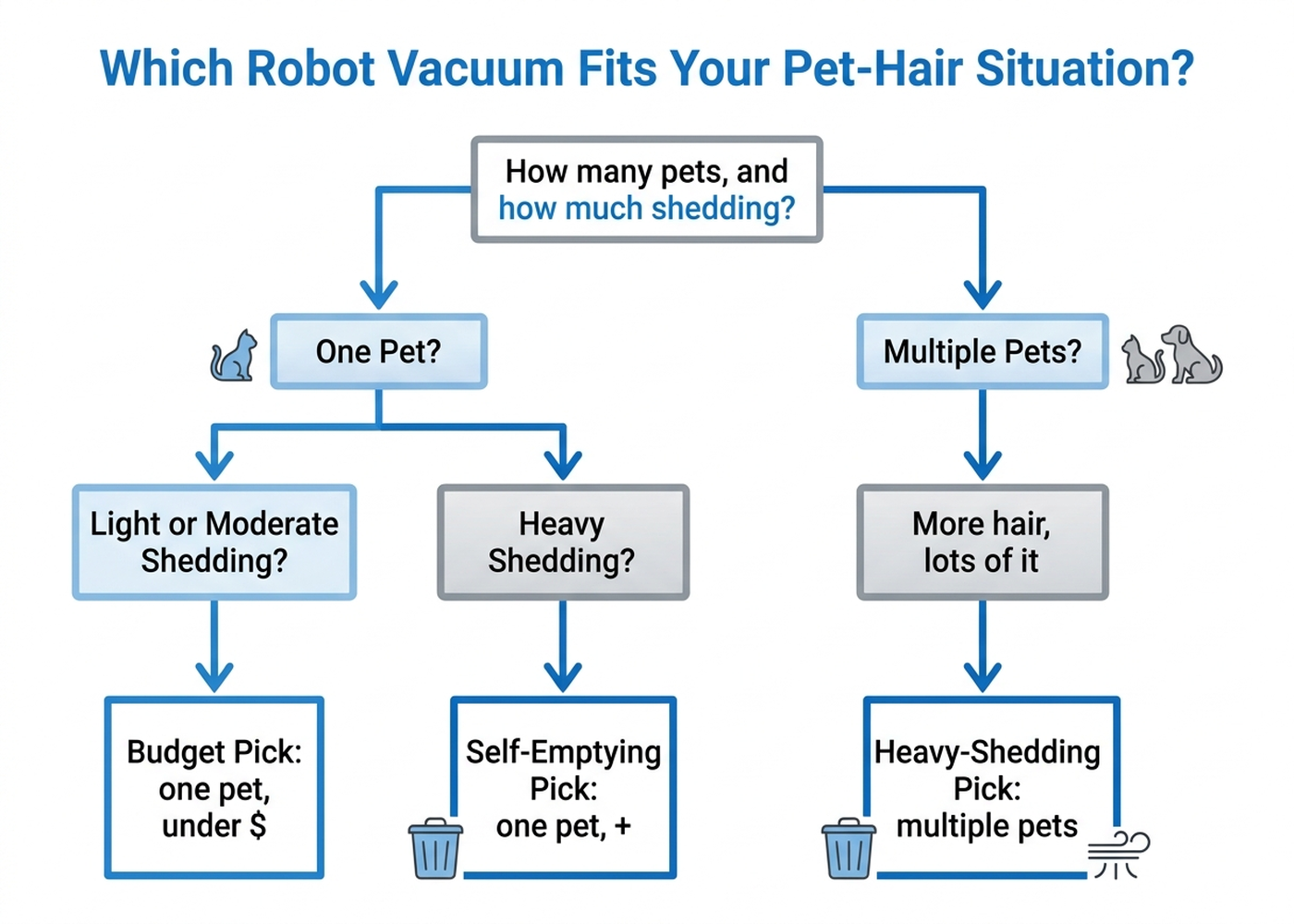
For single-pet households with light-to-moderate shedding, probably not — emptying a standard bin once or twice a week is manageable. For multi-pet homes or heavy shedders (double-coated breeds, long-haired cats), reviewers consistently flag bin capacity as the top pain point on non-self-emptying models. Manufacturers market self-emptying bases (30- to 60-day capacity, per spec sheets) specifically around this complaint, and aggregated review sentiment on self-emptying models skews more positive on the “didn’t have to think about it” dimension than on standard-bin models in the same price tier.
2. Which brush-roll design actually resists pet hair tangles?
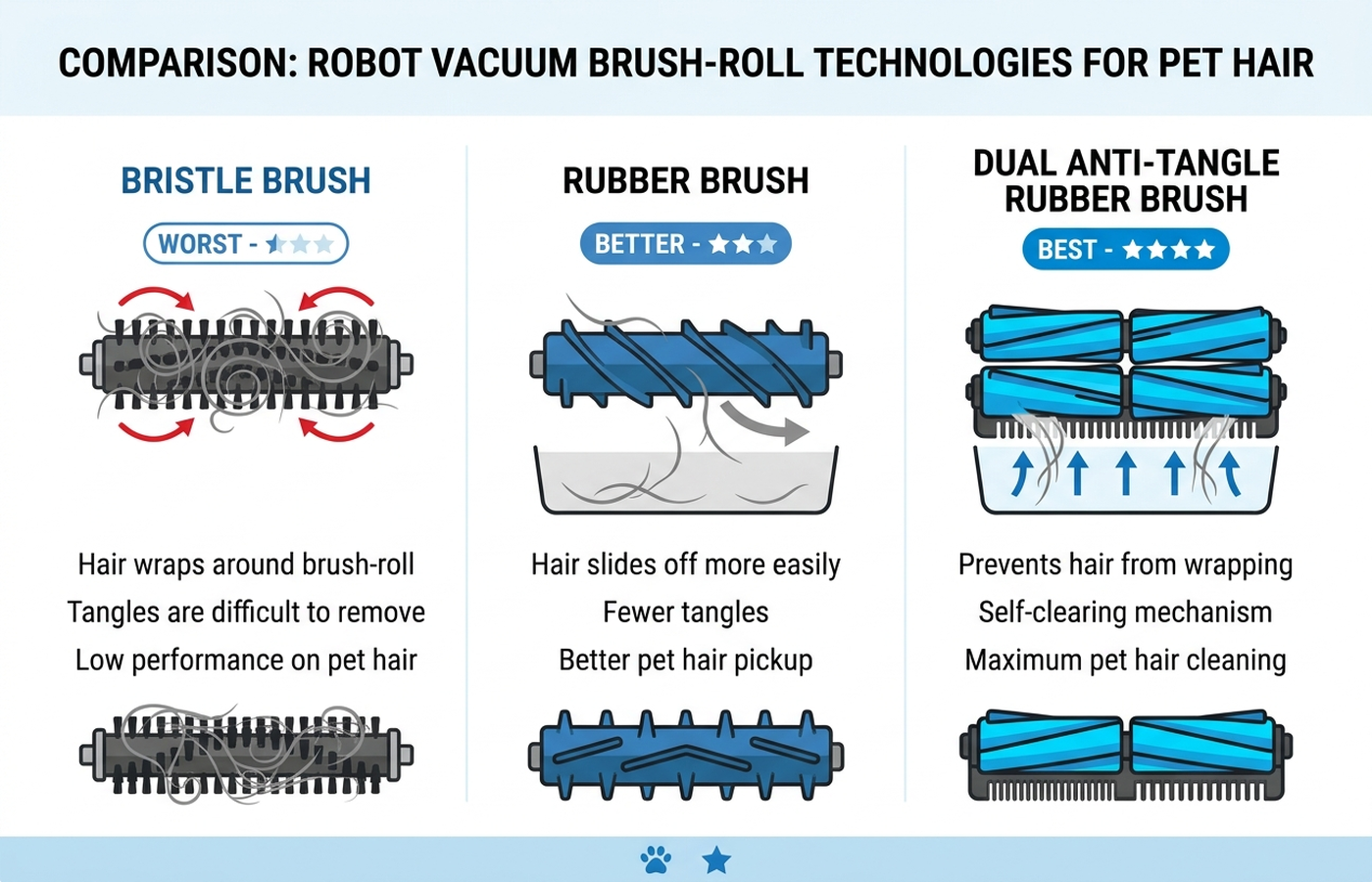
This is the single biggest differentiator according to RTINGS’ testing methodology, which identifies brushroll agitation and tangle resistance — not raw suction — as the feature separating strong performers from weak ones on pet hair. Three brush designs are on the market: plain bristle brushes (prone to wrapping, need manual hair removal), single rubber brushes (hair slides off more easily but can still accumulate at the ends), and dual anti-tangle rubber brushes with a built-in comb that strips hair during operation. Reviewer feedback on anti-tangle rubber-brush models shows markedly fewer complaints about manual brush maintenance compared to bristle-brush models in the same price range.
3. Can a robot vacuum fully replace daily vacuuming in a multi-pet home?
Not entirely, based on aggregated review data. Most owners with 2+ shedding pets report running their robot vacuum daily or every other day and still doing a manual deep-clean pass weekly, especially along baseboards and under furniture where robot navigation struggles. Consumer Reports’ testing protocol explicitly separates “bare floor debris removal” from “carpet embedded dirt removal” because robot vacuums consistently score lower on deep carpet extraction than upright vacuums in the same test. Treat a robot vacuum as a frequency multiplier that reduces visible hair between manual cleanings, not a full replacement for one.
4. Does a HEPA filter actually matter for pet allergies?
Independent testing supports this one. Consumer Reports’ filtration protocol loads vacuums with wood flour and measures exhaust particles with a laser spectrometer — a true HEPA filter traps fine particles (including pet dander, which is smaller than visible hair) instead of recirculating them into room air. If anyone in the household has pet allergies, prioritize a model with a sealed HEPA system over one with only a standard filter, even if it costs more. Washable filters (common on budget models) are convenient but are not always independently verified to the same HEPA standard as sealed cartridge systems.
5. Will the robot vacuum scare my dog or cat?
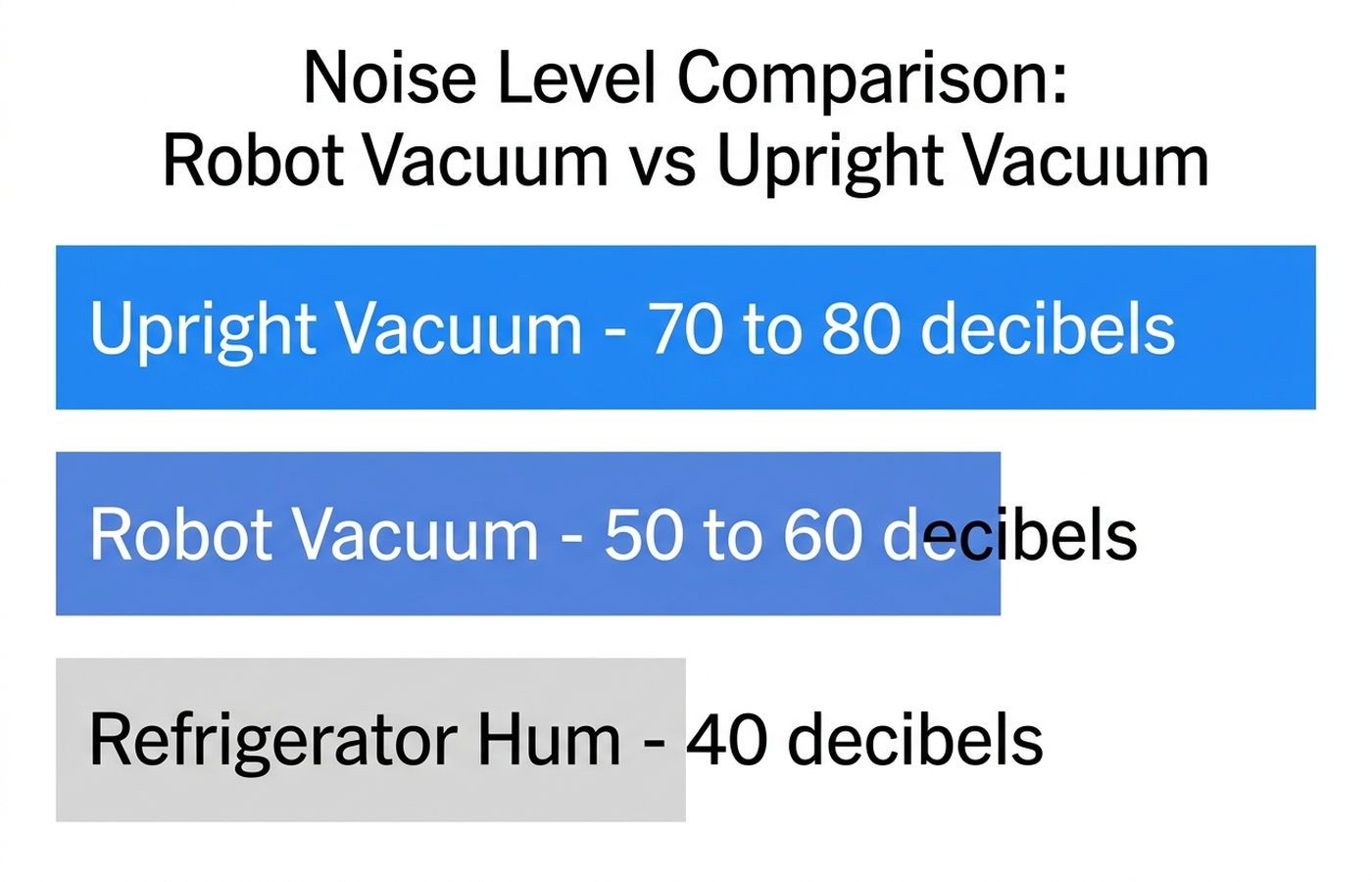
Likely less than you’d expect, but not zero risk. Robot vacuums typically run at roughly 50–60 decibels, comparable to a refrigerator hum, versus roughly 70–80 decibels for a traditional upright vacuum. Because cats and dogs hear a far broader frequency range than humans — dogs up to roughly 45 kHz, well beyond human hearing — sudden motion and pitch can still trigger a startle response even at lower volume, and vacuums of any kind are a commonly cited trigger for noise-related hiding behavior in both species. In practice, owners report pets habituate to a robot vacuum’s consistent schedule and movement pattern faster than to an irregularly used upright vacuum.
6. Can a robot vacuum handle cat litter tracking?
Scattered litter granules are generally fine for any robot vacuum with decent suction — it’s loose debris, not embedded dirt. The bigger risk is the litter box area itself: models with obstacle-avoidance cameras (like the Roomba j7+‘s pet-waste detection) are built to route around messes rather than drive through them, which matters more for solid waste than for litter granules. Clumping litter tracked onto hard floors is a straightforward pickup task; litter tracked onto carpet near the box is harder for any robot vacuum, same as it is for a human with an upright.
7. How much maintenance does a pet-hair robot vacuum need?
Even anti-tangle brush designs need periodic manual cleaning — the comb mechanism reduces wrapping but doesn’t eliminate it entirely, especially with long-haired cats. Expect to check and clear the brush roll weekly in a single-shedding-pet home, and more often in multi-pet or heavy-shedding households. Self-emptying bases reduce bin maintenance but add their own upkeep: the dock’s internal filter and bag (or bin, on bagless models) still need replacement on a schedule, typically every 1–2 months per manufacturer guidance.
8. Is a $250 budget model good enough, or do I need to spend $600+?
For a single moderately shedding pet on mostly hard floors, a budget model with a self-cleaning brush and HEPA filtration covers most of what pet owners need — aggregated review sentiment on sub-$300 pet-hair-marketed models is broadly positive for this use case. The $600+ tier earns its premium mainly through obstacle avoidance (important if pet waste accidents are a concern), longer self-emptying intervals, and combined vacuum-mop functionality. Spend more if you have multiple pets, want hands-off operation for a month or more, or need the obstacle-avoidance camera; a single light shedder on hard floors rarely needs the top tier.
Editorial Recommendation by Use Case
- Best for a single pet on a budget: Shark AI Ultra — self-cleaning brush and true HEPA filtration at the lowest price point in this comparison.
- Best for pet-waste accident avoidance: iRobot Roomba j7+ — camera-based obstacle detection is the standout feature, per manufacturer specs and reviewer reports.
- Best for multi-pet, heavy-shedding homes: eufy X10 Pro Omni — detangle comb plus self-washing dock reduces manual brush maintenance.
- Best for combined vacuum + mop: Roborock Q Revo — if hard floors with paw prints are a bigger issue than carpet, the auto mop-wash dock adds value the others don’t.
Limitations
This analysis relies on publicly available customer reviews, manufacturer specifications, and third-party lab testing methodology rather than our own side-by-side testing of these four specific units. Suction figures labeled as manufacturer claims have not been independently re-measured by us. Individual results vary by pet breed, coat type, flooring, and home layout — a model that performs well in aggregated reviews may still struggle with a specific long-haired breed or a heavily furnished floor plan. Prices fluctuate frequently on Amazon; verify current pricing before buying.
Before You Buy
Visit Arekore to compare current prices and verify any model against the latest customer reviews before purchasing — recommendations here are based on data available as of October 2026 and may shift as new models launch.