Roborock Qrevo Review 2026: Is the Auto-Empty Dock Worth It?
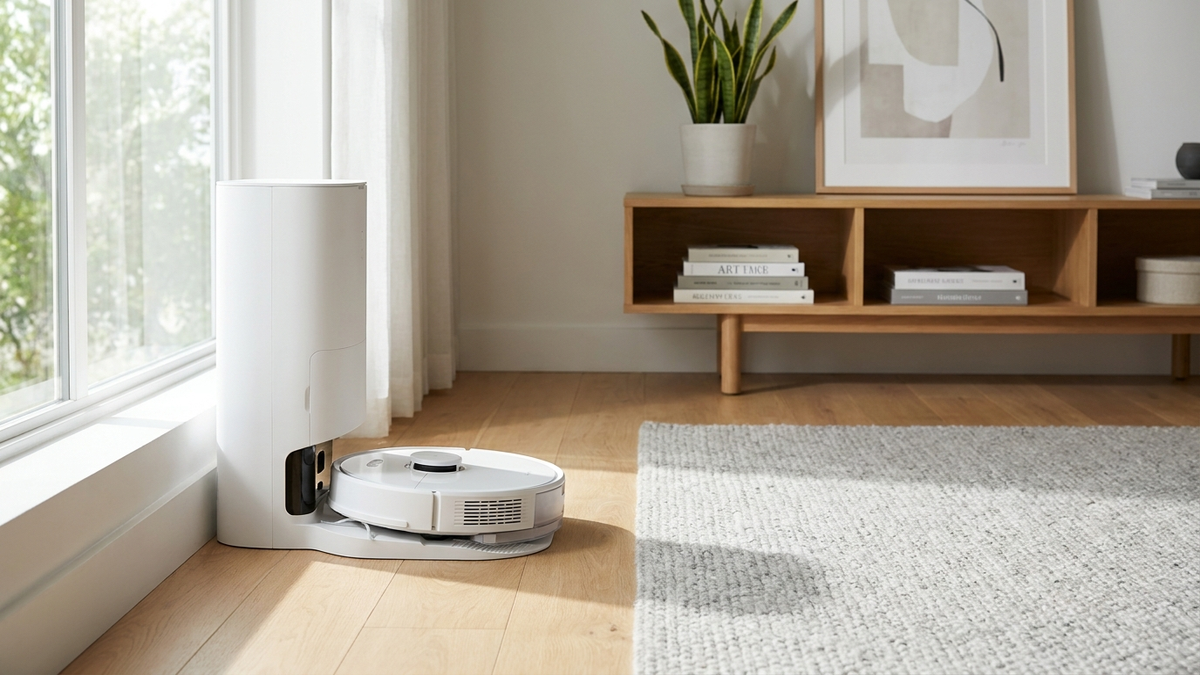
Roborock’s Qrevo Curv line sells itself on one core promise: the dock does almost everything the dustbin and mop bucket used to require a human for. It empties the robot’s onboard bin into a larger bag, washes the spinning mop pads in hot water, dries them with warm air, and refills the clean-water tank — all without opening a cabinet. That convenience comes at a real price gap over a basic robot-and-charger setup, and it adds a second machine with its own moving parts, water lines, and recurring costs. We pulled apart manufacturer specs, independent lab testing, and aggregated owner feedback to see whether the auto-empty, self-washing dock earns its keep or mostly adds complexity.
As an Amazon Associate, Arekore earns from qualifying purchases. The Amazon product links in this article may include our affiliate tracking ID and may earn us a commission if you buy through them, at no additional cost to you. See our Links Policy for details on how we select products and how commissions do not influence our recommendations.
TL;DR / Quick Verdict
- The auto-empty function is a genuine time-saver, but it’s not a full maintenance holiday. Independent testing and owner reports agree the dock cuts manual dustbin-emptying from several times a week to roughly once a week, not to zero — someone still has to swap the dust bag every 45-60 days and refill detergent for the mop-washing cycle.
- The self-washing, self-drying mop function is the part buyers actually notice day to day. Aggregated owner feedback repeatedly cites not having to touch a dirty mop pad as the biggest quality-of-life change, more than the dustbin emptying itself.
- Mopping quality on stuck-on messes, not the dock, is the most common complaint. Independent reviewers and owner feedback both flag streaking or incomplete pickup on dried spills often enough that it’s worth checking recent reviews on your specific model before assuming spotless floors.
- The dock is worth the premium for households generating heavy daily debris — pet hair, kids, high foot traffic — and a weaker case for a single person in a small apartment, where a cheaper robot-only setup with manual emptying may cost less over time for a similar result.
How We Reached These Conclusions (Methodology)
This is an editorial analysis, not a hands-on review; we did not personally test the products covered here. It synthesizes (a) RTINGS’ published lab review of the Roborock Qrevo Curv, (b) independent testing and reporting from Vacuum Wars, Tom’s Guide, TechRadar, and Gizmodo, (c) Roborock’s published manufacturer specifications for the Qrevo Curv and CurvX, and (d) aggregated owner sentiment drawn from Amazon and Best Buy customer reviews and Reddit discussion threads referencing dock reliability, mopping performance, and maintenance costs. We did not personally test the products covered here, and we avoid citing a specific unverified review count, since totals fluctuate. Manufacturer figures (suction power in Pa, dock dimensions) are labeled as such. Prices are amazon.com figures at the time of writing (September 2026) and change frequently, especially around sales events.
What the Auto-Empty, Self-Washing Dock Actually Does
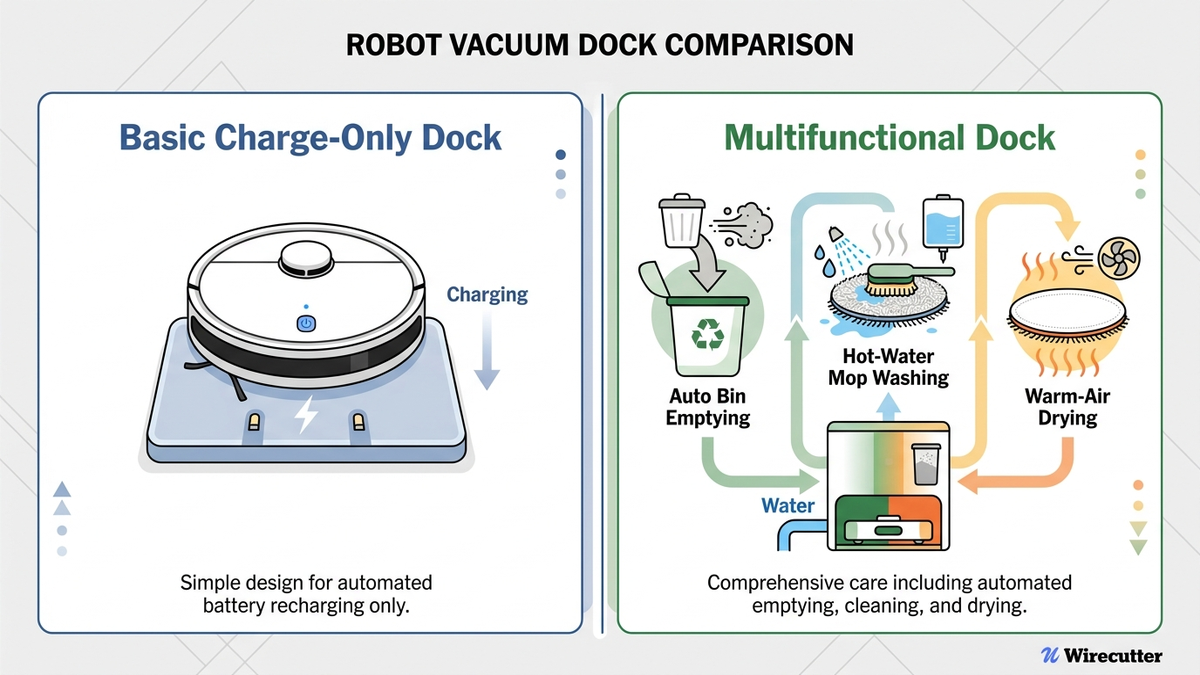
A basic robot vacuum dock is just a charging pad. Roborock calls its current flagship dock the “Multifunctional Dock 3.0”: after a cleaning run, the robot returns, and the dock vacuums the contents of its onboard bin into a larger disposable bag (rated to hold roughly 45-60 days of debris depending on household size and pet shedding), then runs the robot’s spinning mop pads through a hot-water wash cycle, followed by warm-air drying to prevent the mildew smell that plagues mop pads left damp in a closet. Higher-tier docks in the line also auto-refill the robot’s onboard clean-water tank from a larger reservoir, so the robot can complete several mopping runs before the dock itself needs a manual water refill.
Independent testing backs up the core claims: RTINGS’ lab review of the Qrevo Curv found its 18,500 Pa (manufacturer-rated) suction and dock cycle performed well against other flagship robot-mop combos, and Vacuum Wars’ hands-on testing highlighted the dock’s hot-water mop wash as noticeably more effective at keeping pads odor-free than cold-water designs used by some competitors. Roborock’s own marketing lists suction up to 22,000 Pa on the CurvX variant, which we treat as a manufacturer claim rather than an independently verified figure across every test, though it is directionally consistent with the brand’s recent generation-over-generation suction increases.
Does the Dock Actually Reduce Maintenance, or Just Relocate It?
The honest answer, based on aggregated reporting across the category, is “reduces, not eliminates.” A multifunctional dock changes the failure mode of maintenance rather than removing it:
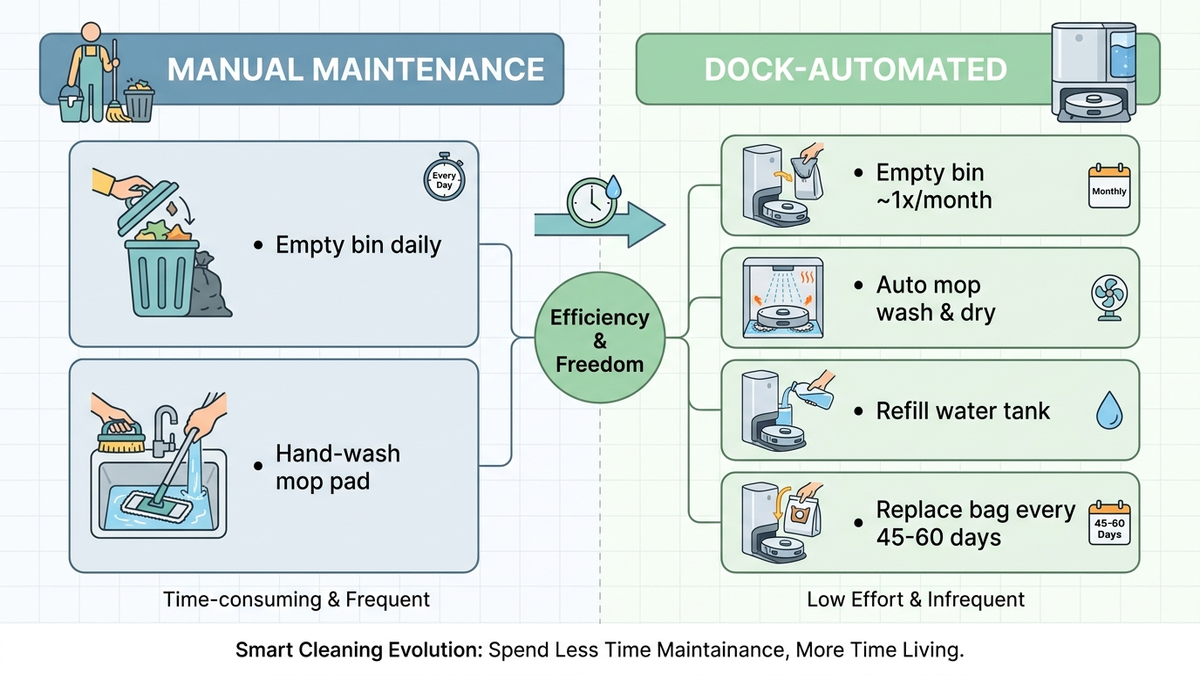
- Dustbin emptying drops from several times a week (a basic robot’s small onboard bin fills fast) to roughly once every 45-60 days when the dock’s larger bag needs replacing — a real reduction, but not zero. Based on typical Amazon listings for compatible replacement bags as of September 2026, a multi-pack runs roughly $3-5 per bag, adding an estimated $15-40 a year depending on shedding levels in the home.
- Mop pad care goes from “unclip a wet, smelly pad and hand-wash it” to “the dock does it automatically” — this is the change owners cite most often as worth paying for, more than the dustbin function.
- New maintenance tasks appear that didn’t exist with a basic dock: the clean-water tank needs periodic refilling, the dirty-water tank needs periodic emptying (daily to every few days depending on mopping frequency), and the dock’s own internal water lines need occasional cleaning to avoid mineral buildup or odor — a task a simple charging dock never required.
- Dock noise is a recurring, if minor, adjustment: the auto-empty cycle runs loud, similar to a handheld vacuum, for roughly 10-15 seconds after each cleaning run — not a defect, but worth knowing before assuming a dock is silent.
Aggregated Amazon and Best Buy review analysis found dustbin-clogging complaints — the dock struggling to fully suck large clumps of pet hair into the bag — appeared often enough to be a recurring, if minority, issue, and a separate cluster of owners reported the dirty-water tank developing a noticeable odor within a day or two if not emptied promptly. Neither issue is unique to Roborock; it reflects a broader pattern across multifunctional docks in the category, per third-party testers who cover competing brands.
Qrevo Curv vs. CurvX vs. a Basic Robot-and-Charger Setup
The Qrevo line spans a wide price range depending on how much dock automation you’re buying into. The standard Qrevo Curv centers on Roborock’s Multifunctional Dock 3.0 with hot-water mop washing and auto-empty; the CurvX steps up suction and shrinks the robot’s chassis height for under-furniture access, at a further price premium. A basic robot-and-charger setup — no auto-empty, no mop washing — sits well below both, with the trade-off that a person handles dustbin and mop-pad care manually every session.
| Model | ASIN | Suction (mfr. claim) | Dock function | Best for |
|---|---|---|---|---|
| Roborock Qrevo Curv | B0D81675BQ | 18,500 Pa | Auto-empty + hot-water mop wash & dry | Buyers who want full dock automation at the line’s entry price |
| Roborock Qrevo CurvX | B0DX1DQKMD | 22,000 Pa | Auto-empty + hot-water mop wash & dry, ultra-slim 3.14” chassis | Buyers who also need under-furniture clearance |
| Basic robot vacuum + charge-only dock (category baseline) | — | Varies by model | Charging only; manual bin/mop care | Single occupants or small spaces with light debris, prioritizing lower cost |
Prices as of 2026-09-10. Check current listing prices before buying, since flagship robot-vacuum pricing moves significantly around sales events.
Check the Roborock Qrevo Curv on Amazon · Check the Roborock Qrevo CurvX on Amazon
Editorial Recommendation: Who Should Pay for the Dock
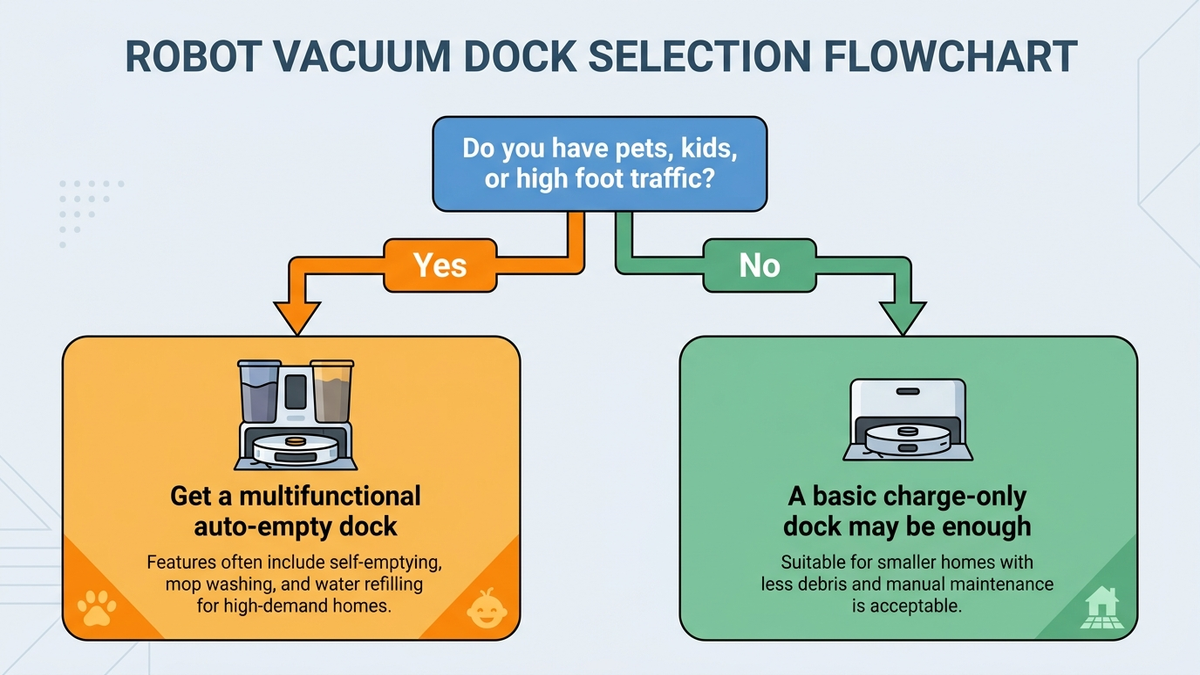
- Households with pets, kids, or high foot traffic: the auto-empty and mop-washing functions address real, frequent maintenance friction here, and this is the strongest case for paying the dock premium.
- Single occupants in smaller apartments with light debris: a basic robot-and-charger setup, with manual bin emptying every few days, may deliver similar cleanliness at meaningfully lower upfront and ongoing cost.
- Buyers choosing between Curv and CurvX specifically: the CurvX’s added suction and slimmer chassis mainly matter if you have low-clearance furniture or heavier carpet; otherwise the standard Curv’s dock automation is functionally identical.
- Anyone prioritizing zero maintenance: temper expectations — the dock reduces manual tasks by roughly three-quarters per aggregated reporting, not to zero, and adds its own upkeep (water tanks, replacement bags, occasional descaling).
Warranty
Roborock backs the Qrevo Curv series with a standard manufacturer warranty; always confirm current coverage terms and any extended-protection offers on the product listing, since terms are updated periodically and can vary by retailer and promotion.
Limitations of This Analysis
This analysis relies on RTINGS’ published lab testing, independent reporting from Vacuum Wars, Tom’s Guide, TechRadar, and Gizmodo, Roborock’s published manufacturer specifications, and a synthesis of Amazon and Best Buy customer reviews and Reddit discussion threads; we did not personally test the Qrevo Curv or CurvX. Individual results vary with home layout, flooring type, and pet presence, and manufacturer-claimed figures like suction ratings in Pa are not independently verified in every test we cite. IDC reported Roborock held an estimated 17.7% share of the broader smart-cleaning-robot category (vacuums, mowers, and other cleaning robots combined) in 2025, ahead of ECOVACS and SharkNinja; IDC has separately reported a higher figure, around 27%, when looking specifically at the robot-vacuum segment alone. We cite these as directional market context rather than precise figures specific to the Qrevo Curv line, since research firms vary in how they define and measure the category. Prices, ASIN availability, and warranty terms change frequently — always confirm current details on the product page before buying.
The Bottom Line
The Qrevo Curv’s multifunctional dock is a real, independently-verified upgrade over a basic charge-only setup — it meaningfully cuts how often a person has to touch a dirty dustbin or mop pad, and the hot-water wash cycle addresses the odor problem that plagues manually-washed mop pads. It is not a maintenance-free appliance: water tanks, replacement bags, and occasional descaling all remain human tasks, and mopping performance on dried-on messes is the category’s most consistent complaint, dock or no dock. Whether the premium is worth it comes down to how much daily debris your household actually generates — check the current price and recent reviews on the specific listing before buying, and if you want a second opinion, paste the URL into Arekore and let the AI scan the reviews and price history for you in about five minutes.