Return-to-Office 2026: A Commuter's Gear Reset
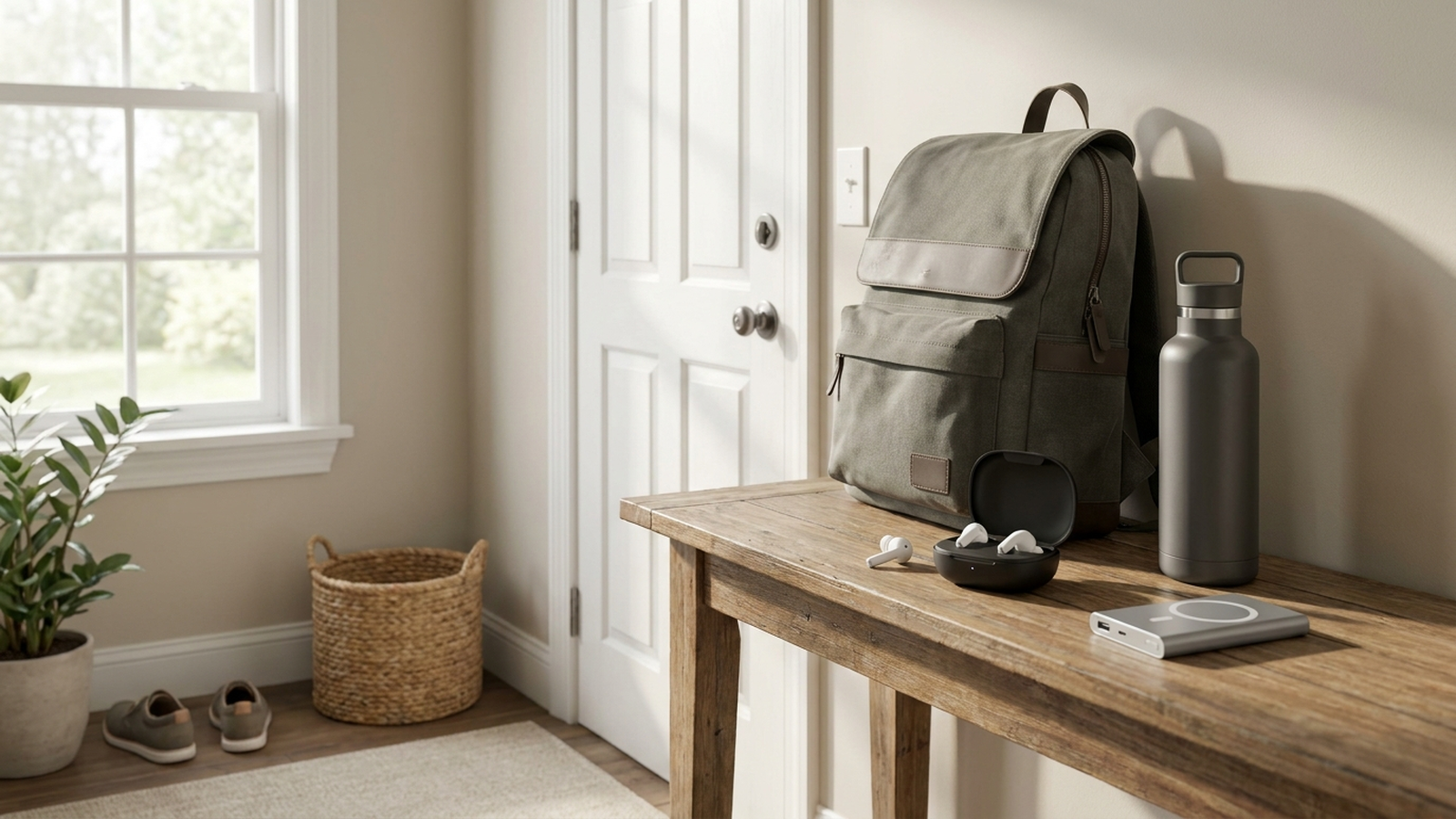
Three or four years of working from a kitchen table has a way of quietly retiring an entire category of gear. The commuter backpack went into a closet. The noise-cancelling earbuds got sold or lost a charging cable. The travel mug turned into a desk mug that never left the house. So when a return-to-office mandate lands, the honest problem is not “what’s new and exciting for commuters in 2026” — it is “what from my old commuting kit still works, and what genuinely needs replacing.” This guide is built around that specific reset, using aggregated Amazon review data, independent testing, and current 2026 return-to-office statistics rather than personal commuting experience.
As an Amazon Associate, Arekore earns from qualifying purchases. The Amazon product links in this article may include our affiliate tracking ID and may earn us a commission if you buy through them, at no additional cost to you. See our Links Policy for details on how we select products and how commissions do not influence our recommendations.
TL;DR / Quick Verdict
- The bag that earns a second look: the Osprey Daylite Plus Commuter Backpack. At 1.29 lb with a padded sleeve and bluesign-approved recycled fabric, it is built specifically as a daily carry rather than a repurposed travel or hiking pack.
- The audio upgrade most people actually need: the Anker Soundcore Space A40. RTINGS classifies it as a lower-mid-range ANC performer, which is honest — but its noise reduction is a real step up from whatever budget wired or non-ANC earbuds survived the WFH years in a drawer.
- The desk-mug-to-commute-mug swap: the Owala FreeSip 24 oz tumbler, whose sip-and-swig spout and manufacturer-rated 24-hour cold retention suit a bag pocket better than an open desk mug ever did.
- The one everyone forgets until day two: a compact Anker 621 MagGo power bank, because a phone that ran all day on a home Wi-Fi charger now has to survive a commute, a full workday, and the trip home.
- The unglamorous fix for the actual physical toll: Dr. Scholl’s Work All-Day insoles, addressing the fact that feet accustomed to slippers are now back on pavement and office flooring for the first time in years.
How We Reached These Conclusions (Methodology)
This is an editorial analysis, not a hands-on review. We did not personally test the products covered here. This guide synthesizes (a) aggregated amazon.com customer ratings and the substance of both positive and low-star reviews, sampled in August 2026; (b) independent third-party testing from RTINGS and Consumer Reports; (c) manufacturer specifications and published warranty terms; and (d) 2026 return-to-office labor-market and commuting-cost data from Archie’s workplace research, FounderReports, and analysis of commute economics. Where we cite a manufacturer figure — noise-reduction percentage, battery capacity, cold-retention hours — we label it as a manufacturer claim rather than an independently verified result. Prices are amazon.com figures at the time of writing and fluctuate.
The Season This Guide Is Actually For
Return-to-office mandates in 2026 are sharper for large, high-profile employers but less universal than headlines suggest: roughly 30% of companies are requiring fully in-person work five days a week, while the rest run hybrid schedules or softer expectations. That partial rollout is exactly why so many workers are re-equipping now rather than months ago — for a large share of the workforce, this is the first sustained in-office stretch since 2020 or 2021.
The math on why gear matters again is straightforward. The 2026 national average one-way commute for in-office and hybrid workers runs close to 28 minutes, though large metro areas — Boston, Los Angeles, Washington D.C., and Newark among them — average closer to 31 minutes each way. Annual commute-cost estimates vary by methodology: Clever Real Estate’s analysis, which blends BLS, Department of Transportation, AAA, Census, and INRIX data, puts the figure at roughly $8,466 a year, while AAA’s separate annual vehicle-ownership-cost report lands closer to $11,577 for the broader cost of driving, depending on vehicle type and mileage. None of that is gear spending — it is gas, transit fare, and parking — which is exactly why the gear budget for this reset should be small and targeted rather than a wholesale re-purchase of everything in a pre-2020 commuter kit. Compliance data backs up why people are ambivalent about the shift: WFH Research’s Survey of Working Arrangements and Attitudes found that by the end of 2024, only 44% of workers said they would comply with a five-day RTO policy, with 41% saying they would look for another job rather than accept it. Whether or not that ambivalence resolves, the commute itself is not optional in the interim, which is the premise for every pick below.
What Actually Needs Replacing (and What Doesn’t)
Not every item from a pre-remote-work commuting kit needs a rebuy. Across aggregated reviews and independent testing, four categories reliably separate gear worth replacing from gear that is fine to keep using:
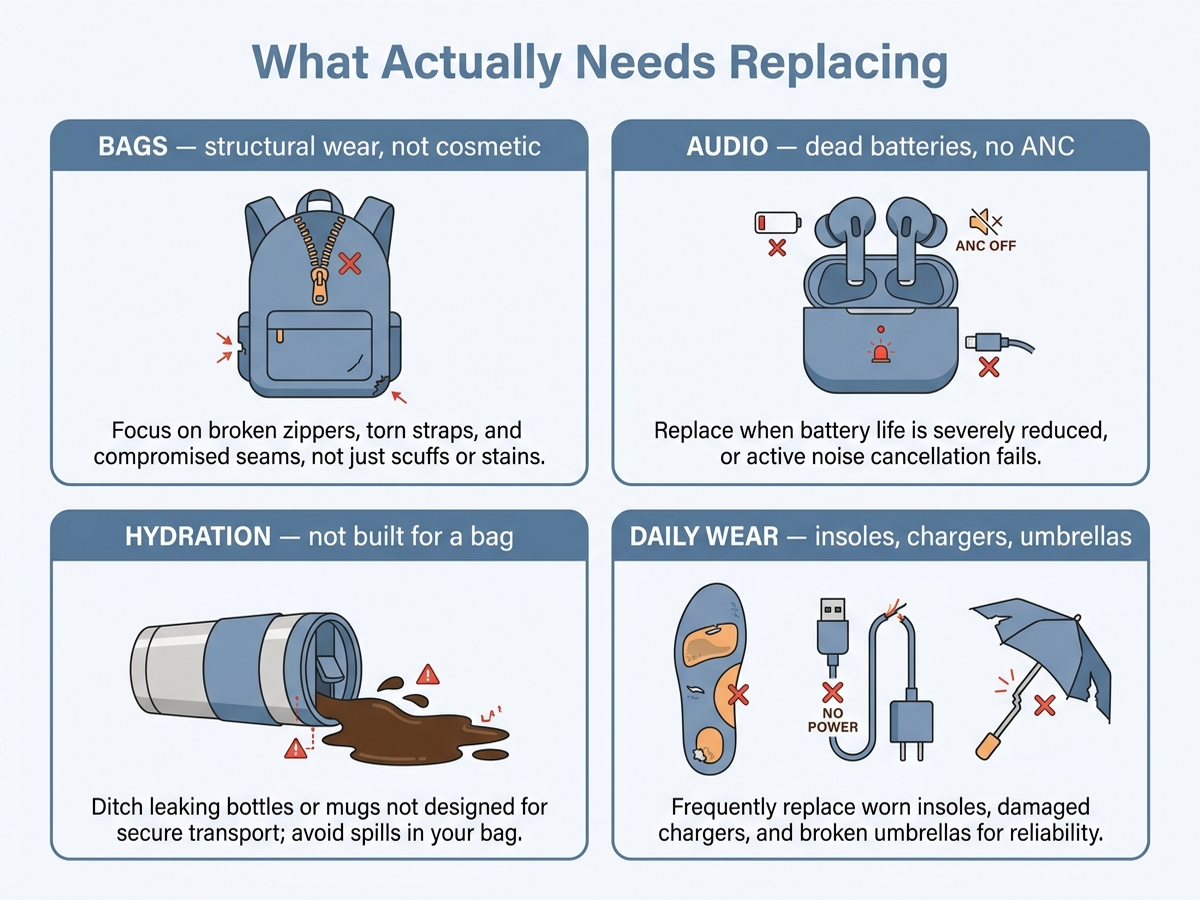
- Bags with structural wear, not cosmetic wear. A scuffed backpack is fine; one with a broken zipper, a torn laptop sleeve, or straps that have lost padding is not — and packs bought for travel rather than daily carry often lack the quick-access pockets a five-day-a-week commute needs.
- Audio gear with degraded batteries or no active noise cancellation. Lithium batteries lose capacity sitting unused for years; earbuds that ran 6 hours in 2020 may run half that now, and older non-ANC models will not compete with current transit or open-office noise.
- Hydration and coffee gear built for a desk, not a bag. An open mug or a non-insulated bottle that lived on a home desk for years is a spill risk and a temperature failure inside a backpack.
- Small daily-wear items nobody thinks to check. Insoles, phone chargers, and umbrellas see the most physical wear-and-tear per dollar and are the easiest category to underestimate when budgeting a reset.
Comparison Table
Prices are approximate amazon.com figures at the time of writing (August 2026) and fluctuate.
| Item | ASIN | Approx. price | Key spec | Warranty (manufacturer) | Fixes this problem |
|---|---|---|---|---|---|
| Osprey Daylite Plus Commuter Backpack | B0D92HZMK2 | ~$65–$75 | 1.29 lb, padded 14” laptop sleeve, recycled bluesign fabric | Osprey All Mighty Guarantee (lifetime) | Travel/hiking packs and worn-out bags lack daily-carry organization |
| Anker Soundcore Space A40 ANC earbuds | B0B1LVC5VZ | ~$79.99 | Reduces noise by up to 98% (mfr. claim), 50h total playtime | 18 months | Degraded old earbuds and non-ANC models can’t handle transit noise |
| Owala FreeSip 24 oz Tumbler | B0BZYCJK89 | ~$27.99–$34.99 | Sip-and-swig spout, 24-hr cold retention (mfr. claim) | Limited | Open desk mugs spill and lose insulation in a bag |
| Anker 621 MagGo Power Bank | B099284SRR | ~$39.99 | 5,000 mAh, ~2 iPhone 15 charges (mfr. claim), magnetic attach | 24 months | Phones charged nightly at a home desk now need all-day coverage away from an outlet |
| Dr. Scholl’s Work All-Day Superior Comfort Insoles | B0D14XW64Z | ~$12.99 | Massaging gel, trim-to-fit, full length | N/A (consumable) | Feet adapted to slippers now face pavement and office flooring daily |
1. Osprey Daylite Plus Commuter Backpack — Built for Daily Carry, Not Repurposed From a Trip
Many people re-entering office life reach first for whatever backpack survived the remote years, which is often a travel or hiking pack pressed into commuter duty. The Osprey Daylite Plus is designed the other way around: a padded internal sleeve fits up to a 14-inch laptop and tablet, front and side stretch-mesh pockets give quick access to a water bottle or transit card without opening the main compartment, and the whole pack weighs 1.29 lb with fabric that is 100% recycled polyester and bluesign approved (manufacturer specifications).
Aggregated Amazon sentiment is strongly favorable, with reviewers repeatedly citing the combination of light weight and structured organization as the reason they switched from a larger travel backpack for daily use. The most common low-star complaint is that the “Plus” version’s slightly larger main compartment runs a little bulky for people who wanted the base Daylite’s more minimal profile — worth checking the specific listing’s dimensions against your actual daily load before buying. Osprey backs the pack with its All Mighty Guarantee, a lifetime warranty against manufacturing defects that is unusually strong for a sub-$80 daily-carry bag.
Check the Osprey Daylite Plus Commuter Backpack on Amazon
2. Anker Soundcore Space A40 — Real ANC for Transit, Honestly Rated
Years of working from a quiet home office lower the bar for what counts as “good enough” audio gear, and a five-day commute resets that bar immediately. RTINGS classifies the Anker Soundcore Space A40 as a lower-mid-range active noise-cancelling in-ear — not flagship-tier — but that positioning is exactly the point for a budget reset: it reduces noise by up to 98% by manufacturer claim, is rated for 50 hours of total playtime with the case, and independent hands-on testing from Tom’s Guide found genuinely effective low-frequency reduction (engine rumble, transit noise) with somewhat less improvement on higher-pitched sounds.
Aggregated Amazon reviews consistently praise the comfortable, lightweight fit for all-day wear and the app-based EQ customization. The most common low-star complaints center on call-microphone quality in windy outdoor conditions and on the touch controls occasionally misregistering taps through a hat or hood in cold weather — both worth weighing if calls or winter commuting are a daily factor. Readers who specifically need stronger noise cancellation for a loud subway or bus commute should budget more for a Sony or Bose flagship model instead, per independent reviewer consensus; the Space A40 is the right tier for a moderate, cost-conscious reset rather than a maximum-ANC upgrade.
Check the Anker Soundcore Space A40 on Amazon
3. Owala FreeSip 24 oz Tumbler — A Desk Mug That Can Survive a Bag
A mug that lived on a home desk for years never had to survive being tipped sideways in a backpack pocket during a transit transfer. The Owala FreeSip solves that specific problem with a push-button lid, a built-in straw for sipping upright, and a separate spout for tilting back to drink — plus double-wall insulation rated by the manufacturer to hold drinks cold for up to 24 hours. A wide mouth opening simplifies both ice-filling and cleaning, addressing a common complaint about narrow-mouth insulated bottles.
Aggregated review sentiment is strongly positive on the leak resistance of the push-lock lid specifically, which reviewers frequently contrast against prior straw-lid bottles that leaked in a bag. The recurring low-star theme is that the straw component requires more frequent cleaning than a simple screw-top bottle to avoid mold buildup — a maintenance step worth building into a weekly routine rather than a flaw unique to this bottle. Warranty coverage is limited rather than lifetime, which is typical for the reusable-bottle category at this price point.
Check the Owala FreeSip 24 oz Tumbler on Amazon
4. Anker 621 MagGo Power Bank — Coverage for a Phone That No Longer Sits Near an Outlet
A phone charged nightly next to a home desk rarely runs low during a WFH day. The same phone navigating transit apps, tapping a contactless transit card, and running noise-cancelling earbuds over a full in-office day is a different battery story. The Anker 621 MagGo is a compact 5,000 mAh magnetic power bank that attaches directly to the back of a MagSafe-compatible iPhone and delivers roughly two full charges for an iPhone 15 by manufacturer figures, without needing a separate cable for that use case.
Aggregated Amazon reviews highlight the magnetic attachment strength and the compact, pocketable size as the main reasons buyers chose it over a larger brick-style power bank. The most frequent low-star complaint is that 5,000 mAh is a genuinely modest capacity for anyone running GPS navigation continuously during a long commute — reviewers who need more than roughly two phone charges in a day should size up to a larger-capacity Anker model instead. Anker backs the unit with a 24-month warranty, longer than the industry-typical 12 to 18 months for portable chargers.
Check the Anker 621 MagGo Power Bank on Amazon
5. Dr. Scholl’s Work All-Day Insoles — The Unglamorous Fix Nobody Budgets For
The most commonly overlooked item in a return-to-office reset is not a gadget at all. Feet that spent years primarily in slippers or barefoot at a home desk are suddenly back on pavement, stairs, and hard office flooring for eight-plus hours a day, and Consumer Reports’ 2026 testing of over-the-counter orthotics and shoe inserts found that cushioned insoles meaningfully reduce fatigue and discomfort for people on their feet most of the day, without needing a custom orthotic fitting. Dr. Scholl’s Work All-Day Superior Comfort Insoles use a trim-to-fit, full-length design with gel cushioning intended for exactly this kind of all-day wear on hard surfaces (manufacturer description), at a price low enough to replace every few months as a consumable rather than a one-time purchase.
Aggregated Amazon reviews are positive on immediate comfort improvement, particularly from reviewers describing jobs or commutes that involve long stretches of standing or walking on concrete or asphalt. The most common low-star complaint is that the cushioning compresses and loses effectiveness after a few months of daily wear — consistent with this being a consumable item rather than a durable one, and worth budgeting for as a recurring, low-cost line item rather than a single purchase.
Check Dr. Scholl’s Work All-Day Insoles on Amazon
Making the Reset Actually Stick
Buying the gear is half the job; a few habits determine whether it actually earns back time and comfort during the first weeks of a new commute routine.
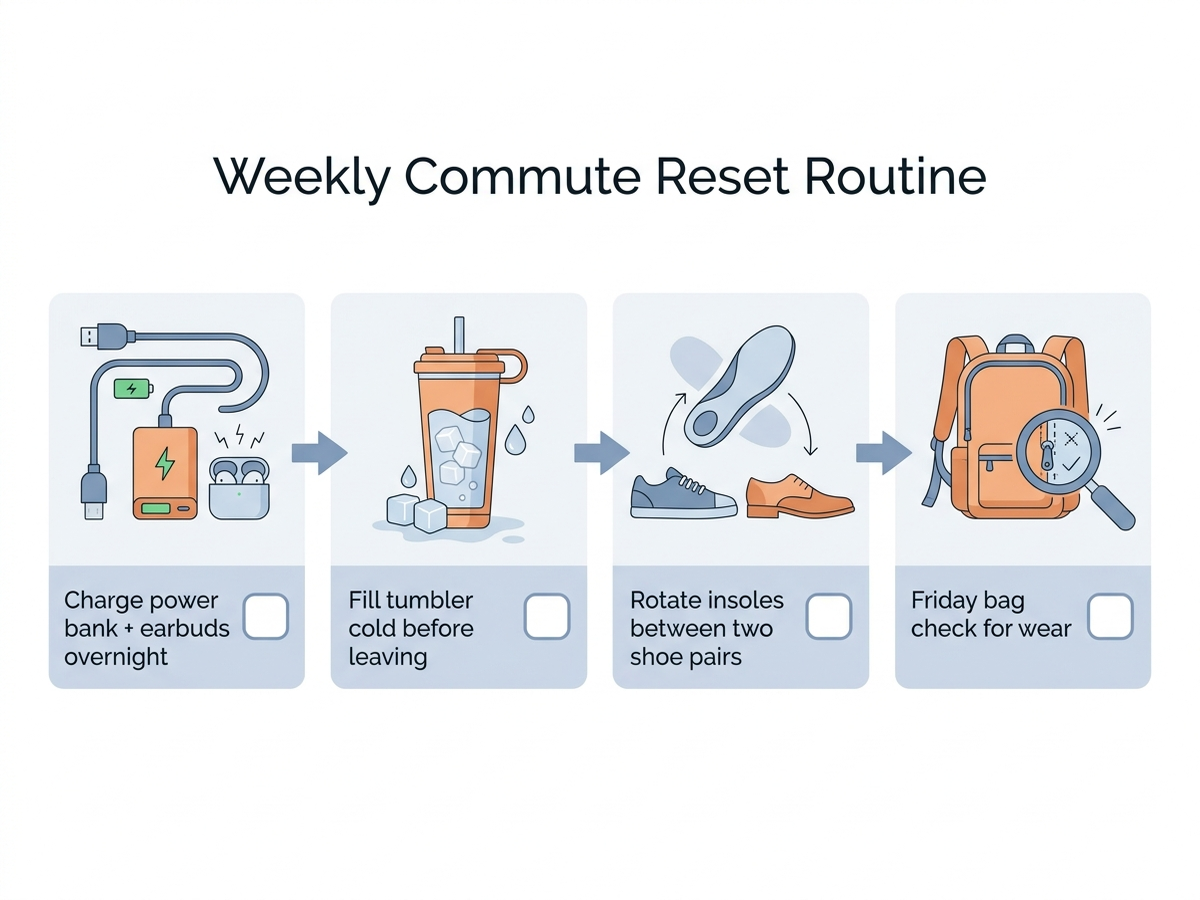
- Charge the power bank and earbuds together, on the same overnight routine. Treating them as a single nightly habit — not two separate things to remember — is the most commonly cited fix in aggregated reviews for “forgot to charge it” complaints.
- Fill the tumbler before you leave, not at the office. The 24-hour cold-retention claim assumes a cold fill; adding ice at a desk after a warm commute defeats the insulation’s main advantage.
- Rotate insoles between two pairs of shoes if you alternate footwear. Since insoles are a consumable, buying two sets and rotating them extends effective comfort life versus moving one set between shoes daily.
- Do a Friday bag check. A five-day-a-week commute puts more cumulative wear on zippers, seams, and small pockets than occasional pre-2020 commuting did; a weekly check catches a fraying strap before it fails on a Tuesday morning.
How to Prioritize: A Budget Flowchart
Few people need to buy all five items simultaneously. This is the order that addresses the most common daily friction first, on a limited reset budget.
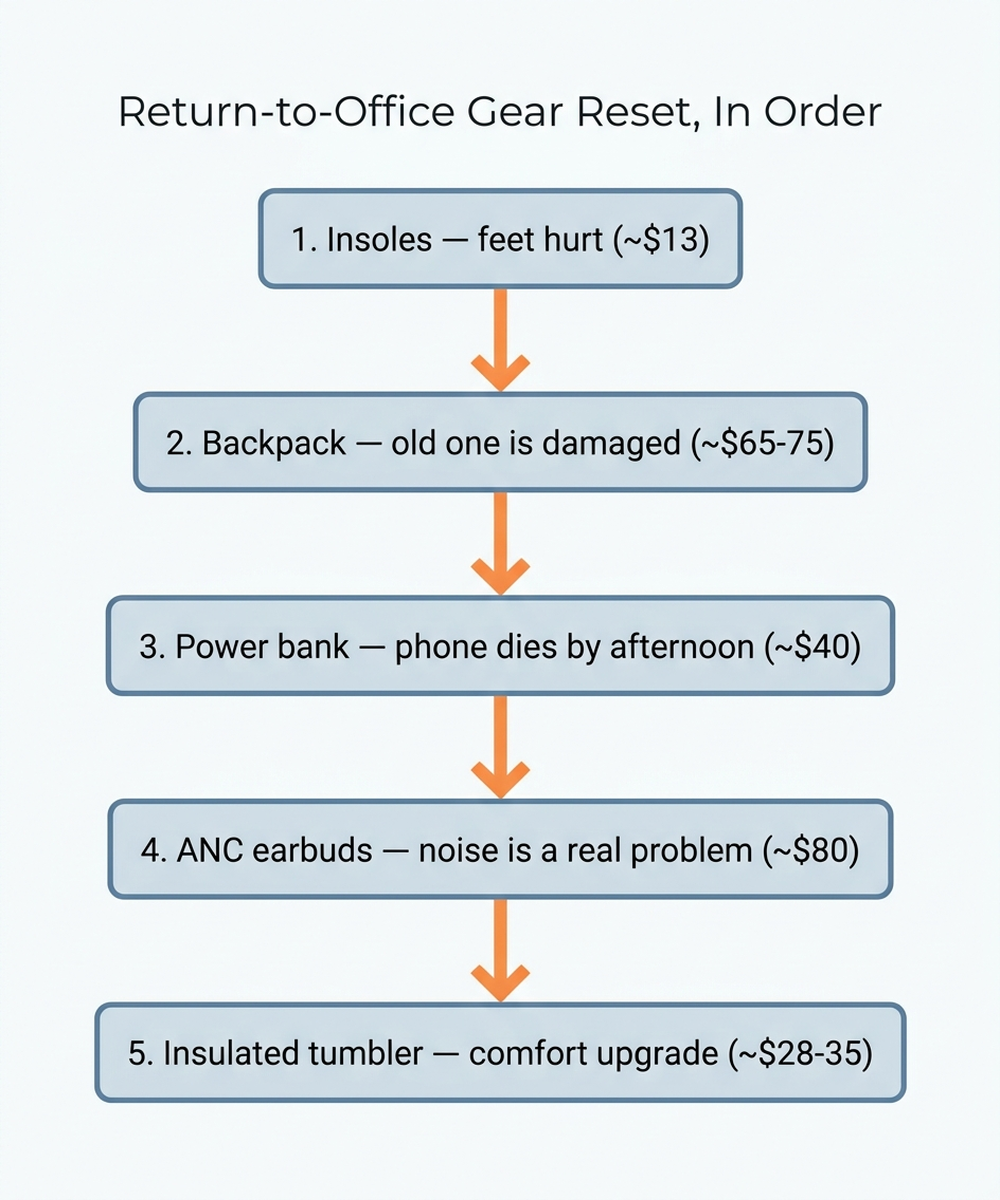
- Start with insoles if your feet hurt (about $13). It is the cheapest item on this list and addresses physical discomfort that compounds daily if ignored.
- Replace the backpack next if the old one shows structural damage (about $65–$75). A failing zipper or torn laptop sleeve is a functional problem, not a cosmetic one, and risks damaging a laptop.
- Add the power bank once you notice your phone running low by afternoon (about $40). This is a fast, low-cost fix once the actual daily battery gap becomes clear from real commute days.
- Add ANC earbuds if transit or office noise is a genuine daily irritant (about $80). Worth waiting a few weeks to confirm this is a real, recurring problem before spending here.
- Add the insulated tumbler last, as a comfort upgrade rather than a necessity (about $28–$35). It solves a real but minor problem — a spilling or lukewarm desk mug — that matters least urgently of the five.
Editorial Recommendations by Use Case
- Best single purchase if your old backpack still works fine: Dr. Scholl’s Work All-Day insoles — the cheapest, most immediate fix for the physical adjustment back to daily walking and standing.
- Best for a long transit commute with real ambient noise: the Anker Soundcore Space A40, with the caveat from RTINGS and other independent testers that maximum-ANC needs cost more.
- Best for anyone whose current bag is genuinely falling apart: the Osprey Daylite Plus, backed by a lifetime defect warranty unusual at its price.
- Best for a phone that dies by mid-afternoon: the Anker 621 MagGo, sized right for roughly two extra charges without adding bag bulk.
- Best low-priority comfort upgrade: the Owala FreeSip tumbler — genuinely useful, but the last item worth buying on a limited reset budget.
Limitations of This Analysis
This analysis relies on publicly available Amazon reviews, independent third-party tests, and manufacturer specifications; we did not personally test these products, and individual experience varies with commute mode, distance, and climate. Return-to-office compliance and commute-cost statistics are drawn from several distinct 2026 surveys and analyses with different methodologies, sample populations, and geographic scope, so they should be read as directional context rather than a single unified figure. Prices, color variants, and warranty terms change frequently on Amazon listings — confirm the current price and version on the product page before buying. Noise-cancellation and cold-retention performance can vary with fit, ambient conditions, and unit-to-unit variance, and manufacturer figures for battery life and charge counts are lab-measured rather than independently reproduced by us.
The Bottom Line
A return-to-office reset does not require replacing an entire pre-2020 commuting kit at once. Starting with the cheapest, most immediate fix — insoles for feet unused to daily walking — and adding a backpack, power bank, earbuds, or insulated tumbler only as a specific, real friction point shows up keeps the reset to roughly $13 to $235 total depending on how many items apply, rather than an unnecessary lump purchase. Whichever items you prioritize, verify the exact current price and version before checkout — and if you want a second opinion on a specific listing, paste the URL into Arekore and let the AI scan the reviews and price history for you in about five minutes.