Owala FreeSip Review 2026: Better Than Stanley?
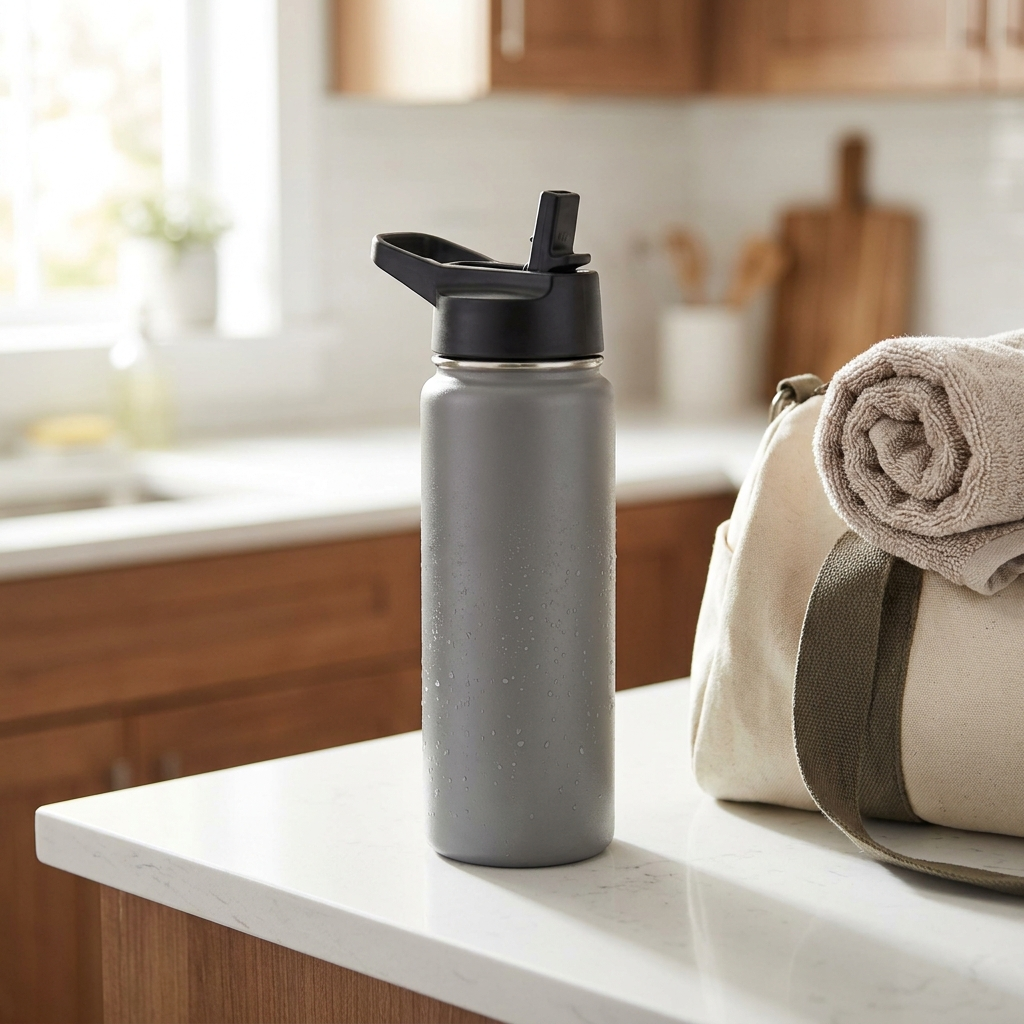
The Owala FreeSip and the Stanley Quencher H2.0 have spent the last three years as the two most talked-about reusable bottles on Amazon, and they solve the hydration problem in genuinely different ways. The FreeSip packs a straw and a push-button chug spout into one lid so a buyer never has to choose between sipping and gulping; the Quencher is built around a wide, cup-holder-friendly tumbler shape with a comfort-grip handle. Both have loyal followings and both have drawn real criticism — the FreeSip for mold complaints in its straw mechanism, the Quencher for a 2024 lawsuit over lead used in its vacuum-insulation seal. We pulled together manufacturer specs, independent lab and long-term testing, and aggregated owner sentiment to answer the question in the headline: is the FreeSip actually the better buy, or just the more Instagrammable one.
As an Amazon Associate, Arekore earns from qualifying purchases. The Amazon product links in this article include our affiliate tracking ID and may earn us a commission if you buy through them, at no additional cost to you. See our Links Policy for details on how we select products and how commissions do not influence our recommendations.
TL;DR / Quick Verdict
- The FreeSip wins on versatility and weight. Its double-wall insulation and dual straw/spout lid make it the more practical daily-carry bottle for someone who drinks on the move, and it’s noticeably lighter than a comparably sized Quencher.
- The Quencher wins on cup-holder fit and one-hand ergonomics. Its 3.1-inch base and comfort-grip handle are purpose-built for car and desk use in a way the bulkier FreeSip is not, even without its silicone boot.
- Both bottles use the same core insulation approach. Owala’s own product listing for the FreeSip describes double-wall vacuum insulation, the same layer count Stanley publishes for the Quencher H2.0, so the practical difference for most buyers comes down to shape and lid design, not a thermal-performance gap.
- Both products carry a real caveat worth knowing before buying. The FreeSip’s straw lid needs weekly disassembly and cleaning to avoid mold buildup reported by some owners; the Quencher’s vacuum-seal base contains lead sealed under stainless steel, which manufacturer Pacific Market International (PMI) says poses no exposure risk unless the base is damaged, a claim that has nonetheless drawn multiple 2024 class-action lawsuits.
How We Reached These Conclusions (Methodology)
This is an editorial analysis, not a hands-on review; we did not personally test either bottle. It synthesizes three kinds of public information: (a) manufacturer specifications published by Owala and Stanley/PMI; (b) independent testing and long-form reviews from outlets including CleverHiker (which tested the classic FreeSip covered here), Outdoor Gear Lab (whose most recent hands-on testing covers the newer FreeSip Sway variant, not the classic 24/32 oz bottles reviewed in this article), and CNN Underscored, alongside Owala’s status as an official Wirecutter water-bottle pick; and (c) aggregated sentiment from Amazon customer reviews and consumer-complaint reporting, which we describe directionally rather than citing an exact review count, since totals fluctuate. Manufacturer-published figures (insulation layer count, retention hours) are labeled as such. Prices are amazon.com prices at the time of writing and change frequently, especially around sales events like Prime Day and Black Friday.
Insulation and Everyday Performance
Owala’s published product specifications describe the FreeSip’s insulation as double-wall vacuum insulation, the same layer count Stanley publishes for the Quencher H2.0 — so on paper the two are evenly matched, and independent testers who have put both through real-world conditions largely confirm that. CleverHiker tested the FreeSip filled with ice water during a full day of desert climbing in Utah and found it stayed cold for the entire outing, with ice remaining intact for several hours — a result broadly in line with what reviewers report for the Quencher under similar conditions. Neither bottle is designed to hold hot beverages well; both are built and marketed primarily as cold-drink vessels.
Where the two diverge more clearly is size and weight. The FreeSip ships in 24-, 32-, and 40-ounce sizes, with the 24-ounce model built to fit a standard car cup holder; the larger sizes do not. The Quencher’s signature 40-ounce size is built around a wider base specifically engineered for cup-holder compatibility, plus a molded handle for one-hand carrying — a form factor the FreeSip does not offer at any size. Reviewers who have carried both consistently describe the FreeSip as the lighter, less bulky option to hold or wear cross-body, while the Quencher is the one that sits more naturally on a desk or in a car console.
Technical Approach: Straw-and-Spout Lid vs. FlowState Tumbler Lid
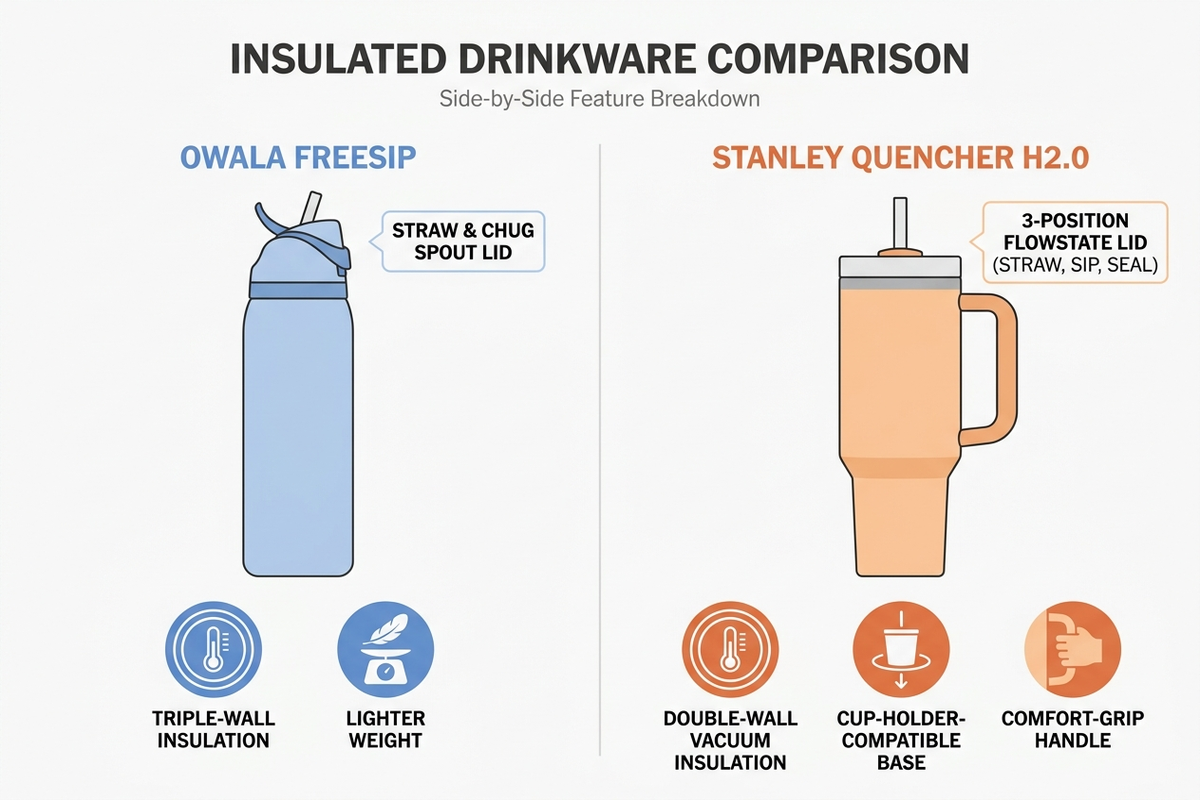
- Owala FreeSip: Locking push-button lid with two independent drinking paths — a covered straw for sipping and a wide-mouth spout (opened by the same button) for chugging. Manufacturer-published double-wall vacuum insulation, BPA-free stainless steel body, available in 24, 32, and 40 ounces.
- Stanley Quencher H2.0 FlowState: 3-position lid (straw, splash-guard sip opening, or fully open) with a reusable plastic straw, manufacturer-published double-wall vacuum insulation, a 3.1-inch cup-holder-compatible base, and an integrated comfort-grip handle, most commonly sold in a 40-ounce size.
- Practical distinction: the FreeSip’s lid design removes the need to choose a drinking mode in advance, at the cost of more small parts to clean; the Quencher trades that flexibility for a handle and a base built specifically around car and desk use.
How to Use the FreeSip Without the Mold Problem
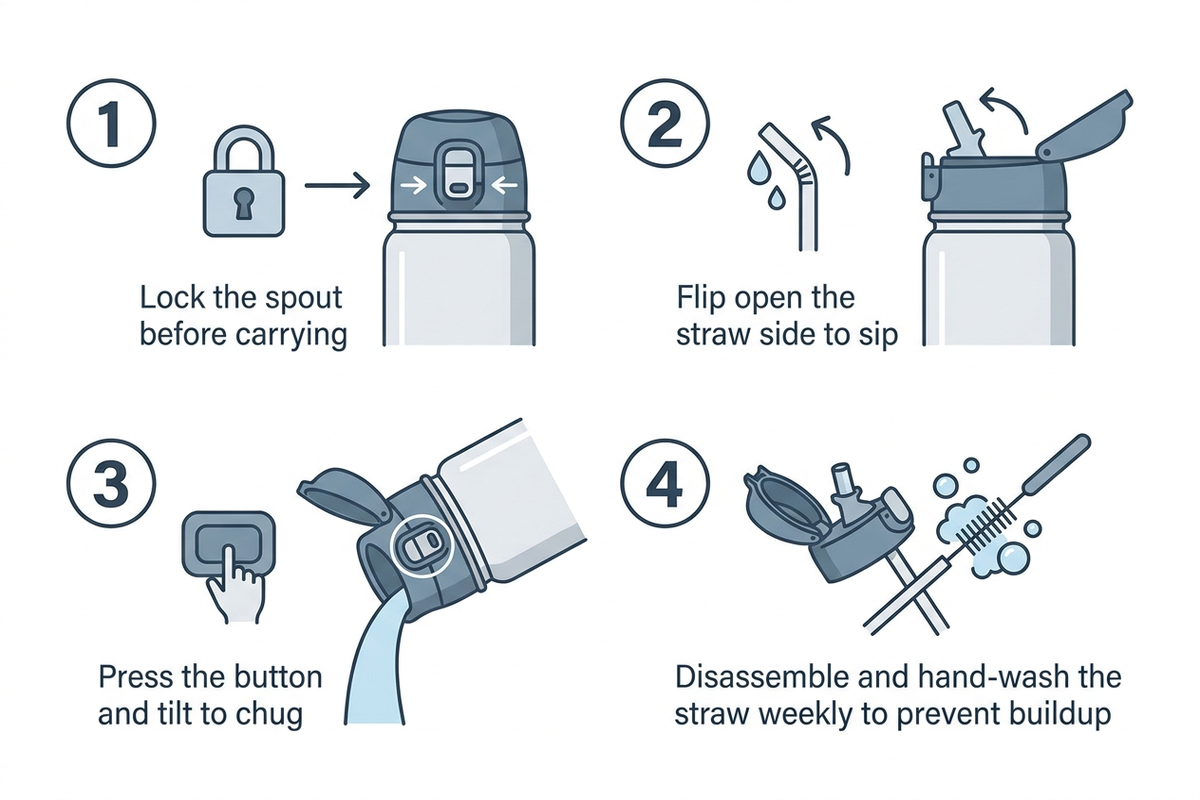
- Lock the lid before carrying it in a bag. The FreeSip’s push-button mechanism has a locked position that prevents the spout from popping open; aggregated owner reviews attribute most leak complaints to the lid being left unlocked rather than a manufacturing defect.
- Use the straw side for casual, on-the-go sipping. The straw draws from the bottom of the bottle and is the more spill-resistant of the two openings while walking or driving.
- Press the button and tilt to chug when you want a larger volume quickly, such as during a workout — this opens the wider spout instead of the straw.
- Disassemble the lid fully and hand-wash the straw at least weekly. Consumer-complaint reporting and independent reviewers both identify buildup inside the straw’s internal crevices — not the bottle body — as the source of mold complaints. Regular disassembly and a bottle-brush cleaning are the manufacturer-recommended fix, and owners who skip this step are the ones most likely to encounter the problem.
Comparison Table
Prices as of 2026-09-22. These are amazon.com prices seen at the time of writing; actual prices fluctuate frequently and are commonly discounted, especially around Prime Day and Black Friday — always check the current price on the product page.
| Model | ASIN | Approx. price | Capacity | Insulation | Best for |
|---|---|---|---|---|---|
| Owala FreeSip Insulated Stainless Steel Bottle, 24 oz | B0BZYCJK89 | ~$27.99 | 24 oz | Double-wall | Cup-holder-friendly daily carry with a straw |
| Owala FreeSip Insulated Stainless Steel Bottle, 32 oz | B0BZYBSRNF | ~$33.99 | 32 oz | Double-wall | Buyers who want more volume and don’t need a cup holder to fit |
| Stanley Quencher H2.0 FlowState Tumbler, 40 oz | B0BD78MYPN | ~$45.00 | 40 oz | Double-wall | Car and desk use, one-hand carrying via the handle |
Editorial Recommendations by Use Case
- Best for daily carry and workouts: the Owala FreeSip, 24 oz — light enough to carry all day, and the straw-or-spout lid covers most drinking situations without swapping bottles. Check the Owala FreeSip 24 oz on Amazon
- Best for buyers who want more volume in the same lid design: the Owala FreeSip, 32 oz — same insulation and lid mechanism as the 24 oz, just too large for most factory cup holders. Check the Owala FreeSip 32 oz on Amazon
- Best for car commuters and desk use: the Stanley Quencher H2.0, 40 oz — its cup-holder base and built-in handle solve a problem the FreeSip doesn’t try to, at the cost of extra bulk to hand-carry. Check the Stanley Quencher H2.0 40 oz on Amazon
- If mold prevention is a dealbreaker: owners who don’t want to commit to weekly lid disassembly should weigh that maintenance step against the FreeSip’s versatility before buying — a simpler single-opening lid (on either brand’s other product lines) may be a better fit.
Durability, Warranty, and the Lead Question
Owala backs the FreeSip with a limited manufacturer warranty against defects, and aggregated owner reviews describe the stainless steel body itself as durable over years of daily use, with most reported problems concentrated in the lid and straw components rather than the bottle body. Stanley similarly warranties the Quencher against manufacturing defects.
The Quencher carries a separate, more serious question: in January 2024, parent company Pacific Market International confirmed that its vacuum-insulation process uses lead at the base of the product, sealed underneath a layer of stainless steel. PMI’s position, reported by multiple news outlets, is that the lead is not accessible or exposed to the user under normal conditions and only becomes a potential exposure risk if the base is damaged and the seal is compromised. That explanation did not prevent multiple proposed class-action lawsuits being filed in 2024 alleging the company failed to adequately disclose the lead’s presence. A federal judge later dismissed the original round of those suits, finding the plaintiffs had not plausibly alleged a realistic risk of harm, but at least one new suit against PMI over lead-related advertising claims was filed afterward, so the litigation is best described as ongoing and unsettled rather than closed. As of this writing we are not aware of a CPSC recall of the Quencher tied to this issue, but buyers who are especially risk-averse, or who have young children handling the bottle, may want to factor the litigation history into their decision even absent a recall.
Limitations of This Analysis
This analysis relies on manufacturer specifications, independent testing from outlets including CleverHiker (testing the classic FreeSip) and Outdoor Gear Lab (whose relevant hands-on testing covers the newer FreeSip Sway variant rather than the classic bottles reviewed here), Owala’s status as a Wirecutter pick, and aggregated Amazon and consumer-complaint reporting; we did not personally test either bottle, and individual experience varies with how consistently a buyer cleans the straw lid or handles the bottle. We did not find a controlled side-by-side lab test directly comparing FreeSip and Quencher cold-retention numbers under identical conditions, so the insulation comparison in this article is directional rather than a head-to-head lab result. The mold complaints referenced come from a mix of owner reviews and consumer-complaint reporting rather than a formal product recall, and complaint volume on public platforms tends to skew toward dissatisfied buyers who sought out a place to post. The lead-lawsuit summary reflects publicly reported litigation and PMI’s own public statements as of this writing; the original 2024 suits were dismissed by a federal judge but at least one new suit has since been filed, and further developments could change the facts described here. Reusable water bottle market size estimates vary widely across research firms (roughly $9–13 billion globally for 2026, depending on the source and category definition used), so we present that figure as general market context rather than a precise number. Prices, ASIN availability, and warranty terms change frequently — always confirm current details on the product page before buying.
The Bottom Line
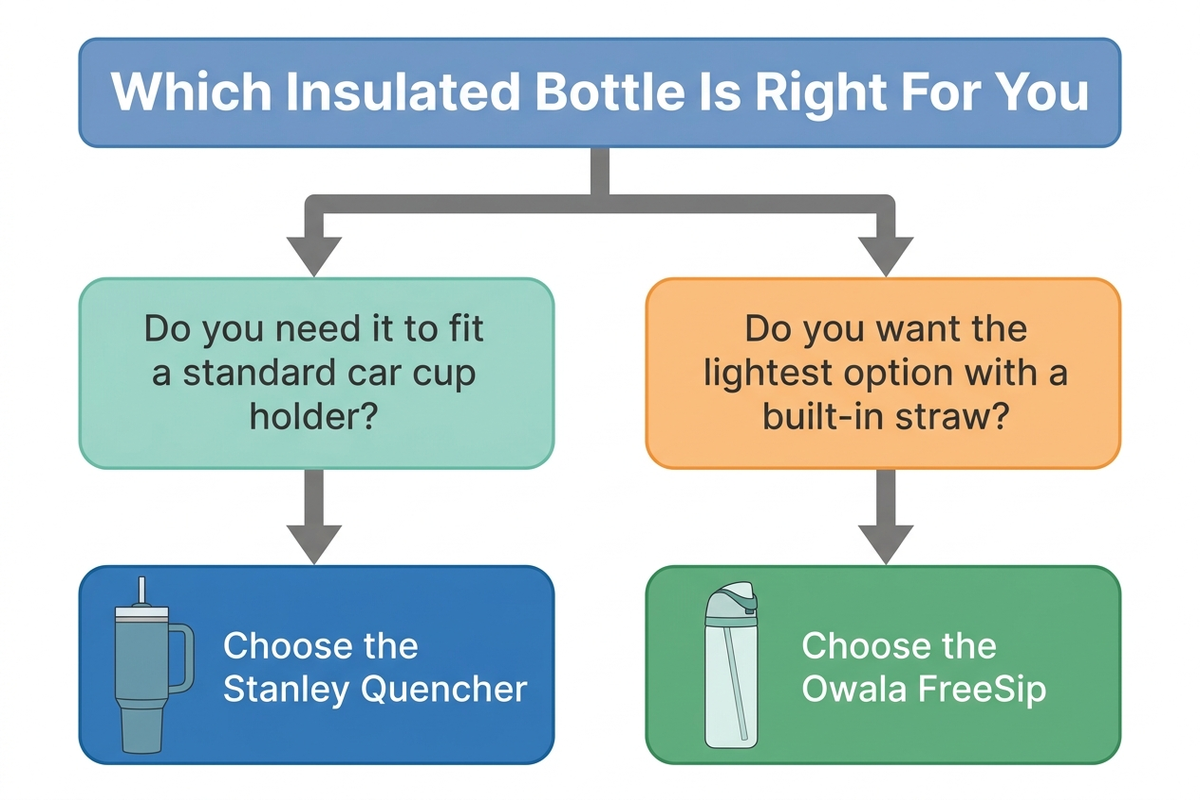
Neither bottle is objectively “better” — they’re built for different daily habits. The Owala FreeSip is the stronger choice for someone who wants one lid that handles both sipping and chugging, at a lighter weight they’re willing to carry by hand or in a bag, provided they’re willing to disassemble and clean the straw regularly. The Stanley Quencher is the stronger choice for someone whose bottle mostly lives in a car cup holder or on a desk, where its handle and wide base matter more than shaving off weight. If the lead-sealed base gives you pause, that consideration points toward the FreeSip; if cup-holder fit is non-negotiable, it points toward the Quencher. Whichever you lean toward, check the current price and read the most recent reviews before buying — and if you want a second opinion on a specific listing, paste the URL into Arekore and let the AI scan the reviews and price history for you in about five minutes.