Ooni Koda 16 Review 2026: Is It Still the Pizza Oven to Buy?

The Ooni Koda 16 spent years as the gas pizza oven independent reviewers pointed to first — Wirecutter called it the best overall home pizza oven, and Tom’s Guide named it the best outdoor pizza oven it had tested. Since then, Ooni has launched the larger, dual-burner Koda 2 Max and quietly moved the Koda 16 to first-generation clearance pricing, down from its original $649 list price. That raises the obvious question for anyone shopping in late 2026: is a superseded, clearance-priced model still the smart buy, or has it been passed over by Ooni’s own newer lineup? We pulled apart manufacturer specs, independent lab and kitchen testing, and aggregated owner feedback to find out.
As an Amazon Associate, Arekore earns from qualifying purchases. The Amazon product links in this article include our affiliate tracking ID and may earn us a commission if you buy through them, at no additional cost to you. See our Links Policy for details on how we select products and how commissions do not influence our recommendations.
TL;DR / Quick Verdict
- The Koda 16’s core cooking performance still holds up. Wirecutter and Tom’s Guide both rated it the best gas pizza oven they tested, and that testing hasn’t been reversed by anything short of Ooni’s own newer, far more expensive Koda 2 Max.
- The value case is stronger now than when it launched. At clearance pricing around $499 — down from $649 — the Koda 16 is the cheapest 16-inch gas deck Ooni still sells, and it undercuts the 24-inch Koda 2 Max by roughly $800.
- Clearance status means limited, inconsistent stock. Because it’s a first-generation model being phased out, availability and exact pricing vary by seller and bundle on amazon.com — check the current listing before assuming the clearance price is active.
- Recurring owner complaints center on the L-shaped burner’s intentionally uneven heat, not the oven’s core reliability: a pronounced “hot corner” that requires frequent rotation, occasional ignition hiccups, and no built-in thermometer.
How We Reached These Conclusions (Methodology)
This is an editorial analysis, not a hands-on review; we did not personally test the Koda 16. It synthesizes (a) Ooni’s published manufacturer specifications for the Koda 12, Koda 16, and Koda 2 Max, (b) independent third-party testing and reviews from Wirecutter (NYT), Tom’s Guide, and Taste of Home, and (c) aggregated owner sentiment pulled from amazon.com customer reviews and specialty pizza-oven review outlets — we cannot report a precise sample size for this aggregated owner-review pool, since it spans multiple retailer and independent-site sources rather than a single surveyed dataset. Manufacturer-claimed figures (max temperature, preheat time, weight) are labeled as such. Prices are amazon.com figures at the time of writing (November 2026) and change frequently given the Koda 16’s clearance status — always confirm the current listing price before buying.
Why a Superseded Model Is Still Worth Considering
Ooni has not discontinued gas pizza ovens entirely — it replaced the Koda 16 in its current-generation lineup with the 24-inch Koda 2 Max, a larger, more expensive oven aimed at buyers who regularly cook for groups. The Koda 16 remains available as a first-generation clearance item rather than vanishing from the market, which is a different situation from a product being pulled for quality or safety reasons. Its defining feature is a single L-shaped gas burner running along the back and left wall of a 16-inch cordierite stone deck, reaching a manufacturer-claimed 950°F in about 20 minutes — hot enough to bake a Neapolitan-style pizza in roughly 60-90 seconds.
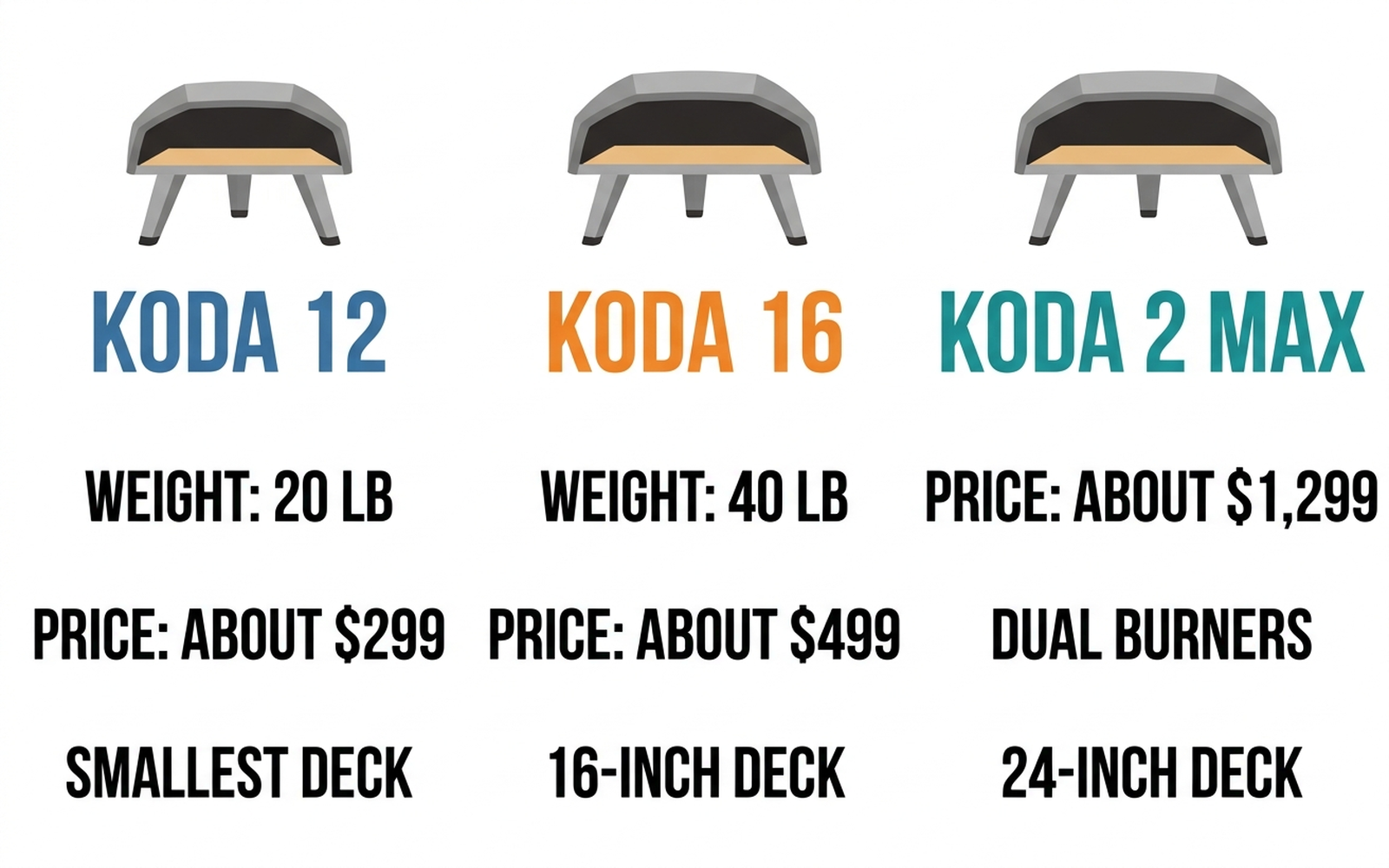
That single-burner, large-deck design is the main technical differentiator from its two closest relatives in Ooni’s own lineup:
- Ooni Koda 12 uses the same single-burner approach on a smaller 12-inch deck, at roughly $299 and 20 lb versus the Koda 16’s 40.1 lb — the lightest, cheapest way into real 900°F+ gas pizza, but with less room for a full-size pie.
- Ooni Koda 2 Max steps up to a 24-inch deck with two independently controlled burners, Ooni’s newer G2 Gas Technology, a digital temperature hub, and dual Bluetooth-capable food probes through the Ooni Connect app — features no Koda 16 or Koda 12 model offers, at roughly $1,299, well over double the Koda 16’s clearance price.
- The Koda 16’s L-shaped single burner heats unevenly by design, producing the “hot corner” near the burner that independent testers and owners both flag — a deliberate tradeoff for a wide 16-inch surface at a price well below the dual-burner Koda 2 Max.
What Independent Testing and Owner Reviews Say
Wirecutter’s testing named the Koda 16 the best overall home pizza oven it evaluated, specifically praising its ease of setup, convenience, and the quality of the pie it produced — reviewer coverage describes it baking pizza that “tastes like the brick oven pies” made in wood-fired ovens abroad. Tom’s Guide’s hands-on review similarly named it the best outdoor pizza oven it tested, reporting that pizzas near the back-left corner came out perfectly charred in a couple of minutes and that the oven reached 700°F in just under 20 minutes; the review’s main criticism was the lack of a built-in thermometer. Taste of Home frames the Koda 16 as the top choice for a “beginner-friendly and versatile” setup, citing its 16-inch deck as large enough for a full-size pizza without stretching the dough to an unusual shape.
Aggregated amazon.com owner reviews are broadly positive — the listing has held a rating in the high 4-star range — but surface a consistent set of design-level complaints that pre-date and don’t disqualify the oven:
- The “hot corner” problem: Tom’s Guide’s hands-on testing and many owner reviews note that because the burner only runs along the back and left wall rather than surrounding the full deck, one corner of the stone runs noticeably hotter than the rest, requiring a quarter-turn of the pizza every 20-30 seconds to avoid burning one side. (Wirecutter’s own coverage frames the same L-shaped burner as a heat-map advantage rather than a flaw, so independent reviewers don’t fully agree on how much this matters in practice.)
- Occasional ignition issues: a minority of owners report trouble getting the burner to light reliably, though this appears uncommon relative to the overall volume of positive reviews and is often resolved by detaching and reattaching the gas regulator.
- No built-in thermometer: owners need an external infrared thermometer to check stone temperature precisely, since the Koda 16 relies on preheat time rather than a built-in gauge.
- Weight and portability: at 40.1 lb with legs attached, reviewers describe it as a patio oven rather than a grab-and-go camping option, unlike the lighter 20 lb Koda 12.
How to Get an Even Bake With the Hot-Corner Design
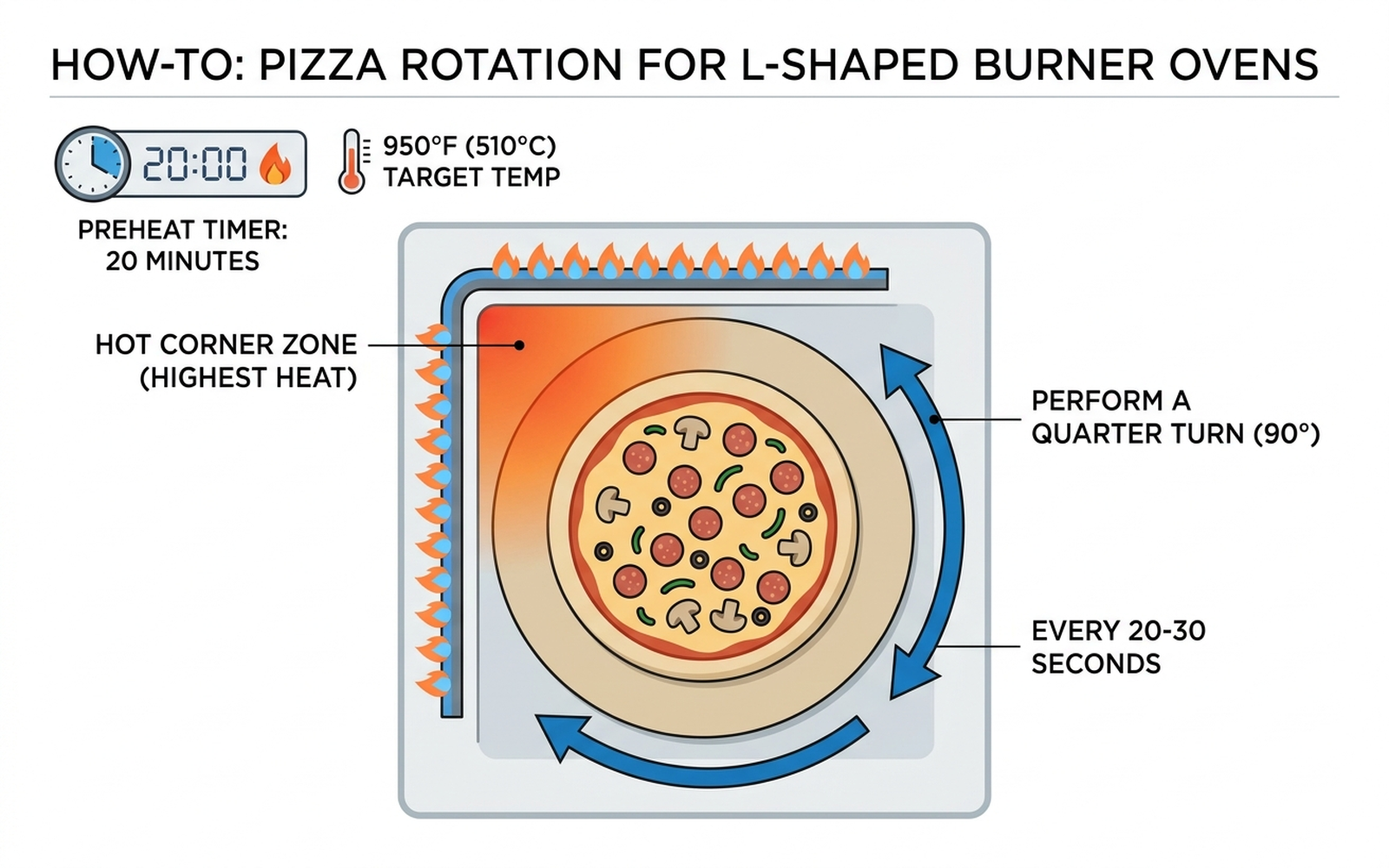
- Preheat for the full 20-minute manufacturer-recommended window before launching the first pie. Reviewers across outlets note that launching early, even when the dome air reads hot, produces a pale, undercooked base because the stone itself hasn’t caught up.
- Rotate the pizza a quarter-turn every 20-30 seconds, since the L-shaped burner concentrates more heat in the back-left corner than the rest of the deck — this is the single technique independent reviewers cite most often for getting an even bake out of the Koda 16’s single-burner design.
- Use a metal turning peel, not just a launch peel, for the rotation step. Owners and reviewers both describe a dedicated turning peel as the biggest single improvement to consistent results on single-burner ovens like this one.
- Check stone temperature with an external infrared thermometer between pies, since the Koda 16 has no built-in gauge — letting the stone fully recover for a few minutes between bakes is a common fix for a soggy or pale second pizza.
Comparison Table
Prices are amazon.com figures at the time of writing (November 2026) and fluctuate given the Koda 16’s clearance status.
| Model | ASIN | Deck Size | Weight | Manufacturer Max Temp | Amazon Price | Best for |
|---|---|---|---|---|---|---|
| Ooni Koda 12 | B07PN5R5WY | 12” | ~20 lb | ~932°F | ~$299 | Buyers who want the cheapest, lightest entry into gas pizza |
| Ooni Koda 16 | B085LGV57D | 16” | ~40.1 lb | ~950°F | ~$499 (clearance) | Buyers who want the biggest deck Ooni still sells at a single-burner price |
| Ooni Koda 2 Max | B0HMTCCH46 | 24” | Heaviest in lineup | ~950°F | ~$1,299 | Buyers who regularly cook for groups and want dual-zone control |
At clearance pricing, the Koda 16 sits roughly $200 above the Koda 12 and $800 below the Koda 2 Max — a gap wide enough that the decision mostly comes down to deck size and group size rather than price alone.
Editorial Recommendation
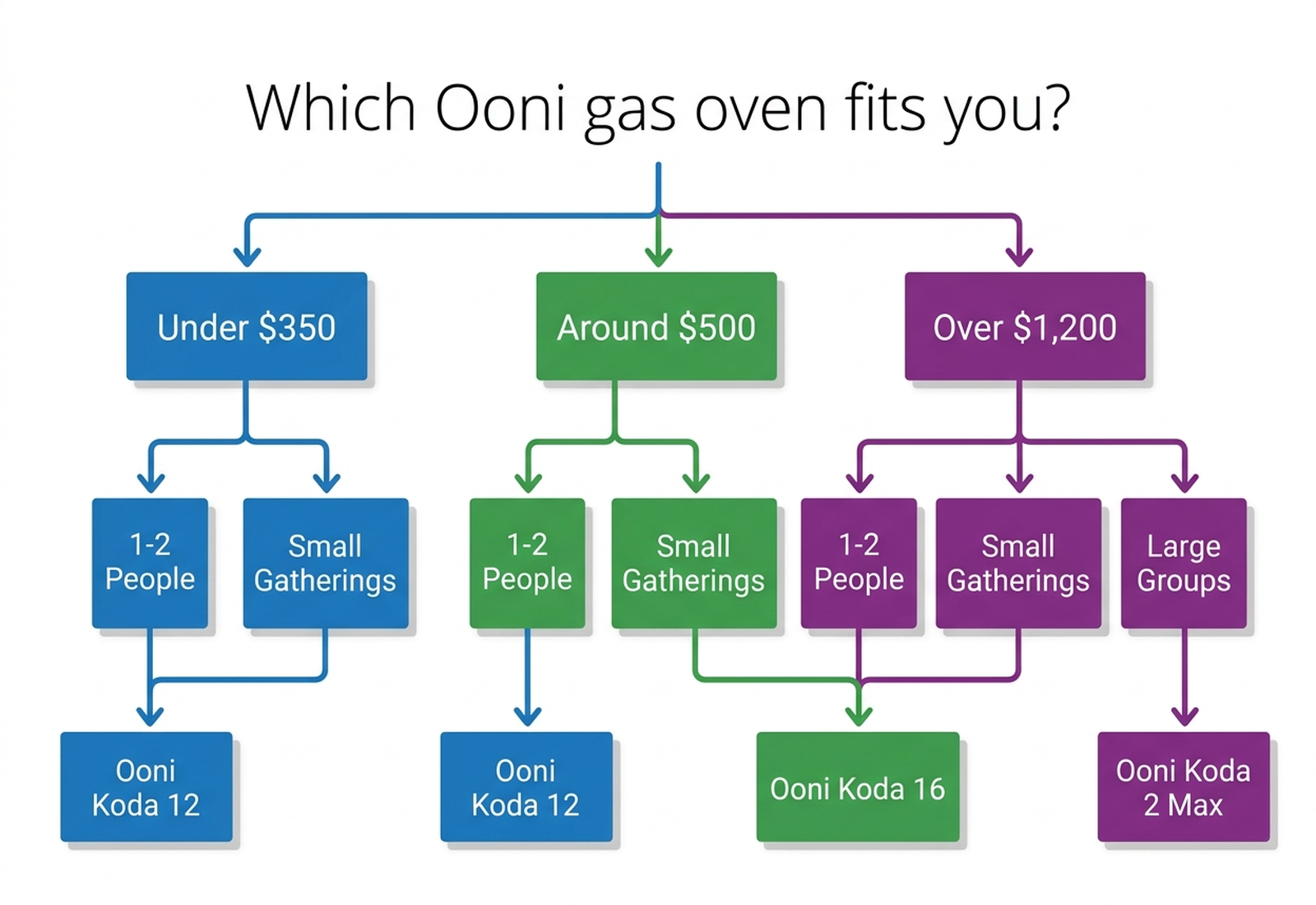
- If you want the oven two major independent reviewers rated best, at its lowest price yet: the Koda 16 at clearance pricing around $499 is hard to beat for a full 16-inch deck — confirm current stock and price on the listing before buying, since clearance availability shifts.
- If your household is smaller and portability matters more than deck size: the Koda 12 is roughly $200 cheaper and half the weight, with the same single-burner design on a smaller stone.
- If you regularly host larger gatherings and want dual-zone temperature control: the Koda 2 Max is Ooni’s current-generation flagship, with a 24-inch deck and two independently controlled burners — at roughly $800 more than the Koda 16.
- If you want the most even bake without learning a rotation technique: a circular-deck, dual-fuel oven like the Solo Stove Pi — covered in our best pizza ovens comparison — trades the Koda 16’s wide single-burner deck for Consumer Reports’ top-rated even heat distribution.
Warranty
Ooni backs the Koda 16 with a standard 1-year manufacturer warranty, extended to 5 years when the oven is registered at Ooni.com — a detail that’s easy to miss and worth doing immediately after purchase. Always confirm current coverage terms on the product listing, since warranty terms are updated periodically and registration requirements can change.
Limitations of This Analysis
This analysis relies on Ooni’s published manufacturer specifications, third-party testing coverage from Wirecutter and Tom’s Guide, and aggregated owner reviews from amazon.com and specialty pizza-oven review sites; we did not personally test the Koda 16, the Koda 12, or the Koda 2 Max, and individual experience varies with propane supply, ambient wind, and unit-to-unit variance. Outdoor pizza oven market-size and growth-rate estimates vary significantly across research firms — figures in third-party coverage range from roughly $0.36 billion to over $1 billion depending on methodology and market scope, so we don’t cite a single precise figure here as authoritative. Prices, ASIN availability, and clearance stock levels change frequently and especially quickly for a model being phased out — always confirm current details on the product page before buying.
The Bottom Line
The Koda 16’s hot corner and missing thermometer are the same quirks reviewers have noted for years, not new problems that emerged after Ooni moved on to the Koda 2 Max — and the core cooking performance that earned it top marks from Wirecutter and Tom’s Guide hasn’t changed. What has changed is the price: at clearance levels near $499, it’s the cheapest way to get Ooni’s widest single-burner deck, which makes it a better value proposition today than it was at full MSRP. The real decision is whether a 16-inch single-zone deck fits how you cook, or whether the step up to the Koda 2 Max’s dual-zone control is worth roughly $800 more for your household. Check current stock and price before buying — clearance listings can sell out or get repriced without notice — and if you want a second opinion on a specific listing, paste the URL into Arekore and let the AI scan the reviews and price history for you in about five minutes.