Nugget Ice Makers 2026: Is "Whisper Quiet" Marketing True?
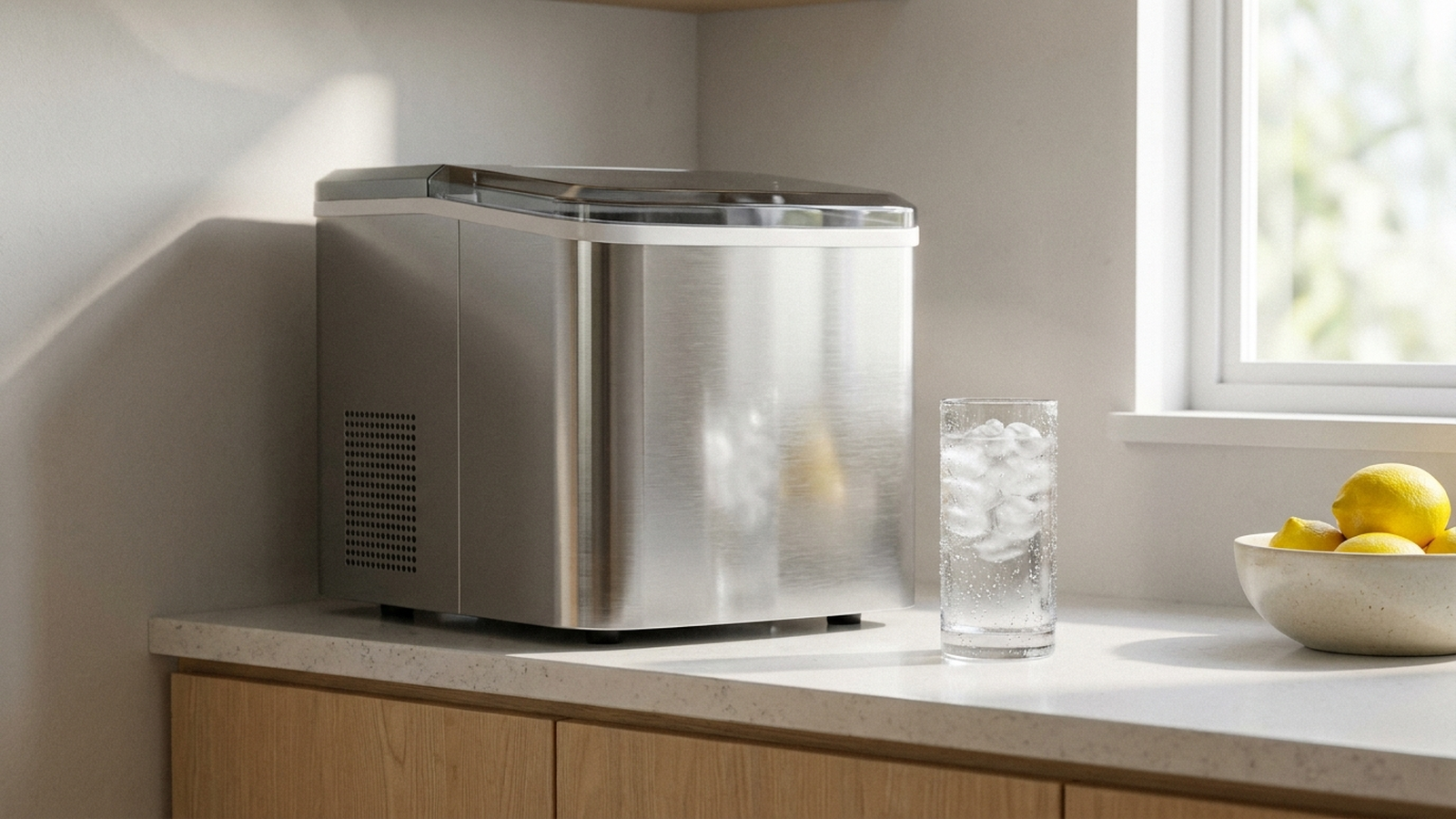
Nugget ice makers are one of the few countertop appliances where the marketing copy leads with a number most shoppers can’t independently verify: a decibel rating. “40 dB Quiet,” “whisper-quiet operation,” “library-quiet at 39 dBA” — these claims show up in product titles and bullet points across nearly every listing on amazon.com. We compared the advertised numbers against a hands-on test from Reviewed (USA Today) and aggregated owner reviews to see how often the marketing claim survives contact with a real kitchen.
As an Amazon Associate, Arekore earns from qualifying purchases. The Amazon product links in this article may include our affiliate tracking ID and may earn us a commission if you buy through them, at no additional cost to you. See our Links Policy for details on how we select products and how commissions do not influence our recommendations.
TL;DR / Quick Verdict
- The advertised dB number is usually measured under best-case conditions — often the compressor hum alone, not the auger grinding ice or nuggets dropping into the bin — so it understates what a listener actually hears during a full cycle.
- Reviewed’s hands-on test of the Frigidaire Gallery EFIC255 found irregular “growling” noises during operation, not a steady hum, even though its average volume is comparable to competing models.
- Owner reviews of the GE Profile Opal 2.0 are split: many describe it as genuinely quiet when new, but a recurring complaint describes a high-pitched whistle developing after 12 to 24 months of use — a failure mode no launch-day dB spec can capture.
- A published dB number without a measurement distance or test condition is not verifiable — several listings advertise “40 dB” with no indication of whether that’s measured at 3 feet, at 1 meter, or during idle standby versus active ice production.
How We Reached These Conclusions (Methodology)
This is an editorial analysis, not a hands-on test; we did not personally test the products covered here with a calibrated decibel meter. This guide synthesizes: (a) Reviewed’s (USA Today) published hands-on test of the Frigidaire Gallery EFIC255, which specifically evaluated operating noise; (b) manufacturer-published decibel specifications listed on amazon.com and brand websites for the GE Profile Opal 2.0, Frigidaire Gallery EFIC255, Silonn, and NewAir nugget ice makers; (c) aggregated amazon.com and Best Buy customer-review sentiment discussing noise, sampled in August 2026; and (d) general reference decibel levels for common household sounds (a quiet library, normal conversation, a running vacuum cleaner) published by hearing-conservation and acoustics-reference sources, used here only to contextualize what a given dB number means in practice. Sample sizes are reported where a retail listing discloses a specific review count; ratings without a disclosed count are labeled “aggregated” rather than assigned an invented N. Prices are amazon.com figures at the time of writing and fluctuate.
Why Nugget Ice Makers Are Noisy in the First Place
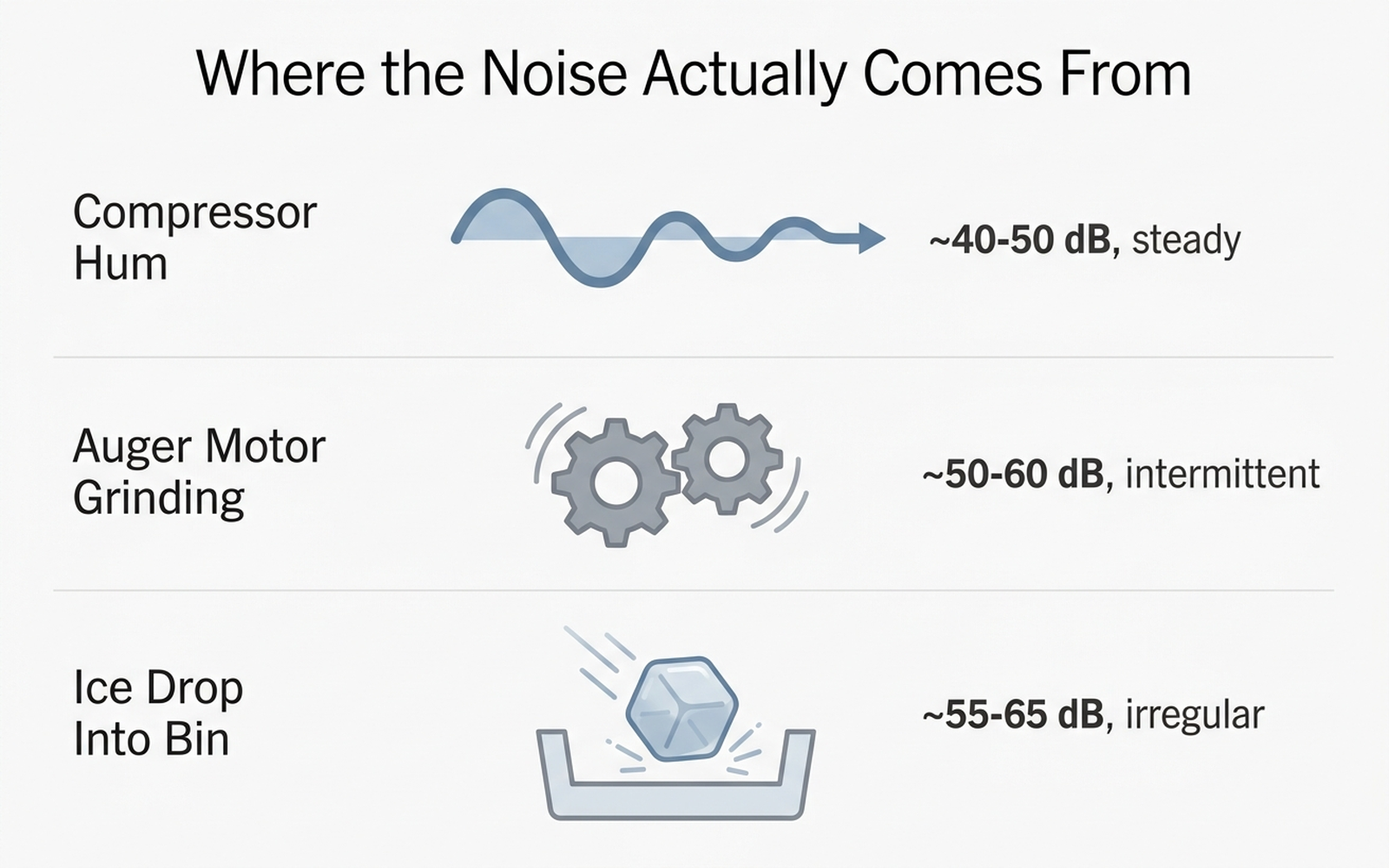
A nugget ice maker isn’t one noise source — it’s three, running on different schedules, and a single advertised dB figure rarely specifies which one it measured.
- The compressor hum is the steady background noise of the refrigeration cycle, comparable to a running refrigerator. This is the noise manufacturers most often quote in marketing specs, because it’s the quietest and most consistent of the three sources.
- The auger motor physically compresses and extrudes the soft, chewable ice nuggets that give this appliance category its name. This mechanical grinding sound is intermittent — it runs only during active ice production, not while ice is idle in the bin — and it’s typically louder than the compressor hum alone.
- Ice dropping into the storage bin produces the sharp, irregular sound reviewers and testers describe as “growling,” “clunking,” or “rattling.” Reviewed’s hands-on test of the Frigidaire Gallery EFIC255 specifically flagged this pattern: the average volume was comparable to competing models, but the irregular timing of the noise made it more noticeable and, in the reviewers’ words, disruptive.
A dB number that reflects only the compressor hum — the quietest of the three — will always undersell what a full ice-making cycle actually sounds like in a kitchen.
Brand-by-Brand: What the Specs and Reviews Show
GE Profile Opal 2.0
The GE Profile Opal 2.0, Wirecutter’s top pick in the nugget-ice category for ice quality and smart-feature execution, is marketed with a noise rating in the high-30s to low-40s dBA range depending on the listing — in the same range as a quiet conversation. Aggregated amazon.com and Best Buy reviews are split on whether that holds up: many owners describe the unit as barely noticeable, humming softly even in a quiet kitchen. But a recurring complaint describes the opposite experience — a loud whine on full cycle, occasionally loud enough to wake someone at night — and several long-term owners report that a high-pitched whistle develops after 12 to 24 months that wasn’t present when the unit was new. That’s a detail a launch-day decibel spec cannot capture, because it describes component wear, not the factory noise floor.
Check GE Profile Opal 2.0 Ultra Nugget Ice Maker on Amazon
Frigidaire Gallery EFIC255
The Frigidaire Gallery EFIC255, a CES Innovation Awards honoree and the most frequently cited value pick against the Opal 2.0, produces a steadier compressor hum in the mid-50s dB range according to owner reports — comparable to a running refrigerator. Reviewed’s hands-on test found the EFIC255 fairly noisy compared to its competition, not primarily because of raw volume, but because of the noise pattern: irregular “growling” sounds at unpredictable intervals rather than a constant, easier-to-tune-out drone. Owner sentiment mirrors that finding — several reviewers say they like the ice but not the noise, describing it as tolerable background sound in an already-busy kitchen but disruptive in a quiet room. The aggregated amazon.com rating for this listing sits noticeably lower than its competitors, around 3.1 stars, and the split isn’t only about noise: a recurring pattern in the reviews is owners loving the ice quality early on but reporting reliability problems developing later, which drags the average down alongside the noise complaints.
Check Frigidaire Gallery EFIC255 Nugget Ice Maker on Amazon
Silonn
Silonn leads with a decibel number directly in its product titles — several listings advertise “40 dB Quiet” as a headline feature, and the brand’s own product pages list figures ranging from 40 dB up to 50-55 dB depending on the specific model and capacity. None of the listings we reviewed specify a measurement distance or whether the figure reflects idle, compressor-only, or full-cycle operation, which makes the number difficult to compare directly against competitors that don’t publish a spec at all, or against independent test data. Aggregated review sentiment is generally positive on noise for the lower-capacity models, with owners describing the sound as comparable to a standard kitchen refrigerator hum.
Check Silonn Nugget Ice Maker Countertop on Amazon
NewAir
NewAir’s Sonic Speed line does not headline a specific decibel figure in its main listing copy the way Silonn does, instead marketing self-cleaning function and daily ice output. Consumer Reports has tested NewAir’s countertop icemaker line and includes noise as one of its standard evaluation criteria, disregarding the transient sound of ice dropping and focusing on steady-state operating volume. Aggregated amazon.com sentiment places NewAir’s noise level in the same general range as its competitors — a background hum most owners describe as tolerable in a kitchen, less so in a bedroom or home office.
Check NewAir Nugget Ice Maker on Amazon
Where a Nugget Ice Maker Actually Falls on the Decibel Scale
To put these numbers in context: a quiet library measures around 30 dB, normal conversation at a few feet sits around 60 dB, and a running vacuum cleaner measures roughly 70-80 dB. Because the decibel scale is logarithmic, each 10 dB increase represents roughly ten times the acoustic energy and about twice the perceived loudness — so the gap between a 40 dB compressor hum and a 55-65 dB full-cycle grinding sound is far larger than the raw numbers suggest. Every countertop ice maker tested in independent roundups we reviewed measured 55 dB or higher during active ice production, even when the same listing’s marketing copy quoted a lower idle or compressor-only figure.
How to Judge a “Quiet” Claim Before You Buy
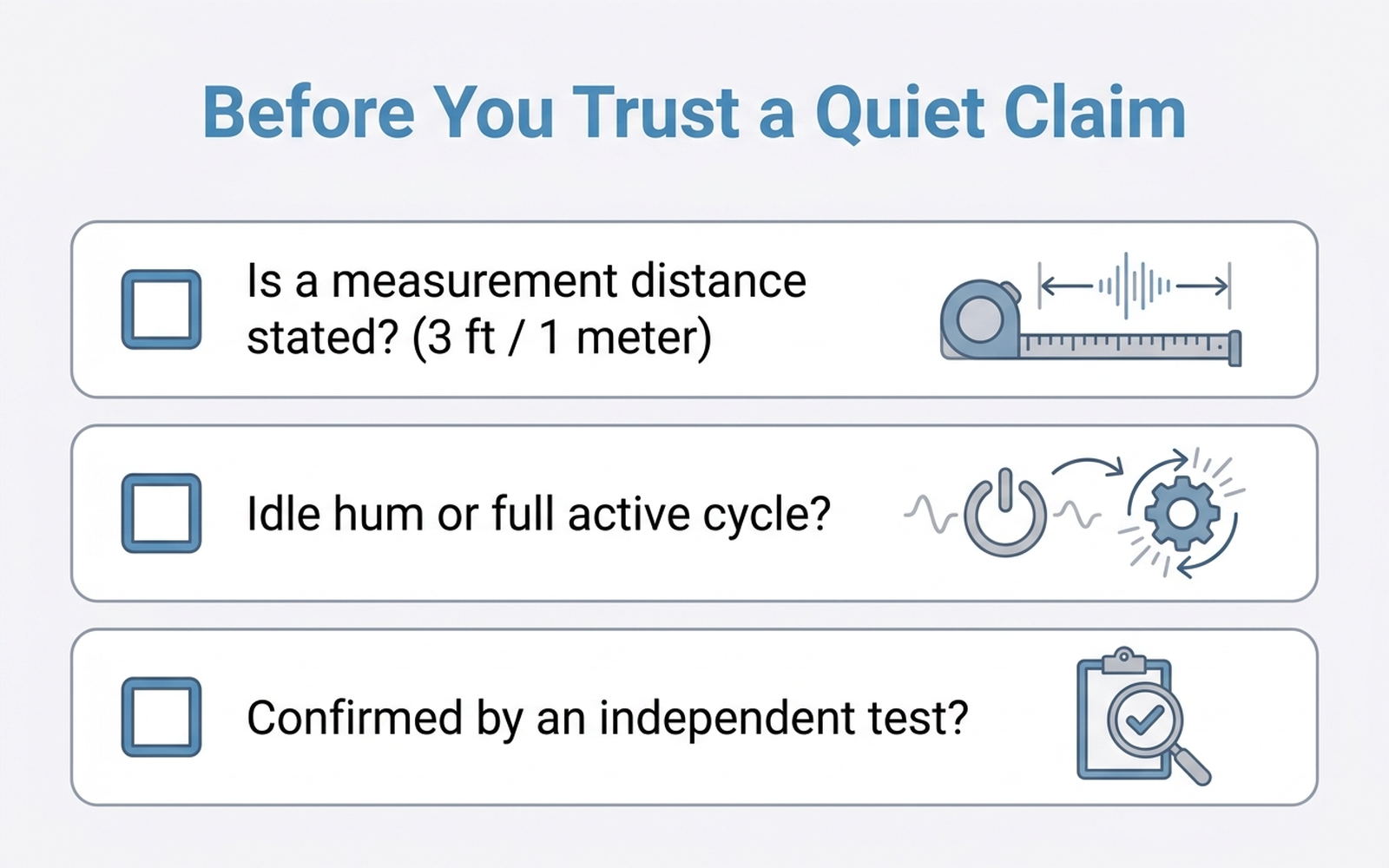
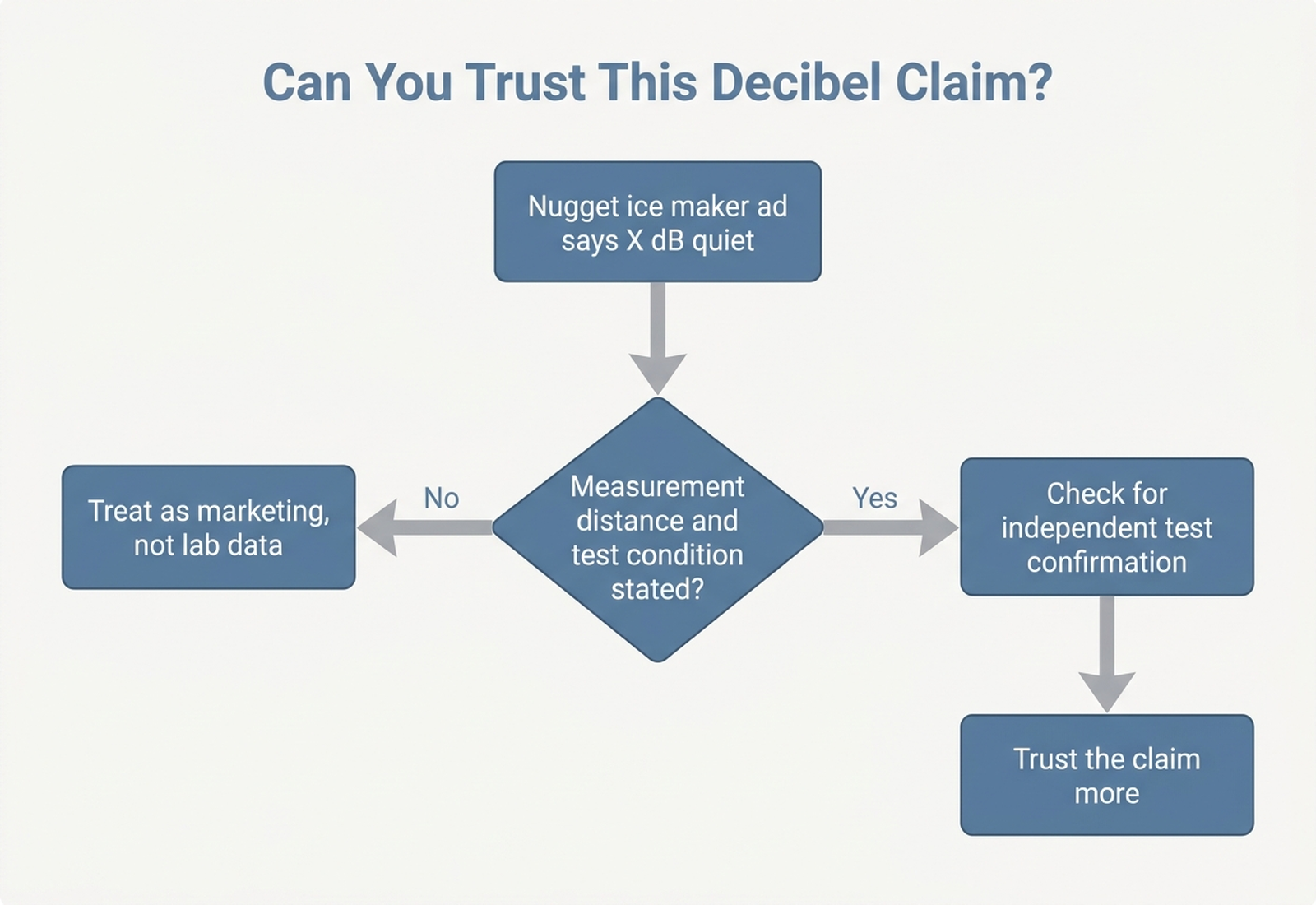
- Check whether the spec states a measurement distance. A dB figure without “measured at 3 feet” or “at 1 meter” is not independently verifiable and should be treated as a marketing figure, not a lab result.
- Ask whether the number covers idle, compressor-only, or full-cycle operation. The auger and ice-drop sounds are almost always louder than the steady compressor hum most specs quote.
- Read the one- and two-star reviews specifically for noise complaints, not just the average rating. Noise tolerance is subjective enough that a 4.5-star average can still hide a consistent subset of buyers who found the unit too loud for a bedroom, office, or open-plan living space.
- Weigh long-term reports, not just launch-day reviews. Several nugget ice makers in this category develop new or louder noises — a whine, a whistle, a rattle — after a year or more of regular use, which a factory spec sheet cannot predict.
- Cross-check against an independent test where one exists. Reviewed’s and Consumer Reports’ published testing gives a noise assessment that isn’t written by the manufacturer, even when it doesn’t include an exact dB figure.
Editorial Recommendation by Use Case
- Best for a shared kitchen or open-plan living space: GE Profile Opal 2.0, based on the largest volume of “barely noticeable” owner feedback, with the caveat that long-term whistle complaints should factor into a buying decision if the unit will run for years without service.
- Best for a garage bar, basement, or detached space where noise matters less: Frigidaire Gallery EFIC255, given its lower price relative to the Opal 2.0 and the fact that its documented noise pattern is more disruptive in a quiet room than in an already-busy space.
- Best for buyers prioritizing a published, headline decibel spec: Silonn’s lower-capacity models, which lead with a specific number even though that number lacks a stated measurement condition.
- Best for buyers who want an independent noise evaluation, not just a manufacturer claim: any model Consumer Reports or Reviewed has specifically tested, since both organizations evaluate noise as a standard criterion rather than relying on the brand’s own marketing copy.
Comparison Table
Prices are approximate amazon.com figures at the time of writing (August 2026) and fluctuate.
| Product | Advertised noise claim | Independent/aggregated finding | Rating (amazon.com) | Typical cost |
|---|---|---|---|---|
| GE Profile Opal 2.0 Ultra | ~39 dBA (“whisper-quiet”) | Wirecutter top pick for ice quality; owner reports split, some develop a whistle after 12-24 months | 4.4★ (aggregated) | ~$500-$580 |
| Frigidaire Gallery EFIC255 | Not consistently published | Reviewed (USA Today): comparable average volume, but irregular “growling” noise pattern flagged as disruptive | 3.1★ (aggregated) | ~$280-$320 |
| Silonn Nugget Ice Maker | ”40 dB Quiet” (headline claim, no stated distance) | Positive owner sentiment on lower-capacity models; distance/condition unverifiable | 4.4★ (aggregated) | ~$180-$230 |
| NewAir Sonic Speed | No headline dB figure | Consumer Reports tests noise as standard criterion; aggregated sentiment places it in line with competitors | 4.2★ (aggregated) | ~$200-$260 |
Decision Flowchart
Warranty and Return Considerations
Noise complaints that surface after the return window closes are a common friction point in this category, since the whine and whistle issues several GE Profile Opal 2.0 owners report tend to develop well after 12 to 24 months of use, past most standard 30-day amazon.com return windows. GE backs the Opal 2.0 with a one-year limited manufacturer warranty on parts and labor, which would cover a developing noise issue if it’s diagnosed as a component defect rather than normal wear. Frigidaire, Silonn, and NewAir each publish standard one-year limited warranties on their countertop nugget ice makers as well; none of the four brands’ standard warranty terms specifically list noise level as a covered defect, so a buyer pursuing a warranty claim for noise alone should expect the manufacturer to evaluate it case-by-case rather than as an automatic covered issue.
Limitations
This analysis relies on Reviewed’s (USA Today) published hands-on test, Consumer Reports’ standard testing criteria, manufacturer-published specifications, and aggregated amazon.com and Best Buy review sentiment, rather than our own side-by-side decibel-meter measurement of these four units. Manufacturer-published dB figures in this category often omit the measurement distance and test condition, which limits how precisely they can be compared against each other or against independent test data. Individual noise tolerance is subjective, and a kitchen’s acoustics, counter placement, and surrounding ambient noise all affect how loud any given unit sounds in practice. Long-term noise changes (a developing whine or whistle) are based on aggregated owner reports rather than a controlled longevity test. Pricing on amazon.com fluctuates with sales events and stock levels.
Bottom Line
A published decibel number on a nugget ice maker listing is a starting point, not a guarantee. The best-documented case in this comparison — Reviewed’s hands-on test of the Frigidaire Gallery EFIC255 — found that the pattern of the noise mattered as much as its raw volume, a distinction no single dB figure captures. Before trusting a “whisper quiet” or “40 dB” claim in a product title, check whether it discloses a measurement distance and test condition, and read the low-star reviews specifically for noise complaints rather than relying on the star average alone.
Before you buy, paste the product link into Arekore — our AI assistant checks review authenticity, surfaces what the one-star reviews actually complain about, and compares prices, free, in about five minutes.