Ninja CREAMi Review 2026: Worth the Counter Space?
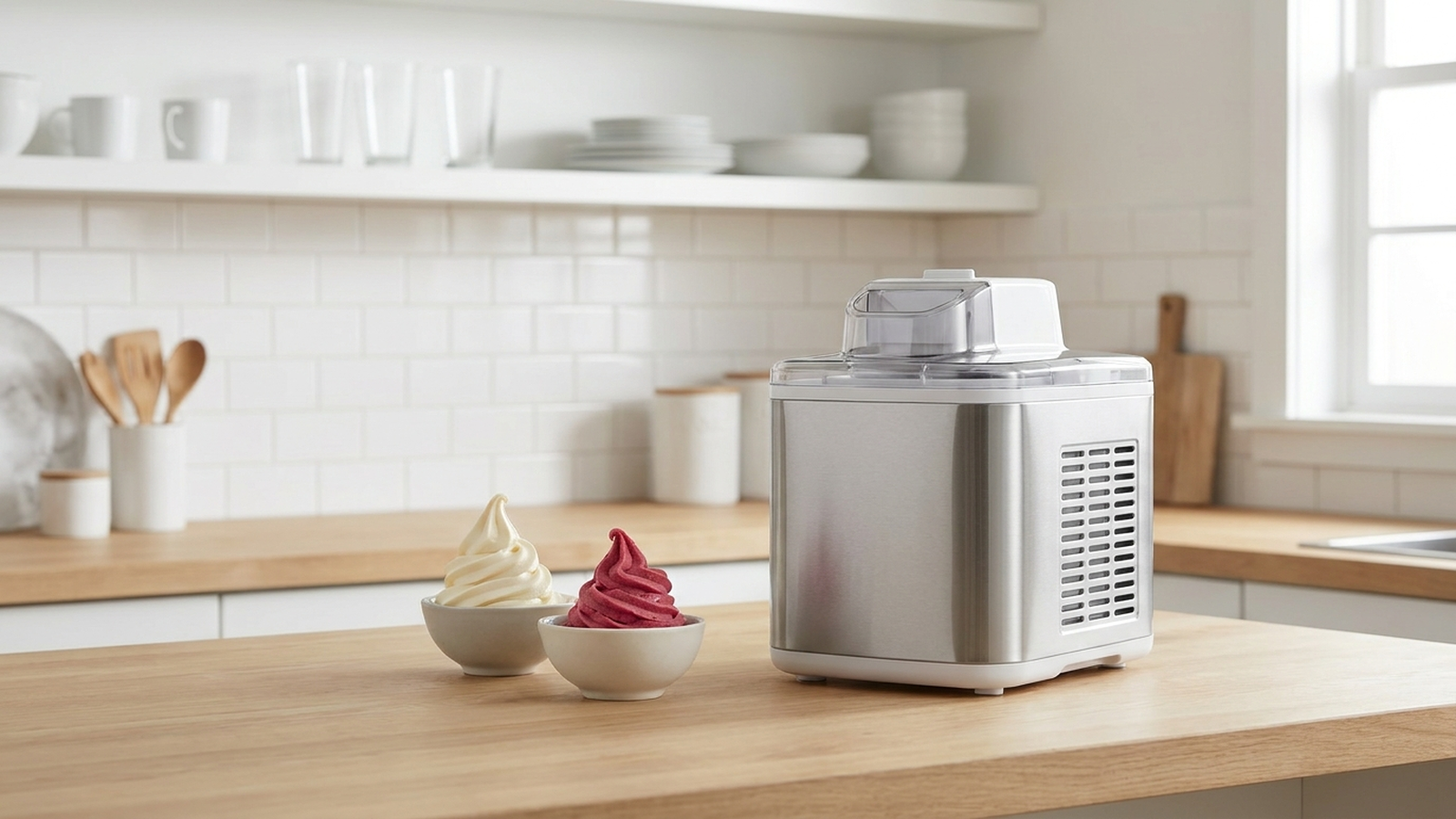
The Ninja CREAMi has been one of the most-searched small kitchen appliances in the US for three straight years running, driven largely by a wave of social video showing frozen protein shakes and Greek-yogurt bases transformed into scoopable “ice cream” in about two minutes. That popularity has also produced a large body of independent testing and owner feedback — enough to check the viral claims against the data rather than the marketing. This analysis looks at what the CREAMi actually does well, where testers found it falls short, and which of the three current Ninja models (plus one traditional alternative) makes sense for different households.
As an Amazon Associate, Arekore earns from qualifying purchases. The Amazon product links in this article may include our affiliate tracking ID and may earn us a commission if you buy through them, at no additional cost to you. See our Links Policy for details on how we select products and how commissions do not influence our recommendations.
TL;DR / Quick Verdict
- The CREAMi’s blade-processing approach genuinely produces a different texture than a traditional churn freezer — firm enough to eat immediately, with no extra freezer time needed, unlike churned soft-serve.
- Durability is the most consistent concern in independent testing and owner reviews, not texture quality. Reviewers report the machine straining audibly on dense or under-liquefied bases, and a documented pattern of plastic shavings ending up in finished treats when the blade digs into the pint container.
- Results depend heavily on getting the base recipe right. America’s Test Kitchen found only one of several tested vanilla recipes came out consistently smooth; others turned out icy or loose because the blade heated the base as it processed.
- The Deluxe (NC501, 11-in-1) and Swirl (NC701, 13-in-1) models add capacity and functions, not fundamentally different mechanics — the core blade-and-pint system is the same across the lineup.
How We Reached These Conclusions (Methodology)
This is an editorial analysis, not a hands-on review; we did not personally test the products covered here. It synthesizes (a) independent testing and reporting from Wirecutter (New York Times), America’s Test Kitchen, and Tom’s Guide, (b) Ninja’s published manufacturer specifications for the NC301, NC501, and NC701 models, and (c) aggregated Amazon customer review sentiment and Ninja Creami Community discussion patterns as documented in third-party reporting, including a specific figure Wirecutter cited of roughly 15 Amazon reviews mentioning plastic shavings in finished product on one listing. We did not personally test the products covered here, and we do not cite an aggregate star rating for the CREAMi line as a whole, since ratings vary by specific listing, color variant, and whether the unit is new or “Renewed.” Prices are amazon.com figures at the time of writing (August 2026) and change frequently, especially around sales events.
Blade-Processing vs. Traditional Churn: Two Different Technical Approaches
Most ice cream makers sold in the US fall into one of two categories, and the CREAMi represents a real departure from the older of the two.
Churn-freeze machines (Cuisinart’s ICE-21 and similar budget models) work by stirring a liquid base inside a bowl that has been pre-frozen in a home freezer for at least 24 hours. A paddle scrapes the freezing mixture off the bowl walls continuously for roughly 20 minutes, incorporating air and preventing large ice crystals from forming. The result is a soft-serve consistency that typically needs another hour or more in the freezer to firm up to scoopable ice cream.
Blade-processing machines, which is what the CREAMi is, work in reverse order: the base — water, dairy, or a protein-shake mixture — is poured into a pint container and frozen completely solid for 24 hours first. The machine then locks the frozen pint in place and drives a stainless-steel paddle down through the solid block, shaving and re-compacting it in roughly two minutes to create a smooth, aerated texture without ever fully melting it. Because the output starts from a fully frozen state, it’s firm enough to eat immediately, which is the core of the CREAMi’s appeal over a traditional churn.
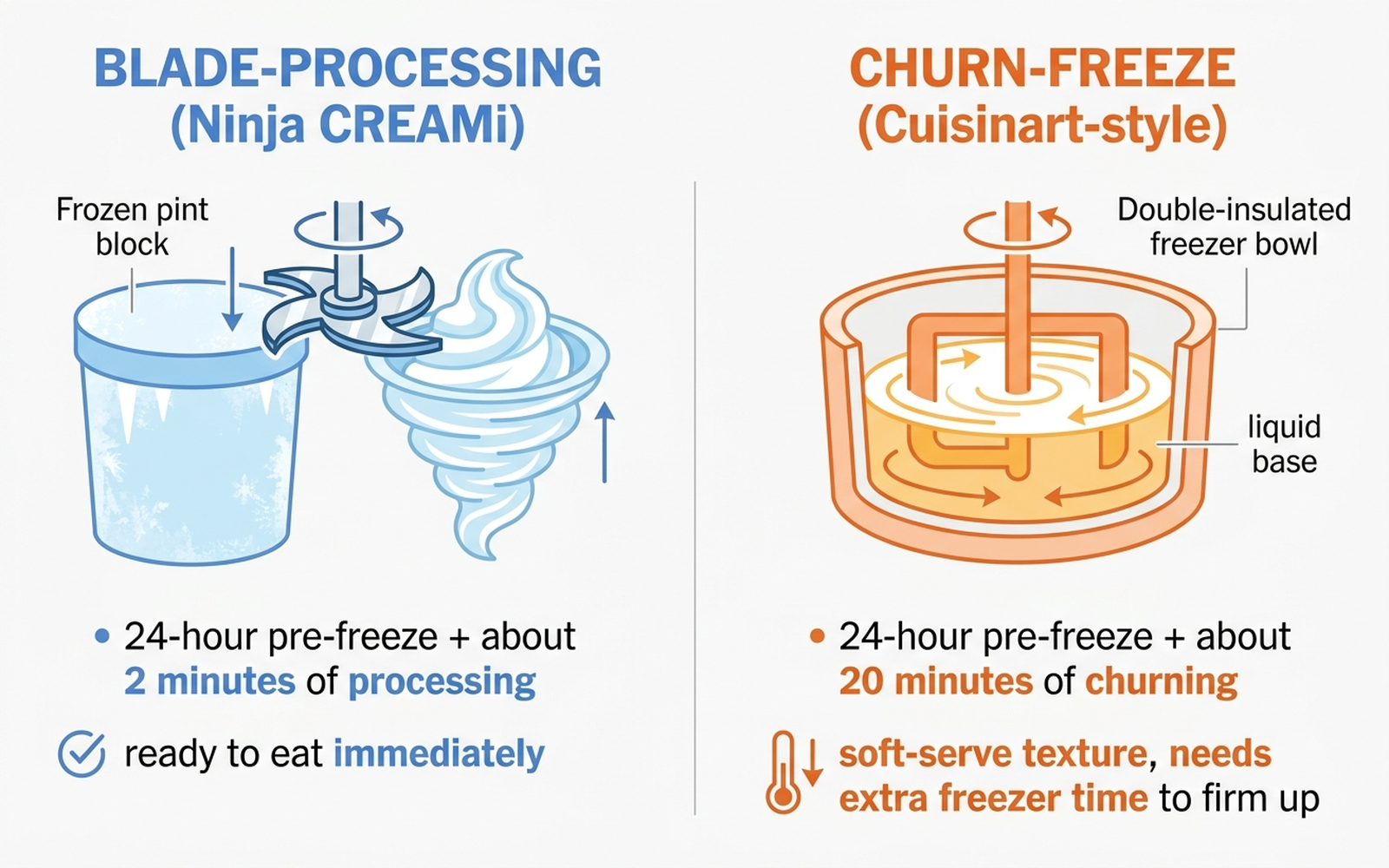
The trade-off shows up in independent testing. America’s Test Kitchen found that blade-processing machines are “most successful with recipes developed specifically for this style of machine,” and reported mixed results with standard vanilla ice cream recipes — some batches came out loose and liquidy because the blade’s friction heated the base as it processed, while others developed noticeable ice crystals. Only the manufacturer’s own strawberry ice cream recipe turned out consistently smooth in their tests, which the reviewers attributed to that recipe’s higher water and pectin content interacting better with the blade mechanism. In other words, the CREAMi is closer to a specialized frozen-dessert processor than a drop-in replacement for a churn freezer, and base recipe matters more than it does with traditional machines.
Model by Model: NC301, NC501 Deluxe, and NC701 Swirl
Ninja currently sells three distinct CREAMi lines on amazon.com, and the differences are mostly about capacity and program count rather than the underlying mechanism.
Ninja CREAMi NC301 (7-in-1). The original and still the most affordable full-size model, with 7 one-touch programs (ice cream, sorbet, lite ice cream, gelato, milkshake, smoothie bowl, and mix-in) built around a single 16 oz. pint. Ninja’s manufacturer list price is around $229, though it’s frequently discounted; it typically ships with two pint containers and lids.
Ninja CREAMi Deluxe NC501 (11-in-1). Adds four more programs — Slushi, Italian Ice, Creamiccino, and Frozen Drink — on top of the original seven, and uses a larger 24 oz. XL pint exclusive to the Deluxe line (it is not compatible with the smaller NC301/NC300-series pints). Manufacturer list price is around $249. The larger tub is the more meaningful change for most households: it produces closer to a pint-and-a-half of finished product per cycle, which matters if you’re serving more than one or two people.
Ninja Swirl by CREAMi NC701 (13-in-1). The newest line, adding a soft-serve dispensing handle and two-in-one pint design so a finished batch can be dispensed as swirled soft serve directly into a bowl or cone, rather than scooped. It uses its own dedicated pint format that isn’t cross-compatible with either the NC301 or NC501 series.
Across all three lines, Ninja specifies the pint size as fixed per model family, and mismatching a pint to the wrong base risks the unit failing to lock — or, per user reports referenced in third-party coverage, motor strain if forced. That single compatibility rule is worth checking before buying replacement or extra pints from third-party sellers, since off-brand containers are sized for a specific series.
How to Use It: Buying and Setup Guide
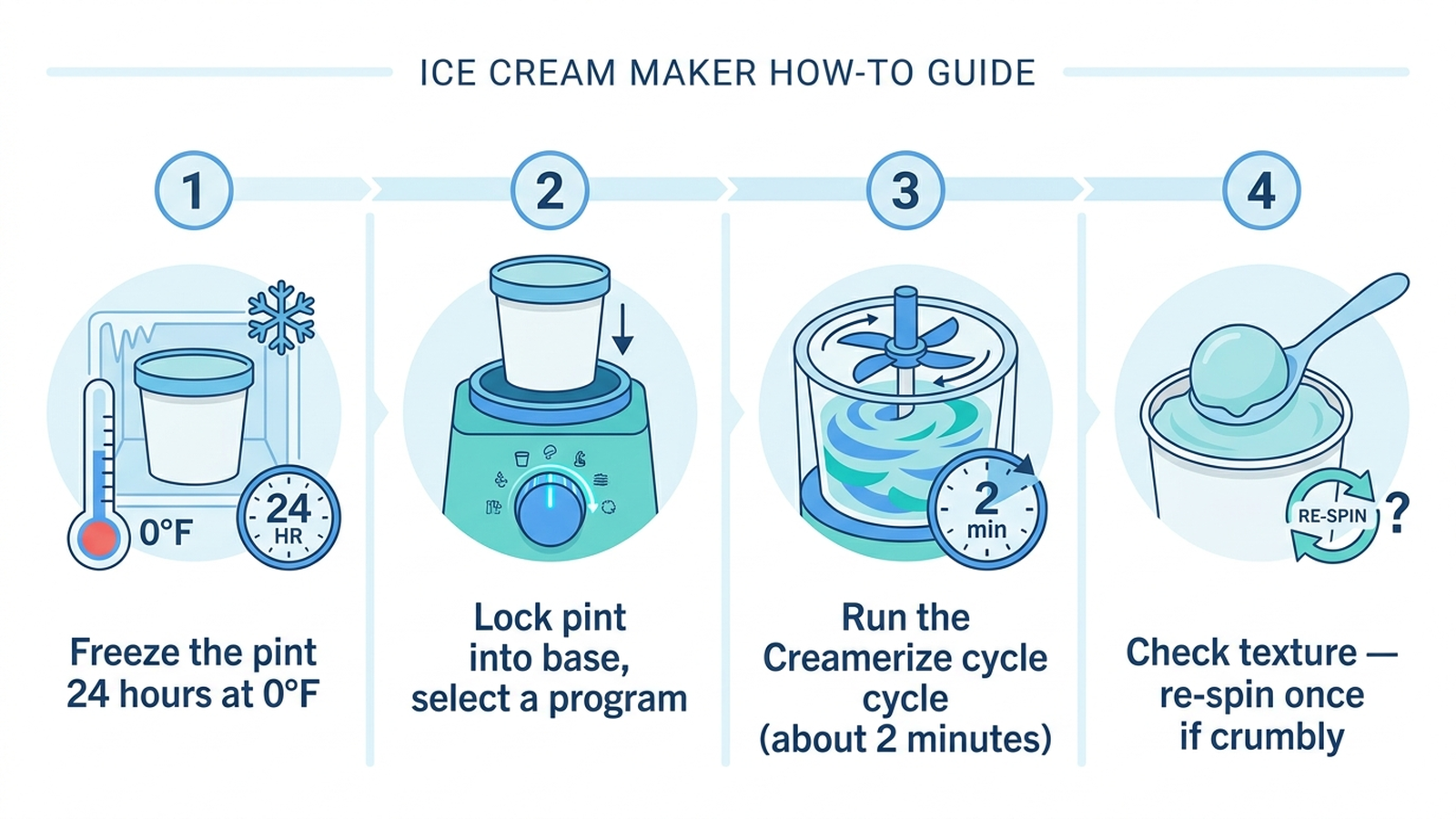
The workflow is consistent across all three CREAMi lines. Pour a liquid or semi-liquid base into the pint (dairy, non-dairy milk, a protein shake mix, or fruit puree), freeze it flat for a full 24 hours at 0°F, then lock it into the motor base and select a program. The Creamerize cycle runs about two minutes. If the result comes out crumbly rather than smooth — common with denser, higher-protein bases — most listings and third-party guides recommend running a second “re-spin” cycle rather than adding liquid, since extra liquid at that stage tends to make the texture worse, not better.
A few buying-guide notes that independent testers and manufacturer documentation both flag:
- Freezer space matters more than counter space. The pint has to lie flat in a home freezer for 24 hours before each batch, so a household making frequent batches typically needs two or more pints in rotation.
- Base composition changes results more than the machine’s settings do. Recipes formulated specifically for blade-processing (rather than adapted from traditional churn recipes) consistently score better in third-party testing.
- The unit isn’t small. Based on third-party size comparisons, it’s roughly the footprint of a large drip coffee maker and weighs around 13 lbs, which is enough that reviewers note it’s not something most people want to move in and out of a cabinet daily.
Comparison Table
Prices are amazon.com figures at the time of writing (August 2026) and fluctuate around sales events.
| Model | ASIN | Programs | Pint size | Mfr. list price | Best for |
|---|---|---|---|---|---|
| Ninja CREAMi NC301 | B09KSWQ15G | 7-in-1 | 16 oz. | ~$229.99 | Solo or two-person households, smallest footprint |
| Ninja CREAMi Deluxe NC501 | B0B9CZ6XBQ | 11-in-1 | 24 oz. XL | ~$249.99 | Families of 3+, larger batches per cycle |
| Ninja Swirl by CREAMi NC701 | B0DSJW8SFG | 13-in-1 | 16 oz. (dispensing) | ~$349.99 | Households that want soft-serve texture dispensed, not scooped |
| Cuisinart ICE-21 (churn-freeze alternative) | B003KYSLMW | N/A (single churn cycle) | 1.5 qt. | ~$69.99 | Budget buyers making large single batches, no interest in protein-shake or high-protein bases |
Check the Ninja CREAMi NC301 on Amazon · Check the Ninja CREAMi Deluxe NC501 on Amazon · Check the Ninja Swirl NC701 on Amazon · Check the Cuisinart ICE-21 on Amazon
Decision Guide: Which One (If Any) Fits Your Kitchen
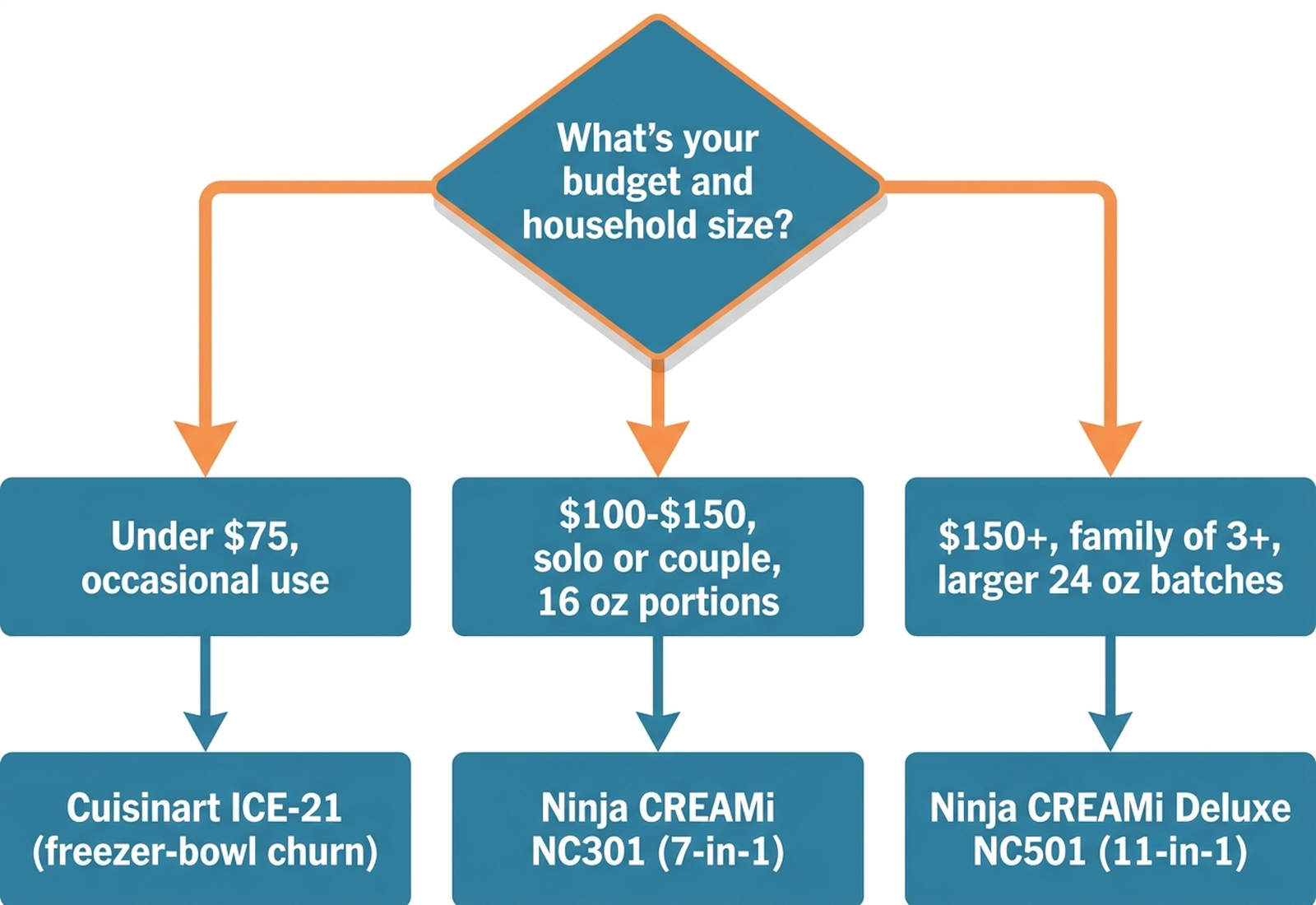
- You mainly want high-protein “healthy ice cream” from frozen Greek yogurt or protein shakes, for one or two people: the standard NC301 covers this use case at the lowest CREAMi price point.
- You’re feeding a family or regularly entertaining, and portion size matters more than program variety: the Deluxe NC501’s larger 24 oz. pint is the more relevant upgrade over the NC301, more so than any of the four extra programs it adds.
- You specifically want soft-serve texture dispensed rather than scooped ice cream: the Swirl NC701 is built around that use case and isn’t really a like-for-like alternative to the other two.
- You mainly make large single batches of traditional dairy-based ice cream and don’t care about protein-shake bases or two-minute processing: a churn-freeze machine like the Cuisinart ICE-21 costs roughly a third as much and, per multiple comparison write-ups, produces smoother traditional dairy ice cream with a simpler mechanism that has fewer reported durability complaints.
Warranty Considerations
Ninja backs CREAMi models with the standard SharkNinja limited manufacturer warranty; given the durability concerns raised in independent testing and owner reviews (motor strain under heavy use, blade contact with plastic pint walls), it’s worth confirming the current warranty term and registering the product promptly after purchase. Extended protection plans are commonly offered as an add-on at checkout on Amazon listings — always check current coverage terms and length on the specific listing before buying, since they are updated periodically.
Editorial Recommendation
- Best overall value for most single or two-person households: Ninja CREAMi NC301 — the core blade-processing experience at the lowest CREAMi price point, without paying for capacity or programs you may not use.
- Best for larger households: Ninja CREAMi Deluxe NC501 — the 24 oz. pint is the meaningful upgrade, more than the additional programs.
- Best for soft-serve specifically: Ninja Swirl NC701 — a genuinely different output format, not just more programs.
- Best for buyers skeptical of durability complaints or who mainly want traditional churned ice cream: Cuisinart ICE-21 — a fundamentally simpler mechanism, lower price, and per comparison testing, no reported pattern of plastic-shaving complaints since it never drives a blade into a rigid frozen block.
Limitations of This Analysis
This analysis relies on third-party testing and reporting from Wirecutter, America’s Test Kitchen, and Tom’s Guide, Ninja’s published manufacturer specifications, and patterns in Amazon customer reviews and community discussion as documented in that third-party reporting; we did not personally test any of the models covered here. We deliberately avoided citing a single aggregate star rating for the CREAMi line, since ratings differ meaningfully across specific color variants, bundle listings, and “Renewed” versus new units on amazon.com. The durability complaints described here — motor strain, plastic shavings, burning-plastic odor during processing — are drawn from specific third-party reporting rather than a comprehensive count of all owner experiences, and unit-to-unit variance means an individual buyer’s experience may differ. The North American residential ice cream maker market was estimated at roughly $1.2–1.3 billion as of 2024–2025 by industry research firms, with continued growth projected through the early 2030s; these are directional market-size estimates from research firms whose methodologies differ, not figures specific to any single product line. Prices, ASIN availability, and warranty terms change frequently — always confirm current details on the product page before buying.
The Bottom Line
The Ninja CREAMi’s blade-processing approach is a legitimately different way to make frozen desserts, and it delivers on its core promise: a scoopable, immediately-edible texture from a fully frozen base in about two minutes, something no traditional churn freezer can match. What the viral marketing tends to leave out is that independent testing and owner reviews both point to real durability concerns — motor strain, blade contact with plastic containers, and inconsistent results with recipes not built specifically for the machine. Whether that trade-off is worth it depends on how often you’d actually use the frozen-shake-to-ice-cream trick versus wanting a simpler, cheaper machine for occasional traditional ice cream. Check the current price and recent reviews on the specific listing before buying, and if you want a second opinion, paste the URL into Arekore and let the AI scan the reviews and price history for you in about five minutes.