Negotiate a Lower Internet Bill in 2026: What Actually Works
As an Amazon Associate, Arekore earns from qualifying purchases. The Amazon product links in this article may include our affiliate tracking ID and may earn us a commission if you buy through them, at no additional cost to you. See our Links Policy for details on how we select products and how commissions do not influence our recommendations.
TL;DR / Quick Verdict
- The 12-month promo cliff is the single biggest reason bills jump. A common pattern is a promotional rate around $49.99/month resetting to $79.99 or higher at month 13 — a jump of $30/month or more if you never call.
- Calling the retention line works, and it works better than most people expect. BroadbandNow’s consumer research puts typical savings from a retention call between $10 and $40 a month, with some callers reporting up to $50/month when they cite two or three competitor prices instead of one.
- Owning your own modem is close to a guaranteed win if you’ve rented one for over a year. Equipment rental runs $10–$15/month ($120–$180/year) at most major providers; a $65–$100 modem typically pays for itself in under a year and keeps saving money after that.
- If none of that moves the price, the Lifeline program can cut up to $9.25/month for households that qualify by income or program participation (SNAP, Medicaid, SSI, and others).
Methodology
This is an editorial analysis, not a personal negotiation log — the Arekore editorial team did not call an ISP to produce this article. It synthesizes: (a) BroadbandNow’s aggregated consumer research on retention-call savings and 2026 price-increase tracking; (b) 2026 coverage from Forbes Home, Allconnect, HighSpeedInternet.com, and CompareInternet.com on negotiation tactics and provider-specific rate changes; (c) Comcast/Xfinity’s own 2026 announcement of a five-year price-guarantee program and reporting on Comcast’s Q2 2026 broadband subscriber losses; (d) modem and rental-fee cost breakdowns from EarthLink, ModemGuides, and Tom’s Guide’s 2026 best-modems roundup; (e) FCC data on the Lifeline program’s 2026 eligibility rules and benefit amounts; and (f) manufacturer specifications and Amazon customer listings for the modems named below, checked against the FCC’s approved-equipment framework. We did not personally test any modem or negotiate a bill ourselves for this piece — treat the dollar figures as directional ranges reported by these sources, not a guarantee of what your specific account will be offered.
1. Why Your Bill Jumped: The Promo Cliff
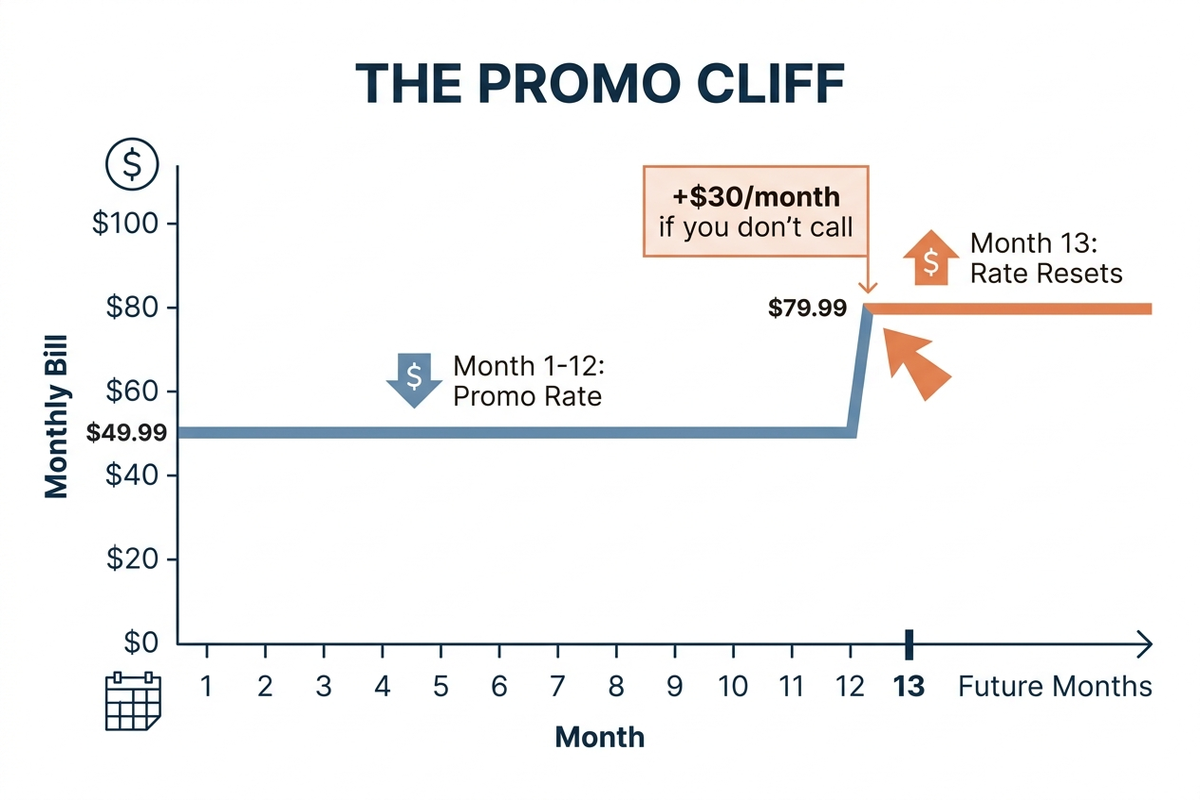
Most cable and fiber internet plans in the US are sold on a 12-month promotional rate. According to 2026 tracking from CompareInternet.com, a $49.99 introductory rate commonly resets to $79.99 or higher once that window closes — and in some markets, an additional gig-tier increase lands on top of that reset. Price hikes of $15–$35/month showed up across multiple providers in 2026 tracking, not counting equipment rental or unlimited-data add-ons.
This isn’t a glitch or an error on your bill. It’s the standard pricing structure: the promotional rate is the acquisition price, and the reset rate is what the provider expects most customers to simply keep paying, because most customers never call to ask. The entire negotiation opportunity exists because that assumption is often wrong.
One market shift worth knowing about: in 2026, Comcast rolled out a five-year Xfinity price guarantee as its primary retention strategy, and Spectrum introduced its own multi-year price-lock offer for new customers. Despite these offers, Comcast still reported losing 167,000 US broadband subscribers in Q2 2026 as customers shopped around after earlier price hikes — a sign that providers are actively trying to reduce churn, which is exactly the leverage a retention call uses.
2. The Retention Call: What Actually Moves the Price
Calling your provider’s customer retention line (not general customer service) is the step that produces the largest single price change for the least effort. Based on aggregated 2026 consumer reporting from BroadbandNow, Forbes Home, and Allconnect, three things consistently separate a successful call from an unsuccessful one:
- Cite 2–3 specific competitor prices, not one. Reps are trained to counter a single competing offer; naming multiple current rates from other providers in your area (AT&T Fiber, Verizon Fios, a rival cable company) is reported to be more effective than mentioning just one.
- Ask specifically for the “retention” or “loyalty” department, not general billing. This is the team with authority to apply discretionary discounts.
- Call during business hours and stay polite but firm. Aggregated reporting across these sources agrees on this point: a documented, calm ask outperforms an angry one, because reps have more latitude to help a customer who isn’t escalating the call.
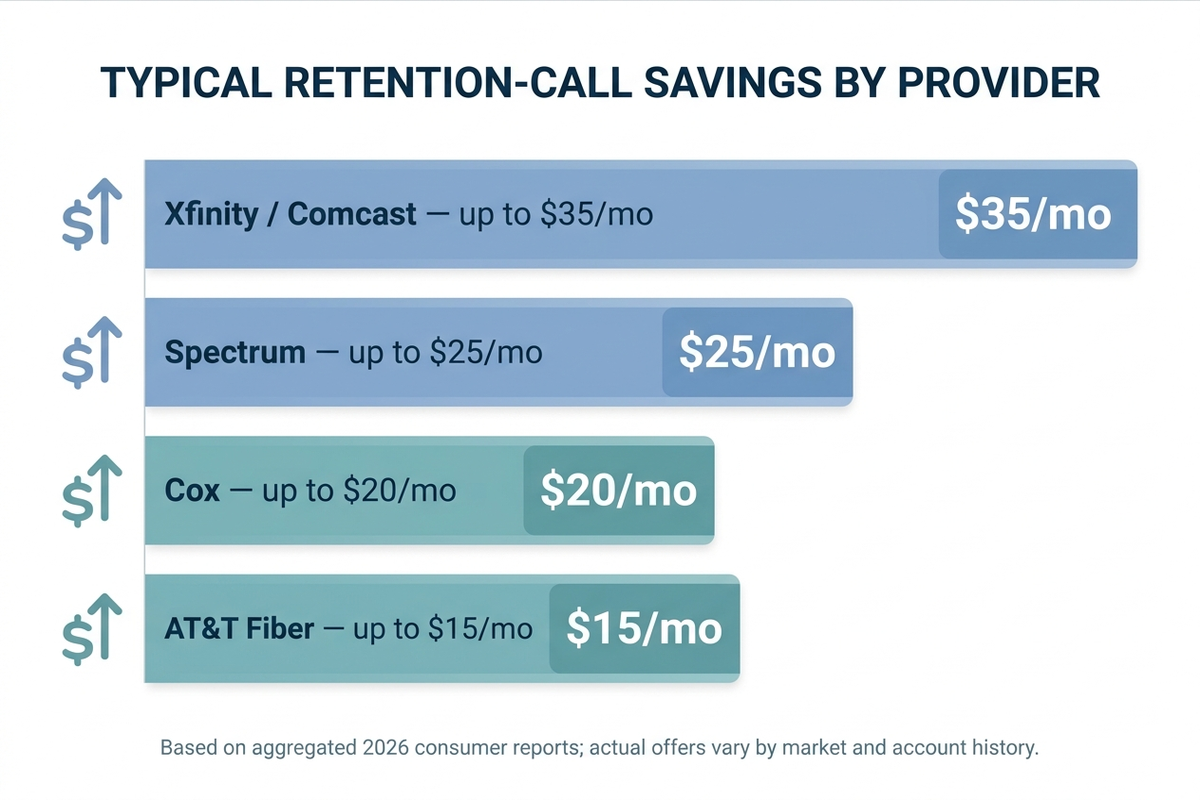
| Provider | Typical retention-call savings (reported) | 2026 retention strategy |
|---|---|---|
| Xfinity / Comcast | Up to ~$35/month | 5-year price-guarantee plans; still lost 167K subscribers in Q2 2026 per company reporting |
| Spectrum | Up to ~$25/month | New multi-year price-lock offer for qualifying customers |
| Cox | Up to ~$20/month | Comparatively modest 2026 increases (~$5/month on 500 Mbps–1 Gig tiers); still offers a 2-year price lock to callers |
| AT&T Fiber | Up to ~$15/month | Smaller increases reported industrywide for fiber vs. cable in 2026 tracking |
These figures are reported ranges compiled across BroadbandNow and CompareInternet.com’s 2026 consumer research, not amounts guaranteed to any individual account — your actual offer depends on your market, your account tenure, and current local competition.
3. Buy Your Own Modem: The Math That Almost Always Works
If a retention call doesn’t move the price much, there’s a second lever most people never pull: the equipment rental fee. Major providers, including Xfinity and Cox, commonly charge $10–$15/month for a rented modem/gateway — $120 to $180 a year, indefinitely, for as long as you keep renting.
A retail DOCSIS 3.1 modem you own outright breaks even against that fee in well under a year and then keeps saving money every month after. Tom’s Guide’s 2026 best-modems coverage and independent reviews consistently point to a small set of models certified across the major cable providers (Xfinity, Cox, Spectrum):
- Budget tier (~$50, DOCSIS 3.0): NETGEAR Cable Modem CM500 — suitable for cable plans up to 300 Mbps. At a $15/month rental fee, it pays for itself in about 3-4 months.
- Mid tier (~$100, DOCSIS 3.1, 2.5 Gbps port): Motorola MB8611 Multi-Gig Cable Modem — a repeat pick in Tom’s Guide’s cable-modem roundups, supports gigabit-tier plans and pairs with any Wi-Fi router you already own.
- High tier (~$250, DOCSIS 3.1, multi-gig): NETGEAR Nighthawk Multi-Gig Cable Modem CM2000 — built for households on 2 Gbps+ plans who want to avoid a second equipment upgrade for several years.
Two caveats before buying: confirm your specific model is on your provider’s approved-equipment list (Xfinity, Cox, and Spectrum each publish one, and an unapproved modem simply won’t activate), and check whether your provider’s rented unit is a combined modem-router “gateway” — if so, you’ll also need your own Wi-Fi router once you switch to an owned modem, which changes the break-even math.
4. If the Provider Won’t Move: The Backup Options
- Downgrade your speed tier. Aggregated 2026 broadband pricing research shows many households are on a plan several times faster than they use; dropping one tier is a straightforward way to cut $10–$20/month without changing providers.
- Bundle internet with a mobile line. Some providers apply a bundle discount to internet pricing when paired with a mobile plan on the same account.
- Check Lifeline eligibility. The federal Lifeline program, run through the FCC’s Universal Service Administrative Company (USAC), reduces a broadband or bundled bill by up to $9.25/month for households at or below 135% of the Federal Poverty Guidelines, or that participate in SNAP, Medicaid, SSI, or Federal Public Housing Assistance. Eligible households on Tribal lands can receive up to $34.25/month. Apply at lifelinesupport.org or ask your provider directly whether it participates.
- Actually switch providers. If a competitor is available at your address, a new-customer promotional rate is often lower than anything your current provider will offer to keep you — the FCC’s Broadband Consumer Label (a nutrition-label-style disclosure providers must show) makes it easier to compare the real monthly cost, including fees, across providers before you switch.
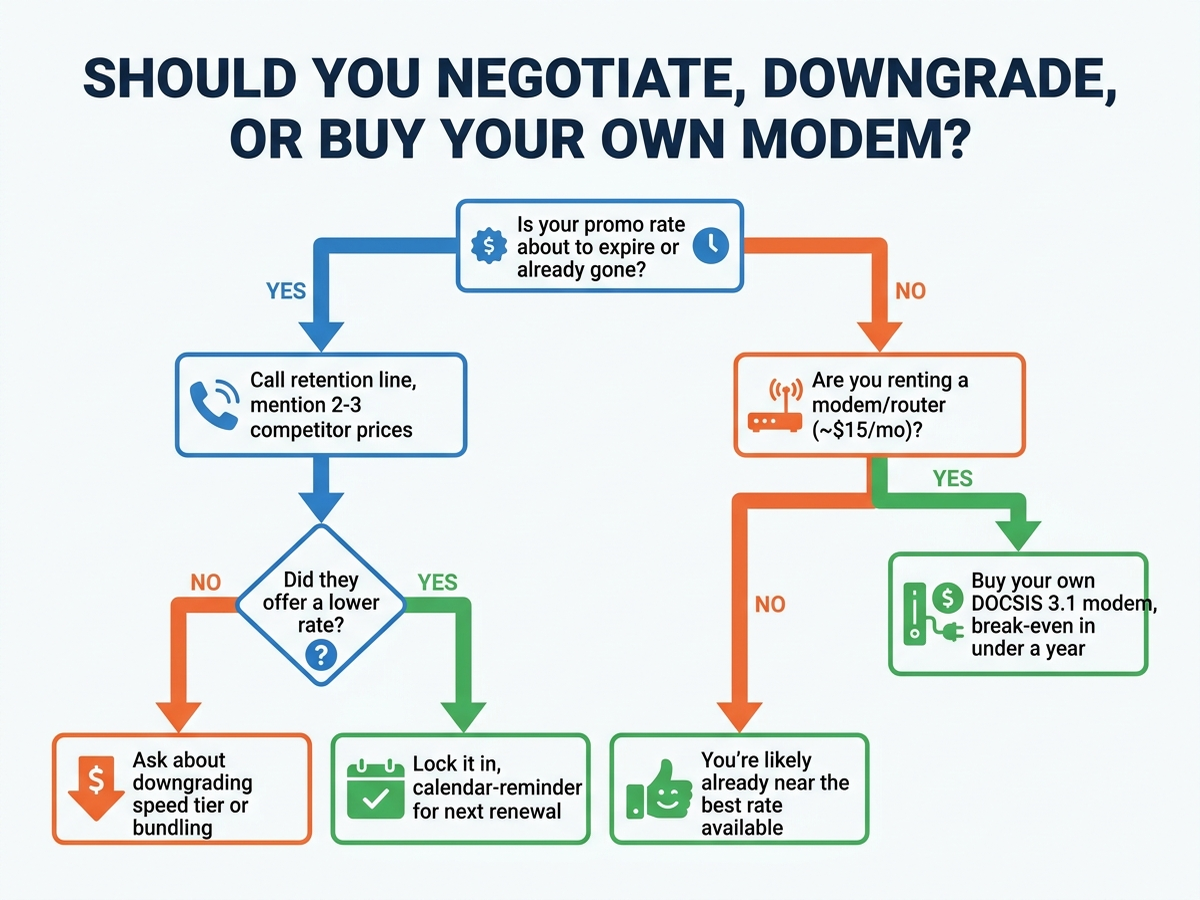
5. Should You Negotiate, Downgrade, or Buy Your Own Modem?
The Bottom Line
Most US households are paying more than they need to, and the gap is well documented: the average advertised broadband price is $52.40/month, but the average household actually pays $74.50/month once promo periods expire and fees stack up. The fix isn’t complicated — it’s just a phone call most people put off. Start with the retention line and two or three competitor prices in hand; if that doesn’t move the number enough, the modem-rental fee is the next-easiest dollar amount to eliminate, since it doesn’t require a negotiation at all.
Limitations of This Analysis
- Retention-call savings figures are aggregated ranges from consumer-research sources (BroadbandNow, Forbes Home, Allconnect, CompareInternet.com), not a controlled study of individual outcomes. Your specific offer depends on your market, provider, account tenure, and local competition, and can be $0 in some cases.
- Provider pricing, rental fees, and promotional structures change frequently and vary by region; the dollar figures above reflect 2026 reporting at the time of writing and should be confirmed against your own bill and provider’s current published rates.
- Modem compatibility must be verified against your specific provider’s approved-equipment list before purchase — an uncertified modem will not activate, regardless of DOCSIS version.
- Amazon prices cited are approximate USD figures at the time of writing and fluctuate with promotions; check the current listing price before buying.
- Lifeline eligibility and benefit amounts reflect 2026 FCC/USAC program rules and can change; confirm current details at lifelinesupport.org before applying.
- This analysis relies on publicly available reporting and aggregated consumer data; we did not personally negotiate a bill or test any modem for this article.