Levoit Core 600S Review 2026: Worth the Upgrade From the 300S?
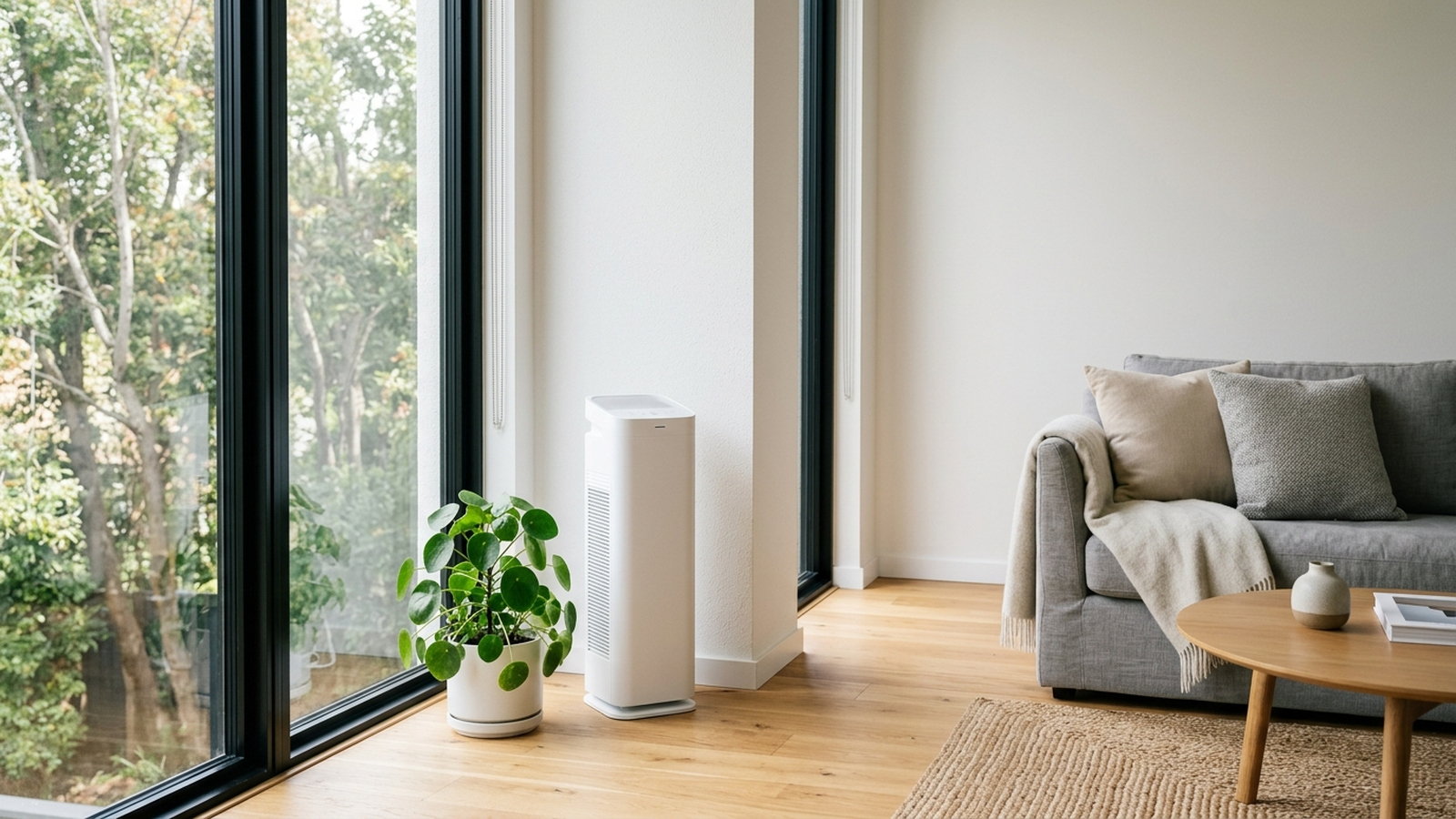
Levoit’s Core lineup is one of the best-selling air purifier families on Amazon, and the question we see shoppers ask most often isn’t “is Levoit good” — it’s which Core model actually fits their room. The Core 600S sits near the top of that lineup, priced roughly $100 above the small-room Core 300S and rated for large, open-plan spaces instead of a single bedroom. That price and coverage gap raises an obvious question: is the 600S genuinely a different tier of air purifier, or is it the 300S with a bigger fan and a bigger price tag? We pulled together independent lab testing, manufacturer specifications, and aggregated owner feedback to find out.
As an Amazon Associate, Arekore earns from qualifying purchases. The Amazon product links in this article include our affiliate tracking ID and may earn us a commission if you buy through them, at no additional cost to you. See our Links Policy for details on how we select products and how commissions do not influence our recommendations.
TL;DR / Quick Verdict
- The Core 600S is a genuine coverage upgrade, not a marketing repackage. Independent testing from HouseFresh puts its top-speed CADR at roughly 375–398 CFM, close to 3x the Core 300S’s 140 CADR rating, and it’s rated by Levoit to clear a 635 sq ft room five times per hour versus 219 sq ft for the 300S.
- That extra power comes with real trade-offs: HouseFresh measured noise from 37.9 dBA up to 62.3 dBA at top speed — noticeably louder than the 300S’s roughly 50 dBA maximum — and the 600S draws about double the power (49W vs. 23W) at comparable settings.
- The most common owner complaint isn’t the fan, it’s the sensor: Auto mode relies on the 600S’s built-in PM2.5/VOC sensor, and a recurring theme in aggregated Amazon reviews is that it under-detects dust and pet dander, making Auto mode less reliable than manual speed control for allergy-sensitive households.
- Filter economics favor the 300S for budget-conscious buyers: genuine Core 600S replacement filters run roughly $50–$80 depending on variant, against lower costs for the smaller 300S filter, so the larger unit’s running cost compounds over a few years of ownership.
- Best fit: households covering a large living room, open-plan main floor, or multi-room space who need the 600S’s genuine coverage advantage — not buyers who could get by with a bedroom-sized unit and would rather save on both the sticker price and the ongoing filter cost.
How We Reached These Conclusions (Methodology)
This is an editorial analysis, not a hands-on review; we did not personally test the products covered here. It synthesizes (a) independent lab testing from HouseFresh, which measures CADR, clearance time, and sound level under controlled conditions, (b) Levoit’s published manufacturer specifications for the Core 600S and Core 300S, and (c) aggregated owner sentiment drawn from the Core 600S’s roughly 14,600 Amazon customer ratings (4.6 out of 5 stars as of this writing) alongside independent review coverage of recurring complaint patterns. Manufacturer-claimed figures — CADR, coverage area in square feet, decibel ratings, and wattage — are labeled as such throughout and distinguished from independently measured test results where both exist. Prices are amazon.com figures at the time of writing (October 2026) and change frequently, especially around holiday sales events.
What the Extra $100 Actually Buys You
The Core 600S and Core 300S share the same basic three-stage filtration architecture — a pre-filter for large particles, a True HEPA filter rated to capture 99.97% of particles down to 0.3 microns, and an activated carbon layer for odors — so the filtration quality itself isn’t where the two models diverge. The difference is scale. Levoit rates the 600S to clean a 635 sq ft room five times per hour, versus 219 sq ft for the 300S, and independent testing backs up that the 600S isn’t just a bigger box around the same engine: HouseFresh’s lab measurements put its estimated top-speed PM1 CADR at around 375 CFM and AHAM PM2.5 CADR near 398 CFM, compared to the 300S’s manufacturer-rated 140 CADR — roughly a 2.7x jump in actual air-moving capacity, which tracks closely with the claimed coverage-area difference.
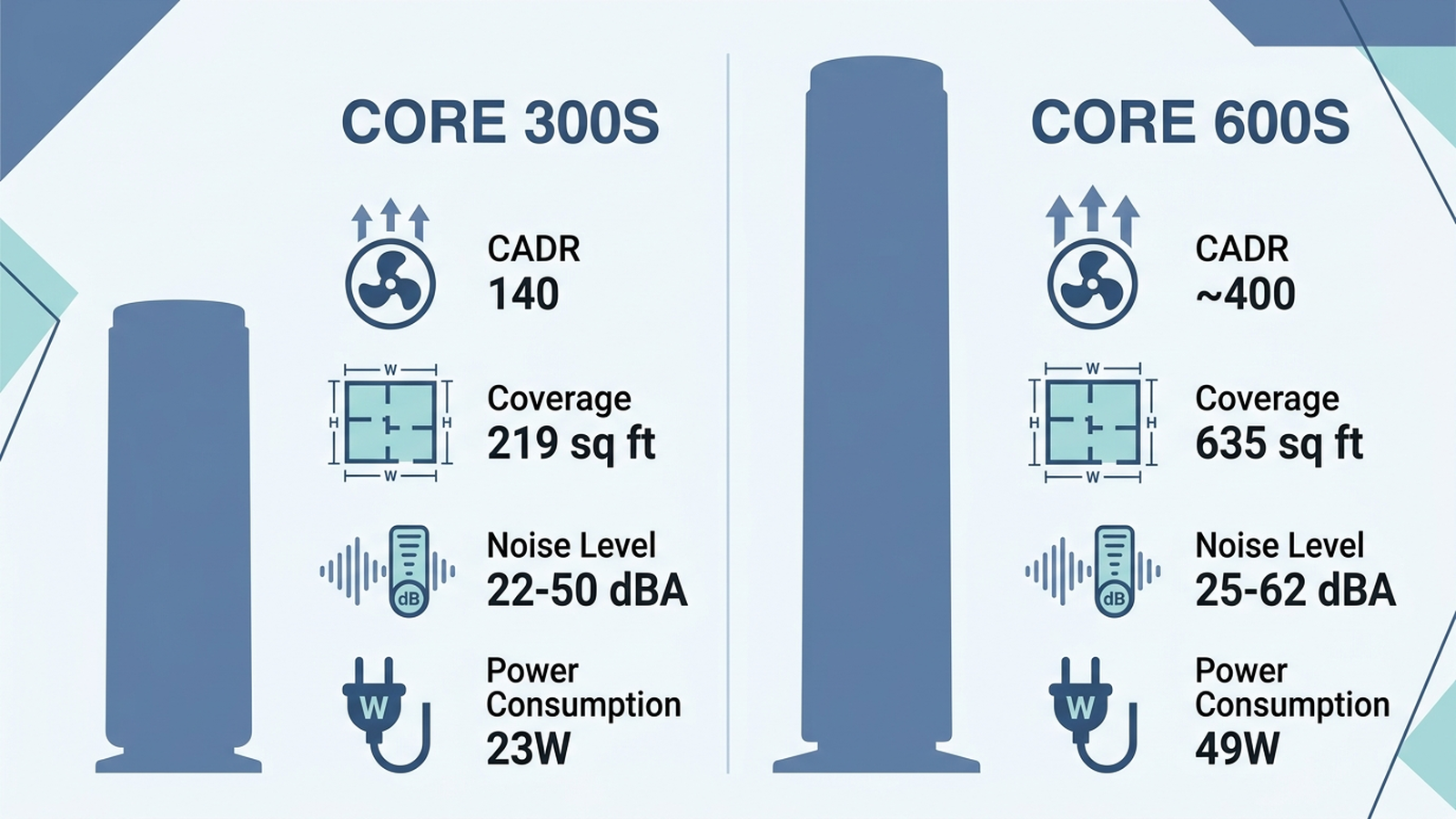
That extra air-moving capacity is also the direct cause of the 600S’s two biggest trade-offs. HouseFresh’s sound measurements show the 600S ranging from 37.9 dBA at low speed up to 62.3 dBA at maximum, and multiple independent reviewers note that only the lowest fan setting stays comfortably under 45 dBA — loud enough at top speed that running it on high in a bedroom overnight is not realistic for most sleepers. Levoit’s own sleep-mode rating of 25 dBA is accurate at the lowest setting, but it’s a different machine entirely from the unit running at speed four. Power draw follows the same pattern: the 600S is rated at up to 49W versus the 300S’s 23W, roughly double, which matters more for households running a unit continuously than for occasional use.
The Auto Mode Problem: What Independent Testing and Owner Reports Agree On
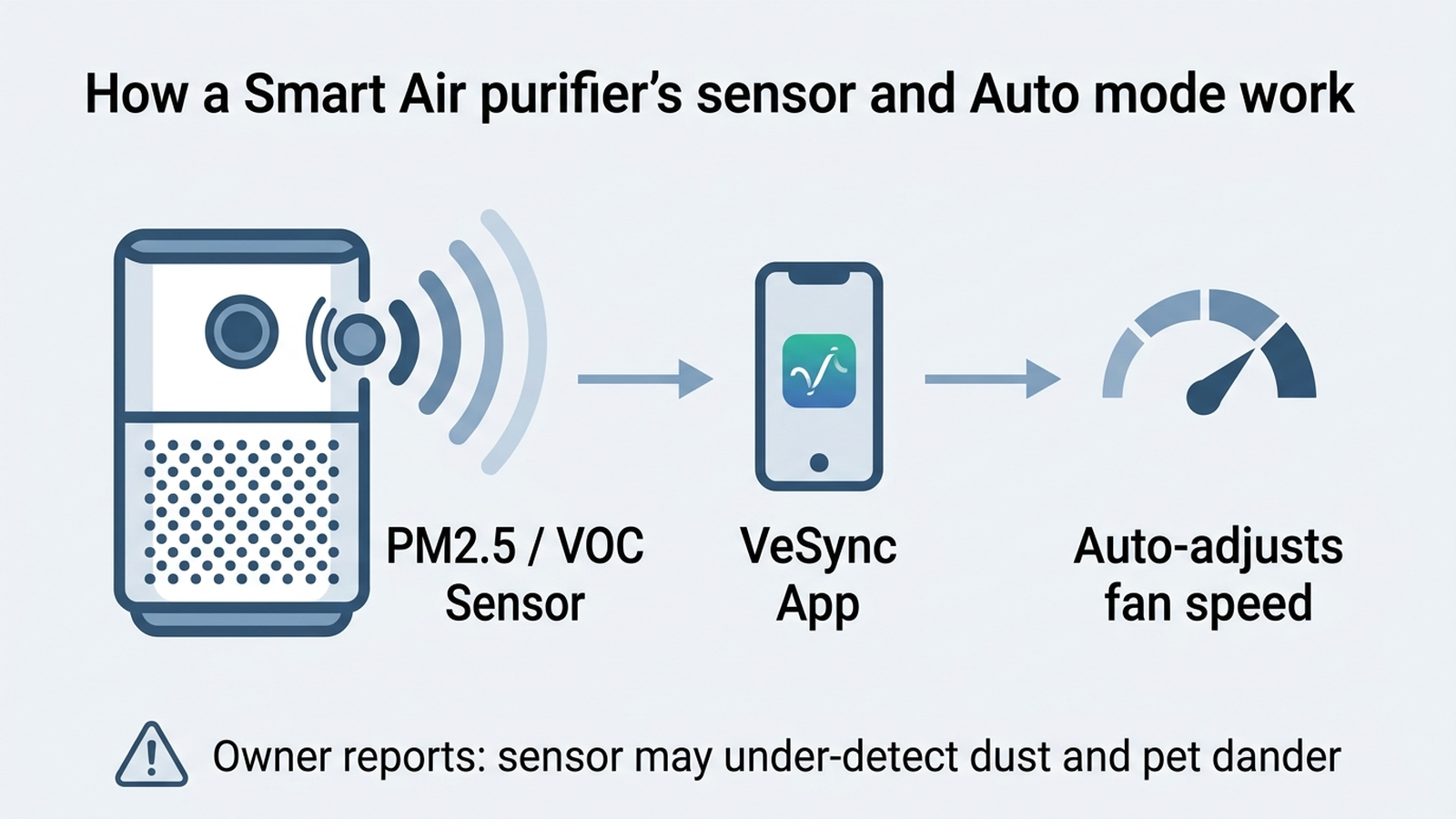
Both Core 600S and 300S models in the “S” (smart) line include a built-in air quality sensor that’s supposed to let Auto mode ramp fan speed up or down based on real-time PM2.5 and VOC readings, with results piped to the VeSync app. On paper, this is the feature that differentiates the “S” smart models from the non-smart Core line and justifies part of the price premium. In practice, aggregated Amazon review analysis of the Core 600S turns up a consistent complaint: the onboard sensor frequently reports “001” or otherwise flat readings even when dust or pet dander is visibly present, which means Auto mode under-reacts and the unit coasts at a lower, quieter fan speed than the room actually needs. For allergy or pet-heavy households specifically chasing the smart-sensor feature, that’s a meaningful gap between the marketed value proposition and what the hardware reliably delivers — the workaround most reviewers land on is running the unit on a fixed manual speed rather than trusting Auto mode.
This isn’t unique to the 600S among Levoit’s smart models, but it matters more on the larger unit precisely because Auto mode is the mechanism meant to balance the 600S’s higher top-end noise against actual air-quality need. If the sensor under-detects, the practical choice narrows to either running a quieter, lower fan speed that may undershoot a large room’s air-changes-per-hour target, or running a fixed higher speed and accepting the 55–62 dBA noise level manually, rather than letting the automation do that trade-off for you.
Where the Core 400S Fits In
Levoit’s Core 400S sits between the two models discussed above, rated by the manufacturer to cover 1,733 sq ft at one air change per hour — a different measurement standard than the 300S and 600S’s five-ACH ratings, so the figures aren’t directly comparable without converting to the same ACH basis. At a manufacturer-claimed 24W and 24 dB, the 400S runs quieter and more efficiently than the 600S at comparable settings, making it a reasonable middle option for a large bedroom or medium living room that doesn’t need the 600S’s higher-ACH coverage in a genuinely large or open-plan space, but also outgrows what the 300S is rated for. It shares the same three-stage HEPA filtration as both other models, so the choice between the three again comes down to room size and noise tolerance rather than filtration quality.
Comparison Table
Prices are amazon.com figures at the time of writing (October 2026) and fluctuate significantly around sales events; always check the current listing before buying.
| Model | ASIN | CADR (independently tested / mfr.) | Coverage (mfr. claim) | Noise range | Power | Best for |
|---|---|---|---|---|---|---|
| Levoit Core 600S-P | B0HLSKB6VW | ~375–398 CFM (HouseFresh) | 635 sq ft @ 5 ACH | 37.9–62.3 dBA tested (25 dBA mfr. sleep mode) | Up to 49W | Large rooms, open-plan main floors, multi-room coverage |
| Levoit Core 400S-P | B08R794ZMX | 231 CFM (mfr. smoke CADR) | 1,733 sq ft @ 1 ACH | 24 dB rated | Up to 24W | Mid-size living rooms or large bedrooms wanting smart features without 600S noise |
| Levoit Core 300S-P | B0HLSMD2PV | 140 CADR (mfr.) | 219 sq ft @ 5 ACH | ~22–50 dBA | Up to 23W | Bedrooms, home offices, and smaller rooms on a budget |
Check the Levoit Core 600S-P on Amazon · Check the Levoit Core 400S-P on Amazon · Check the Levoit Core 300S-P on Amazon
Editorial Recommendation: Is the Core 600S Worth It?
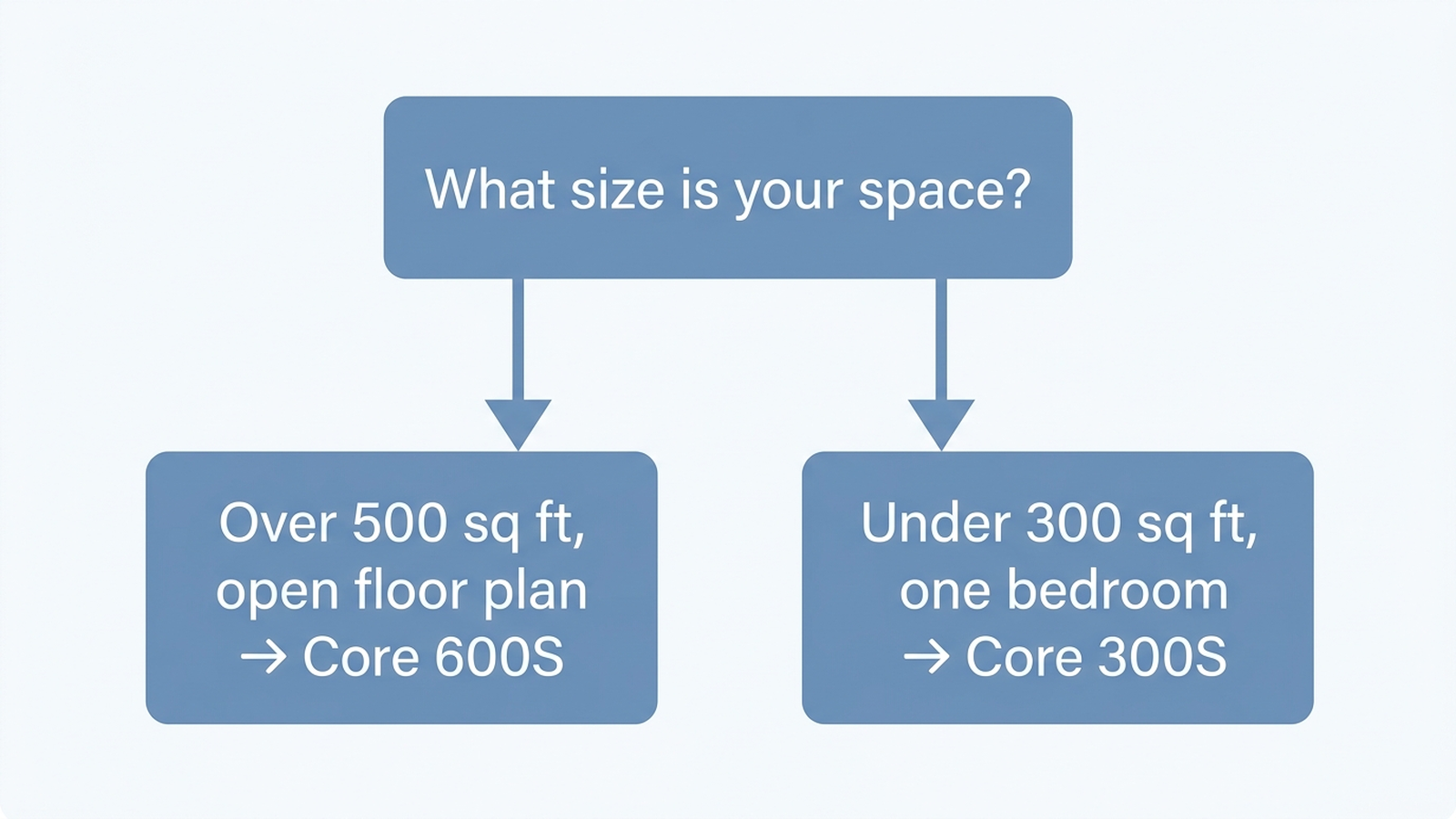
- If your space is a large living room, open-plan main floor, or multiple connected rooms over roughly 500 sq ft: the 600S’s nearly 3x CADR advantage over the 300S is real and independently measured, not just a marketing claim — this is the scenario where the upgrade pays off.
- If you’re furnishing a single bedroom or home office under about 300 sq ft: the Core 300S delivers the same filtration quality (99.97% at 0.3 microns) at roughly half the price, half the power draw, and meaningfully lower peak noise — the 600S’s extra capacity goes unused.
- If you have moderate allergies or pet shedding and were drawn to the “smart” Auto mode specifically: budget for running the unit on a fixed manual speed rather than relying on Auto mode, given the recurring sensor under-detection pattern in owner feedback.
- If overnight bedroom noise is a priority: neither model’s top speed is bedroom-quiet; plan to run either on its lowest or sleep-mode setting overnight and accept reduced air-changes-per-hour versus the rated maximum.
Warranty
Levoit backs the Core 600S with a 2-year limited warranty, consistent with its smart “S”-line products; coverage terms and any extended-protection options can vary by retailer and promotion, so confirm the current terms on the specific product listing before buying, especially for third-party-sold or renewed units.
Limitations of This Analysis
This analysis relies on third-party lab testing from HouseFresh, Levoit’s published manufacturer specifications, and aggregated Amazon owner review patterns; we did not personally test the Core 600S, 400S, or 300S units. Individual results vary with room shape, ceiling height, furniture layout, and placement relative to airflow. CADR and coverage-area figures mix independently measured results (HouseFresh) with manufacturer-only claims (Levoit) where independent test data wasn’t available for every model in this comparison, and we’ve labeled each figure’s source accordingly. The global smart air purifier market was estimated in industry research at double-digit billions of dollars in 2026 with continued growth projected through the early 2030s, and one benchmark report placed Levoit ahead of competitors like Coway on recommendation coverage within the category as of September 2026 — we present this as directional market context rather than a precise, universally agreed figure, since methodologies vary across research firms. Prices, ASIN availability, and warranty terms change frequently — always confirm current details on the product page before buying.
The Bottom Line
The Core 600S isn’t just a bigger-looking version of the Core 300S wearing a higher price tag — independent testing confirms it moves close to three times the air the 300S does, which is the entire point if you’re trying to cover a large or open-plan room. But that extra capacity brings real costs: it’s noticeably louder at top speed, draws roughly double the power, and its smart Auto mode has a well-documented habit of under-detecting dust and pet dander, which undercuts the main feature that’s supposed to justify its “smart” branding. If your space genuinely needs the coverage, the 600S earns its premium. If a single bedroom or small office is all you’re purifying, the smaller Core 300S delivers the same filtration quality for less money, less noise, and a cheaper filter habit. Check the current price and recent reviews on the specific listing before buying, and if you want a second opinion, paste the URL into Arekore and let the AI scan the reviews and price history for you in about five minutes.