Mechanical Keyboard Lubing: Is It Worth It in 2026?
TL;DR
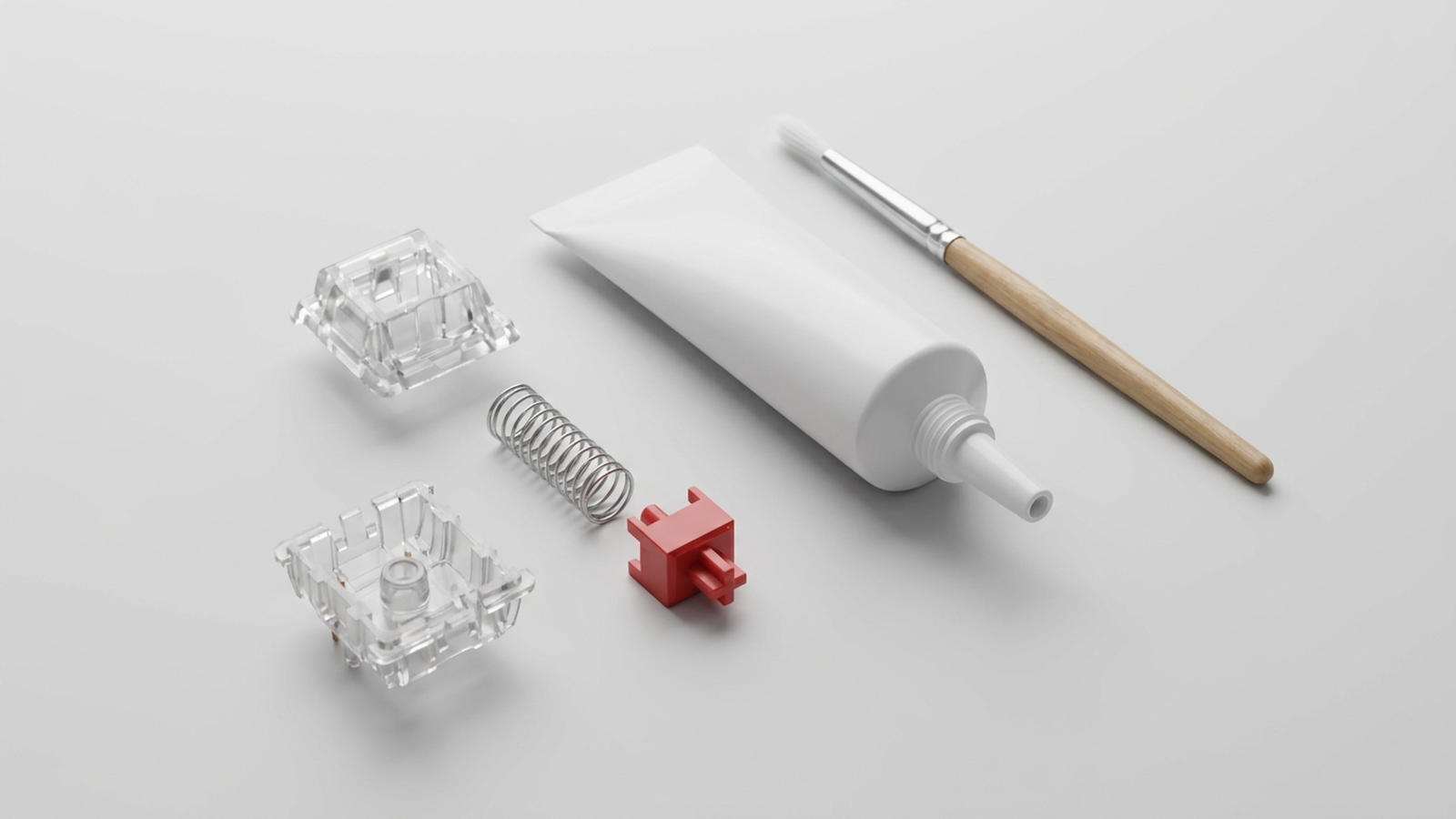
Hand-lubing a mechanical switch removes the scratch and spring noise that stock parts often have, and the improvement is real and measurable. But factory pre-lubed switches from brands like Gateron have closed most of that gap for anyone who doesn’t already own a lube kit. The data points to a narrower recommendation than the enthusiast forums suggest: lube by hand if you already own budget unlubed switches or enjoy the process, otherwise buy pre-lubed.
Methodology
This analysis synthesizes (a) aggregated customer review sentiment from Amazon US listings for lubed and unlubed switch sets, lube kits, and lubricant products sampled in August 2026, (b) RTINGS’ published switch-testing framework and comparative data on smoothness and consistency, (c) manufacturer specifications from Gateron and Chemours (maker of Krytox), and (d) mechanical-keyboard market research on the enthusiast/DIY segment. We did not personally lube or test the switches covered here; recommendations reflect patterns across public data, not first-hand use.
Why Lubing Became a Thing
Every mechanical switch has metal springs and plastic parts sliding against each other thousands of times a day. Without lubrication, that friction shows up as two audible problems: a scratchy texture as the stem rubs the housing, and a metallic “ping” from an unlubricated spring. Neither affects how long a switch lasts, but both affect how a keyboard sounds and feels — which is most of what enthusiasts are chasing.
The hobby’s fix is to disassemble each switch, apply a thin film of grease to the stem and housing, and a lighter oil to the spring, then reassemble. RTINGS, which tests switches on a standardized bench rather than relying on subjective impressions, treats smoothness and sound consistency as measurable properties rather than vibes — which is part of why the “lube or don’t” debate has actual data behind it now, not just forum opinion.
Three Approaches, Compared
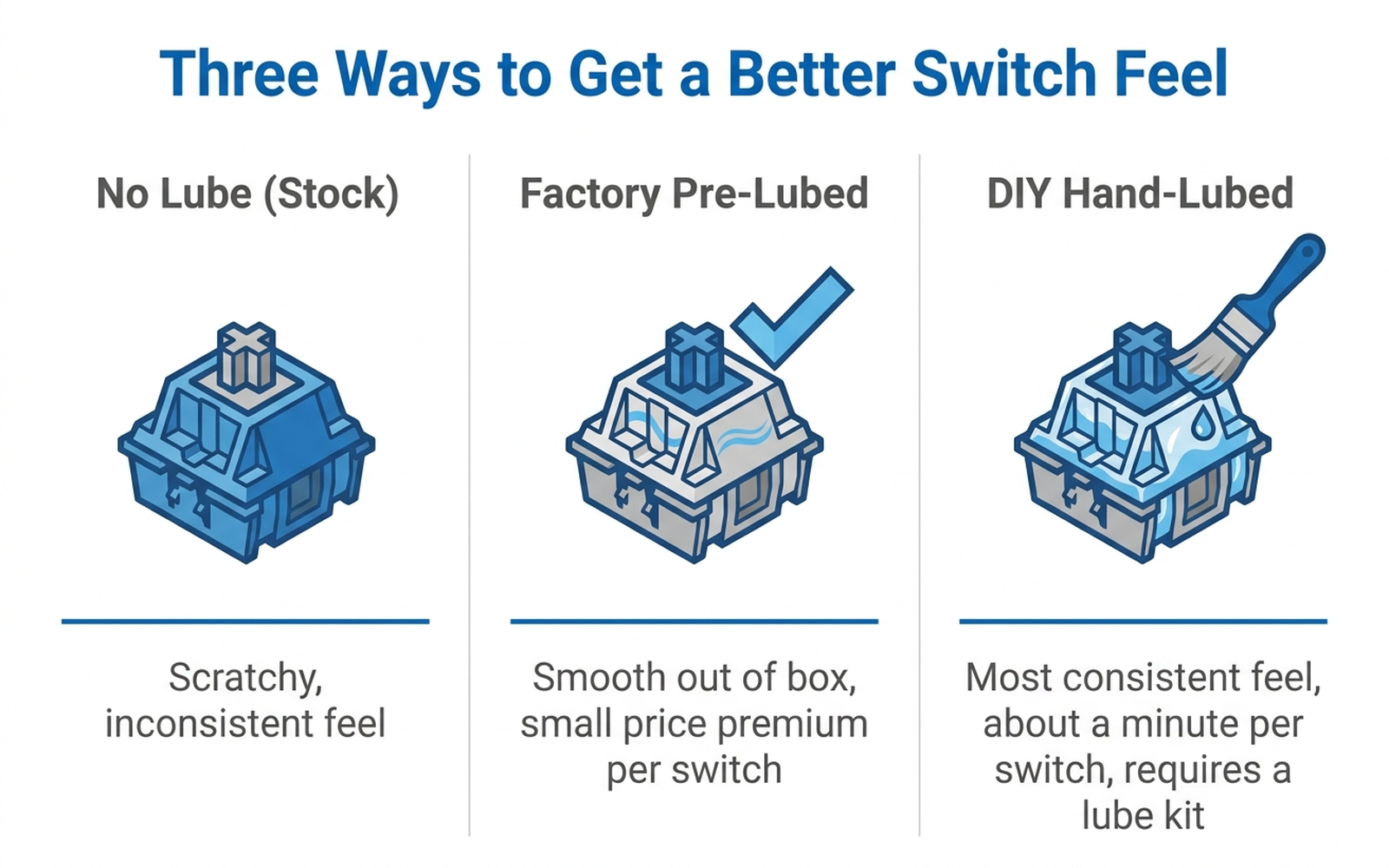
| Approach | Typical cost | Consistency | Time investment |
|---|---|---|---|
| Stock, unlubed | $0 extra | Low — varies switch to switch | None |
| Factory pre-lubed (e.g., Gateron Ink V2 Pro) | Roughly $0.10–$0.30 more per switch than the unlubed version, at time of writing | Moderate to high, depending on the factory’s process | None |
| DIY hand-lubed | $15–$25 for a starter kit (lube, brush, switch opener) at time of writing, reusable across hundreds of switches | Highest — every switch gets the same treatment | 30–60 seconds per switch once practiced |
The Technical Approaches to Lubricant
Not all lube does the same job, and mixing them up is one of the more common mistakes reviewers report. There are two grades of Krytox perfluoropolyether lubricant commonly used in the hobby, plus lighter silicone-based options bundled into budget kits:
- Krytox GPL 205g0 — a thicker grease applied to the stem rails and inside the housing with a fine brush. This is the “thock” lubricant: it dampens the plastic-on-plastic contact that causes scratch, and heavier application deepens the sound.
- Krytox GPL 105 — a much thinner oil, applied sparingly to the spring itself. Its job is eliminating spring “ping” and rattle without adding enough mass to make the spring feel sluggish, which matters more to reviewers focused on keystroke speed.
- Budget silicone-based greases bundled in low-cost kits — reviewers report these work adequately for casual use but are more prone to a gummy feeling if over-applied, since they don’t shear as cleanly as PFPE-based Krytox formulas.
Manufacturer note: Chemours markets Krytox as an industrial PFPE lubricant; its use in keyboards is a hobbyist adaptation, not a stated use case from the manufacturer.
How the DIY Process Works
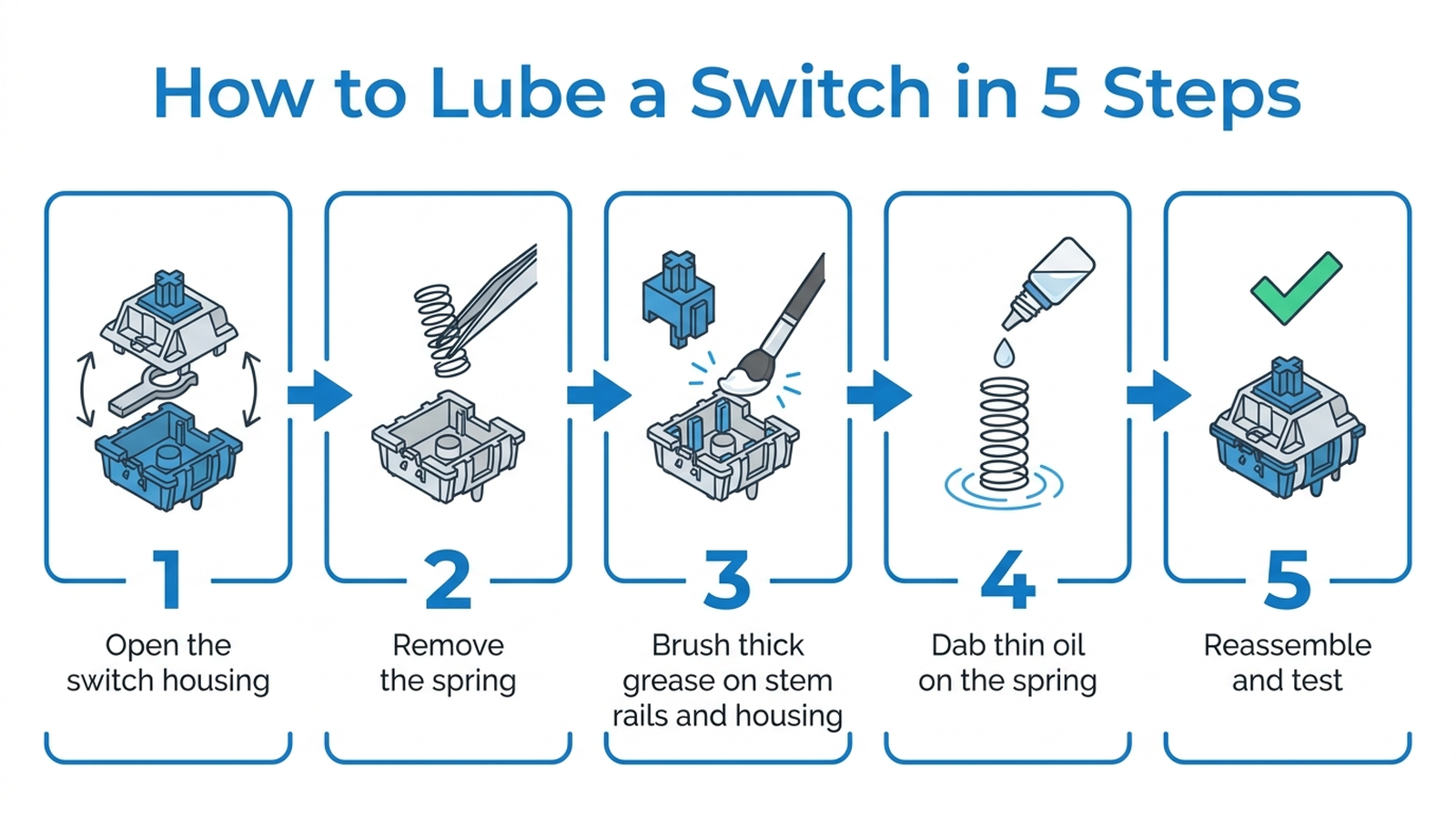
The standard process reviewers describe: open the switch housing with a switch opener tool, remove the spring, brush a thin, even coat of thicker grease onto the stem rails and inner housing walls, apply a light dab of thinner oil to the spring, then reassemble and test the switch by hand before moving to the next one. Over-application is the most commonly cited mistake in aggregated reviews — too much grease can slow the switch’s return speed and make it feel mushy rather than smooth.
What Aggregated Reviews Say
Customer review sentiment for pre-lubed switch listings on Amazon is generally positive: buyers describe the Gateron Ink V2 Pro line as smooth and consistent “out of the box,” with recurring praise for eliminating the need for a separate lubing step. Reviews of budget switch lube kits (bundled brushes, openers, and grease) skew positive for first-time builders, with the most common complaint being an included brush that’s too coarse for precise application — several listings note buyers upgrading to a separate fine-tip brush.
Reviews of factory-lubed budget switches (sub-$0.10 unit cost) are more mixed than premium pre-lubed lines: some buyers report inconsistent lube application from unit to unit within the same batch, which is the exact problem hand-lubing is meant to solve. This inconsistency — not the absence of lube — is the more common complaint in aggregated feedback, more than an outright lack of lubrication.
Should You Lube Your Switches?
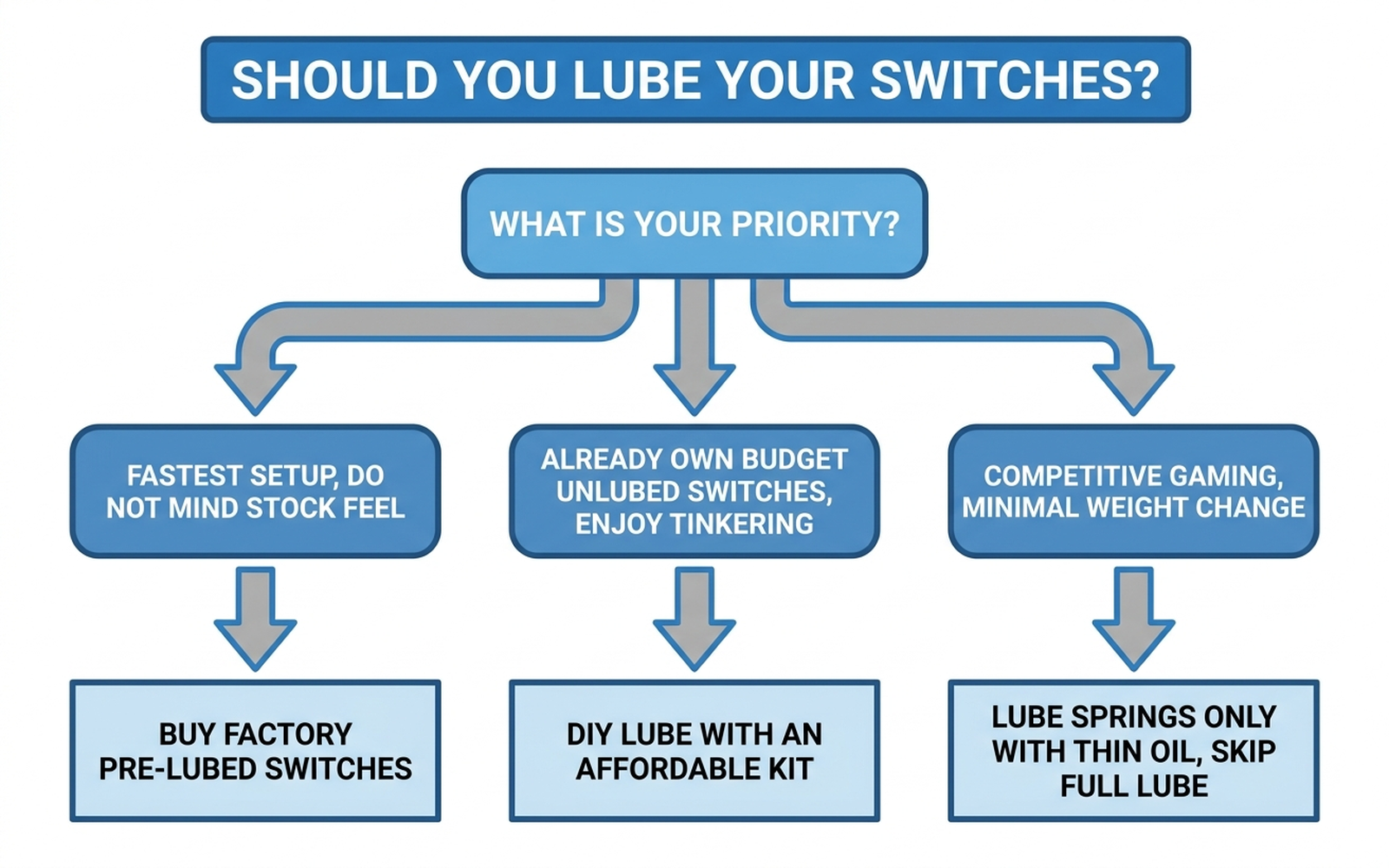
Best for a fast, low-effort upgrade: Buy factory pre-lubed switches. A line like the Gateron Ink V2 Pro removes the labor entirely and, per aggregated review sentiment, delivers a smooth, consistent feel for most typing and gaming use cases.
Best for tinkerers and existing budget-switch owners: Hand-lube with a starter kit. If you already own unlubed or inconsistently lubed switches, a one-time kit purchase pays for itself across an entire keyboard’s worth of switches, and lets you control exactly how much grease goes where.
Best for competitive gaming setups: Consider lubing springs only, with a thin oil like Krytox 105, and skip the thicker stem grease. This removes spring ping without adding the perceived weight that a full lube job can introduce — a distinction several competitive-focused build guides draw explicitly.
Limitations
This analysis relies on publicly available customer reviews, manufacturer specifications, and RTINGS’ published testing framework rather than hands-on testing by our editorial team. Review sentiment on Amazon reflects self-selected buyers who chose to leave feedback, which may skew more positive or more detailed than the average purchaser’s experience. Lube application quality also varies by individual technique and by manufacturing batch, so results for any single switch or kit may differ from the aggregated pattern described here.
Shop the Category
As an Amazon Associate, Arekore earns from qualifying purchases — see the notice at the bottom of this page for details.
Krytox GPL 205g0 grease (10g, with brush) — the standard thick lubricant for stem rails and housings. View on Amazon
Krytox GPL 105 oil (5ml dropper) — thin spring oil for eliminating ping without added weight. View on Amazon
Switch lube kit with opener and puller tools — a complete starter kit for a first DIY lube job. View on Amazon
Gateron Ink V2 Pro Black switches (pre-lubed, 35-pack) — factory-lubed linear switches for buyers who want to skip the DIY step. View on Amazon
Visit Arekore to compare current prices and verify any product before buying.