JBL vs Sonos: Best Portable Bluetooth Speaker in 2026
TL;DR
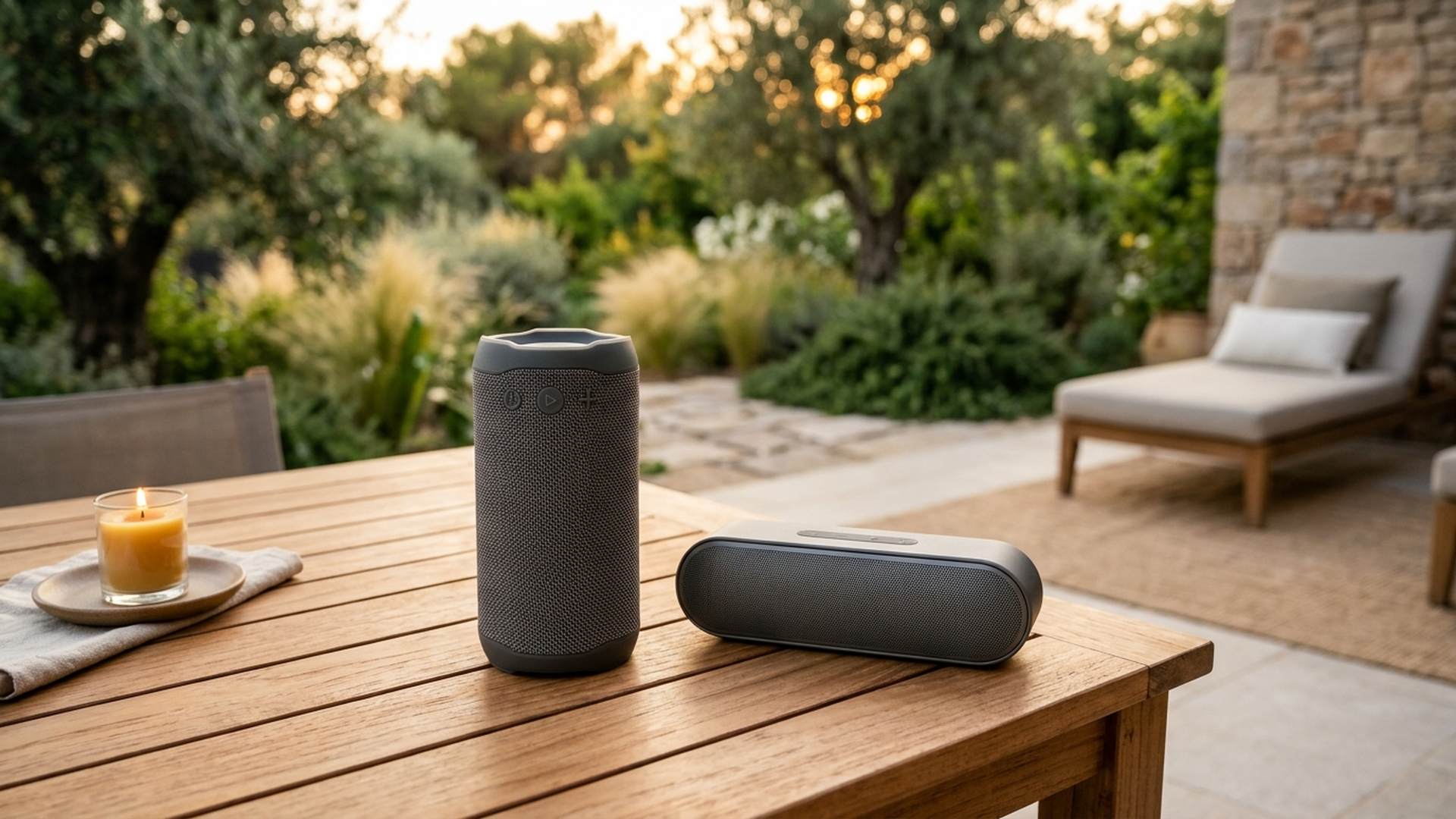
JBL and Sonos approach the same product category from opposite directions. JBL builds for volume, durability, and value — the Flip 7 and Charge 5 are rugged, affordable, and engineered to get as loud as possible. Sonos builds for software and ecosystem — the Roam 2 and Move 2 trade some battery life and raw loudness for Wi-Fi connectivity, automatic room tuning, and multi-room sync with other Sonos speakers. If you don’t already own Sonos gear, the JBL lineup is the easier recommendation for most buyers. If you do, the Roam 2’s ability to join your existing Sonos system changes the calculation.
As an Amazon Associate, Arekore earns from qualifying purchases. The Amazon product links in this article include our affiliate tracking ID and may earn us a commission if you buy through them, at no additional cost to you. See our Links Policy for details on how we select products and how commissions do not influence our recommendations.
Methodology
This analysis synthesizes (a) aggregated Amazon US customer reviews for the JBL Flip 7 (4.6 stars, 2,317 ratings) and Sonos Roam 2 (4.3 stars, 1,677 ratings) sampled in October 2026, (b) third-party test data and comparison reporting from RTINGS, Digital Trends, SoundGuys, and TechRadar, and (c) manufacturer specifications published by JBL (Harman) and Sonos. We did not personally test the products covered here. Figures for battery life, IP ratings, and Bluetooth versions are manufacturer-published specs verified against at least one independent review source.
Two Engineering Philosophies
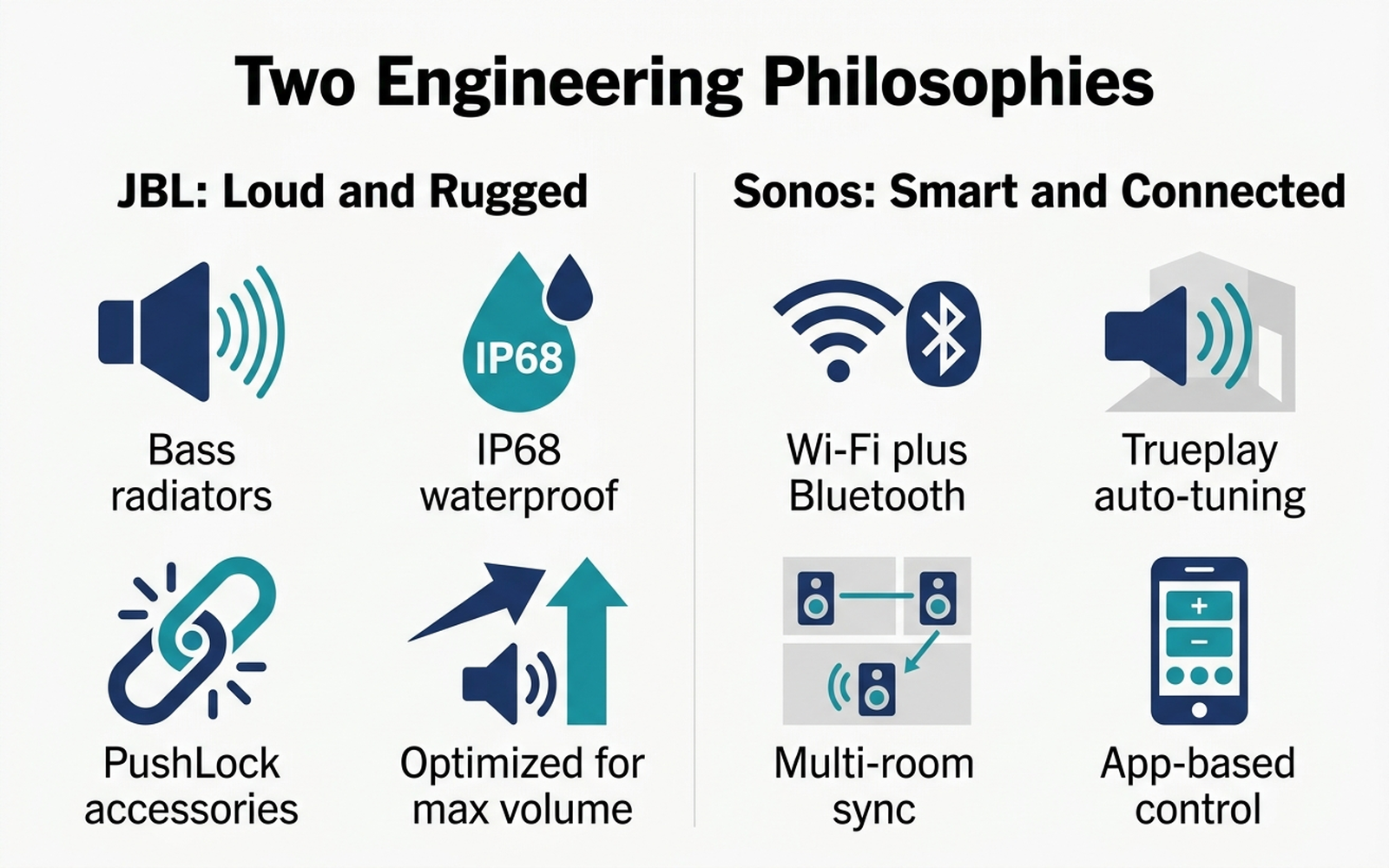
JBL and Sonos are not really competing for the same design brief, even though their products sit in the same Amazon category. JBL’s portable lineup — Go, Flip, Charge, Xtreme — is built around a simple formula: maximize loudness and bass output per dollar, wrap it in a waterproof shell, and keep the control surface to a handful of physical buttons. JBL now holds roughly 60% share of the overall portable Bluetooth speaker market and over 70% in the louder “party speaker” segment, according to market-research firm Futuresource — a position built almost entirely on that value-and-volume formula.
Sonos takes the opposite approach. Its portable speakers (Roam, Roam 2, Move, Move 2) are smaller extensions of a home multi-room audio system that happen to run on battery and Bluetooth. The signature Sonos feature is Trueplay, software that uses the speaker’s built-in microphones to automatically correct its sound output for the room or outdoor space it’s in. Sonos also lets its portable speakers join a Wi-Fi-based multi-room group with other Sonos products in the house — something no JBL speaker can do. That ecosystem focus has made Sonos a leading player in the premium tier of the category, even though it trails JBL badly in total unit volume.
JBL Lineup, Model by Model
JBL Flip 7 — the default pick for most buyers
The JBL Flip 7 is JBL’s mid-size cylindrical speaker and the one most directly positioned against the Sonos Roam 2. Manufacturer specs list 16 hours of battery life with JBL’s “Playtime Boost” mode enabled (14 hours without it) and an IP68 rating, meaning it resists both dust and submersion — JBL’s own materials describe it as rated for use at the pool, not just splash exposure. It carries a Bluetooth 5.4 radio and a PushLock accessory system for clip-on straps and mounts. List price is $149.95, though it has repeatedly dropped near $99.95 in Amazon promotions, so shoppers who aren’t in a hurry can often buy it well under list.
In the aggregated Amazon review set (4.6 stars, 2,317 ratings as of October 2026), reviewers consistently cite loud output and solid low-end bass for a speaker this size, along with the drop-proof rubberized housing. The main recurring complaint in third-party reviews is that JBL’s sound signature is bass-forward by design, which some listeners who prefer a flatter, more neutral tuning find fatiguing at high volume.
JBL Charge 5 — for all-day outdoor use and phone charging
The JBL Charge 5 steps up in size and battery capacity: 20 hours of playback and a USB-A powerbank port that can charge a phone directly, a feature the Flip 7 and Sonos Roam 2 both lack. It carries the same IP67 water resistance as most of JBL’s outdoor line. At roughly $179.95 list, independent comparison outlets (HomeTheaterReview, Versus) describe the Charge 5 as the better choice than Sonos’s home-oriented Move 2 for genuinely portable use — beach trips, camping, tailgating — where its 2.11-pound weight and phone-charging function matter more than studio-grade sound.
Sonos Lineup, Model by Model
Sonos Roam 2 — for existing Sonos households
The Sonos Roam 2 is Sonos’s direct answer to the JBL Flip-class speaker, priced around $179. Its headline feature isn’t raw sound — independent reviewers at SoundGuys and Digital Trends rate the JBL Flip 7 ahead of it on loudness and bass extension — but connectivity. The Roam 2 can switch between Bluetooth (for on-the-go use) and Wi-Fi (at home), and on Wi-Fi it can join an existing Sonos multi-room group, meaning it can play the exact same audio, perfectly synced, as the Sonos speakers already in a buyer’s living room or kitchen. It also supports Qi wireless charging, a convenience feature neither JBL model offers.
Battery life is the Roam 2’s clearest weak point. Manufacturer spec and independent testing agree on roughly 10 hours per charge, six hours less than the Flip 7, and several reviewers (CNN Underscored, Android Police) flag that the Roam 2 does not reliably enter low-power standby when idle, so it can lose meaningful charge sitting unused on a shelf. In the aggregated Amazon review set (4.3 stars, 1,677 ratings as of October 2026), sound quality and build are rated positively, but battery-related comments are the most common source of lower ratings.
Sonos Move 2 — a home speaker you can carry outside
The Sonos Move 2 is a different proposition entirely: a $449 speaker with genuine stereo separation from dual tweeters, automatic Trueplay tuning, and 24 hours of battery life, but at 7 pounds it’s meant to live mostly indoors and get carried to the backyard occasionally, not thrown in a backpack. HomeTheaterReview and TechRadar both describe it as the stronger-sounding option for indoor, room-filling listening, while recommending JBL’s smaller, lighter models for anyone whose primary use case is actual portability.
How the Numbers Compare
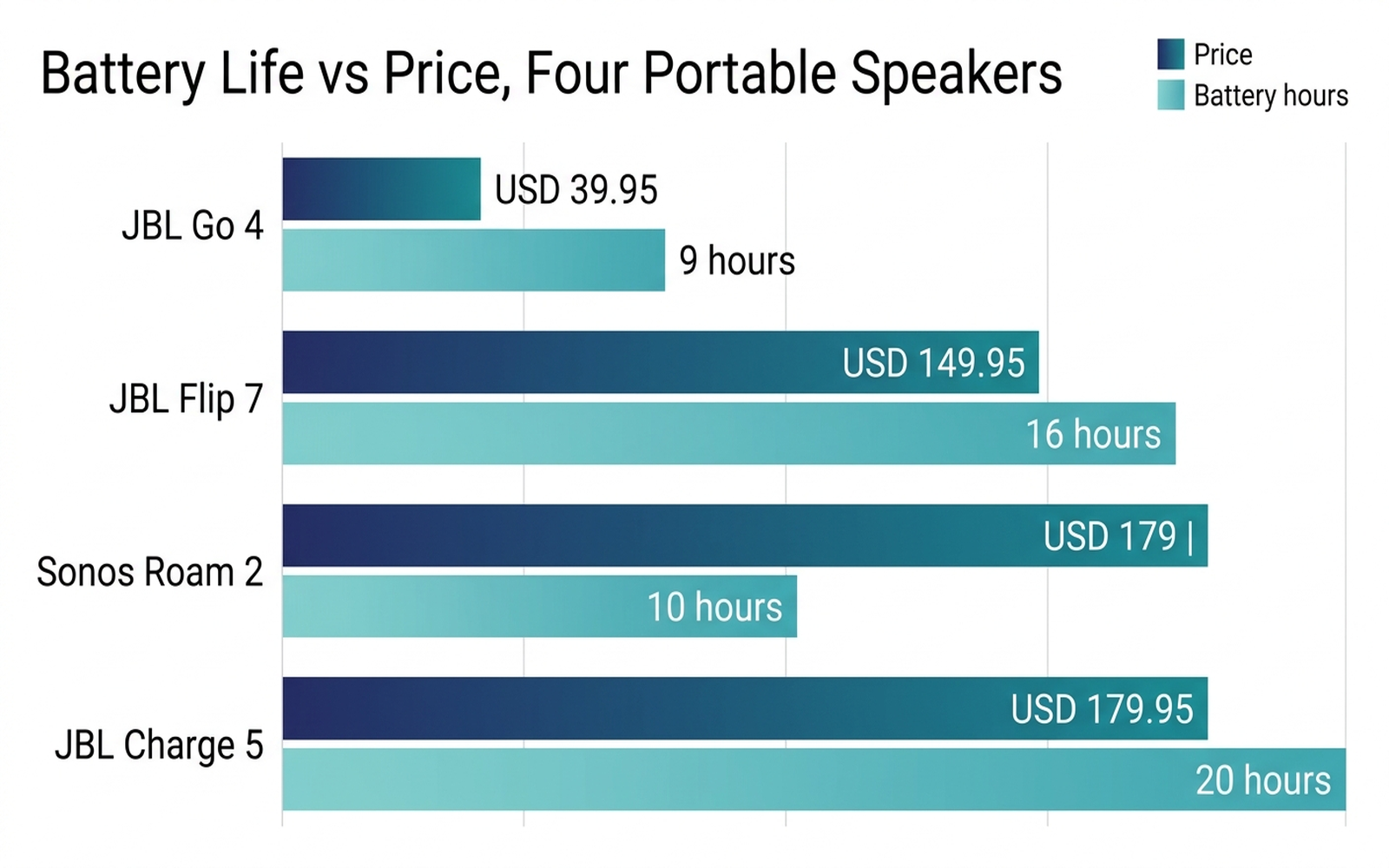
| Speaker | Price (as of 2026-10-25) | Battery life | Water resistance | Bluetooth | Standout feature |
|---|---|---|---|---|---|
| JBL Go 4 | $39.95 | 7 hours (9 with Playtime Boost) | IP67 | 5.3 | Cheapest entry into the JBL line |
| JBL Flip 7 | $149.95 | 16 hours (Playtime Boost) | IP68 | 5.4 | Best balance of loudness, battery, and price |
| Sonos Roam 2 | $179.00 | 10 hours | IP67 | 5.2 | Wi-Fi multi-room sync with other Sonos speakers |
| JBL Charge 5 | $179.95 | 20 hours | IP67 | 5.3 | Built-in USB-A powerbank for charging a phone |
| Sonos Move 2 | $449.00 | 24 hours | IP56 | 5.0 | True stereo sound from dual tweeters |
Prices as of 2026-10-25, based on Amazon US list pricing; actual purchase price fluctuates with promotions.
Which One Should You Buy?
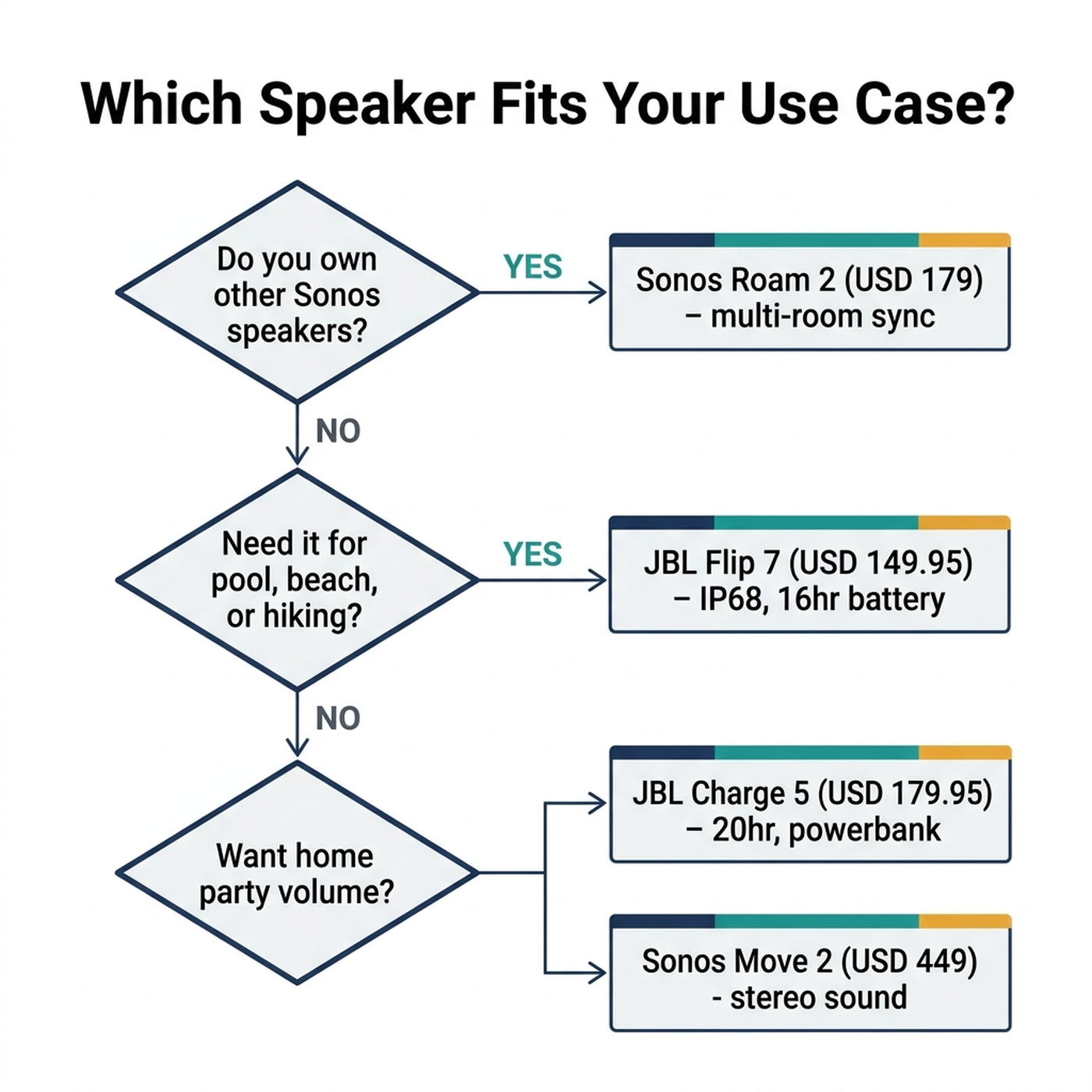
Buy a JBL if: you want the loudest, most durable speaker for the money, you’re taking it somewhere genuinely wet (pool, beach, kayak), or you need it to double as a phone charger. The Flip 7 covers most single-speaker needs; step up to the Charge 5 if you want longer battery life and a powerbank function for group outings.
Buy a Sonos if: you already own Sonos speakers at home and want a portable unit that can join that system over Wi-Fi, or you specifically want automatic room-correction (Trueplay) and are willing to trade battery life and raw loudness for it. The Move 2 is worth its much higher price only if indoor, room-filling stereo sound is the primary use case, not portability.
Warranty and Support
JBL (a Harman International brand) covers its portable speakers with a standard one-year limited warranty against manufacturing defects in the US, handled through Harman’s support channels or the retailer. Sonos also offers a one-year limited warranty on the Roam 2 and Move 2, with an option to register the product through the Sonos app, which some owners report streamlines warranty claims. Neither brand’s standard warranty covers accidental damage (drops outside the rated durability, water damage beyond the stated IP rating, or battery degradation from normal wear), so buyers who want accidental-damage coverage should look at a third-party protection plan at checkout.
Limitations
This analysis relies on publicly available Amazon customer reviews, third-party test and comparison reporting (RTINGS, Digital Trends, SoundGuys, TechRadar, HomeTheaterReview, CNN Underscored), and manufacturer-published specifications current as of October 2026. We did not personally test any of the speakers covered here. Review counts and star ratings on Amazon change continuously and may differ from what’s shown here by the time you read this. Battery life figures are manufacturer specs measured under standardized conditions (moderate volume, no Wi-Fi streaming); real-world battery life varies with volume level and connection type. Individual unit-to-unit variance and personal taste in sound signature (bass-forward versus neutral) can outweigh any of the aggregate patterns described above.
Verify Before You Buy
Specs, pricing, and availability on Amazon change frequently. Before purchasing any speaker mentioned here, visit Arekore to cross-check current pricing and verify the product still matches the specifications described in this article.