Jackery Explorer 1000 v2 Review 2026: Worth the Upgrade?
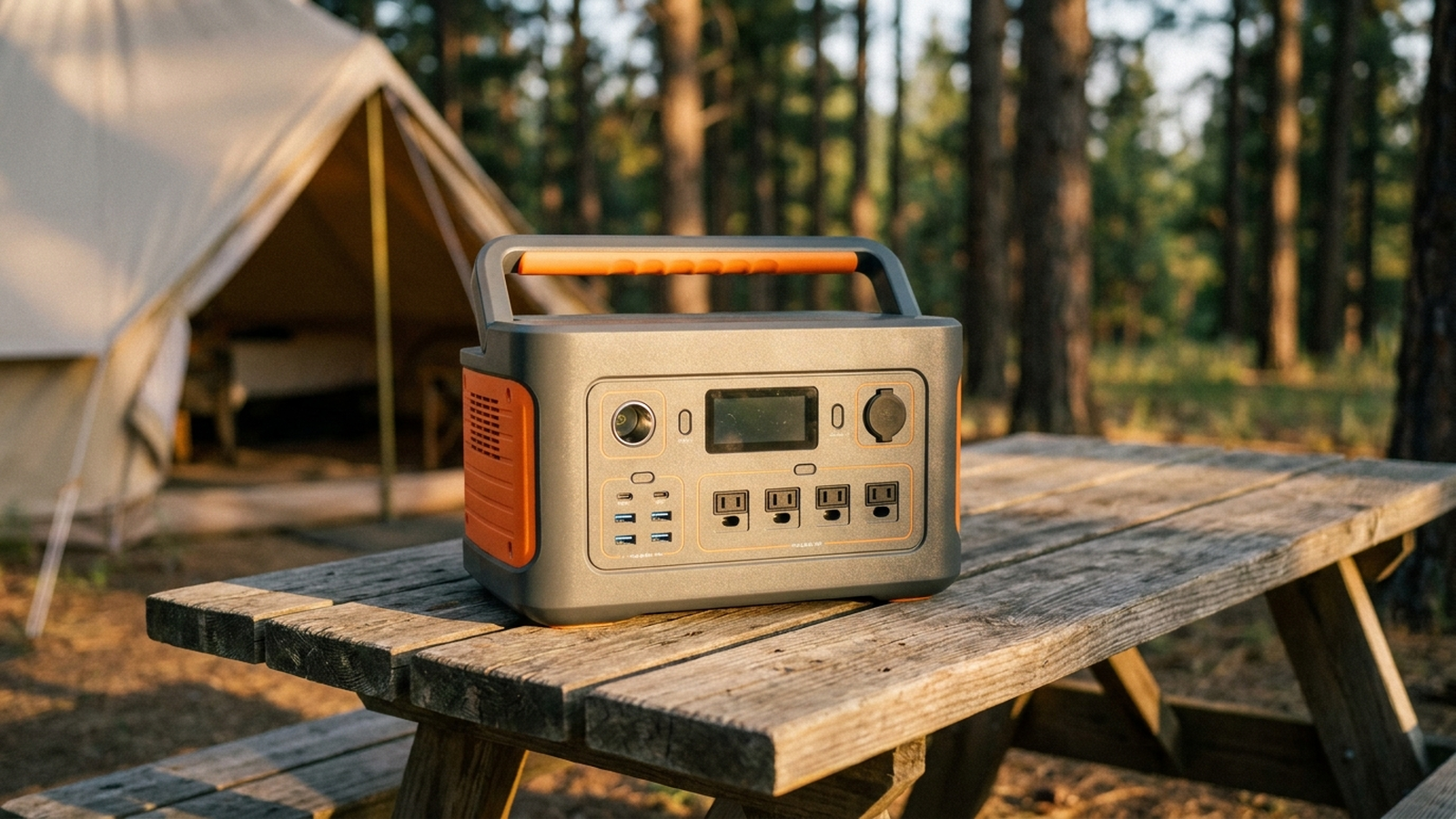
The Jackery Explorer 1000 v2 replaced the company’s best-selling original Explorer 1000 with a new battery chemistry, a faster charger, and a 50% higher power ceiling — but it launched at roughly the same price point. That combination raises an obvious question for anyone who already owns the original, or who is shopping the 1000Wh class for the first time: is the “v2” a meaningful upgrade, or mostly a spec-sheet refresh? We pulled apart the manufacturer specs, independent lab testing, and aggregated owner feedback to find out.
As an Amazon Associate, Arekore earns from qualifying purchases. The Amazon product links in this article may include our affiliate tracking ID and may earn us a commission if you buy through them, at no additional cost to you. See our Links Policy for details on how we select products and how commissions do not influence our recommendations.
TL;DR / Quick Verdict
- The battery chemistry change is the real upgrade. The v2 switched from NMC to LiFePO4 cells rated for roughly 4,000 charge cycles versus the original’s roughly 500 — a meaningful jump in usable lifespan, not just a marketing number.
- Charging speed roughly quadrupled. Manufacturer specs put standard wall charging at about 1.7 hours to full, versus roughly 6 hours or more commonly reported for the original NMC model.
- Output jumped from 1,000W to 1,500W (3,000W surge), enough to run more demanding appliances like coffee makers and small power tools that the original could not reliably handle.
- If your original Explorer 1000 still works, the upgrade case is weaker — this is a stronger buy for first-time shoppers or owners of an aging NMC unit than for happy current owners.
How We Reached These Conclusions (Methodology)
This is an editorial analysis, not a hands-on review; we did not personally test the products covered here. It synthesizes (a) Jackery’s published manufacturer specifications for both the original Explorer 1000 and the Explorer 1000 v2, (b) independent third-party coverage from TechRadar, which called the v2 “one of the best portable power stations we’ve ever tested,” alongside Consumer Reports’ broader portable-power-station testing program, and (c) aggregated owner sentiment from long-form reviews across independent gear-review sites and Amazon’s product listing. We did not personally test the products covered here, and we avoid citing a specific unverified Amazon review count, since exact totals fluctuate. Manufacturer figures (capacity, cycle life, charge time) are labeled as such. Prices are amazon.com figures at the time of writing (August 2026) and change frequently, especially around sales events.
What Actually Changed From v1 to v2
The original Jackery Explorer 1000 used an NMC (nickel manganese cobalt) lithium-ion battery, the same broad chemistry family used in many early consumer power stations and EVs. NMC cells are energy-dense and relatively light, but they degrade faster with repeated full charge-discharge cycles — manufacturer-rated lifespans in that generation typically topped out around 500 cycles to 80% remaining capacity.
The Explorer 1000 v2 switched to LiFePO4 (lithium iron phosphate) cells, rated by Jackery at roughly 4,000 cycles to 80% remaining capacity. By 2026, LiFePO4 has become the standard chemistry across the category — it’s the same shift that led European testing body Stiftung Warentest to favor LiFePO4-based models in its 2023 power-station comparison (its most recent major test in this category as of this writing), which crowned the EcoFlow River 2 Max as test winner over older NMC designs. In practical terms, a LiFePO4 pack lets an owner drain the battery to empty roughly daily for around a decade before capacity meaningfully declines, versus a few years of regular use for a comparable NMC unit.
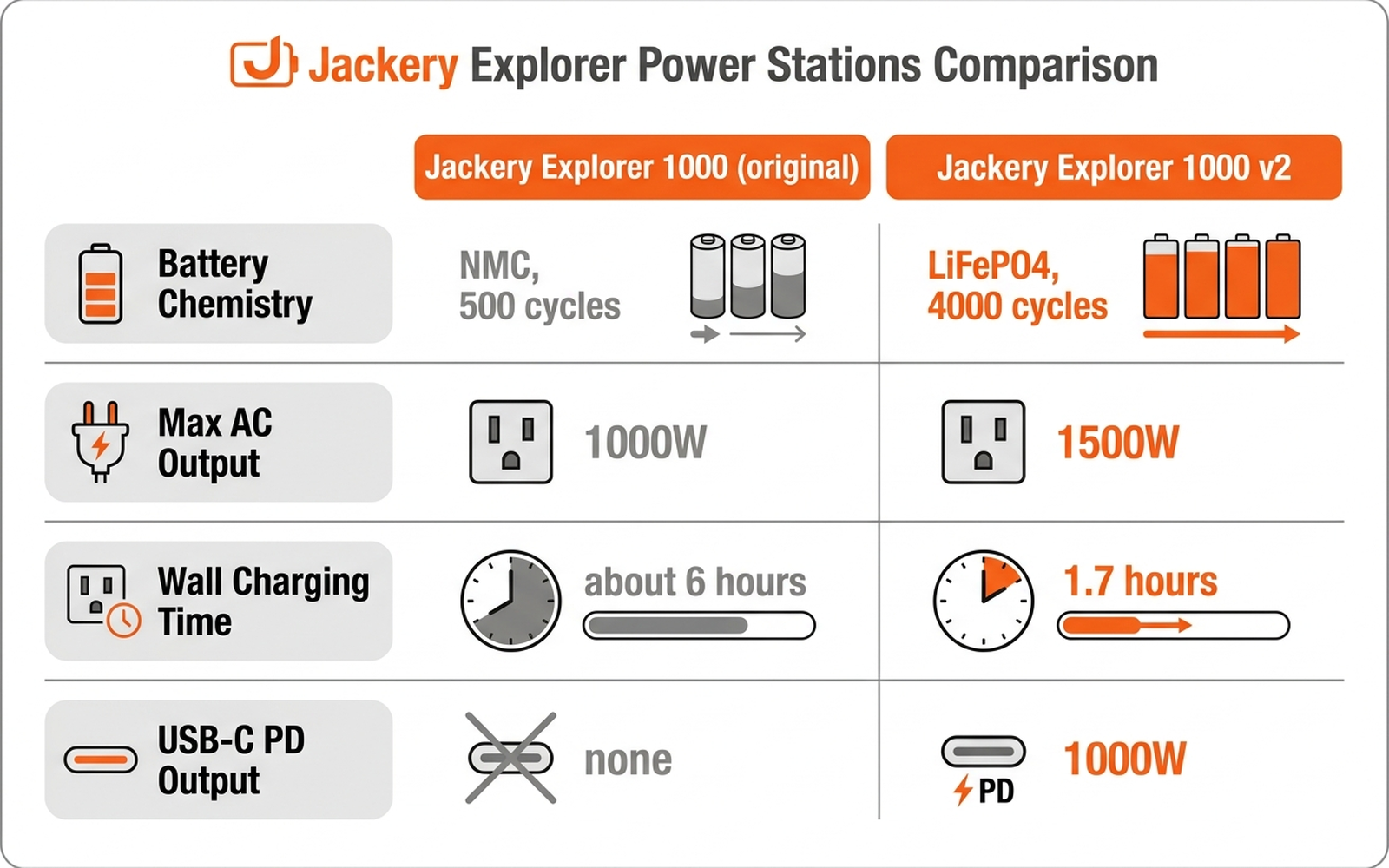
Beyond the battery, three other changes stand out in the manufacturer spec sheets:
- AC output rose from 1,000W to 1,500W (3,000W surge), which Jackery’s own materials frame as enabling higher-draw devices like coffee makers, space heaters, and corded power tools that the original’s 1,000W ceiling could not reliably run.
- Wall charging time dropped from roughly 6 hours (original) to about 1.7 hours (v2) under standard charging, with a faster “boost” mode available through Jackery’s companion app for even quicker top-offs.
- USB-C PD output reached 100W on the v2, fast enough to charge a modern laptop directly — a port the original Explorer 1000 lacked entirely, since USB-C PD charging standards were less common in consumer electronics when it launched.
Physically, Jackery’s materials describe the v2 as having an 18% smaller footprint than the original despite the larger battery and inverter, with a handle that folds flat for easier storage — a minor but frequently mentioned convenience improvement in aggregated owner feedback.
What Independent Testing and Owner Reviews Say
TechRadar’s coverage of the Explorer 1000 v2 calls it “one of the best portable power stations we’ve ever tested,” citing its balance of capacity, weight, and price relative to competitors. Consumer Reports, which runs an ongoing portable-power-station testing program covering multiple brands including Jackery, EcoFlow, and Anker, has rated other Jackery models highly for recharging speed — a category where the v2’s LiFePO4 chemistry and faster charger are a direct beneficiary of the same design trend Consumer Reports flags as a differentiator among top performers.
Aggregated owner reviews are broadly positive on the same points independent testers highlight: fast charging, useful capacity for weekend camping trips or short home outages, and a genuinely quieter cooling fan than many owners expected from a 1,500W inverter. Reported fan noise sits around 42 dB under light-to-moderate load — comparable to a quiet home refrigerator — and climbs to roughly 55 dB when the unit is pushed near its 1,000W-plus output ceiling, loud enough that some owners note it as noticeable but not disruptive in a typical room. A recurring minor complaint in owner feedback is that the cooling fan cycles on briefly for a few seconds at a time during overnight charging, which a small number of reviewers found distracting when charging the unit in a bedroom; Jackery’s app includes a “quiet charging” mode intended to address this by capping charge current overnight.
How to Charge the Explorer 1000 v2
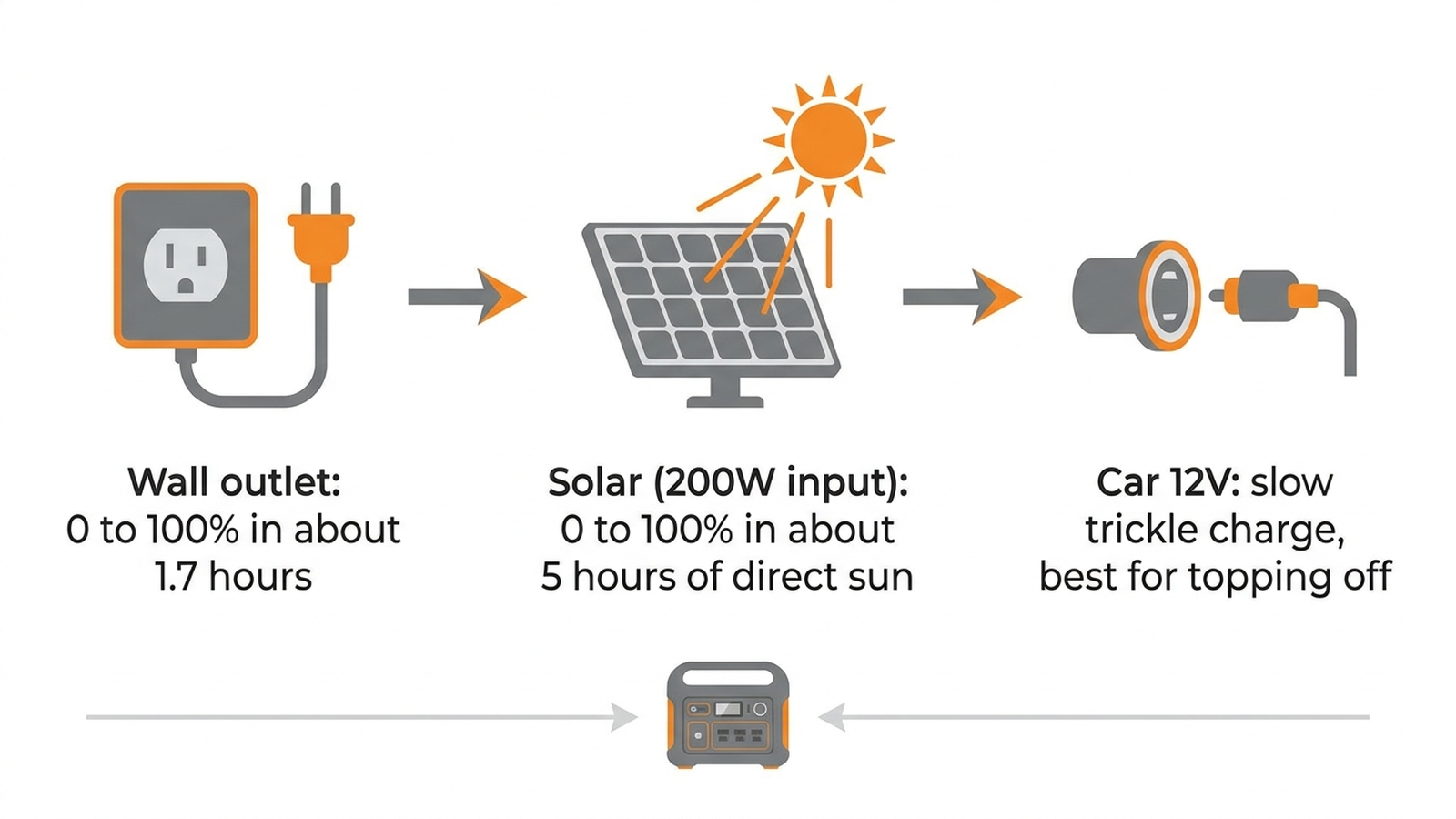
- Wall outlet (AC): the fastest standard method, reaching 0–100% in about 1.7 hours per Jackery’s specifications, or faster with the app-enabled boost mode.
- Solar panel (up to 200W input): using two of Jackery’s 100W SolarSaga panels in direct sunlight, owners commonly report full charges in around 5 hours, though real-world solar input is affected by weather, panel angle, and season.
- Car 12V outlet: the slowest of the three methods, best treated as a way to top off charge during a drive rather than a primary charging method for a depleted battery.
Comparison Table
Prices are amazon.com figures at the time of writing (August 2026) and fluctuate significantly around sales events — this model has been discounted as low as the mid-$400s during past promotions against a manufacturer list price near $799–$899.
| Model | ASIN | Capacity | AC Output | Battery | Best for |
|---|---|---|---|---|---|
| Jackery Explorer 1000 v2 | B0D7PPG25F | 1,070Wh | 1,500W (3,000W surge) | LiFePO4, ~4,000 cycles | First-time buyers, upgraders from an aging NMC unit |
| Anker Solix C1000 | — | ~1,056Wh | 1,800W | LiFePO4 | Buyers who prioritize higher continuous wattage |
| EcoFlow Delta 3 Plus | — | 1,024Wh (expandable) | 1,800W | LiFePO4, ~4,000 cycles | Buyers who may want to add expansion batteries later |
The Anker Solix C1000 and EcoFlow Delta 3 Plus both edge out the Jackery on rated continuous AC output (1,800W vs. 1,500W) and the EcoFlow supports battery expansion, which the Jackery does not. Jackery’s advantage in third-party comparisons tends to be brand longevity and resale value in the US market rather than a spec-sheet win on any single metric — worth weighing if you’re choosing between all three rather than deciding whether to upgrade an existing Jackery unit.
Editorial Recommendation: Is the Upgrade Worth It?
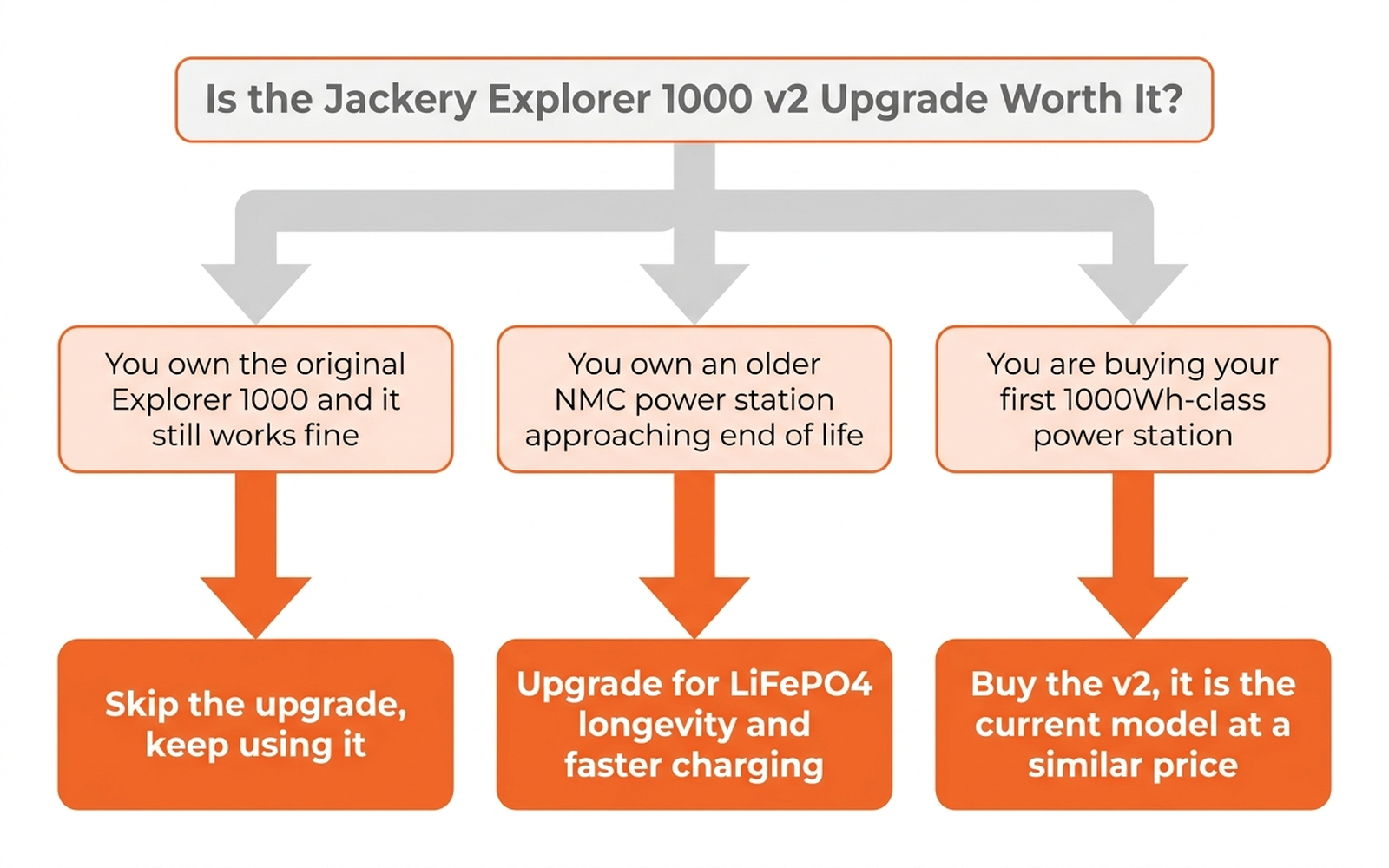
- If you already own the original Explorer 1000 and it still holds a charge reliably: the upgrade case is weak. You’re paying full price again for faster charging and higher output you may not need for occasional camping or emergency backup use.
- If you own an aging NMC-based power station approaching the end of its rated cycle life: the v2’s LiFePO4 chemistry and roughly 8x longer rated cycle life make it a reasonable one-time replacement that should outlast a second NMC purchase.
- If you’re buying your first 1000Wh-class power station: the v2 is the current-generation model at a similar price to what the original launched at, making it the more sensible default over seeking out the discontinued original.
- If continuous wattage above 1,500W or future battery expansion matters to your use case: compare directly against the Anker Solix C1000 or EcoFlow Delta 3 Plus, which lead on those specific specs.
Check the Jackery Explorer 1000 v2 on Amazon
Warranty
Jackery backs the Explorer 1000 v2 with a standard manufacturer warranty; always confirm current coverage terms on the product listing, since warranty periods and extended-coverage offers are updated periodically and can vary by retailer and promotion.
Limitations of This Analysis
This analysis relies on Jackery’s published manufacturer specifications, third-party coverage from TechRadar and Consumer Reports, and aggregated owner reviews; we did not personally test either the original Explorer 1000 or the v2, and individual experience varies with climate, usage pattern, and unit-to-unit variance. Cycle-life figures (500 vs. 4,000 cycles) are manufacturer-rated under standardized test conditions and may not directly reflect real-world degradation for every owner. Portable power station market-size figures — the US segment was valued at roughly $280 million in 2024 by one industry estimate, with North America holding an estimated 37.7% share of the global market in 2026 — come from third-party research firms whose methodologies differ, so we present them as directional context rather than precise figures specific to this one product. Prices, ASIN availability, and warranty terms change frequently — always confirm current details on the product page before buying.
The Bottom Line
The Jackery Explorer 1000 v2 is a genuine generational upgrade on paper — LiFePO4 chemistry, roughly 4x faster charging, and 50% more AC output — rather than a cosmetic refresh, and independent testing from outlets like TechRadar backs up that the improvements hold up in practice. Whether it’s worth buying depends heavily on what you already own: weak case for happy original-Explorer-1000 owners, strong case for first-time buyers or anyone replacing an aging NMC unit. Check the current price and read the most recent reviews before buying — and if you want a second opinion on a specific listing, paste the URL into Arekore and let the AI scan the reviews and price history for you in about five minutes.