Video Doorbell Battery Dying Fast on Halloween? Here's Why
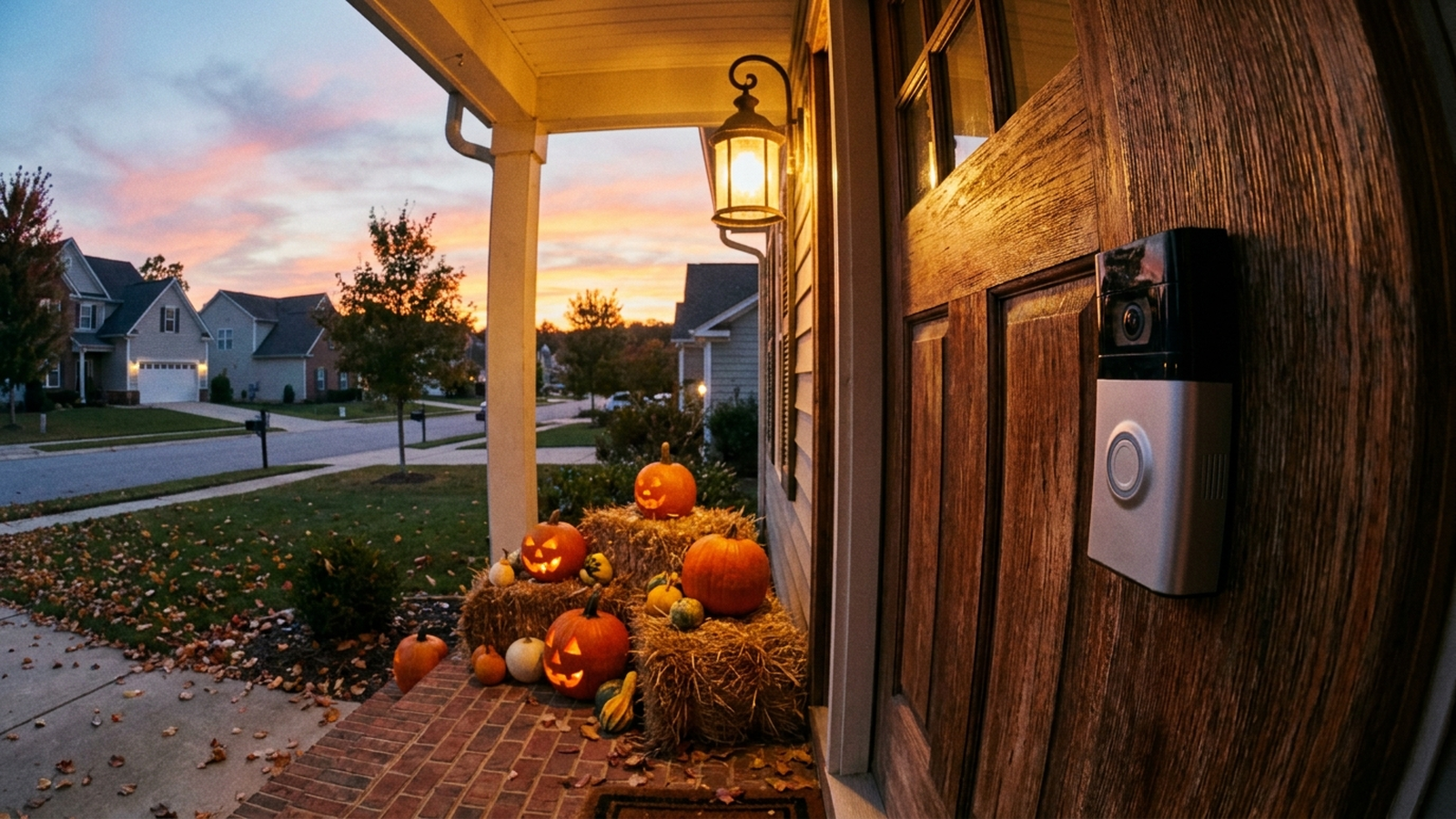
TL;DR. A battery doorbell that lasts weeks in October can die in a single evening on Halloween because motion events, not the calendar, drain the battery — and a busy street can trigger a battery-powered doorbell dozens or hundreds of times per hour once trick-or-treaters arrive. The three biggest multipliers documented by manufacturer support teams are Live View usage, cold temperatures below about 40°F, and a weak Wi-Fi signal that forces the doorbell into constant reconnect attempts. Switching to People Only detection, charging to 100% the night before, and keeping a spare charged battery on hand cover most households; a solar charger or a wired/dual-power doorbell is the fix for a chronically busy porch.
A note on links and methodology
As an Amazon Associate, Arekore earns from qualifying purchases. The Amazon product links in this article include our affiliate tracking ID and may earn us a commission if you buy through them, at no additional cost to you. See our Links Policy for details on how we select products and how commissions do not influence our recommendations.
We did not personally test the specific doorbells or accessories named below. Every cause and fix in this article is an editorial synthesis of manufacturer support documentation, independent testing, and aggregated public data, cited inline.
Methodology
This is an editorial analysis based on publicly available data collected in September 2026. We did not run controlled battery-drain tests ourselves; instead we synthesized:
- Manufacturer support documentation — Ring’s official “Fixing Unexpected Battery Drain in Video Doorbell or Security Cameras” article, which is the primary source manufacturers point to for diagnosing battery-drain complaints, along with Eufy’s and Wyze’s published battery-troubleshooting guidance.
- Independent product testing — Consumer Reports’ 2026 lab-tested video doorbell rankings and Tom’s Guide’s ongoing video doorbell testing coverage, both of which score battery performance under real-world event loads rather than only advertised standby claims.
- Aggregated consumer troubleshooting reports — patterns documented across smart-home support and troubleshooting sites (The Droid Guy, SmartHomePoint, DIY Smart Home Solutions) describing the specific triggers behind sudden battery drain, cross-checked against manufacturer documentation rather than taken at face value.
- National Retail Federation Halloween data — NRF’s 2026 Halloween consumer survey, which puts overall Halloween participation at 73% of U.S. households and candy-handing-out specifically at 66%, the seasonal spike in door-front foot traffic that drives the battery problem this article addresses.
- Aggregated Amazon customer review sentiment on amazon.com for the doorbells and accessories referenced below, read via each product’s “Top reviews” and “Customers say” panels in September 2026. We do not report a precise review-count N because Amazon’s review panels do not expose a stable, verifiable count; a fabricated number would be misleading.
We deliberately do not simulate a specific personal troubleshooting story or invent a fake reviewer persona. The advice below is a synthesis of manufacturer documentation, independent testing, and aggregated review patterns — treat it as a starting framework, not a substitute for a manufacturer’s own diagnostic tool.
1. Why one night can undo months of battery life
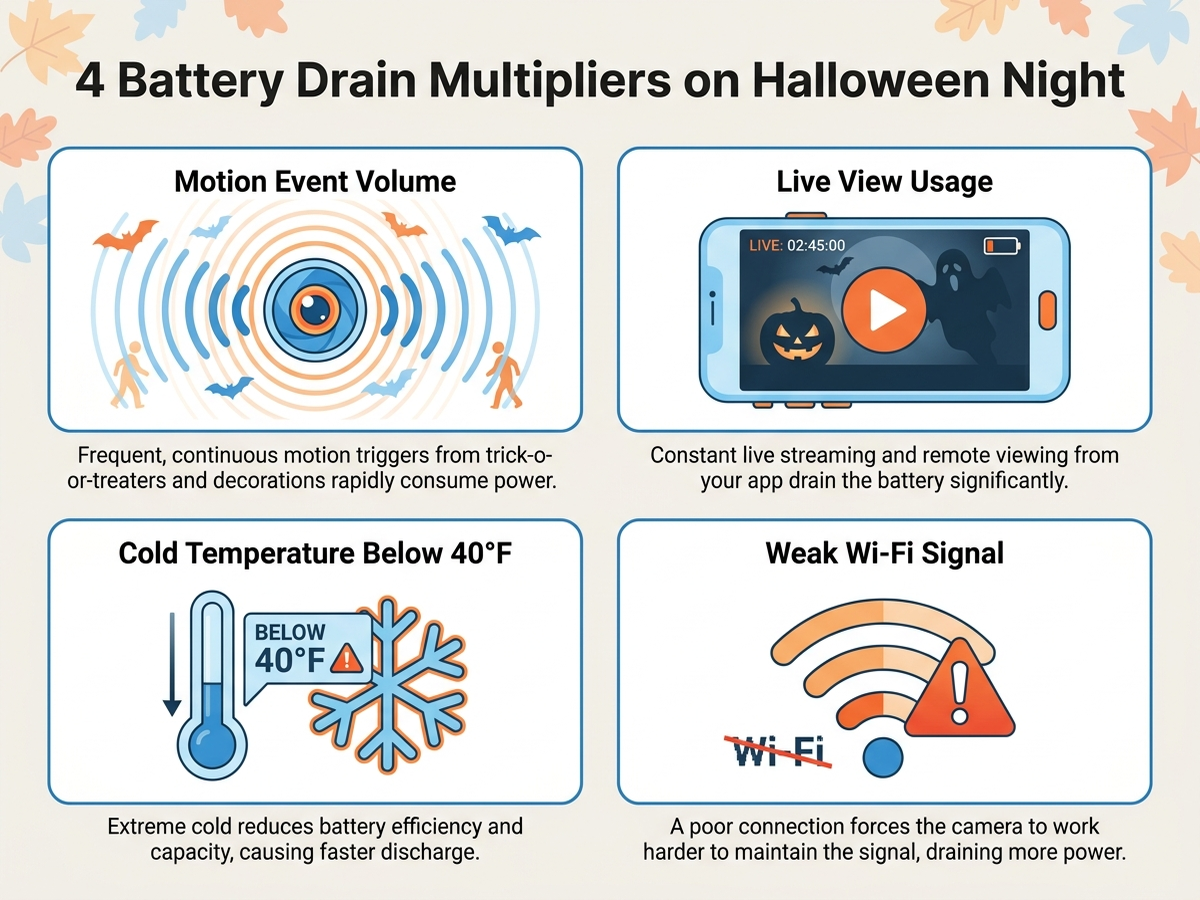
Manufacturer support documentation is consistent on this point: how long a battery doorbell’s charge lasts is driven almost entirely by event volume, not elapsed time. Ring’s own troubleshooting guidance frames it directly — a doorbell on a quiet street can run for months on one charge, while an identical unit on a busy block needs recharging every week or two, because every motion event, notification, and Live View session draws power regardless of the calendar date.
Halloween concentrates a year’s worth of that event volume into a few hours. NRF’s 2026 survey found that 66% of U.S. households plan to hand out candy, which means a residential street that might see a car or pedestrian trigger the doorbell every few minutes on an ordinary evening can instead register a motion event every few seconds for two or three straight hours as costumed groups move door to door.
| Drain multiplier | What it looks like on Halloween | Fixable before the night? |
|---|---|---|
| Motion event volume | Dozens of groups triggering the sensor per hour instead of per day | Yes — adjust sensitivity/zones |
| Live View sessions | Checking the app repeatedly to see who’s at the door | Yes — limit checks, use notifications instead |
| Cold temperature | Battery capacity measurably drops below ~40°F | Partially — charge fresh, keep spare warm indoors |
| Weak Wi-Fi (low RSSI) | Extra outdoor decorations or a crowded porch disrupts signal | Yes — check RSSI, add extender |
Live View is the single most battery-heavy feature most owners underestimate: opening the live camera feed to watch a group of trick-or-treaters approach draws meaningfully more power than a standard motion-triggered clip, according to manufacturer guidance cited in smart-home troubleshooting coverage. On a night when a household might open Live View a dozen times out of curiosity or caution, that habit alone can account for a large share of the unusual drain.
2. The cold-weather factor most owners don’t expect in late October
Halloween falls at the point in the year when many U.S. regions cross into the temperature range that measurably affects lithium-ion battery performance. Manufacturer and troubleshooting documentation puts the threshold at roughly 40°F (4°C): below that point, batteries in outdoor smart-home devices drain faster and, near freezing, may not recharge properly at all. Coverage of winter Ring performance issues also notes that once a device’s internal temperature sensor triggers a low-power state, its motion-detection algorithm can become less sensitive — meaning a doorbell running low and cold on Halloween night may both drain faster and register trick-or-treaters later than usual.
This compounds with the event-volume problem rather than replacing it: a battery that’s already handling triple its normal daily events is doing so with reduced effective capacity if the evening turns cold, which is a common pattern in northern and mountain states by late October.
3. Weak Wi-Fi turns a busy night into a dead battery
A battery doorbell with a marginal Wi-Fi connection drains faster even on a quiet day, because a weak signal forces the device into repeated reconnect attempts that consume power in the background. Troubleshooting documentation aggregated from Ring’s own support flow and independent smart-home sites puts the failure threshold at an RSSI below roughly -70; below that, the doorbell works harder just to hold its connection, on top of whatever power the actual motion events and Live View sessions require.
This matters specifically on Halloween because a porch that’s normally fine can become a temporary Wi-Fi dead zone: extra outdoor lighting, inflatable decorations, or simply more people standing near the router-facing side of the house can add enough interference to push a borderline signal into reconnect-loop territory on the one night it’s handling the most events of the year.
4. What to actually do, in order
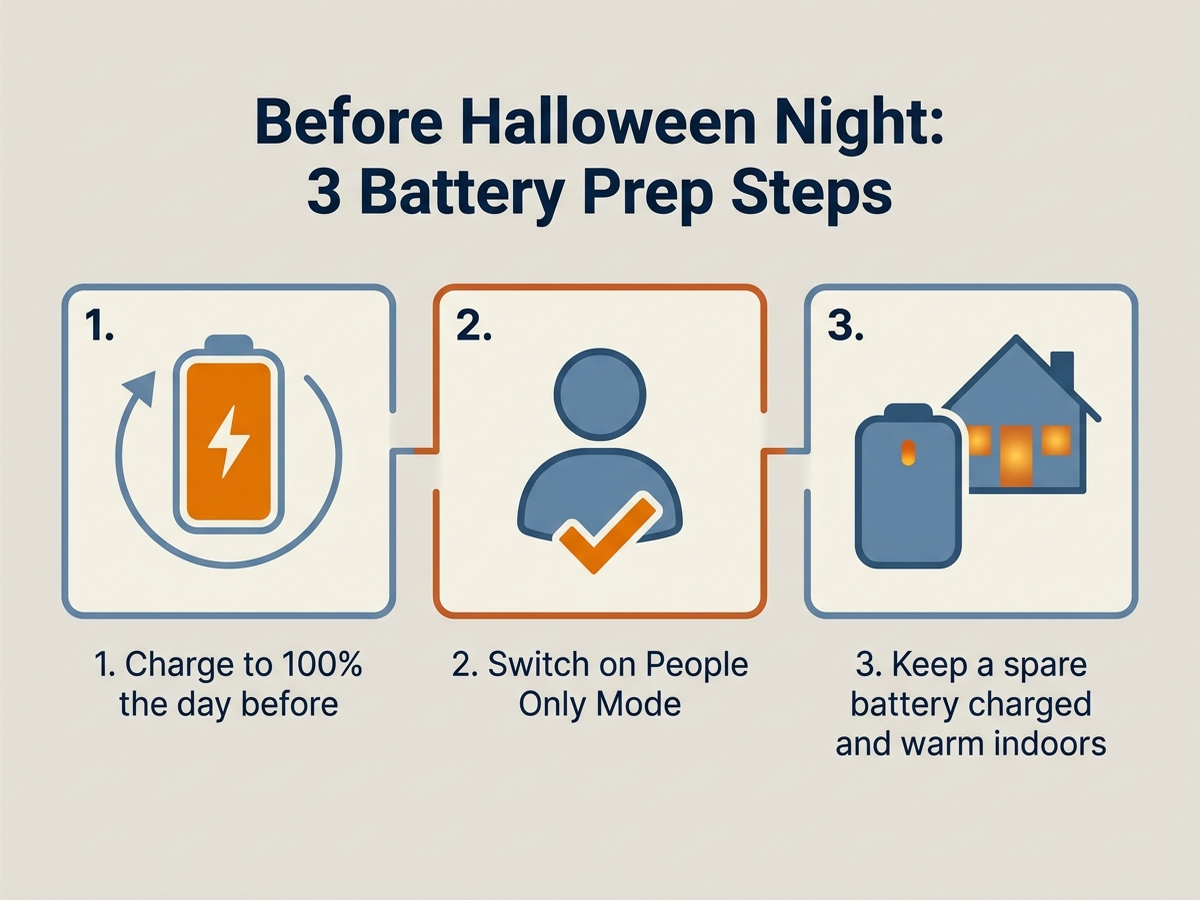
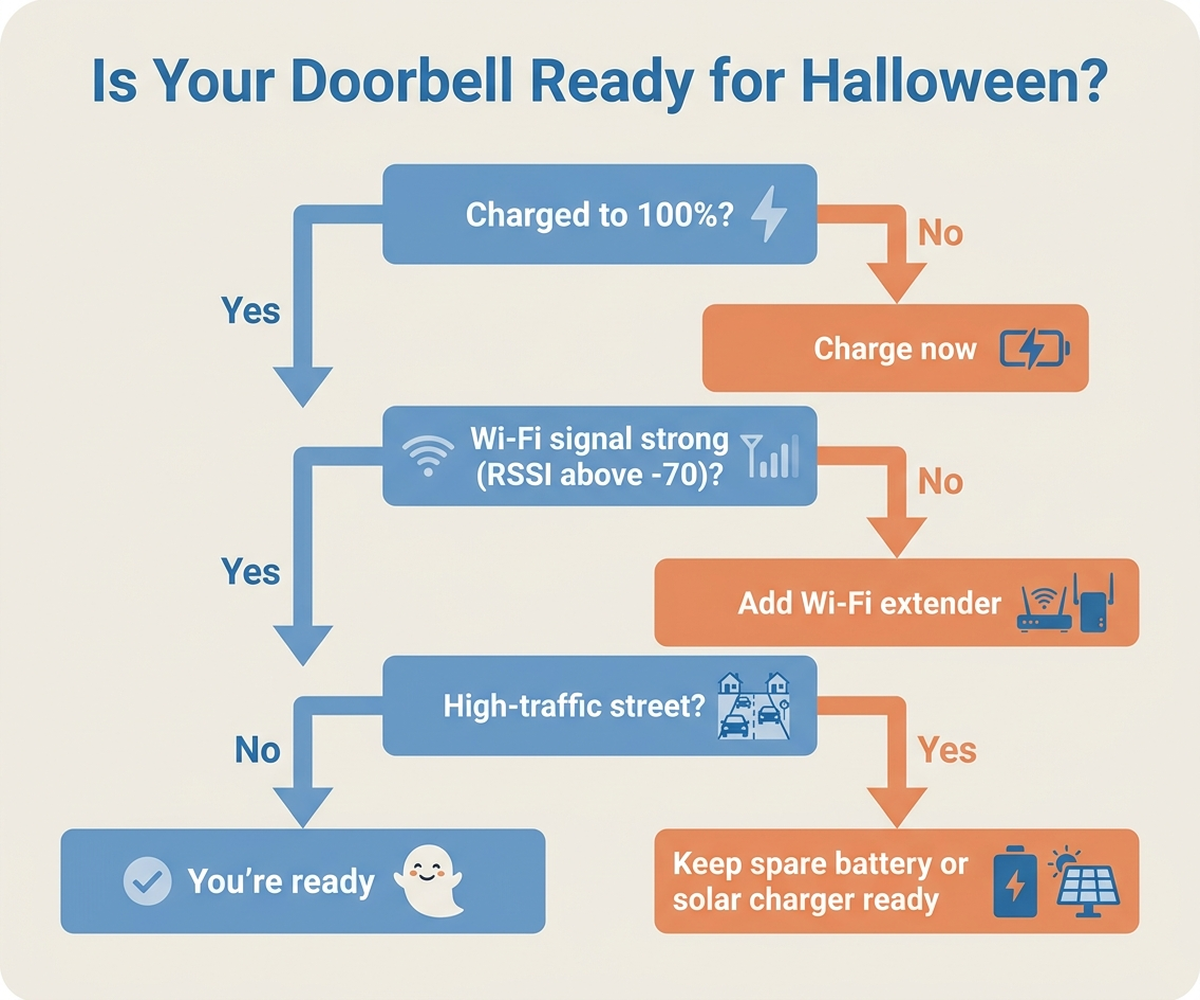
- Charge to 100% the afternoon before, not the morning of. A full charge going into peak event volume is the single highest-leverage fix, and it’s the first item in most manufacturers’ own pre-event checklists.
- Switch on People Only / People Only Mode if the doorbell supports it, so it ignores decorations, pets, and passing cars rather than triggering on every moving object — manufacturer guidance describes this single change as capable of roughly doubling battery life on a busy street.
- Lower Motion Frequency to “Regularly” or “Periodic” rather than the most sensitive setting, and narrow Motion Zones to the actual walkway rather than the whole street.
- Limit Live View checks. Rely on push notifications and recorded clips instead of repeatedly opening the live feed to watch groups approach — this is a habit, not a hardware fix, but it’s one of the largest single drains according to manufacturer guidance.
- Check the doorbell’s signal strength (RSSI) in-app in the days before Halloween. If it’s weaker than roughly -70, add a Wi-Fi extender near the door rather than discovering the problem mid-evening.
- Keep a charged spare battery ready to swap, if the model supports quick-release batteries — a five-minute swap partway through the evening is a more reliable fix than hoping a partial charge lasts.
- Bring an already-low battery indoors to warm up before Halloween night, if temperatures are near or below 40°F; a cold battery charges more slowly and holds less usable capacity than the same battery at room temperature.
5. If a spare battery or solar charger is the fix
Editorial recommendation, not personal testing. For households that already know their doorbell sits on a busy block and don’t want to interrupt trick-or-treating to recharge mid-evening, manufacturer accessory lines address this directly.
- Ring Rechargeable Quick Release Battery Pack (2-Pack) — swaps into compatible Ring doorbells and cameras in seconds without removing the unit from its mount; keeping one charged spare on hand is the fastest fix for a mid-Halloween battery warning.
- Ring Solar Charger for Battery Doorbell — a trickle-charge accessory for compatible newer Ring Battery Doorbell models, aimed at reducing how often the battery needs a manual charge during a high-traffic stretch rather than eliminating charging entirely.
6. If the real fix is a dual-power or wired doorbell
If a specific address reliably sees Halloween-level foot traffic more than once a year — a corner lot, a block known locally as a trick-or-treat destination — a doorbell that isn’t solely battery-dependent removes the problem at the source rather than managing around it.
- eufy Security Video Doorbell C31 — supports both battery and existing wired doorbell power, so a household with existing doorbell wiring can run it wired and sidestep battery-drain events entirely; Consumer Reports’ 2026 testing noted above-par video quality among battery-powered doorbells in this class.
- Arlo Essential Video Doorbell (Wire-Free) — a wire-free option from a brand whose doorbell line Tom’s Guide has tested for reliability across signal conditions; still battery-powered, so the same event-volume and RSSI guidance above still applies, but useful as a comparison point for households evaluating brands rather than accessories.
7. The decision flowchart
8. The bottom line
A video doorbell that comfortably lasts weeks most of the year can die in a single Halloween evening because event volume, not time, drains the battery — and NRF’s 2026 data shows two-thirds of U.S. households are handing out candy, which is exactly the kind of concentrated foot traffic that triggers this. Charging to 100% beforehand, switching on People Only detection, and checking Wi-Fi signal strength ahead of time prevent most mid-evening dead batteries. For an address that sees this kind of traffic more than once a year, a spare quick-release battery, a solar charger, or a dual-power doorbell addresses the recurring pattern rather than the one night.
Limitations of this analysis
To be explicit about what this article does not establish:
- We did not personally reproduce Halloween-level battery drain on the specific units named here. The causes and fixes described are drawn from manufacturer support documentation, independent testing methodology, and aggregated troubleshooting reports, not a controlled test we ran ourselves.
- The 40°F cold-weather threshold and -70 RSSI threshold are general manufacturer guidance and can vary by specific battery chemistry, doorbell model, and router hardware.
- NRF’s 66% candy-distribution figure is a national household average; actual foot traffic at any single address varies enormously by neighborhood density and local trick-or-treat customs.
- “Doubling battery life” from People Only mode is a manufacturer-cited estimate, not an independently measured figure from our own testing.
- Amazon review sentiment was read from each ASIN’s public review panels in September 2026 and reflects aggregated impressions, not a scientific sample.