Fitbit vs Apple Watch 2026: Data-Driven Buyer's Guide
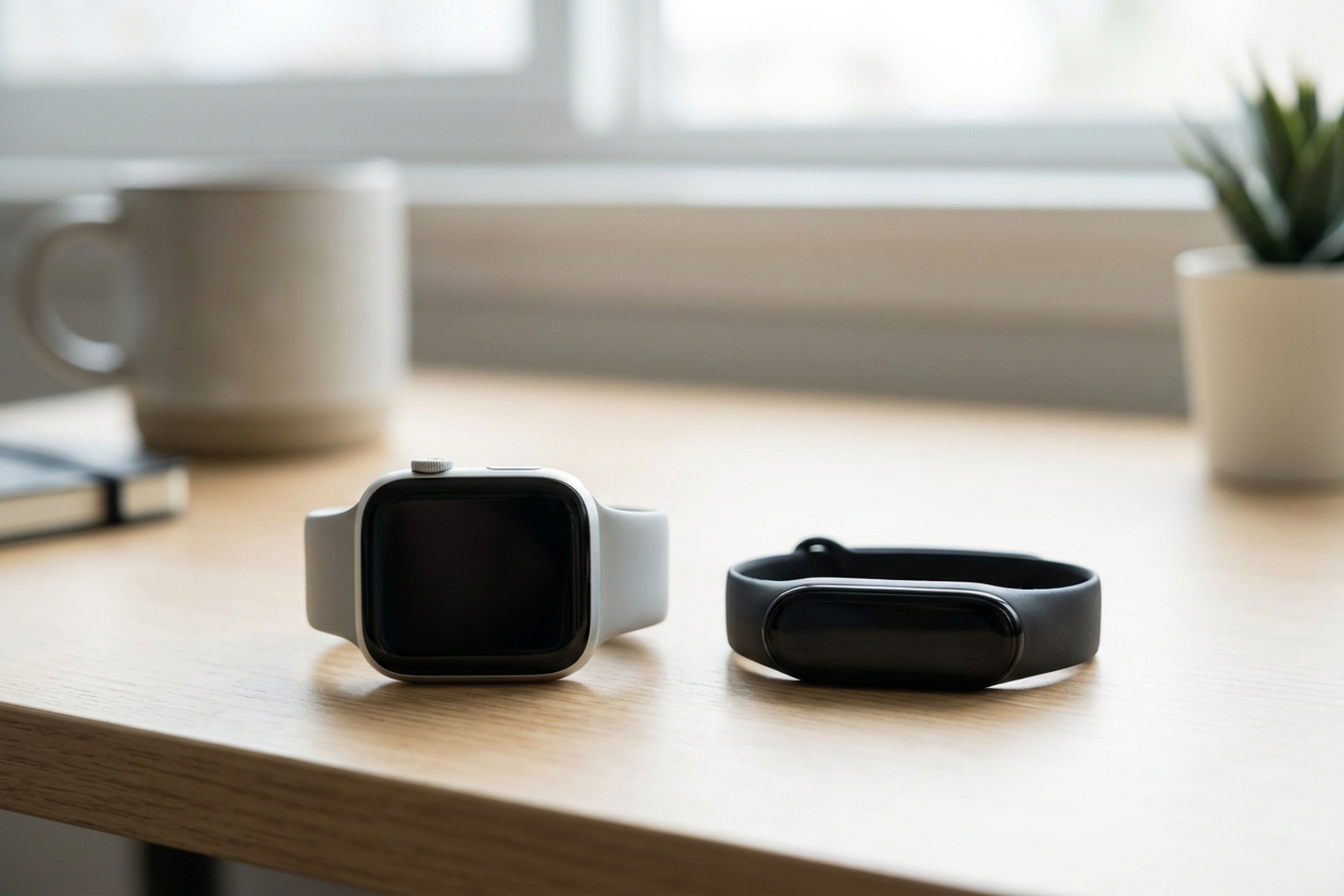
TL;DR
Apple Watch (Series 11 or SE 3) wins if you own an iPhone and want a full app ecosystem, Apple Pay, and always-on notifications on your wrist. Fitbit (Charge 6 or the new screenless Fitbit Air) wins if you want 7+ days of battery life, work with Android, or just want passive health tracking without checking a screen all day. 2026 added a wrinkle: Google folded the Fitbit app into “Google Health,” so even longtime Fitbit owners are adjusting to a different product than the one they bought.
Methodology
This analysis synthesizes (a) aggregated Amazon US customer reviews for the Apple Watch Series 10/11 (14,000+ ratings) and Fitbit Charge 6 (20,000+ ratings), (b) third-party test data and hands-on reviews from Tom’s Guide, Wirecutter, 9to5Google, and Stiftung Warentest’s wearables database (182 devices tested as of its April 2026 update), and (c) manufacturer specifications from Apple and Google. We did not personally test the products covered here; figures above $100 in price differences reflect sale pricing commonly seen on amazon.com rather than list price.
Two Technical Approaches: Smartwatch vs. Screenless Tracker
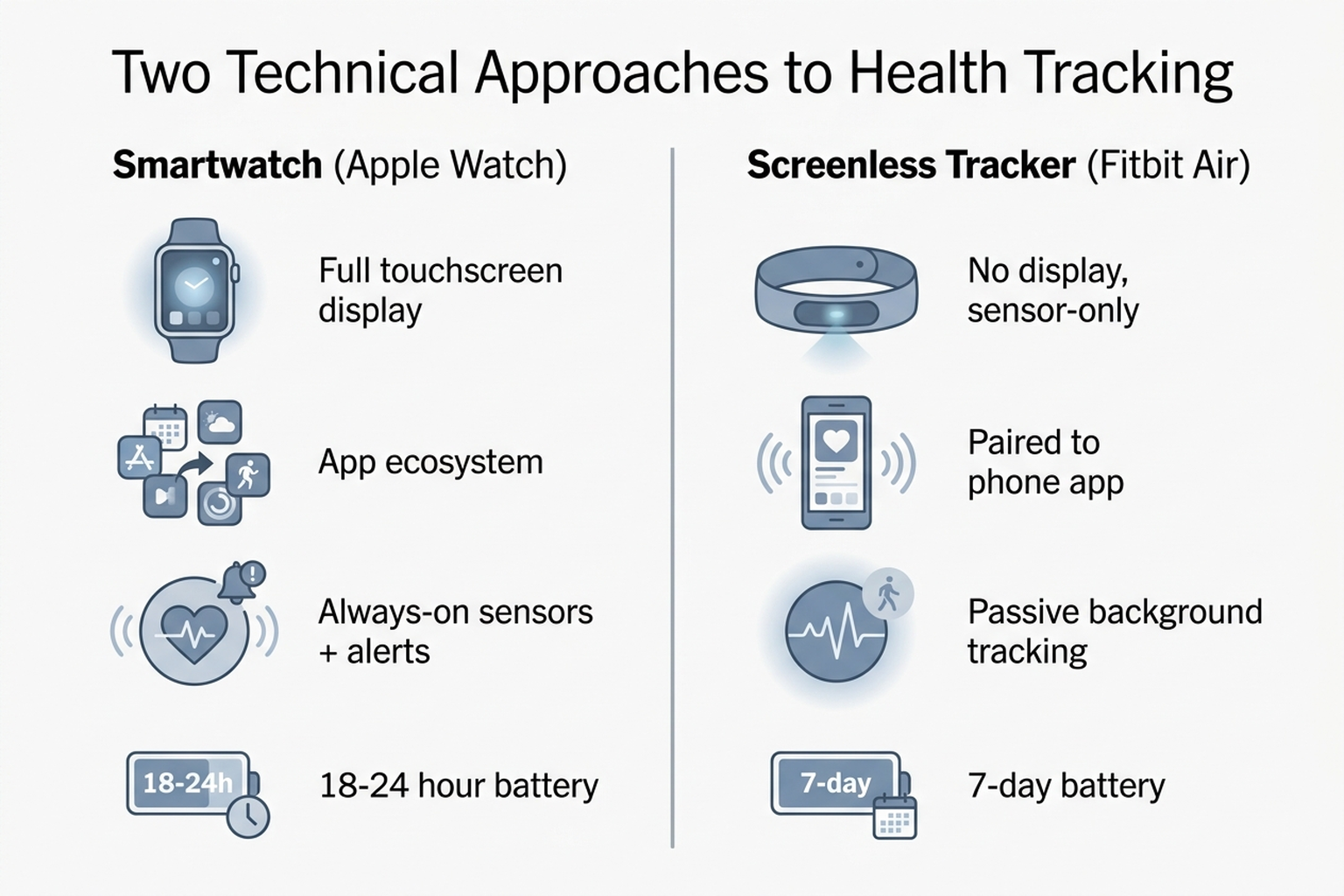
The Apple Watch and the Fitbit lineup are no longer really the same product category. Apple Watch is a general-purpose wrist computer: full touchscreen, third-party apps, cellular/LTE options, Apple Pay, and message replies, built around a roughly one-day battery cycle. Fitbit, by contrast, has split into two approaches after Google’s 2026 product changes.
The Fitbit Charge 6 is still a small-screen band: a touchscreen you glance at for stats, paired to a phone app, with roughly 7 days of battery. The newer Fitbit Air, launched in May 2026 at $99.99, drops the screen entirely — it’s a 0.4-ounce (12-gram) sensor pod that tracks heart rate, sleep, SpO2, and skin temperature in the background and reports everything to your phone, with 7+ days of battery per charge. Neither Fitbit device requires an iPhone; both work with Android and iOS. Apple Watch requires an iPhone to activate and pair, full stop.
Manufacturer Deep Dive
Apple Watch Series 11 — the full-ecosystem option
The Series 11 (amazon.com list price around $399 for 42mm GPS, frequently discounted to $299.99 in sale events per MacRumors tracking) runs Apple’s S-series chip, adds a 1.53-inch always-on display, heart rate, SpO2, ECG, skin temperature, and GPS, and supports up to 24 hours of battery (38 hours in Low Power Mode, per Apple’s own spec sheet). It is also the current Stiftung Warentest test winner in the German lab’s wearables database (updated April 2026), which evaluated pulse accuracy during walking, running, cycling, and at rest alongside step-counter precision.
Amazon customer reviews for the Series line (14,000+ ratings at 4.7/5 on the Series 10 generation) are broadly positive on sensor accuracy and iPhone integration. The most consistent complaint across reviewer threads is battery life — “single-day battery” shows up repeatedly as the top-cited flaw, even though Apple’s own fast-charging hardware has shortened top-up time.
Apple Watch SE 3 — the budget Apple option
The SE 3 (amazon.com around $229–249 for the 44mm GPS model) runs the same S10 chip as the pricier Watch Ultra 3, with an 18-hour battery, sleep and heart rate tracking, and sleep apnea detection, but drops the ECG sensor, SpO2 sensor, and always-on display that the Series 11 includes. It is Apple’s answer to shoppers who want the ecosystem without the $400 price tag.
Fitbit Charge 6 — the budget fitness-first band
The Charge 6 (ASIN B0CHN2F11G on amazon.com, list price $159.95, frequently on sale closer to $99–119) is Amazon’s best-selling fitness tracker in its category, with over 20,000 ratings. It carries a 7-day battery, built-in GPS, Google Maps and Google Wallet integration, and — notably — an FDA-cleared single-lead ECG for atrial fibrillation detection, making it the first Fitbit band (not watch) to carry that clearance. Reviewer sentiment is mixed at the 3.5-star range when purchased at full price, but reviewers consistently describe it as the best value when bought on a discount, which happens often.
Fitbit Air — Google’s new screenless bet
Launched May 2026 at $99.99 (ASIN B0GTMTZF3V on amazon.com), the Fitbit Air has no display and no app notifications on the wrist. Early reviews from 9to5Google and Android Police describe it as “near-perfect” for background health tracking — 24/7 heart rate, sleep staging, SpO2, and skin temperature — while noting the AI-driven “Health Coach” feature behind the paid Google Health Premium tier ($9.99/month or $99/year, three months included) is still uneven. The Air does not carry a clinical ECG sensor; its AFib detection runs through passive heart-rhythm notifications instead, the same category of feature as Apple Watch’s irregular-rhythm alerts rather than a 30-second ECG recording.
The Google Health Transition (what current Fitbit owners should know)
This is the most important 2026-specific fact for anyone comparing these brands: starting May 19, 2026, Google replaced the Fitbit app with “Google Health” for all existing Fitbit users, migrating historical sleep, activity, and cardiac data to a Google Account. The update removed several popular features — badges, “sleep animals,” social groups, and direct messaging between Fitbit friends were all discontinued, with Google confirming the historical badge data would not be preserved. Anyone shopping for a Fitbit band today is buying into the Google Health platform, not the standalone Fitbit app that built the brand’s reputation — worth knowing before you commit, especially if social step-count challenges were part of why you liked Fitbit originally.
How to Use: Battery Life and Sensor Coverage
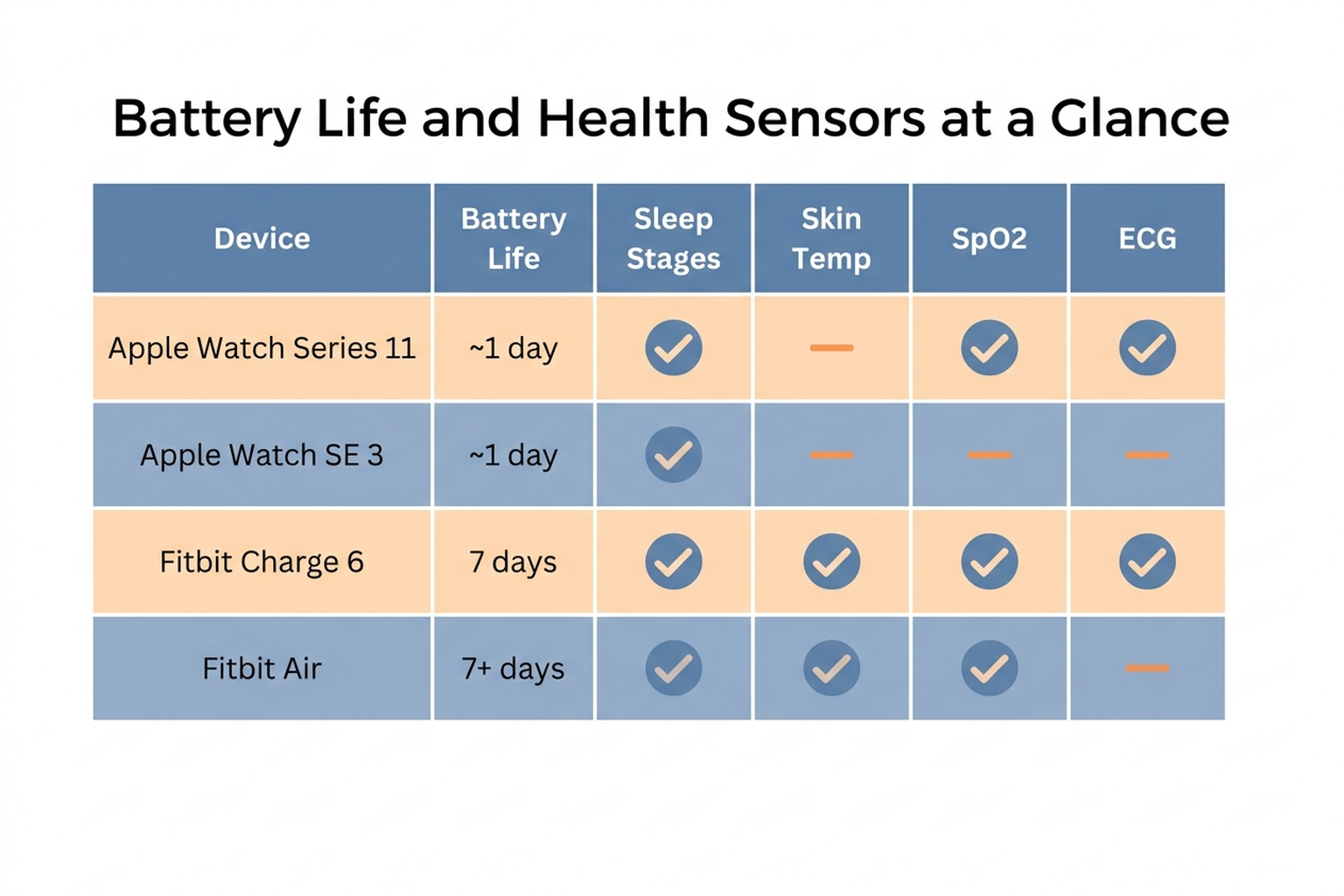
The pattern holds across both brands’ lineups: Apple’s always-on display and app ecosystem cost roughly a week of battery life compared to Fitbit’s band-style hardware. If you charge your phone nightly already, an extra nightly watch charge may be a non-issue; if you’ve skipped a smartwatch before specifically because you forgot to charge it, the Fitbit side of this comparison is built for that habit.
Comparison Table
| Device | Price (as of 2026-10-06) | Battery Life | Requires iPhone? | ECG | Amazon Rating Volume |
|---|---|---|---|---|---|
| Apple Watch Series 11 (42mm GPS) | ~$299–399 | ~24 hrs (38 hrs low-power) | Yes | Yes | 14,000+ (Series 10 gen) |
| Apple Watch SE 3 (44mm GPS) | ~$229–249 | ~18 hrs | Yes | No | N/A (new model) |
| Fitbit Charge 6 | ~$99–159.95 | 7 days | No (iOS/Android) | Yes | 20,000+ |
| Fitbit Air | $99.99 | 7+ days | No (iOS/Android) | No (AFib notifications only) | N/A (new model) |
Prices as of 2026-10-06, based on amazon.com list and frequently-observed sale pricing. Verify current pricing on the product page before buying.
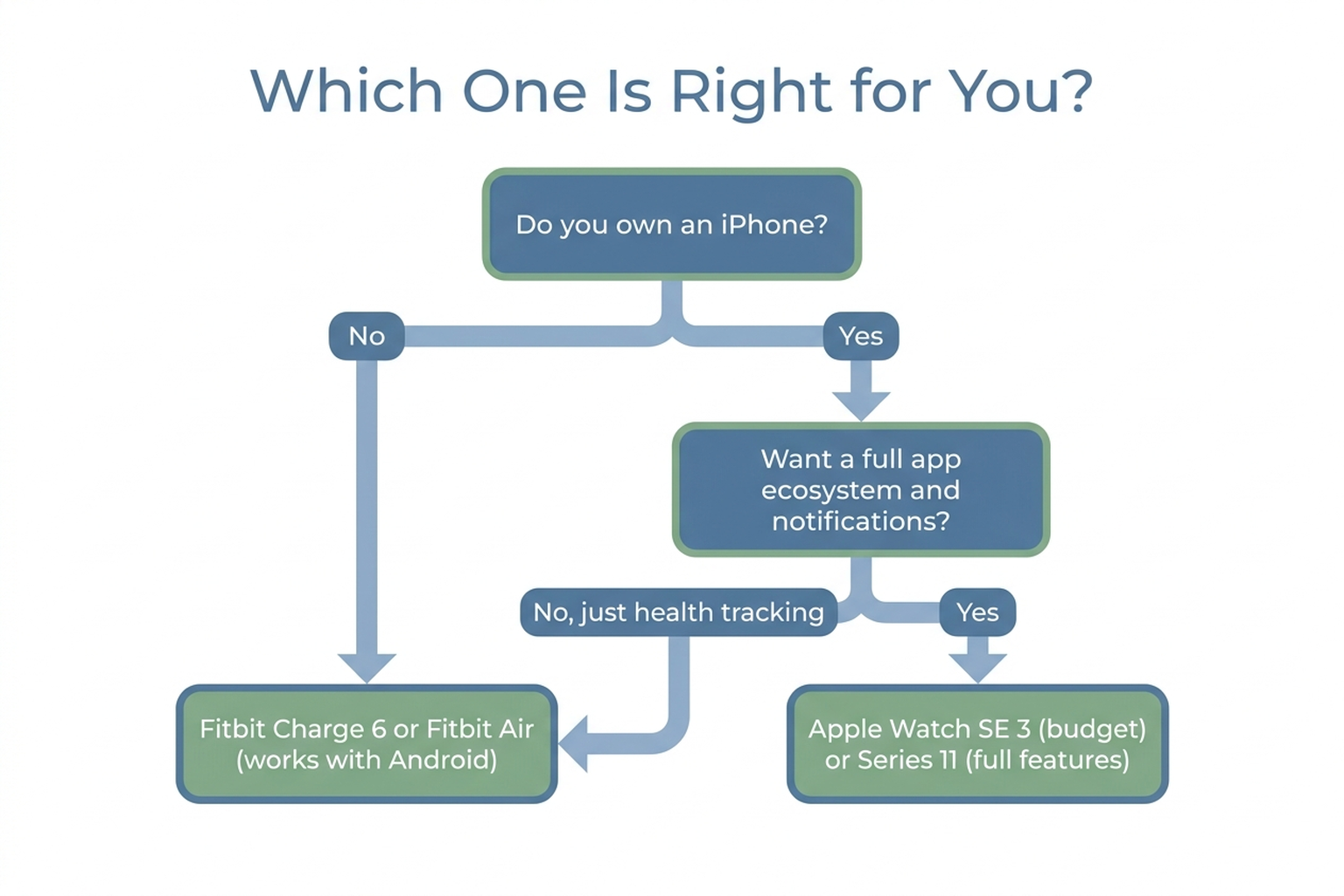
Decision Flowchart: Which One Is Right for You?
Editorial Recommendation by Use Case
- Best for iPhone owners who want the full smartwatch experience: Apple Watch Series 11. The ECG, SpO2, and always-on display combination is unmatched among the devices covered here, and it’s the current Stiftung Warentest lab test winner.
- Best for budget-conscious iPhone owners: Apple Watch SE 3. Same chip as the flagship Ultra 3, at roughly 60% of the Series 11’s list price, with the tradeoff of losing ECG and SpO2.
- Best for Android users or anyone who wants a week of battery: Fitbit Charge 6. It’s the rare budget device that also carries an FDA-cleared ECG sensor, a combination the data shows is hard to find below $160.
- Best for people who don’t want to look at a screen: Fitbit Air. At $99.99 it’s the cheapest device in this analysis, and the screenless design directly answers the most common complaint about wearables — that checking a watch face becomes its own distraction.
Limitations
This analysis relies on publicly available reviews, manufacturer specifications, and third-party lab tests rather than our own hands-on testing of these specific units. Battery-life figures are manufacturer-published and vary by individual use (GPS use, always-on display settings, and cellular connectivity all reduce real-world battery life below the advertised figures). Amazon rating volumes shift over time and were current as of the sources cited above, not necessarily as of your reading date. Individual experience may vary based on wrist size, skin tone (which can affect optical heart-rate accuracy), and workout type.
As an Amazon Associate, Arekore earns from qualifying purchases. The Amazon product links in this article include our affiliate tracking ID and may earn us a commission if you buy through them, at no additional cost to you. See our Links Policy for details on how we select products and how commissions do not influence our recommendations.
Want a recommendation tailored to your own phone, budget, and workout habits? Visit Arekore to verify current pricing and specs before you buy — wearable lineups change fast, and this article’s prices reflect what we saw as of October 2026.