Best Gear for First-Time Homeowners Winterizing in 2026
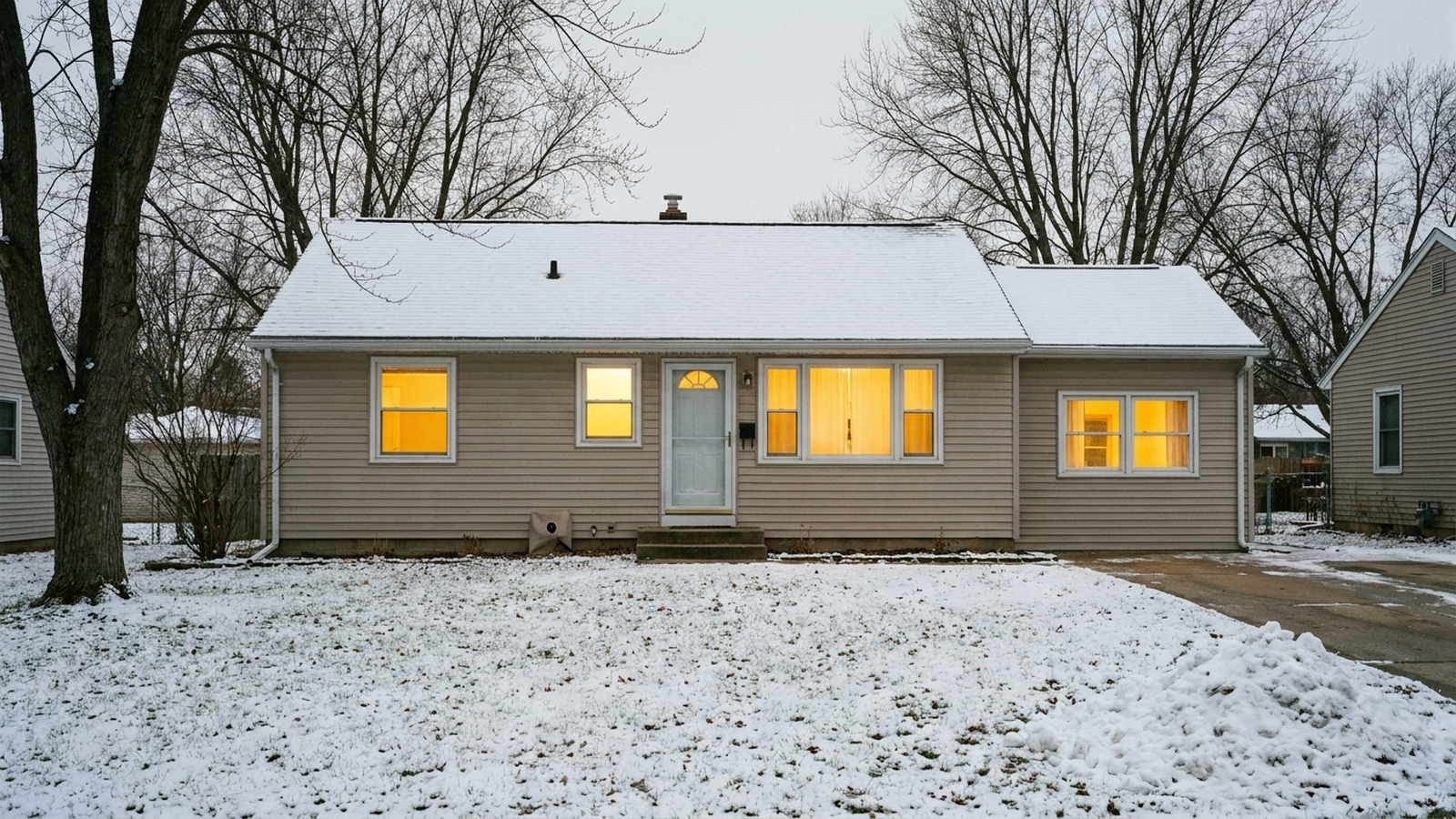
Water damage and freezing account for nearly 23% of all US homeowners insurance losses, and the Insurance Information Institute puts the average water-damage-or-freezing claim at roughly $15,400, according to industry loss data compiled by the III. A first winter in a new house is exactly when this risk is highest: nobody has told you yet where the exposed pipe is, whether the outdoor faucet has ever frozen, or whether the thermostat that came with the house is actually programmed correctly. This guide sorts eight commonly recommended winterizing products into what’s genuinely worth buying for a first-time homeowner, using aggregated Amazon review data, Department of Energy weatherization guidance, and industry insurance-claim statistics — not a personal test of every item.
As an Amazon Associate, Arekore earns from qualifying purchases. The Amazon product links in this article include our affiliate tracking ID and may earn us a commission if you buy through them, at no additional cost to you. See our Links Policy for details on how we select products and how commissions do not influence our recommendations.
TL;DR / Quick Verdict
- Highest priority, lowest cost: a Frost King self-sealing pipe insulation multi-pack (
$5.99) and an Ohuhu outdoor faucet cover 2-pack ($13.99) — together under $20, they address the single most common cause of winter water-damage claims. - Worth it if you have an unreliable hose bib in a hard freeze: the Freeze Miser temperature-activated faucet valve (~$44.99) — a more durable, install-once alternative to foam covers for climates that regularly drop below 20°F.
- Worth it for most first-time owners: an ecobee Smart Thermostat Premium (
$249.99) or Google Nest Learning Thermostat, 4th Gen ($279.99) — DOE and ENERGY STAR data show sealing air leaks alone saves 10–20% on heating bills, and a learning thermostat captures savings without manual scheduling. - Worth it if pipes run through an unheated space: a YoLink Water Leak Detector 4 with freeze-warning (~$29.99–$39.99 per sensor) — the only product here that alerts you before a pipe actually bursts, not after.
- Worth it once, useful for years: Frost King V-Seal weatherstripping (
$8–$12 per door/window) and a True Temper telescoping roof rake ($65–$80) — cheap relative to the cost of a single ice-dam leak or a drafty winter.
How We Reached These Conclusions (Methodology)
This is an editorial analysis, not a hands-on review. We did not personally test the products covered here. This guide synthesizes (a) aggregated amazon.com customer ratings and the substance of both positive and low-star reviews, sampled the week of 2026-09-01; (b) US Department of Energy weatherization guidance and ENERGY STAR smart-thermostat savings data; (c) Insurance Information Institute and State Farm claims data on frozen-pipe losses; (d) manufacturer specifications for temperature-activation thresholds and materials; and (e) independent product-testing summaries where available. Where we cite a manufacturer claim — an activation temperature, an energy-savings percentage, a battery-life estimate — we label it explicitly as a manufacturer claim rather than an independently verified result. Prices as of 2026-09-01 are amazon.com figures and fluctuate.
Why a First Winter Is the Highest-Risk Winter
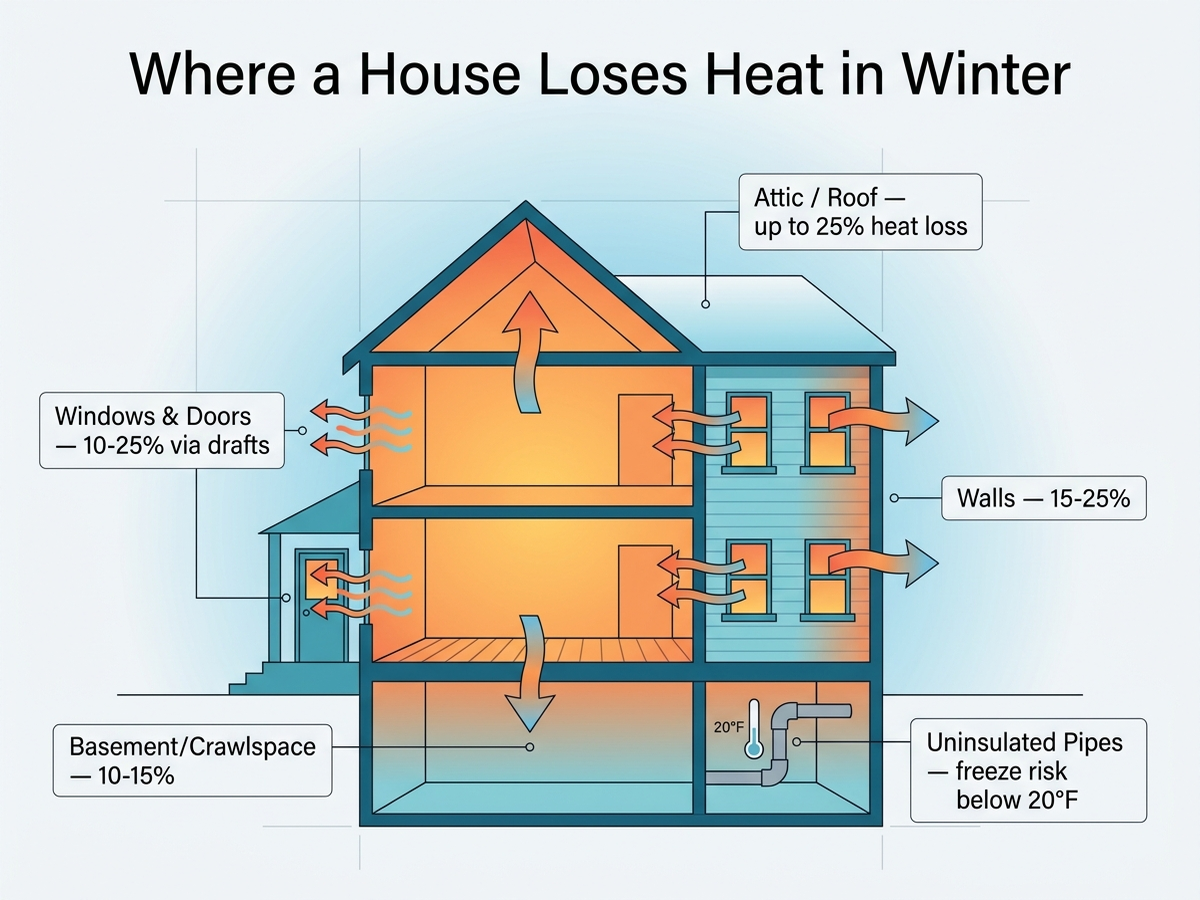
Frozen and burst pipes generate an estimated $1.4 billion in insurance claims every year in the US, making cold-weather plumbing failures one of the costliest categories of homeowner loss behind hurricanes and tornadoes, per industry claims data reported by the Voss Law Firm and corroborated by State Farm’s own recent claims history (more than 20,000 claims and over $628 million in paid losses from 2024 through mid-2025 alone). What makes a first-time homeowner’s first winter statistically riskier isn’t bad luck — it’s information. A previous owner or a renter’s landlord typically already knows which faucet freezes first, which room runs cold, and which pipe runs through an unheated crawlspace. A new owner has to find all of that out, often the hard way, in the first hard freeze. Most standard homeowners insurance policies only cover frozen-pipe damage if the home was “properly maintained and heated” — insurers can and do deny claims when a homeowner failed to take basic preventative steps, which is exactly the gap this guide’s cheapest two items are designed to close.
Comparison Table
Prices as of 2026-09-01 are approximate amazon.com figures and fluctuate.
| Item | ASIN | Approx. price | Category | Verdict |
|---|---|---|---|---|
| Frost King Self-Sealing Pipe Insulation (6-ft) | B001AU09VO | ~$5.99 (multi-pack) | Pipe insulation | Worth it — highest priority |
| Ohuhu Outdoor Faucet Cover, 2-Pack | B0773NHTSX | ~$13.99 | Faucet freeze protection | Worth it — highest priority |
| Freeze Miser Outdoor Faucet Freeze Protection | B01KYDVTVG | ~$44.99 | Faucet freeze valve | Worth it, conditionally |
| Frost King M13WH V-Seal Weather-Strip, 17-ft | B000BQK9XG | ~$9.99 | Door/window weatherstripping | Worth it — cheap, high ROI |
| ecobee Smart Thermostat Premium | B09XXS48P8 | ~$249.99 | Smart thermostat | Worth it — most households |
| Google Nest Learning Thermostat, 4th Gen | B0D5BGST5N | ~$279.99 | Smart thermostat | Worth it, conditionally |
| YoLink Water Leak Detector 4 (freeze warning) | B0CC4JQLV1 | ~$34.99 | Freeze/leak sensor | Worth it — unheated spaces |
| True Temper Telescoping Roof Rake, 17-ft | B0060G4TV4 | ~$76.99 | Snow/ice-dam removal | Worth it, seasonal climates |
1. Pipe Insulation and Faucet Covers — Worth It, Highest Priority
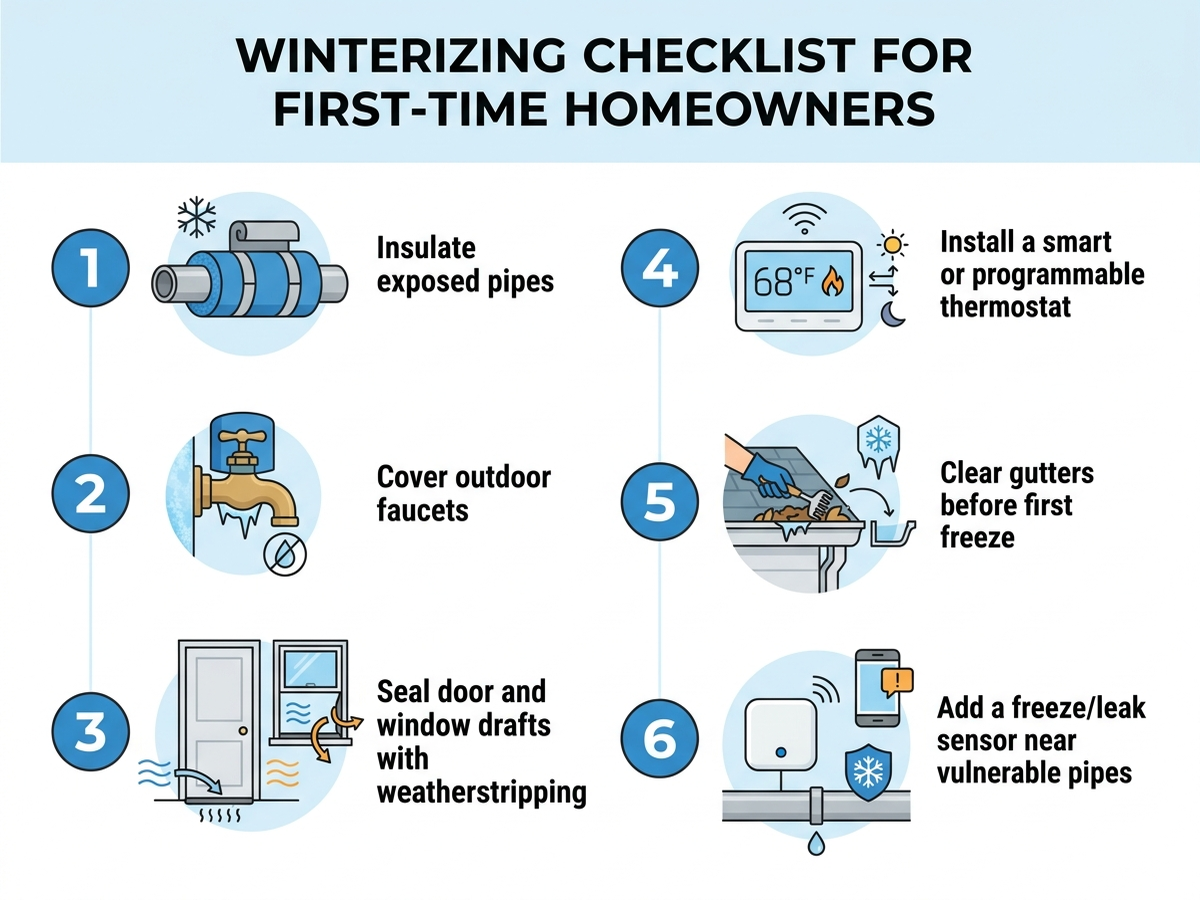
These two items are grouped together because they solve the same problem from opposite ends of the pipe, and together they cost less than a single takeout dinner. Frost King’s self-sealing pre-slit pipe insulation is a foam sleeve that snaps onto exposed copper or PEX pipe in a basement, crawlspace, or garage without tools — aggregated Amazon reviews consistently cite the pre-slit, self-sealing adhesive strip as the reason it installs in minutes rather than requiring tape or glue, which matters for a first-time owner who has never done this before. The Ohuhu outdoor faucet cover is a foam-insulated fabric sock that slips over an exterior hose bib and cinches with a strap; Ohuhu markets it for general sub-freezing and “sub-zero weather” freeze protection without publishing an exact temperature floor, and it’s explicitly designed to be removed and reused season after season rather than replaced annually.
Neither product requires a plumber, a subscription, or ongoing maintenance beyond checking that the cover hasn’t blown loose in high wind — the most common low-star complaint on faucet covers generally, not specific to this brand. Given that a single burst-pipe claim averages north of $15,000, per Insurance Information Institute data, this is the highest-value pairing in the entire guide relative to its combined under-$20 cost.
Check Frost King Self-Sealing Pipe Insulation on Amazon
Check the Ohuhu Outdoor Faucet Cover 2-Pack on Amazon
2. Freeze Miser — Worth It, Conditionally
The Freeze Miser is a different approach to the same faucet-freezing problem: rather than insulating around the faucet, it’s a valve that installs onto the hose bib itself and, per manufacturer specification, opens automatically to slowly drip water when the temperature at the valve drops below 37°F/3°C, relieving the pressure buildup that actually causes a pipe to split. Aggregated reviews frame it as a “install once and forget it” alternative to the annual routine of putting a foam cover on before the first freeze and pulling it off again in spring, at roughly three times the cost of a basic cover. It’s worth the extra cost specifically for climates with sustained hard freezes (regularly below 20°F for days at a time) where a foam cover alone may not be enough, or for a homeowner who knows they’ll forget to re-cover the faucet every year. For milder climates with only occasional overnight freezes, the cheaper Ohuhu-style cover is sufficient and this is an unnecessary upgrade.
Check the Freeze Miser Outdoor Faucet Freeze Protection on Amazon
3. Weatherstripping — Worth It, Cheap and High ROI
The Department of Energy states plainly that sealing uncontrolled air leaks around doors and windows can save 10–20% on a home’s heating and cooling bills, and weatherstripping is the single cheapest way to do it. Frost King’s V-Seal weatherstrip uses a hinged, spring-open V-shaped strip that compresses to fill the gap around a door or sliding window; it’s built with an adhesive rated to bond even in sub-freezing temperatures, which matters because most first-time owners don’t get around to weatherstripping until the cold has already arrived. Consumer Reports has independently tested weatherstripping and window-sealing tape products, and the V-seal design has stayed on the market for decades — a longer track record than some competing tapes, which user reports say have been discontinued or reformulated after UV-related failures in direct sunlight.
At under $10 per door or window, this is one of the lowest-cost, highest-return items in this entire guide — a homeowner sealing three drafty doors and two old windows spends less than $50 total against a 10–20% cut in heating costs for the whole season.
Check Frost King V-Seal Weather-Strip on Amazon
4. Smart Thermostats — Worth It for Most Households
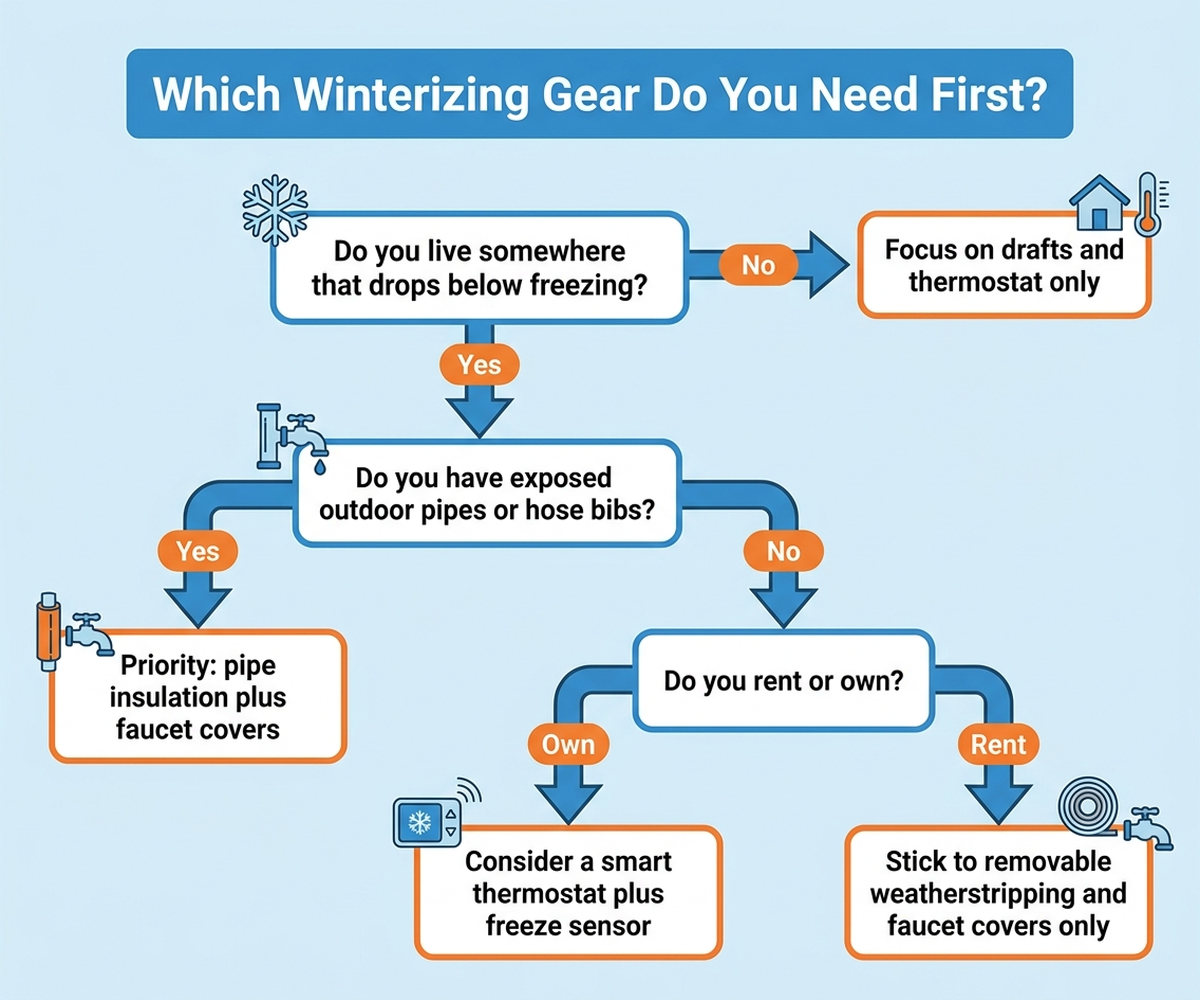
Manufacturer marketing for smart thermostats tends to overstate savings — ecobee has advertised savings up to 26% — but independent ENERGY STAR program data shows a more modest, still meaningful average 8% reduction in combined heating and cooling costs, translating to roughly $50–$100 a year for a typical US home, with the biggest gains going to households upgrading from a manual, never-programmed thermostat rather than one that was already scheduled well. Independent testing and expert reviews in 2026 continue to rank the ecobee Smart Thermostat Premium and the Google Nest Learning Thermostat, 4th Gen, as the category leaders, with ecobee’s built-in remote sensor edging out Nest specifically on measured energy savings in room-by-room comparisons, while Nest’s simpler dial-based scheduling appeals to owners who don’t want to manage a companion sensor. Aggregated Amazon reviews for both products consistently flag geofencing and occupancy-sensing as the features that actually drive savings — a smart thermostat left in a fixed schedule and never adjusted captures little of the advertised benefit over a well-programmed basic model.
At a combined roughly $250–$280, this is the single biggest expense in this guide, and the DOE’s own Weatherization Assistance Program (WAP) data is a useful reality check: low-income households that received a professional, whole-home weatherization retrofit through that federal program saved an average of $372 or more per year, a larger and more thorough intervention than a homeowner’s own DIY weatherstripping — but the direction is the same. The highest-return move for a tight first-year budget is still sealing air leaks and protecting pipes before a thermostat upgrade, not instead of it.
Check the ecobee Smart Thermostat Premium on Amazon
Check the Google Nest Learning Thermostat, 4th Gen, on Amazon
5. YoLink Water Leak Detector 4 — Worth It for Unheated Spaces
Every product covered so far tries to prevent a pipe from freezing in the first place. The YoLink Water Leak Detector 4 is the one item in this guide that assumes prevention might fail anyway, and it’s built specifically for that case: alongside standard leak detection, it includes a low-temperature sensor that sends an app, SMS, or email alert when the temperature at the sensor approaches freezing — giving a homeowner time to run a faucet, add a space heater, or check on a pipe before it actually bursts, rather than discovering the damage after the fact. It connects over YoLink’s own long-range LoRa protocol rather than Wi-Fi, which independent comparisons note is the deciding factor for placement in a basement, crawlspace, or detached garage where household Wi-Fi signal is unreliable — exactly the unheated spaces where a first-time homeowner is least likely to notice a problem developing.
Aggregated reviews rate the battery life (rated by the manufacturer at up to 5 years on standard AAA batteries) and the hub-based long range as the standout features relative to Wi-Fi-only competitors like GoveeLife’s leak detectors, which lack a temperature/freeze-alert function entirely. The tradeoff is a required hub purchase for the first sensor, after which additional sensors are cheaper to add.
Check the YoLink Water Leak Detector 4 on Amazon
6. Roof Rake — Worth It, Seasonal Climates Only
A telescoping roof rake, like the True Temper 17-foot aluminum-handle model, lets a homeowner pull heavy snow off a roof edge from the ground rather than climbing a ladder, and its real purpose is preventing ice dams — a ridge of ice that forms at the roof edge when heat escaping through an under-insulated attic melts snow above and refreezes it at the colder eave, backing water up under shingles and into the ceiling below. This is a genuinely regional recommendation: it’s a near-essential purchase in snow-belt climates (the Northeast, Upper Midwest, mountain West) and an unnecessary purchase for the roughly two-thirds of the US that rarely sees sustained heavy roof snow load. Aggregated reviews consistently praise the telescoping design’s low weight (under 5 lbs) and quick collapse for storage, with the most common low-star complaint being that the poly blade can crack in extreme cold if used too aggressively against ice rather than fresh snow.
Check the True Temper Telescoping Roof Rake on Amazon
Editorial Recommendations by Use Case
- Best first purchase for any first-time homeowner, any climate: Frost King pipe insulation + Ohuhu faucet cover — under $20 combined, addresses the single largest source of winter insurance claims.
- Best for a homeowner in a hard-freeze climate who won’t remember seasonal upkeep: the Freeze Miser — install once, no annual cover routine.
- Best single upgrade for lowering the heating bill: Frost King V-Seal weatherstripping on every exterior door and older window — cheapest item here, DOE-documented 10–20% savings.
- Best smart thermostat for most households: the ecobee Smart Thermostat Premium — independent testing shows a measured edge over Nest via its remote room sensor.
- Best safeguard for a basement, crawlspace, or detached garage: the YoLink Water Leak Detector 4 — the only product that warns before a pipe actually bursts.
- Best purchase to skip if you don’t live in a snow-belt climate: the roof rake — a real ice-dam risk in the Northeast and Upper Midwest, unnecessary in most of the rest of the US.
Limitations of This Analysis
This analysis relies on publicly available Amazon reviews, Department of Energy and ENERGY STAR program data, Insurance Information Institute and State Farm claims statistics, and manufacturer specifications; we did not personally test these products, and individual results depend heavily on a specific home’s insulation quality, climate zone, and how exposed a given pipe or faucet actually is. Temperature-activation thresholds (such as the Freeze Miser’s 37°F trigger point) and battery-life estimates are manufacturer claims, not independently verified in third-party lab conditions. Smart thermostat savings percentages are program averages across many households, not a guarantee for any individual home — a household already using a well-programmed manual thermostat will see meaningfully smaller savings than the averages cited here. Roof-rake and ice-dam risk is heavily climate-dependent and largely irrelevant in regions that don’t see sustained heavy snow load. Prices fluctuate on Amazon listings — confirm the current price on the product page before buying.
The Bottom Line
The two cheapest items in this guide — pipe insulation and a faucet cover, together under $20 — address the same failure mode responsible for an estimated $1.4 billion in annual US insurance claims, which makes them the highest-priority purchase for any first-time homeowner regardless of budget or climate. Weatherstripping is close behind on return relative to cost. The bigger-ticket items — a smart thermostat, a leak sensor, a roof rake — are all genuinely worth it, but for more specific situations: a household that wants ongoing energy savings, a home with an unheated crawlspace, or a homeowner in a heavy-snow region. Whichever gear you’re weighing, confirm the exact current price and version before checkout — and if you want a second opinion on a specific listing, paste the URL into Arekore and let the AI scan the reviews and price history for you in about five minutes.