Anti-Fatigue Mats vs. Compression Socks: 2026 Guide
TL;DR
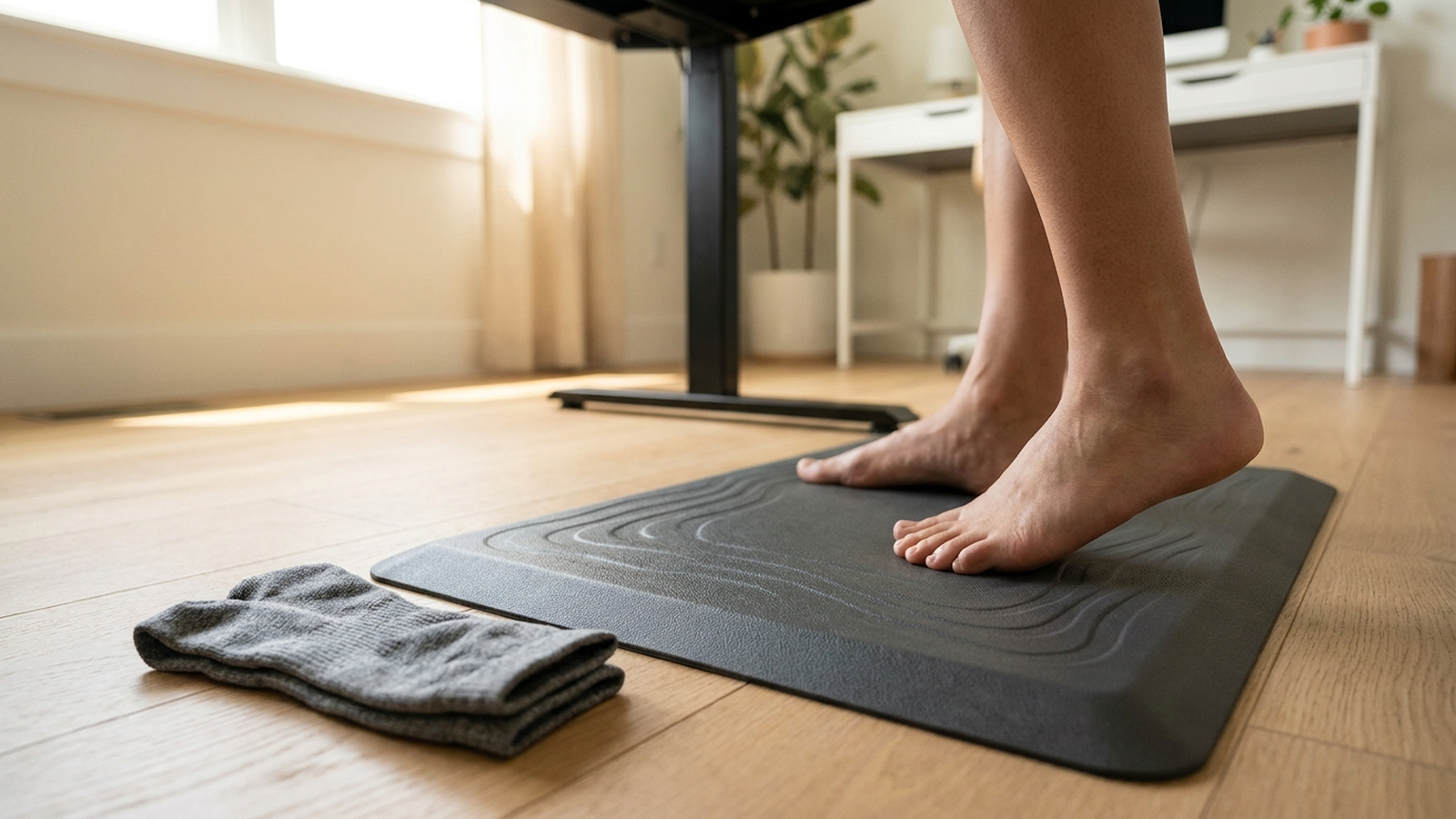
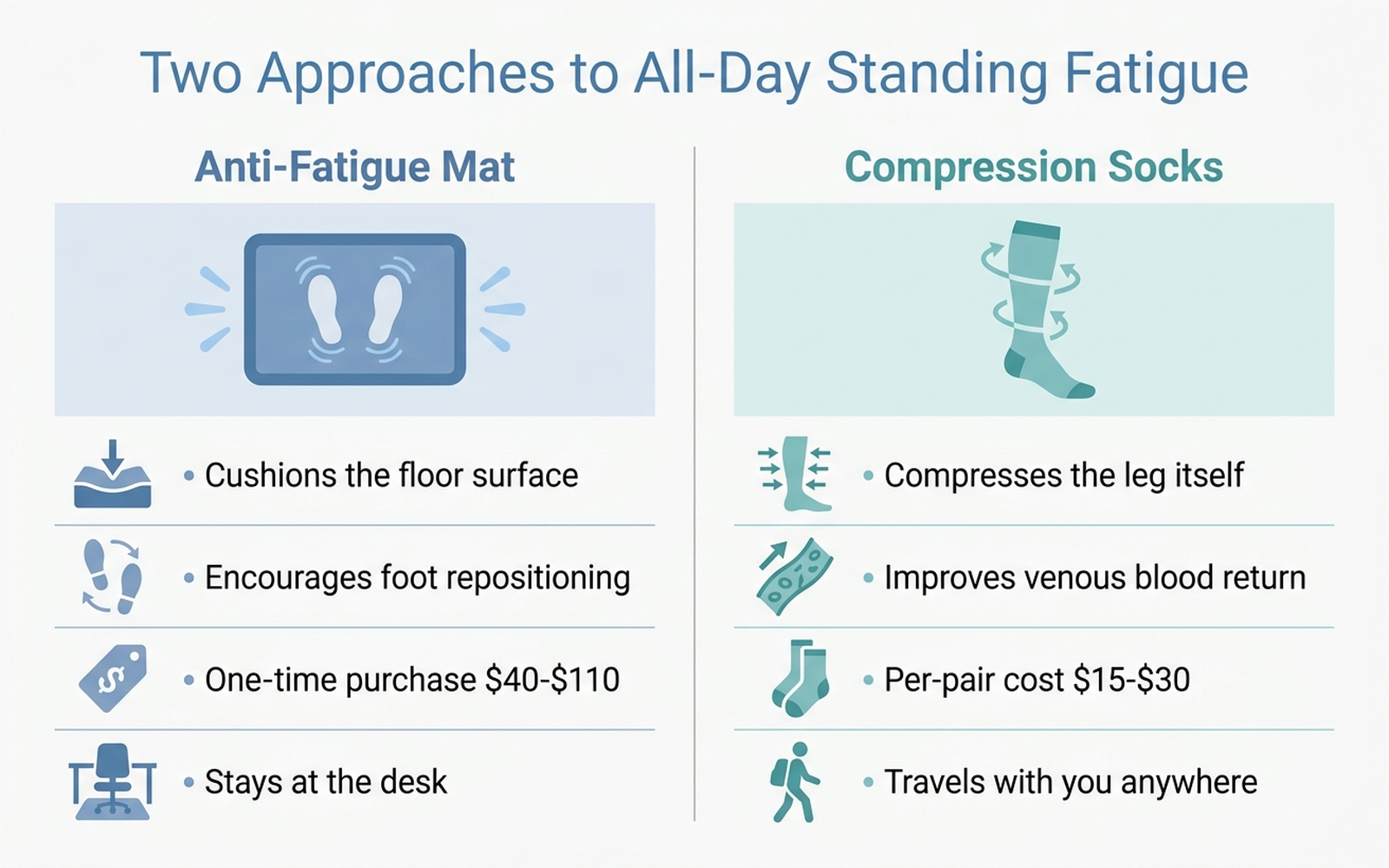
Anti-fatigue mats and compression socks solve two different problems, not the same one. A mat cushions the floor and encourages you to shift your stance; graduated compression socks (15-20 mmHg) squeeze the leg itself to push blood back toward the heart. Peer-reviewed research on prolonged standing work shows compression measurably reduces leg swelling and fatigue, while mat reviews are driven almost entirely by comfort perception rather than clinical data. Most people who stand more than four hours a day get the best results using both together.
Methodology
This analysis synthesizes (a) a peer-reviewed physiological study comparing graduated compression stockings to regular socks during prolonged standing work, published in Human Factors (2023) and indexed on PubMed, (b) Wirecutter’s long-running anti-fatigue mat testing program, which has recommended the Ergodriven Topo since 2016, (c) aggregated Amazon US customer review sentiment across four best-selling products (sample sizes noted per product below), and (d) manufacturer specifications and market-size data from Grand View Research and The Business Research Company. We did not personally test the products covered here.
Two Different Mechanisms, Not Competing Products
The confusion between these two categories comes from the fact that both are marketed as “leg fatigue” solutions. Mechanically, they do different jobs.
An anti-fatigue mat works from the outside in. Standing on a hard, flat surface for hours locks your posture and restricts the small postural muscle contractions that keep blood moving in your legs. A cushioned or textured mat surface — especially one with a raised terrain pattern like the Ergodriven Topo — subtly destabilizes your footing just enough to prompt you to shift weight and reposition your feet, which keeps those muscles active.
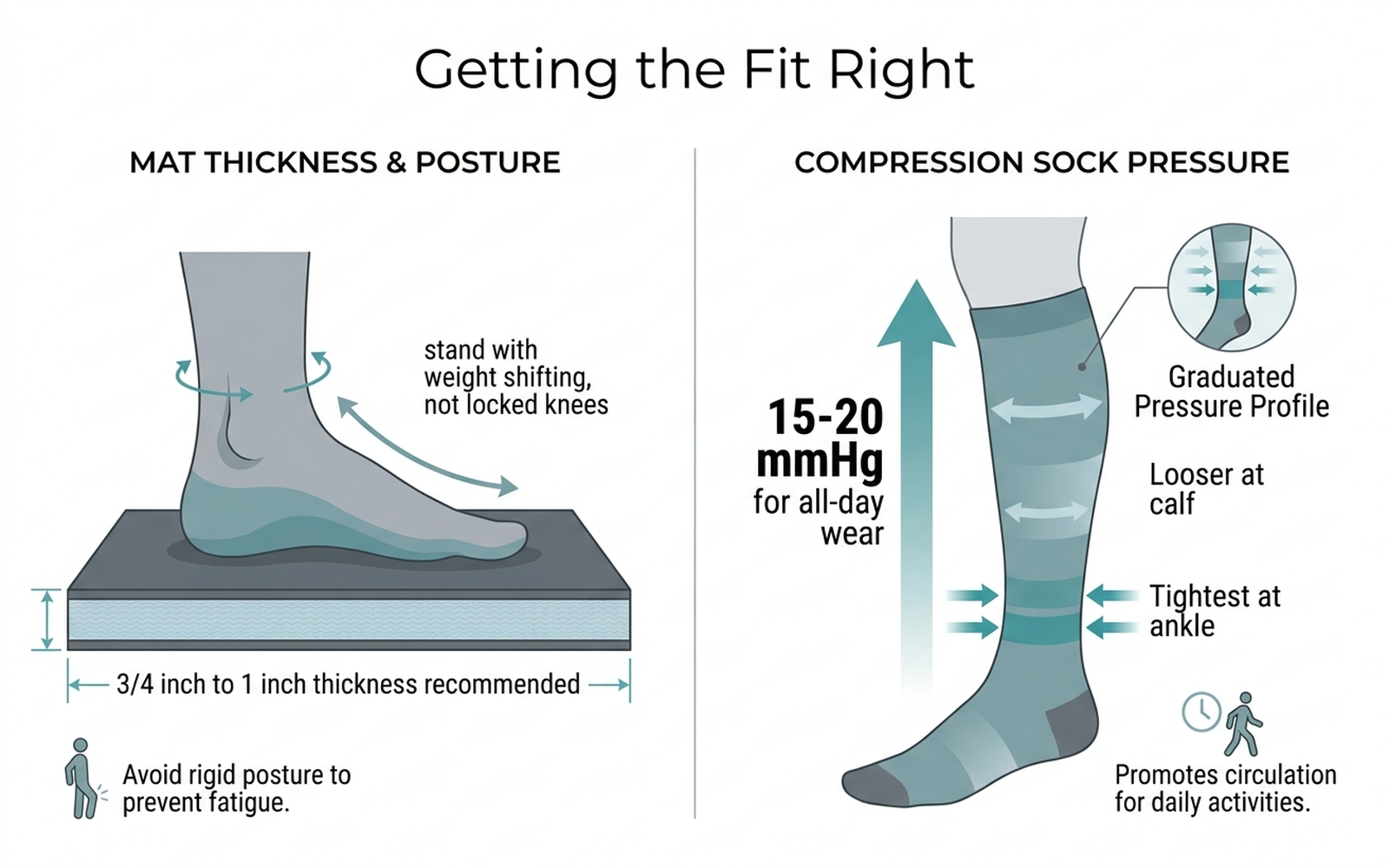
Compression socks work from the inside out. A graduated compression garment is tightest at the ankle and progressively looser up the calf, which mechanically assists venous return — the process of blood flowing back up the leg against gravity. A 2023 study published in Human Factors (Garcia et al., also indexed on PubMed) measured lower-leg fatigue, edema, and discomfort in 40 male security guards on 12-hour standing shifts, comparing 15-20 mmHg and 20-30 mmHg compression stockings against regular socks. Both compression levels showed a statistically significant reduction in fatigue, swelling, and discomfort compared to regular socks, with knee-length graduated stockings measurably reducing evening leg swelling relative to regular socks after a day of standing work.
That is a meaningfully different evidence base. The compression sock benefit is measured physiologically. The mat benefit, while real for comfort, is documented mostly through independent product testing (Wirecutter’s own multi-month mat trials) and aggregated customer sentiment rather than clinical trial data — a distinction worth being upfront about.
Comparison Table
| Product | Category | Price (at time of writing) | Key spec | Amazon rating |
|---|---|---|---|---|
| Ergodriven Topo | Anti-fatigue mat | ~$109 | 1” molded PU foam, calculated terrain, 16-year warranty | 4.7 (~6,000 ratings) |
| ComfiLife Anti-Fatigue Mat | Anti-fatigue mat | ~$40-45 | 3/4” high-density foam, 20”x32”, lifetime warranty | 4.6 (tens of thousands of ratings) |
| SB SOX Compression Socks | Compression socks | ~$16-20/pair | 20-30 mmHg graduated compression | 4.5 |
| CHARMKING Compression Socks (3-pair) | Compression socks | ~$15-19 for 3 pairs | 15-20 mmHg graduated compression | 4.5 |
Manufacturer-stated compression levels (mmHg) and warranty terms are manufacturer claims, not independently verified.
Customer Sentiment Synthesis
Aggregated Amazon customer review sentiment across the compression socks category — which asinsight.com’s Amazon-data tracking places at over 2,700 competing ASINs — shows most listed products clustering in the 4.3-4.7 star range, with the $10-$20 price band accounting for the largest share of listings (over half of all ASINs in the category). Reviewers of graduated compression socks in the 15-20 mmHg range frequently cite reduced “heavy leg” feeling by end of shift, consistent with the physiological literature above. A common complaint in lower-quality listings is the top band rolling down or cutting off circulation when sized incorrectly, which is a fit issue rather than a mechanism failure — compression socks are sized by calf circumference, not just shoe size.
For anti-fatigue mats, the Ergodriven Topo’s near-6,000-rating base skews heavily toward comfort and durability comments, with the “calculated terrain” texture cited as the differentiator over flat foam competitors. Flat budget mats like ComfiLife draw praise for price-to-thickness ratio but more frequent complaints about edge curling after several months of daily standing-desk use.
Editorial Recommendation by Use Case
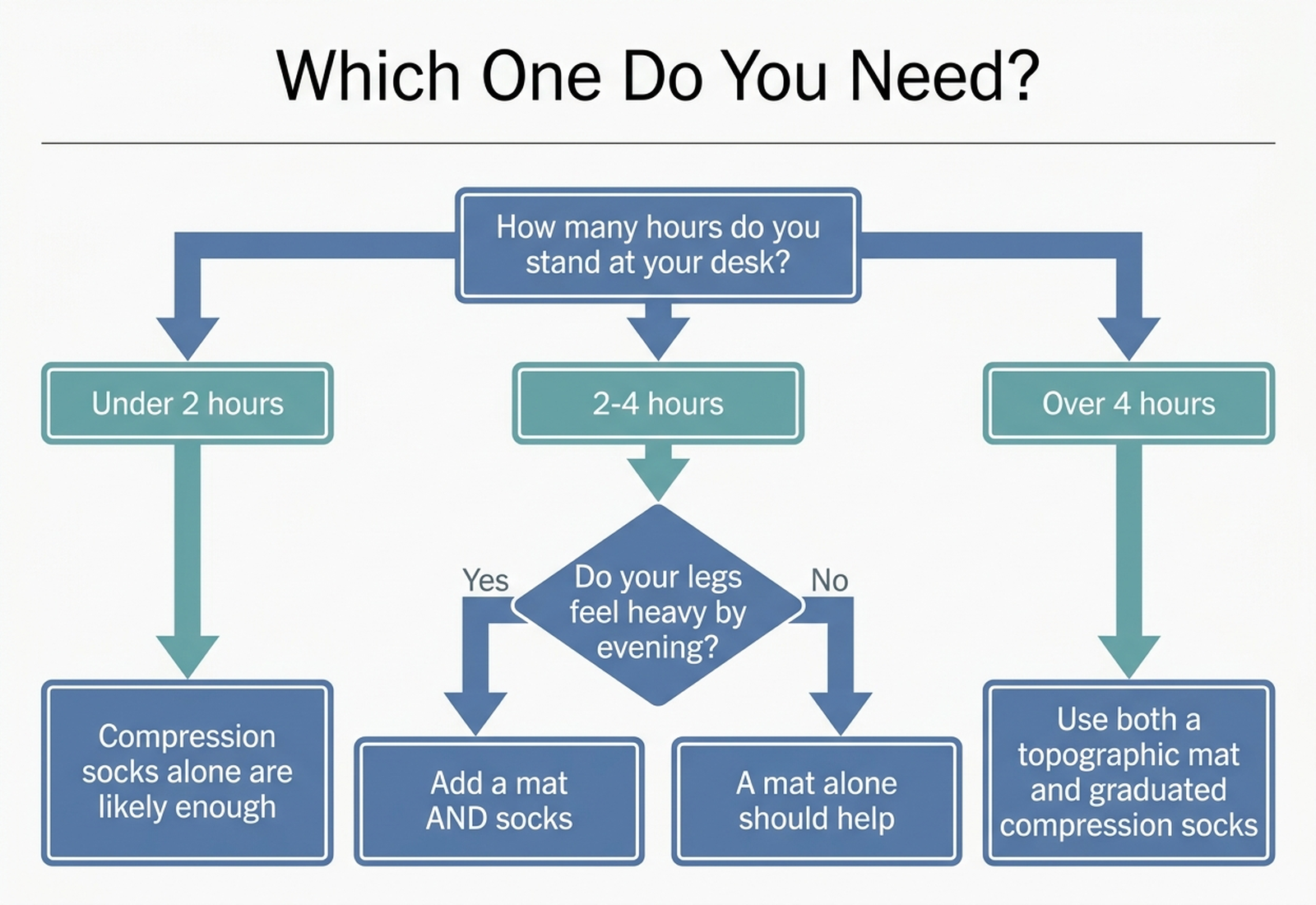
- Best for standing 1-3 hours/day (occasional standing desk use): Compression socks alone. The evidence for mats’ benefit scales with total standing time, and at low daily durations the postural-shift argument for a mat matters less.
- Best for standing 4+ hours/day: Both together. This is where the compression research shows the largest measured swelling reduction, and where mat reviewers most consistently report needing a textured surface rather than a flat one.
- Best for renters or shared/multi-desk offices: Compression socks. They travel with the person rather than staying tied to one physical desk, and per-pair cost ($15-$30) is a fraction of a premium mat.
- Best for a dedicated home office setup: The Ergodriven Topo. At $109 it is the highest one-time cost in this comparison, but the 16-year warranty and Wirecutter’s repeated multi-year retest results suggest it holds up under daily use better than flat foam mats.
- Best budget entry point: ComfiLife mat plus a multi-pack of 15-20 mmHg compression socks. Combined cost lands well under $70 for both categories.
Limitations
This analysis relies on publicly available peer-reviewed research, third-party product testing, and aggregated Amazon customer reviews rather than original clinical testing or hands-on product trials by our editorial team. The compression sock study referenced above measured a single-sex sample of 40 male security guards on 12-hour shifts; results may vary for other occupations, body types, or pre-existing circulatory conditions, and anyone with diagnosed vascular issues should consult a physician before using graduated compression socks. Individual mat comfort is highly subjective and can vary by flooring type, footwear, and body weight. Manufacturer compression-level (mmHg) and warranty claims have not been independently lab-verified.
Links Policy
As an Amazon Associate, Arekore earns from qualifying purchases. The Amazon product links in this article may include our affiliate tracking ID and may earn us a commission if you buy through them, at no additional cost to you. See our Links Policy for details on how we select products and how commissions do not influence our recommendations.
Verify Before You Buy
Prices, ratings, and availability change constantly on Amazon. Before purchasing any product mentioned here, visit Arekore to check current pricing and cross-reference the latest customer reviews yourself.