How to Clean a Cordless Vacuum Filter Without Damaging It
TL;DR
Most cordless vacuum filters just need cold water, no soap, and a full 24–48 hours of air-drying — the two mistakes that actually damage filters are using hot water or detergent (which can warp the pleats) and reinstalling a filter that’s still even slightly damp (which can short the motor). Manufacturers recommend tapping out loose dust every few uses and doing a full rinse every 4–6 weeks for most brands, more often with pets or heavy carpet use. A clogged filter is one of the most common causes of a cordless vacuum “losing suction” even when the motor sounds completely normal.
Methodology
This analysis synthesizes official filter-care instructions published by Dyson, Shark, Tineco, and Bissell for their current cordless stick vacuum lines, a peer-reviewed 2024 lab study from Aerosol and Air Quality Research that tested filter performance across six cordless handheld vacuum models, and RTINGS.com’s published cordless-vacuum test-bench methodology. We also reviewed aggregated Amazon customer Q&A and forum discussion describing suction-loss complaints tied to filter maintenance, and current Amazon replacement-filter listings to compare availability and pricing by brand. We did not run a controlled side-by-side filter-aging test ourselves; this is an editorial synthesis of publicly available manufacturer and third-party data, not first-hand testing.
Why a Dirty Filter Kills Suction Before the Motor Does
A cordless vacuum’s filter sits between the dust cup and the motor, catching the fine particles the cyclone or dustbin doesn’t trap before air gets pulled through. As that filter media loads up with dust, it chokes the airflow the motor is trying to move — the motor itself keeps spinning at full speed, which is why a vacuum with a clogged filter often sounds completely normal even as suction drops noticeably across every attachment and surface.
A 2024 peer-reviewed study published in Aerosol and Air Quality Research tested six cordless handheld vacuum models under controlled lab conditions and found that as dust load on the filter media increased, both airflow rate and the rate at which airflow held up over time declined measurably. The same study found that filter cartridges that didn’t seal tightly against the vacuum housing let more fine particulate matter leak past the filter as dust accumulated — a reminder that a poorly reseated filter isn’t just a suction problem, it can also let allergens back into the room you just cleaned.
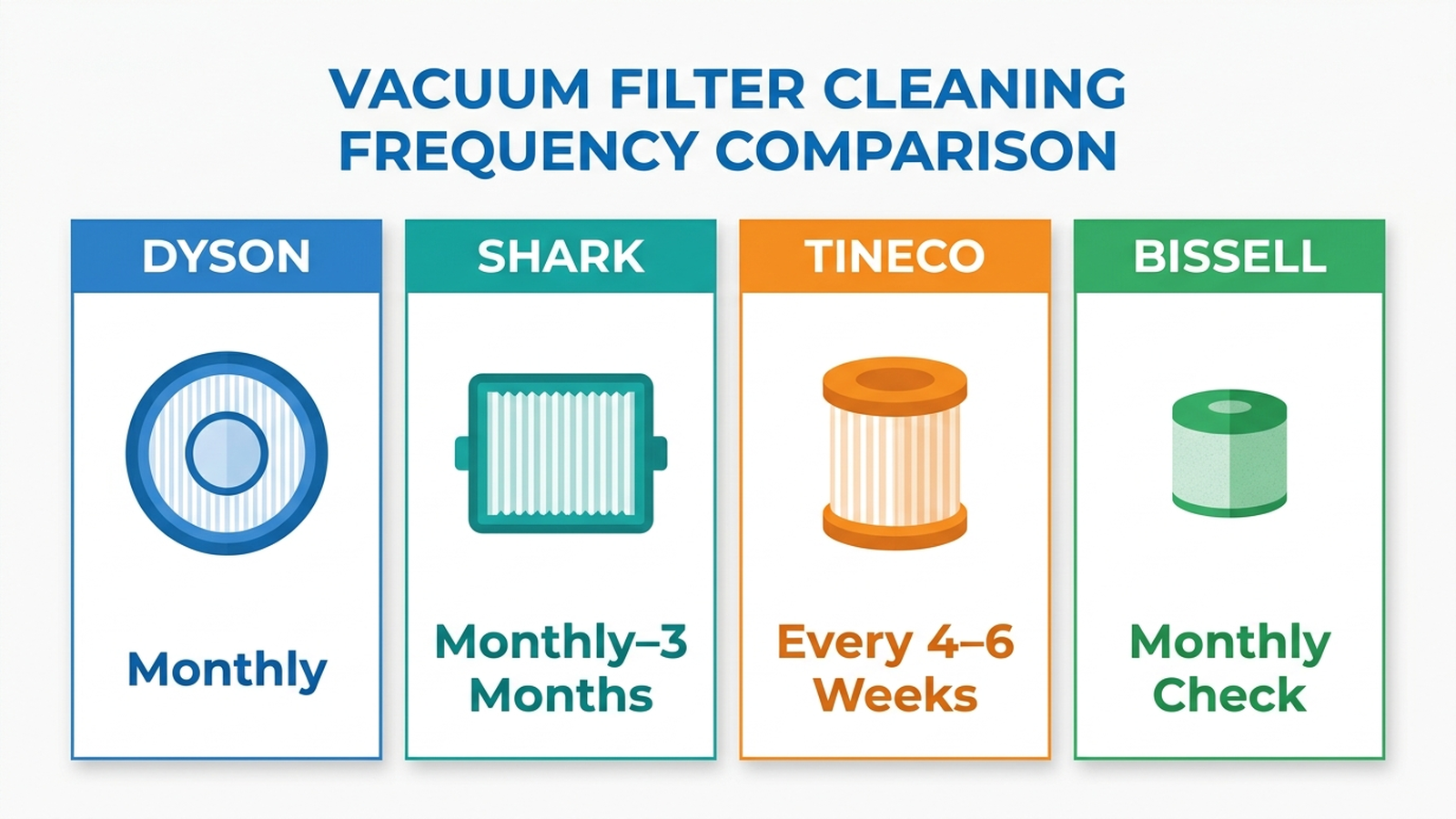
Manufacturer guidance across brands converges on a similar cadence: Dyson recommends washing its filters at least once a month to maintain suction power. Shark recommends cleaning washable filters monthly for typical households, more often with pets or heavy carpet traffic, and replacing washable filters every 3–6 months. Tineco recommends a full filter clean every 4–6 weeks. Bissell recommends checking filters monthly and washing or replacing every 3–6 months, tightening to every 2–4 weeks for pet owners or high-traffic homes.
The Cleaning Process (and Where People Go Wrong)
The core steps are nearly identical across brands, but the details that get skipped are exactly what damages a filter or the vacuum’s motor:
- Turn off and remove the battery or unplug the dock first. Every manufacturer’s instructions lead with this; cleaning a filter on a vacuum that can still power on is an avoidable way to get hurt or trigger the motor while the filter housing is open.
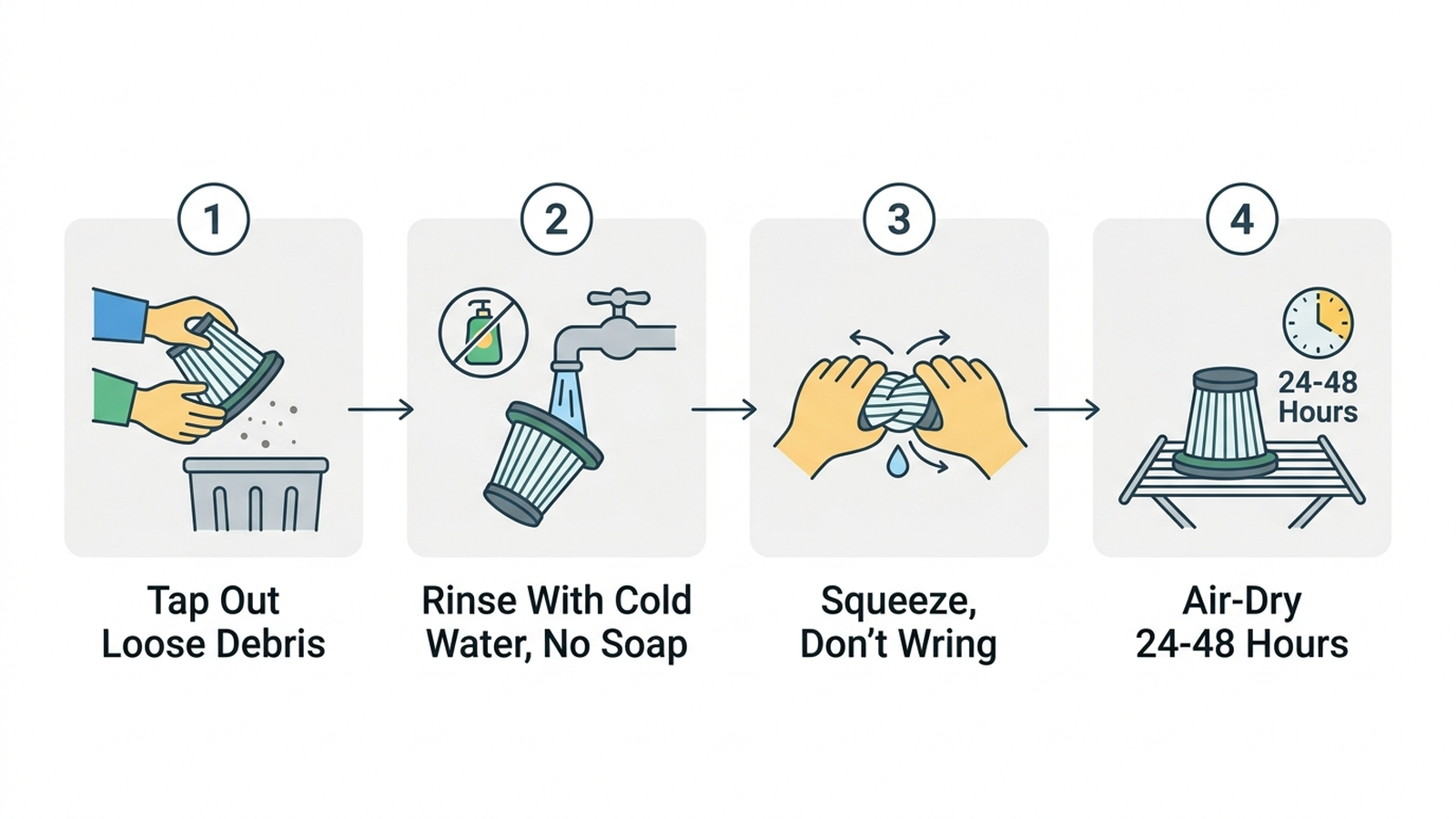
- Tap out loose debris before you touch water. Hold the filter over a trash can and tap it firmly several times. This alone removes a surprising amount of dust and means less debris to rinse out later.
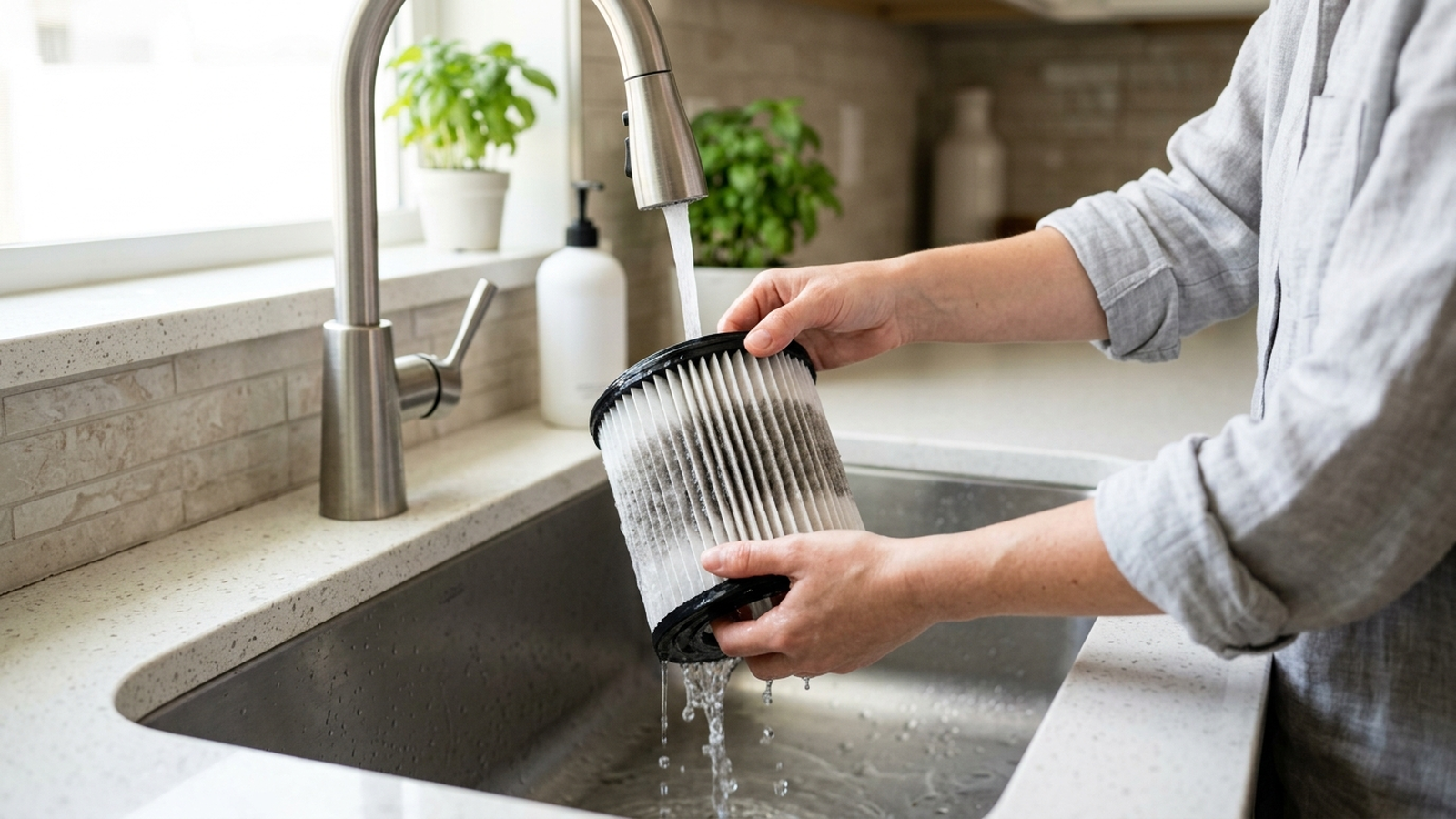
- Rinse with cold or lukewarm water only — never hot, never soap. Dyson is explicit that detergents should never touch the filter. Hot water and soap residue can degrade the pleated media over repeated washes and, in HEPA-style filters, can compromise the fine filtration layer. Run water through until it comes out clear.
- Squeeze, don’t wring. Pressing water out by hand is fine; twisting or wringing the pleats like a towel can permanently deform a foam or felt filter.
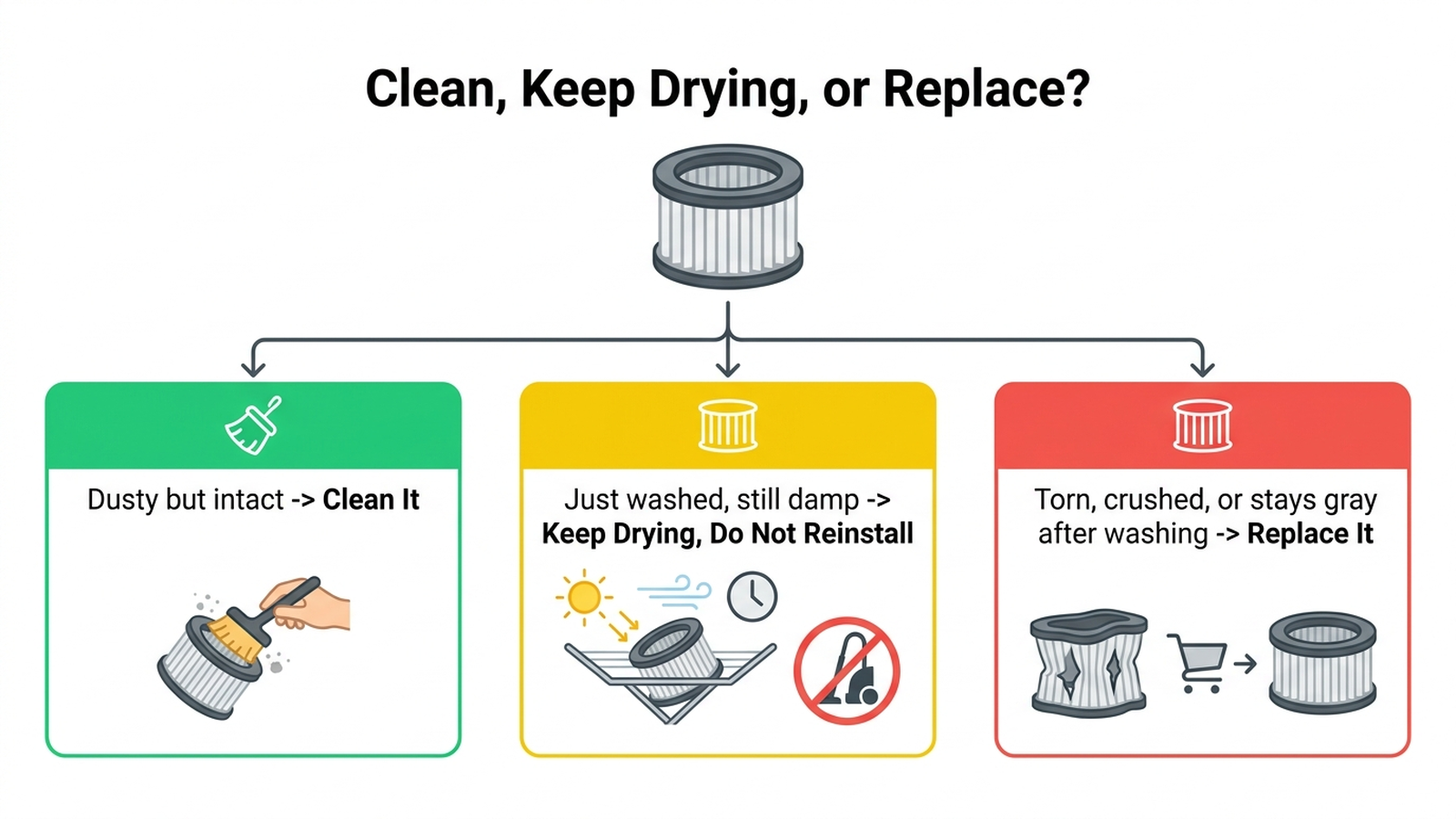
- Air-dry for a full 24–48 hours before reinstalling — no exceptions. This is the step most people shortcut, and it’s the one with the highest cost if you get it wrong. A damp filter let back into the vacuum means the motor pulls moisture through itself on the next use, which can cause immediate motor failure that most warranties won’t cover because it’s user-caused. Never use a hairdryer, oven, microwave, radiator, or direct sunlight to speed up drying — heat can warp pleated filter material.
- Never put a vacuum filter in the washing machine or dishwasher. None of the four brands in this analysis approve either method for any current cordless model; both can deform the filter frame or leave detergent residue the manufacturers explicitly warn against.
- Check for damage before reinstalling. Permanent discoloration that doesn’t rinse out, tears, crushed pleats, or a HEPA filter that stays visibly gray after a proper wash all mean it’s time to replace rather than reinstall — a damaged HEPA-style filter can let allergens pass straight through to the exhaust air.
Cleaning and Replacement Schedule by Brand
Prices as of 2026-10-11. Figures below are manufacturer-published guidance, not independently measured by Arekore.
| Brand | Recommended clean frequency | Washable? | Replace washable filter | Approx. replacement filter price |
|---|---|---|---|---|
| Dyson (V-series) | At least monthly | Yes (most pre-motor filters) | Per manufacturer wear inspection | ~$15–$25 |
| Shark (ION/Stratos/PowerDetect) | Monthly, up to every 3 months | Yes | Every 3–6 months; HEPA every 6–12 months | ~$12–$20 |
| Tineco (A-series/Pure ONE) | Every 4–6 weeks | Yes | Every 3–6 months | ~$15–$25 |
| Bissell (Featherweight/ICONpet) | Check monthly | Yes | Every 3–6 months (every 2–4 weeks with pets) | ~$10–$18 |
Editorial Recommendation by Use Case
- If you have pets or heavy carpet traffic: clean the filter every 2–4 weeks rather than waiting for the brand’s standard interval — every manufacturer in this comparison shortens its own recommendation for pet households, and a dust-loaded filter is one of the most common root causes behind “my vacuum suddenly has no suction” complaints.
- If your filter still looks gray or discolored after a proper rinse: stop trying to extend its life and replace it. A HEPA-style filter that won’t come clean is a filtration failure, not just a cosmetic one.
- If you’re not sure when you last cleaned it: check it now. Several brands’ own support pages note that users frequently mistake a clogged filter for a dead motor or dying battery — a wash-and-dry cycle costs nothing and rules out the most common cause first.
- If you just washed a filter and need the vacuum today: don’t reinstall it wet. Buy or keep a spare filter on hand (most brands sell 2–3 packs) so one can dry fully while the other stays in service.
Limitations
This analysis relies on manufacturer-published care instructions, a single peer-reviewed lab study covering six handheld models, and aggregated customer-support and marketplace data rather than a controlled side-by-side filter-aging test Arekore ran itself. Actual filter lifespan and clog rate vary significantly based on home dust levels, pet hair volume, carpet versus hard floor use, and how consistently the cleaning schedule above is followed. Replacement filter pricing on Amazon changes frequently and third-party sellers rotate in and out of stock, so treat the price ranges above as directional rather than current-to-the-minute. Market-research estimates put the U.S. cordless vacuum cleaner market at roughly $2.8–2.9 billion in 2025 — a scale note on how widely this maintenance issue applies, not a claim about any individual product’s performance.
As an Amazon Associate, Arekore earns from qualifying purchases. The Amazon product links in this article include our affiliate tracking ID and may earn us a commission if you buy through them, at no additional cost to you. See our Links Policy for details on how we select products and how commissions do not influence our recommendations.
Replacement Filters We Found on Amazon
- Dyson Genuine OEM Filter for V11 Animal/TorqueDrive/Absolute, V15 Detect (part 970013-02)
- Genuine Dyson SV22 Filter Unit for V15 Detect Animal Cordless Stick Vacuum
- Shark IP1251/IP3251 PowerDetect Filter Replacement Kit with cleaning brush
- Tineco Filter Replacement Kit (2 pre-filters + 1 HEPA) for A10/A11/S10/S11 series
- Replacement filter for Bissell Featherweight 2024F/Pro/2024N cordless stick vacuum
Before buying a replacement filter, check the exact model number on your vacuum — brands reuse body designs across sub-models with different filter shapes, and Arekore recommends confirming fit on the product listing before purchasing.