Best Video Doorbells in 2026: Ring vs. Nest vs. Eufy
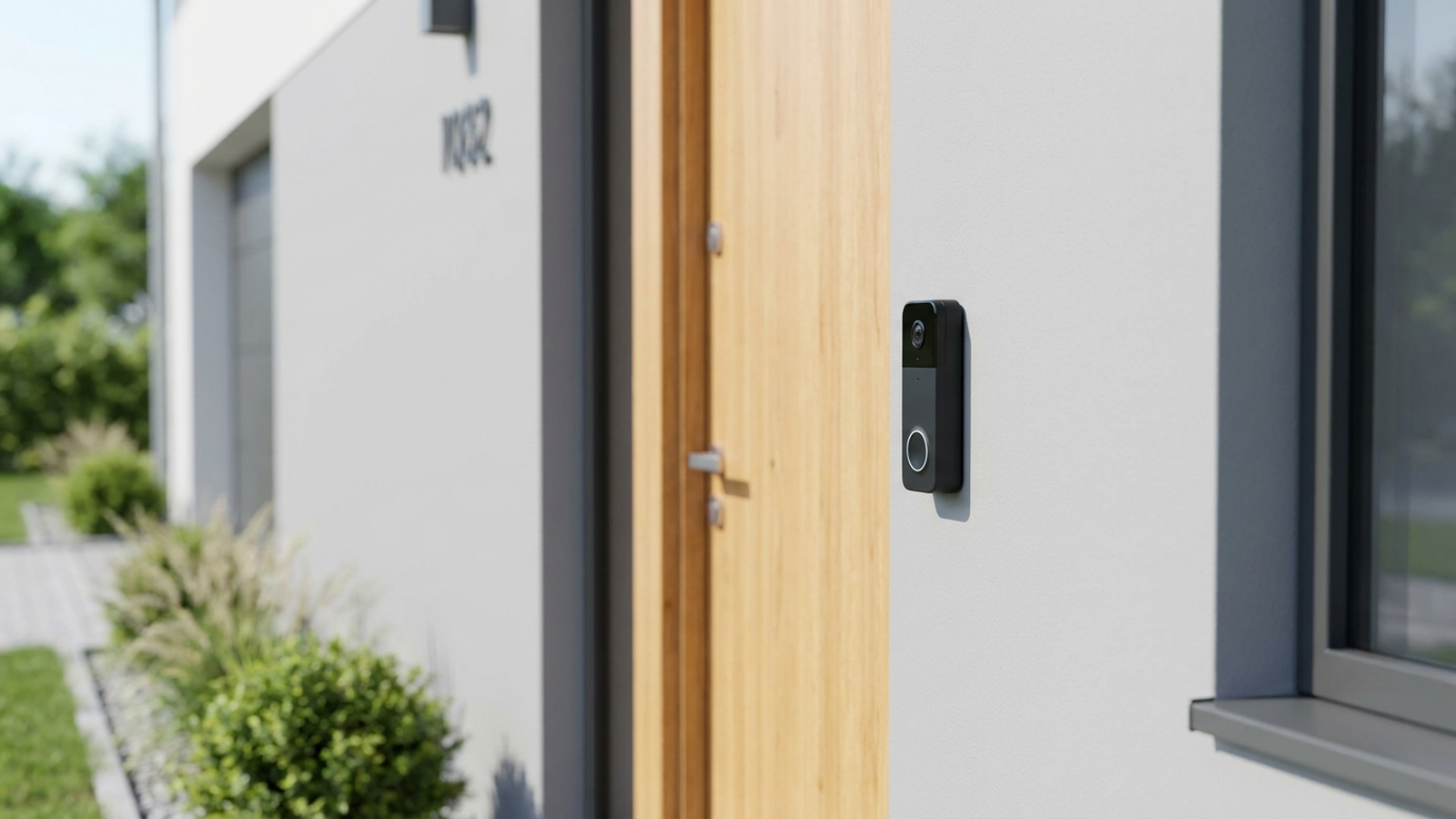
TL;DR / Quick Verdict
- Best overall: Google Nest Doorbell (Wired, 3rd Gen) — the only major brand offering on-device person/package/vehicle detection with no subscription required, plus what reviewers consider the most accurate motion detection in the category.
- Best for renters or no-wiring homes: Ring Battery Doorbell Plus — easiest install, strong daytime video, but full features require a Ring Protect subscription.
- Best for zero monthly fees: Eufy Security Video Doorbell E340 — local storage on the doorbell or a HomeBase hub, no cloud account required, dual cameras that catch packages a single-lens doorbell misses.
Methodology
This analysis synthesizes (a) aggregated Amazon US customer reviews for the current-generation Ring, Google Nest, and Eufy video doorbell lines, (b) independent test coverage from Consumer Reports, Tom’s Guide, and Wirecutter, and (c) manufacturer-published specifications for video resolution, field of view, and battery life. We did not personally test the products covered here. Consumer Reports states it evaluated 14 video doorbell models across motion-alert speed, live-feed loading time, video quality, smart-feature accuracy, and roughly 70 data-privacy and security factors; where we cite a lab result, it traces back to that testing program or to Tom’s Guide’s hands-on reviews, not to our own use.
Technical Approach: Three Different Bets on Detection
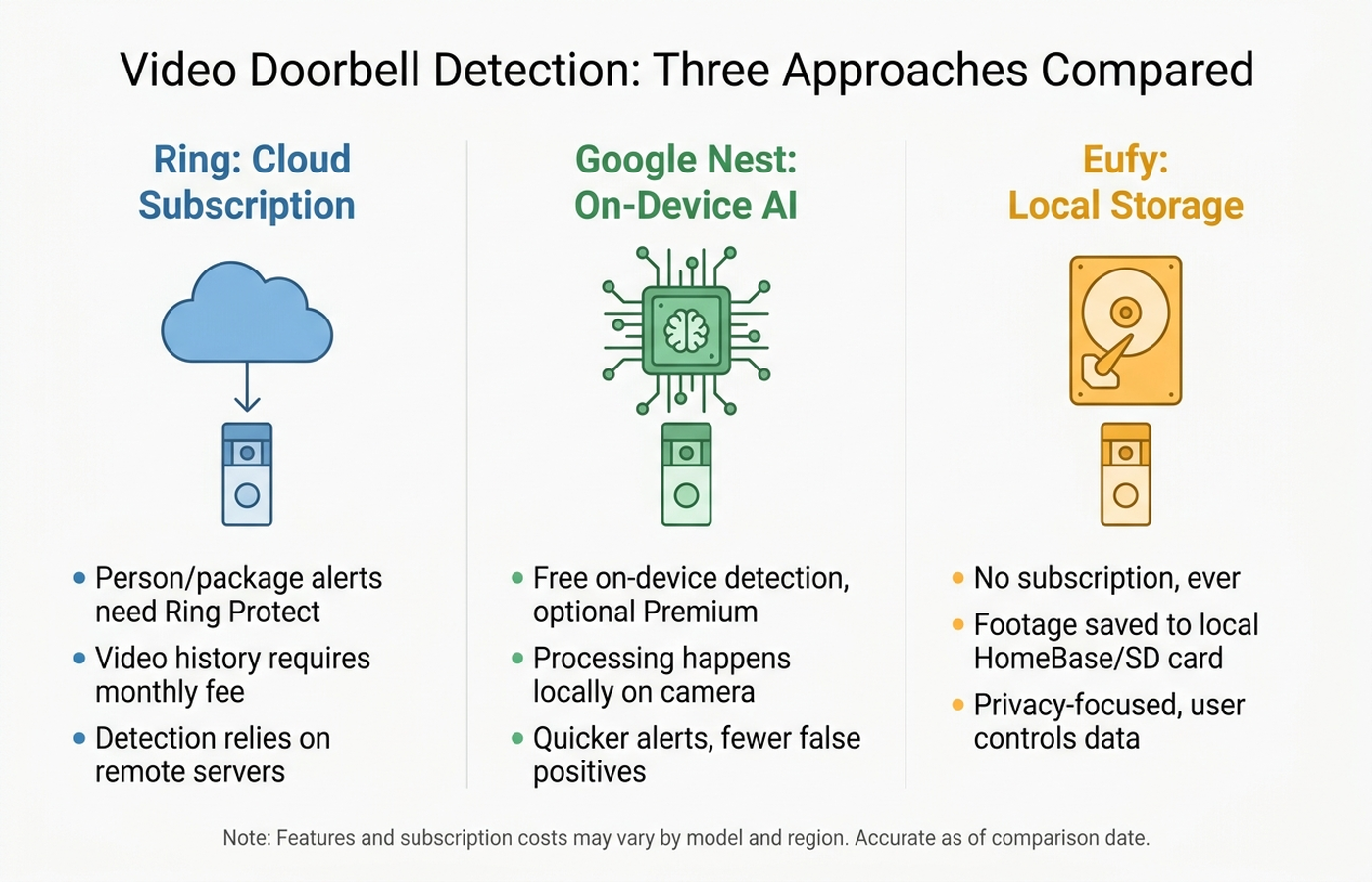
Video doorbells solve the same problem — tell you who’s at the door without making you monitor a live feed all day — but the three leading brands have converged on different architectures:
- Ring (cloud-first, subscription-gated features): Ring’s doorbells ship with basic motion alerts for free, but person detection, package alerts, and video history beyond a live view require a Ring Protect plan ($4.99/month per device or $9.99/month for the whole home). The Ring Battery Doorbell Plus uses Head-to-Toe video framing, and the top-tier Ring Wired Doorbell Pro adds 4K capture and radar-based 3D motion detection that Consumer Reports and other testers credit with pushing false alerts from passing cars close to zero.
- Google Nest (on-device AI, subscription optional): Google’s differentiator is that person, package, animal, and vehicle detection run as on-device machine learning, not a cloud subscription feature. Tom’s Guide has called the wired Nest Doorbell “the best video doorbell you can get,” specifically because Google is “the only one that offers video storage and person and package detection without having to pay for a subscription” — free tier includes three hours of rolling event-based cloud storage. A Google Home Premium plan ($10/month) extends storage to 30 days and adds Gemini-powered natural-language video search.
- Eufy (local storage, no subscription by design): Eufy’s entire value proposition is that video never needs to leave your house. Footage records to on-device storage (8–16GB depending on model) or to an optional HomeBase hub, with no cloud account required to view or export clips. The tradeoff, per Tom’s Guide, is that Eufy’s AI detection is a step behind Ring and Nest’s cloud-assisted models — you get privacy and zero recurring cost, not the most sophisticated alerts.
Manufacturer Deep Dive
Ring
Ring’s current US lineup spans roughly $50 (basic wired doorbell) to $230 (Ring Wired Doorbell Pro, 4K). The mid-tier Ring Battery Doorbell Plus is Tom’s Guide’s pick for “best for most people,” citing comfortable 2K+ daytime video and Head-to-Toe framing that captures a visitor from head to feet rather than a cropped close-up. Its main limitation, per the same review, is weaker night-time video and package-detection reliability that some verified purchasers flag as inconsistent. The flagship Ring Wired Doorbell Pro adds true 4K capture with 10x enhanced zoom and radar-based 3D motion detection, which independent testing credits with sharply reducing false alerts triggered by cars or foliage.
Google Nest
Google sells two current-generation doorbells: a battery model and a wired model, both running the same on-device detection stack. The Nest Doorbell (Wired, 3rd Gen) captures 2K HDR video at a 166-degree field of view and is Wirecutter and Tom’s Guide’s consensus top pick for 2026, largely because free-tier detection (person, package, vehicle, animal) doesn’t require a subscription — a rarity in this category. The tradeoff is ecosystem lock-in: Nest doorbells integrate with the Google Home app and Google Assistant/Gemini, not Apple HomeKit or Alexa routines beyond basic notifications. The older battery-powered 2nd-gen model remains on sale and is a reasonable pick for renters who can’t run new doorbell wiring.
Eufy
Eufy’s Security Video Doorbell E340 is the brand’s volume seller: dual cameras (one forward-facing, one angled down at the porch) designed specifically to catch packages that single-lens doorbells miss, 2K FHD resolution, color night vision, and 8GB of built-in storage with no subscription. Consumer Reports rates Eufy’s wired S330 model strongly on video quality, data security, and response time. For buyers who want to skip battery charging entirely and don’t mind running new wiring, Eufy’s wired doorbell line (no monthly fees, 16–24 VAC hardwired) is the most price-accessible no-subscription option in this comparison at roughly $100–$110.
How to Choose: Battery vs. Wired, and Which Detection Model Fits Your Door
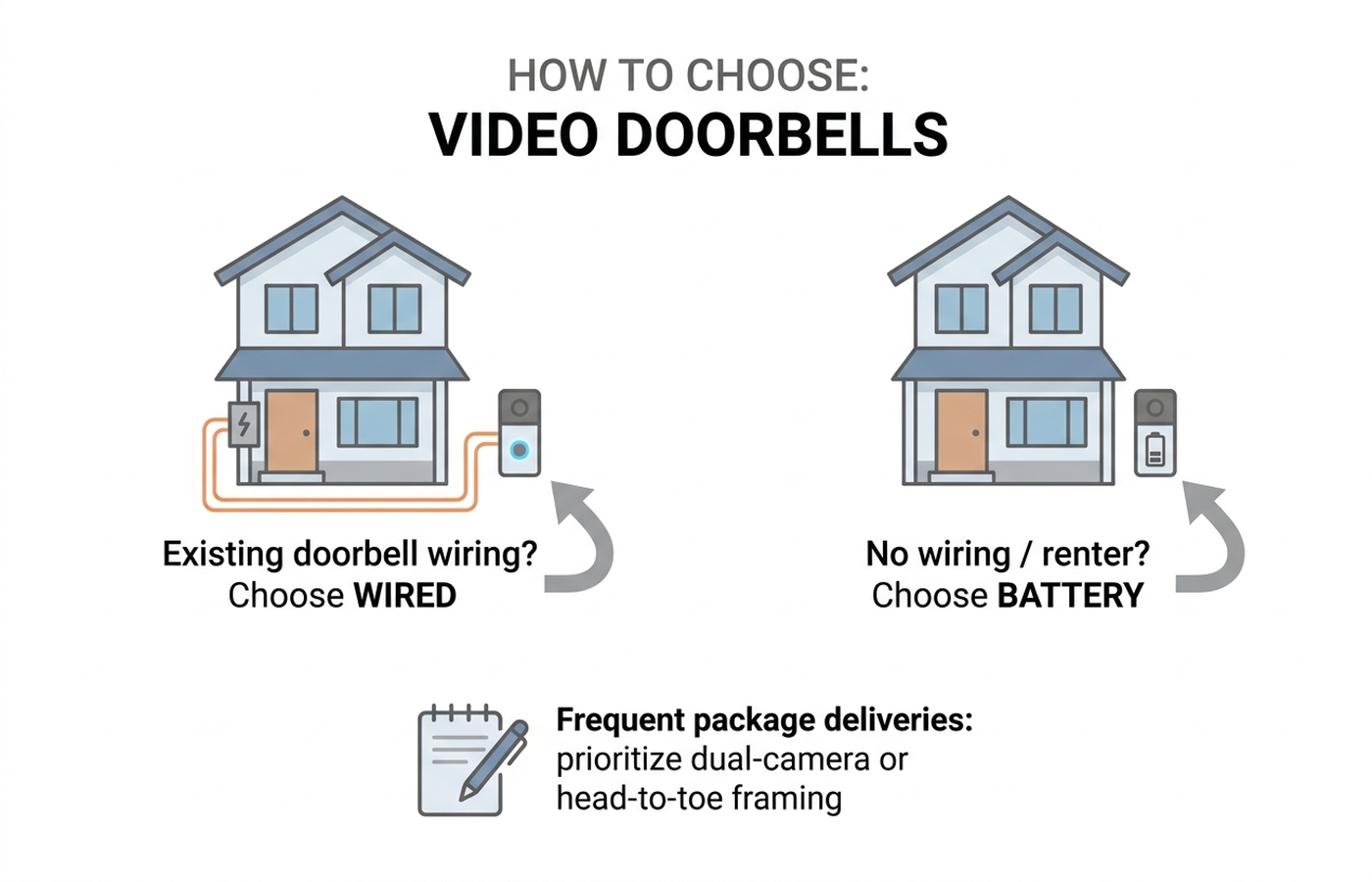
- No existing doorbell wiring (most apartments, some older houses): a battery-powered model — Ring Battery Doorbell Plus or Nest Doorbell (Battery) — installs in under 30 minutes with no electrician and no wire-nutting.
- Existing low-voltage doorbell wiring (16–24 VAC): a wired model skips battery charging and recharge cycles entirely. Ring Wired Doorbell Pro, Nest Doorbell (Wired, 3rd Gen), and Eufy’s wired doorbell line all use existing transformer wiring.
- You get frequent package deliveries: prioritize a dual-camera design (Eufy E340) or Head-to-Toe framing (Ring) — a single forward-facing camera at doorbell height often crops out a package left on the porch floor.
- You want zero monthly cost, permanently: Eufy is the only brand in this comparison where full detection features never require a subscription, because everything processes and stores locally.
- You want the most accurate detection and don’t mind an optional subscription: Nest’s on-device AI gives free-tier accuracy that both Ring and Eufy testers rank below, per Tom’s Guide and Consumer Reports.
Comparison Table
Prices as of 2026-08-30 — Amazon frequently runs short-term discounts on all three brands; check the live listing before buying.
| Product | Type | Resolution | Storage / Subscription | Price |
|---|---|---|---|---|
| Ring Battery Doorbell Plus | Battery | 2K+ (Head-to-Toe) | 3-hr live view free; full history needs Ring Protect ($4.99–$9.99/mo) | ~$179.99 |
| Ring Wired Doorbell Pro | Wired | 4K, 10x zoom | Same subscription model as above; radar-based motion | ~$229.99 |
| Nest Doorbell (Wired, 3rd Gen) | Wired | 2K HDR | 3-hr on-device event history free; Google Home Premium ($10/mo) for 30-day history | ~$219.99 |
| Nest Doorbell (Battery, 2nd Gen) | Battery | HD (960p–1080p) | 3-hr on-device event history free; same optional Premium tier | ~$179.99 |
| Eufy Security Video Doorbell E340 | Battery or wired | 2K FHD, dual camera | 8GB on-device, no subscription | ~$169.99 |
| Eufy Battery Video Doorbell C210 | Battery | 1080p | Local storage, no subscription, 120-day battery life claim | ~$109.99 |
Decision Flowchart: Price vs. Purpose
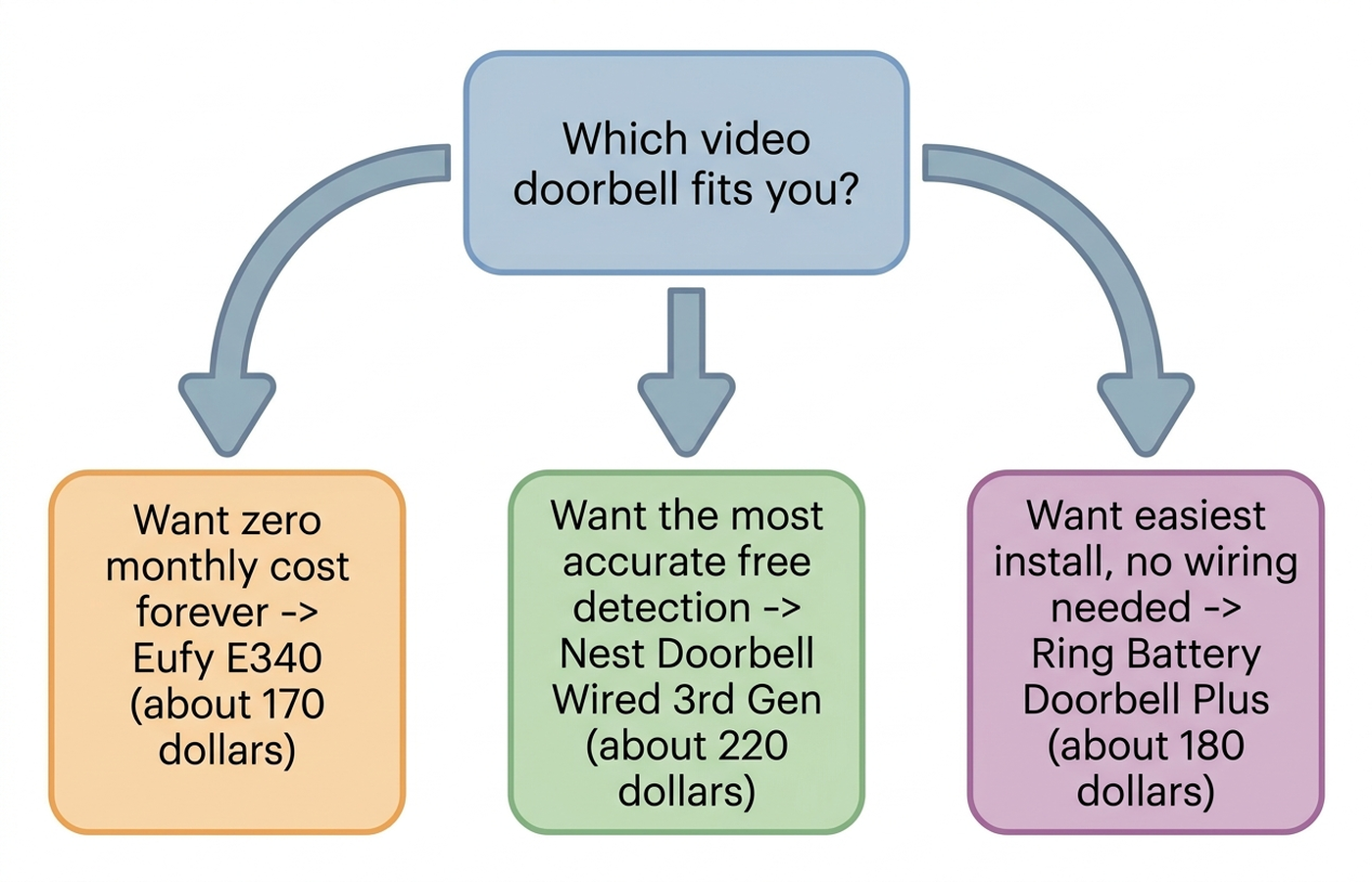
For a quick path through the six models above: first decide battery vs. wired based on whether you already have doorbell wiring. Then decide how much ongoing cost you’re willing to accept — zero recurring cost points to Eufy, an optional subscription for the most accurate free-tier detection points to Nest, and the widest ecosystem/accessory support (chimes, floodlights, existing Ring hardware) points to Ring. See the flowchart figure below for the full branching logic, including the package-delivery-frequency branch that favors Eufy’s dual-camera E340 or Ring’s Head-to-Toe framing.
Warranty and Support
All three brands offer a standard 1-year limited hardware warranty in the US, covering manufacturing defects but not battery degradation from normal use or physical damage from weather exposure outside the rated IP rating. Ring and Google both sell extended coverage bundled into their respective subscription tiers in some markets; Eufy’s warranty is hardware-only since there’s no subscription to bundle it into. Battery life claims (Eufy’s 120-day figure, for example) are manufacturer specifications based on a defined activity profile, not an independently verified real-world average — actual battery life varies with motion-event frequency, temperature, and Wi-Fi signal strength at the mounting location.
Editorial Recommendation
- Best for most people: Nest Doorbell (Wired, 3rd Gen) — the on-device detection accuracy that both Wirecutter and Tom’s Guide rank first, with a genuinely usable free tier.
- Best if you rent or can’t add wiring: Ring Battery Doorbell Plus — the easiest installation path, with the caveat that a Ring Protect subscription is close to mandatory for full functionality.
- Best for privacy-first buyers who want zero subscriptions, ever: Eufy Security Video Doorbell E340 — local-only storage, dual-camera package detection, at a lower long-run total cost than either subscription-leaning competitor.
- Best budget pick: Eufy Battery Video Doorbell C210 — no-subscription storage at roughly half the price of the flagship models, with a tradeoff in resolution (1080p vs 2K/4K) and AI sophistication.
Limitations
This analysis relies on publicly available reviews, manufacturer specifications, and third-party test coverage from Consumer Reports and Tom’s Guide; we did not independently test detection accuracy, night-vision quality, or battery life under controlled conditions. Manufacturer-published figures (battery life, field-of-view degrees, zoom ratios) are cited as manufacturer claims, not independently verified facts, unless a cited third-party test explicitly confirmed them. Individual experience may vary based on mounting height, Wi-Fi signal strength, climate, and how a household’s specific door and porch layout interacts with each camera’s field of view. Prices listed reflect Amazon US at the time of writing and change frequently, including short-term promotional discounts not reflected in the table above.
As an Amazon Associate, Arekore earns from qualifying purchases. The Amazon product links in this article include our affiliate tracking ID and may earn us a commission if you buy through them, at no additional cost to you. See our Links Policy for details on how we select products and how commissions do not influence our recommendations.
- Ring Battery Doorbell Plus
- Ring Wired Doorbell Pro (4K)
- Google Nest Doorbell (Wired, 3rd Gen)
- Google Nest Doorbell (Battery, 2nd Gen)
- Eufy Security Video Doorbell E340
- Eufy Battery Video Doorbell C210
Visit Arekore to verify current pricing and availability on any product mentioned here before buying.