Best Tech Gifts for Aging Parents in 2026: What Gets Used
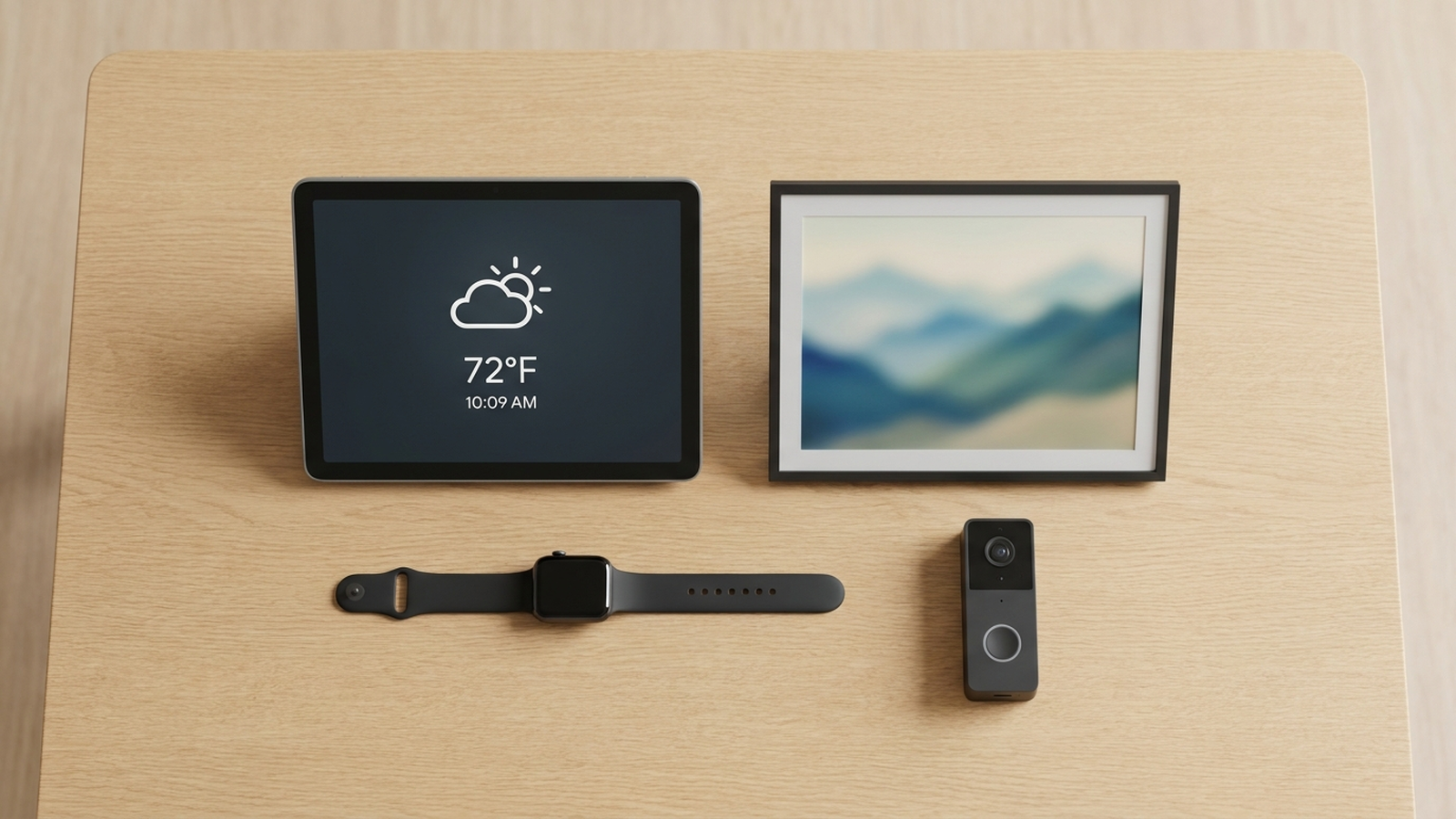
Two in five older adults are already planning a tech purchase this year, and 71% say they bought some form of technology in 2025 — up from 67% the year before, according to AARP’s 2026 Technology Trends survey. What that survey doesn’t capture is the gadget graveyard in so many parents’ junior bedrooms: tablets that never left the box, “smart” devices unplugged after the first confusing week, apps abandoned because nobody stuck around to help past setup. The gap between a well-intentioned tech gift and one that gets used every day usually comes down to one thing — whether it solves a problem the parent already has, in a way that doesn’t require them to learn new behavior. This guide focuses on the small category of tech gifts that aggregated reviews and caregiver data suggest actually stick.
As an Amazon Associate, Arekore earns from qualifying purchases. The Amazon product links in this article include our affiliate tracking ID and may earn us a commission if you buy through them, at no additional cost to you. See our Links Policy for details on how we select products and how commissions do not influence our recommendations.
TL;DR / Quick Verdict
- The gift most likely to get daily use with zero ongoing setup: the Amazon Echo Show 8 — voice-first video calling and reminders that don’t require reading a screen or navigating menus.
- The gift caregivers report gets the most emotional reaction, not just use: the Aura Carver digital photo frame — family sends photos remotely with zero action needed from the parent.
- The safety gift with the least resistance from parents who reject “old person” devices: the Apple Watch SE (2nd Gen) — fall and crash detection built into a mainstream smartwatch, not a medical-alert pendant.
- The gift that fixes a specific, recurring frustration for adult children, not just parents: the Ring Battery Video Doorbell — answers “who’s at the door” without getting up, and gives caregivers remote visibility.
- The medication gift worth the upfront cost if adherence is already a problem: the e-Pill MedTime locked automatic pill dispenser — no monthly subscription, unlike most smart pill-dispenser competitors.
How We Reached These Conclusions (Methodology)
This is an editorial analysis, not a hands-on review. We did not personally test the products covered here. This guide synthesizes (a) aggregated amazon.com customer ratings and the substance of both positive and low-star reviews, sampled the week of 2026-09-14; (b) independent third-party testing and buying guidance from Wirecutter, Security.org, and Reviewed (USA Today); (c) manufacturer specifications and published warranty terms; and (d) 2026 AARP Technology Trends and Adults 50-Plus survey data covering device ownership and technology spending among adults 50 and older. Where we cite a manufacturer figure — battery life, sensor range, display size — we label it as a manufacturer claim rather than an independently verified result. Prices as of 2026-09-14 are amazon.com figures and fluctuate.
Why Most Tech Gifts for Aging Parents Fail
AARP’s 2026 survey found that adults 50-plus already own smart TVs at a 77% rate and laptops at 70%, but ownership of home assistants sits at just 35% and wearables at 36% — a meaningfully lower adoption curve for the newer device categories that tend to get gifted at holidays. That gap is not really about cost; average technology spending among older adults hit $756 in the AARP survey. It’s about friction. A device that requires reading a manual, remembering a passcode, or navigating a settings menu competes directly against decades of muscle memory built around a landline phone and a television remote.
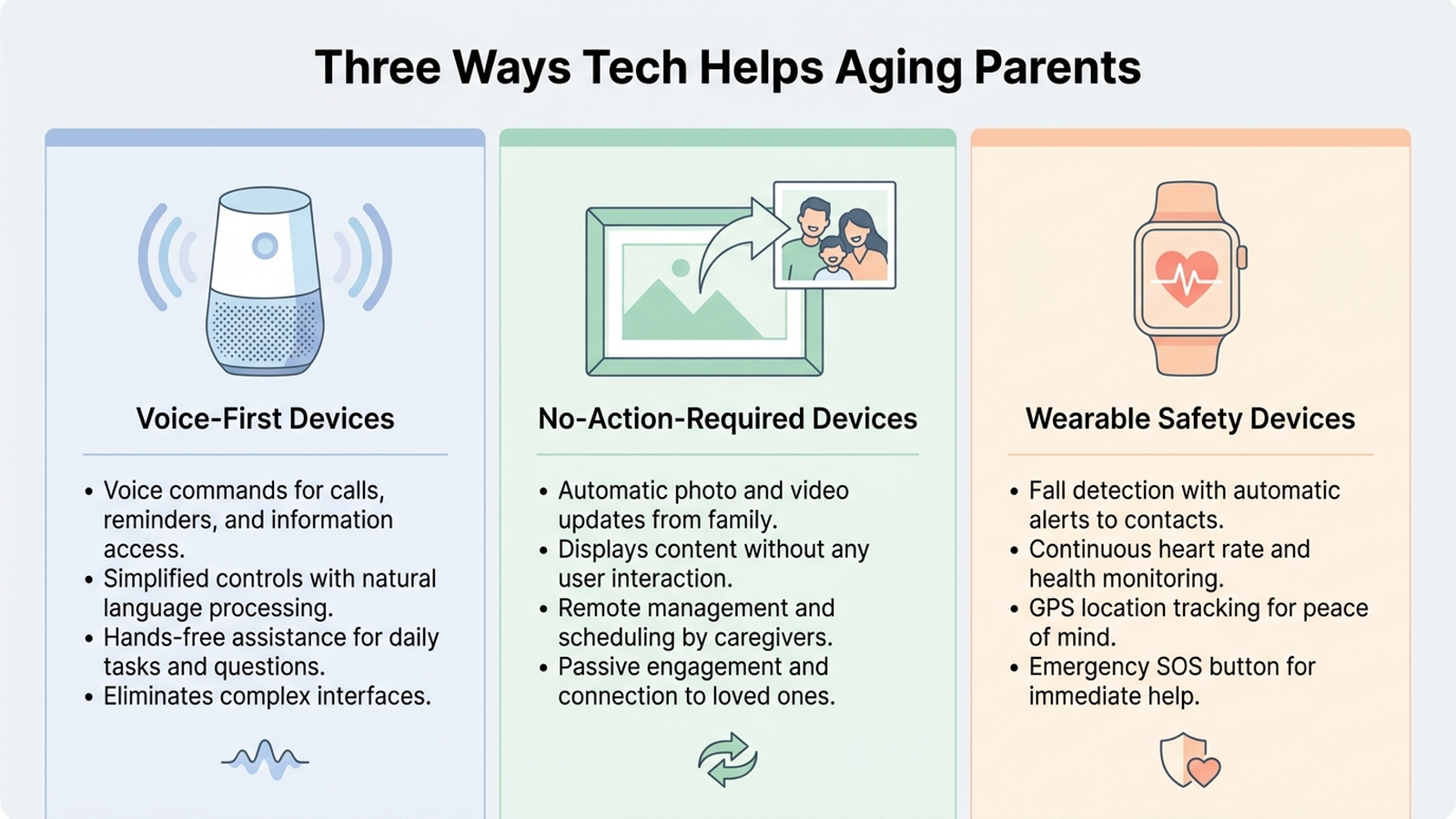
Reviewers and caregiver-focused outlets converge on the same three technology approaches that avoid this friction, each solving a different underlying problem:
- Voice-first devices (smart speakers and displays) remove the need to read a screen or type — a parent talks, the device responds. AARP’s data shows this is still the least-adopted mainstream category, which is exactly why a gift that works out of the box moves the needle more than one more app on a phone they already ignore.
- No-action-required devices (digital photo frames, some doorbell cameras) put the work on the sender, not the recipient. The parent does nothing differently; content simply appears.
- Wearable safety devices solve for the scenario every adult child worries about most — a fall or medical event when nobody is there — without the stigma some traditional medical-alert pendants carry, since a mainstream smartwatch doesn’t visibly signal “I am frail.”
Comparison Table
Prices as of 2026-09-14 are approximate amazon.com figures and fluctuate.
| Item | ASIN | Approx. price | Key spec | Warranty (manufacturer) | Solves this problem |
|---|---|---|---|---|---|
| Amazon Echo Show 8 | B0DC8ZMR1P | ~$150–$180 | 8.7” HD display, Alexa voice control, spatial audio | 1-year limited | Video calls and reminders without screen navigation |
| Aura Carver 10.1” Digital Picture Frame | B099GCGS1S | ~$150–$180 | 10.1” HD display, WiFi, unlimited free storage (mfr.) | 1-year limited | Family photo-sharing with zero parent action |
| Apple Watch SE (2nd Gen), GPS 40mm | B0CHX9CY7W | ~$219–$249 | Fall detection, crash detection, heart-rate monitor | 1-year limited | Fall/medical emergency detection without a stigmatized device |
| Ring Battery Video Doorbell | B0BZWRSRWV | ~$70–$100 | Battery-powered, 1080p HD video, two-way talk | 1-year limited | Remote visibility into who’s at the door |
| e-Pill MedTime Locked Automatic Pill Dispenser | B00020BK9S | ~$170–$200 | 24 daily alarms, locked compartments, no monthly fee | 1-year limited | Medication adherence without a subscription |
| Apple AirTag, 4-Pack | B0932QJ2JZ | ~$80–$99 | Bluetooth item tracker, Precision Finding (mfr.) | 1-year limited | Lost keys, wallet, or bag — a common low-vision frustration |
Setup Matters More Than the Device Itself
Across every product category above, the recurring low-star complaint in aggregated reviews isn’t about the hardware — it’s about handing a parent a device that hasn’t been configured yet. The gap between a gift that gets used daily and one that ends up back in its box is usually a few minutes of setup work done by the giver, not the recipient.
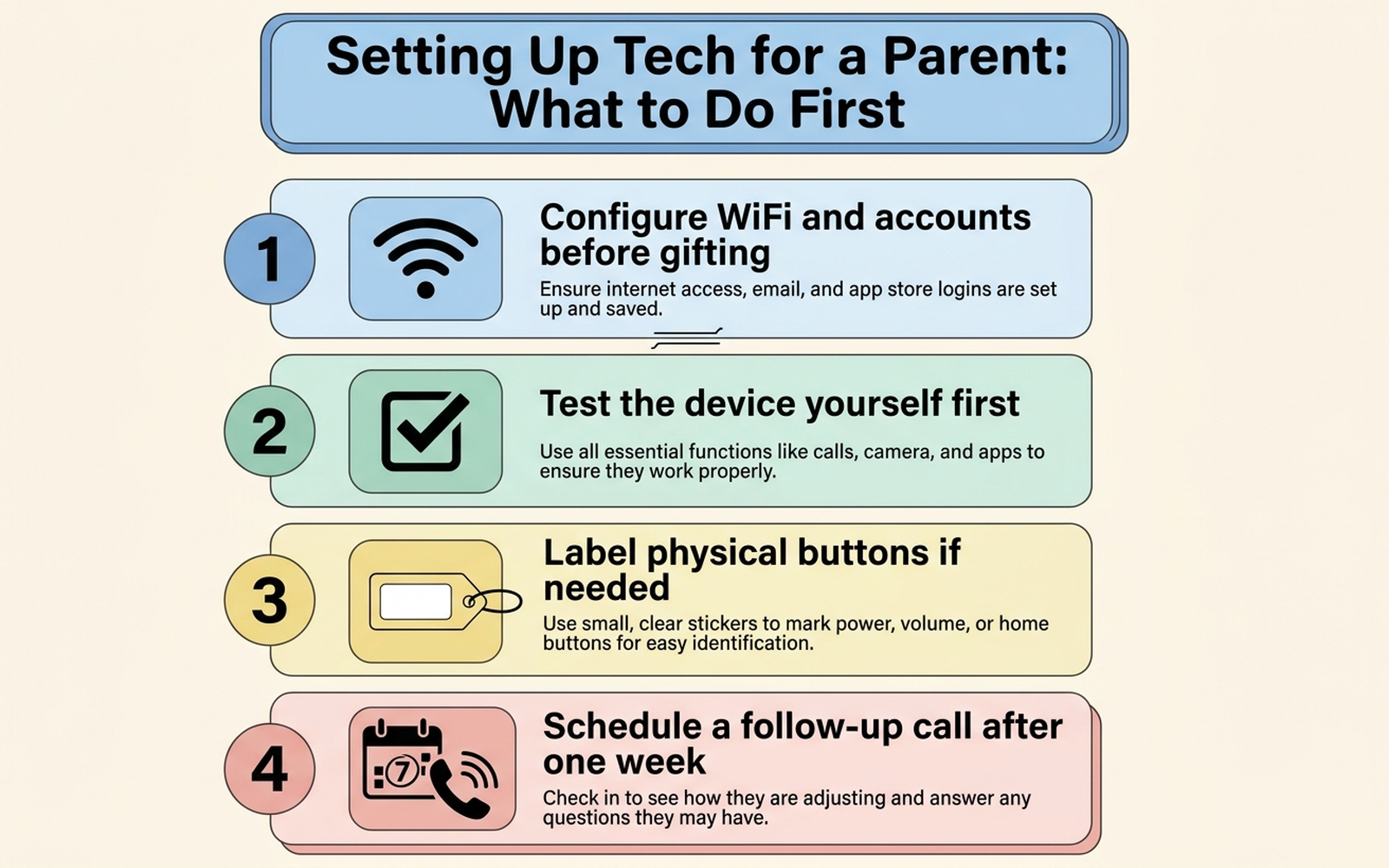
- Configure WiFi, accounts, and contacts before wrapping it. Reviewers across the Echo Show, Aura Carver, and Ring doorbell consistently cite unfinished setup, not the product itself, as the reason a gift sat unused.
- Test every core function yourself first. Placing a video call, checking a photo upload, or triggering a doorbell notification before handing the device over catches configuration issues while there’s still time to fix them.
- Label physical buttons if a parent has low vision or limited tech exposure. A small sticker on a power or volume button removes a common source of confusion in the first week.
- Schedule a follow-up call about a week later. Aggregated reviews suggest most of the abandonment happens in the first few days, when a small, fixable confusion goes unaddressed simply because nobody checked back in.
1. Amazon Echo Show 8 — The Device Least Likely to End Up Unplugged
The core reason smart displays outperform tablets as a gift for older adults, according to reviewers and caregiver-focused outlets, is that they’re voice-first — a parent never has to find an app icon or remember a passcode to start a video call or ask for a reminder. The current Echo Show 8 has an 8.7-inch HD display, spatial audio, and Alexa integration that handles video calling, medication reminders, weather, and music through spoken commands alone.
Aggregated Amazon reviews are strongly positive on call quality and the device’s usefulness for the specific tasks seniors repeat daily — timers, weather, family video calls — while Security.org’s 2026 Echo Show review notes that “getting it set up” is the main area where the device still has room for improvement for less tech-comfortable users. The most common low-star complaint centers on this same setup step rather than day-to-day use, which suggests the device performs well once configured but shouldn’t be shipped and left for a parent to set up alone. Amazon backs the device with a 1-year limited warranty.
Check the Amazon Echo Show 8 on Amazon
2. Aura Carver Digital Picture Frame — The Gift That Requires No New Behavior From the Parent
Most tech gifts fail because they ask the recipient to do something new. The Aura Carver flips that: family members send photos to the frame remotely through a phone app, and the frame displays them automatically over WiFi — the parent does nothing except look at it. Wirecutter names the Carver its top pick for gifting specifically because of this zero-effort model, along with unlimited free cloud storage (no monthly subscription) and a straightforward first-time setup that Aura designed around a non-technical recipient.
Aggregated Amazon reviews consistently describe strong emotional reactions from grandparents and aging parents who received one as a gift, with many reviewers noting the frame became a genuine daily habit rather than a novelty that faded. The most common low-star complaint involves the initial WiFi pairing step, which some reviewers found finicky on older home routers — worth testing the connection before wrapping it as a gift. Aura backs the frame with a 1-year limited warranty.
Check the Aura Carver Digital Picture Frame on Amazon
3. Apple Watch SE (2nd Gen) — Fall Detection Without the Medical-Alert Stigma
Traditional medical-alert pendants solve a real problem — detecting a fall when nobody is present — but caregiver-focused reviewers consistently note that many older adults resist wearing one because it visibly signals frailty to visitors and strangers. The Apple Watch SE delivers the same core safety function, fall detection and crash detection, paired with an Emergency SOS call and location share, inside a mainstream smartwatch that doesn’t carry the same stigma.
Aggregated Amazon reviews are positive on the watch’s core health tracking and its Emergency SOS reliability, while independent reviewers flag the same tradeoff every review of Apple Watch as a senior-safety device raises: it requires charging roughly every one to two days (a manufacturer-claimed battery figure that varies with use), which is a meaningfully higher maintenance burden than a medical-alert pendant’s multi-day or multi-week battery life. It also assumes reasonable comfort with a touchscreen, which is a real barrier for parents in the earlier stages of technology adoption. Apple backs the watch with a 1-year limited warranty.
Check the Apple Watch SE (2nd Gen) on Amazon
4. Ring Battery Video Doorbell — Visibility Into Who’s at the Door, for the Parent and the Caregiver
Answering the door is a small daily task that becomes a real friction point once mobility declines — getting up, walking to the door, and checking a peephole is a meaningfully bigger ask than it sounds. The Ring Battery Video Doorbell solves this with a 1080p camera, motion alerts, and two-way talk, letting a parent see and speak to a visitor from a phone, tablet, or paired Echo Show without walking to the door. It has the added benefit of giving an adult child living elsewhere the same remote visibility, including notifications when a caregiver, delivery, or unexpected visitor arrives.
Aggregated Amazon reviews are strongly positive on video clarity and the ease of the battery-powered installation, which avoids any doorbell wiring work; the most common low-star complaint concerns the optional Ring Protect subscription needed for full video history and person-alert features, which is a monthly cost worth factoring in beyond the device’s sticker price. Ring backs the doorbell with a 1-year limited warranty.
Check the Ring Battery Video Doorbell on Amazon
5. e-Pill MedTime Locked Automatic Pill Dispenser — Medication Adherence Without a Monthly Fee
Several newer smart pill dispensers on the market require an ongoing monthly subscription to function at all, which adds up over years of daily use. The e-Pill MedTime is a locked automatic dispenser supporting up to 24 daily alarms, with locked compartments designed to prevent a confused or memory-impaired parent from accidentally double-dosing, and it runs with no recurring subscription fee — a one-time purchase.
Aggregated Amazon reviews from caregivers and adult children managing a parent’s medication are positive on the device’s reliability and the peace of mind from the locked compartments specifically, especially for parents with early memory concerns; the most common low-star complaint is the more dated interface and setup process compared with app-connected competitors, which trade off simplicity for that connected convenience (and its subscription cost). e-Pill backs the dispenser with a 1-year limited warranty.
Check the e-Pill MedTime Automatic Pill Dispenser on Amazon
6. Apple AirTag, 4-Pack — The Small Gift for a Common, Underrated Frustration
Losing keys, a wallet, or a bag is a disproportionately stressful event for an older adult with declining vision or mobility, since retracing steps is harder than it used to be. The Apple AirTag is a small Bluetooth tracker that attaches to a keychain, bag, or wallet and uses Apple’s Find My network — including Precision Finding, a manufacturer-claimed feature that guides a searcher directly to the item — to locate a misplaced item from a phone.
Aggregated Amazon reviews are strongly positive on reliability for exactly this use case, with many reviewers specifically buying a set for an aging parent’s most commonly misplaced items; the most common low-star complaint concerns battery replacement, which requires a coin-cell battery every six to twelve months per manufacturer claims, and setup requires an iPhone or iPad, so it isn’t an option for a parent on an Android device. Apple backs the AirTag with a 1-year limited warranty.
Check the Apple AirTag 4-Pack on Amazon
Matching the Gift to Where a Parent Actually Is With Technology
The single biggest predictor of whether a tech gift gets used, according to caregiver-focused reviewers across every product category above, is whether it matches the parent’s current comfort level rather than the giver’s assumption of where they should be.
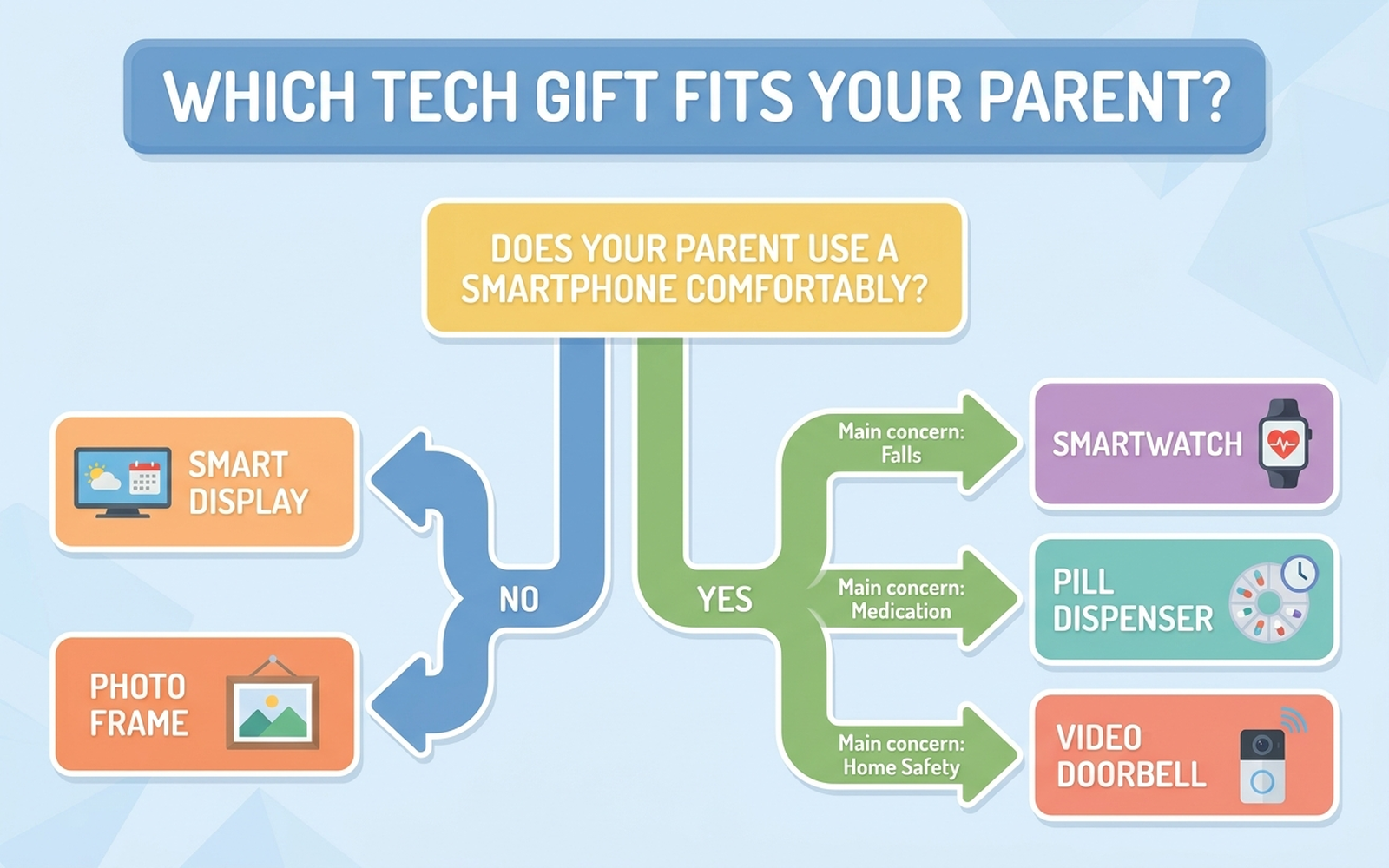
- If the parent rarely uses a smartphone and the main goal is staying connected, start with the Amazon Echo Show 8 or the Aura Carver — both require little to no ongoing action from the parent after setup.
- If the biggest worry is a fall or medical event when nobody is around, the Apple Watch SE is the better fit than a traditional medical-alert pendant for a parent likely to resist wearing something that looks medical, provided they’re already comfortable with a touchscreen and daily charging.
- If medication adherence is already a documented problem, the e-Pill MedTime is worth the upfront cost specifically because it avoids the recurring subscription most smart competitors require.
- If the concern is more about home safety and knowing who’s at the door, the Ring Battery Video Doorbell solves that directly, and pairs well with an existing Echo Show for hands-free announcements.
- If the parent has already adopted a smartphone comfortably, a small, low-friction add-on like the AirTag 4-Pack solves a real frustration without requiring them to learn a new device at all.
Editorial Recommendations by Use Case
- Best first gift for a parent who resists new technology: the Aura Carver digital photo frame — no new behavior required, and aggregated reviews report the strongest emotional response of any product here.
- Best for a parent who lives alone and whose family worries about falls: the Apple Watch SE (2nd Gen), provided the parent already uses a smartphone-adjacent touchscreen comfortably.
- Best for keeping a parent connected without a screen-navigation learning curve: the Amazon Echo Show 8, with the caveat that a tech-comfortable family member should complete setup first.
- Best for adult children who want remote visibility into a parent’s home, not just their device use: the Ring Battery Video Doorbell.
- Best for a parent already showing signs of memory-related medication issues: the e-Pill MedTime, chosen specifically for its lack of a recurring subscription fee.
Limitations of This Analysis
This analysis relies on publicly available Amazon reviews, independent third-party buying guides, manufacturer specifications, and AARP’s aggregated 2026 survey data; we did not personally test these products, and individual experience varies enormously with a parent’s specific vision, hearing, memory, and prior technology exposure. AARP’s technology adoption statistics describe adults 50 and older as a broad group, which spans a wide range of comfort levels the averages don’t capture — a gift well-suited to a tech-engaged 55-year-old may be a poor fit for an 85-year-old with limited smartphone exposure. Fall-detection accuracy, battery life, and network range figures are manufacturer specifications rather than independently reproduced lab results, and no device here replaces an in-person conversation with a parent about what they actually want before buying something on their behalf.
The Bottom Line
The tech gifts that get used past the first week share one trait: they solve a problem the parent already has, without asking the parent to learn a new behavior to get there. A photo frame that requires zero action, a smart display that responds to voice instead of a menu, and a smartwatch that quietly detects a fall without looking like a medical device all outperform gifts that assume a parent will independently explore an app or a settings screen. Total spend across every item here runs from about $80 for a set of AirTags to roughly $219–$249 for the Apple Watch SE, and there’s no requirement to buy more than one — matching the single gift to the specific gap identified above beats buying several and hoping one sticks. Whichever item you’re considering, verify the exact current price and version before checkout — and if you want a second opinion on a specific listing, paste the URL into Arekore and let the AI scan the reviews and price history for you in about five minutes.