Best Stand Mixers 2026: KitchenAid vs Cuisinart vs Bosch
TL;DR
For most home bakers, the KitchenAid Artisan Series 5-Quart remains the safest pick — it’s been Wirecutter’s top choice for over a decade and has the deepest attachment ecosystem on Amazon. Budget-conscious or occasional bakers get nearly the same core performance from the Cuisinart Precision Master SM-50 for roughly $100-150 less. Serious bread bakers who need bowl-lift stability and large batch capacity should look at the Bosch Universal Plus, whose belt-driven design and 6.5-quart bowl handle dense dough that can strain direct-drive mixers.
Methodology
This analysis synthesizes (a) aggregated Amazon US customer reviews for the three models covered, sampled in August 2026, (b) third-party test data and editorial reviews from Reviewed (USA Today), Tom’s Guide, and Consumer Reports, (c) the German Stiftung Warentest “Küchenmaschinen im Test” evaluation, which included KitchenAid and Bosch kitchen machines tested for kneading performance and safety, and (d) manufacturer specification sheets. We did not personally test the products covered here.
Technical Approach: Three Different Motor and Drive Designs
The three mixers in this comparison use meaningfully different mechanical designs, which explains most of the performance differences reviewers report.
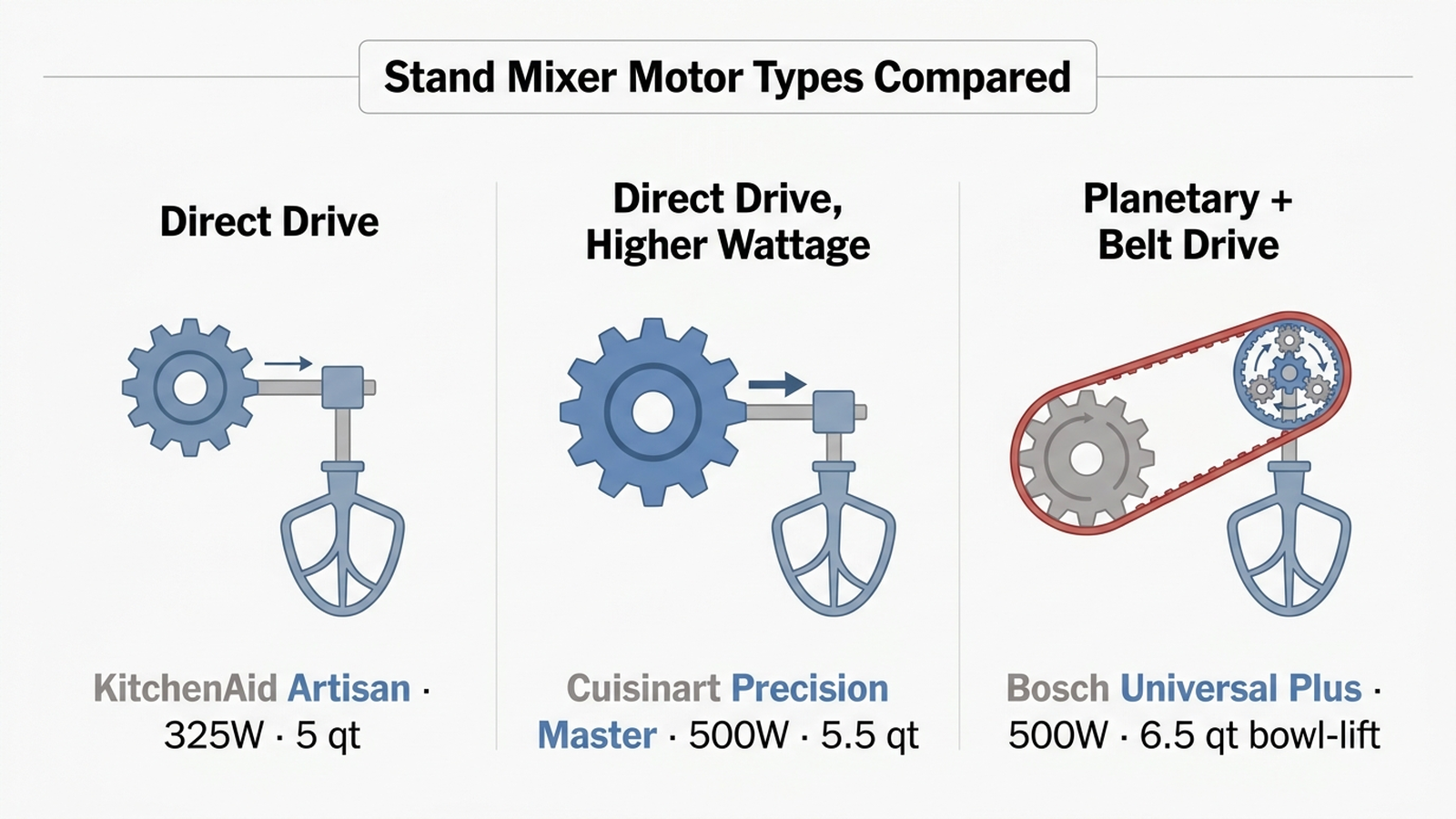
- KitchenAid Artisan (direct drive, 325W, tilt-head, 5 qt): The beater is directly coupled to the motor shaft. This design is simple and durable but tops out around a 5-quart bowl before torque becomes a limiting factor for dense dough.
- Cuisinart Precision Master (direct drive, 500W, tilt-head, 5.5 qt): A higher-wattage version of the same basic architecture. Reviewed and Tom’s Guide both note it approaches KitchenAid-level heft and stability at a lower price point, though it is not as refined in fit and finish.
- Bosch Universal Plus (planetary + belt drive, 500W, bowl-lift, 6.5 qt): Bosch uses a base-mounted motor connected via belt, a design more common in commercial mixers. This produces higher sustained torque for bread dough and supports a much larger bowl, at the cost of a bulkier footprint and a steeper learning curve for attachments.
Manufacturer Details
KitchenAid markets the Artisan’s 325-watt motor and notes the direct-drive design is intended to minimize moving parts that can wear out — the company’s own materials emphasize longevity as the core value proposition, a manufacturer claim rather than an independently verified figure. The 10-speed dial and tilt-head format have been essentially unchanged for over a decade, and the KSM150PS accepts KitchenAid’s large third-party attachment ecosystem (pasta rollers, meat grinders, spiralizers).
Cuisinart positions the Precision Master as delivering “professional results” with a 500-watt motor and 12 speed settings — again a manufacturer-stated figure, not a lab-verified output measurement. Reviewers note the stainless bowl and construction feel closer to KitchenAid’s build quality than other budget mixers, though several reviews flag that the mixer can shake or “walk” on the counter at speed 6 and above because its base carries less weight than KitchenAid’s.
Bosch advertises the Universal Plus’s compatibility with more than 20 optional attachments (meat grinder, ice cream maker, blender) sold separately, marketed around “German engineering” heritage. The bowl-lift, belt-driven design is a manufacturer design choice aimed at commercial-style dough handling rather than a claim we can independently verify beyond noting it mirrors architecture used in higher-end commercial mixers.
Customer Sentiment Synthesis
Aggregated Amazon customer reviews and cross-referenced retail reviews point to a few consistent patterns:
- KitchenAid Artisan: The dominant praise theme is longevity — many reviewers report units in daily use for 10+ years. The most common complaint cluster involves motor issues after heavy or improper use: a burning smell or grinding noise, most often traced to worn carbon brushes after repeated overloading (e.g., mixing multiple loaves of dense bread dough back to back), which is a known wear pattern for direct-drive motors under sustained heavy load rather than a random defect.
- Cuisinart Precision Master: Reviewers frequently describe it as “the closest thing to a KitchenAid for less money,” with praise for the stainless bowl and included accessories. The repeated critique across independent reviews is stability at higher speeds — several testers reported the unit shaking or “walking” during whipping at speed 6+.
- Bosch Universal Plus: Reviewers consistently cite superior dough-kneading capacity and bowl size as the standout feature, particularly from bread-focused bakers making multiple loaves at once. The most common friction point is the attachment learning curve — the bowl-lift mechanism and belt-drive attachment hub work differently from tilt-head mixers, which some first-time buyers find unintuitive.
Comparison Table
| Model | Price (as of 2026-08-27) | Motor | Bowl Capacity | Drive Type | Speeds |
|---|---|---|---|---|---|
| KitchenAid Artisan 5-Qt (KSM150PS) | $429.99 | 325W | 5 qt, tilt-head | Direct drive | 10 |
| Cuisinart Precision Master (SM-50BC) | $299.95 | 500W | 5.5 qt, tilt-head | Direct drive | 12 |
| Bosch Universal Plus | $449.99 | 500W | 6.5 qt, bowl-lift | Planetary + belt | 4 speeds + pulse |
Prices are manufacturer list prices and may not reflect ongoing Amazon promotions or lightning deals.
How to Use: Matching Speed to Task
Regardless of which mixer you buy, matching mixer speed to the task extends motor life and improves results.
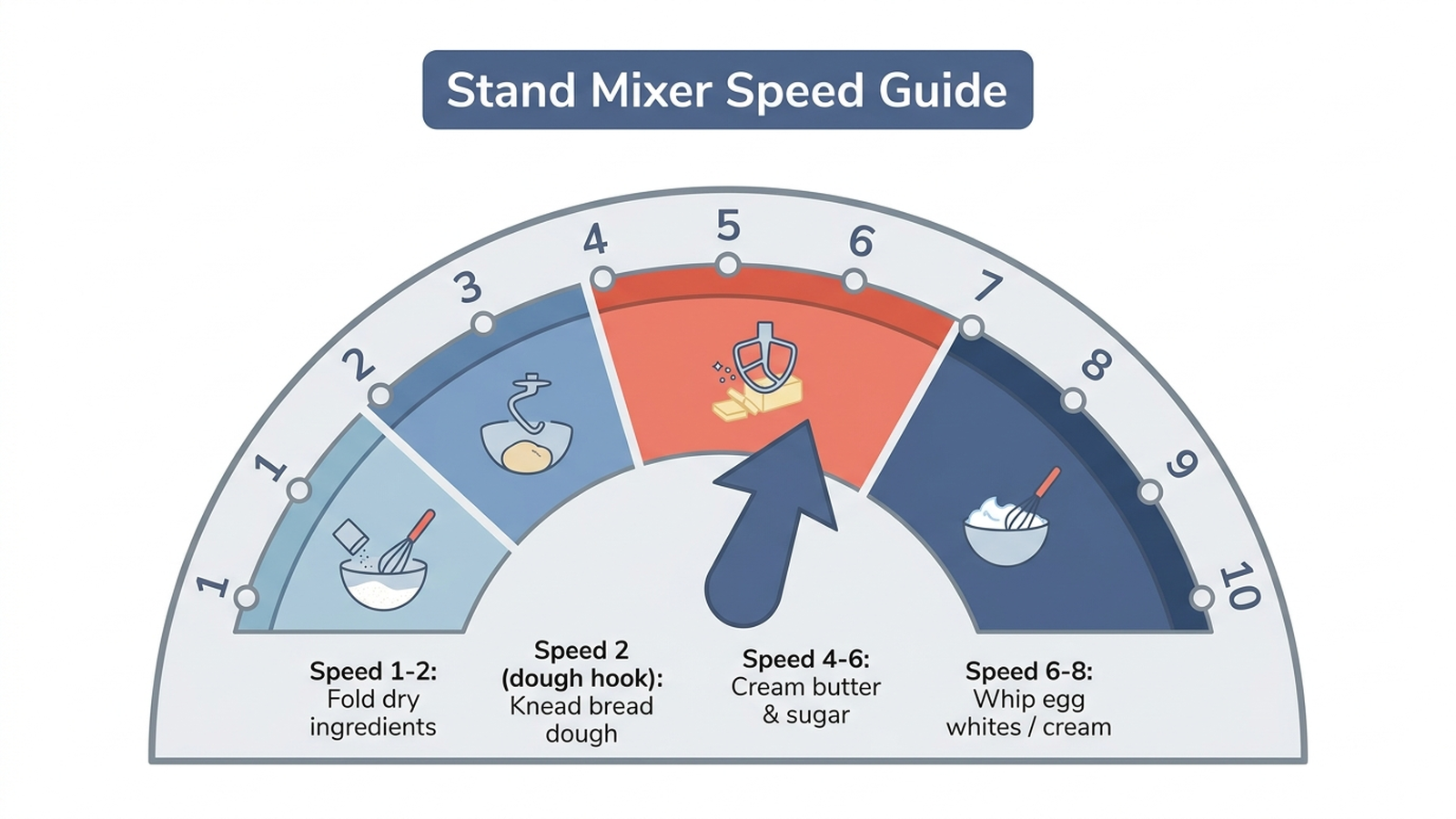
Reviewers across all three brands report that the most common cause of premature motor wear is running dense bread dough at too high a speed for too long — manufacturer manuals for all three brands recommend keeping dough-hook kneading at the lowest 1-2 speed settings and limiting continuous run time on large batches.
Which One Should You Buy?
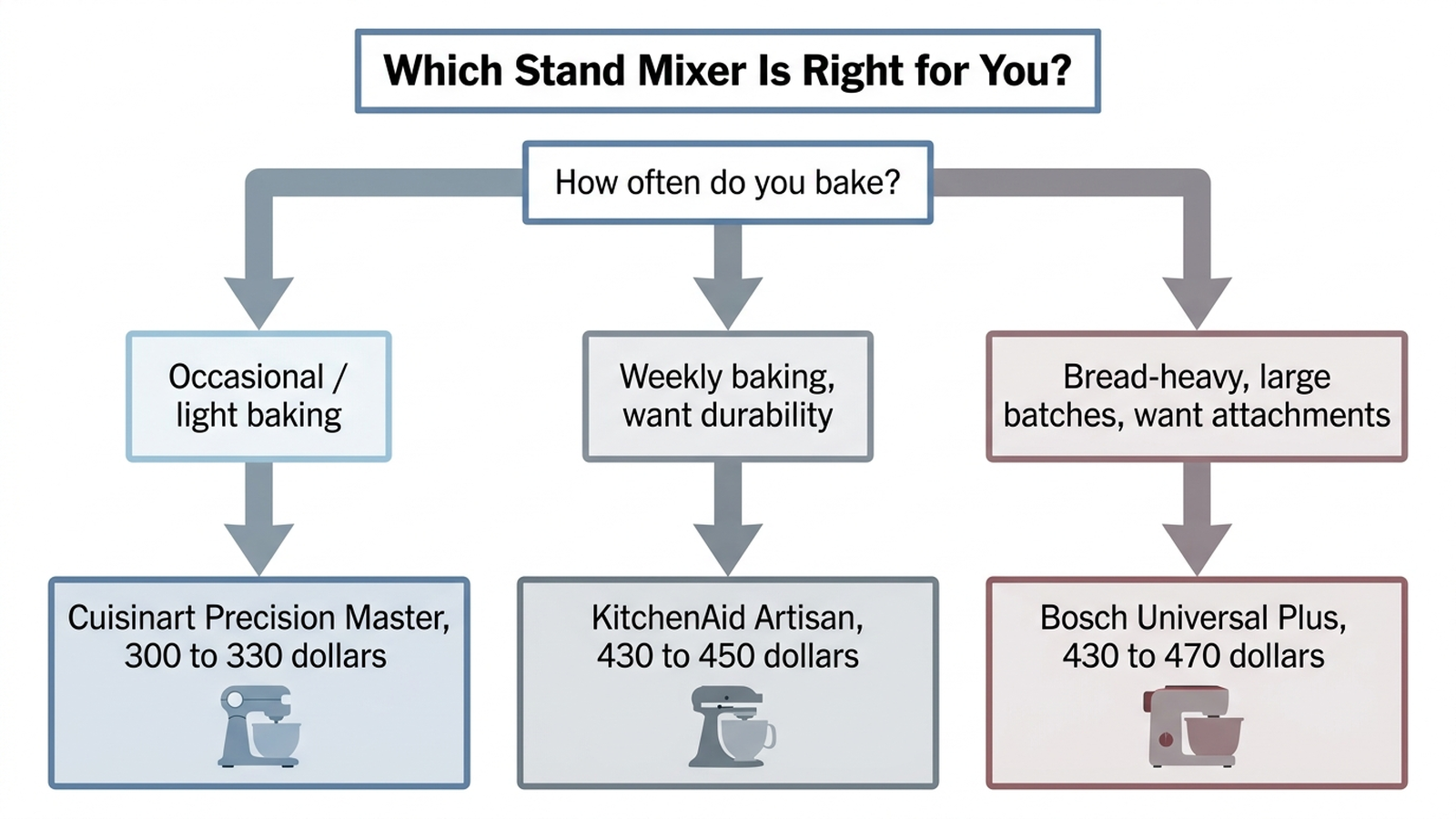
- Best for most people: KitchenAid Artisan — the largest attachment ecosystem and the longest reviewer-reported track record for longevity.
- Best value: Cuisinart Precision Master — comparable core mixing performance at a meaningfully lower price, if you can tolerate more counter vibration at high speeds.
- Best for bread bakers: Bosch Universal Plus — larger bowl and higher sustained torque for dense dough, at the cost of a bulkier design and steeper learning curve.
Limitations
This analysis relies on publicly available reviews, manufacturer specifications, and third-party test data, including Stiftung Warentest’s German kitchen-machine testing program. Individual experience may vary based on baking frequency, recipe type (light batters vs. dense bread dough), and unit-to-unit manufacturing variance. Prices shown are list prices as of the stated date and change frequently with promotions; check the current Amazon listing before buying.
As an Amazon Associate, Arekore earns from qualifying purchases. The Amazon product links in this article include our affiliate tracking ID and may earn us a commission if you buy through them, at no additional cost to you. See our Links Policy for details on how we select products and how commissions do not influence our recommendations.
Products Mentioned
- KitchenAid Artisan Series 5-Quart Tilt-Head Stand Mixer (KSM150PS)
- Cuisinart Precision Master 5.5-Quart Stand Mixer (SM-50BC)
- Bosch Universal Plus Stand Mixer, 500W, 6.5-Quart
Verify current pricing, availability, and specifications on the Amazon product page before purchasing — we do not guarantee prices stay current after publication.