Best Rice Cookers in 2026: Zojirushi vs Tiger vs Cuckoo, a Data-Driven Buyer's Guide
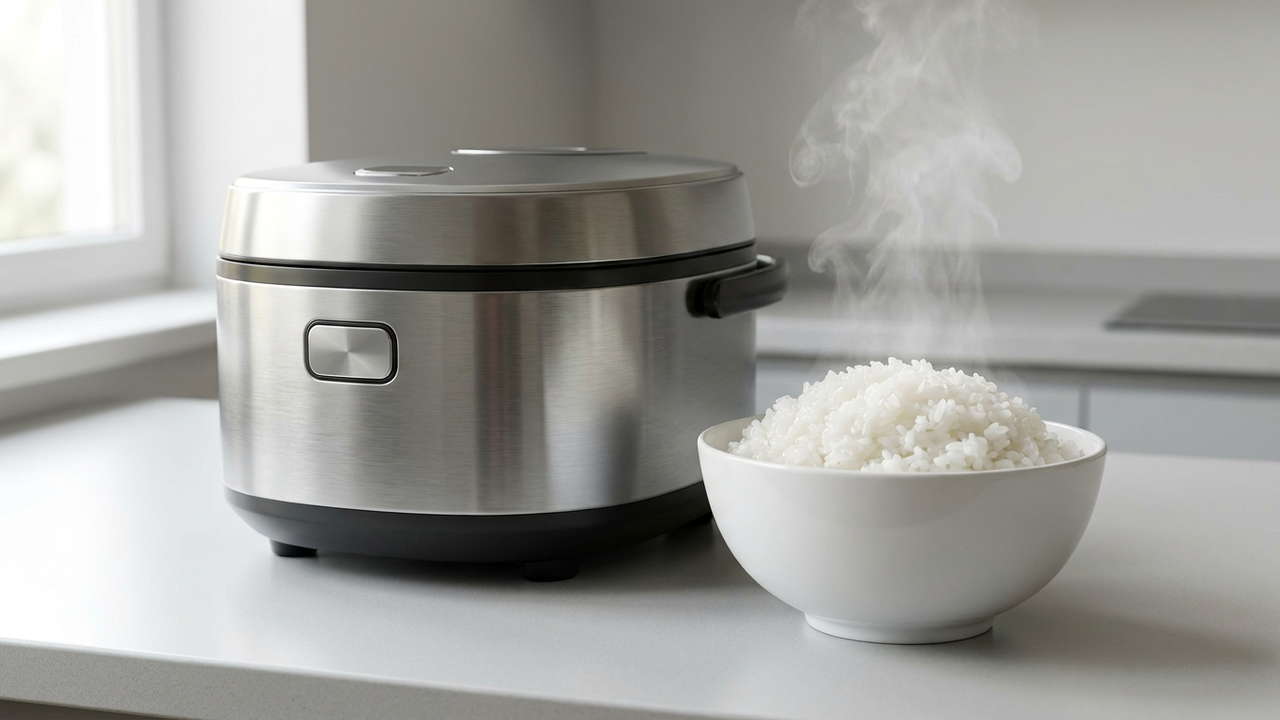
You stand in the appliance aisle, or scroll a results page, and every rice cooker looks roughly the same. A pot, a lid, a button. Yet prices run from under $40 to well past $500. The gap is not branding. It is the heating technology inside, and the kind of rice each machine is built to produce. Buyers who pick on price or looks alone often end up disappointed: a $400 cooker that tastes no different from the old one, or a chewy-rice machine when they wanted light and fluffy. This guide breaks down the three brands that dominate serious US rice-cooker shopping, Zojirushi, Tiger, and Cuckoo, plus a budget pick, so you can match a machine to how you actually eat.
This article is provided by Arekore, an AI shopping assistant. Paste a product URL and our AI checks review authenticity, digs into low-star feedback, and compares prices in about five minutes.
TL;DR / Quick Verdict
- Best overall short-grain rice: Zojirushi pressure induction models produce the glossiest, chewiest results, but cost the most.
- Best value: the Zojirushi Neuro Fuzzy (micom) delivers most of that quality for roughly a third of the flagship price.
- Most features for the money: Cuckoo pressure cookers add GABA brown-rice modes, voice guidance, and turbo cooking at a mid-range price.
- Best for cooking rice plus a side dish at once: Tiger’s Tacook models.
- Tightest budget: the Aroma ARC-954SBD multicooker covers the basics for around $45.
How We Reached These Conclusions (Methodology)
This is an editorial analysis, not a hands-on review. We did not personally test the products covered here. Instead, this guide synthesizes three kinds of public information: (a) aggregated amazon.com customer ratings and the substance of low-star reviews, captured in June 2026; (b) independent third-party testing from America’s Test Kitchen, Wirecutter, CNN Underscored, and specialist review sites such as Prudent Reviews; and (c) manufacturer specifications and user manuals. Where we cite a manufacturer figure, we label it as a manufacturer claim rather than an independently verified result. Prices are amazon.com figures at the time of writing and will change.
The US Rice Cooker Market in 2026
Rice cookers are no longer a niche appliance in American kitchens. The global electric rice cooker market is projected to grow from about $4.30 billion in 2024 to roughly $4.47 billion in 2025 (Market Research Future), on its way to an estimated $7.29 billion by 2035 at a compound annual growth rate near 6.3%. North America remains one of the largest regional markets, driven by demand for convenience and consistency, and the broader category of small electric cooking appliances has seen steady US sales growth over the past several years (industry market reports).
Two trends matter for buyers. First, premiumization: shoppers increasingly trade up to induction-heating (IH) and pressure-IH machines that promise better texture, mirroring a global shift in which IH-equipped models now make up a large share of sales in mature Asian markets. Second, downsizing: smaller US households are fueling demand for compact 3-cup machines that still carry premium features. Against that backdrop, this guide compares Zojirushi, Tiger, and Cuckoo, the three brands US buyers most often weigh against each other once they decide to spend more than supermarket-shelf money.
1. First, Understand the Heating Technology
The single biggest driver of price and rice quality is how the cooker heats the pot. There are four broad approaches.
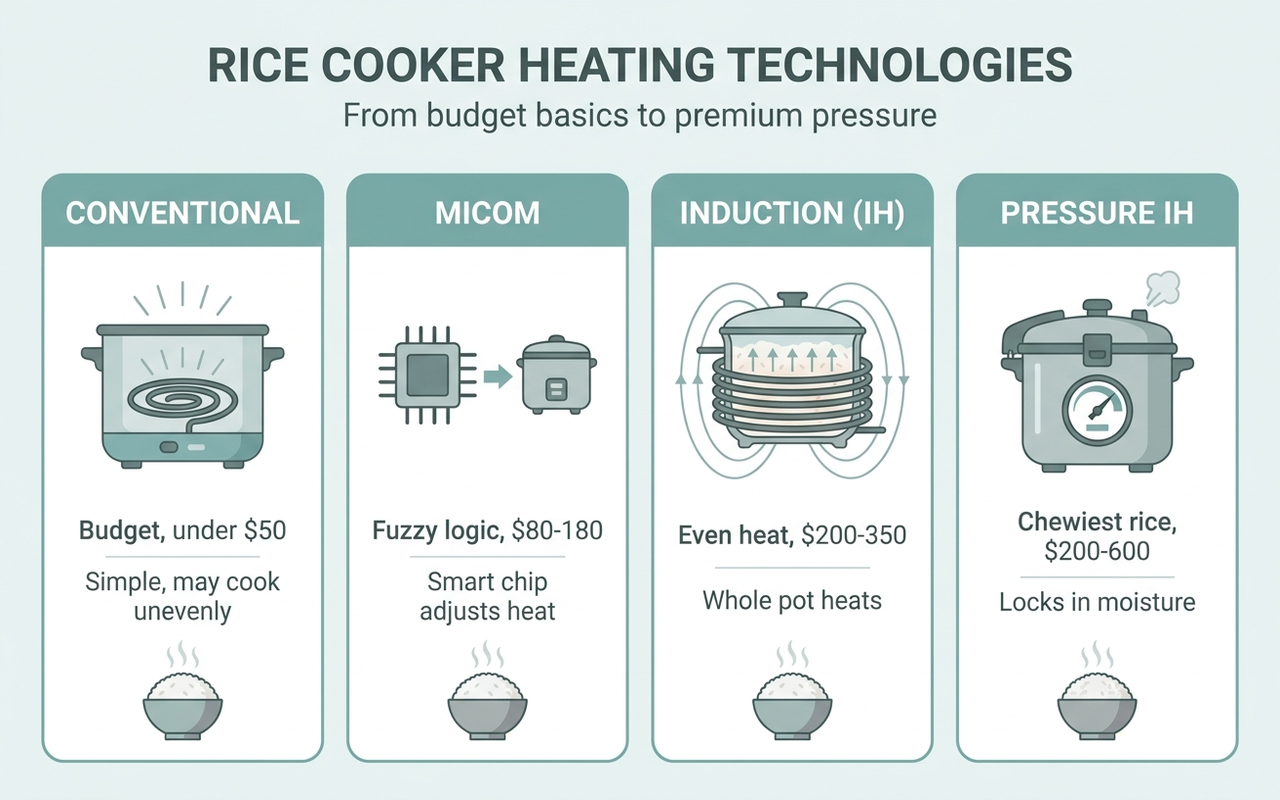
| Technology | Typical price | How it works | Resulting rice |
|---|---|---|---|
| Conventional | Under $50 | Single bottom heating plate, on/off thermostat | Affordable; can cook unevenly, firmer texture |
| Micom (fuzzy logic) | $80–$180 | Microchip adjusts time and temperature by program | Even, reliable; multiple grain modes |
| Induction (IH) | $200–$350 | Electromagnetic field heats the whole pot | Very even, high-heat, excellent consistency |
| Pressure IH | $200–$600 | IH heating plus internal pressure above 212°F | Chewiest, sweetest; best for short-grain rice |
In plain terms: conventional cookers prioritize price, micom is the reliable all-rounder, induction adds even high-heat precision, and pressure IH is the premium tier built to maximize texture. Pressure models seal the pot and raise the boiling point above 212°F, driving heat deeper into each grain to develop a chewier, sweeter bite. The flagships from all three brands in this guide use induction or pressure IH. One caveat worth noting: America’s Test Kitchen found that induction models “didn’t consistently perform better or faster” than good conventional electric cookers in its testing, so the premium is about peak texture and consistency, not a guaranteed night-and-day difference for every cook. Decide which technology fits your budget first, and the field narrows fast.
2. The Three Brands at a Glance (2026)
“What actually separates Zojirushi, Tiger, and Cuckoo?” Here is the quick read.
| Comparison | Zojirushi | Tiger | Cuckoo |
|---|---|---|---|
| Origin | Japan | Japan | South Korea |
| Signature strength | Micom & pressure IH precision | Tacook dual-cooking, durable pots | Pressure cooking, GABA modes |
| Texture tendency | Glossy, fluffy, sweet short-grain | Versatile, clean separate grains | Chewy, moist, fast |
| Price range | $180–$600 | $110–$370 | $150–$300 |
| Standout feature | Neuro Fuzzy logic; sushi modes | Cook rice and a side dish together | Voice guide, turbo, auto-clean |
| Best for | Short-grain & sushi rice purists | Multitaskers and meal-preppers | Feature-hunters and value seekers |
In a sentence each: Zojirushi is the precision specialist US reviewers most often crown for Japanese short-grain rice; Tiger is the versatile workhorse whose Tacook plate steams a protein above the rice; Cuckoo is the feature-rich Korean challenger that packs pressure cooking and extra modes into a mid-range price. The next section helps you map those personalities onto your own kitchen.
3. How to Choose Without Regret: 4 Checkpoints
Before picking a brand, sort your own needs along four axes.
- 1. Pick a heating technology to set your budget. If you just need cooked rice cheaply, conventional or micom is fine. If texture and consistency matter and you eat rice often, IH or pressure IH is worth it. This decision alone sets your price band.
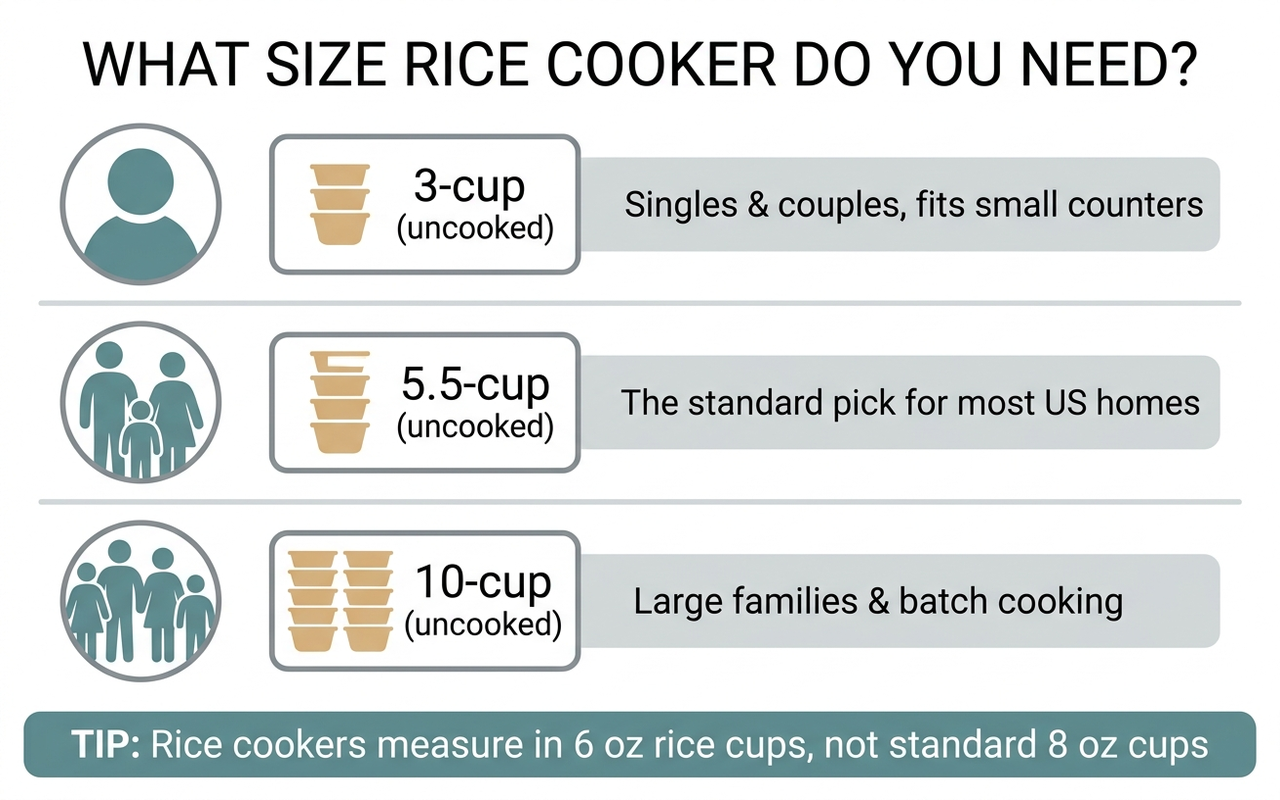
- 2. Size up for your household, then add a little. Rice cookers are rated in 6-ounce rice cups, not standard 8-ounce measuring cups. A 3-cup model suits singles and couples; 5.5-cup is the standard pick for most US homes; 10-cup fits large families and batch cooking. Buyers who occasionally host or meal-prep rarely regret a little extra headroom.
- 3. Choose texture by preference. Want glossy, slightly sticky short-grain or sushi rice? Lean Zojirushi. Want clean, separate grains and the ability to cook a side dish at once? Tiger. Want chewy, moist rice and modes like GABA brown rice? Cuckoo. Most machines also offer firmer/softer settings, so pick by the baseline tendency.
- 4. Check cleanup. You wash the inner pot and inner lid after every use. Pressure models also have a pressure valve and gasket to keep clean. Fewer, dishwasher-friendly removable parts make daily upkeep easier and more likely to actually happen.
A higher price does not guarantee the right fit. Matching technology, capacity, texture preference, and cleanup effort to your life is what drives satisfaction.
4. Zojirushi: The Short-Grain Precision Standard
Zojirushi built its reputation on thermal control, and US reviewers repeatedly name it the brand to beat for Japanese-style short-grain and sushi rice. Wirecutter’s long-standing pick for Japanese rice is the Neuro Fuzzy NS-ZCC10, whose “fuzzy logic” microchip makes fine, ongoing adjustments to temperature and timing. Step up to induction and pressure IH, and the pot heats more evenly and seals in moisture for a chewier, sweeter result. The lineup spans an affordable micom workhorse to a made-in-Japan pressure flagship, so you can buy into the Zojirushi cooking philosophy at several price points.
5. Tiger: The Versatile Multitasker
Tiger’s distinguishing trick is Tacook, a synchronized cooking plate that steams a protein or vegetable above the rice without flavors mixing, so a single machine can turn out a small meal. Its induction-heating JKT series uses a multi-layer ceramic-coated inner pot the manufacturer says produces fluffier rice, while the micom JAX line brings fuzzy-logic cooking plus slow-cook, steam, and bread functions to a lower price. If you want one appliance that does more than rice, Tiger is the brand to shortlist.
6. Cuckoo: The Feature-Rich Korean Challenger
Cuckoo is the brand that put pressure cooking into the mainstream rice-cooker conversation in the US. Its pressure models cook quickly and produce moist, chewy rice, and they pack in features that the Japanese brands often reserve for higher tiers: GABA brown-rice fermentation modes, turbo cooking, English voice guidance, and an auto-clean cycle. Across specialist review sites, the popular CRP-P0609S scores well, with reviewers repeatedly singling out its GABA mode and multi-grain results as standouts in its price class. For shoppers who want the most capability per dollar, Cuckoo is hard to ignore.
7. The Budget Pick
Not everyone needs a $200-plus machine. If you cook rice occasionally or want a low-risk first cooker, a simple digital multicooker covers the basics, white and brown rice, steaming, slow cooking, and keep-warm, for the price of a couple of takeout meals.
8. What the Aggregated Reviews Say
Reading across thousands of amazon.com ratings and the independent tests, a few consistent themes emerge. The pattern below reflects aggregated sentiment, not our own hands-on testing.
- Zojirushi earns the most consistent praise for short-grain and sushi rice quality and long-term durability; the value NP-HCC10XH carries roughly 4.7 stars across 4,200-plus ratings. The most common criticism is price, and that menus and manuals have a learning curve.
- Cuckoo (4.5 stars, 2,500-plus ratings on the CRP-P0609S) wins on features and speed, with reviewers highlighting chewy texture and multi-day keep-warm freshness; recurring complaints involve the audible voice prompts and a busier control panel.
- Tiger (around 4.3 stars on the JKT-D10U) is valued for versatility and the Tacook plate; its review pool is smaller, and a few buyers note its rice runs slightly firmer than Zojirushi’s.
9. Editorial Recommendation by Use Case
Mapping the analysis above onto common situations:
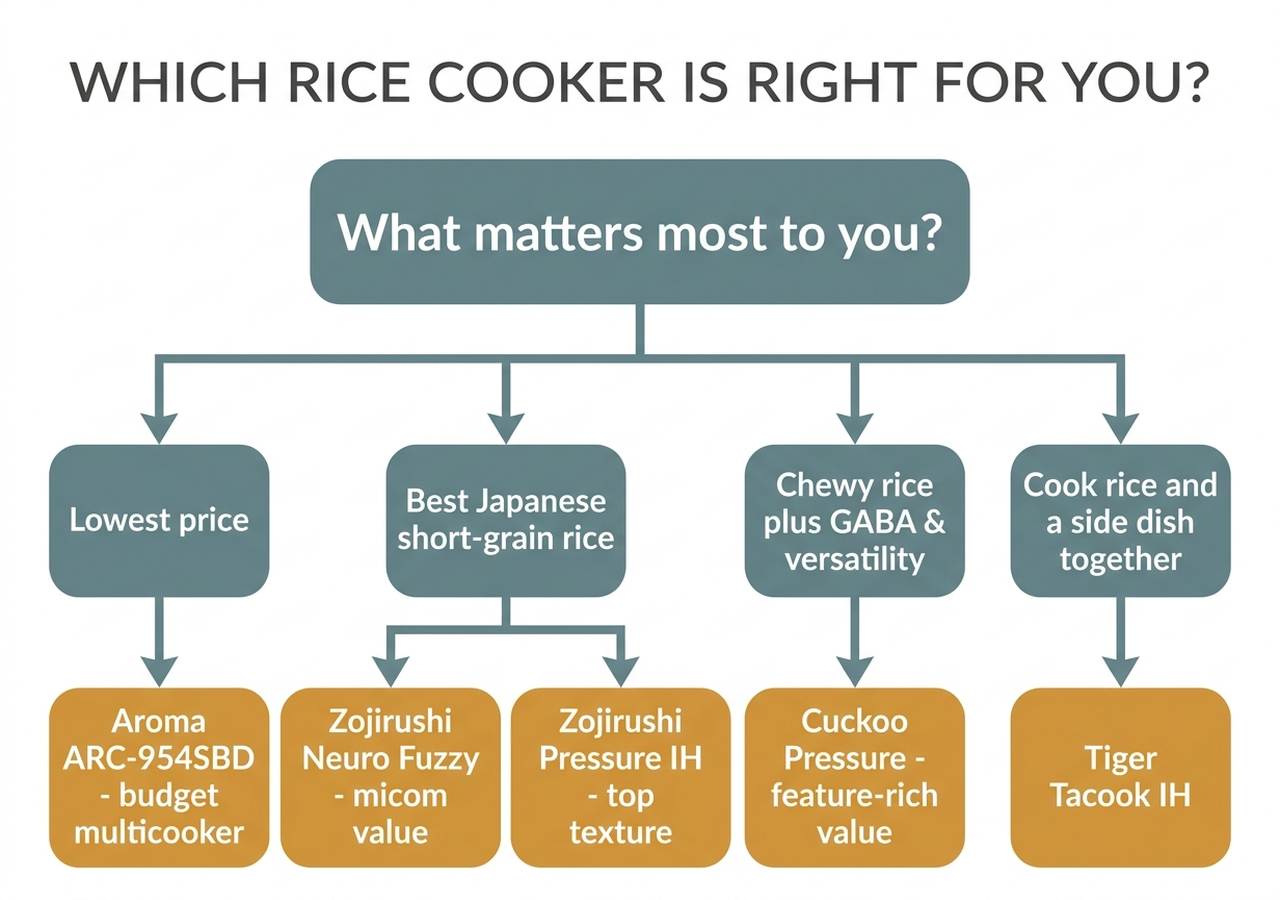
| If you are… | Consider | Why |
|---|---|---|
| Chasing the best short-grain texture | Zojirushi NW-JEC10BA (Pressure IH) | Made-in-Japan pressure flagship for the chewiest, sweetest rice |
| Wanting IH evenness, easy cleanup | Zojirushi NW-QAC10 (flat-top IH) | 12 settings, wipe-clean top, no pressure-valve upkeep |
| Seeking the best value in quality rice | Zojirushi NS-ZCC10 (Neuro Fuzzy) | Reviewer favorite for Japanese rice at micom pricing |
| Buying your first serious IH cooker | Zojirushi NP-HCC10XH | ~4.7 stars across 4,200+ ratings; reliable induction |
| Cooking rice and a side dish at once | Tiger JKT-D10U or JAX-T10U | Tacook plate steams a protein above the rice |
| Wanting the most features per dollar | Cuckoo CRP-P0609S | Pressure, GABA, voice guide, auto-clean at mid price |
| On the tightest budget | Aroma ARC-954SBD | Covers the basics for around $45 |
10. Warranty, Upkeep, and the Bottom Line
Before you buy, two practical notes. Warranty: Zojirushi and Tiger typically back their cookers with a limited warranty (often one year on most models, longer on select premium units); Cuckoo and Aroma offer comparable limited warranties. Register your purchase and keep the receipt, since coverage usually requires proof of purchase. Upkeep: wash the inner pot and inner lid after each use, and for pressure models, clean the pressure valve and gasket regularly so they seal properly. Choosing a model with fewer, easy-to-remove parts makes daily cleaning more sustainable.
The bottom line is the same principle that opened this guide: a higher price tag does not automatically mean the right cooker for you. Match heating technology, capacity, texture preference, and cleanup effort to your household, and the choice among Zojirushi, Tiger, and Cuckoo becomes clear. Want glossy short-grain rice? Zojirushi. Want one machine that cooks rice and a side together? Tiger. Want the most features for the money? Cuckoo.
Of course, checking every spec, price, and review for each model is a lot of work, and review pages are not always trustworthy. That is where the Arekore AI shopping assistant helps: paste the URL of any rice cooker you are considering, and the AI checks review authenticity, summarizes what low-star reviewers actually complain about, and weighs whether the current price is reasonable, in about five minutes.
Found a rice cooker you like? Verify it with Arekore.
Limitations
This analysis relies on publicly available customer reviews, third-party tests, and manufacturer specifications. We did not personally test the products covered here. Aggregated review sentiment can be skewed by review manipulation, and individual experience may vary by rice variety, water ratio, altitude, and unit-to-unit variance. Manufacturer figures (pressure levels, inner-pot materials, mode counts) are claims by the maker, not independently verified by us. Prices and star ratings are amazon.com figures at the time of writing (June 2026) and will change; confirm current details on each product page before buying.
Prices in this article are approximate amazon.com figures at the time of writing (June 2026). Prices, availability, and ratings change frequently, so confirm the latest details on each retailer’s page before purchasing. Capacities are stated in standard 6-ounce rice cups. Follow each product’s manual and safety instructions in use.
References: