Best Pressure Washers in 2026: Sun Joe vs. Ryobi
TL;DR / Quick Verdict
- Best overall value: Sun Joe SPX3000 — the most-purchased DIY electric pressure washer on Amazon US, with nearly 45,000 ratings, though its brushed motor is the segment’s most common source of longevity complaints.
- Best for most homeowners: Ryobi RY142300 (2,300 PSI, brushless) — Wirecutter’s top overall pick after testing six models, thanks to a brushless motor that runs quieter and holds up longer than brushed alternatives at a similar price.
- Best for heavy-duty jobs: Greenworks 2,700 PSI brushless washer — the highest cleaning-power figure of the three, a 10-year motor warranty, and reviewer reports of a sturdier build, at roughly double the Sun Joe’s price.
Methodology
This analysis synthesizes (a) aggregated Amazon US customer reviews for the Sun Joe SPX3000, Ryobi RY142300, and Greenworks 2,700 PSI electric pressure washer lines, (b) independent test coverage and buying guidance from Wirecutter and Consumer Reports, and (c) manufacturer-published PSI, GPM, and motor specifications. We did not personally test the products covered here. Wirecutter’s guidance is based on more than 50 hours of research and roughly a week of hands-on testing across six pressure washer models on tasks like cleaning cars and patio furniture; where we cite a specific claim (“best for most homeowners”), it traces back to that testing program, not to our own use. Sample sizes for review-based sentiment (for example, Sun Joe’s rating count) are labeled per product below.
Technical Approach: Three Ways to Power a Pressure Washer
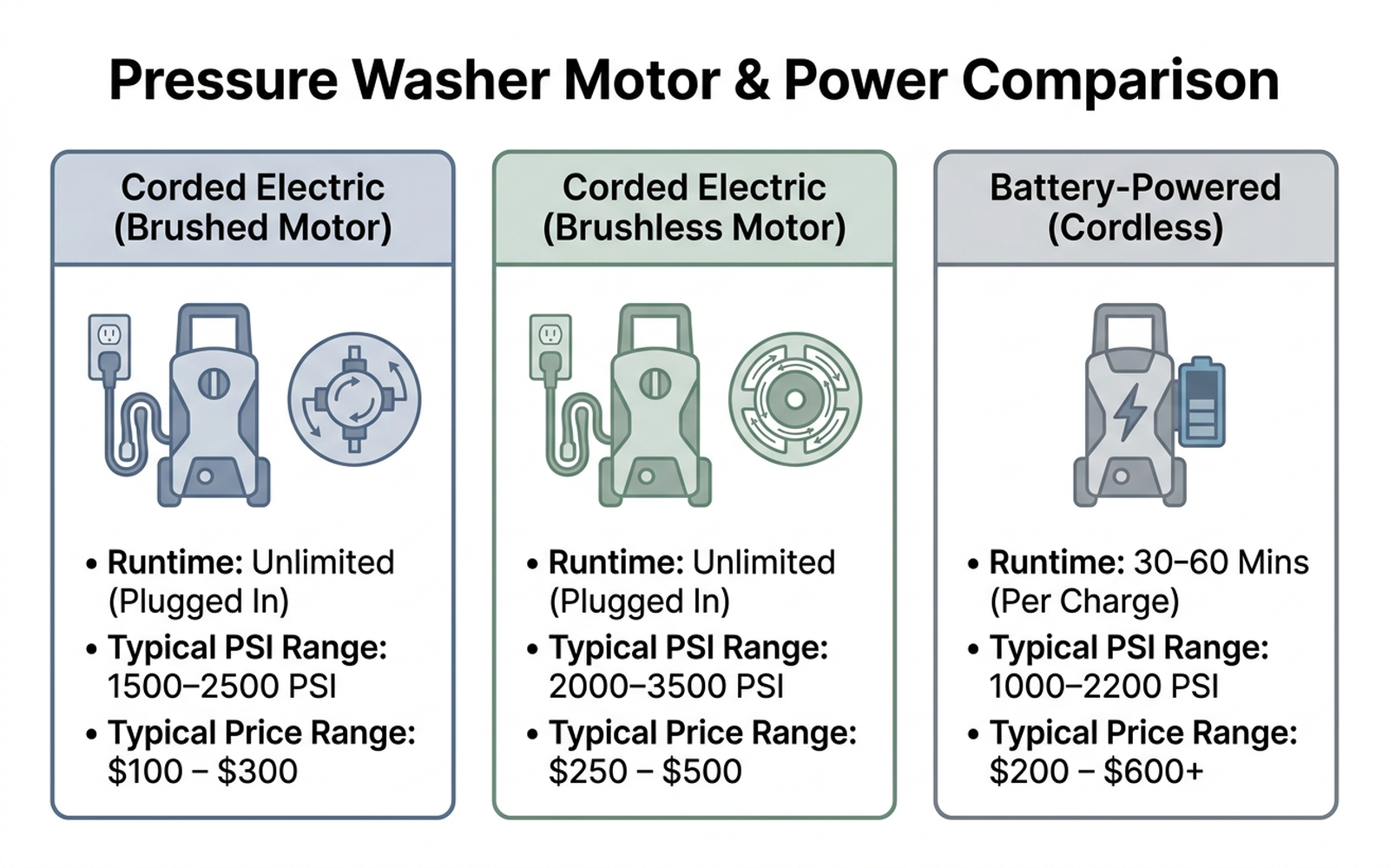
Electric pressure washers split into three motor and power designs, and the tradeoffs explain most of the price and reliability gap between the three brands compared here:
- Brushed (universal) motor — the traditional, lowest-cost electric motor design. It’s cheap to manufacture, which is why brushed-motor washers like the Sun Joe SPX3000 undercut brushless competitors by $100 or more. The tradeoff: brushed motors use physical carbon brushes that wear down with use, and user discussion threads on forums such as Slickdeals and detailing-enthusiast communities (e.g., AutoGeek Online) describe pump or motor failure within one to two seasons of occasional use as a recurring complaint pattern for this design.
- Brushless motor — used in the Ryobi RY142300 and Greenworks 2,700 PSI models. Brushless motors have no wearing contact brushes, run quieter, and are the design Wirecutter’s testing credits with the Ryobi’s edge in longevity and consistency versus cheaper brushed units. Manufacturers typically back brushless motors with longer warranties — Greenworks advertises a 10-year motor warranty on its brushless line, versus roughly one year on most brushed budget models.
- Battery-powered (cordless) — a smaller but growing category as battery technology improves, though we could not verify a precise, US-specific historical market-share figure for this shift. Cordless models like Ryobi’s ONE+ 18V line max out around 700 PSI, well below any corded model in this comparison, and typically run 20–30 minutes per battery charge. They trade cleaning power for the ability to work anywhere without running an extension cord, and are best suited to light jobs — patio furniture, bikes, small deck sections — rather than driveways or siding.
Manufacturer Deep Dive
Sun Joe SPX3000
The Sun Joe SPX3000 delivers 2,030 PSI at 1.76 GPM (rated to a 2,500 PSI maximum), using a 14.5-amp universal brushed motor, and ships with five quick-connect spray tips (0°, 15°, 25°, 40°, and a soap nozzle). It carries close to 45,000 Amazon US ratings as of this writing, with roughly 73% at five stars — the deepest review base of any product in this comparison, reflecting years as one of the best-selling electric pressure washers in the US. The recurring complaint pattern in owner discussion threads (Slickdeals, AutoGeek Online, and similar forums) is premature pump or motor failure, sometimes within a single season of occasional home use, along with occasional reports of leaks at the wand-to-hose connection out of the box. At its typical street price, most buyers treat it as a low-cost tool they may need to replace in a few years rather than a long-term investment.
Ryobi RY142300
Ryobi’s RY142300 produces 2,300 PSI at 1.2 GPM using a 13-amp brushless induction motor, and includes a bonus turbo nozzle that Ryobi’s own marketing claims delivers up to 50% more cleaning power than a standard fan-tip nozzle (a manufacturer claim, not independently verified in the testing we reviewed). Wirecutter names it the best pressure washer for most homeowners after testing it against five competing models, citing the brushless motor’s quieter operation and better durability track record than brushed alternatives in the same price range. Ryobi also sells a separate ONE+ 18V battery-powered line (topping out around 700 PSI) for buyers who prioritize cordless portability over raw cleaning power — a genuinely different tool for a different job, not a direct substitute for the corded RY142300.
Greenworks 2,700 PSI Brushless
Greenworks’ 2,700 PSI model is the highest-output washer in this comparison, rated at 2,700 PSI and 2.3 GPM with a brushless motor — a cleaning-units figure (PSI × GPM) noticeably higher than either the Sun Joe or Ryobi. Buyer comparisons on Slickdeals and similar forum threads describe the Greenworks build as sturdier and less plastic-heavy than Sun Joe’s budget line, and Greenworks backs the motor with a 10-year warranty against roughly one year on most brushed competitors. The tradeoff is price: at roughly $399.99, it costs about double the Sun Joe SPX3000 and roughly $150–200 more than the Ryobi RY142300, positioning it for buyers who pressure-wash a full driveway, large deck, or multi-story siding regularly rather than occasional light-duty use.
How to Choose: Matching PSI to the Surface
Pressure washer specs are usually reduced to a single PSI number, but PSI (force) and GPM (water flow) work together — multiplying them gives “cleaning units,” a rough measure of total cleaning power. Higher PSI cuts through caked-on grime faster, but it can also strip paint, gouge wood, or crack vinyl siding if the nozzle is held too close or the wrong tip is used. Matching pressure to the surface matters as much as the model you buy.
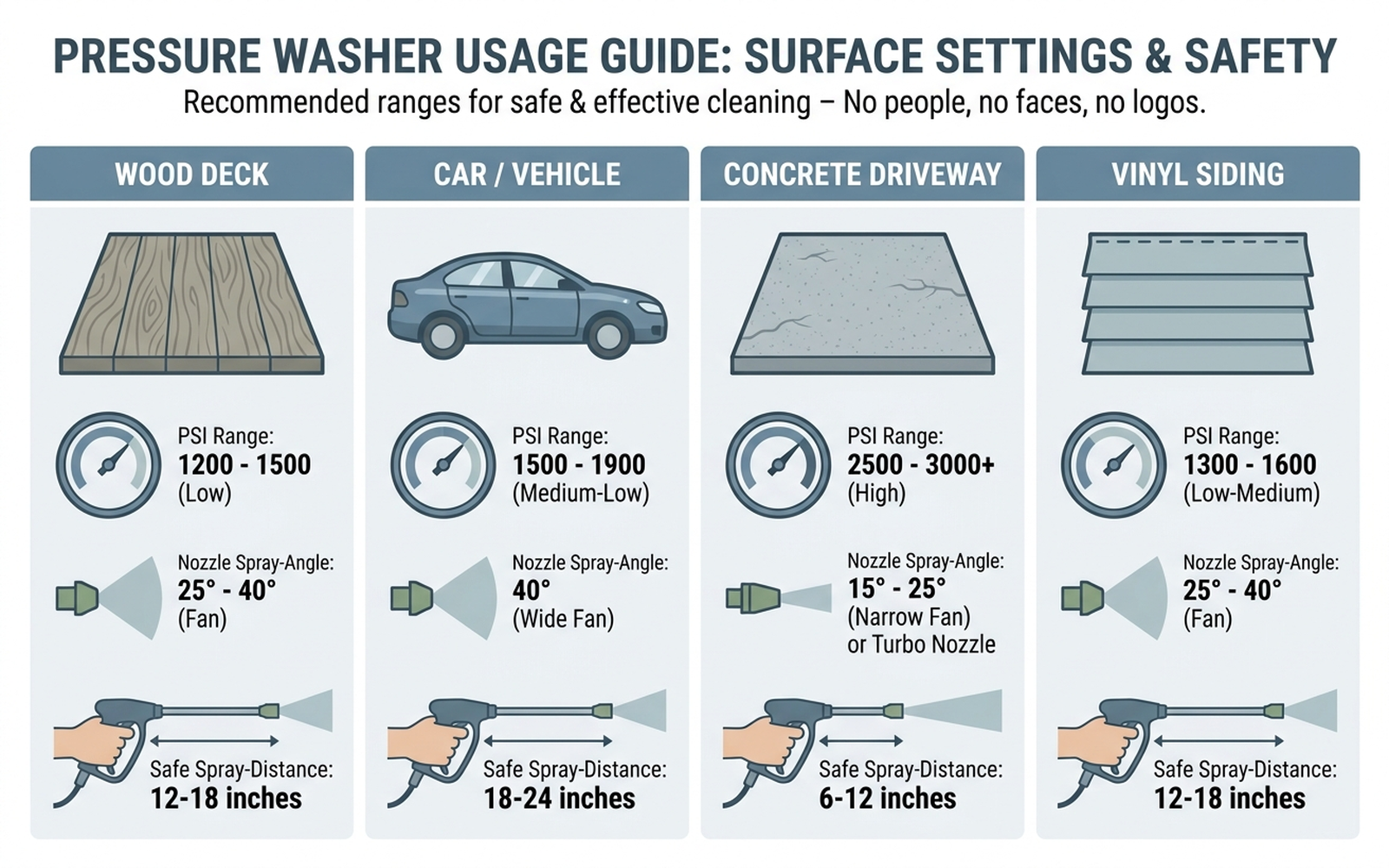
- Wood decks: keep it low, 500–1,200 PSI with a wide fan tip, held well back from the surface — high pressure gouges softwood and strips protective stain.
- Cars and vehicles: 1,200–1,900 PSI with a wide-angle (25°–40°) nozzle, never the 0° pinpoint tip, which can chip paint or crack trim at close range.
- Concrete driveways and walkways: 2,000–3,000 PSI is where a corded electric washer earns its keep — this is the surface where the Ryobi’s and Greenworks’ higher output over the Sun Joe shows up most.
- Vinyl siding: 1,200–1,700 PSI, angled downward so water can’t force its way behind panels, which can trap moisture and promote mold.
Comparison Table
Prices as of 2026-09-10 — Amazon frequently runs short-term discounts on all three brands; check the live listing before buying.
| Product | PSI / GPM | Motor | Reviews (Amazon US) | Price |
|---|---|---|---|---|
| Sun Joe SPX3000 | 2,030 PSI / 1.76 GPM | Brushed (universal) | ~45,000 ratings, ~73% five-star | ~$159.99 |
| Ryobi RY142300 | 2,300 PSI / 1.2 GPM | Brushless | Newer listing, smaller review base | ~$199.99 |
| Greenworks 2,700 PSI | 2,700 PSI / 2.3 GPM | Brushless | Newer listing, smaller review base | ~$399.99 |
Decision Flowchart: Frequency of Use vs. Budget
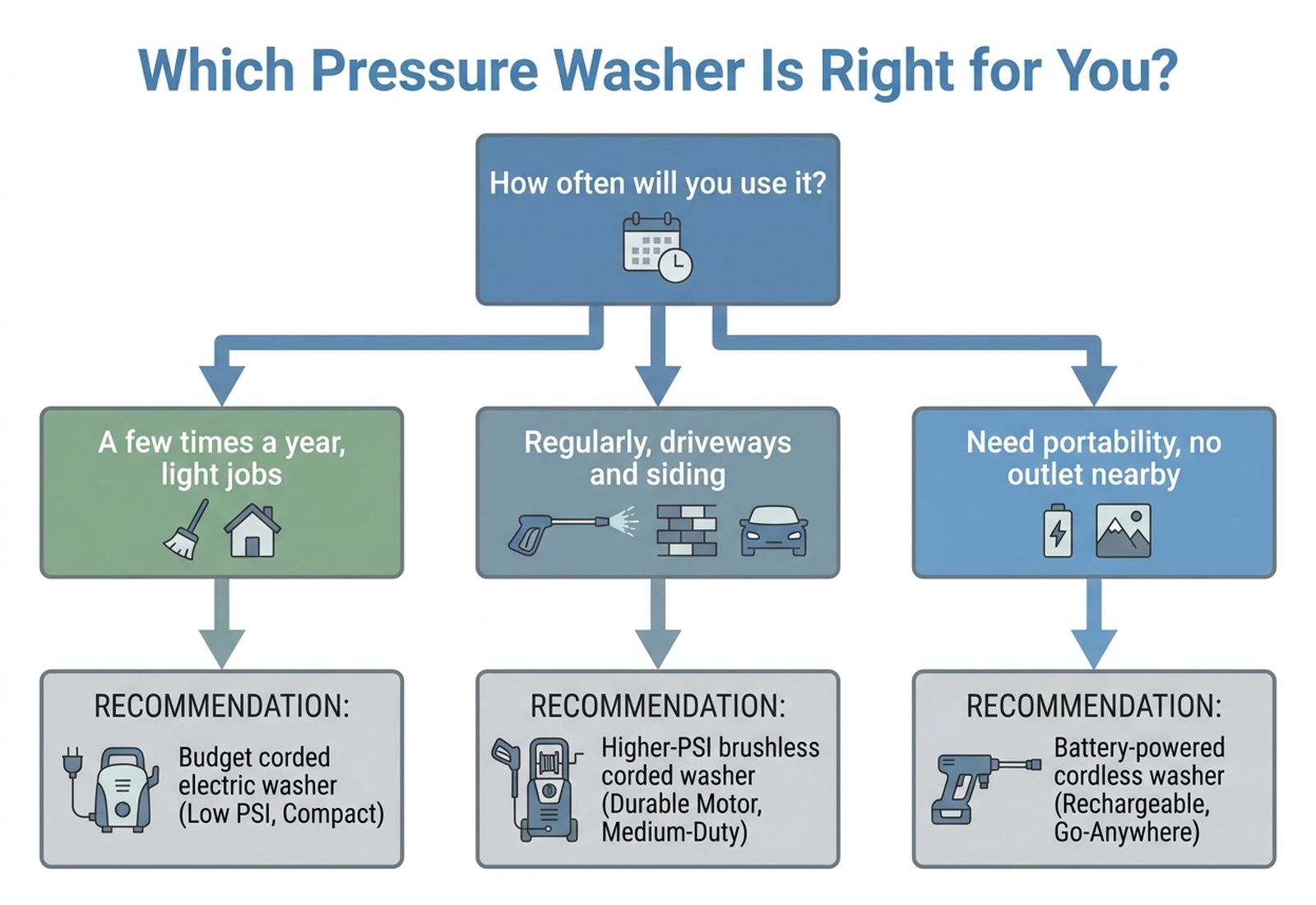
The clearest way through these three is to start with how often you’ll actually use the machine, not the PSI number on the box. Occasional light jobs point toward the cheapest option you’re comfortable replacing in a few years; regular driveway and siding cleaning points toward paying more up front for a brushless motor that’s less likely to fail mid-project; and a need to work away from an outlet points toward a battery-powered model at a fraction of the PSI.
Warranty and Support
Warranty length tracks motor type closely in this category. Sun Joe’s brushed-motor SPX3000 carries a standard 2-year limited warranty. Ryobi’s RY142300 brushless model carries a 3-year limited warranty. Greenworks backs its brushless motor specifically with a 10-year warranty, alongside a 3-year limited warranty on the rest of the unit — the longest coverage of the three, consistent with brushless motors’ lower failure rate in the owner reports we reviewed. None of these warranties cover normal wear items like O-rings, spray tips, or hoses, and none cover damage from freezing water left in the pump over winter — a failure mode owner communities specifically flag as avoidable with basic winterizing (running pump antifreeze through the system or fully draining it before storage).
Editorial Recommendation
- Best for most homeowners: Ryobi RY142300 — Wirecutter’s top pick, with a brushless motor that reviewers and owner-community reports associate with meaningfully better longevity than brushed alternatives at a similar price point.
- Best budget pick: Sun Joe SPX3000 — the deepest review base and lowest price of the three, worth it for buyers who use a pressure washer a few times a year and are fine replacing a brushed-motor unit down the line.
- Best for heavy, frequent use: Greenworks 2,700 PSI — the highest cleaning-units figure and longest motor warranty, for driveways, large decks, or multi-story siding cleaned more than occasionally.
- Best for cordless portability: Ryobi’s ONE+ 18V battery line — a different tool for light jobs (patio furniture, bikes, small surfaces) where running a cord isn’t practical, not a substitute for the corded models above on tougher surfaces.
Limitations
This analysis relies on publicly available Amazon customer reviews, owner-community forum reports, manufacturer specifications, and Wirecutter’s published testing; we did not independently test PSI output, motor longevity, or cleaning performance under controlled conditions. Manufacturer-published figures (turbo-nozzle cleaning-power claims, warranty terms) are cited as manufacturer claims unless a cited third-party source explicitly verified them. Reliability patterns drawn from owner-community reports reflect a self-selected group of people motivated to post about failures or successes, not a statistically representative sample of all buyers. Individual experience may vary based on water pressure at the source, frequency of use, and whether a unit is properly winterized. Prices listed reflect Amazon US at the time of writing and change frequently, including short-term promotional discounts not reflected in the table above.
As an Amazon Associate, Arekore earns from qualifying purchases. The Amazon product links in this article include our affiliate tracking ID and may earn us a commission if you buy through them, at no additional cost to you. See our Links Policy for details on how we select products and how commissions do not influence our recommendations.
- Sun Joe SPX3000 Electric Pressure Washer
- Ryobi RY142300 2,300 PSI Brushless Electric Pressure Washer
- Greenworks 2,700 PSI Brushless Electric Pressure Washer
Visit Arekore to verify current pricing and availability on any product mentioned here before buying.