Best Outdoor Pizza Ovens in 2026: Ooni vs Solo Stove

Backyard pizza ovens have gone from a niche purchase to a genuine category: the US outdoor pizza oven market is estimated at roughly $1.28 billion in 2026, growing at a 7.8% compound annual rate, with compact and portable models posting even faster 20-25% annual sales growth as buyers trade in propane grills for 60-second, 900°F+ pies. Two brands dominate the conversation on amazon.com — Ooni and Solo Stove — and Consumer Reports put both through controlled bake-offs this year. This guide breaks down how their designs differ, what that independent testing and aggregated Amazon owner reviews actually say, and which oven fits which budget and fuel preference.
As an Amazon Associate, Arekore earns from qualifying purchases. The Amazon product links in this article include our affiliate tracking ID and may earn us a commission if you buy through them, at no additional cost to you. See our Links Policy for details on how we select products and how commissions do not influence our recommendations.
TL;DR / Quick Verdict
- Best overall (Consumer Reports’ top pick): the Solo Stove Pi (Dual Fuel) — switches between a wood-burning assembly and a gas burner, and CR credits its circular deck and easy fuel-switching for the most consistently even bake of the group, backed by a lifetime warranty.
- Best gas-only flagship: the Ooni Koda 16 — a 16-inch propane deck that reaches roughly 950°F in about 20 minutes and cooks a 16-inch pizza in 60 seconds, with the highest Amazon review volume of any oven in this guide.
- Best lower-cost single-fuel alternative: the Solo Stove Pi Prime — a smaller, round, propane-only oven that reviewers consistently call the easiest for a first-timer to use well.
- Best budget pick: the BIG HORN 12” Multi-Fuel Pizza Oven — runs on wood pellets, propane, or an optional electric element for a fraction of the flagship price, with real stone-baked results despite far less polish.
- The real choice: decide whether you want wood-fired flexibility and the longest warranty (Solo Stove Pi Dual Fuel), the biggest deck and fastest gas-only cook (Ooni Koda 16), the simplest learning curve (Solo Stove Pi Prime), or the lowest entry price (BIG HORN) before you pick a brand.
How We Reached These Conclusions (Methodology)
This is an editorial analysis, not a hands-on review. We did not personally test the products covered here. This guide synthesizes three kinds of public information: (a) independent lab and kitchen testing from Consumer Reports, Reviewed (USA Today), and Tom’s Guide; (b) aggregated amazon.com customer ratings and the substance of recurring praise and complaints, sampled in October 2026; and (c) manufacturer specifications and product listings. Where we cite a manufacturer figure — a maximum temperature, a preheat time, or a cook time — we label it as a manufacturer specification rather than an independently verified result, since oven-to-oven and ambient-temperature variance affects real-world performance. Prices are amazon.com figures at the time of writing (as of 2026-10-19) and shift frequently, especially around Memorial Day and Black Friday.
Technical Approach: Three Different Philosophies
The ovens in this guide solve the same problem — reaching pizzeria-level heat (700°F+) in a backyard-sized footprint — with different fuel strategies and deck geometries.
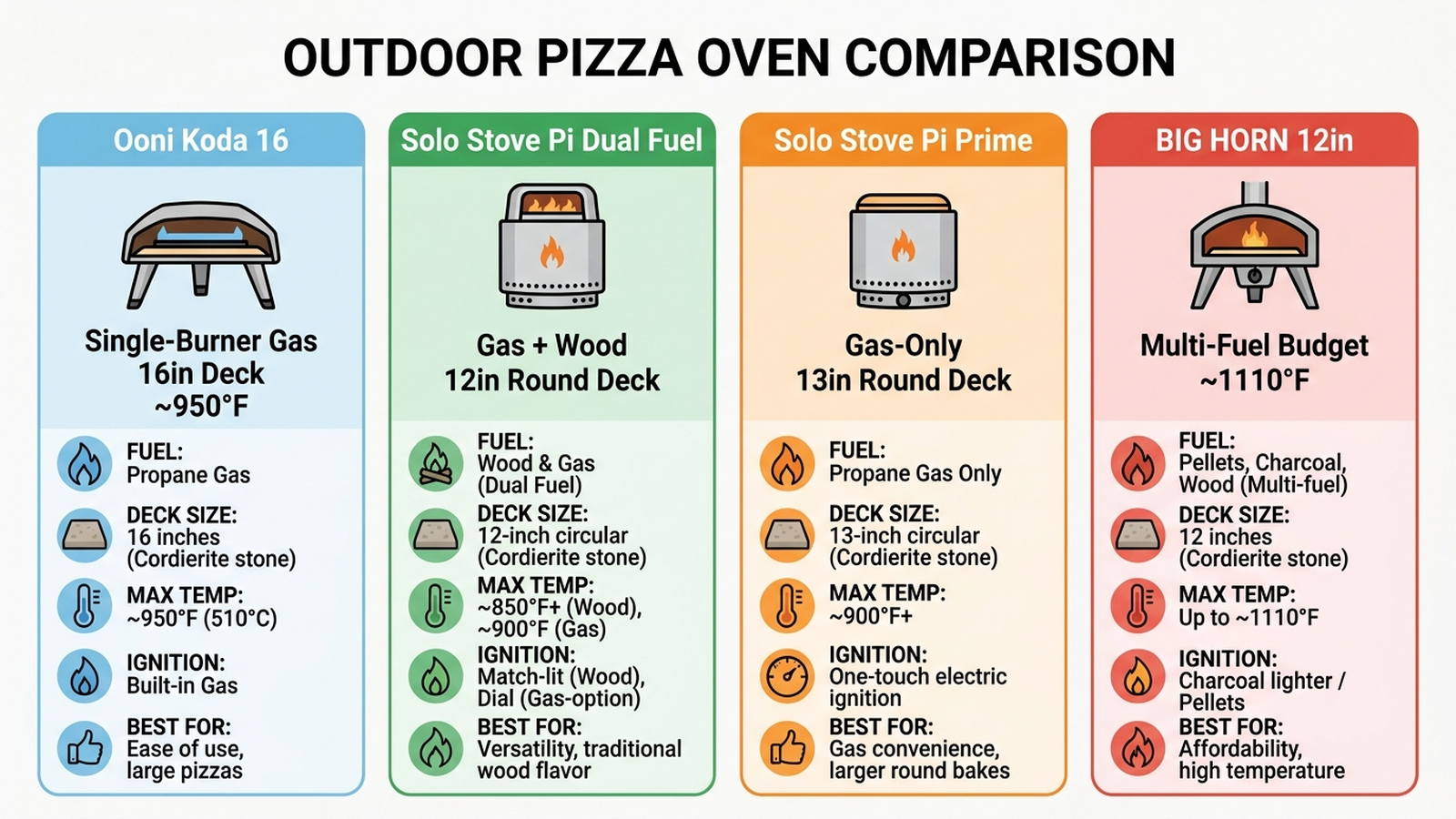
- Ooni Koda 16 (single-fuel, large gas deck): a 16-inch cordierite stone deck fed by a single L-shaped gas burner, reaching a manufacturer-claimed ~950°F in about 20 minutes. The L-shaped burner heats unevenly by design, so the pizza needs a quarter-turn every 20-30 seconds — a deliberate tradeoff for a wide, 16-inch cooking surface that fits a full-size pie without stretching the dough to the oven’s edge.
- Solo Stove Pi Dual Fuel (dual-fuel, circular deck): a round 12-inch stone deck that ships with both a gas burner and a wood-burning assembly, letting the same oven run on propane for weeknight convenience or wood for backyard-gathering flavor. Consumer Reports’ testing specifically credits the circular shape — rather than the cylindrical or oblong shapes common elsewhere — with a more even bake, and found the opening “small enough to hold in heat but wide enough to slide in or turn a pie easily.”
- Solo Stove Pi Prime (single-fuel, smaller circular deck): the gas-only version of the same circular-deck design, with a 13-inch opening and no wood-burning hardware. Dropping the dual-fuel assembly lowers the price and, per aggregated reviews, the learning curve — reviewers consistently describe it as the easiest of the group to get a good result from on the first try.
- BIG HORN 12” Multi-Fuel (budget, multi-fuel): a 12-inch stainless deck oven that accepts wood pellets out of the box and an optional gas burner or electric element as add-ons, reaching a manufacturer-claimed ~1,110°F. It trades build quality and brand-name support for a price roughly one-third of the flagship ovens.
Comparison Table (prices as of 2026-10-19)
| Model | Fuel | Deck Size | Manufacturer Max Temp | Amazon Price | Rating | ASIN |
|---|---|---|---|---|---|---|
| Solo Stove Pi (Dual Fuel) | Gas + wood | 12” round | ~850-900°F | ~$450-$500 | Consumer Reports’ top overall pick | B0B7Y12NQX |
| Ooni Koda 16 | Gas (propane) | 16” | ~950°F | ~$479-$500 | 4.6★ (1,062 ratings, Amazon) | B085LGV57D |
| Solo Stove Pi Prime | Gas (propane) | 13” round | ~950°F | ~$400 | 4.6★ (236 ratings, Amazon) | B0CG2MB8YB |
| BIG HORN 12” Multi-Fuel | Wood pellet / gas / electric | 12” | ~1,110°F (manufacturer claim) | ~$120-$180 | Budget pick across multiple outlets | B0CQ2DK39N |
Manufacturer Detail: What Each Brand Gets Right
Solo Stove Pi Dual Fuel
Consumer Reports named the Solo Stove Pi Dual Fuel its top overall pick among the outdoor pizza ovens it tested this year, Solo Stove’s first entry into the category. Testers found it straightforward to fire up on either gas or charcoal/wood, with gas controls that CR compares to a standard grill or stovetop, and consistently got crisp, evenly cooked pizza across runs. CR also flags the warranty as a standout: Solo Stove backs the Pi line with a lifetime warranty against manufacturing defects, longer than the one-year terms CR says it typically sees elsewhere in the category, some of which extend to five or ten years only with product registration.
Ooni Koda 16
Independent outlets consistently rank the Koda 16 as the most beginner-friendly large-format gas oven: Taste of Home’s review calls it the top choice for a “beginner-friendly and versatile” setup, citing the roughly 20-minute preheat to Neapolitan temperatures and a 16-inch deck that fits a full-size pizza without needing to stretch dough to an unusual shape. Aggregated Trustpilot sentiment across more than 1,200 Ooni reviews is overwhelmingly positive, with customers repeatedly citing build quality and ease of use; on amazon.com specifically, the Koda 16 carries a 4.6-star average across 1,062 ratings, the highest review volume of any oven in this guide. Recurring complaints in owner reviews center on the L-shaped burner’s intentionally uneven heat distribution, which requires rotating the pizza every 20-30 seconds, and occasional gas-ignition trouble that most owners resolve by detaching and reattaching the regulator.
Solo Stove Pi Prime
Tom’s Guide and TechGearLab both frame the Pi Prime as the easiest oven in Solo Stove’s lineup to use well on a first attempt, pointing to its single propane burner and simple control knob versus the dual-fuel model’s extra assembly. On amazon.com, the Pi Prime holds a 4.6-star rating across 236 reviews, with Solo Stove backing it with the same lifetime manufacturing-defect warranty as the Dual Fuel model. The main recurring criticism in aggregated reviews is temperature-zone control: some owners report it is harder to maintain an even cooking zone across the full stone than on the larger Koda 16, which a few attribute to the smaller 13-inch deck concentrating heat more tightly near the burner.
BIG HORN 12” Multi-Fuel
BIG HORN doesn’t appear in Consumer Reports’ or Tom’s Guide’s testing, but multiple pizza-oven-focused review sites single it out as the lowest-cost way into real stone-baked pizza, noting it runs on wood pellets out of the box and accepts an optional gas burner or electric heating element for buyers who want to upgrade fuel type later. Its manufacturer-claimed ~1,110°F ceiling is higher on paper than either Solo Stove or Ooni flagship, though none of the independent outlets we reviewed have verified that figure with lab instrumentation, and build-quality notes across review sites consistently describe thinner stainless steel and less refined fit-and-finish than the two premium brands.
Customer Sentiment Synthesis
Aggregated Amazon review patterns for the Ooni Koda 16 — the highest-volume listing in this guide at 1,062 ratings — repeatedly praise consistent results “pie after pie” once owners learn the rotation technique the L-shaped burner requires, with ignition hiccups and the intentional uneven-heat design the most common points of friction. The Solo Stove Pi Prime’s 236 reviews skew toward first-time buyers who call out how little trial and error it took to get a good bake, a pattern consistent with independent reviewers framing it as the most beginner-friendly single-fuel option. Owner sentiment on the dual-fuel Solo Stove Pi echoes Consumer Reports’ lab findings: reviewers who use both fuel modes describe the propane side as grill-simple and the wood side as the better flavor option for weekend entertaining, with the lifetime warranty frequently cited as a deciding factor over cheaper single-fuel ovens.
How to Use: Preheat and Rotation Matter More Than Max Temperature
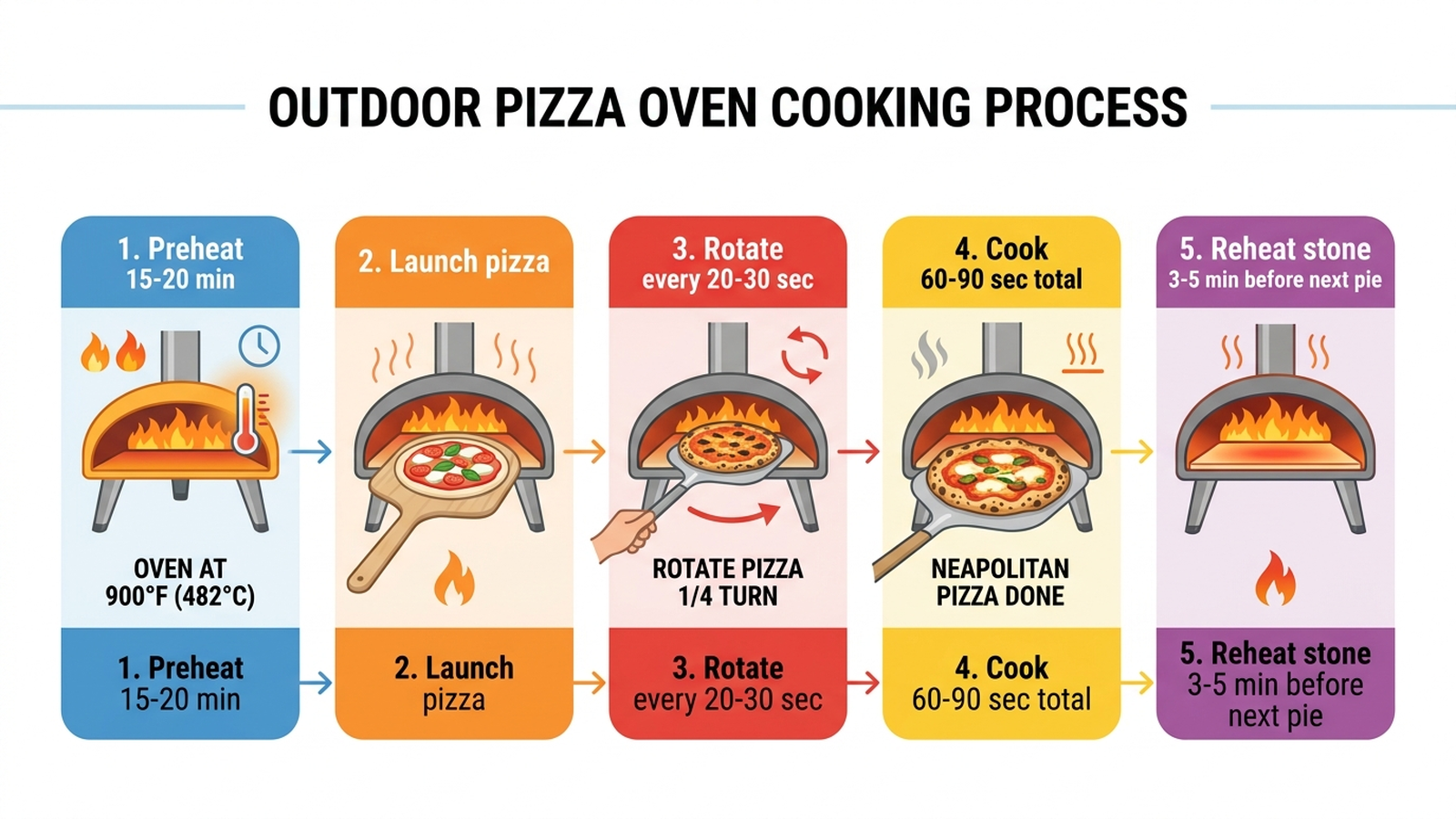
Across every oven in this guide, independent testers and manufacturer guidance agree on the same fundamentals:
- Preheat for the full manufacturer-recommended window (roughly 15-20 minutes for the Ooni and Solo Stove ovens) before the first pie — launching too early produces a pale, undercooked base even if the dome air temperature reads hot.
- Rotate the pizza every 20-30 seconds on single-burner designs like the Koda 16 and BIG HORN, since the flame sits on one side of the deck; the round Solo Stove ovens still benefit from one or two rotations even though CR found their heat distribution more even.
- Use a stainless steel or aluminum turning peel, not just a launch peel, for the rotation step — reviewers across all four ovens cite a dedicated turning peel as the single biggest improvement to consistent results.
- Let the stone fully reheat for 3-5 minutes between pizzas; skipping this step is the most commonly cited cause of a soggy or pale second pie in aggregated owner reviews.
Technical Approach Comparison (Visual)
Which One Should You Buy?
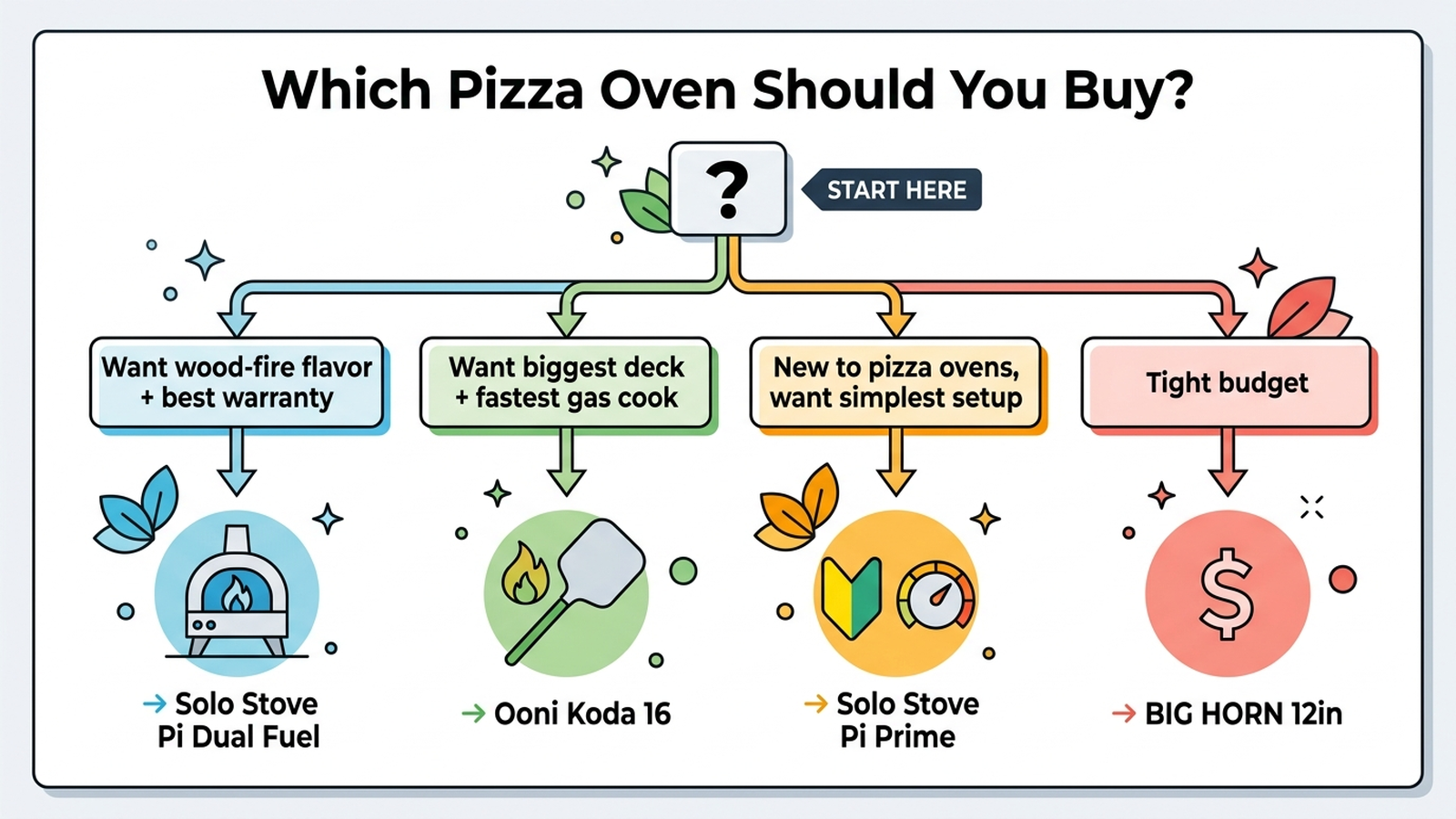
- Want the oven independent testers rate highest overall, and like the option to burn wood for flavor? The Solo Stove Pi Dual Fuel (~$450-$500) is Consumer Reports’ top pick, backed by a lifetime warranty — the strongest coverage of any oven here.
- Want the biggest deck, the fastest gas-only cook, and the largest base of Amazon reviews to check before buying? The Ooni Koda 16 (~$479-$500) is the most-reviewed oven in this guide and fits a full 16-inch pizza without stretching the dough thin.
- New to outdoor pizza ovens and want the simplest possible learning curve? The Solo Stove Pi Prime (~$400) is the pick reviewers most consistently call easy to get right on the first attempt.
- Working with a tight budget and willing to accept less refined build quality? The BIG HORN 12” Multi-Fuel (~$120-$180) gets real stone-baked results for roughly a quarter of the flagship price, with the flexibility to add a gas or electric fuel option later.
Warranty and Support
Solo Stove backs both the Pi Dual Fuel and Pi Prime with a lifetime warranty against manufacturing defects, which Consumer Reports specifically calls out as longer coverage than most competitors offer. Ooni covers the Koda 16 with a three-year warranty that extends through product registration, alongside a 60-day money-back guarantee, and aggregated reviews describe Ooni’s customer support as responsive with readily available replacement parts (including the pizza stone, which is the most commonly reported wear item). Budget multi-fuel ovens like the BIG HORN typically carry shorter, standard limited warranties — check the specific listing before buying, since warranty terms can vary between near-identical BIG HORN SKUs on Amazon.
Limitations
This analysis relies on publicly available independent testing, retailer and manufacturer specifications, and aggregated Amazon customer ratings rather than our own hands-on testing. Pizza oven performance is also highly technique-dependent — dough hydration, ambient wind, and how closely a user follows preheat and rotation guidance all affect results more than small differences in manufacturer-claimed max temperature. Prices on amazon.com change frequently, particularly around Memorial Day, July 4th, and Black Friday promotions, so treat the prices above as directional rather than exact at the moment you read this.
Visit Arekore Before You Buy
Before buying any outdoor pizza oven, use the Arekore AI shopping assistant to double-check current pricing, confirm a specific listing is sold by an authorized seller, and compare the latest customer feedback for the exact bundle or accessory package you’re considering.
Where to buy: