Best Memory Foam Pillows 2026: Coop vs Tempur-Pedic
The single most common reason people wake up with a stiff neck is a pillow that holds their head at the wrong height. Memory foam solved part of that problem by conforming to the shape of the head and neck, and it now sits at the center of the US pillow market. But “memory foam pillow” covers three very different designs — adjustable shredded fill, a solid molded block, and a foam-and-natural-fiber blend — and the right one depends almost entirely on how you sleep. This guide compares the three that dominate the conversation on US Amazon: the Coop Home Goods Original, the Tempur-Pedic TEMPUR-Cloud, and the Layla Kapok, using aggregated review data, independent testing, and manufacturer specifications.
As an Amazon Associate, Arekore earns from qualifying purchases. The Amazon product links in this article may include our affiliate tracking ID and may earn us a commission if you buy through them, at no additional cost to you. See our Links Policy for details on how we select products and how commissions do not influence our recommendations.
TL;DR / Quick Verdict
- Best for most people, and the safe default: the Coop Home Goods Original — an adjustable shredded-foam pillow that ships with an extra bag of fill so you can dial the loft up or down to fit any sleep position. It is Amazon’s long-running best-seller in the category and a Consumer Reports recommended pick.
- Best simple, one-piece foam feel: the Tempur-Pedic TEMPUR-Cloud — a solid block of the brand’s signature TEMPUR material with a soft, cradling feel and a fixed medium loft. The pick if you want classic memory foam and dislike fussing with fill.
- Best cooling and natural-fiber option: the Layla Kapok — shredded memory foam blended with plant-based kapok fibers, adjustable via a zipper, wrapped in a copper-infused cover marketed for temperature regulation.
- The real choice: decide whether you value adjustability (Coop), a fixed one-piece feel (Tempur-Pedic), or cooling and a softer natural blend (Layla) — then match the loft to whether you sleep on your side, back, or stomach.
How We Reached These Conclusions (Methodology)
This is an editorial analysis, not a hands-on review. We did not personally test the products covered here. Instead, this guide synthesizes three kinds of public information: (a) aggregated amazon.com customer ratings and the substance of low-star reviews, sampled in June 2026; (b) independent third-party testing and reporting from Consumer Reports, the Sleep Foundation, Tom’s Guide, Reviewed (USA Today), Mattress Clarity, and Mattress Nerd; and (c) manufacturer specifications. Where we cite a manufacturer figure — a loft height, a fill material, or a certification — we label it as a manufacturer claim rather than an independently verified result. We deliberately avoid quoting precise review counts or “percent of reviewers” figures we cannot verify; the sentiment summaries below are directional. Prices are amazon.com figures at the time of writing and change frequently, especially around Prime Day and the holidays.
The US Pillow Market in 2026
Pillows are a bigger business than most people assume. One market-research estimate values the US pillow market at roughly $3.37 billion in 2025, growing toward $4.77 billion by 2032 at about a 5.1% annual rate (Fortune Business Insights; other firms publish different figures, so treat it as directional). Within that market, foam — primarily memory foam — is the dominant fill type, capturing roughly 35% of share in recent data.
The growth is being driven by health and alignment concerns, not just comfort. Industry analysis of the US memory-foam pillow segment points to a sharp rise in demand for cervical-support and orthopedic designs, reflecting how many buyers now shop for a pillow specifically to address neck pain. At the same time, online bedding sales keep expanding, and Amazon has become the default storefront for the category — which is why the three pillows here, all Amazon staples, are the ones most US buyers actually compare.
The practical takeaway: memory foam is mature and competitive at every price from about $75 to $130. The meaningful differences between these three are about adjustability, loft, and cooling — not about whether any of them “works.”
1. First, Decide What Matters Most to You
Before comparing models, settle the questions that explain most of the differences here:
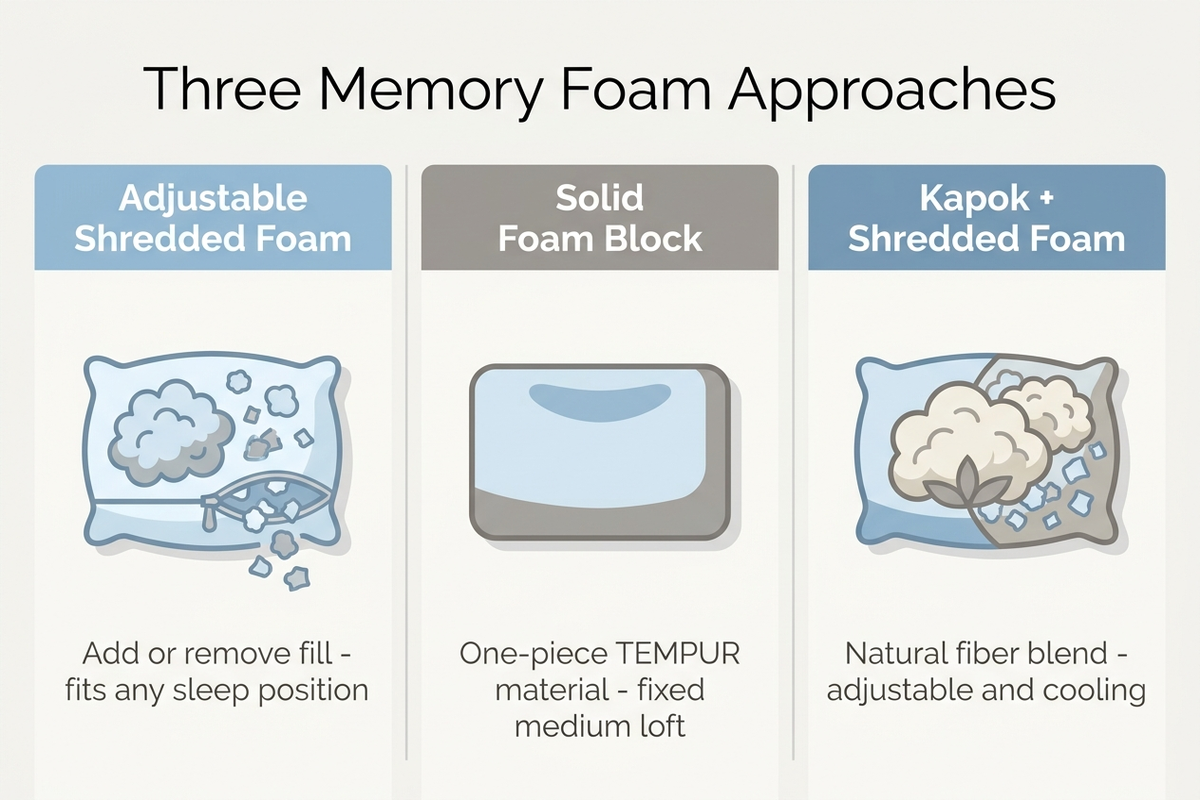
- Do you want to fine-tune the height yourself? The Coop Original is built around adjustability: unzip it and add or remove shredded fill until the loft is right for your body and position.
- Do you prefer a simple, one-piece feel with nothing to adjust? The Tempur-Pedic TEMPUR-Cloud is a single molded block of foam at a fixed loft — set it on the bed and you’re done.
- Do you sleep hot, or prefer a softer, more natural fill? The Layla Kapok blends foam with plant-based kapok and wraps it in a copper-infused cover marketed for cooling.
- What position do you sleep in? This matters more than brand. Side sleepers generally need a high loft, stomach sleepers a low one, and back sleepers something in between — covered in the next section.
A useful rule of thumb from the aggregated reviews: the biggest driver of satisfaction with any memory foam pillow is getting the loft right for your sleep position. Adjustable pillows (Coop, Layla) let you correct that yourself; a fixed pillow (TEMPUR-Cloud) only works well if its built-in loft happens to match you.
2. The Technology: Three Ways to Build a Foam Pillow
The single most important distinction in this category is solid foam versus shredded foam — it determines whether a pillow is adjustable and how it breathes.
- Adjustable shredded (cross-cut) foam. The Coop Original is filled with cross-cut memory foam blended with microfiber. Because the fill is loose, air moves through it and you can add or remove it. Coop states the Original is CertiPUR-US and GREENGUARD Gold certified and ships with an extra half-pound bag of fill so you can customize loft (manufacturer claims).
- Solid molded foam. The TEMPUR-Cloud is a single piece of the brand’s proprietary TEMPUR material in an extra-soft feel, with a fixed loft of about 5 inches and a machine-washable polyester cover (manufacturer figures). It delivers the classic slow-conforming “memory foam” sensation but cannot be adjusted, and solid foam traditionally traps more heat than shredded fill.
- Foam-plus-natural-fiber blend. The Layla Kapok mixes shredded memory foam with kapok, a light, airy plant fiber, and is adjustable via a zippered cover. Layla wraps it in a cover woven with copper-infused (CuTEC) yarn, which the brand markets as helping disperse heat (manufacturer claim).
Two more factors matter across all three:
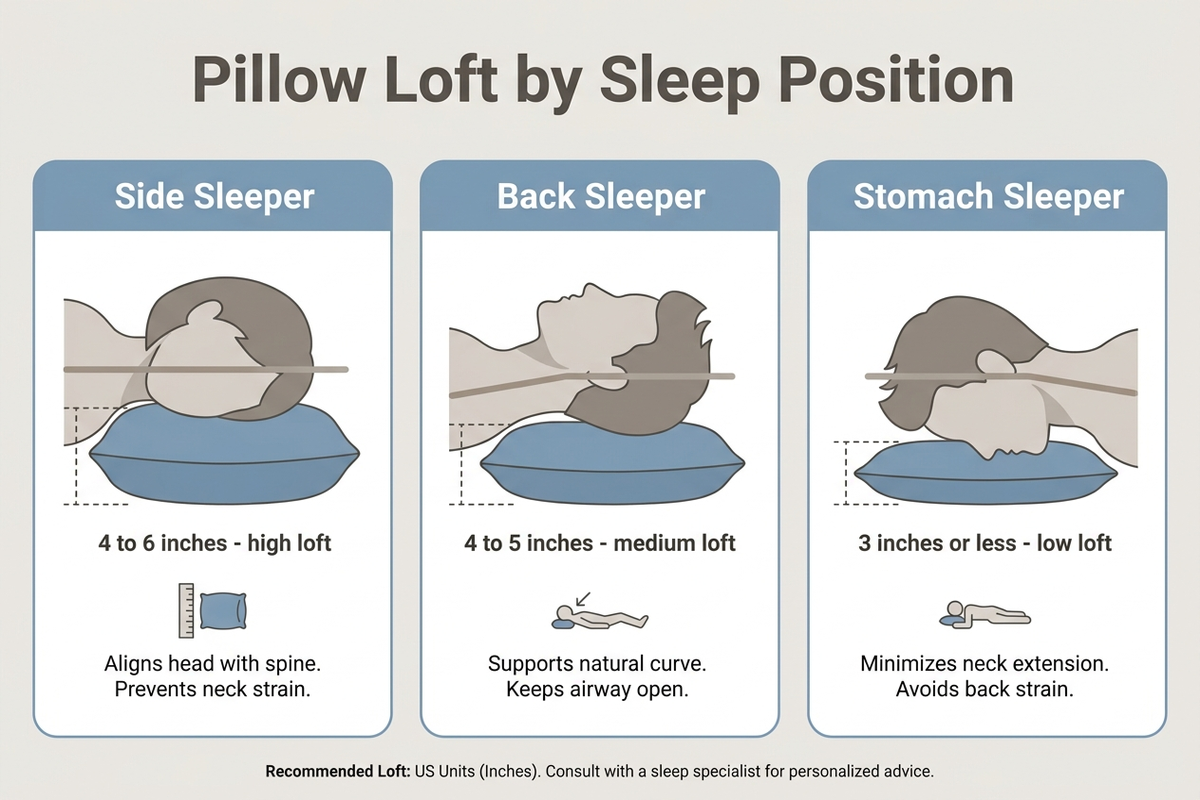
- Loft and sleep position. Per the Sleep Foundation’s testing guidance, side sleepers generally need a higher loft (roughly 4–6 inches) to fill the gap between shoulder and head, back sleepers a medium loft (about 4–5 inches), and stomach sleepers a low loft (around 3 inches or less) to avoid craning the neck. This is exactly where adjustable pillows have an advantage.
- Cooling. Shredded and blended fills breathe better than a solid block; covers matter too. The Layla leans hardest into cooling with its copper yarn, while a common complaint about solid foam is heat retention.
Bottom line: pick the fill type that matches how much control you want, then set the loft to your sleep position.
3. Comparison Table
Prices are amazon.com figures at the time of writing (June 2026) and fluctuate. Fill type, loft, and certifications are manufacturer or review-platform figures.
| Model | ASIN | Approx. price (Queen/Standard) | Fill | Adjustable? | Best for |
|---|---|---|---|---|---|
| Coop Home Goods Original | B00EINBSEW | ~$75 | Cross-cut memory foam + microfiber | Yes (add/remove fill) | All positions; anyone who wants to tune loft |
| Tempur-Pedic TEMPUR-Cloud | B07CMKX3C7 | ~$89+ | Solid TEMPUR foam block | No (fixed ~5” loft) | Back/stomach sleepers who want classic foam |
| Layla Kapok | B07BBV1MPD | ~$109–114 | Shredded memory foam + kapok | Yes (zippered fill) | Hot sleepers; those wanting a natural blend |
4. Coop Home Goods Original — The Adjustable All-Rounder
The Coop Home Goods Original is, for many buyers, the default answer to “what’s a good memory foam pillow?” It is a long-running best-seller on Amazon, and its defining feature is adjustability: it arrives overfilled with cross-cut memory foam and microfiber and includes an extra half-pound bag of fill, so you unzip the inner liner and add or remove foam until the loft fits your body and sleep position (manufacturer claims). Coop states the fill and cover are CertiPUR-US and GREENGUARD Gold certified.
Independent reviewers treat it as the value benchmark. Consumer Reports rated the Coop Original as a recommended pillow, and outlets including Tom’s Guide, the Sleep Foundation, and Mattress Clarity repeatedly highlight the adjustable loft as the reason it suits side, back, and stomach sleepers alike — you simply set the height each position needs. That versatility is the whole pitch.
The trade-offs are modest. The standard cover is a polyester-rayon blend (Coop’s “Lulltra” fabric) rather than cotton, and reviews note it manages moisture less well than a cotton cover, so hot sleepers may want to pair it with a breathable pillowcase. Aggregated reviews also indicate that, like most shredded-foam pillows, it can lose some loft over time and may need topping up or occasional fluffing. Getting the fill amount right takes a little experimentation up front.
Aggregated sentiment: the Original carries a high average rating across a very large number of ratings (in the mid-4-star range at time of writing). Praise clusters around adjustability, neck support, and value; the most common complaints involve initial off-gassing smell and the fill needing tuning.
Check the Coop Home Goods Original on Amazon
5. Tempur-Pedic TEMPUR-Cloud — The Classic One-Piece Feel
The TEMPUR-Cloud is the pillow for people who want the memory foam feel with nothing to fiddle with. It is a single molded block of Tempur-Pedic’s proprietary TEMPUR material in an extra-soft feel, delivering the slow-sinking, cradling sensation the brand built its reputation on. It has a fixed medium loft of about 5 inches and a removable, machine-washable polyester cover (manufacturer figures).
Reviewers describe it as a comfortable, low-fuss choice. Tom’s Guide reviewed the TEMPUR-Cloud favorably for back and stomach sleepers, noting the soft, conforming feel, while Mattress Nerd and Sleep Advisor frame it as a solid entry into the Tempur-Pedic lineup at a more accessible price than the brand’s contoured models. It also carries a 5-year warranty (manufacturer figure), longer than most mass-market foam pillows.
The catch is the flip side of its simplicity: you cannot adjust the loft. If its roughly 5-inch height doesn’t match your body, there’s no fix — and reviews suggest side sleepers with broad shoulders may find it too low for proper alignment (Tempur-Pedic sells contoured models like the TEMPUR-Neck aimed at side sleepers). Solid foam also traditionally sleeps warmer than shredded fill, though the cover is designed to mitigate that. And it sits above the Coop on price.
Aggregated sentiment: generally strong ratings, with reviewers praising the plush, high-quality foam feel and the washable cover. Recurring criticisms are heat retention and that the fixed loft is too low for some side sleepers.
Check the Tempur-Pedic TEMPUR-Cloud on Amazon
6. Layla Kapok — The Cooling, Natural-Fiber Blend
If the Coop is about adjustability and the Tempur-Pedic is about a fixed classic feel, the Layla Kapok is about cooling and a softer, more natural fill. It blends shredded memory foam with kapok, a light and airy plant-based fiber, for a feel reviewers describe as plush yet supportive. Like the Coop, it is adjustable — unzip the cover to add or remove fill — and it ships with a high loft (around 7 inches) that many sleepers, especially stomach and back sleepers, will want to reduce. Its cover is woven with copper-infused CuTEC yarn, which Layla markets as absorbing and dispersing heat (manufacturer claim).
Independent reviewers single out the temperature performance and versatility. Reviewed (USA Today) and Tom’s Guide both rate the Kapok as comfortable and adjustable, with Tom’s Guide noting a firmer, supportive feel well suited to side sleepers once dialed in, and multiple outlets highlighting that it sleeps cooler than a typical solid-foam pillow. Layla also backs it with a 120-night trial and a 5-year limited warranty (manufacturer figures) — one of the longer trial windows in the category.
The trade-offs: it is the most expensive of the three at the time of writing, and the copper-cooling benefit is a manufacturer marketing claim rather than an independently verified figure — reviews describe it as temperature-neutral rather than actively cold. As with any adjustable pillow, the shipped loft is high, so expect to spend a little time removing fill to get it right.
Aggregated sentiment: consistently positive ratings, with reviewers praising the cooling cover, the plush-but-supportive feel, and the long trial. Recurring criticisms are the price and that it arrives fuller/loftier than some sleepers want.
Check the Layla Kapok on Amazon
7. How to Set Up a Memory Foam Pillow
A great pillow still needs the right setup. Here is how to get each of these to support your neck properly.
- Match loft to your position first. Side sleepers: aim high (about 4–6 inches) to fill the shoulder-to-head gap. Back sleepers: medium (about 4–5 inches). Stomach sleepers: low (about 3 inches or less). These are Sleep Foundation starting points, not exact rules — your mattress firmness and shoulder width shift them.
- Adjustable pillows (Coop, Layla): they arrive overfilled on purpose. Remove fill gradually — a handful at a time — until your head, neck, and spine sit in a straight line when you lie in your usual position. Keep the extra fill; you can add it back.
- Fixed pillow (TEMPUR-Cloud): there is nothing to adjust, so the test is simpler — lie down in your normal position and check alignment. If your neck bends up or down noticeably, this fixed loft may not be your match.
- Air it out first. New memory foam commonly has an initial off-gassing smell. Unbox it a day before use and let it air in a ventilated room; the odor fades.
- Keep it clean. Check whether the cover is machine-washable (the TEMPUR-Cloud and Coop covers are removable) and follow the care label, since foam fill itself generally should not be machine washed.
8. How to Choose: A Decision Flowchart
The three pillows barely compete head-to-head; each is the clear answer to a different priority.
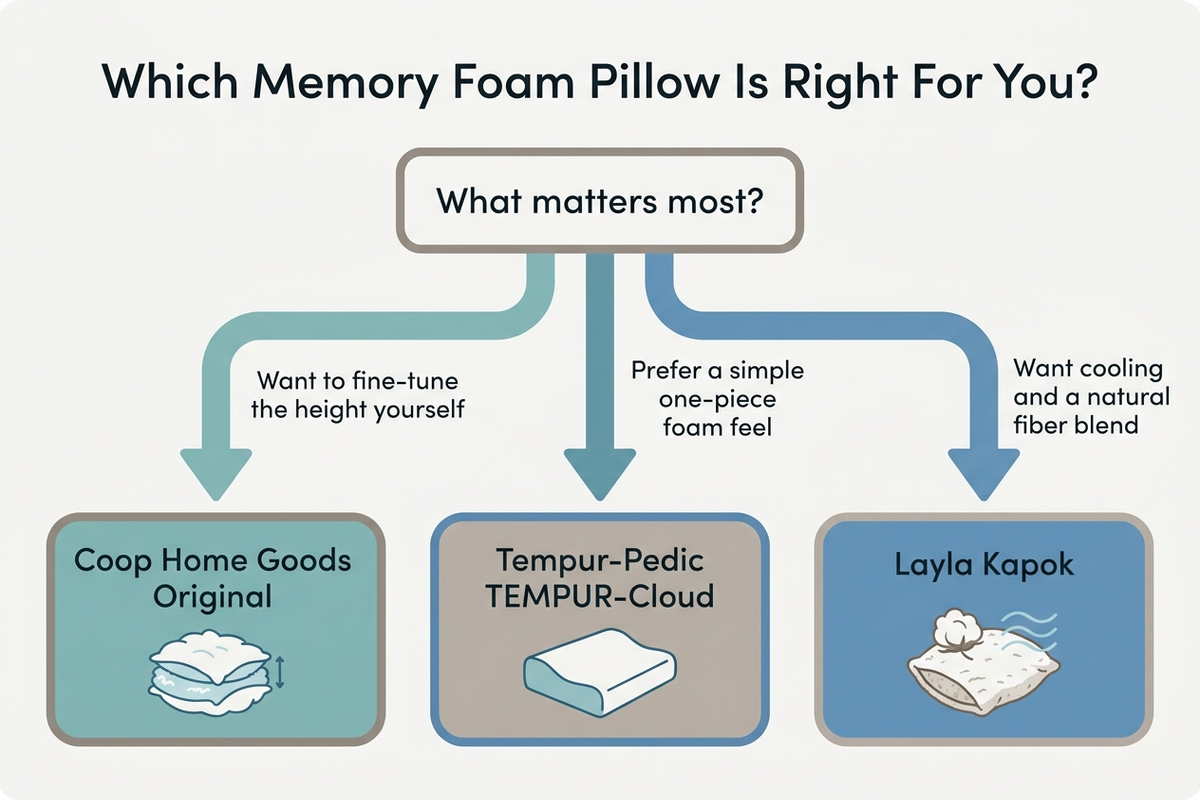
- Start with adjustability. Do you want to fine-tune the height yourself — or share one pillow across sleep positions in the household? Choose an adjustable pillow: the Coop Original (value default) or the Layla Kapok (cooling upgrade). If you’d rather have nothing to adjust, the fixed TEMPUR-Cloud is the simplest.
- Then weigh temperature. Sleep hot? The Layla Kapok, with its shredded blend and copper-yarn cover, is built for cooling. Solid-foam pillows like the TEMPUR-Cloud traditionally run warmer.
- Finally, weigh price and position. The Coop is the least expensive and adapts to any position. The TEMPUR-Cloud suits back and stomach sleepers who like classic foam, but its fixed ~5-inch loft can be low for broad-shouldered side sleepers. The Layla is the priciest but pairs cooling with side-sleeper-friendly support once dialed in.
9. Editorial Recommendations by Use Case
- Best for most people: Coop Home Goods Original. Adjustable loft, all-position versatility, a Consumer Reports recommendation, and the lowest price of the three make it the easiest to recommend to a first-time buyer.
- Best for a simple classic-foam feel: Tempur-Pedic TEMPUR-Cloud. If you want the signature TEMPUR sensation and dislike adjusting fill, and you sleep on your back or stomach, this one-piece pillow is the low-fuss pick.
- Best for hot sleepers: Layla Kapok. The foam-plus-kapok blend and copper cover make it the coolest-sleeping option here, and it’s adjustable and side-sleeper-friendly — at the highest price.
- Best for side sleepers specifically: an adjustable pillow set to a high loft — the Coop Original or Layla Kapok. Both let you build up the height that side sleeping needs; the fixed TEMPUR-Cloud can fall short here.
10. Warranty, Trials, and Longevity
Trial and warranty terms differ across the three (confirm current terms on each product page, as they occasionally change):
- Coop Home Goods offers a 100-night trial and a 5-year limited warranty (manufacturer figures). Because it’s adjustable and Coop sells extra fill, a Coop pillow can be “topped up” as the foam settles, extending its useful life.
- Layla offers the longest trial of the three — a 120-night trial with a 5-year limited warranty (manufacturer figures) — useful given it’s the priciest option.
- Tempur-Pedic backs the TEMPUR-Cloud with a 5-year warranty (manufacturer figure). As a solid-foam pillow it isn’t refillable, so treat it as a replace-rather-than-refresh pillow when the foam eventually softens.
Across shredded-foam pillows generally, expect to add or fluff fill periodically; solid foam holds its shape but can’t be revived once it softens.
11. Limitations of This Analysis
This analysis relies on publicly available reviews, independent third-party tests, and manufacturer specifications; we did not personally test these pillows, and individual experience varies with body size, mattress firmness, sleep position, and unit-to-unit variance. “Cooling,” “firmness,” and “loft” are partly subjective and depend on you and your bedding; recommended loft ranges are starting points, not exact values, and every adjustable pillow needs dialing in. Market-size and market-share statistics come from third-party research firms whose methodologies differ, so we present them as directional. Cooling claims (such as copper-yarn heat dispersion) and figures like loft height, fill material, and certifications are manufacturer claims labeled as such and are not independently verified here. Prices, ASIN availability, model variations (sizes, cover options), and warranty and trial terms change frequently; always confirm the current price, version, and specifications on the product page before buying.
The Bottom Line
For a memory foam pillow, the position you sleep in matters more than the logo on the tag. Choose the Coop Home Goods Original if you want an affordable, adjustable pillow that adapts to any sleeper, the Tempur-Pedic TEMPUR-Cloud if you want a classic one-piece foam feel with nothing to adjust, and the Layla Kapok if you sleep hot and want a cooling, natural-fiber blend. Whichever you lean toward, verify the exact size, version, and current price before you check out — and if you want a second opinion on a specific listing, paste the URL into Arekore and let the AI scan the reviews and price history for you in about five minutes.