Best Leaf Blowers 2026: Cordless vs Corded for Fall Cleanup
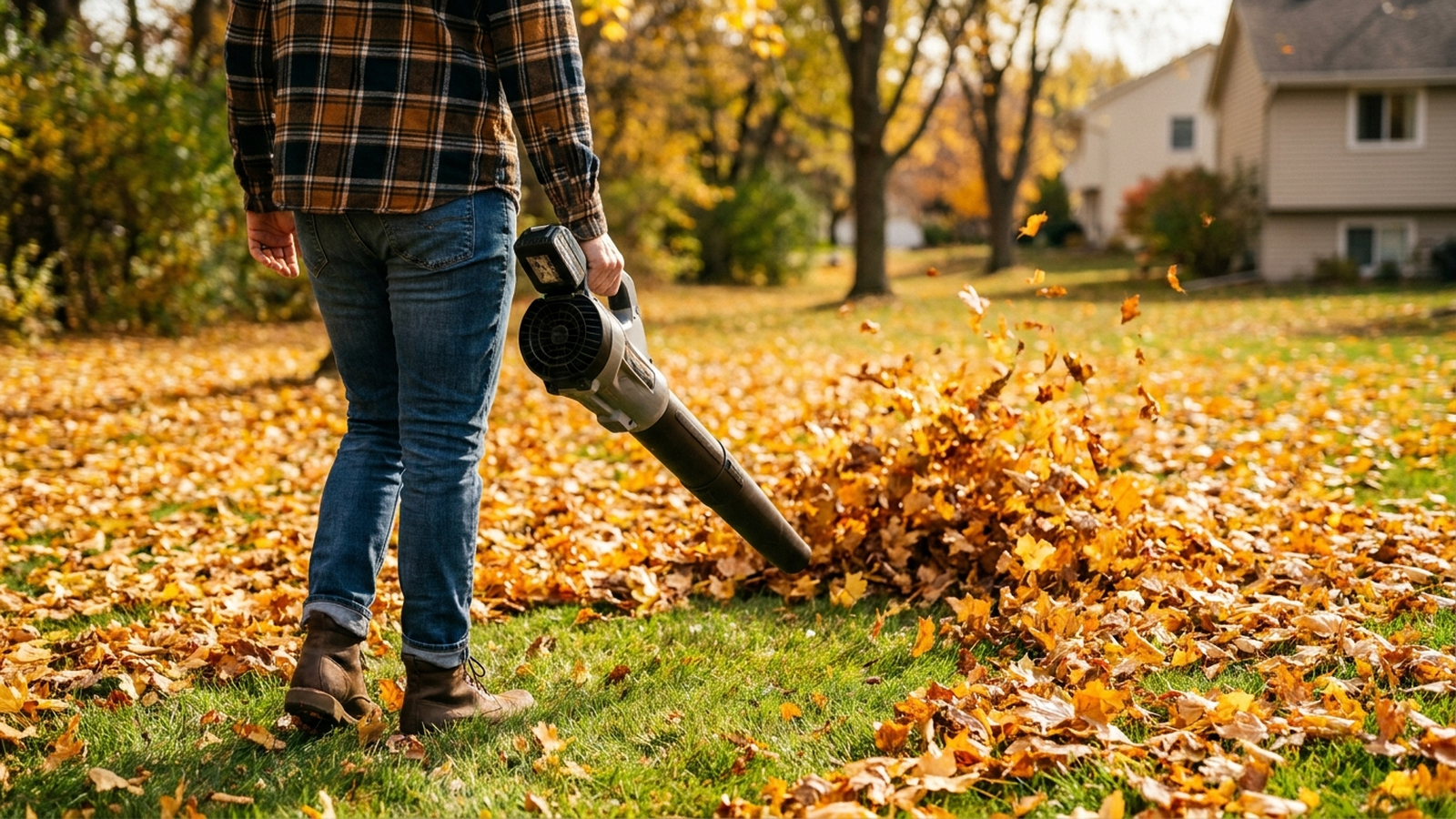
TL;DR. Gas leaf blowers are being restricted in more than 100 US cities as of 2026, and the two-stroke engines that power most gas models are a genuine noise and emissions problem — but “just buy electric” isn’t a single decision. For a small yard, a corded electric blower like the WORX WG520 Turbine 600 gives near-unlimited runtime for about $60. For a mid-size yard without an outlet in range, a cordless handheld like the EGO Power+ LB6504 or Greenworks 60V 700 CFM matches gas-blower power for 15-50 minutes per charge. For a large property with mature trees, a cordless backpack blower — Consumer Reports’ top scorer in 2026 — trades weight and price for 30-60 minutes of runtime. Below, we break down the tradeoffs using Consumer Reports lab data and aggregated Amazon customer sentiment.
A note on links and methodology
As an Amazon Associate, Arekore earns from qualifying purchases. The Amazon product links in this article include our affiliate tracking ID and may earn us a commission if you buy through them, at no additional cost to you. See our Links Policy for details on how we select products and how commissions do not influence our recommendations.
We also did not personally test these products — every claim below is an editorial synthesis of public data. The Methodology section explains exactly which sources we used.
Methodology
This article is an editorial analysis based on publicly available data collected in September 2026. We synthesized four categories of source:
- Independent lab tests — Consumer Reports’ 2026 leaf blower ratings and its best cordless leaf blowers roundup, which score models on debris clearing, noise, ease of use, and battery runtime.
- Customer reviews on amazon.com — we read the “Top reviews,” “Most recent reviews,” and the AI “Customers say” summary block on each ASIN’s product page to identify recurring positive and negative themes. We do not report a precise sample size N because Amazon’s review panels do not expose a stable count; reporting a fake precise N would be misleading.
- Manufacturer specifications — official EGO, Greenworks, Ryobi, WORX, and BLACK+DECKER product pages for CFM (cubic feet per minute, a volume-of-air measurement), MPH (air speed), voltage, and runtime figures. These are manufacturer-published numbers, not independently verified lab results, and we label them as such throughout.
- Regulatory and market data — city and state gas-leaf-blower restriction tracking from PIRG’s interactive policy map and coverage of 2026 bans, plus leaf blower and outdoor power equipment market-size estimates from industry research firms (Coherent Market Insights, Fortune Business Insights).
We deliberately do not simulate first-person product experience, fabricate reviewer personas, or invent precise data points we cannot verify. Recommendations are editorial opinions formed from the synthesis above.
1. Why “just go electric” is more complicated than it sounds
More than 100 US cities now restrict gas-powered leaf blowers in some form, and the pace of new restrictions accelerated through 2026. Lower Merion Township, Pennsylvania began a seasonal gas blower ban on June 1, 2026 (prohibited June 1-October 1 and January 1-April 1). Baltimore restricted gas blowers to a two-month fall window in 2026, ahead of a full ban at year-end. Portland, Oregon is phasing out gas blowers on a path to a complete ban by 2028. Several states — including Colorado, Nebraska, Texas, Wyoming, New Mexico, and Maryland — now offer rebates specifically for switching from gas to electric equipment.
The reasons cited are consistent across jurisdictions: two-stroke gas engines are loud (often 90-100+ decibels at the operator’s ear, well above levels associated with hearing damage over repeated exposure) and burn a gas-oil mixture inefficiently, producing disproportionate emissions relative to engine size. But the practical replacement decision isn’t “gas vs. electric” — it’s a three-way tradeoff between corded electric, cordless (battery) handheld, and cordless (battery) backpack, and each fits a different yard.
2. Three technical approaches, compared
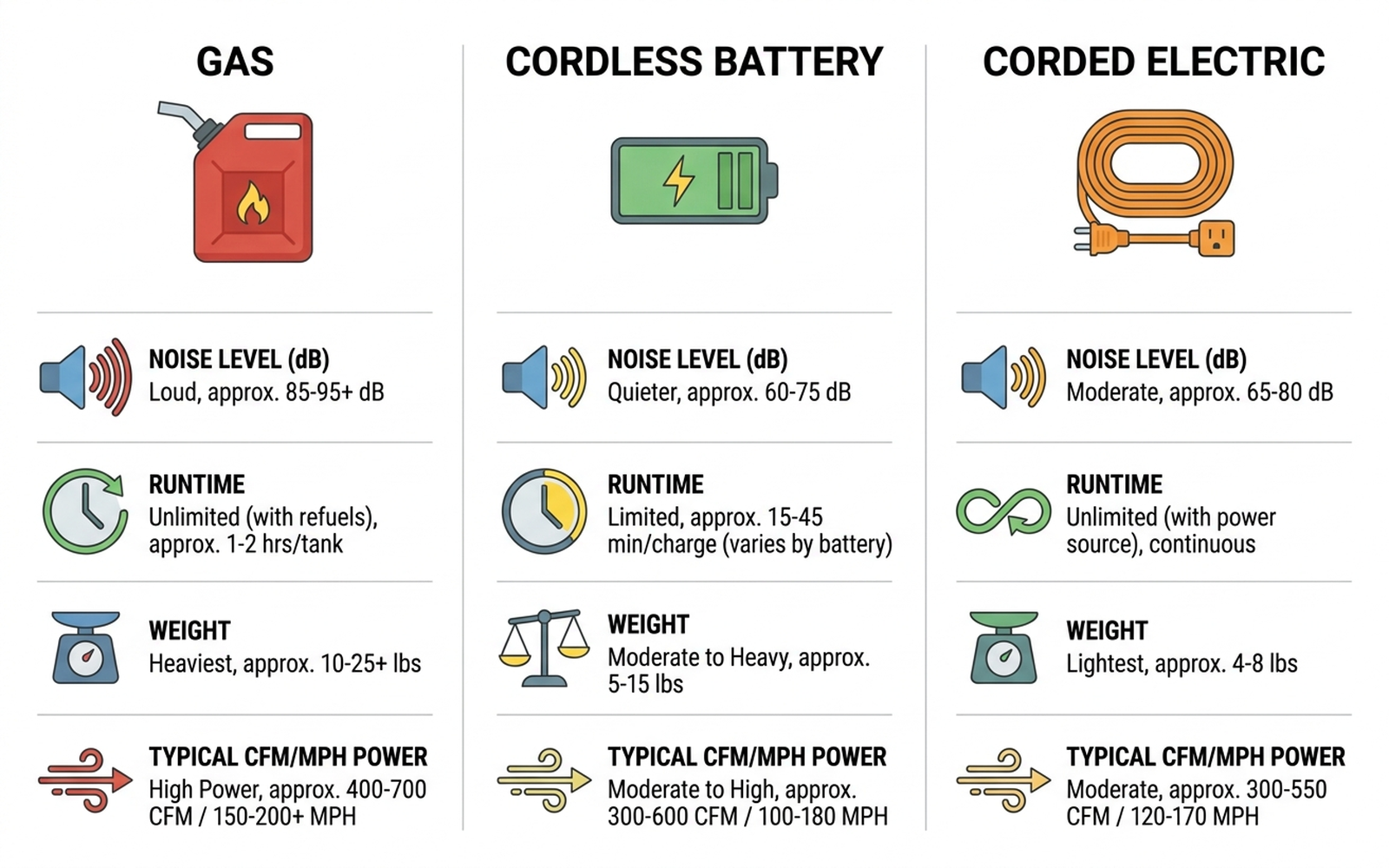
Corded electric blowers plug into a standard outlet and run as long as you keep them plugged in. The tradeoff is a cord — practically speaking, that means an extension cord you drag around the yard, and a hard ceiling on how far from the house you can work. Manufacturers publish CFM and MPH figures for corded models that are broadly comparable to mid-tier cordless handhelds, because the motor doesn’t need to be sized around a battery’s power delivery limits.
Cordless handheld blowers run on removable lithium-ion battery packs, typically 40V-60V for the higher-power consumer models (EGO, Greenworks, Ryobi) and 20V for lighter-duty options. Consumer Reports found the best handheld cordless models can match or exceed comparable gas handhelds on debris-clearing speed while running meaningfully quieter — but battery runtime is real: most handhelds max out at 12 to 15 minutes of continuous full-power use before needing a swap or recharge, per Consumer Reports’ testing notes on the category.
Cordless backpack blowers move the battery weight onto a backpack harness rather than making the handheld unit heavier, and use larger battery packs — Consumer Reports’ testing found backpack models deliver 30 to 60 minutes of runtime per charge, at the cost of a heavier overall unit (20-30 lbs with battery) and a higher price ($600-800 for top performers).
3. Manufacturer detail: what each brand’s flagship actually does
EGO Power+ LB6504 (650 CFM handheld, 56V battery): EGO’s handheld line uses a proprietary 56V battery platform shared across EGO’s broader lawn tool lineup (mowers, trimmers), which matters if you already own EGO tools and want battery interchangeability. EGO publishes a runtime of up to 90 minutes on the included 5.0Ah battery at variable lower speeds, though full-power runtime is shorter — manufacturer runtime claims are typically measured at partial throttle, not the blower’s top speed. Aggregated Amazon customer sentiment repeatedly cites strong power (“crazy powerful,” “the power I need”) alongside a recurring complaint about the unit’s weight during extended use.
EGO LBPX8004-2 (backpack, tested by Consumer Reports): CR’s top-scoring backpack blower for 2026, at 86/100 — the highest score across the nine blowers in that test round. It weighs about 30 lbs with battery and carries a 5-year warranty, at a list price around $769.
Greenworks 60V 700 CFM handheld (BL60L512 line): Greenworks’ 60V handheld line scored 85/100 in Consumer Reports’ handheld category, the top score among handhelds tested, at roughly $250 — notably cheaper than EGO’s comparable model. CR specifically noted it runs quietly enough that hearing protection isn’t necessary during normal operation, and rated it fast on both loose leaves and embedded debris. Greenworks’ 60V battery platform is not interchangeable with EGO’s 56V or Ryobi’s 40V systems, so factor that in if you’re building out a multi-tool battery ecosystem.
Ryobi 40V HP Brushless “Whisper Series” backpack: Ryobi’s 40V backpack line delivers 730 CFM and 165 MPH per Ryobi’s published specs for the single-battery kit (RY404170), running on one 6.0Ah battery with a variable-speed trigger and cruise control. Ryobi markets the Whisper Series specifically on noise — the brand claims roughly 85% quieter operation than a comparable gas backpack blower at around 59 dB, a manufacturer claim rather than an independently verified figure. A higher-output two-battery configuration in the same Whisper Series line (RY40HPLB02K) pushes to 850 CFM and 180 MPH at a higher price; Consumer Reports scored a Ryobi backpack blower from this line 83/100, calling it quick at clearing leaves and effective at pulling stuck material out of grass.
WORX WG520 Turbine 600 (corded): A 12-amp corded electric blower rated at 600 CFM and 110 MPH, weighing about 6.5 lbs — light enough for one-handed operation for extended periods, since there’s no battery weight to carry. At roughly $50-60, it’s the cheapest genuinely capable option in this roundup. The obvious limitation is the cord: WORX’s own marketing frames it around “daily yard debris clearing” rather than large-property cleanup, and a cord-based blower fundamentally isn’t practical for properties without accessible outlets near the work area.
BLACK+DECKER BEBL750 (corded): A 9-amp corded axial blower rated at 450 CFM and 140 MPH, at about 7.3 lbs, with a built-in scraper for stuck debris and 2-speed control. It’s a step down in raw CFM from the WORX unit but a recognizable, widely available brand at a similar price point.
4. How to use a leaf blower without wasting a third of the job
Independent test data and manufacturer guidance converge on a few basics that materially change how fast the job gets done:
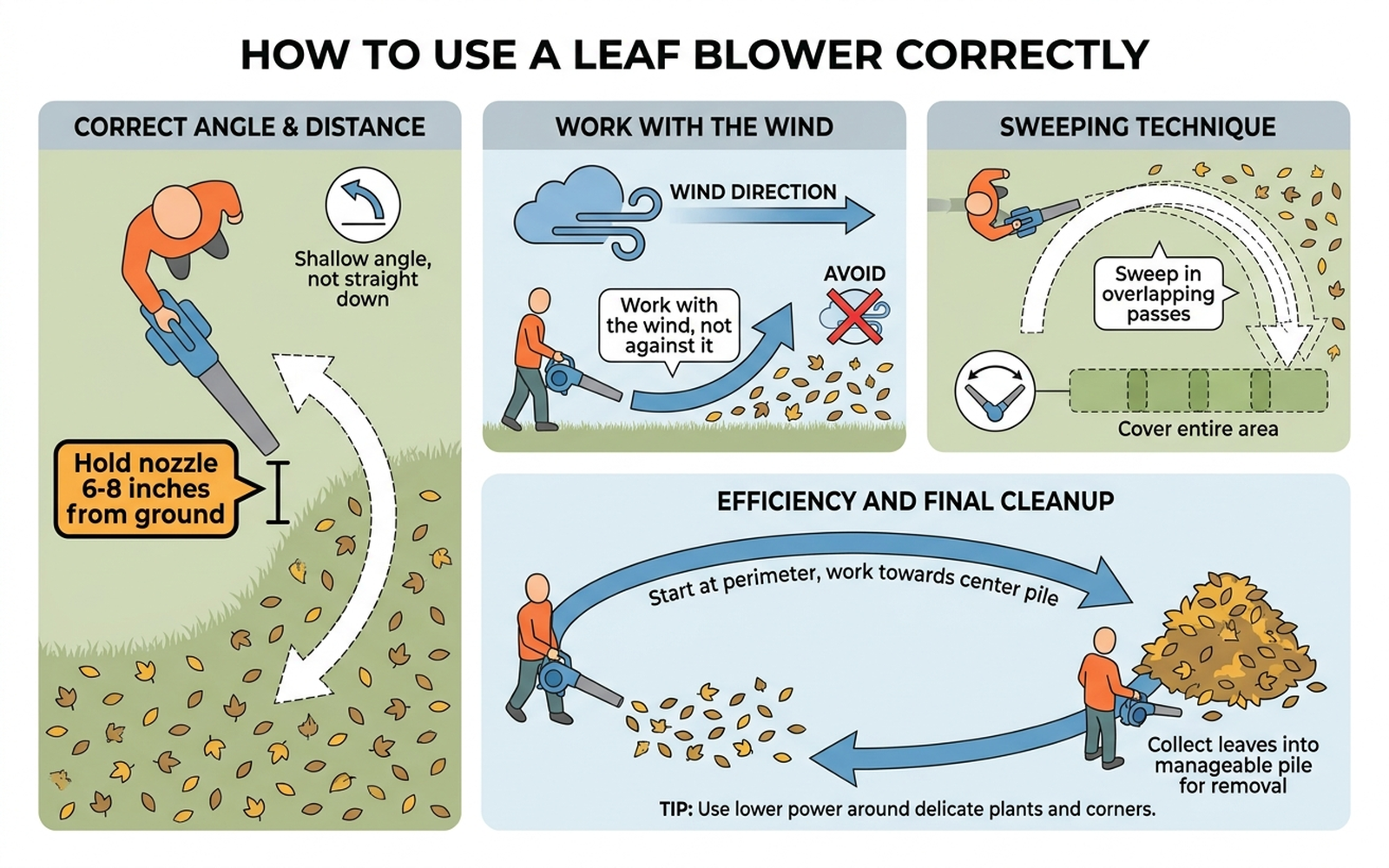
- Work with the wind, not against it. Blowing debris into a headwind roughly doubles the effective work, since the airflow has to overcome both the debris weight and opposing wind resistance.
- Hold the nozzle 6-8 inches off the ground for loose leaves on a lawn; lower for embedded debris in grass, higher (and at a shallower angle) for hard surfaces like driveways where you don’t need ground-hugging airflow.
- Sweep in overlapping passes, not one wide swing — Consumer Reports’ technique notes on debris-clearing speed found overlapping narrow passes clear a lawn faster than single wide sweeps, because a blower’s airflow is a cone, not a flat wall.
- Match speed setting to debris type. Nearly every cordless model in this roundup has a variable-speed trigger or speed-lock dial; full power on dry leaves is often unnecessary and burns battery runtime faster for no clearing-speed benefit, while wet or embedded debris genuinely needs the top setting.
5. Comparison table
Prices as of 2026-09-12. Manufacturer-published CFM/MPH figures; CR score is Consumer Reports’ independent lab score out of 100 where available.
| Model | Type | CFM / MPH | Runtime | Weight | CR Score | Price |
|---|---|---|---|---|---|---|
| EGO Power+ LB6504 | Cordless handheld (56V) | 650 CFM / 180 MPH | Up to 90 min (variable speed) | ~9 lbs w/ battery | — | ~$200 |
| Greenworks 60V 700 CFM | Cordless handheld (60V) | 700 CFM / 170 MPH | Up to 50 min | 10.2 lbs w/ battery | 85/100 | ~$250 |
| Ryobi 40V HP Whisper Series backpack (RY404170) | Cordless backpack (40V) | 730 CFM / 165 MPH | ~30 min (1-battery config) | ~18 lbs w/ battery | 83/100* | ~$409 |
| WORX WG520 Turbine 600 | Corded electric | 600 CFM / 110 MPH | Unlimited (corded) | 6.5 lbs | — | ~$55 |
| BLACK+DECKER BEBL750 | Corded electric | 450 CFM / 140 MPH | Unlimited (corded) | 7.3 lbs | — | ~$45 |
* CR’s 83/100 score was measured on a higher-output two-battery Ryobi Whisper Series backpack configuration (850 CFM / 180 MPH), not the single-battery RY404170 kit linked above — treat it as directionally representative of the product line, not a direct score for this exact SKU.
6. Customer sentiment synthesis
Across the cordless handheld models (EGO, Greenworks), the most consistent positive theme in aggregated Amazon reviews is raw power relative to size — reviewers frequently compare favorably against gas blowers they previously owned. The most consistent negative theme is weight fatigue during extended sessions, particularly for larger yards where a single battery charge doesn’t cover the whole property and reviewers end up swapping batteries mid-job.
For the corded WORX and BLACK+DECKER models, sentiment splits along an expected line: reviewers who bought them for small-to-medium lots (under roughly a quarter acre, close to outlets) report high satisfaction with unlimited runtime and low weight; reviewers who tried to use a corded blower on a larger property or one without convenient outlet access report frustration managing extension cords across the yard, which is a structural limitation of the corded design rather than a specific product flaw.
7. Warranty and support
EGO backs its cordless outdoor power tools with a 5-year tool warranty and a 3-year battery warranty, among the longer warranties in the category — Consumer Reports specifically flagged the LBPX8004-2’s 5-year warranty as a factor in its top ranking. Ryobi’s backpack line also carries a 5-year warranty. Greenworks’ consumer 60V line typically carries a 4-year tool warranty. Corded electric models from WORX and BLACK+DECKER generally carry shorter 2-3 year warranties, consistent with their lower price point and simpler mechanical design (no battery management electronics to warranty separately).
8. Which one is right for you
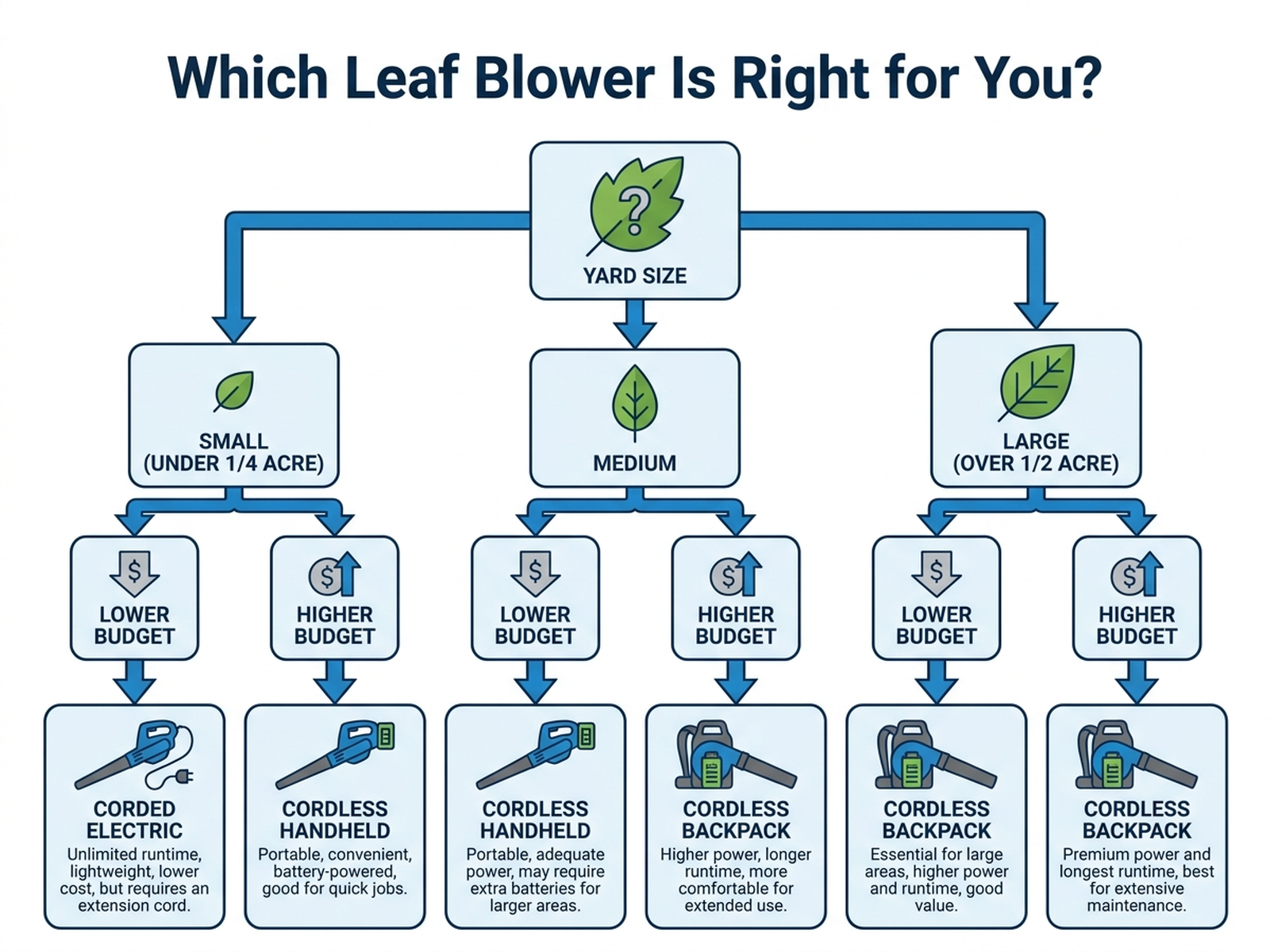
- Small yard, outlet within cord range, budget-conscious: a corded electric blower — WORX WG520 Turbine 600 or BLACK+DECKER BEBL750 — covers the job at roughly a quarter of the price of a cordless model, with zero runtime anxiety.
- Medium yard, no convenient outlet, want gas-comparable power: a cordless handheld — Greenworks 60V 700 CFM if price is the deciding factor (and CR’s top handheld score), EGO LB6504 if you already own EGO 56V tools and want battery interchangeability.
- Large property, mature trees, heavy fall leaf volume: a cordless backpack blower — Ryobi’s 40V Whisper Series backpack if budget matters at around $409, EGO’s LBPX8004-2 if you want CR’s single highest-scoring 2026 model and don’t mind the roughly $360 premium.
- Living somewhere with an active or upcoming gas blower restriction: check your municipality’s specific rules before buying — some bans are seasonal, some are commercial-use-only initially with residential restrictions phased in later, and requirements vary significantly by city even within the same state.
9. Limitations
This analysis relies on publicly available Consumer Reports scores, manufacturer specifications, and aggregated Amazon customer reviews — we did not personally test these blowers side by side. CFM and MPH figures for the EGO handheld, Ryobi backpack, and both corded models are manufacturer-published specifications rather than independently lab-verified numbers; only the Greenworks handheld and one Ryobi backpack configuration carry a Consumer Reports lab score in this comparison, and CR did not test the exact backpack SKU (RY40HPLB02K) or handheld corded models referenced here, so those scores are directionally representative of the product line rather than a direct one-to-one test result. Gas blower restriction details change frequently and vary by municipality; verify current local rules before assuming any option is compliant in your area. Individual experience may vary based on lot size, debris type, and unit-to-unit variance.
Have a specific yard-size or budget question about leaf blowers? Ask Arekore’s AI shopping assistant to compare options for your situation before you buy.