Best Gear for Night-Shift Workers in 2026
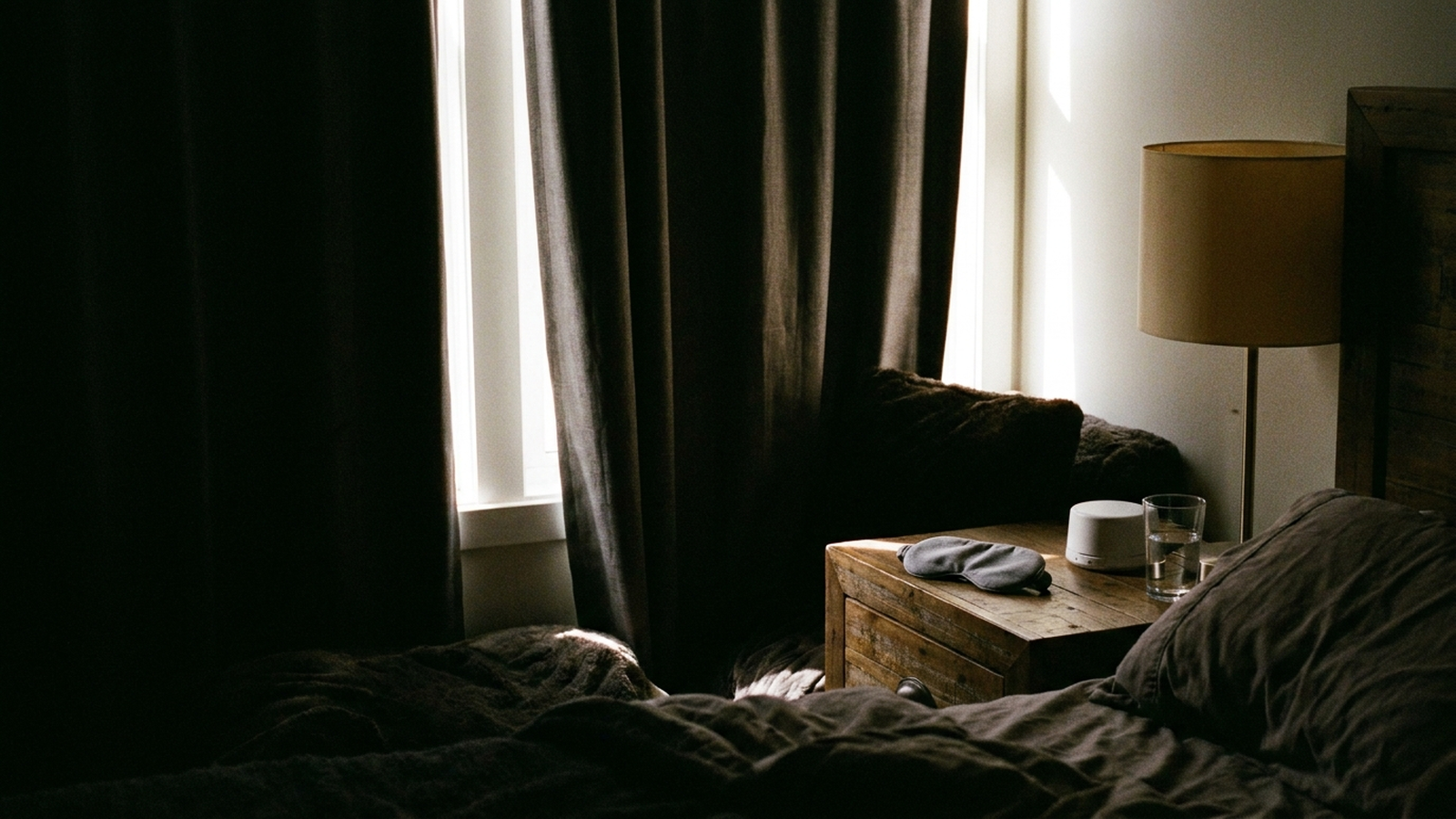
Roughly 30% of the US workforce works a schedule outside the standard daytime shift, according to NIOSH, and the people on it face a problem no amount of willpower solves: the human body is built to sleep when it’s dark and eat on a regular clock, and night shifts fight both at once. Nurses, warehouse workers, security staff, and factory operators on rotating or fixed night schedules have long reported the worst sleep of any shift pattern — federal survey data has found more than half of night-shift healthcare workers sleeping six hours or less a day — and a 2025 European survey of shift workers found that 89.2% said their eating patterns were disrupted by their schedule and 73.9% said they often couldn’t finish a meal because it went cold before they had time to eat it. This guide is built for that specific reader: a short, deliberately narrow list of gear that addresses the two things a night shift actually breaks — daytime sleep and meal timing — based on aggregated review data, independent lab testing, and manufacturer specifications rather than personal anecdote.
As an Amazon Associate, Arekore earns from qualifying purchases. The Amazon product links in this article may include our affiliate tracking ID and may earn us a commission if you buy through them, at no additional cost to you. See our Links Policy for details on how we select products and how commissions do not influence our recommendations.
TL;DR / Quick Verdict
- The sleep mask that actually stays on: in USA Today’s Reviewed lab testing of 11 masks, the contoured MZOO Luxury Sleep Mask won best overall for blocking light without pressing on the eyes — a bulkier, pricier competitor tested worse for staying in place on side sleepers.
- The sound tool that masks a daytime household: a non-looping white noise machine like the LectroFan High Fidelity, run at a steady 50–60 dB, prevents the sharp noise contrasts (a door, a dog, a delivery truck) that trigger the brain’s orienting reflex during daytime sleep.
- The one curtain spec that matters: a high blackout percentage (85%+) with a thermal or felt liner, not just “room darkening” — the difference between a genuinely dark room at 2 p.m. and one with daylight leaking around every edge.
- The most-skipped item that prevents eye strain on the commute home: amber-tinted lenses for the last stretch of a shift and the drive home, which manufacturer and industry data describe as blocking 80–90% of the blue wavelengths that tell the brain it’s morning.
- The fix for the meal problem, not just the sleep problem: an insulated lunch container that keeps food at temperature through a full shift, addressing the “meals go cold” complaint nearly three-quarters of shift workers report.
How We Reached These Conclusions (Methodology)
This is an editorial analysis, not a hands-on review. We did not personally test the products covered here. This guide synthesizes (a) independent lab and in-home testing from Reviewed (USA Today), which tested 11 sleep masks for light-blocking performance and fit; (b) aggregated amazon.com customer ratings and the substance of both positive and low-star reviews for each product category, sampled in August 2026; (c) manufacturer specifications for blackout percentage, decibel range, and lens tint; and (d) occupational-health survey data from NIOSH and a 2024–2025 SHIFT2HEALTH survey of European shift workers on sleep and eating disruption. Where a figure comes from a manufacturer rather than an independent lab, we label it as a manufacturer claim. Prices are amazon.com figures at the time of writing and fluctuate.
Why Night-Shift Sleep Fails in Two Different Ways
Night-shift workers tend to solve the wrong half of the problem, and it usually costs them either money or sleep quality.
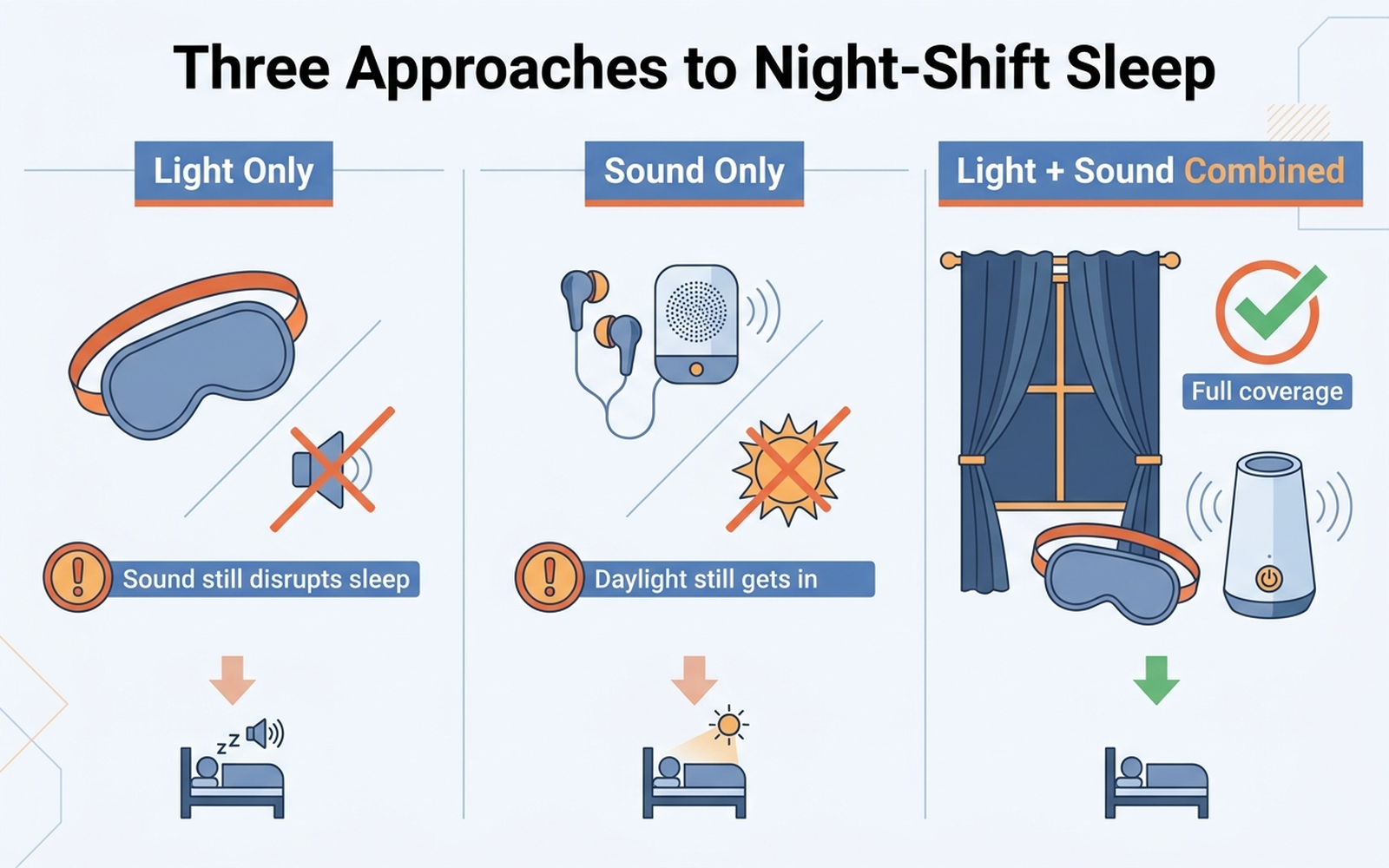
The first mistake is treating daytime sleep as a light problem only: buying blackout curtains, taping the edges of the window, and assuming the job is done — then lying awake anyway because a garbage truck, a neighbor’s dog, or a sibling’s video call keeps breaking through. The second mistake is the reverse: investing in a premium sound machine while sleeping under regular curtains, so the room still floods with daylight at 2 p.m. even though it’s quiet. Sleep researchers and occupational-health guidance consistently describe daytime sleep for shift workers as a combined problem — light exposure suppresses melatonin production regardless of how quiet the room is, and noise triggers wake-ups regardless of how dark it is. The gear below is organized around closing both gaps at once, plus the separate, less-discussed problem of eating on a broken schedule.
Comparison Table
Prices are approximate amazon.com figures at the time of writing (August 2026) and fluctuate.
| Item | ASIN | Approx. price | Key spec | Best for |
|---|---|---|---|---|
| MZOO Luxury Sleep Mask | B07KC5DWCC | ~$15–$20 | 3D contoured cups, zero eye pressure design | Reviewed’s top-tested pick for staying on and blocking light |
| LectroFan High Fidelity White Noise Machine | B00JU8P8VY | ~$40–$50 | 20 non-looping fan/white-noise sounds, up to 85 dB (mfr.) | Masking a daytime household without a repetitive loop |
| NICETOWN Noise Reducing Blackout Curtains, 2-panel | B01CS31NDE | ~$25–$35 | Triple-weave fabric, blocks 85–99% of light (mfr.), thermal insulation | The base layer that a mask and noise machine can’t replace |
| Swanwick Classic Night Swannies (amber) | B01EIP0CXC | ~$60–$70 | Amber-tinted lens, blocks ~99% of blue light (mfr.) | Last 2 hours of shift and the commute home |
| Bentgo Classic adult lunch box | B00B78UBO4 | ~$20–$25 | Stackable 3-compartment, sealing strap, BPA-free | Keeping a full meal from going cold mid-shift |
1. MZOO Luxury Sleep Mask — The One That Actually Stays On
A sleep mask that slides off during the night, or presses into the eyes on the side you sleep on, gets abandoned within a week — which is exactly the failure mode Reviewed (USA Today) found when it lab-tested 11 sleep masks side by side under a floodlight for light infiltration and wore each one for multi-night trials. Its top overall pick was the MZOO Luxury Sleep Mask, cited for its 3D contoured eye cups that avoid pressing on the eyes or lashes while still blocking light effectively; notably, the same test found a pricier, more heavily marketed modular mask “bulky,” saying it “did not fit properly or stay on at night because the adjustable band offers no stretch” — a useful reminder that price and marketing don’t reliably predict fit.
Aggregated Amazon reviews for the MZOO echo the lab finding, with side sleepers specifically calling out the contoured design as the reason it stays put compared to flat masks they’d tried before. The most common low-star complaint is that the head strap runs slightly large on smaller heads before the first adjustment, a fit issue most reviewers resolve by tightening the velcro strap on first use.
Check the MZOO Luxury Sleep Mask on Amazon
2. LectroFan High Fidelity White Noise Machine — Sound Without the Repetitive Loop
Many white noise machines play a short audio loop that the brain unconsciously starts to notice, which defeats the point of masking sound during an eight-hour daytime sleep window. The LectroFan High Fidelity uses an algorithm that generates fan and white-noise sounds without looping, across 20 selectable variations and a volume range manufacturer specifications list up to 85 dB — loud enough to cover a garbage truck or a loud neighbor at a steady 50–60 dB setting most sleep guidance recommends for masking rather than blocking sound entirely.
Aggregated Amazon reviews consistently cite the non-looping design as the reason buyers prefer it over cheaper fan-sound machines that reviewers describe as “noticeably repetitive” after a few nights. The most frequent low-star complaint is that the digital tones, while non-looping, sound less “natural” to some users than a real mechanical fan — a genuine trade-off for buyers who specifically want an authentic fan whir rather than a synthesized sound.
Check the LectroFan High Fidelity White Noise Machine on Amazon
3. NICETOWN Noise Reducing Blackout Curtains — The Base Layer a Mask Can’t Replace
A sleep mask blocks light reaching the eyes, but it does nothing for the light that keeps a room feeling like daytime the moment the mask comes off for a bathroom trip, and it does nothing to regulate the heat a sunlit room accumulates by early afternoon. NICETOWN’s noise-reducing blackout curtains use a triple-weave fabric with a felt-style liner that manufacturer specifications describe as blocking 85–99% of light and outside noise, plus a thermal-insulating effect that keeps a room from overheating during a summer afternoon nap.
Aggregated Amazon reviews are strongly positive on the actual blackout performance, with reviewers specifically noting the room stays dark even at the edges of the window frame — a common failure point for cheaper “room darkening” curtains that only dim light rather than block it. The most common low-star complaint is that the grommet-top design lets in narrow slivers of light at the very top of the window unless a valance or ceiling-mounted track is added, a fixable gap rather than a fabric defect.
Check the NICETOWN Noise Reducing Blackout Curtains on Amazon
4. Swanwick Classic Night Swannies — For the Last Two Hours and the Drive Home
The final stretch of a night shift and the commute home are when circadian-rhythm exposure does the most damage, because bright light — including daylight through a windshield — signals the brain that it’s morning and suppresses the melatonin still needed for the sleep ahead. Amber-tinted lenses like Swanwick’s Classic Night Swannies are designed to block a high percentage of blue-spectrum light (manufacturer specifications describe roughly 99% blockage), the strategy sleep researchers recommend specifically for the pre-bed and commute window rather than for wear during the entire shift.
Aggregated Amazon reviews frequently cite the glasses as part of a broader night-shift routine rather than a standalone fix, with reviewers pairing them with blackout curtains and a consistent sleep schedule. The most common low-star complaint is the amber tint’s strong color cast, which some buyers find disorienting for driving until they get used to it — worth testing during a low-traffic commute before relying on them for a longer drive.
Check the Swanwick Classic Night Swannies on Amazon
5. Bentgo Classic Adult Lunch Box — Solving the Meal Problem, Not Just the Sleep Problem
Sleep gear addresses half of what a broken schedule disrupts; the other half is eating, and the 2024–2025 SHIFT2HEALTH survey found nearly three-quarters of shift workers regularly can’t finish a meal because it’s gone cold by the time they get a break. The Bentgo Classic is a stackable 3-compartment container with a sealing strap and a removable utensil set, built (manufacturer specifications) to keep portioned food separated and sealed rather than sliding together in a single container over a bumpy commute or a shift-bag toss.
Aggregated Amazon reviews consistently praise the sealing strap for actually preventing leaks in a bag, a common complaint about compartment containers without one. The most frequent low-star note is that the compartments are sized for a full meal rather than snacks, so buyers who want to pack small snacks separately often add a second, smaller container alongside it.
Check the Bentgo Classic Adult Lunch Box on Amazon
Building the Routine in the Right Order
Not every item needs to be bought on day one of a new night-shift schedule, and the order below reflects which gaps cause the most immediate sleep loss.
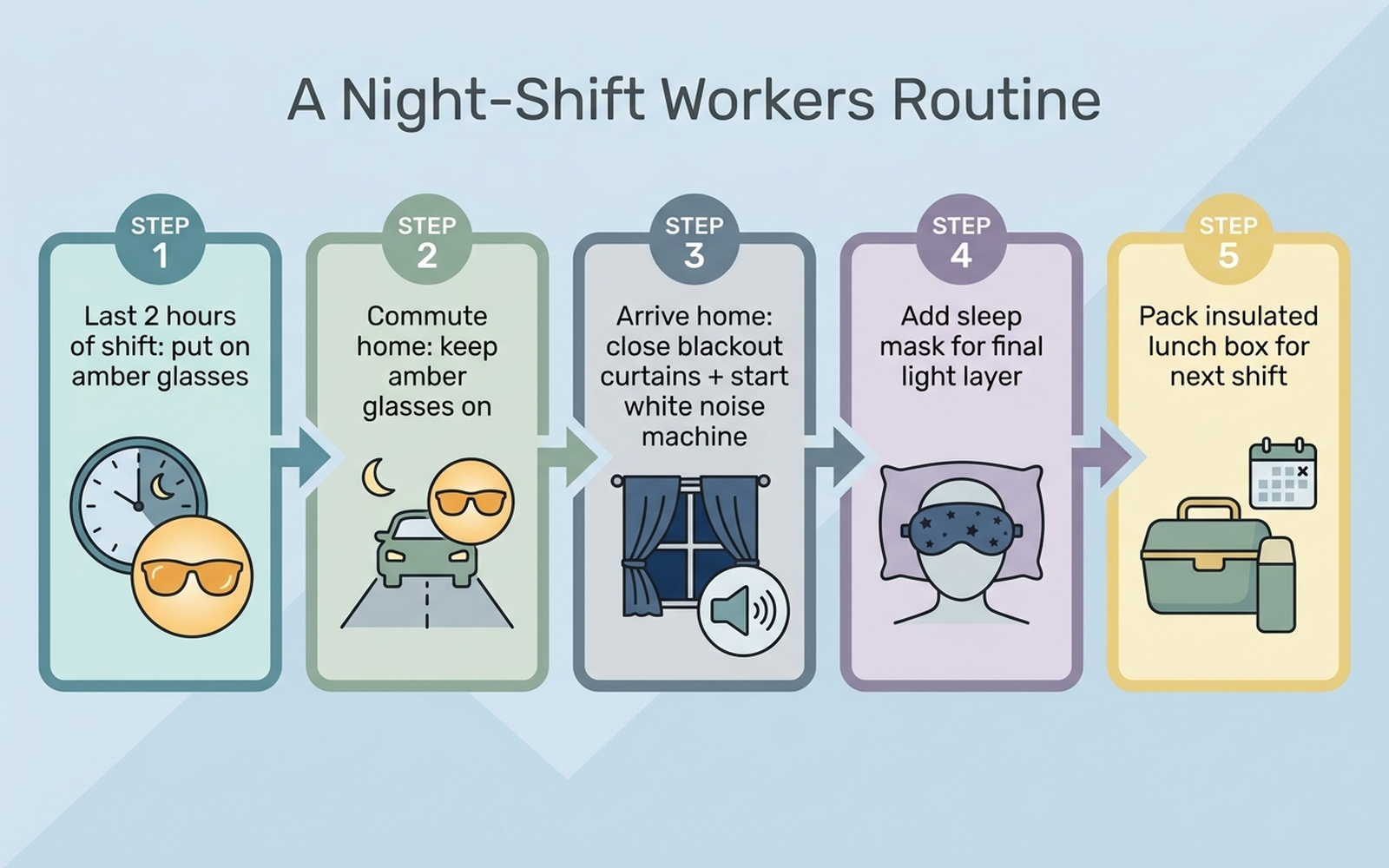
- Blackout curtains first. This is the base layer that every other item assumes is already in place; without it, a sleep mask and a white noise machine are compensating for a problem the room itself should be solving.
- White noise machine second. Once the room is dark, an unpredictable daytime household is usually the next thing that wakes a night-shift sleeper mid-cycle.
- Sleep mask third. A mask is the fine-tuning layer for the gaps curtains leave — around the frame, under a door — not a replacement for them.
- Amber glasses for the last two hours of the shift and the commute home. Put them on before the drive, not after arriving home; the point is limiting light exposure before sleep, not after.
- Insulated lunch box, packed the night before. This is the one item on the list that solves the eating problem rather than the sleeping problem, and reviewers who pack the night before report it’s the step most likely to get skipped when a shift runs long.
Choosing by Budget: A Priority Flowchart
Not every night-shift worker starting a new schedule can buy all five items at once, and the right starting point depends on the budget available.
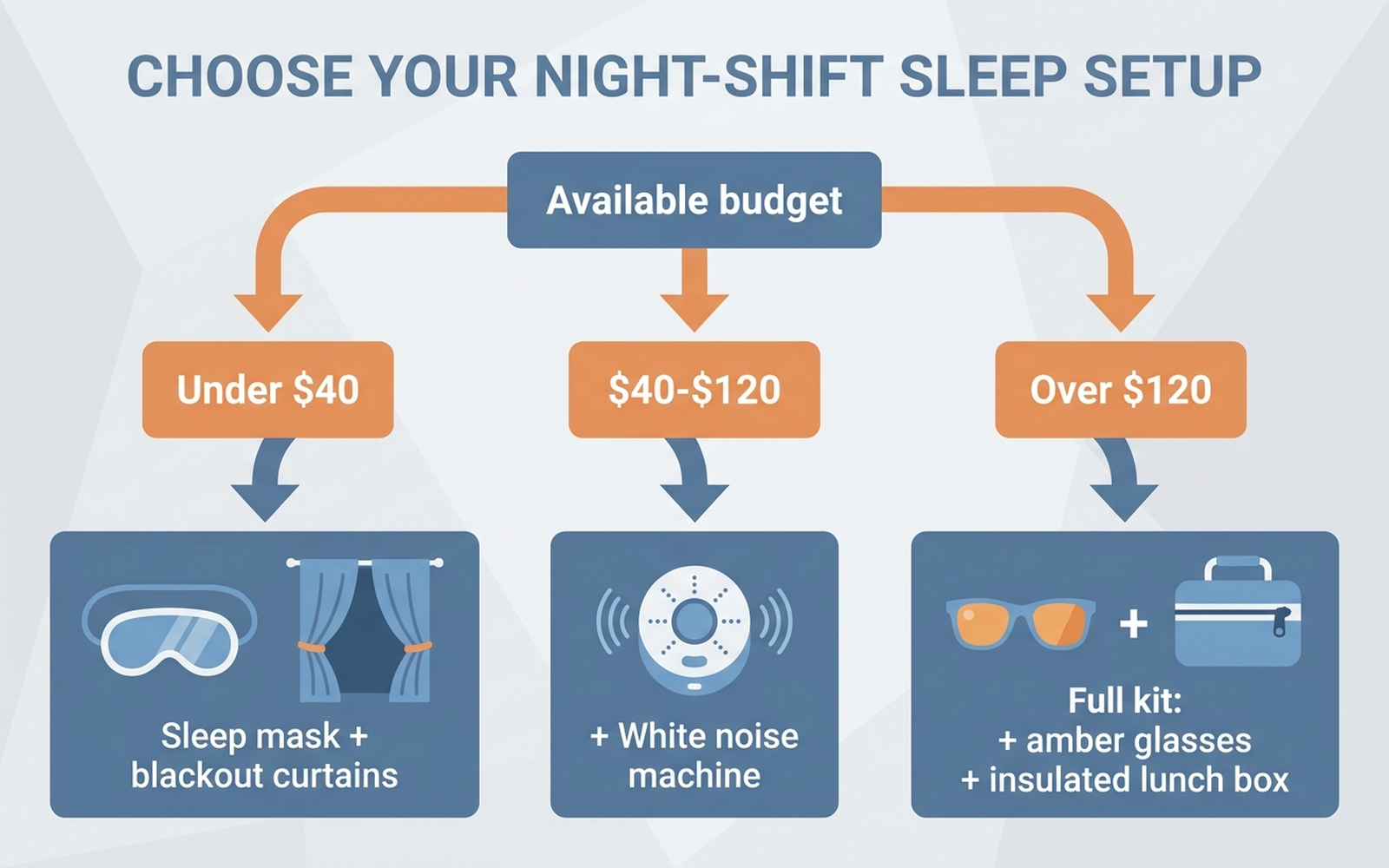
- Under $40: the MZOO sleep mask and the NICETOWN blackout curtains cover the two highest-impact, lowest-cost gaps — light reaching the eyes and light filling the room.
- $40–$120: add the LectroFan white noise machine, which closes the sound gap that curtains and a mask can’t address on their own.
- Over $120: the full five-item kit, adding the Swanwick amber glasses for the commute and the Bentgo lunch box for the separate meal-timing problem, addresses both halves of what a night shift disrupts.
Editorial Recommendations by Use Case
- Best single item to not skip: blackout curtains — the base layer every other item on this list assumes is already handled.
- Best-tested sleep mask: the MZOO Luxury Sleep Mask, based on Reviewed’s (USA Today) direct lab and wear testing against 10 competitors.
- Best for a noisy daytime household: the LectroFan High Fidelity, for its non-looping sound design over cheaper looping alternatives.
- Best for the commute home: Swanwick’s amber-tinted glasses, worn for the final two hours of a shift and the drive, not the entire shift.
- Best fix for the eating problem, not the sleeping problem: the Bentgo Classic, addressing the “meals go cold” complaint reported by most shift workers surveyed.
- What to skip: buying a premium sound machine before fixing curtains — sound-only setups still leave a room bright enough to suppress deep sleep.
Limitations of This Analysis
This analysis relies on independent lab testing (Reviewed, USA Today), aggregated public reviews, manufacturer specifications, and occupational-health survey data; we did not personally test the products covered here. Manufacturer figures — blue-light blockage percentage, decibel range, blackout percentage — are provided under controlled test conditions and may not reflect every unit or bedroom setup. The NIOSH sleep-duration figure for night-shift healthcare workers reflects a national dataset from 2010 and is cited as a baseline reference rather than a current-year statistic; the SHIFT2HEALTH eating-disruption figures come from a European survey and may not generalize precisely to the US workforce, though the underlying mechanism — shift work disrupting meal timing — is consistent across the occupational-health literature. Individual results depend on room layout, work schedule consistency, and household noise conditions that vary case by case. Prices and ASIN availability change frequently; confirm the current price and version on the product page before buying.
The Bottom Line
Daytime sleep for a night-shift worker fails for two separate reasons — light and sound — and the gear that actually helps addresses both, in roughly this order: blackout curtains, a sleep mask that stays on, a non-looping white noise machine, amber glasses for the commute, and an insulated lunch box for the meal-timing problem nobody markets gear for. That combination, based on independent lab testing and aggregated review data rather than marketing claims, typically runs $120–$180 total and covers the two things a broken schedule breaks most. Whichever pieces you prioritize first, verify the exact version and current price before checkout — and if you want a second opinion on a specific listing, paste the URL into Arekore and let the AI scan the reviews and price history for you in about five minutes.