Best New-Parent Gadgets in 2026: What's Worth the Money
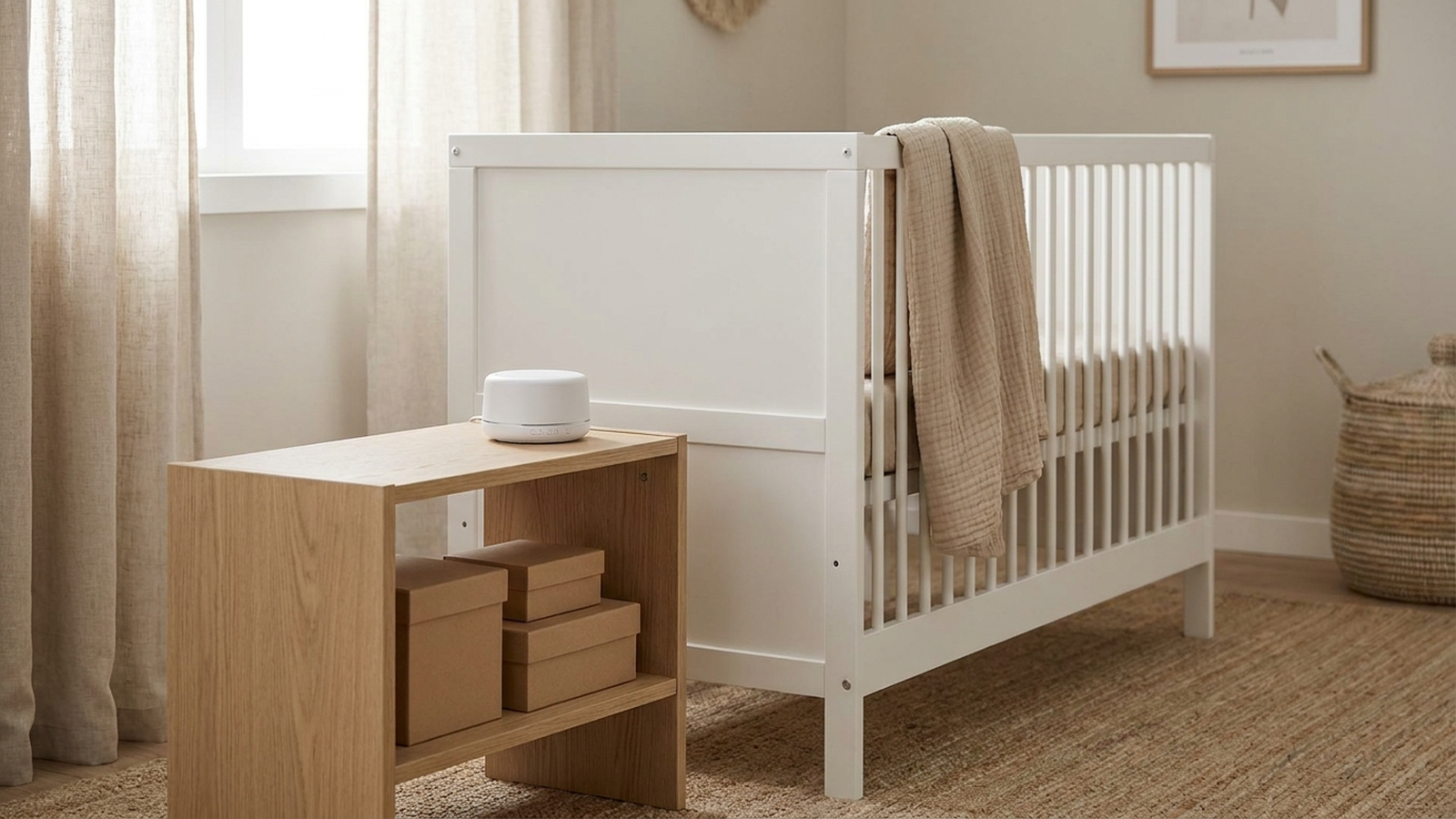
The average American family now spends $20,384 in a baby’s first year, up 29% from $15,775 just a few years earlier, according to BabyCenter’s most recent parent cost survey. Baby registries compound that pressure: gift guides, influencer unboxings, and in-store displays present dozens of gadgets as must-haves, with little to separate the ones backed by real safety and performance data from the ones that mostly collect dust in a closet by month four. This guide sorts eight of the most-registered baby gadgets into three categories — worth buying, worth it only for a specific situation, and worth skipping — using aggregated Amazon review data, independent lab testing, and, in one case, a federal consumer-safety investigation.
As an Amazon Associate, Arekore earns from qualifying purchases. The Amazon product links in this article include our affiliate tracking ID and may earn us a commission if you buy through them, at no additional cost to you. See our Links Policy for details on how we select products and how commissions do not influence our recommendations.
TL;DR / Quick Verdict
- Skip entirely: the Baby Brezza Formula Pro Advanced — Consumer Reports’ lab testing found it consistently under-dispensed formula powder, and the CPSC’s public complaint database lists dozens of incident reports tied to the product family, including hospitalizations.
- Worth it for most budgets: the eufy Security Baby Monitor E21 — 4K camera, no monthly subscription, and a hybrid Wi-Fi/local mode, at roughly a third of the premium monitors’ price.
- Worth it if sleep data matters to you: the Nanit Pro Smart Baby Monitor — sensor-free breathing-motion tracking that independent reviewers rate highest for sleep insight, not just video.
- Worth it only for a documented medical reason: the Owlet Dream Duo 3 — its Dream Sock is FDA-cleared for pulse rate and oxygen tracking, but the FDA’s own 2021 warning letter history on this device category is worth reading before treating it as a routine SIDS-prevention tool.
- Worth it only if you rent first: the SNOO Smart Sleeper at $1,695 — Happiest Baby’s own data shows about 1 in 5 babies don’t take to it, which is exactly why the company offers a 6-month rental before you commit to buying.
How We Reached These Conclusions (Methodology)
This is an editorial analysis, not a hands-on review. We did not personally test the products covered here. This guide synthesizes (a) aggregated amazon.com customer ratings and the substance of both positive and low-star reviews, sampled the week of 2026-08-25; (b) a Consumer Reports lab investigation into formula-dispensing machines and the CPSC’s saferproducts.gov public complaint database; (c) FDA regulatory history and clearance documents for wearable infant vital-sign monitors; (d) manufacturer specifications and published warranty terms; and (e) 2026 first-year baby-cost survey data from BabyCenter. Where we cite a manufacturer claim — added sleep hours, decibel ratings, battery runtime — we label it explicitly as a manufacturer claim rather than an independently verified result. Prices as of 2026-09-01 are amazon.com figures and fluctuate.
Why “Worth It” Needs a Real Bar, Not a Registry Trend
Baby registries reward novelty. A gadget that looks impressive in a 30-second unboxing video earns a spot on more registries than a $35 bottle warmer, even when aggregated long-term reviews tell a different story once the returns and one-star complaints are read in bulk. The American Academy of Pediatrics also draws a hard line that most registry guides skip past entirely: swings, bouncers, and car seats are not sleep surfaces, and only bassinets meeting the CPSC’s 2021 flat-surface safety rule qualify as a place to put a baby down for a nap unsupervised — a rule written specifically after the 2019 Fisher-Price Rock ‘n Play recall linked an inclined “sleeper” to dozens of infant deaths. That regulatory backdrop is why this guide treats “worth it” as a question with real stakes, not just a comfort-versus-price tradeoff.
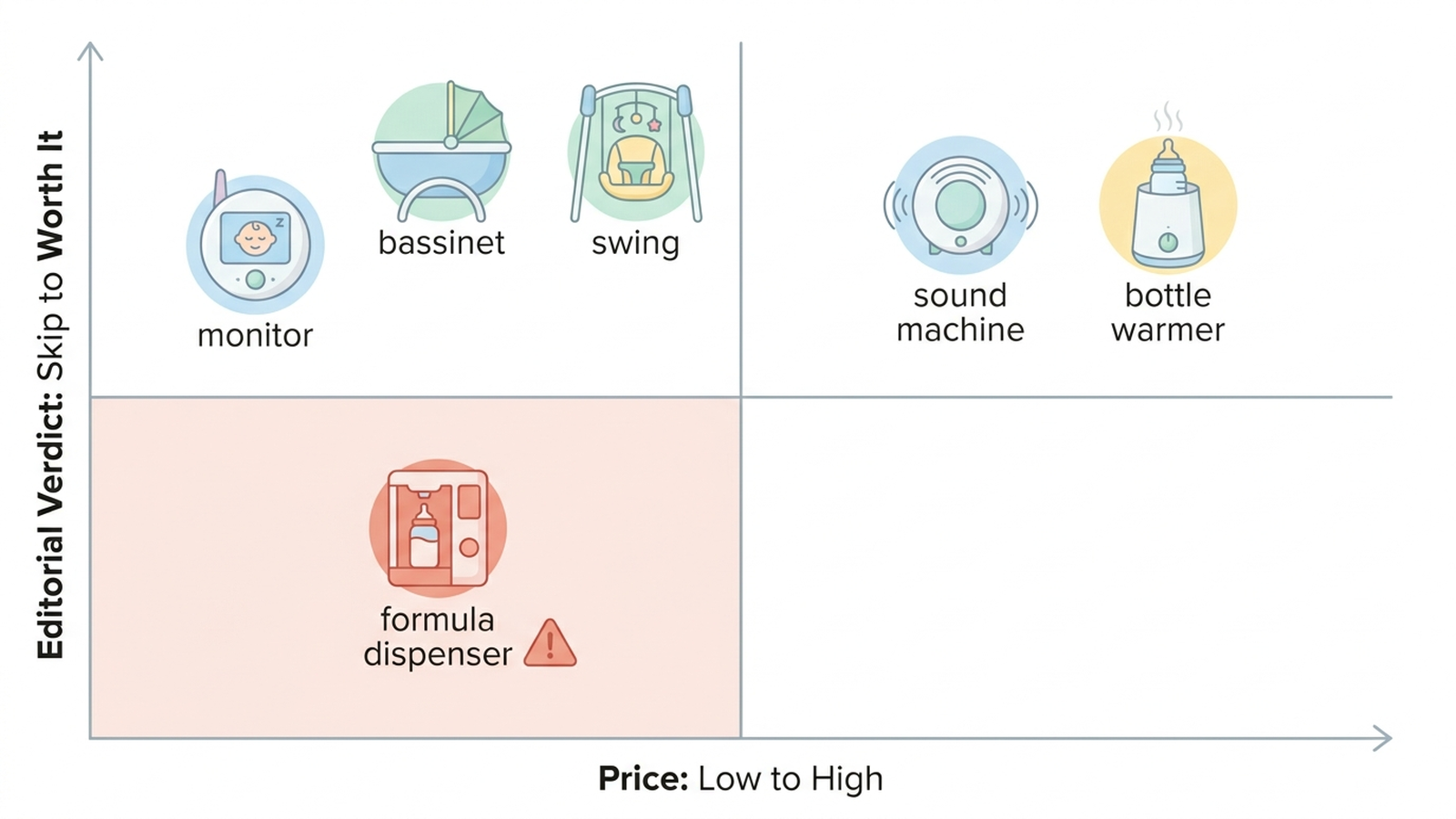
Comparison Table
Prices as of 2026-09-01 are approximate amazon.com figures and fluctuate.
| Item | ASIN | Approx. price | Category | Verdict |
|---|---|---|---|---|
| eufy Security Baby Monitor E21 | B0DDXCWMRK | ~$129.99 | Video monitor | Worth it — best value |
| Nanit Pro Smart Baby Monitor & Wall Mount | B0DHH53KGS | ~$289.99 | Video + sleep monitor | Worth it — sleep data |
| Owlet Dream Duo 3 | B0GVL2KSTQ | ~$379.99 | Wearable vitals monitor | Worth it, conditionally |
| SNOO Smart Sleeper Bassinet | B0716KN18Z | ~$1,695 | Smart bassinet | Worth it, rent first |
| 4moms MamaRoo Multi-Motion Swing | B0B3F93NYT | ~$219.99–$249.99 | Baby swing | Worth it, conditionally |
| Hatch Rest 2nd Gen Sound Machine | B08QVG9759 | ~$59.99 | White noise machine | Worth it — cheap, AAP-aligned |
| Philips Avent Premium Fast Bottle Warmer | B0876T9DQZ | ~$39.99 | Bottle warmer | Worth it — low cost, low risk |
| Baby Brezza Formula Pro Advanced | B07MYW28QR | ~$229.99 | Formula dispenser | Skip |
1. Baby Monitors — Worth It, But Pick by What You Actually Need
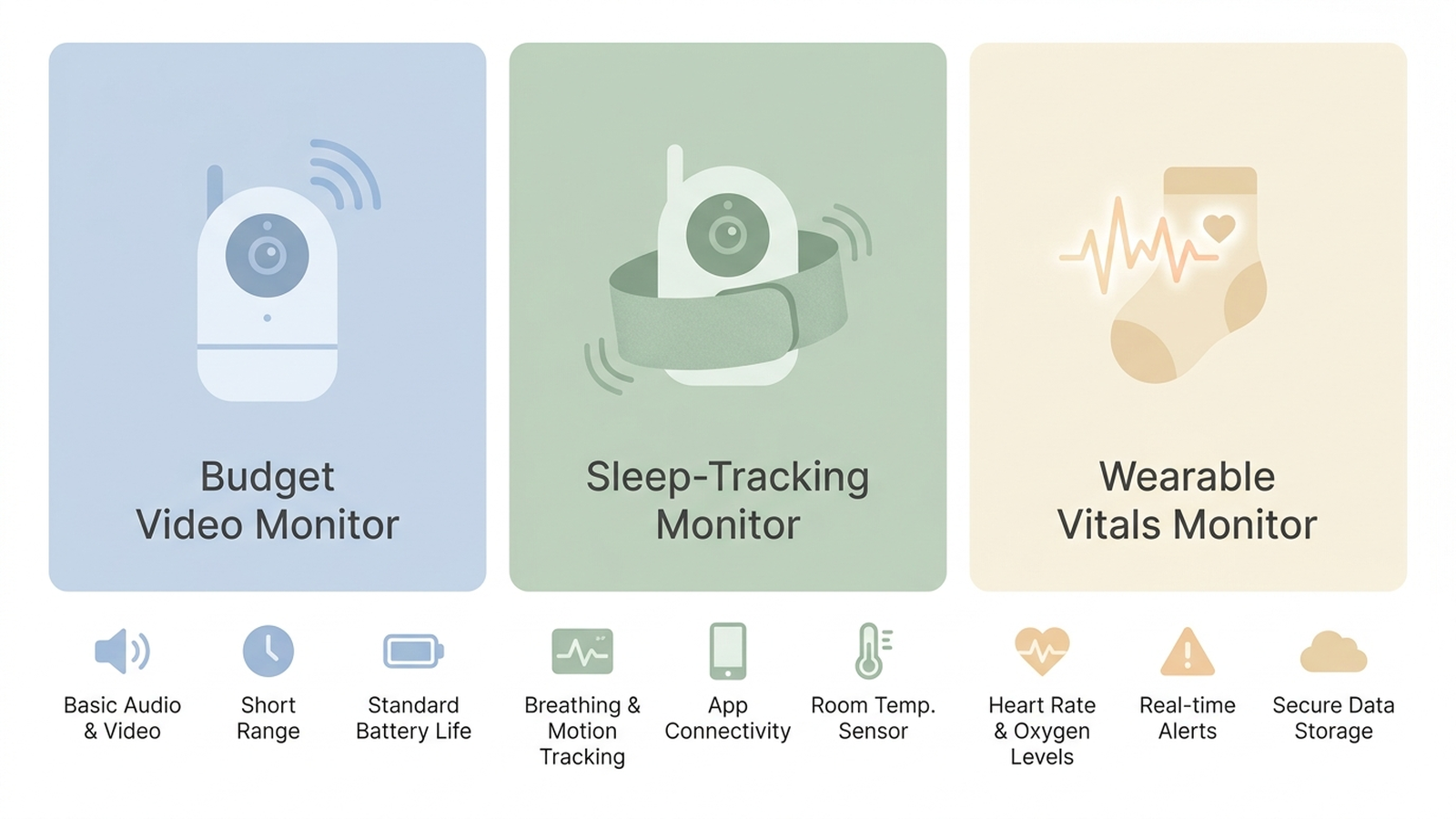
Baby monitors are the one category on this list where “worth it” splits cleanly by budget and by what problem you’re actually solving, not by which model is objectively best. The eufy Security Baby Monitor E21 covers the baseline case — a 4K camera, pan-tilt, 8x zoom, and a hybrid Wi-Fi/no-Wi-Fi mode with no monthly subscription fee, at roughly a third of the price of the premium options. Aggregated Amazon reviews consistently cite the no-subscription model and local-storage option as the deciding factor for budget-conscious buyers who don’t want a recurring bill layered on top of the hardware cost.
For parents who specifically want sleep insight rather than just a camera feed, the Nanit Pro uses a sensor-free breathing band worn on a swaddle or sleep sack rather than the camera lens itself, and independent comparisons consistently rank it ahead of Owlet on sleep-pattern detail, at the cost of no direct vital-sign tracking. The Owlet Dream Duo 3 takes the opposite tradeoff: its Dream Sock is FDA-cleared (as a Class II medical device, per the FDA’s 2023 de novo authorization) to track pulse rate and average blood oxygen, but that clearance followed a 2021 FDA warning letter that forced Owlet to pull its prior-generation sock from the market for two years over unauthorized medical-device marketing claims. That history doesn’t mean the current, FDA-cleared version is unsafe — it means the earlier version’s alerts weren’t validated the way parents assumed, and it’s worth reading the current clearance documentation rather than review-site marketing copy before treating any wearable monitor as a SIDS-prevention device; none are approved for that use, and the AAP’s back-sleeping and firm-surface guidance remains the only evidence-based prevention step.
Worth noting for anyone tempted to assume a camera automatically beats a simple audio monitor: Germany’s Stiftung Warentest, one of Europe’s most rigorous independent testing bodies, has repeatedly found in its baby-monitor comparisons that plain audio-only models outperform video units overall, with no video baby monitor in its lineup earning a “very good” rating — a reminder that more sensors and a screen don’t automatically mean a more reliable device, even if this guide focuses on video and wearable monitors for the sleep- and vitals-tracking features most US shoppers are specifically looking for.
Check the eufy Security Baby Monitor E21 on Amazon
Check the Nanit Pro Smart Baby Monitor on Amazon
Check the Owlet Dream Duo 3 on Amazon
2. SNOO Smart Sleeper — Worth It, But Rent Before You Buy
The SNOO Smart Sleeper, designed by pediatrician Dr. Harvey Karp, is the most expensive item on this list at $1,695, and it’s also one of the few smart-bassinet products with a real, if imperfect, evidence base behind its core claim: manufacturer-reported testing associates it with 1 to 2 additional hours of parent sleep per night in households where the baby responds to it. That “where it responds” clause matters — by Happiest Baby’s own published data, roughly 1 in 5 babies don’t take to the SNOO, which is exactly why the company offers a flat-rate 6-month rental (around $499 plus reconditioning, per third-party pricing trackers) instead of pushing every buyer straight to the $1,695 purchase price. The SNOO’s rocking-and-white-noise response is also built around the CPSC’s 2021 flat-sleep-surface rule — unlike the recalled Rock ‘n Play, it does not incline the baby, which is the regulatory distinction that keeps it classified as an acceptable sleep surface rather than a soothing-only device like a swing.
Aggregated reviews and independent testers are broadly positive on sleep-time improvement for babies who adapt to it, with the most common low-star complaints centering on the ongoing $20/month subscription needed for full app features and the resale-dependent economics if a baby is one of the ones who never settles into it. Certified pre-owned units, sold directly through Happiest Baby, run meaningfully cheaper and carry the same CPSC-compliant safety certification as new units.
Check the SNOO Smart Sleeper Bassinet on Amazon
3. 4moms MamaRoo — Worth It, Conditionally
The 4moms MamaRoo ($219.99–$249.99 depending on fabric and color) is a bouncer/swing hybrid with five app-controllable motions modeled on real parent movement patterns, rather than the single back-and-forth arc of a traditional swing. Aggregated reviews split cleanly by household: parents whose babies respond well to it — commonly described as the difference between a 20-minute nap and a full uninterrupted stretch — rate it among the highest-value purchases in their entire registry, while a smaller but consistent minority report their baby actively dislikes the motion regardless of setting. That split is exactly why independent reviewers, including BabyGearLab’s hands-on testing, frame the MamaRoo as “worth it if you’ve already tried a basic swing and it wasn’t enough” rather than a default first purchase — buying secondhand or borrowing one before committing to a new unit is a common recommendation across parenting communities given the price gap versus a standard swing.
One safety note that applies regardless of how well a baby responds: the AAP is explicit that swings and bouncers, including the MamaRoo, are not sleep surfaces for unsupervised naps — a baby who falls asleep in one should be moved to a firm, flat crib or bassinet as soon as reasonably possible.
Check the 4moms MamaRoo Multi-Motion Swing on Amazon
4. Hatch Rest — Worth It, and One of the Cheapest Items Here
At roughly $59.99, the Hatch Rest 2nd Gen sound machine and night light is the least expensive gadget on this list, and it’s also aligned with an actual pediatric recommendation: the AAP endorses a sound machine kept under 50 decibels to mask household noise and support falling and staying asleep, and the Hatch Rest’s app lets parents set and cap volume precisely rather than guessing at a dial. Aggregated Amazon reviews consistently rate the app-controlled sound library, adjustable night light, and “time-to-rise” toddler feature (useful well past the newborn stage) as the reasons it stays in daily use for years rather than being outgrown in a few months, unlike several single-purpose newborn gadgets on this list.
Check the Hatch Rest 2nd Gen Sound Machine on Amazon
5. Philips Avent Bottle Warmer — Worth It, Low Cost and Low Risk
The Philips Avent Premium Fast Bottle Warmer (about $39.99) warms a bottle in as few as three minutes with an automatic shut-off, by manufacturer specification, and is one of the few items in this guide where the “worth it” case doesn’t depend on a subscription, an app, or a specific parenting philosophy — it’s a low-cost appliance that solves a specific 2 a.m. problem (warming a bottle without a stovetop pan or an unpredictable microwave hot-spot). Aggregated reviews consistently cite the automatic shut-off as the feature that matters most, since overheated milk destroys nutrients and can scald; the most common low-star complaint concerns brittle plastic clips on the water-fill reservoir after a year or more of daily use, a wear issue rather than a functional defect.
Check the Philips Avent Premium Fast Bottle Warmer on Amazon
6. Baby Brezza Formula Pro Advanced — Skip This One
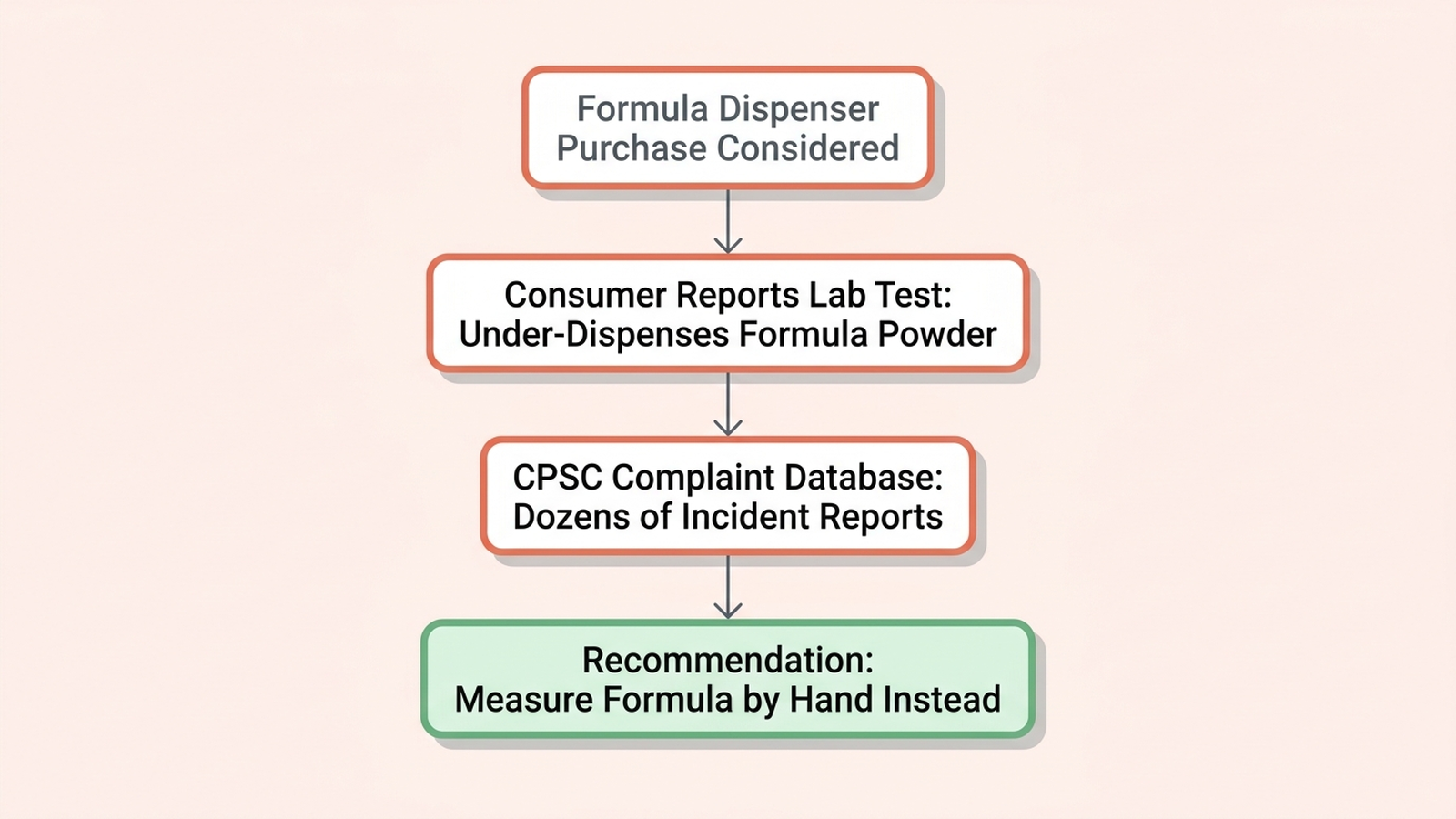
This is the one item on this list we recommend skipping outright, and the reasoning isn’t a soft preference — it’s a documented safety finding. Consumer Reports lab-tested the Baby Brezza Formula Pro Advanced (and its WiFi variant) after receiving complaints, and found the machines consistently dispensed less formula powder than the setting called for, which over repeated feedings can under-nourish an infant. The CPSC’s public saferproducts.gov database lists dozens of reported incidents across the broader Formula Pro product family, including reports of infant hospitalizations linked to improperly mixed bottles. A separate, widely reported December 2025 incident involving the smaller Formula Pro Mini — a different model in the same product family, not the Formula Pro Advanced reviewed here — described an infant’s dangerous weight drop traced back to a watered-down mixture from the machine; we include it as relevant context on the family’s dispensing-accuracy pattern, not as a claim about the Advanced model specifically. Baby Brezza has publicly disputed CR’s findings, attributing the discrepancy to natural variability in formula powder density rather than a machine defect — we note that dispute for balance, but a for-profit safety claim from the manufacturer under investigation doesn’t outweigh an independent lab test plus a multi-year federal complaint pattern.
Measuring formula by hand with the scoop that ships with the formula tub takes under a minute once the routine is set, costs nothing, and removes the specific failure mode CR documented. If a bottle-prep gadget is genuinely necessary for a household’s routine, prioritize the models CR’s testing did not flag for accuracy problems, and revisit any Formula Pro purchase already made against your pediatrician’s feeding-volume guidance.
We are not linking to this product, in line with the safety concerns documented above.
Editorial Recommendations by Use Case
- Best single gadget for a tight budget: the Hatch Rest at $59.99 — cheap, AAP-aligned, and useful well past infancy.
- Best baby monitor for most households: the eufy Security E21 — full 4K video with no recurring subscription cost.
- Best baby monitor if sleep tracking is the priority: the Nanit Pro — independent reviewers consistently rate its sleep insight ahead of camera-only or vitals-focused competitors.
- Best big-ticket purchase, if you rent first: the SNOO — real reported sleep benefit, but only after confirming your baby is in the roughly 80% who respond to it.
- Skip outright: the Baby Brezza Formula Pro Advanced — an independent lab test and a multi-year federal complaint record on dispensing accuracy is a harder bar than “mixed reviews,” and this product doesn’t clear it.
Limitations of This Analysis
This analysis relies on publicly available Amazon reviews, a Consumer Reports lab investigation, FDA regulatory filings, the CPSC’s public complaint database, and manufacturer specifications; we did not personally test these products, and individual experience varies with a specific infant’s temperament, sleep patterns, and household routine. The Consumer Reports formula-dispenser findings and CPSC incident reports describe patterns observed across a sample of units and complaints, not a guarantee that every individual unit will under-dispense or malfunction. FDA clearance for a wearable vital-sign monitor is a regulatory classification, not a guarantee against false alarms or missed events, and no product in this category is approved as a SIDS-prevention device. Prices, color variants, and bundle contents change frequently on Amazon listings — confirm the current price and version on the product page before buying.
The Bottom Line
Seven of the eight gadgets in this guide clear a real “worth it” bar, but for different reasons and at different price points — a $39.99 bottle warmer and a $1,695 smart bassinet can both be reasonable purchases if you’re solving the specific problem each one addresses, rather than buying because a registry checklist or an unboxing video said so. The eighth, the Baby Brezza Formula Pro Advanced, is the one item here where the evidence — an independent lab test plus a multi-year federal complaint pattern — points toward skipping it in favor of a method that costs nothing and carries none of the documented risk. Whichever gadgets you’re weighing, verify the exact current price and version before checkout — and if you want a second opinion on a specific listing, paste the URL into Arekore and let the AI scan the reviews and price history for you in about five minutes.