Best Fire Pits in 2026: Solo Stove vs Breeo Compared
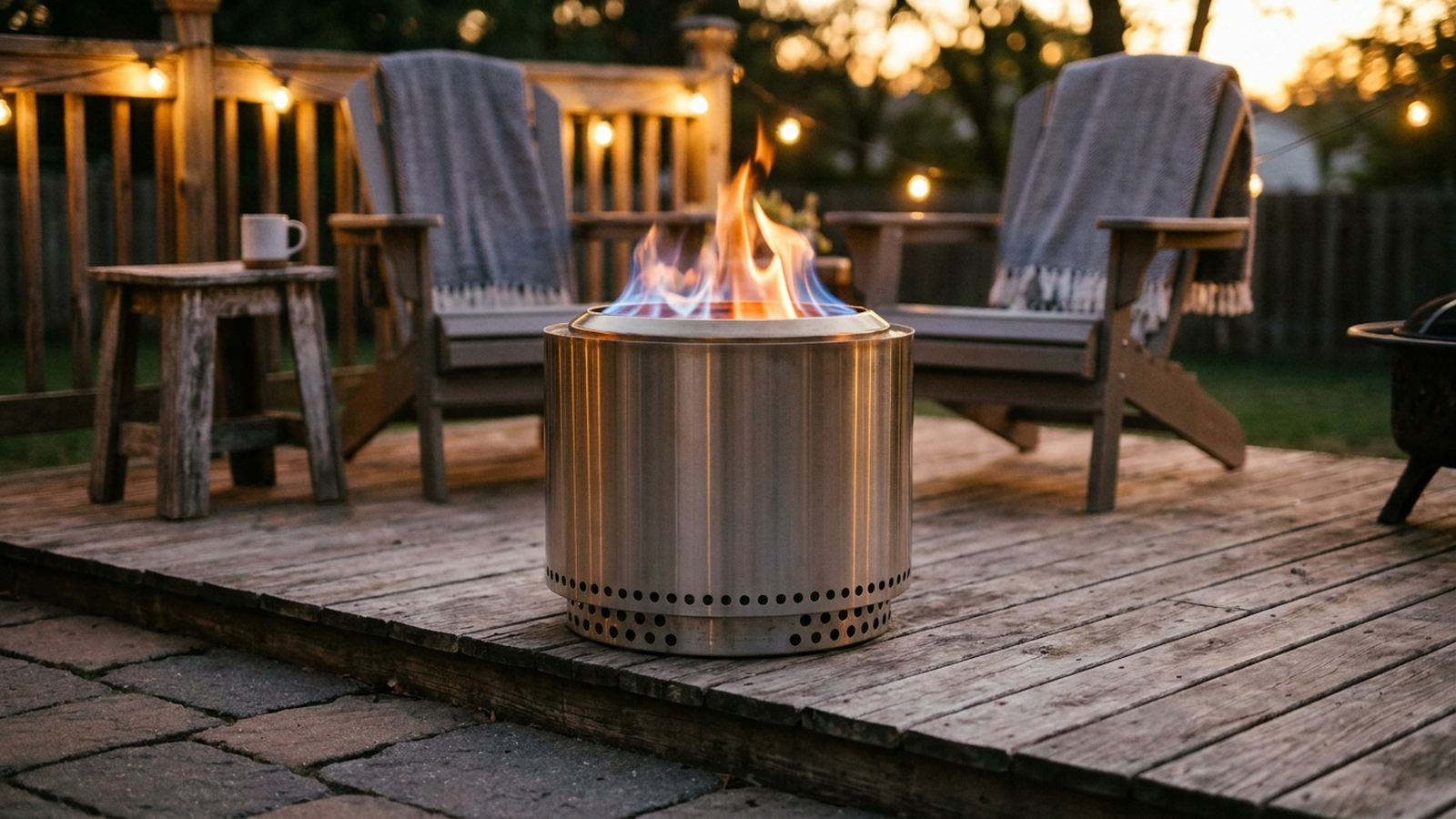
TL;DR / Quick Verdict
- Best overall for most backyards: Solo Stove Bonfire 2.0 with Stand — a double-wall airflow design that burns nearly smoke-free, at a lower price and lighter weight than Breeo’s comparable models, making it the easier pick for renters and smaller patios.
- Best for cooking and permanent installs: Breeo X Series 24 — noticeably thicker steel and a wide ecosystem of grill and griddle accessories built around live-fire cooking, at a meaningfully higher price than Solo Stove.
- Most important durability note: both brands’ stainless and corten steel are rust-resistant, not rust-proof — aggregated owner reviews report surface rust and, less often, warped fire grates within the first year, most commonly tied to storing the pit uncovered or wet.
Methodology
This analysis synthesizes (a) aggregated Amazon US customer reviews and BBB/Trustpilot complaint patterns for current Solo Stove and Breeo fire pit lines, (b) independent test and buying-guide coverage from Family Handyman, HGTV, GearJunkie, and AmazingRibs.com, (c) manufacturer-published specifications on airflow technology, materials, and warranty terms, and (d) category market-size data from Deep Market Insights’ smokeless fire pit market report. We did not personally test the products covered here. Amazon does not expose a precise, publicly verifiable review count per listing, so we do not report an exact aggregate sample size; category-level statistics are cited to named third-party sources, not to our own research.
Technical Approach: Double-Wall Airflow vs. X Airflow Technology, and Why the Difference Is Small
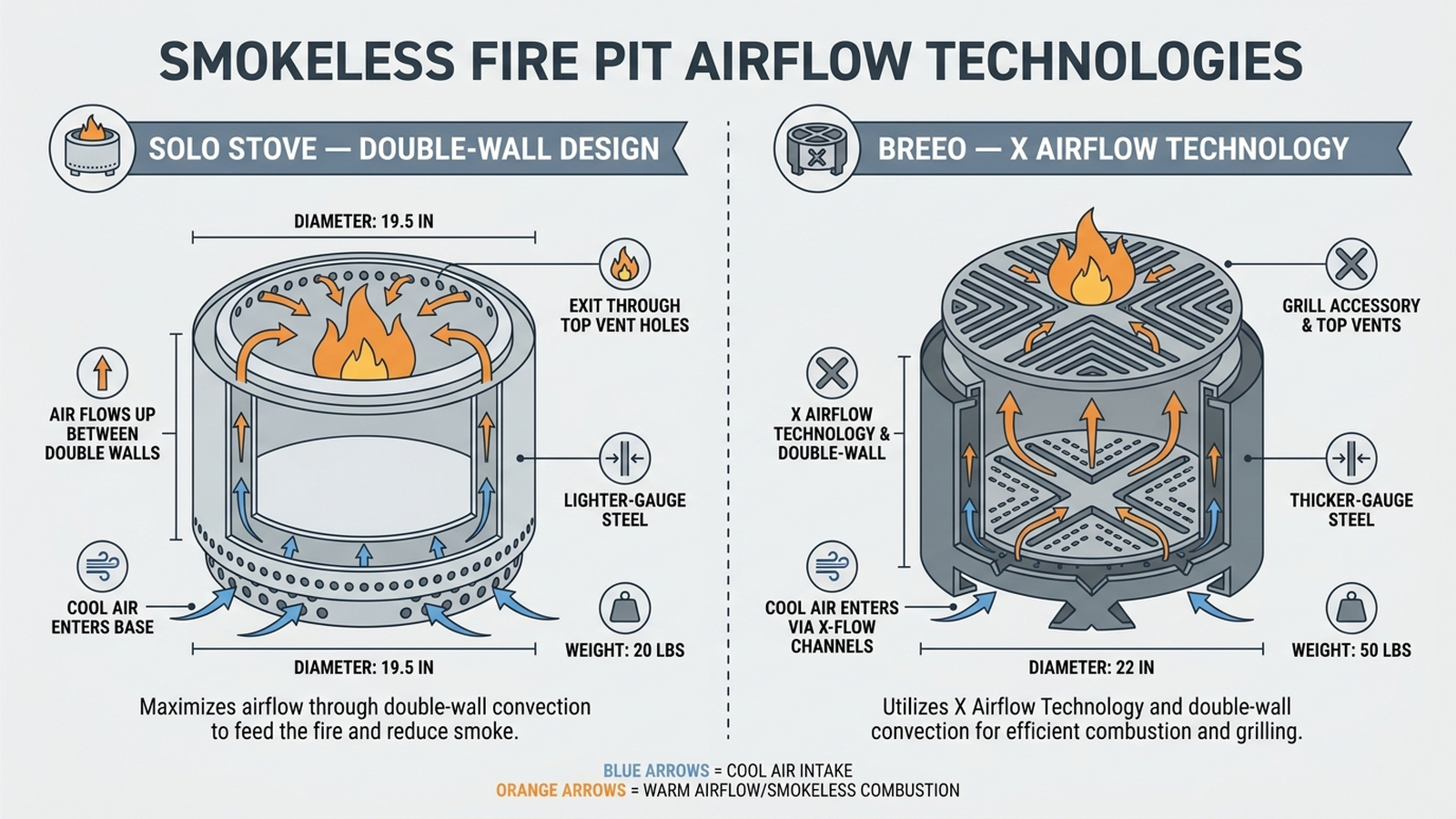
Both brands solve the same problem — traditional fire pits smoke because unburned gases escape before they combust — with the same basic mechanism: a double-wall steel body that draws air in through a bottom gap, preheats it between the walls, and pushes it back into the fire through a ring of small holes near the rim for secondary combustion. The practical differences show up in construction and intended use, not in whether the smoke-reduction concept itself works:
- Solo Stove (double-wall design): Solo Stove’s Bonfire line uses 304 stainless steel in a lighter-gauge build than Breeo’s X Series, which keeps the finished fire pit noticeably lighter and easier to move between a patio and a campsite. Family Handyman’s testing found the design genuinely smokeless in normal outdoor conditions, though wind and wet or resinous wood can still produce visible smoke on any smokeless design, not just Solo Stove’s.
- Breeo (X Airflow Technology): Breeo’s X Series uses a similar double-wall convection principle but in noticeably thicker steel — reviewers at GearJunkie and AmazingRibs.com describe the X24’s wall gauge as a step up from Solo Stove’s, and Breeo offers a corten (weathering) steel finish that Solo Stove does not. Breeo also builds its Outpost grill grate and griddle system directly around the X Series’ rim, positioning the line as a cooking appliance first and a smokeless fire pit second.
- Shared baseline: both brands’ current lines include a removable ash pan, ship with a base or legs that lift the pit off the ground, and are marketed as usable with standard cordwood without gas or propane hookups — none of this differs meaningfully between brands.
The category both brands compete in is growing quickly: Deep Market Insights projects the global smokeless fire pit market at roughly $1.26 billion in 2026, rising to about $1.75 billion by 2031 — a reflection of how mainstream double-wall, low-smoke designs have become since Solo Stove popularized the category.
Manufacturer Deep Dive
Solo Stove
Solo Stove’s current lineup centers on the Bonfire 2.0, a 19.5-inch-diameter, 304 stainless steel fire pit rated by the manufacturer for 4–6 people and sold both with and without a companion stand. The stand-included version raises the pit off direct ground contact and adds a shelf; the base version is lighter and cheaper for buyers who already have a fire-safe surface. Solo Stove backs the line with what it calls a lifetime warranty against manufacturing defects, though the company’s own warranty terms exclude cosmetic issues like surface rust. Aggregated Amazon and Better Business Bureau complaint patterns show a recurring theme: some owners report surface rust appearing within weeks to months, and a smaller number report the perforated fire grate warping or burning through within the first year of regular use — complaints that Solo Stove’s customer service reportedly treats as cosmetic wear rather than a covered defect. Positive reviews consistently praise the smokeless performance itself and the pit’s light weight for moving between storage and use.
Breeo
Breeo’s X Series is sold in 19-, 24-, and 30-inch diameters, in either polished stainless steel or a stainless/corten steel mix that develops a weathered rust-colored patina by design rather than by neglect. The X Series 24 — Breeo’s most popular size according to multiple independent reviewers — weighs roughly 62 lbs versus the Solo Stove Bonfire 2.0’s roughly 20–25 lbs, reflecting a much heavier steel gauge that reviewers at Family Handyman and AmazingRibs.com credit with better long-term resistance to warping under repeated high-heat use. Breeo backs the X Series with a lifetime workmanship warranty plus a specific 3-year warranty against rust-through or burn-through, a narrower but more concrete durability guarantee than Solo Stove’s general lifetime-defect language. Breeo’s accessory ecosystem — the Outpost grill grate, griddle, and sear plate — is built directly around the X Series rim, and multiple reviewers describe cooking capability as the main reason to pay Breeo’s higher price over Solo Stove.
How to Choose: Portability vs. Cooking, and What Actually Drives Rust Complaints
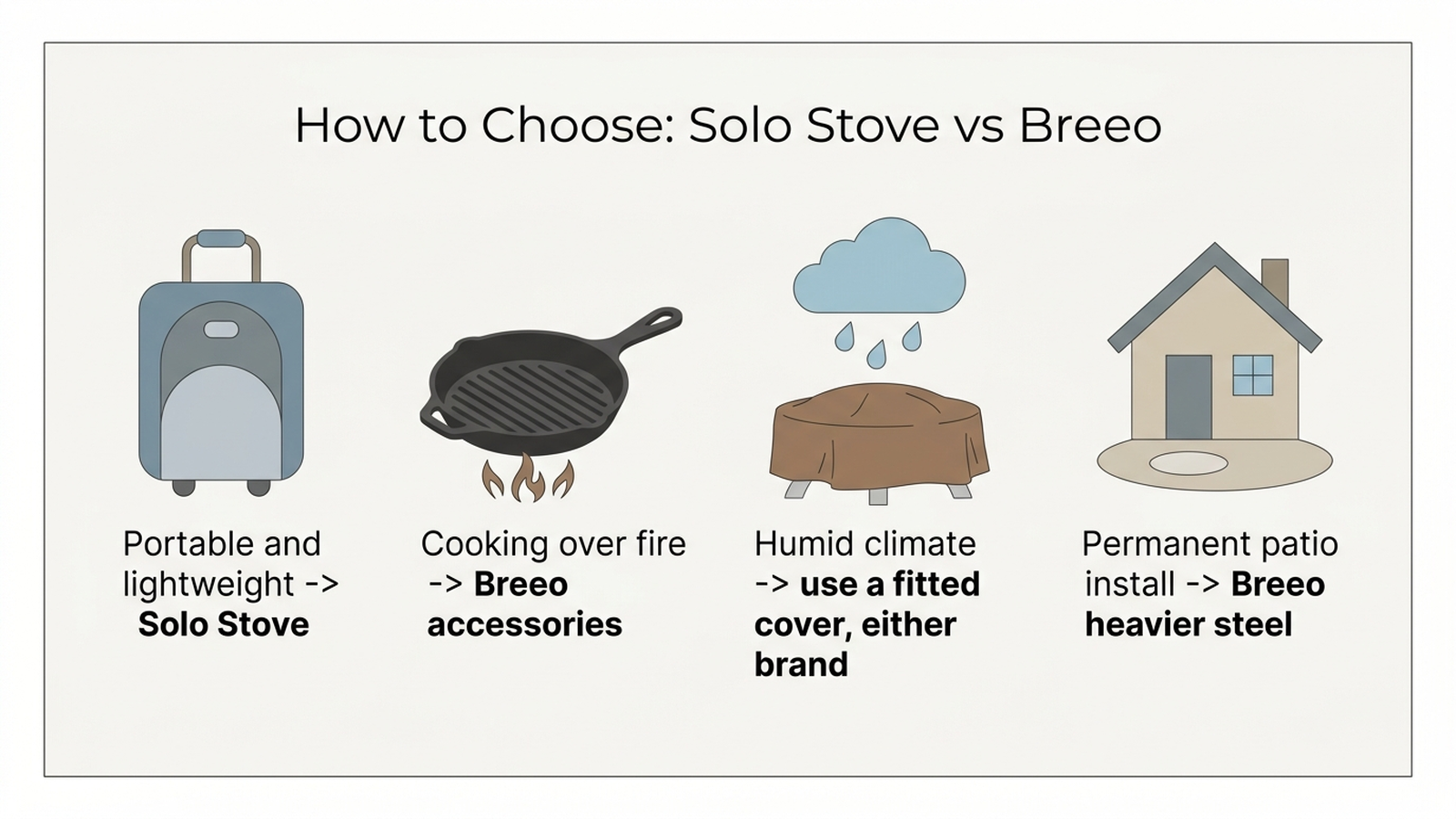
- Want the lightest, easiest-to-store option: Solo Stove’s Bonfire 2.0 weighs roughly a third of Breeo’s X Series 24, which matters for renters moving the pit in and out of storage or apartment-adjacent patios.
- Want to cook over the fire regularly: Breeo’s X Series accessory ecosystem (grill grate, griddle, sear plate) is purpose-built for the rim, while Solo Stove’s cooking accessories are a smaller, more recent addition to its lineup.
- Live somewhere humid or near salt air: both brands’ steel is rust-resistant, not rust-proof — a fitted cover and dry storage reduce the surface-rust complaints that show up most often in reviews of both brands, regardless of which one you buy.
- Want a permanent, semi-buried, or hardscaped installation: Breeo’s heavier gauge and corten-steel patina finish are designed to look intentional as they weather in place, unlike Solo Stove’s polished stainless finish.
- Budget-constrained but still want the smokeless mechanism: Solo Stove’s Bonfire 2.0 without the stand is the least expensive way into genuinely smokeless burning from either brand.
Comparison Table
Prices as of 2026-09-24 — both brands run seasonal discounts heading into fall; check the live listing before buying.
| Product | Diameter | Weight | Material | Warranty | Price |
|---|---|---|---|---|---|
| Solo Stove Bonfire 2.0 with Stand | 19.5 in | ~21.75 lbs | 304 stainless steel | Lifetime (defects) | ~$399.99 |
| Solo Stove Bonfire 2.0 (no stand) | 19.5 in | ~20 lbs | 304 stainless steel | Lifetime (defects) | ~$349.99 |
| Breeo X Series 24 (Corten) | 27.5 in (24 in interior) | ~62 lbs | Corten/stainless steel | Lifetime + 3-yr rust/burn-through | ~$599.00 |
| Breeo X Series 19 (Corten) | 22.1 in | ~47 lbs | Corten/stainless steel | Lifetime + 3-yr rust/burn-through | ~$449.00 |
Decision Flowchart: Portability vs. Build Weight
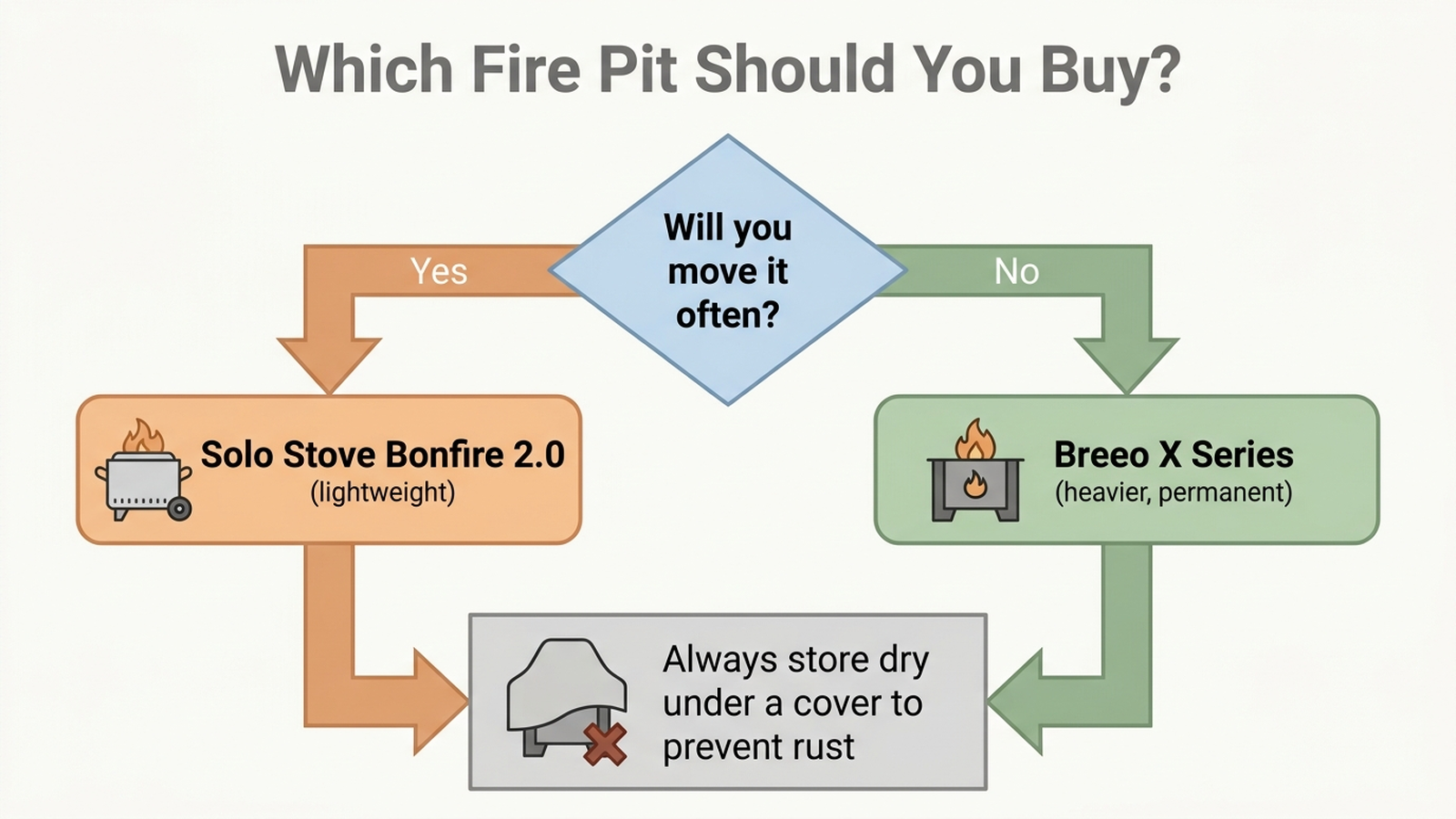
Start by deciding whether you’ll move the fire pit regularly — between a patio and a driveway, into a garage for winter, or between rental properties. If yes, Solo Stove’s lighter build is the practical choice, and the only remaining decision is whether you need the stand (better for uneven or heat-sensitive surfaces) or can skip it to save money. If the fire pit will live in one place — a fixed patio, a hardscaped fire-pit area, or anywhere you plan to cook over it often — Breeo’s heavier steel and cooking accessory ecosystem justify the higher price, and the choice narrows to the 19-inch size for a smaller patio or the 24-inch for a family-size gathering space. Regardless of brand, the flowchart’s last branch is universal: buy a fitted cover and store the pit dry, since both brands’ rust complaints cluster around uncovered, wet storage rather than any inherent defect in one steel type over the other.
Warranty and Support
Solo Stove backs its fire pits with a lifetime warranty against manufacturing defects, but the company’s stated terms — and a recurring pattern in Better Business Bureau and Amazon complaints — treat surface rust and cosmetic wear as excluded from coverage, which has frustrated some owners who see rust appear within the first season. Breeo’s warranty structure is more specific: a lifetime workmanship warranty paired with an explicit 3-year guarantee against rust-through or burn-through, giving owners a concrete timeframe for the failure mode both brands’ complaint patterns center on most. Neither warranty covers damage from improper fuel (accelerants, treated or painted wood) or from leaving the pit uncovered in standing water. Both companies sell branded weatherproof covers as accessories, and reviewers at Family Handyman and GearJunkie consistently recommend buying one regardless of brand, since dry storage is the single factor most cited across owner reviews as the difference between a pit that stays cosmetically clean for years and one that shows surface rust within months.
Editorial Recommendation
- Best for most people: Solo Stove Bonfire 2.0 with Stand — the lightest, easiest-to-store smokeless option at the lowest price point of the four products compared, well-suited to patios, rentals, and occasional camping use.
- Best for cooking and permanent setups: Breeo X Series 24 — the accessory ecosystem and heavier steel gauge make it the stronger choice for anyone who wants to grill over the fire regularly or install the pit in a fixed hardscaped space.
- Best budget entry point: Solo Stove Bonfire 2.0 without the stand — keeps the same smokeless mechanism at a lower price for buyers who already have a fire-safe surface.
- Skip regardless of brand: leaving any smokeless fire pit uncovered through wet weather — both brands’ rust and warping complaints concentrate heavily around this storage habit rather than a defect unique to one steel type.
Limitations
This analysis relies on publicly available Amazon customer reviews, Better Business Bureau and Trustpilot complaint records, manufacturer specifications, and buying-guide coverage from Family Handyman, HGTV, GearJunkie, and AmazingRibs.com; we did not independently test smoke output, burn temperature, or long-term rust resistance under controlled conditions. Weight, diameter, and warranty terms are cited as manufacturer specifications and were not independently re-measured. Rust and warping complaint patterns reflect the tone and frequency of publicly visible reviews and complaints, not an audited failure-rate statistic for either brand. Individual experience may vary substantially based on climate, storage habits, wood type, and how often the pit is used for cooking versus ambient fire. Prices listed reflect Amazon US at the time of writing and change frequently, including seasonal promotional discounts not reflected in the table above.
As an Amazon Associate, Arekore earns from qualifying purchases. The Amazon product links in this article include our affiliate tracking ID and may earn us a commission if you buy through them, at no additional cost to you. See our Links Policy for details on how we select products and how commissions do not influence our recommendations.
- Solo Stove Bonfire 2.0 with Stand
- Solo Stove Bonfire 2.0 (no stand)
- Breeo X Series 24 (Corten Steel)
- Breeo X Series 19 (Corten Steel)
Visit Arekore to verify current pricing and availability on any product mentioned here before buying.