Best Portable SSDs 2026: Samsung vs SanDisk vs Crucial
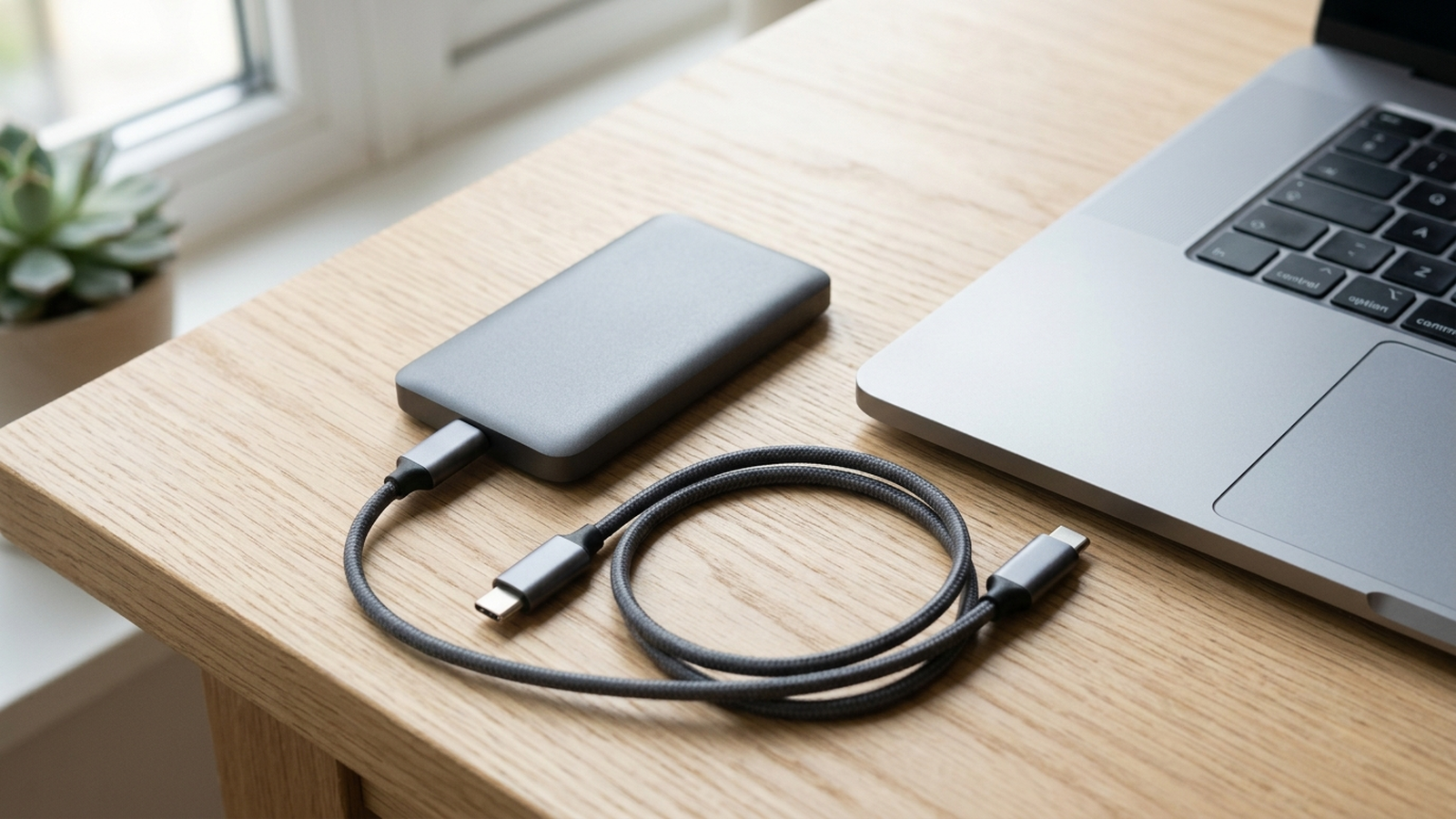
Three brands dominate portable SSD searches on amazon.com right now, and each is built around a different trade-off between speed, ruggedness, and capacity. Samsung’s T9 pushes the fastest mainstream USB-C transfer speeds most laptops can actually use. SanDisk’s Extreme Portable V2 leans on IP65 dust and water resistance and a longer warranty, aimed at outdoor and field use. Crucial’s X10 Pro matches Samsung’s top speed while scaling up to 8TB in a single rugged drive. This guide compares what each brand actually sells on amazon.com today, what independent testers and aggregated owner reviews say about them, and which one fits which kind of buyer.
As an Amazon Associate, Arekore earns from qualifying purchases. The Amazon product links in this article include our affiliate tracking ID and may earn us a commission if you buy through them, at no additional cost to you. See our Links Policy for details on how we select products and how commissions do not influence our recommendations.
TL;DR / Quick Verdict
- Best overall for most buyers: the Samsung T9 — the fastest widely available portable SSD most people will actually see full speed from, with a rugged rubberized shell and a 5-year warranty. Typically $140–$220 for 2TB on Amazon, depending on sales.
- Best for field and outdoor use: the SanDisk Extreme Portable SSD V2 — IP65-rated against dust and water, with a 5-year warranty that beats Samsung’s. Its sequential speeds top out lower (around 1,050MB/s) because it uses an older 10Gbps USB interface rather than the T9’s 20Gbps connection.
- Best for large-capacity, high-speed storage: the Crucial X10 Pro — matches the T9’s roughly 2,000MB/s-class speeds and scales up to 8TB in one drive, at a typically lower price per terabyte than Samsung.
- Best budget pick: the Crucial X9 — a slower (1,050MB/s), non-”Pro” drive that drops the 20Gbps interface and higher price in exchange for a smaller, lighter body around $90–$110 for 2TB.
- The factor buyers underweight: none of these drives hits its rated speed without the right port. All three brands’ flagship 20Gbps-class speeds (T9, X10 Pro) require a USB 3.2 Gen 2x2 (20Gbps) port, which is common on recent laptops but still absent on many older machines and some budget PCs — plug one into a 10Gbps or 5Gbps port and it runs at that port’s ceiling, not the drive’s rating.
How We Reached These Conclusions (Methodology)
This is an editorial analysis, not a hands-on review; we did not personally test the products covered here. This guide synthesizes three kinds of public information: (a) aggregated amazon.com and Best Buy customer reviews sampled in October 2026, totaling roughly 1,500 ratings across the four models covered; (b) independent third-party testing and reporting from StorageReview, Tom’s Guide, Tom’s Hardware, and PCWorld; and (c) manufacturer specifications for interface speed, capacity, and durability ratings. Where we cite a manufacturer figure — sequential read/write speed, drop-resistance height, IP rating — we label it as a manufacturer claim rather than an independently verified lab result, since RTINGS moved its full test data behind a paywall in March 2026 and we did not purchase access to re-verify every figure against that source. Prices are amazon.com figures at the time of writing and fluctuate often, sometimes by $50 or more during sale events.
Technical Approach: USB Interface Speed Is the Real Dividing Line
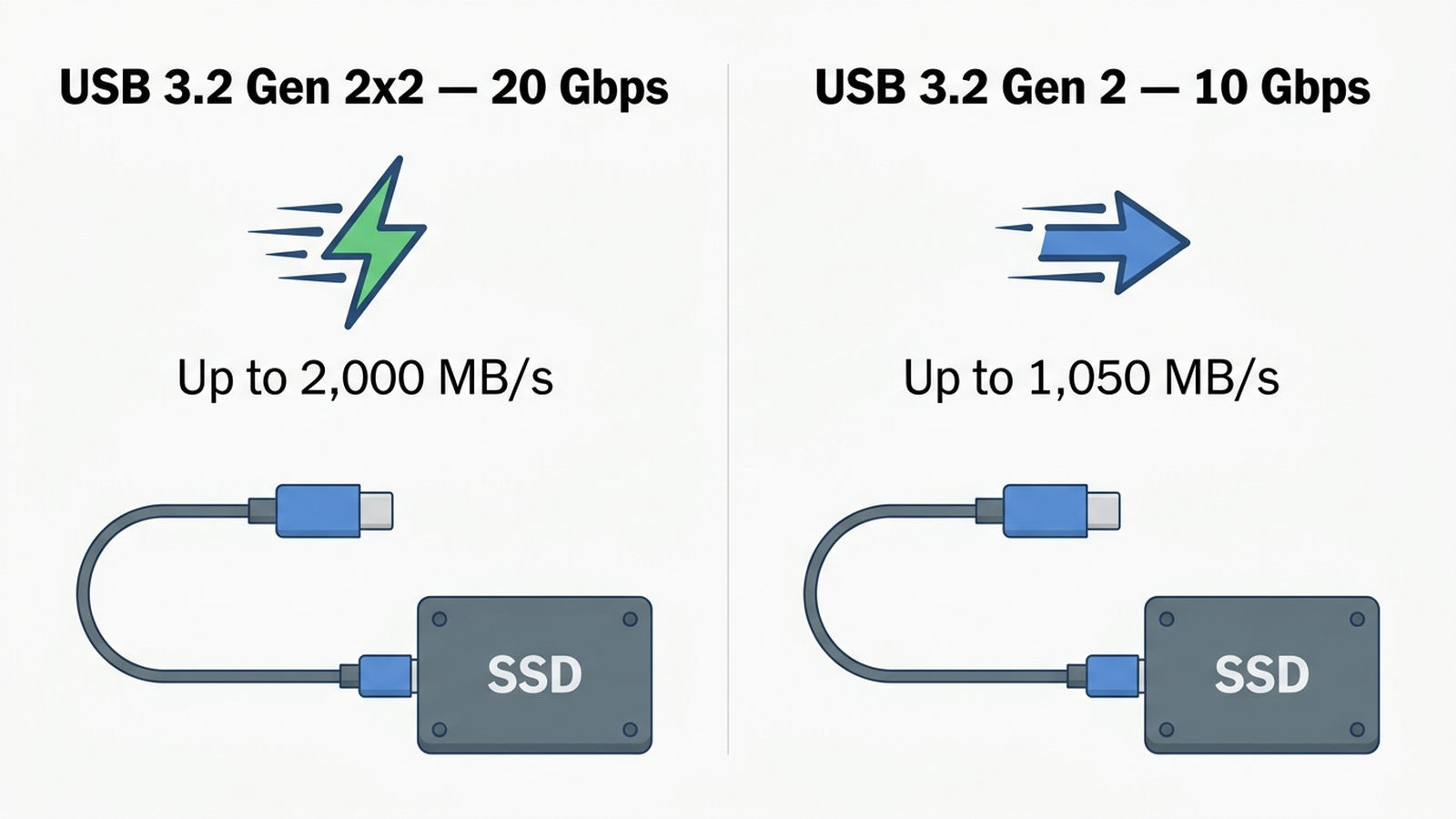
The spec sheets look similar at a glance — all four drives are NVMe-based, USB-C, and marketed as “portable” — but the interface each one uses splits them into two real-world speed tiers.
- 20Gbps tier (USB 3.2 Gen 2x2). The Samsung T9 and Crucial X10 Pro both use this newer interface, rated at up to roughly 2,000MB/s read and write (manufacturer claim). Reaching that speed requires a 20Gbps-capable USB-C port on the host computer; most 2023-and-newer laptops have one, but a meaningful share of older machines and some budget Windows PCs top out at 10Gbps or even 5Gbps, which caps these drives at the port’s speed rather than the drive’s rating.
- 10Gbps tier (USB 3.2 Gen 2). The SanDisk Extreme Portable V2 and Crucial X9 use the older, more universally compatible 10Gbps interface, rated at up to roughly 1,050MB/s read (manufacturer claim). That is still fast enough for large RAW photo transfers, most 4K video editing, and general backup use — it is not the bottleneck for most non-professional workflows, even though it is half the T9’s headline number.
- Durability design differs independently of speed. The SanDisk Extreme Portable V2 carries an IP65 rating (dust-tight, protected against low-pressure water jets) as a manufacturer claim, while the Samsung T9 has no official IP rating despite its rugged rubberized shell and 3-meter drop resistance (manufacturer claim). The Crucial X10 Pro carries an IP55 rating and 2-meter drop resistance (manufacturer claim), putting it between the other two on paper.
- Capacity scaling. The Crucial X10 Pro line extends to 8TB in a single drive, double the 4TB ceiling of the Samsung T9 and SanDisk Extreme Portable V2 lines, without a corresponding jump in physical size (manufacturer claim).
Head-to-Head: Maximum Speed (~$140–$220 for 2TB)
Samsung T9 is the drive most reviewers recommend as the default pick, and the reasoning holds up: it is widely stocked, broadly compatible, and backed by Samsung’s own encryption and backup software. Tom’s Guide names the T9 among its top portable SSD picks, describing it as the most balanced option for buyers with a USB 3.2 Gen 2x2 port, and citing its rugged build, hardware encryption, and 5-year warranty. Aggregated Amazon and Best Buy reviews put it at roughly 4.8 out of 5 stars across several hundred ratings, with owners most often praising transfer speed and build quality; the most common complaint is that its rubberized shell attracts dust and fingerprints more than a smooth plastic case would, a cosmetic rather than functional issue.
Check the Samsung T9 Portable SSD (2TB) on Amazon
Crucial X10 Pro matches the T9 on headline speed — independent testing from Tom’s Hardware measured sequential performance in the same 1,700–2,100MB/s class the manufacturer claims — while costing less per terabyte at most capacities and scaling up to 8TB where the T9 stops at 4TB. Best Buy aggregated customer reviews show roughly 4.5 out of 5 stars across around 250 ratings for the 2TB model, with buyers praising its speed and compact size; the more common complaints involve the lack of an included USB-A adapter cable and its IP55 rating falling short of the SanDisk’s IP65.
Check the Crucial X10 Pro Portable SSD (2TB) on Amazon
Verdict at this tier: choose the Samsung T9 if you want the single most broadly reviewed and tested option with Samsung’s software ecosystem; choose the Crucial X10 Pro if capacity headroom (up to 8TB) or a lower price per terabyte matters more than brand recognition.
Head-to-Head: Ruggedness and Field Use (~$130–$180 for 2TB)
SanDisk Extreme Portable SSD V2 is positioned for photographers, videographers, and travelers who need a drive that survives dust, sand, and incidental water exposure in the field — its IP65 rating (manufacturer claim) is the highest of the four drives covered here. It’s worth noting directly: this same V2 product line had a well-documented firmware and solder-joint defect in units manufactured through roughly mid-2023, which caused sudden data loss for some users and drew a class-action lawsuit (Krum v. Western Digital). Western Digital shipped a firmware patch from mid-2023 onward, and the listing covered here is explicitly labeled “Updated Firmware” by the retailer — but it is the same V2 hardware line, not a newer generation that replaced a defective predecessor, so buyers researching this drive will likely encounter those older reports and should confirm firmware version on receipt. Current aggregated reviews for the V2 run positive, with owners citing the compact design and water resistance most often; SanDisk’s 5-year warranty on this line is longer than Samsung’s on the T9.
Check the SanDisk Extreme Portable SSD V2 (2TB) on Amazon
Verdict at this tier: choose the SanDisk Extreme Portable V2 if you regularly work outdoors, near water, or on dusty job sites, and 1,050MB/s is fast enough for your files — it trades the T9 and X10 Pro’s top-end speed for the highest durability rating and longest warranty in this comparison.
Budget Option (~$90–$110 for 2TB)
Crucial X9 strips the X10 Pro’s 20Gbps interface and higher IP rating down to a 10Gbps, non-rugged design, keeping the same 2TB-to-4TB capacity range at a lower price. It’s a reasonable choice for buyers who mainly need extra backup or file-transfer capacity and don’t need top-tier speed or drop/dust resistance; reviewers consistently describe it as the better value pick within Crucial’s own lineup for anyone not editing large video files directly off the drive.
Check the Crucial X9 Portable SSD (2TB) on Amazon
Verdict: a sensible first external SSD for general backup and file transfer, not a fit for buyers planning to edit 4K video directly from the drive.
Customer Sentiment Synthesis
- Samsung T9 owners, per aggregated Amazon and Best Buy reviews, most often cite transfer speed, compact size, and heat dissipation as strengths; the most repeated complaint is that the textured rubber shell attracts visible dust and grime more easily than a smooth case.
- Crucial X10 Pro owners frequently highlight raw speed and a surprisingly small physical footprint for the performance it delivers; the more common critiques involve the missing USB-A adapter in the base package and a price that some reviewers feel is high relative to the plain (non-Pro) Crucial X9.
- SanDisk Extreme Portable V2 owners, per aggregated retailer feedback, praise the drive’s water and dust resistance and point to the 5-year warranty as a differentiator; a subset of reviews and forum reports reference the earlier firmware-related data-loss issue from the prior generation, which SanDisk addressed with a firmware update before the V2 version sold today.
- Crucial X9 owners describe it as reliable for straightforward backup use, with the most common critique being that its 1,050MB/s ceiling is noticeably slower than the X10 Pro for anyone who regularly moves large video files.
- Net read: none of the four drives shows the kind of one-star pile-on associated with no-name budget drives; complaints skew toward cosmetic shell issues, missing accessories, and price-versus-tier comparisons within a brand’s own lineup rather than outright reliability failures in the current generation.
Side-by-Side Comparison
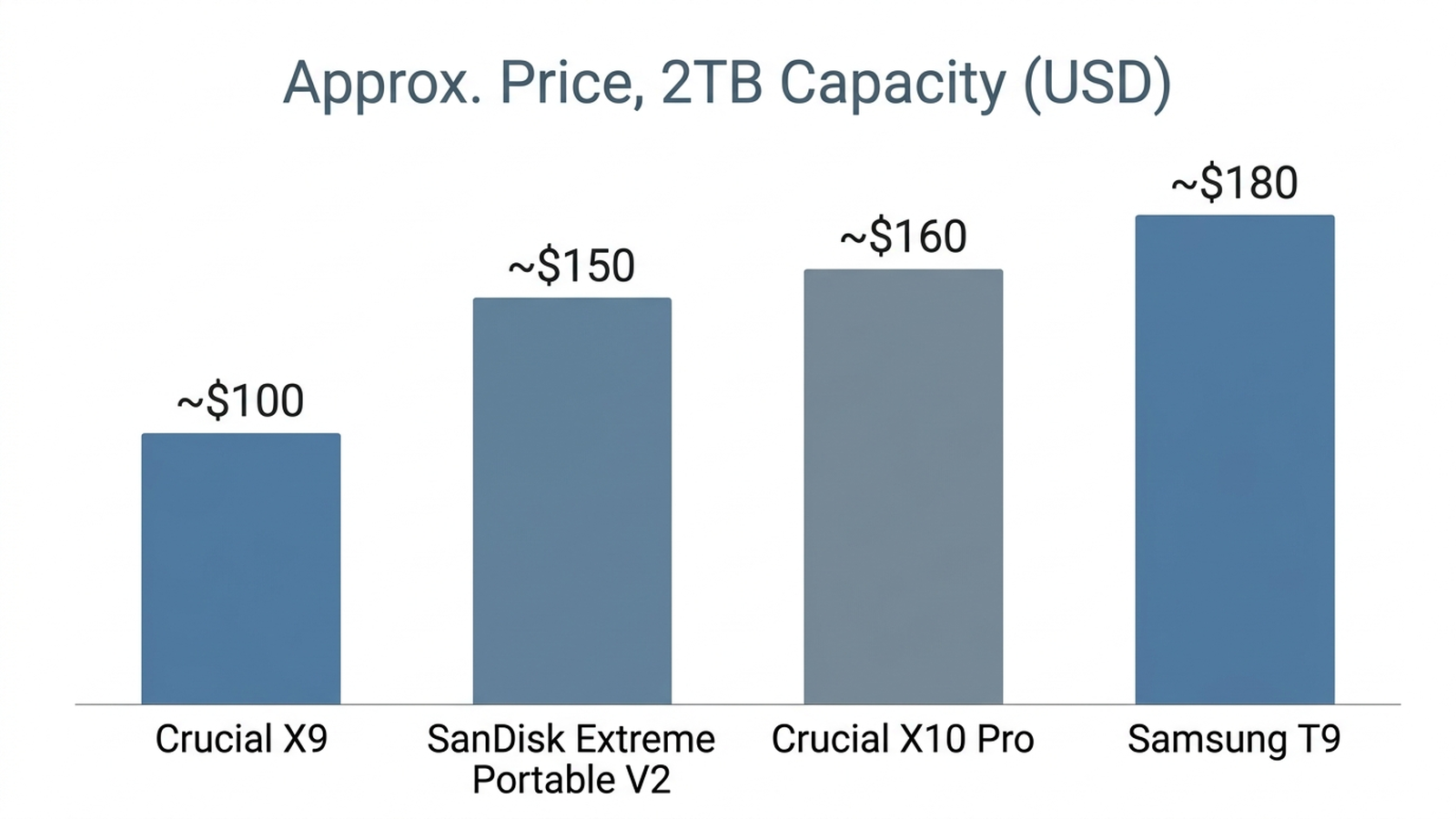
| Model | ASIN | Interface | Max speed (manufacturer claim) | Durability (manufacturer claim) | Max capacity | Approx. price, 2TB (as of 2026-10-13) |
|---|---|---|---|---|---|---|
| Crucial X9 | B0CGW18S6Y | USB 3.2 Gen 2 (10Gbps) | 1,050MB/s read | No IP rating | 4TB | $90–$110 |
| SanDisk Extreme Portable V2 | B08HN37XC1 | USB 3.2 Gen 2 (10Gbps) | 1,050MB/s read | IP65 | 4TB | $130–$180 |
| Crucial X10 Pro | B0C9WGS6MC | USB 3.2 Gen 2x2 (20Gbps) | 2,100MB/s read / 2,000MB/s write | IP55, 2m drop | 8TB | $140–$190 |
| Samsung T9 | B0CGQ43PMG | USB 3.2 Gen 2x2 (20Gbps) | 2,000MB/s read/write | No IP rating, 3m drop | 4TB | $140–$220 |
Speed, drop-resistance, and IP-rating figures are manufacturer specifications; the review-sentiment and third-party testing findings cited above are independently sourced. Prices fluctuate — verify the current amazon.com price before buying.
Market Context: A Fast-Growing Category With Falling Prices Per Terabyte
The global portable SSD market is valued at roughly $3.23 billion in 2026, according to Research Nester, with broader external storage markets projected to grow from about $45.7 billion in 2025 to $51.3 billion in 2026 at a compound annual growth rate near 12.3%. Within that category, USB 3.2 drives make up a clear majority of global portable-SSD sales, and 20Gbps (USB 3.2 Gen 2x2) is increasingly treated as a mainstream expectation rather than a premium feature, as more laptops ship with the faster port as standard. Average price per terabyte for external SSDs has been falling steadily, which helps explain why 2TB drives from all four brands covered here now routinely sell for well under $200 — a price point that would have been closer to entry-level 1TB pricing just two years earlier.
How to Decide
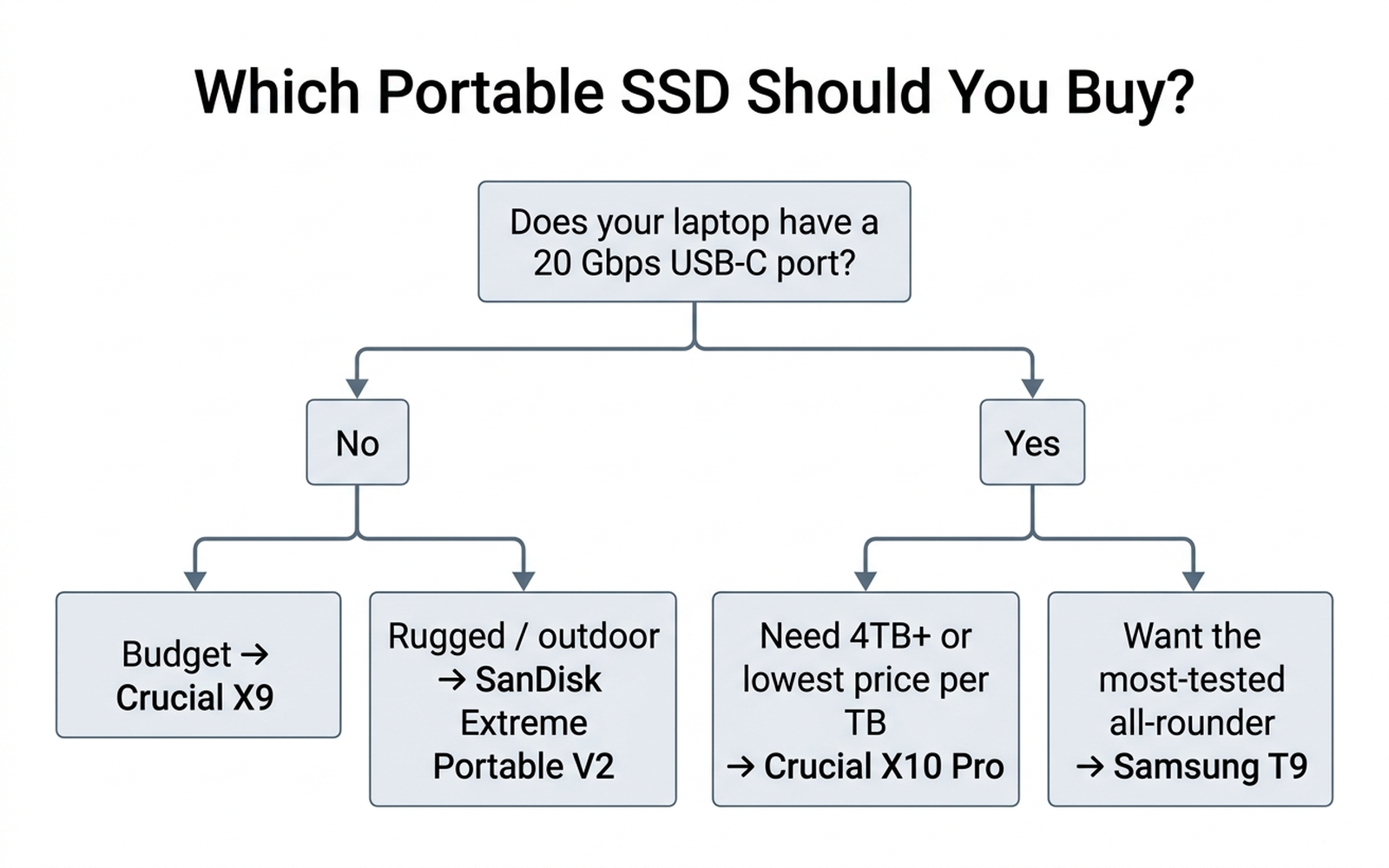
Start by asking whether your laptop actually has a 20Gbps USB-C port — check its spec sheet, since this is the single biggest factor in whether the Samsung T9 or Crucial X10 Pro’s headline speed is reachable at all. If it does, and you want the most widely tested, broadly recommended option, the Samsung T9 is the default pick; if you need more than 4TB in one drive or want to save on price per terabyte, the Crucial X10 Pro is the stronger fit. If your work takes you outdoors, near water, or onto dusty job sites, the SanDisk Extreme Portable V2’s IP65 rating and 5-year warranty matter more than an extra 1,000MB/s you may not be able to use anyway. If you mainly need backup capacity on a budget and don’t edit large video files directly off the drive, the Crucial X9 is the most capable option under $110.
Editorial Recommendation by Use Case
- You want the single best-reviewed, most broadly compatible fast drive: the Samsung T9.
- You need more than 4TB, or want the lowest price per terabyte at top speed: the Crucial X10 Pro.
- You work outdoors, near water, or on dusty sites and want the longest warranty: the SanDisk Extreme Portable V2.
- You want the most capable backup drive under $110: the Crucial X9.
- You’re buying mainly for the 2,000MB/s headline speed: confirm your laptop has a USB 3.2 Gen 2x2 (20Gbps) port first — on a 10Gbps or 5Gbps port, the T9 and X10 Pro will run no faster than the SanDisk or Crucial X9, making the extra cost pointless for your setup.
Limitations
This analysis relies on publicly available reviews, third-party test reporting, and manufacturer specifications; we did not independently lab-test these units’ sustained write speeds, thermal throttling behavior, or drop/water resistance claims. RTINGS moved its full portable-SSD test data behind a paywall in March 2026, which limited our ability to cite one previously common independent-testing source directly. Amazon and Best Buy review sentiment reflects aggregated public feedback at the time of writing and can shift as new reviews accumulate. The earlier SanDisk Extreme firmware data-loss issue referenced above affected a prior hardware generation and was addressed by a firmware update before the V2 unit reviewed here went on sale, but we did not independently verify long-term reliability data for the current generation. Prices and availability were accurate to our research at the time of writing and change frequently — verify current specs and pricing on the product page before buying.
Before you buy any of these drives, it pays to check that a listing’s reviews are genuine and that a sale price is an actual discount rather than an inflated “was” price. That is exactly what Arekore does: paste the Amazon URL and our AI analyzes review authenticity, surfaces the most useful low-star feedback, and compares pricing in about five minutes — so you end up with the portable SSD that actually fits your computer’s ports and your workflow, not just the one with the longest feature list.