Best Dash Cams 2026: Garmin vs Vantrue vs Nextbase
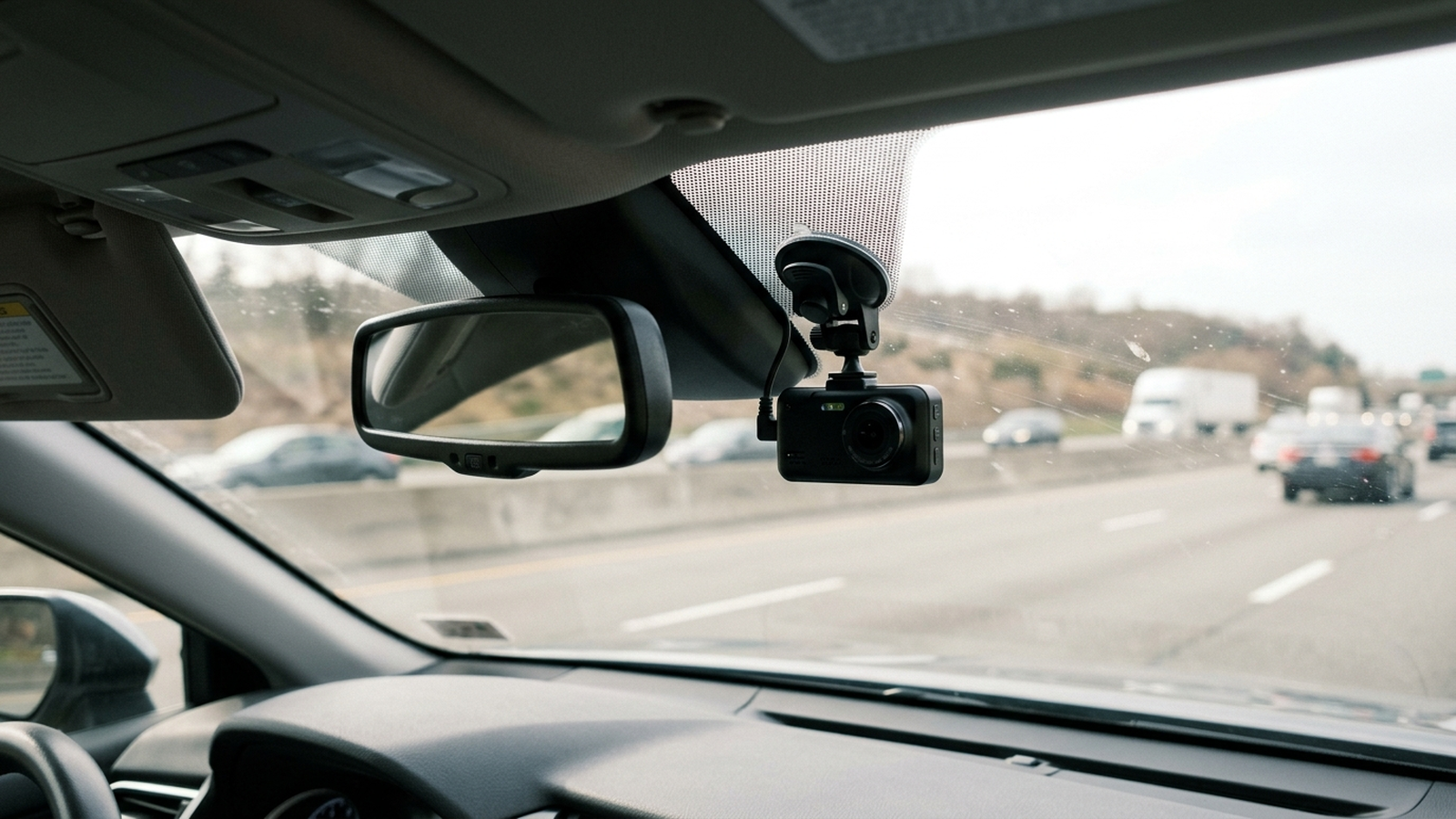
Three brands dominate dash cam searches on amazon.com right now, and each is optimized for a different kind of buyer. Garmin leans on its GPS heritage to build the smallest, most voice-friendly single-channel cameras. Vantrue has built a reputation among rideshare and delivery drivers for multi-channel systems that capture the front seat, cabin, and rear simultaneously. Nextbase positions itself as the touchscreen, feature-rich option with built-in emergency response tools. This guide compares what each brand actually sells on amazon.com today, what independent testers and aggregated owner reviews say about them, and which one fits which kind of driver.
As an Amazon Associate, Arekore earns from qualifying purchases. The Amazon product links in this article include our affiliate tracking ID and may earn us a commission if you buy through them, at no additional cost to you. See our Links Policy for details on how we select products and how commissions do not influence our recommendations.
TL;DR / Quick Verdict
- Best overall for most drivers: the Garmin Dash Cam 67W — compact, voice-controlled, and the only one of the three built primarily around a small, discreet single-channel design. Typically $150–$260 on Amazon.
- Best for rideshare and delivery drivers: the Vantrue N4 Pro — a 3-channel system covering front (4K), cabin, and rear simultaneously, with Vantrue’s PlatePix license-plate-clarity processing. Typically around $300–$380.
- Best for touchscreen control and emergency features: the Nextbase 622GW — a 4K front camera with a 3-inch touchscreen, built-in Alexa, and the what3words emergency-location feature. Typically $250–$400 depending on bundle.
- Best budget pick: the Vantrue E1 Lite — 1080p with GPS and WiFi for around $90–$110, a reasonable entry point if 4K and multi-channel recording aren’t priorities.
- The factor buyers underweight: a dash cam does not automatically lower your car insurance premium. As of 2026, no major U.S. insurer has a standardized discount program for dash cam ownership; the real value is footage that can prevent a false liability claim or an unjustified rate increase after a dispute.
How We Reached These Conclusions (Methodology)
This is an editorial analysis, not a hands-on review; we did not personally test the products covered here. This guide synthesizes three kinds of public information: (a) aggregated amazon.com customer reviews sampled in October 2026, totaling roughly 2,900 ratings across the four models covered; (b) independent third-party testing and reporting from Wirecutter (NYT), TechRadar, and specialist outlets including DashCamTalk and Dashcaminsight; and (c) manufacturer specifications for resolution, field of view, and storage limits. Where we cite a manufacturer figure — field of view, sensor model, license-plate clarity claims — we label it as a manufacturer claim rather than an independently verified result. Prices are amazon.com figures at the time of writing and change frequently, often by $50 or more during sale events.
Technical Approach: Single-Channel vs. Multi-Channel Recording
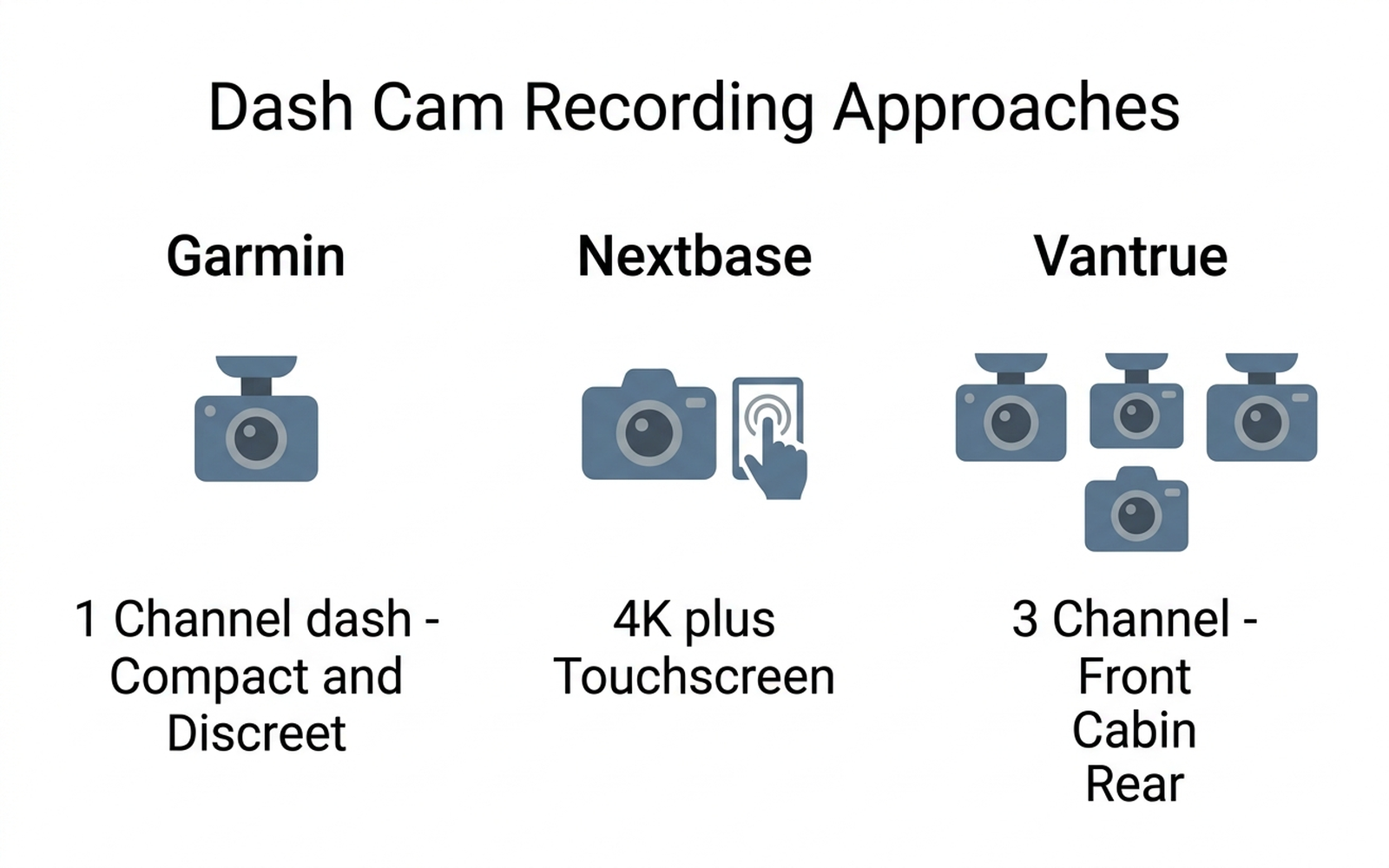
The three brands are not all solving the same problem, which matters more than the spec sheets alone suggest.
- Garmin’s approach prioritizes size and discretion. The Dash Cam 67W is a single-channel (front-only) 1440p camera with a 180-degree field of view (manufacturer claim) and Garmin’s HDR processing, called “Garmin Clarity.” Voice control (“Ok, Garmin”) lets drivers save clips or toggle audio recording hands-free. It ships with a 16GB microSD card and supports Garmin’s companion app for clip review and optional vehicle monitoring when parked.
- Vantrue’s approach, demonstrated by the N4 Pro, is multi-channel coverage: a 4K front sensor, 1080p cabin-facing infrared camera, and 1080p rear camera recording simultaneously, aimed squarely at rideshare and delivery drivers who need to document what happens inside the vehicle as well as outside it. The N4 Pro uses a Sony STARVIS 2 sensor (IMX678) and Vantrue’s PlatePix processing, which the company claims makes license plates roughly 1.5x sharper than competing models (manufacturer claim) — relevant for hit-and-run and parking-dispute footage. It supports microSD cards up to 512GB.
- Nextbase’s approach centers on the touchscreen and connected features. The 622GW records 4K at 30fps (or 1440p at 60fps, or 1080p at 120fps for slow-motion) through a 3-inch IPS touchscreen, with image stabilization, built-in Alexa, and what3words integration that converts GPS coordinates into a three-word location code for faster emergency dispatch.
- Budget tier. The Vantrue E1 Lite drops to a single 1080p front channel at a 160-degree field of view, keeping GPS, WiFi, and voice control but giving up the 4K sensor and multi-channel coverage of the N4 Pro.
Head-to-Head: Compact and Discreet (~$150–$260)
Garmin Dash Cam 67W is built for drivers who want a camera that essentially disappears behind the mirror. At 1440p with a 180-degree field of view (manufacturer claim), it captures meaningfully more of the lane beside you than a typical 120–140-degree camera, while remaining one of the smallest units in this comparison. Aggregated Amazon reviews put it at 4.2 out of 5 stars across roughly 970 ratings, with owners most often praising its compact size and simple voice commands; independent testing aggregated by SmartHomeExplorer gives it an 8.4-out-of-10 expert consensus score across four review sources. Pricing has swung widely — list price runs $259.99, but the camera has repeatedly hit $149.99–$179.99 during Amazon lightning deals (as of 2026-10-12).
Check the Garmin Dash Cam 67W on Amazon
Verdict at this tier: if front-only coverage is enough and a small, unobtrusive camera matters more than 4K resolution or multi-channel recording, the Garmin 67W is the lowest-friction choice — the tradeoff is that it records only the road ahead, not the cabin or rear.
Head-to-Head: Multi-Channel and Touchscreen (~$250–$400)
Vantrue N4 Pro is the pick for drivers who need documented coverage of the cabin interior, not just the road. Its 3-channel setup — 4K front, 1080p cabin, 1080p rear — runs simultaneously, and the STARVIS 2 sensor is built to hold up in low light, a frequent weak point for cheaper multi-channel systems. Amazon customer reviews average 4.5 out of 5 stars across roughly 1,000 ratings, with owners citing night-vision quality and build durability most often; the more common complaints involve WiFi connectivity drops and the camera’s larger physical footprint compared with single-channel units. Pricing typically runs $300–$380 depending on bundle (as of 2026-10-12), plus a one-year warranty.
Check the Vantrue N4 Pro on Amazon
Nextbase 622GW targets drivers who want to interact with the camera directly rather than rely entirely on an app. Its 3-inch touchscreen, built-in Alexa, and what3words emergency-location feature are genuine differentiators — Wirecutter’s dash cam testing methodology (over 400 models researched, 61 tested hands-on since 2013) has repeatedly flagged Nextbase’s software polish as a strength relative to budget competitors, even in years when a different model wins the brand’s top overall pick. The 622GW records 4K at 30fps with image stabilization and a 140-degree field of view, narrower than Garmin’s 180-degree claim but typical for the 4K-touchscreen category. Pricing starts around $249.99 for the front-only bundle and climbs toward $400 for bundles that add a rear camera and larger microSD cards (as of 2026-10-12).
Check the Nextbase 622GW on Amazon
Verdict at this tier: choose the Vantrue N4 Pro if cabin and rear coverage matter — rideshare driving, frequent passengers, or parking-lot disputes. Choose the Nextbase 622GW if touchscreen control, Alexa integration, and emergency-dispatch features matter more than a third camera channel.
Budget Option (~$90–$110)
Vantrue E1 Lite strips the N4 Pro’s multi-channel design down to a single 1080p front camera with a 160-degree field of view, keeping GPS, WiFi, and voice control while dropping to a more modest sensor than the 4K models above. Independent reviewers covering the budget tier describe it as the strongest GPS-and-WiFi-equipped option under $100, a meaningfully different value proposition than no-name cameras at the same price that often skip GPS entirely. It typically runs $89.99–$109.99 in bundle configurations that include a microSD card (as of 2026-10-12).
Check the Vantrue E1 Lite on Amazon
Verdict: a reasonable first dash cam for drivers who mainly want basic incident documentation and don’t need 4K detail or multi-channel coverage.
Customer Sentiment Synthesis
- Garmin Dash Cam 67W owners, per aggregated Amazon reviews, most often cite the compact size and ease of use; Reddit sentiment aggregated by third-party trackers runs roughly 92% positive, with the most common praise being how “inobtrusive” the camera is compared with bulkier competitors.
- Vantrue N4 Pro owners frequently highlight night-vision quality and overall build durability; the more common critiques involve WiFi pairing reliability and the physical size of a 3-camera system compared with a single-channel unit.
- Nextbase 622GW owners, per aggregated retailer and Amazon feedback, praise the touchscreen interface and what3words emergency feature; some reviews note that bundle pricing can be confusing, since the base unit, rear camera, and memory card are frequently sold as separate add-ons rather than one fixed price.
- Heat sensitivity is a category-wide theme, not brand-specific. Independent reviewers and owner reports across multiple dash cam brands flag that battery-backed units (rather than capacitor-backed) are more prone to shutting down or failing in extreme heat — relevant for anyone parking in direct sun in hot climates, regardless of which of these three brands they choose.
- Net read: none of the three brands shows the kind of one-star pile-on associated with no-name budget cameras; complaints skew toward connectivity quirks and bundle-pricing confusion rather than core recording failures.
Side-by-Side Comparison
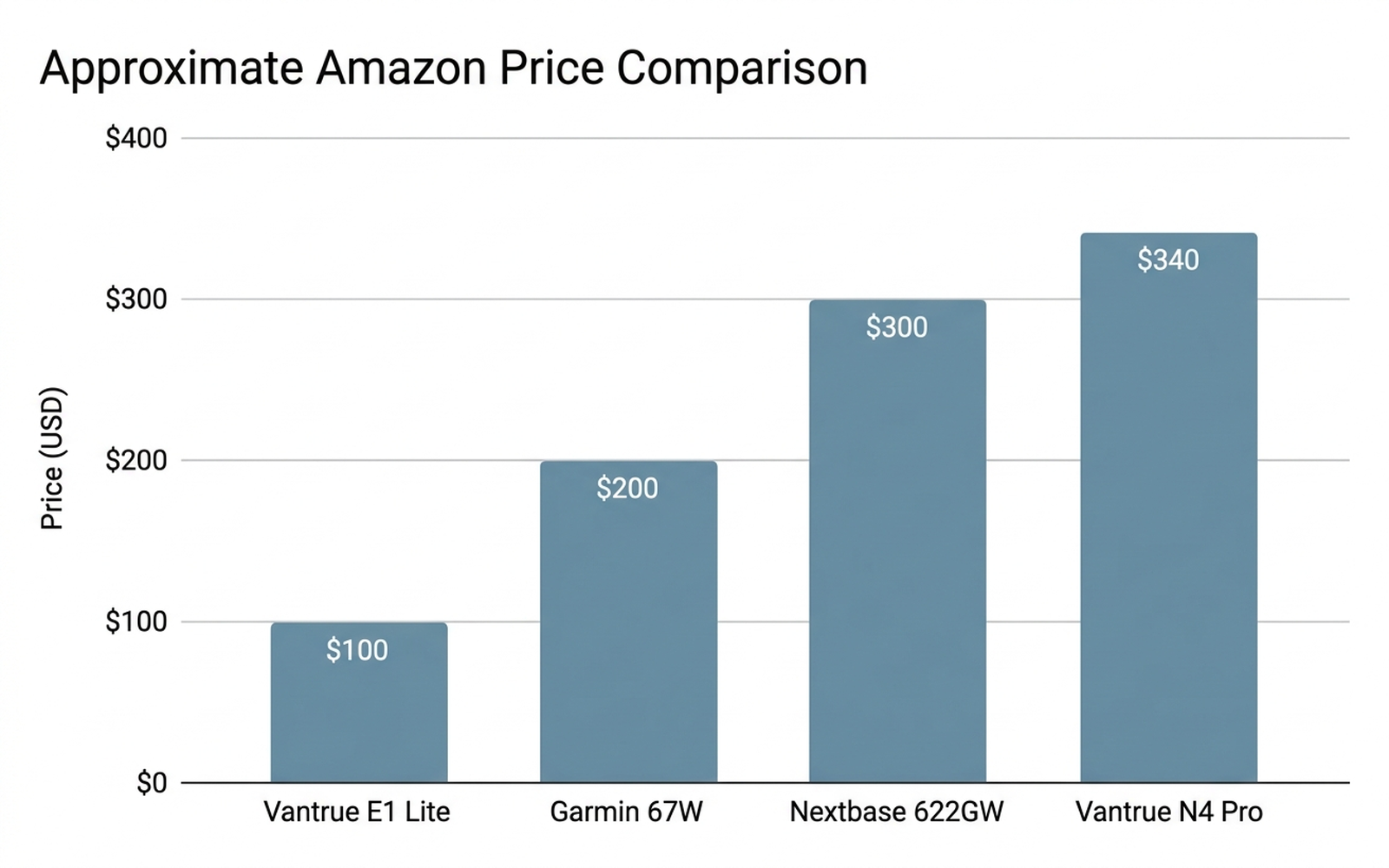
| Model | ASIN | Channels | Max resolution | Field of view (front) | Approx. price (as of 2026-10-12) |
|---|---|---|---|---|---|
| Vantrue E1 Lite | B0BK135HWR | 1 (front) | 1080p | 160° | $90–$110 |
| Garmin Dash Cam 67W | B093244D1J | 1 (front) | 1440p | 180° | $150–$260 |
| Nextbase 622GW | B08F7RH7NY | 1–2 (front, optional rear) | 4K | 140° | $250–$400 |
| Vantrue N4 Pro | B0C3M7HPRT | 3 (front, cabin, rear) | 4K (front) | 165° | $300–$380 |
Field of view and resolution figures are manufacturer specifications; the review-sentiment and third-party testing findings cited above are independently sourced. Prices fluctuate — verify the current amazon.com price before buying.
Market Context: A Fast-Growing, Fragmented Category
The global dashboard camera market is projected to grow from roughly $6.0 billion in 2026 to $9.8 billion by 2031, a compound annual growth rate of about 10.4%, according to Mordor Intelligence. The North America segment specifically is valued at roughly $1.31 billion in 2026, growing toward $2.18 billion by 2031 at a CAGR of about 10.7%. Growth drivers cited across multiple market research firms include rising demand for insurance-dispute documentation, the expansion of rideshare and delivery gig work (which effectively requires multi-channel cameras like the Vantrue N4 Pro for driver protection), and increasing adoption of basic recording devices as an aftermarket accessory category. Notably, that growth is not being driven by direct insurance discounts: as of 2026, no major U.S. insurer offers a standardized rate reduction for dash cam ownership, with Louisiana’s new commercial-auto telematics discount (effective January 1, 2026) standing out as a narrow exception rather than the norm.
How to Decide
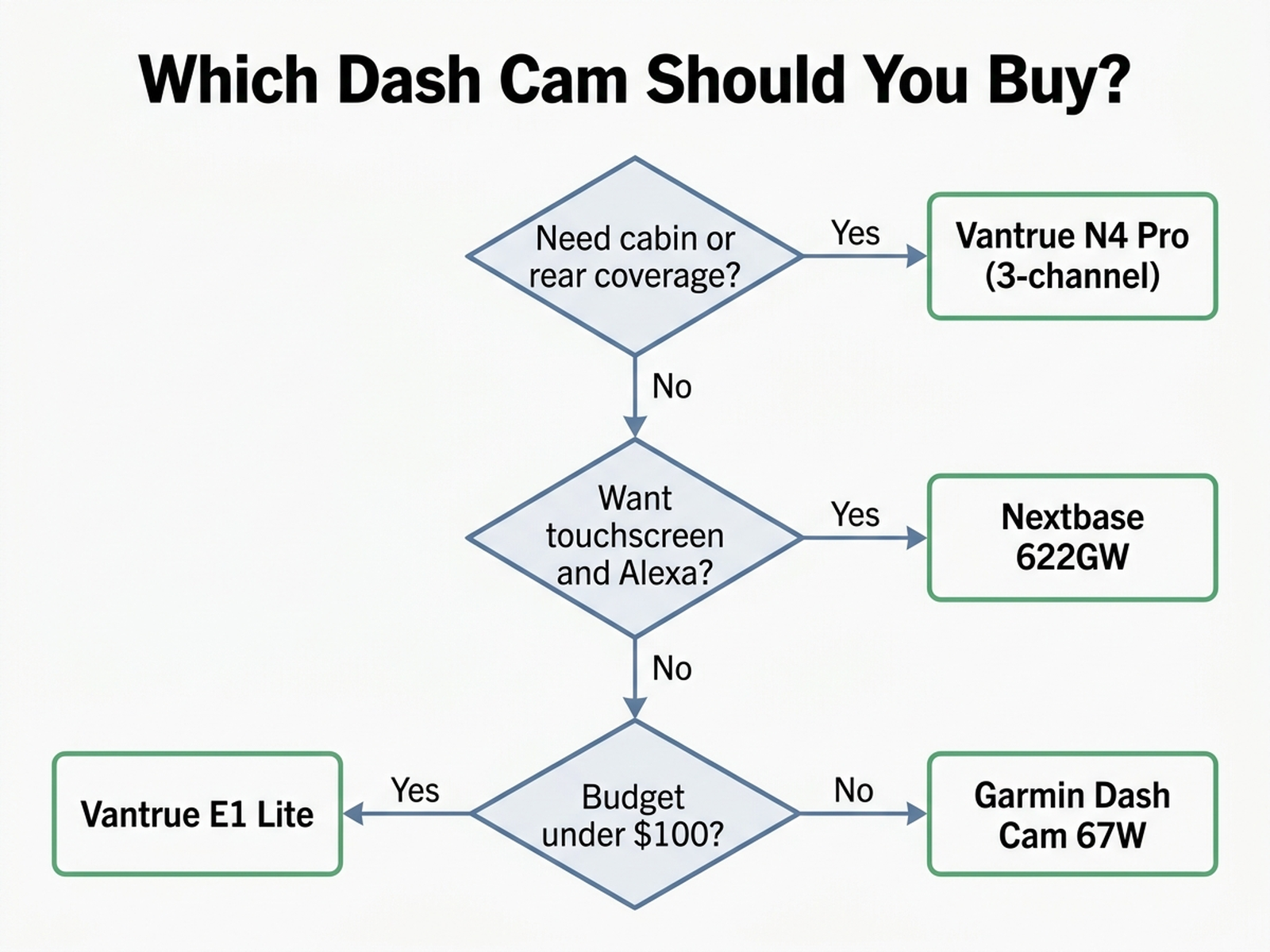
Start by asking whether you need more than front-facing coverage. If you drive for a rideshare or delivery platform, or simply want documented proof of what happens inside your own vehicle, the Vantrue N4 Pro’s 3-channel setup is the only option in this comparison built for that job. If front-only coverage is enough, the decision comes down to size versus features: the Garmin 67W is the smallest and most discreet option with strong voice control, while the Nextbase 622GW trades some of that discretion for a touchscreen, Alexa integration, and the what3words emergency feature. If budget is the primary constraint and 4K detail isn’t essential, the Vantrue E1 Lite is the most capable sub-$100 option that still includes GPS and WiFi.
Editorial Recommendation by Use Case
- You want the smallest, most discreet dash cam with solid voice control: the Garmin Dash Cam 67W.
- You drive for rideshare, delivery, or simply want cabin and rear coverage documented: the Vantrue N4 Pro.
- You want touchscreen control, Alexa integration, and emergency-location features: the Nextbase 622GW.
- You want a capable entry-level camera under $100: the Vantrue E1 Lite.
- You’re buying mainly to lower your insurance premium: reconsider your expectations — as of 2026, no major U.S. insurer offers a standardized dash cam discount; the realistic benefit is footage that can prevent a false liability claim, not a line-item discount on your bill.
Limitations
This analysis relies on publicly available reviews, third-party test reporting, and manufacturer specifications; we did not independently lab-test these units. Field of view, sensor model, and license-plate-clarity claims are manufacturer specifications and are not directly comparable to independent lab measurements of real-world footage quality. Amazon review sentiment reflects aggregated public feedback at the time of writing and can shift as new reviews accumulate. Heat-sensitivity reports are drawn from scattered owner feedback across the category rather than a controlled thermal test. Prices and availability were accurate to our research at the time of writing and change frequently — verify current specs and pricing on the product page before buying.
Before you buy any of these cameras, it pays to check that a listing’s reviews are genuine and that a sale price is an actual discount rather than an inflated “was” price. That is exactly what Arekore does: paste the Amazon URL and our AI analyzes review authenticity, surfaces the most useful low-star feedback, and compares pricing in about five minutes — so you end up with the dash cam that actually fits how you drive, not just the one with the longest feature list.