Best Blenders in 2026: Vitamix vs Ninja vs Blendtec
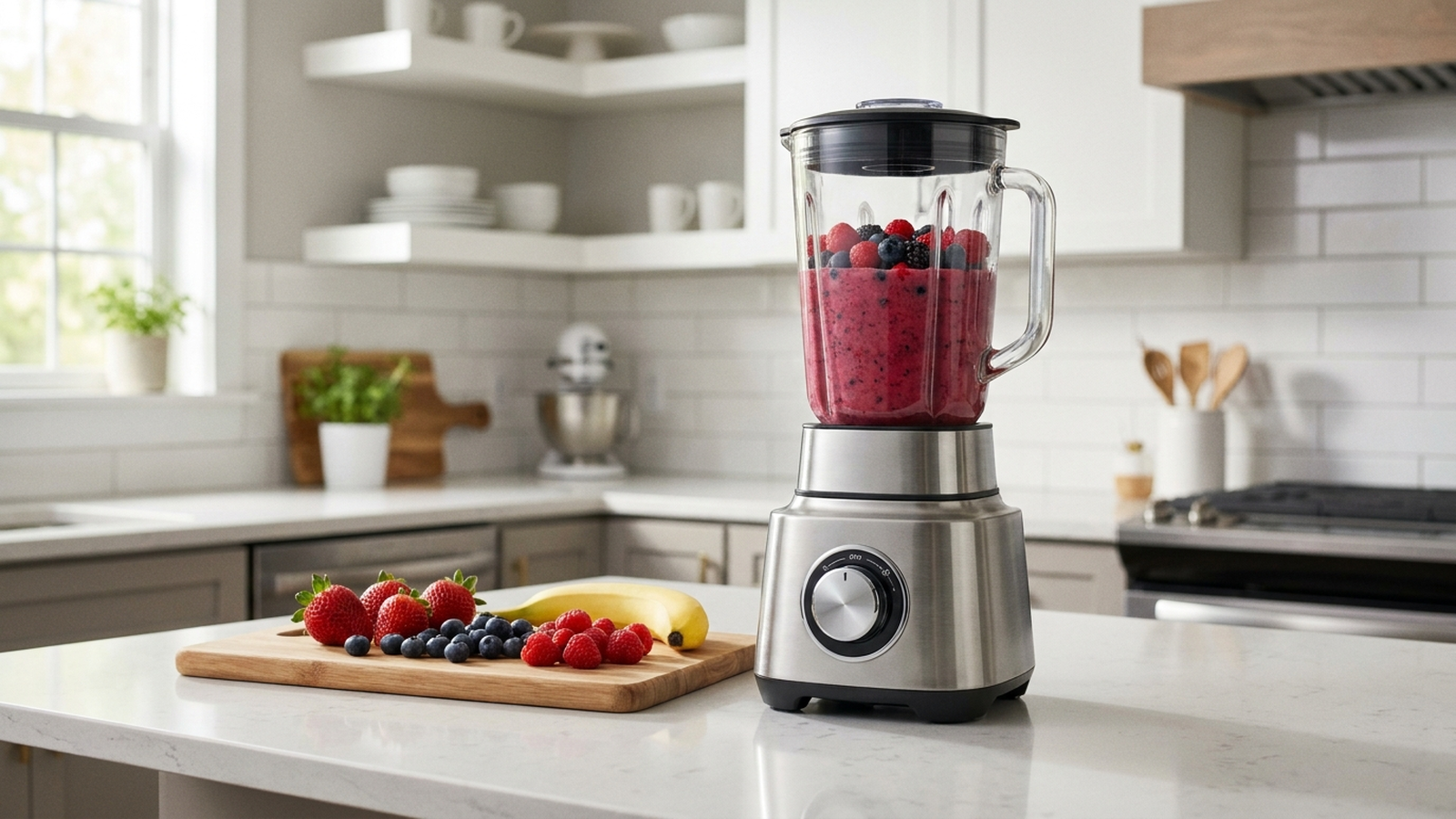
Every kitchen-appliance thread on Reddit eventually turns into the same argument: Vitamix, Ninja, or Blendtec? The honest answer is that these three brands aren’t really competing head-to-head across the board. Vitamix and Blendtec both sell professional-grade machines in the $350–$700 range built to run for a decade; Ninja sells feature-dense combo systems at a third of that price, aimed at people who want smoothies, dips, and dough in one box without a four-figure commitment. This guide synthesizes aggregated Amazon customer reviews, independent lab testing, and manufacturer specifications to sort out which approach actually fits which kitchen — and which specific models are worth the money in 2026.
As an Amazon Associate, Arekore earns from qualifying purchases. The Amazon product links in this article may include our affiliate tracking ID and may earn us a commission if you buy through them, at no additional cost to you. See our Links Policy for details on how we select products and how commissions do not influence our recommendations.
TL;DR / Quick Verdict
- Best all-around premium blender: the Vitamix 5200 — a decade-plus workhorse with the tamper design that gives you the most manual control over thick blends, and the model independent testers most often cite as the benchmark other blenders are judged against.
- Best for hands-off convenience: the Blendtec Total Classic Original — a marginally more powerful motor and pre-programmed one-touch cycles mean less babysitting, at the cost of the manual control a tamper provides.
- Best value / most features per dollar: the Ninja Foodi Power Blender Ultimate System — roughly a third of the price of the premium two, with a built-in food processor and smoothie-bowl functions, but a shorter expected lifespan and a 3-blade design several reviewers flag as awkward to clean.
- Best for smart-connected users: the Vitamix A3500 Ascent — the same core motor and blade geometry as the 5200, wrapped in a programmable, app-connected shell with a self-detect container sensor.
- The real choice: decide whether you’re buying a 10-year kitchen tool or a 3-year kitchen tool before you decide on a brand — the price gap mostly reflects that difference, not raw blending power.
How We Reached These Conclusions (Methodology)
This is an editorial analysis, not a hands-on review. We did not personally test the products covered here. This guide synthesizes three kinds of public information: (a) aggregated amazon.com customer ratings and the substance of low- and high-star reviews, sampled in August 2026; (b) independent third-party testing and comparisons from RTINGS, Consumer Reports, and other appliance labs; and (c) manufacturer specifications and official product listings. Where we cite a manufacturer figure — motor wattage, blade tip speed, peak horsepower — we label it as a manufacturer claim rather than an independently verified result. Prices are amazon.com figures at the time of writing and change frequently, sometimes by over $100 within a single month.
1. Three Different Approaches to Blending Power
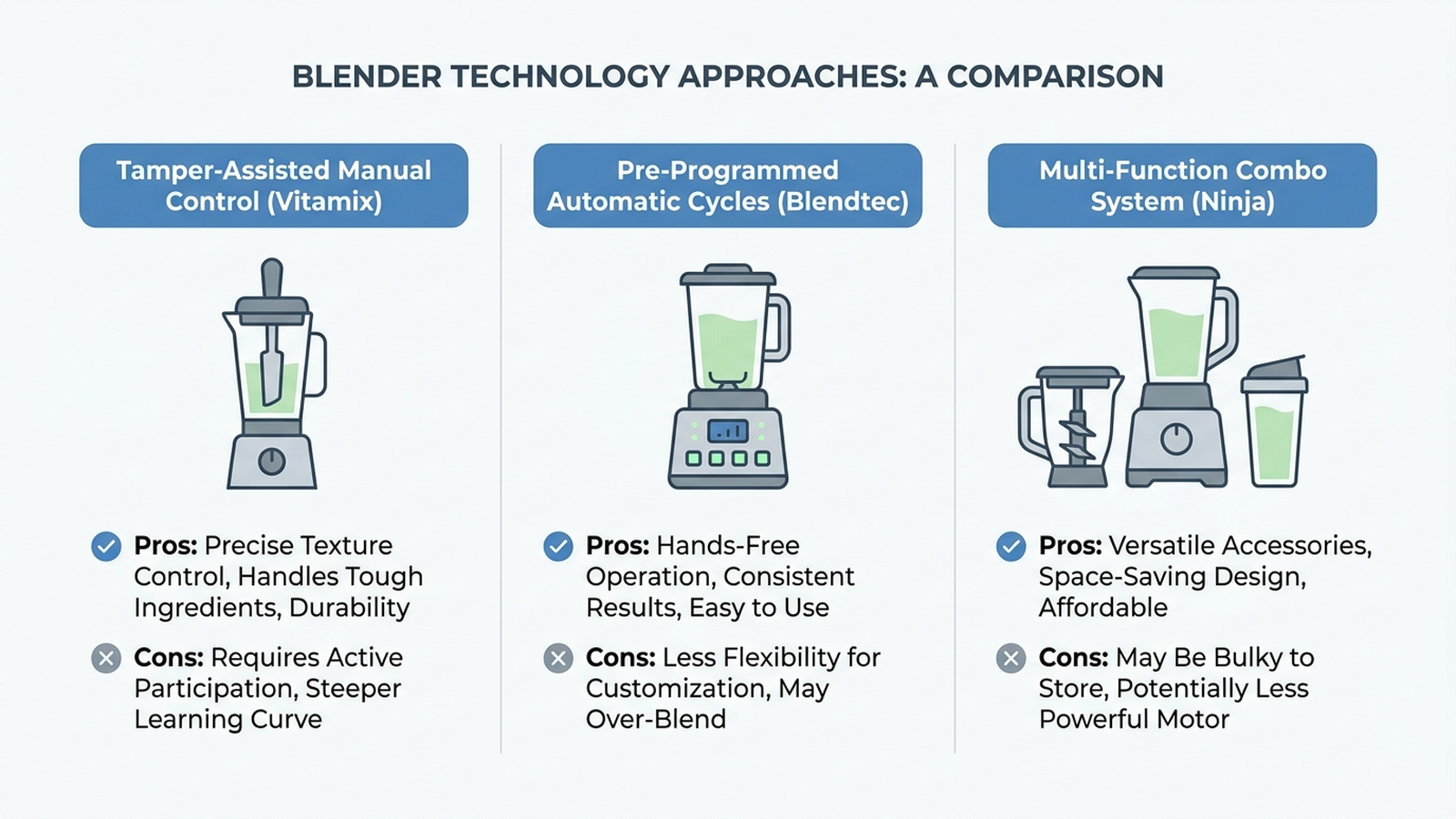
The three brands solve the same problem — turning solid ingredients into a smooth liquid — with genuinely different mechanisms:
- Tamper-assisted manual control (Vitamix). Most Vitamix models ship with a plastic tamper you insert through a hole in the lid while the motor runs, pushing thick mixtures (nut butter, frozen banana, dense soup) down into the blades. This gives the person blending real-time control over consistency, at the cost of needing a free hand during the blend.
- Pre-programmed automatic cycles (Blendtec). Blendtec’s Total Classic uses a wider jar and a single, thick, blunt blade, paired with pre-programmed push-button cycles (smoothie, ice cream, hot soup) that vary blade speed automatically over a set time. Manufacturer figures put its blade tip speed at up to 310 mph, versus roughly 250 mph for Vitamix, with a rated 3 peak horsepower against Vitamix’s 2–2.2 peak horsepower.
- Multi-function combo systems (Ninja). The Ninja Foodi Power Blender Ultimate System uses a 3-blade stack and a 1600-peak-watt motor (manufacturer claim), but its real differentiator is interchangeable attachments — a food-processor bowl, a smoothie-bowl maker, and single-serve cups — turning one motor base into several appliances.
None of these approaches is objectively “best” — a tamper matters if you regularly blend thick, low-liquid mixtures; automatic cycles matter if you want to walk away mid-blend; combo attachments matter if counter space and appliance count are the constraint, not raw blending performance.
2. Vitamix 5200 — The Established Benchmark
Vitamix 5200 (ASIN B004F9L4EI) is the model independent reviewers most consistently point to when they explain why Vitamix commands a premium. It ships with a 64 oz. container, a laser-cut stainless-steel blade, 10 variable speeds plus a high-speed setting, and the tamper described above. Its motor is rated at 2.0–2.2 peak horsepower, 11.5 amps, and roughly 1,380 watts (manufacturer figures). List price on amazon.com fluctuates widely — we’ve seen it listed anywhere from roughly $349 to $489 at different points in 2026 — so it is worth checking the current price against Vitamix’s own site before buying.
Aggregated Amazon reviews for the 5200 run to several thousand ratings with an average around 4 out of 5 stars, and it holds Best Seller status in Amazon’s Countertop Blenders category. The recurring praise in customer reviews centers on longevity — many reviewers report a decade or more of daily use — and self-cleaning speed (a drop of dish soap and warm water, run on high for 30–60 seconds). The recurring complaint is noise: the 5200 is loud enough that several reviewers specifically warn against using it early in the morning in an apartment with thin walls. Independent reviewers, including RTINGS’ side-by-side testing of Vitamix against Blendtec, generally credit Vitamix with smoother control over thick blends thanks to the tamper, while noting Blendtec edges it out on raw ice-crushing speed.
Check the Vitamix 5200 on Amazon
3. Vitamix A3500 Ascent — The Smart-Connected Flagship
Vitamix A3500 Ascent Series (ASIN B08CF573X5) uses the same core motor architecture as the 5200 but adds a programmable touchscreen, wireless container recognition (the base senses which container size is attached and adjusts blending programs automatically, a manufacturer claim), and Bluetooth connectivity to the Vitamix Perfect Blend app for guided recipes. Vitamix’s own site lists it around $699.95, and amazon.com pricing tracks close to that figure depending on container size and finish.
Reviewers who upgrade from a 5200 to an A3500 in aggregated customer feedback most often cite the programmable presets and self-detect container as the reason, rather than any perceived increase in blending power — the underlying motor and blade geometry are functionally similar to the 5200’s. For buyers who don’t want app connectivity or programmable presets, the 5200 delivers comparable blending results for roughly half the price; the A3500 is a convenience and finish upgrade, not a performance leap.
Check the Vitamix A3500 Ascent on Amazon
4. Blendtec Total Classic Original — The Automatic-Cycle Alternative
Blendtec Total Classic Original with the WildSide+ jar (ASIN B005Z49GAG) trades Vitamix’s tamper for a wider jar geometry designed to pull ingredients into the blade vortex without manual assistance, plus six pre-programmed cycles (smoothie, ice cream, hot soup, and others) that run automatically once started. Manufacturer specifications list a 1,560-watt, 13-amp motor rated at up to 3 peak horsepower, with blade tip speeds up to 310 mph — figures that come in above Vitamix’s comparable numbers, though independent testers note that headline horsepower and amperage don’t map directly to blend quality, since jar geometry and blade design matter as much as raw motor output. List price for the WildSide+ jar configuration runs close to $400, with refurbished units appearing on Amazon closer to $190.
Blendtec’s single-blade design is intentionally blunt and thick — the company markets it as safer to handle when the blade isn’t spinning, unlike Vitamix’s sharper blade assembly. Aggregated customer reviews are mixed: several reviewers praise the larger WildSide+ jar’s capacity and the convenience of walking away during a programmed cycle, while others report noise levels comparable to or slightly above Vitamix (independent comparisons put the gap at roughly 1–2 decibels, essentially indistinguishable to most listeners) and occasional quality-control complaints on specific units.
Check the Blendtec Total Classic Original on Amazon
5. Ninja Foodi Power Blender Ultimate System — The Value and Versatility Pick
Ninja Foodi Power Blender Ultimate System (ASIN B098RCQVRB, model SS401) takes a different approach entirely: a 1,600-peak-watt motor (manufacturer claim) paired with a 72 oz. pitcher, plus an included food-processor bowl, an XL smoothie-bowl maker, and to-go cups that use the same motor base. Amazon list pricing typically runs in the $150–$200 range, roughly a third of what a Vitamix 5200 costs and closer to a quarter of an A3500.
Ninja’s 3-blade stack handles ice and frozen fruit capably according to aggregated reviews, though several reviewers specifically call the blades “extra sharp” and awkward to remove for cleaning compared with Vitamix’s or Blendtec’s single-piece blade assemblies. The core value proposition in customer reviews isn’t raw blending performance — reviewers who’ve used both a Ninja and a premium blender generally acknowledge Vitamix or Blendtec produce a smoother, more consistent result on tough ingredients like leafy greens or ice — it’s the multi-function attachments replacing what would otherwise be a separate food processor and single-serve blender. For a first apartment, a dorm, or a household that blends occasionally rather than daily, that trade-off often makes more sense than a $400+ single-purpose machine.
Check the Ninja Foodi Power Blender Ultimate System on Amazon
6. Side-by-Side Comparison
| Model | ASIN | Motor (mfr. claim) | Control style | Container | Approx. price (at writing) |
|---|---|---|---|---|---|
| Vitamix 5200 | B004F9L4EI | 2.0–2.2 peak HP, 1,380 W | Tamper, manual variable speed | 64 oz | $349–$489 |
| Vitamix A3500 Ascent | B08CF573X5 | 2.2 peak HP, 1,440 W | Touchscreen presets, app-connected | 48–64 oz (self-detect) | ~$699.95 |
| Blendtec Total Classic Original | B005Z49GAG | 3 peak HP, 1,560 W | 6 pre-programmed cycles | 90 oz WildSide+ | ~$399 (new), ~$190 (refurb.) |
| Ninja Foodi Power Blender Ultimate System | B098RCQVRB | 1,600 peak W | Auto-iQ presets + manual | 72 oz + attachments | $150–$200 |
Motor and power figures are manufacturer specifications and are not directly comparable across brands due to differing measurement methods (peak horsepower vs. peak watts). Prices fluctuate; verify the current amazon.com price before buying.
7. What Aggregated Customer Reviews Say
Across both premium brands, the dominant theme in high-star reviews is longevity — Vitamix and Blendtec owners frequently mention using the same unit for 8, 10, or more years, and both companies back that expectation with multi-year warranties (see below). The dominant complaint for both is noise: neither brand scores well in the “quiet” category, and multiple owners specifically mention needing to close a door or wait until later in the day to blend. For Ninja, reviewers are broadly satisfied with the value proposition and included attachments, but a recurring one- and two-star theme involves the blade assembly loosening or leaking over 1–3 years of use — consistent with a machine built to a lower price point rather than a decade-long duty cycle. None of the three brands is free of individual unit-quality complaints; all are sold at high enough volume that a small percentage of any batch will have manufacturing defects.
8. How to Get the Most Out of Any Blender
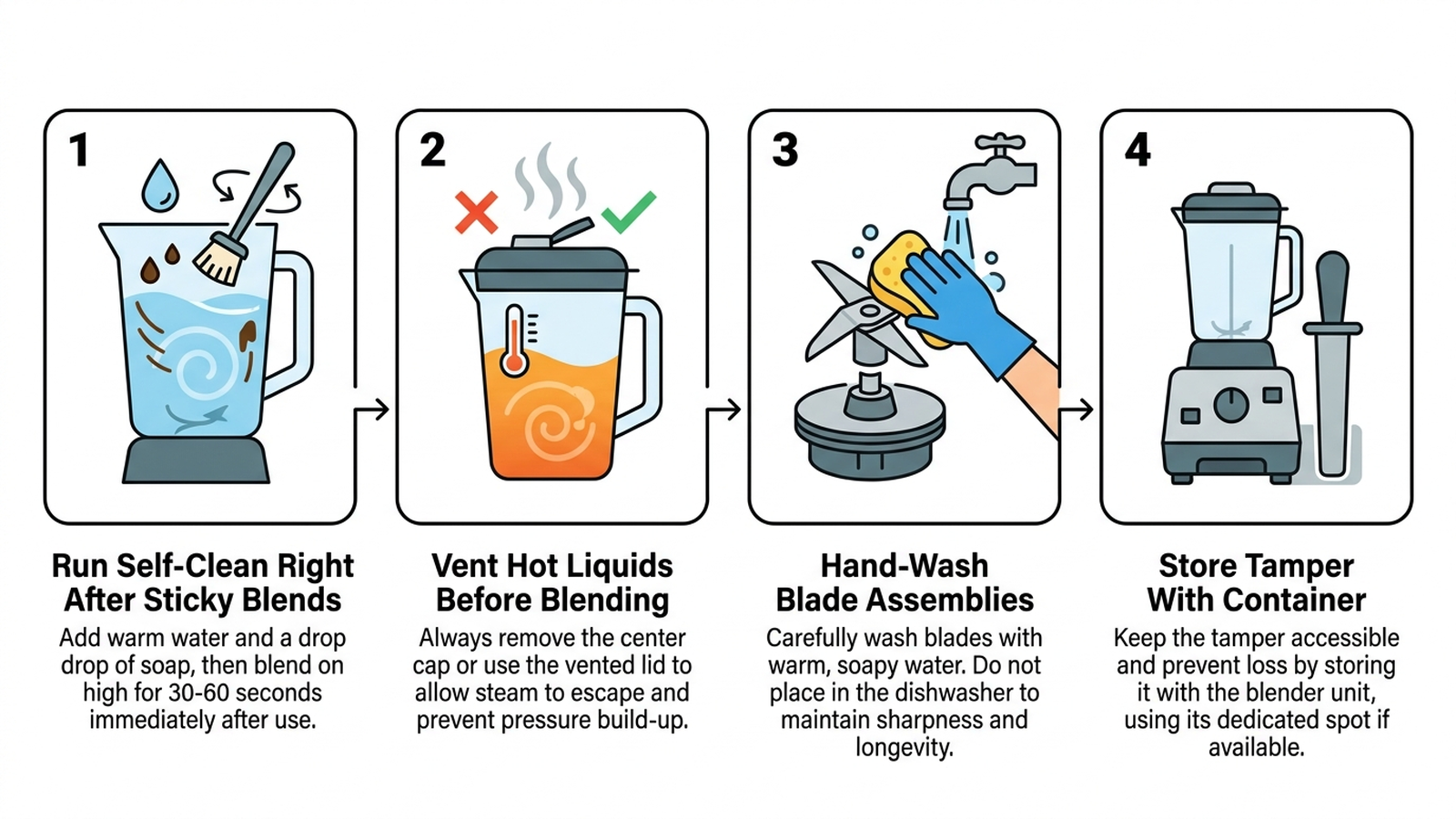
- Run the self-clean cycle immediately after blending anything sticky or oily (nut butter, smoothies with yogurt) rather than letting residue sit — this is the single most-cited way owners extend blade and seal life.
- Don’t run a tamper-equipped blender dry or near-empty at high speed — thin mixtures with a tamper inserted can splash back through the lid opening.
- Let hot liquids vent before blending soup — most manufacturers specify removing the center cap or using a vented lid to avoid pressure buildup.
- Hand-wash blade assemblies rather than relying solely on dishwashers for machines with a removable multi-piece blade stack (Ninja’s 3-blade design in particular) — trapped moisture around the blade’s base bearing is a common cause of early leaks.
- Store the tamper or extra attachments in the container, not loose in a drawer — several reviewers across all three brands cite a lost tamper or attachment as their top annoyance.
9. Decision Flowchart
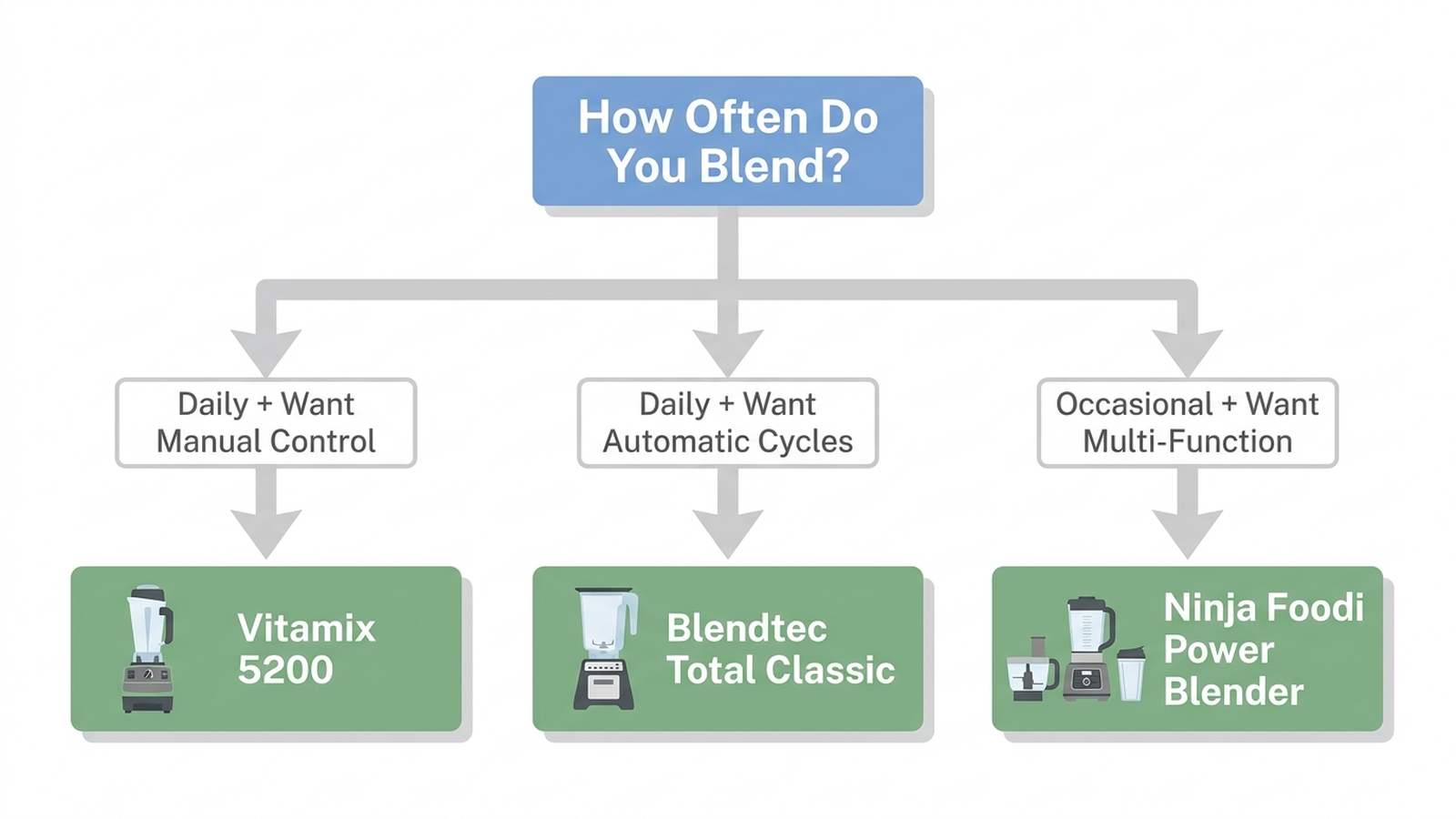
Start with how often you’ll actually use it and what else you need it to do. If you blend daily and want a machine built to last a decade with real manual control over thick blends, get the Vitamix 5200 — or the A3500 if app connectivity and presets are worth roughly $250–$350 more to you. If you want similar longevity but prefer walking away during the blend rather than tampering by hand, the Blendtec Total Classic Original is the closer fit. If you blend occasionally, want a food processor and smoothie-bowl maker without buying three separate appliances, and don’t need a 10-year duty cycle, the Ninja Foodi Power Blender Ultimate System delivers the most function per dollar.
10. Warranty and Support
Vitamix backs the 5200 and A3500 with a 7-year full warranty (manufacturer terms; confirm at purchase), among the longest in the small-appliance category and a meaningful signal of the company’s own confidence in unit longevity. Blendtec’s Total Classic Original typically carries an 8-year motor warranty on the base with shorter coverage on the jar (manufacturer terms vary by generation; confirm current terms before buying). Ninja’s Foodi Power Blender Ultimate System carries a standard 1-year limited warranty, in line with most sub-$300 kitchen appliances. That warranty gap is one of the more concrete, verifiable signals of how each company expects its product to hold up over time, and it’s worth weighing alongside the purchase price rather than looking at price alone.
Editorial Recommendation by Use Case
- You blend daily and want the longest-lasting, most controllable machine: the Vitamix 5200.
- You want that same longevity with app connectivity and programmable presets: the Vitamix A3500 Ascent.
- You want automatic pre-programmed cycles instead of a hand-operated tamper: the Blendtec Total Classic Original.
- You blend occasionally and want a food processor and smoothie-bowl maker bundled in at a fraction of the price: the Ninja Foodi Power Blender Ultimate System.
- Everyone: run the self-clean cycle right after every use — residue buildup, not raw power, is the top driver of blade and seal complaints across every brand here.
Limitations
This analysis relies on publicly available reviews, third-party reporting, and manufacturer specifications; we did not independently lab-test these units. Motor wattage, horsepower, and blade-speed figures are manufacturer claims and are not directly comparable across brands due to differing measurement methodologies. Real-world blending results vary with ingredient type, container fill level, and unit-to-unit variance. Prices and availability were accurate to our research at the time of writing and fluctuate significantly — verify current specs, warranty terms, and pricing on the product page before purchasing.
Before you buy any of these, it pays to check that the listing’s reviews are genuine and the price is actually competitive. That is exactly what Arekore does: paste the Amazon URL and our AI analyzes review authenticity, surfaces the most useful low-star feedback, and compares pricing in about five minutes — so you end up with the blender that fits how often you actually cook, not just the most heavily advertised one.