Best Commuter Backpacks for Bus-Riding Students in 2026
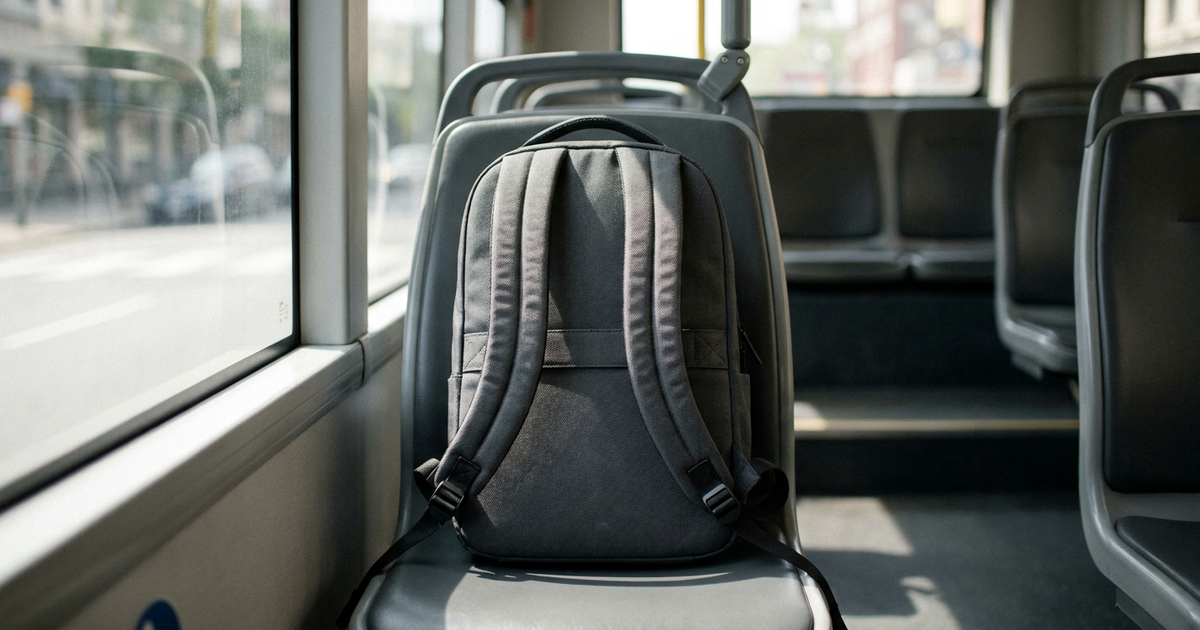
Most back-to-school backpack guides are written for a kid getting dropped off at the curb. That is not the same bag a student needs if the actual daily routine is a 20-minute bus ride, a transfer, and a walk from the stop — carrying a laptop, a water bottle, and whatever is left of a charger cable, often while standing in a crowded aisle. The U.S. backpack market was estimated at roughly $5.88 billion in 2025 and is projected to keep growing at a 7.2% annual rate through 2033, according to Grand View Research — and a meaningful share of that growth is driven by exactly this kind of daily, multimodal commute rather than a single drive to campus. This guide compares four backpacks built for that reality: the Osprey Daylite Plus, the MATEIN Travel Laptop Backpack, the Troubadour Apex 3.0, and the JanSport Right Pack.
As an Amazon Associate, Arekore earns from qualifying purchases. The Amazon product links in this article may include our affiliate tracking ID and may earn us a commission if you buy through them, at no additional cost to you. See our Links Policy for details on how we select products and how commissions do not influence our recommendations.
TL;DR / Quick Verdict
- Best all-rounder for daily bus commutes: the Osprey Daylite Plus Commuter Backpack — a padded laptop sleeve, mesh water-bottle pockets, and a breathable back panel at a mid-range price, backed by Osprey’s “All Mighty Guarantee” repair-or-replace policy.
- Best for security on crowded routes: the MATEIN Travel Laptop Backpack — a hidden, back-panel anti-theft pocket that faces your body rather than outward, plus a USB charging port, at the lowest price of the four.
- Best premium pick, if budget allows: the Troubadour Apex 3.0 — named a laptop-backpack pick by The New York Times Wirecutter, with a 5-year guarantee and the most refined ergonomics here.
- Best budget-durable classic: the JanSport Right Pack — a Cordura-nylon body and JanSport’s lifetime warranty, at the lowest up-front commitment for a name-brand pack.
- The real choice: decide whether security on a packed bus (MATEIN), all-day comfort (Osprey), premium ergonomics (Troubadour), or rock-bottom simplicity and warranty (JanSport) matters most for the specific route.
Methodology
This is an editorial analysis, not a hands-on review — we did not personally test these backpacks. It synthesizes: (a) aggregated amazon.com customer ratings and the substance of low-star reviews, sampled in July 2026; (b) The New York Times Wirecutter’s independent testing and pick of the Troubadour Apex line as a best laptop backpack; (c) manufacturer specifications and warranty terms published by Osprey, MATEIN, Troubadour, and JanSport; and (d) U.S. Bureau of Transportation Statistics reporting on security incidents by transit mode, used only as general context for why bag security matters on shared transit rather than as a student-specific statistic. Where we cite a manufacturer figure — capacity in liters, fabric denier, or warranty terms — we label it as a manufacturer claim rather than an independently verified result. We deliberately avoid quoting precise review counts or “percent of reviewers” figures we cannot verify; the sentiment summaries below are directional. Prices are amazon.com figures at the time of writing and change frequently, especially during the back-to-school season.
1. Why “Commuter” Backpacks Are a Different Category From “School” Backpacks
A backpack designed around being carried to a car and set on a passenger seat does not have to survive being slung over a shoulder while standing in a moving bus aisle, pressed against other riders, for 20 to 40 minutes each way. Three requirements separate a genuine commuter pack from a generic school bag:
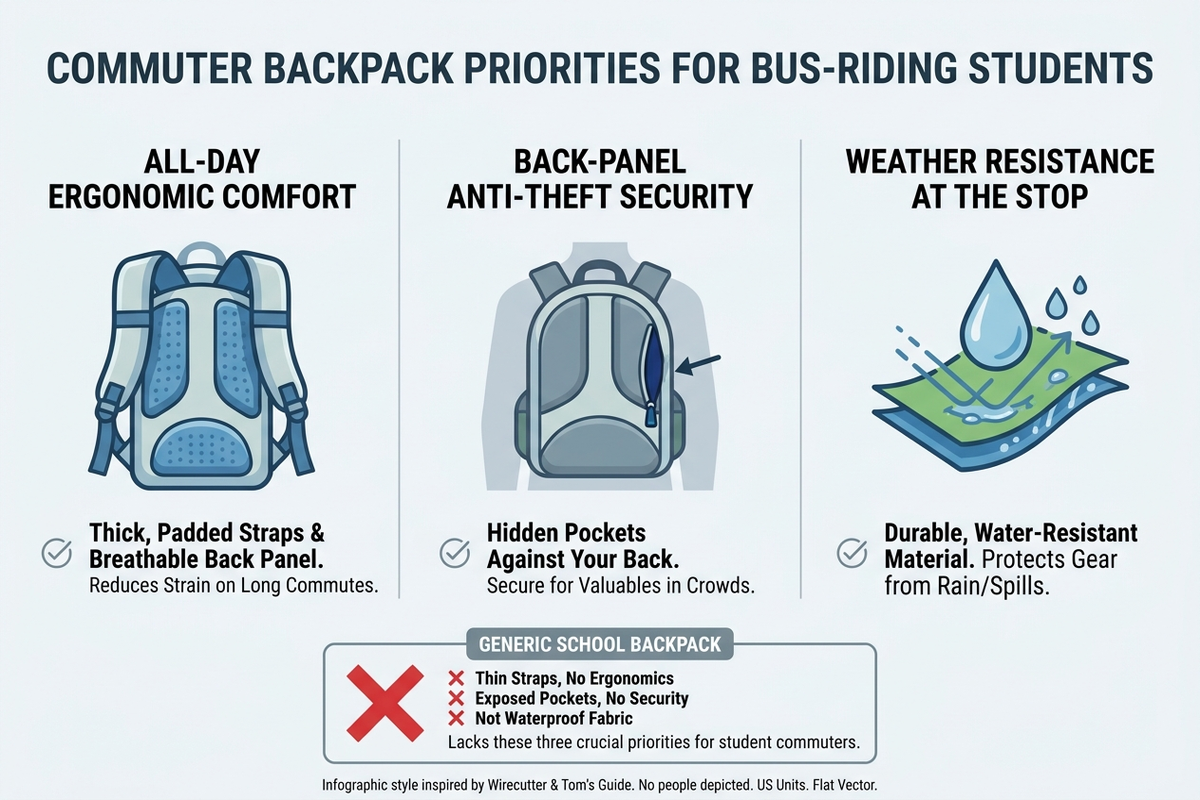
- Ergonomics for standing, not just sitting. A padded, breathable back panel and sternum strap matter far more when the bag stays on your back for the whole ride rather than getting set down.
- Security for close-contact spaces. A bus aisle or crowded platform is close-quarters by design; a bag that opens fully to your back, rather than outward, is harder for someone else to unzip unnoticed.
- Weather resistance at the stop, not just the walk. Waiting at an uncovered bus stop in rain is a different exposure than a dash from a car to a building — water-resistant fabric and covered zippers matter more.
A generic school backpack can be fine for a five-minute walk to a car. None of the four picks below assume that shorter, drier, seated trip.
2. The Comparison Table
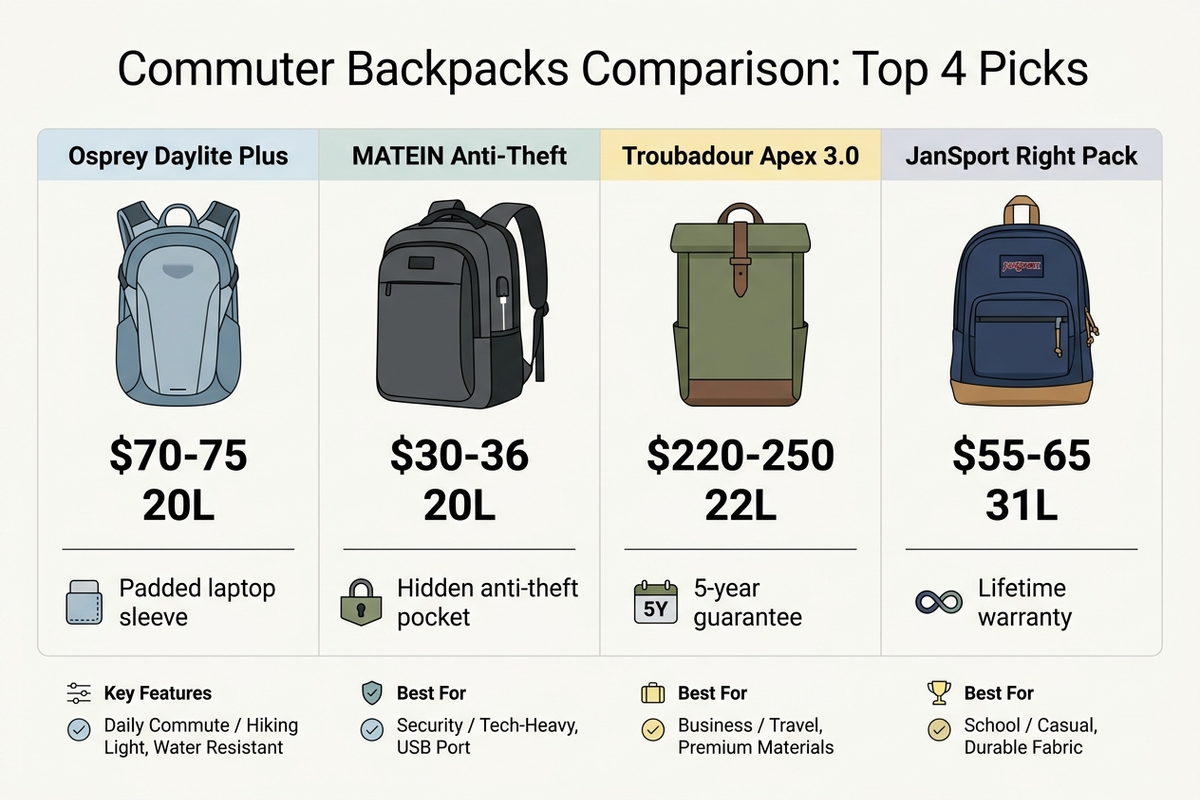
Prices are amazon.com figures at the time of writing (July 2026) and fluctuate. Capacity and warranty terms are manufacturer figures.
| Model | ASIN | Approx. price | Capacity | Laptop sleeve | Anti-theft pocket | Warranty |
|---|---|---|---|---|---|---|
| Osprey Daylite Plus Commuter | B0D92HZMK2 | ~$70–$75 | 20L | Padded, up to 15” | Not dedicated (main compartment access) | Osprey “All Mighty Guarantee” (lifetime repair/replace) |
| MATEIN Travel Laptop Backpack | B06XZTZ7GB | ~$30–$36 | ~20L | Padded, up to 15.6” | Yes — hidden back-panel pocket | Manufacturer limited warranty |
| Troubadour Apex 3.0 | B0CB968PC2 | ~$220–$250 | 22L | Padded, up to 16” | Back-panel access design | 5-year guarantee |
| JanSport Right Pack | B0028BRZ98 | ~$55–$65 | 31L | Padded, up to 15” | Not dedicated | Lifetime warranty |
3. Osprey Daylite Plus — The All-Day Comfort Pick
The Osprey Daylite Plus Commuter Backpack is built by a brand whose reputation comes from technical hiking packs, and that engineering shows in the details that matter for a standing commute: a mesh-covered foam back panel for airflow, padded shoulder straps, and a sternum strap most school-branded backpacks skip entirely. The main compartment holds a padded laptop and tablet sleeve, while stretch-mesh side pockets keep a water bottle within reach without opening the main zip.
Osprey backs the pack with its All Mighty Guarantee — a repair-or-replace policy the company applies across its line, regardless of how the damage happened, which is a meaningfully stronger promise than the standard one-year limited warranties common in this category.
Aggregated sentiment: reviewers consistently praise the comfort of the strap system on longer walks and the durability of the recycled-polyester fabric. The most common complaint is that the Daylite Plus runs smaller than expected once a laptop, charger, and a change of clothes are all packed in — a fair trade-off for a bag built to stay light and comfortable rather than to maximize volume.
Check the Osprey Daylite Plus on Amazon
4. MATEIN Travel Laptop Backpack — The Security Pick
The MATEIN Travel Laptop Backpack is built around a single idea: the pocket most likely to hold a wallet, passport, or phone should face your back, not the crowd. Its hidden anti-theft pocket sits flush against the back panel, underneath the padded shoulder straps — a layout designed so it is difficult for someone standing behind you on a packed bus to access without you noticing. A built-in USB port on the exterior, paired with an internal charging cable, lets a power bank inside the bag top off a phone without unzipping anything.
At roughly $30–$36, it is also the least expensive of the four picks by a wide margin, which makes it a reasonable first-year college or high-school pick for a budget-conscious buyer.
Aggregated sentiment: the anti-theft pocket and USB port are the most-cited positives across reviews, along with the price-to-feature ratio. The most common criticism involves zipper durability after a year or more of daily heavy use — a trade-off common at this price tier.
Check the MATEIN backpack on Amazon
5. Troubadour Apex 3.0 — The Premium Pick
The Troubadour Apex 3.0 is the one bag on this list independently recognized outside of aggregated Amazon reviews: The New York Times Wirecutter named the Apex line a top laptop backpack pick, citing its ergonomic straps, breathable back panel, and water-resistant construction. The pack ships with a lockable-zipper design and an internal pocket sized for an AirTag or similar tracker — a meaningful addition for a bag that will spend hours a day out of sight in a bus’s overhead rack or between your feet.
Troubadour backs the Apex with a 5-year guarantee, well beyond the one-year standard, which matters given the price. At roughly $220–$250, it costs three to seven times more than the other three picks here — a genuine splurge, justified mainly for a buyer who wants the best ergonomics and is willing to pay for it, or who commutes long enough hours that the comfort difference compounds daily.
Aggregated sentiment: reviewers highlight the comfort of the strap system on long commutes and the water resistance during unexpected rain. The recurring criticism is, unsurprisingly, price relative to lower-cost alternatives that cover the same basic laptop-and-books use case.
Check the Troubadour Apex 3.0 on Amazon
6. JanSport Right Pack — The Budget-Durable Classic
The JanSport Right Pack is the least specialized of the four — it was not designed around a bus commute specifically — but it earns a spot here on the strength of its fabric and warranty. The body is made from Cordura nylon, the same abrasion-resistant material used in heavy-duty luggage, and JanSport backs it with a lifetime warranty against manufacturing defects, a policy the brand has held for decades. At 31 liters, it is also the roomiest pack in this comparison, which suits a student who carries textbooks alongside a laptop.
What it lacks compared to the other three: no dedicated anti-theft pocket, a less padded back panel than the Osprey or Troubadour, and no stretch water-bottle pockets. For a shorter or less crowded bus route where security and all-day ergonomics matter less than capacity and price, it remains a reasonable, well-tested default.
Aggregated sentiment: long-term durability and the lifetime warranty are the most-repeated positives, often from reviewers noting a JanSport bag lasted through multiple school years. Complaints center on comfort during longer walks compared to more padded alternatives.
Check the JanSport Right Pack on Amazon
7. How to Choose: A Decision Flowchart
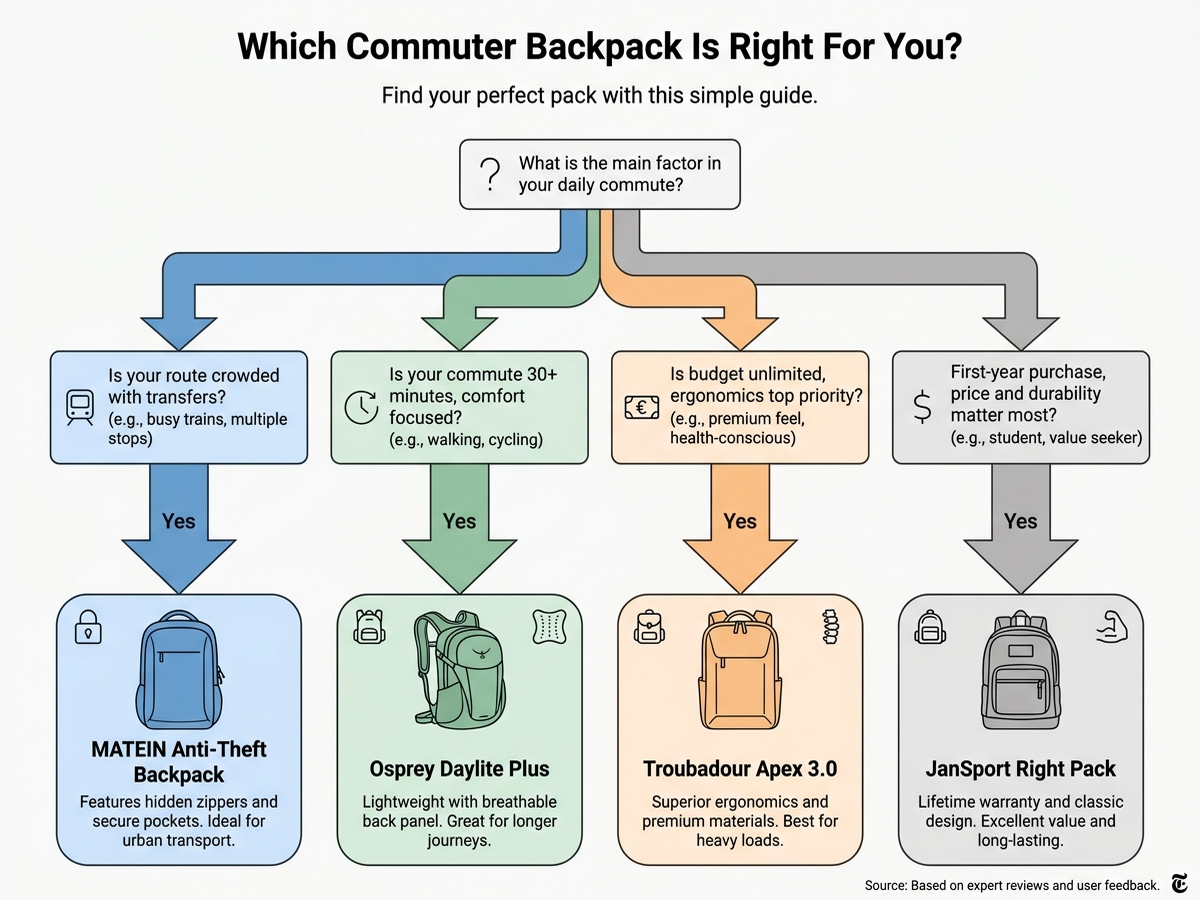
- Is the route crowded, with transfers or standing room only? The MATEIN’s hidden anti-theft pocket is the clearest fit for close-contact conditions.
- Is the commute long (30+ minutes each way) and mostly about comfort? The Osprey Daylite Plus balances padding, breathability, and price better than the other three.
- Is budget close to unlimited and ergonomics the top priority? The Troubadour Apex 3.0 is the most refined option, backed by an independent Wirecutter pick and a 5-year guarantee.
- Is this a first-year purchase where price and proven durability matter most? The JanSport Right Pack’s lifetime warranty and Cordura fabric make it the safest low-cost bet.
8. Editorial Recommendations by Use Case
- Best all-rounder: Osprey Daylite Plus. The strongest balance of comfort, weather resistance, and price for a genuine daily bus commute.
- Best for a crowded or multi-transfer route: MATEIN Travel Laptop Backpack. The hidden back-panel pocket is the single most relevant security feature in this comparison, at the lowest price.
- Best if budget allows a splurge: Troubadour Apex 3.0. The only pick with an independent third-party test behind it, plus the longest guarantee.
- Best for maximum capacity on a tight budget: JanSport Right Pack. Roomiest bag here, backed by a genuine lifetime warranty.
9. Care, Weatherproofing, and Longevity
- Zippers are the first failure point on any daily-use backpack. All four picks use metal or reinforced zipper pulls; avoid overpacking a compartment, which is the most common cause of a torn zipper track before the fabric itself wears out.
- Water resistance is not waterproofing. The MATEIN, Osprey, and Troubadour packs use water-resistant fabric that sheds light rain, but none are rated for submersion — a laptop sleeve alone will not protect electronics in a downpour without a rain cover or dry bag insert.
- Warranty terms matter more than they look. Osprey’s All Mighty Guarantee and JanSport’s lifetime warranty both cover normal wear over years of use, which meaningfully changes the real cost of ownership versus a one-year-only warranty bag that needs replacing sooner.
10. Limitations of This Analysis
This analysis relies on publicly available reviews, one independent third-party test (Wirecutter’s evaluation of the Troubadour Apex line), and manufacturer specifications; we did not personally test these backpacks, and individual experience varies with route length, crowding, and unit-to-unit variance in fabric and stitching. Market-size statistics come from a single third-party research firm (Grand View Research) whose methodology differs from other trackers that publish different figures for the same category — we present the number as directional rather than precise. The transit-security context cited in the methodology is general U.S. transit-mode data, not a student- or backpack-specific statistic, and should be read only as background on why bag security is a reasonable concern on shared transit. Prices, ASIN availability, and warranty terms change frequently; always confirm the current price, capacity, and warranty language on the product page before buying.
The Bottom Line
For a genuine daily bus commute, the backpack that matters is not the one built for a five-minute walk from a car — it is the one built to stay comfortable while standing and to keep its contents secure in close quarters. Choose the Osprey Daylite Plus for the best all-around balance, the MATEIN if security in a crowded aisle is the top concern, the Troubadour Apex 3.0 if budget allows for the most refined ergonomics, and the JanSport Right Pack for maximum capacity on the lowest realistic budget. Whichever you lean toward, confirm the current price and capacity before checkout — and if you want a second opinion on a specific listing, paste the URL into Arekore and let the AI scan the reviews and price history for you in about five minutes.