Anova Precision Cooker Review 2026: Still the Best?
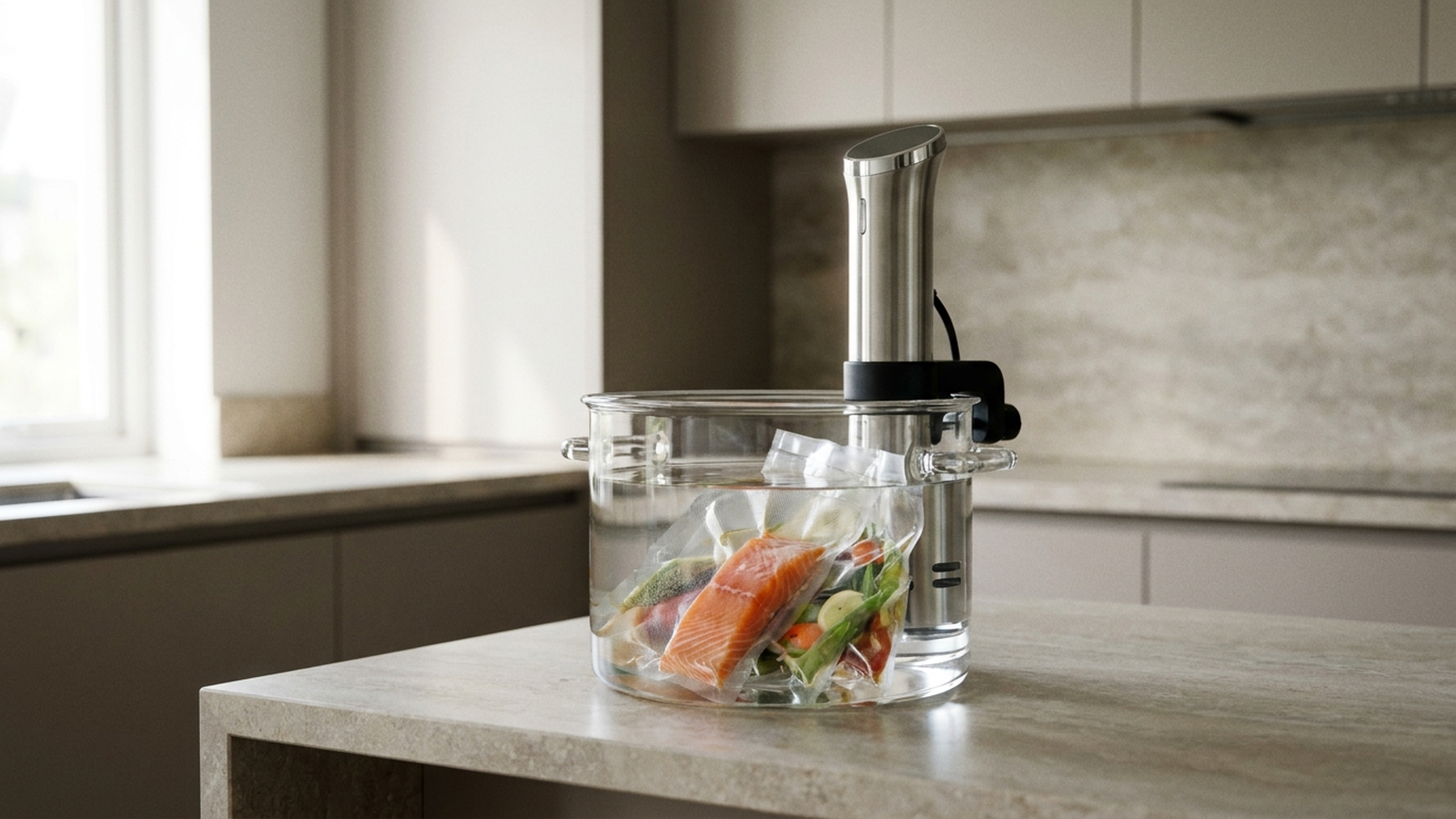
Anova has been the default answer to “which sous vide cooker should I buy” for close to a decade, but the brand picked a fight with its own customers in August 2024 by adding a monthly fee to keep using the companion app. That controversy is still shaping owner sentiment in 2026, even though the underlying hardware kept winning independent lab tests the whole time. We pulled apart the subscription policy, aggregated owner complaints, and third-party lab data to answer a narrower question than “is it good” — is the Anova Precision Cooker still the sous vide circulator to beat in 2026, or has the backlash opened the door for a competitor.
As an Amazon Associate, Arekore earns from qualifying purchases. The Amazon product links in this article include our affiliate tracking ID and may earn us a commission if you buy through them, at no additional cost to you. See our Links Policy for details on how we select products and how commissions do not influence our recommendations.
TL;DR / Quick Verdict
- Anova’s hardware still wins independent lab testing. TechGearLab named the Precision Cooker 3.0 its Editor’s Choice among sous vide circulators, citing a 0.06°F average temperature-accuracy discrepancy and a 9.5-quart water bath heated from 50°F to 147°F in 36 minutes.
- The app subscription controversy is real but narrower than headlines suggested. Anova began charging $1.99/month (or $9.99/year) for remote app control starting August 21, 2024, but grandfathered in any account created before that date for free, permanent access — new buyers in 2026 are the ones who pay.
- Ownership has been stable since 2017, when appliance maker Electrolux acquired Anova; unlike some kitchen-gadget brands, there’s no bankruptcy or parts-supply risk clouding a 2026 purchase.
- Breville’s Joule Turbo is the strongest challenger on raw speed, cooking roughly twice as fast on some cuts, but it ships with zero physical buttons or display — you’re fully dependent on its app and Wi-Fi even to start a basic cook.
How We Reached These Conclusions (Methodology)
This is an editorial analysis, not a hands-on review; we did not personally test the products covered here. It synthesizes three kinds of public information: (a) manufacturer specifications published by Anova Culinary and Breville for their respective sous vide lines; (b) independent third-party lab testing from TechGearLab, which scored the Anova Precision Cooker 3.0 as its top-rated sous vide circulator across accuracy, heating speed, and circulation tests; and (c) aggregated sentiment from Anova’s own community forum, Home Assistant’s community forum, and owner discussion threads covering the 2024 subscription-fee rollout and ongoing Wi-Fi/Bluetooth connectivity complaints. Manufacturer figures (wattage, flow rate, accuracy claims) are labeled as such. Prices are amazon.com figures at the time of writing and change frequently, especially around sales events like Prime Day.
Does the App Subscription Change Whether You Should Buy One?
In August 2024, Anova announced it would begin charging new users $1.99 per month or $9.99 per year to use its companion app for remote monitoring and control — the feature that lets you start, check, or adjust a cook from your phone instead of the device’s own buttons. The announcement triggered a visible backlash across Anova’s community forum and third-party appliance forums, with owners criticizing the shift from a free, decade-old app to a paid one.
The practical impact for a 2026 buyer is narrower than the outrage suggests. Anova grandfathered in any user who created an app account before August 21, 2024, for free access “forever,” according to the company’s own FAQ. That means existing owners are unaffected. It’s new buyers — anyone purchasing an Anova cooker for the first time in 2026 — who will hit the subscription paywall for remote app features, though the device’s on-unit controls (setting temperature and time directly on the circulator) reportedly still work without any app or subscription at all. The bigger practical risk isn’t the $2/month fee itself; it’s that Anova is also reportedly phasing out cloud connectivity for older Bluetooth-only models, which is a separate hardware-support question from the subscription pricing.
Technical Approach: Nano 3.0 vs. Precision Cooker 3.0 vs. Precision Cooker Pro
All three tiers use the same core mechanism — a heating element and impeller inside a clip-on wand that circulates temperature-controlled water around vacuum-sealed food — but they scale power and batch size differently.
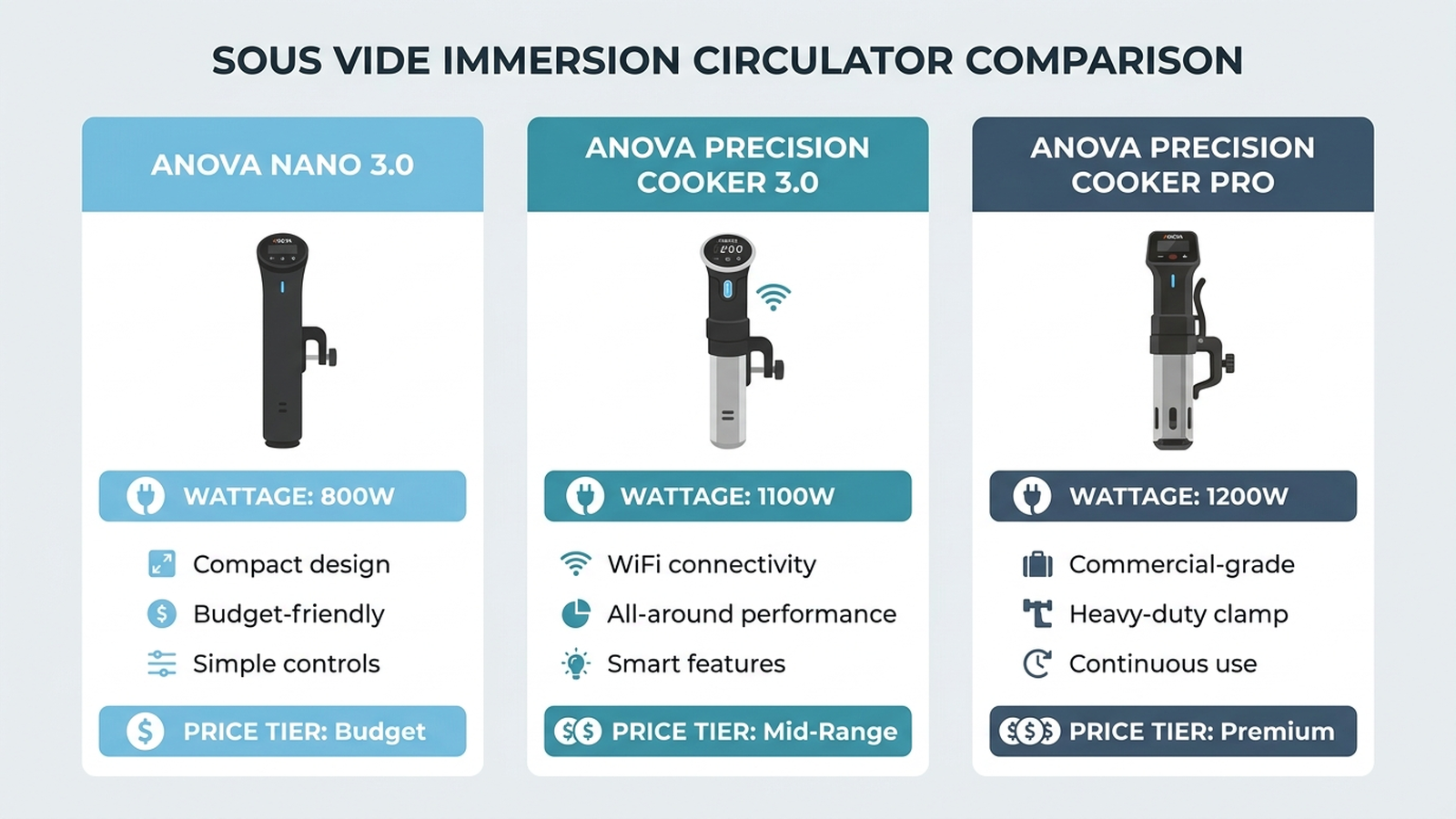
- Anova Precision Cooker Nano 3.0 (800 watts) is the compact, budget tier — small enough to store in a drawer, aimed at singles or smaller water baths. Manufacturer specifications list dual-band Wi-Fi and a two-line touchscreen display on the current generation.
- Anova Precision Cooker 3.0 (1,100 watts) is the mainstream pick, and the model TechGearLab tested as its Editor’s Choice. Manufacturer specifications cite a stronger pump for larger water volumes than the Nano, aimed at family-size batches and thicker cuts of meat.
- Anova Precision Cooker Pro (1,200 watts) is the largest and most heavy-duty option, built with a full metal housing, IPX7 water resistance, and — per manufacturer specifications — a 12-liter-per-minute flow rate aimed at large batches or near-commercial use, such as cooking for a big gathering or running multiple cooks back to back.
The practical distinction: home cooks making a couple of steaks or chicken breasts at a time gain little from the Pro’s extra power. Buyers who regularly cook in bulk — large batches for meal prep, or bigger cuts like a whole brisket — are the ones the Pro tier is actually built for.
How to Use an Anova Sous Vide Circulator
The core workflow is the same across every Anova tier and, broadly, across the sous vide category as a whole.
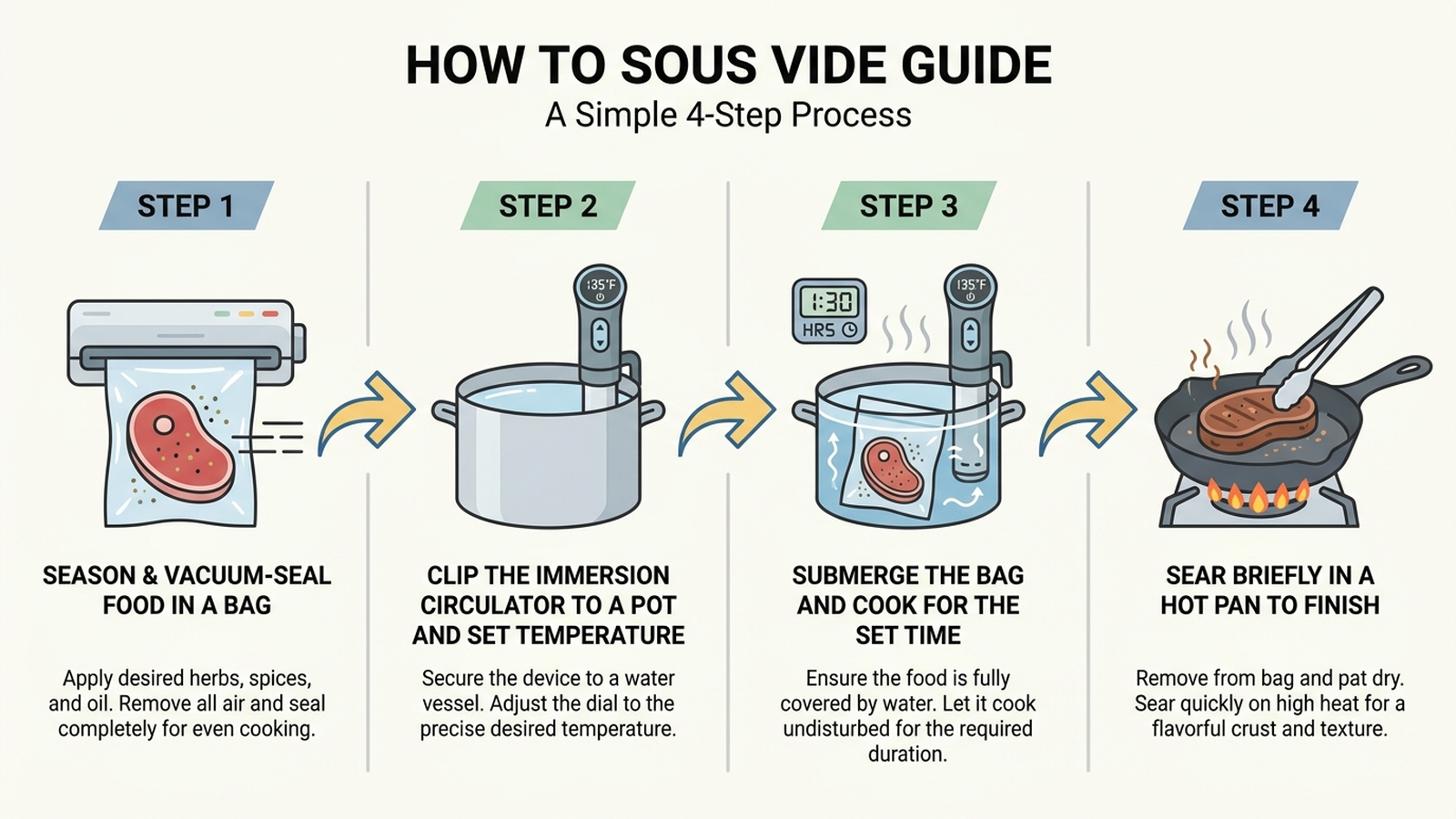
- Season the food and vacuum-seal it in a bag (a dedicated vacuum sealer or the water-displacement method with a zip-top bag both work).
- Clip the circulator to the side of a pot filled with water and set the target temperature — sous vide cooks hold food at a precise temperature rather than a high heat, which is what prevents overcooking.
- Submerge the sealed bag fully and let it cook for the set time, which can range from under an hour for thin cuts to 24+ hours for tougher cuts like chuck roast.
- Finish with a brief hard sear in a hot pan or with a torch — sous vide alone doesn’t brown food, so most recipes call for a fast finishing step to add color and crust.
Aggregated owner complaints on Anova’s community forum and Home Assistant’s forum most frequently cite Wi-Fi and Bluetooth connectivity — devices dropping their connection mid-cook, or the app failing to reconnect after a router reboot — rather than complaints about cooking performance itself. Since the on-device buttons reportedly still set temperature and time without any app connection, a dropped Wi-Fi signal is an inconvenience for remote monitoring, not a failure of the actual cook in progress.
Comparison Table
Prices as of 2026-09-28. These are list prices seen on amazon.com and manufacturer listings; actual selling prices fluctuate frequently and are commonly discounted below list, especially around Prime Day and other sales events — always check the current price on the product page.
| Model | ASIN | List price | Power | App required for basic use? | Best for |
|---|---|---|---|---|---|
| Anova Precision Cooker Nano 3.0 | B0BQ93XGWC | ~$99.00 | 800W | No (on-device controls) | Singles, small water baths, storage-limited kitchens |
| Anova Precision Cooker 3.0 (WiFi) | B0BQ9F56WV | ~$149.00 | 1,100W | No (on-device controls) | Most home cooks, family-size batches |
| Anova Precision Cooker Pro | B07QFC6LN6 | ~$249.00 | 1,200W | No (on-device controls) | Large batches, thick cuts, near-commercial use |
| Breville Joule Turbo | B0C384T4P2 | ~$249.95 | 1,100W | Yes (no display or buttons) | Buyers prioritizing raw cooking speed over app-free control |
Editorial Recommendations by Use Case
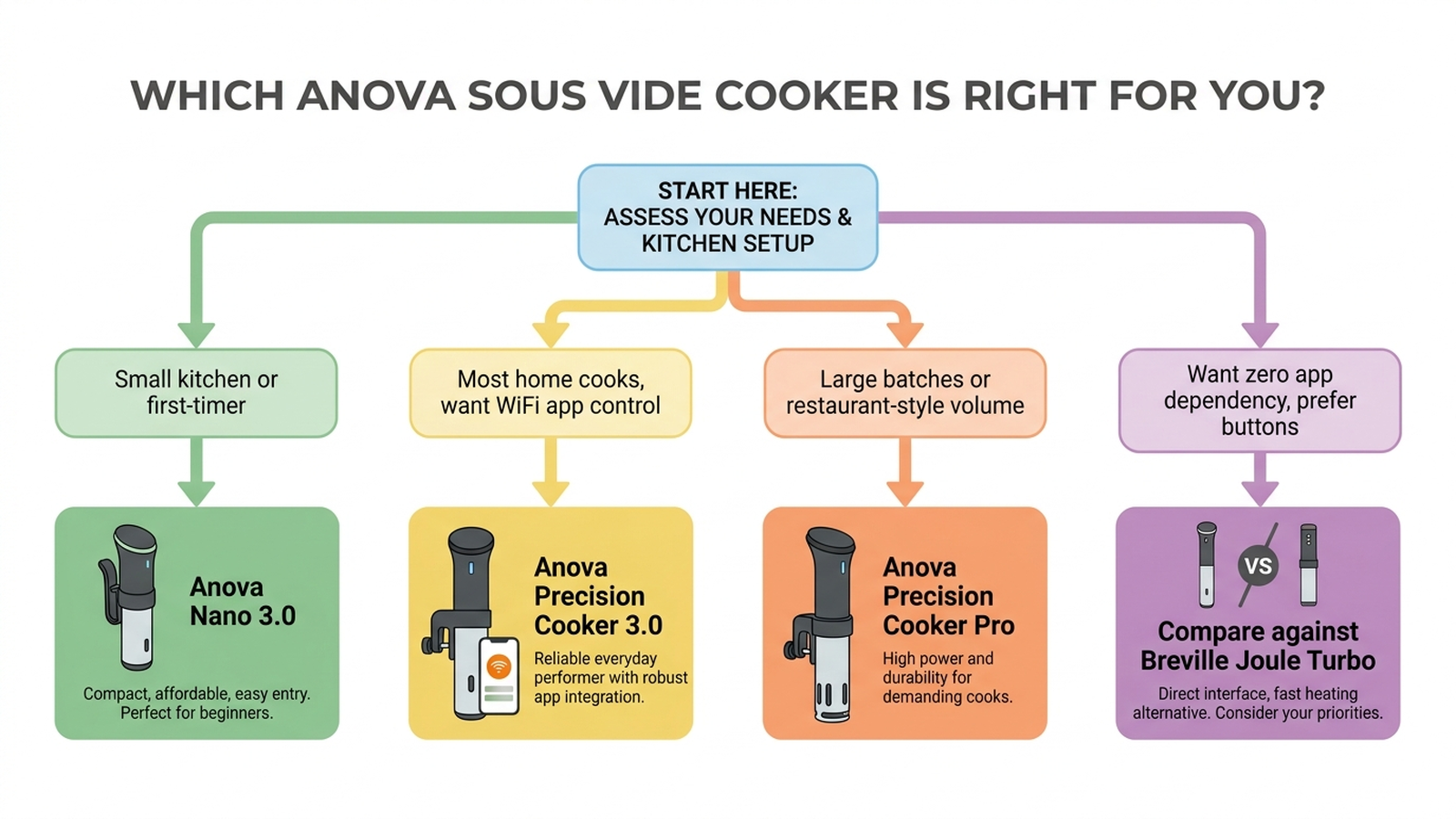
- Best for most households: the Anova Precision Cooker 3.0 — TechGearLab’s top-scoring circulator on accuracy and heating speed, with on-device controls that work without any app or subscription. Check the Anova Precision Cooker 3.0 on Amazon
- Best for small kitchens or first-time buyers: the Nano 3.0 — the lowest price point in the lineup and small enough to store in a drawer between uses. Check the Anova Precision Cooker Nano 3.0 on Amazon
- Best for large batches or frequent bulk cooking: the Precision Cooker Pro — the highest wattage and flow rate in the Anova lineup, built for bigger water volumes and back-to-back cooks. Check the Anova Precision Cooker Pro on Amazon
- If raw cooking speed matters more than app-free operation: the Breville Joule Turbo cooks roughly twice as fast on some cuts, but it has no physical display or buttons at all — worth cross-shopping only if you’re comfortable being fully app-dependent even for a basic cook. Check the Breville Joule Turbo on Amazon
Durability and Warranty
Anova backs its Precision Cooker line with a standard limited manufacturer warranty against defects in materials and workmanship, which does not cover damage from misuse or normal wear and tear; the Precision Cooker Pro carries an IPX7 water-resistance rating and a full-metal housing that manufacturer specifications position as more heavy-duty than the Nano or 3.0’s mixed plastic-and-metal construction. Aggregated complaints on Anova’s own community forum and third-party appliance forums center overwhelmingly on Wi-Fi and Bluetooth connectivity rather than mechanical failure of the heating element or impeller — a pattern consistent with a company whose hardware continues to score well in independent lab testing while its software layer draws the most owner frustration. Confirm current warranty terms on the product page, as coverage details are occasionally updated.
Limitations of This Analysis
This analysis relies on manufacturer specifications, TechGearLab’s lab testing, and aggregated sentiment from community and appliance forums; we did not personally test these products, and individual experience varies with home Wi-Fi conditions, recipe, and unit-to-unit variance. Forum-sourced complaint data skews toward owners who sought out a platform to discuss a problem, so the emphasis on connectivity issues should be read as what frustrated owners talk about, not a representative cross-section of all Anova owners. Sous vide market-size figures vary widely across third-party research firms — estimates for 2026 range from roughly $1 billion to $1.5 billion depending on methodology and category scope — so we present them as directional market context rather than a precise figure specific to any single Anova model. Prices, ASIN availability, and subscription terms change frequently — always confirm current details on the product page and Anova’s own FAQ before buying.
The Bottom Line
The 2024 subscription-fee backlash changed how loudly people talk about Anova online, not whether the hardware still performs. TechGearLab’s independent lab testing still puts the Precision Cooker 3.0 at the top of the category on accuracy and heating speed, on-device controls still work without paying anything, and existing owners were grandfathered into free app access — it’s only new 2026 buyers who face the $1.99/month option for remote control features. For most home cooks, the Precision Cooker 3.0 remains the rational default; for buyers who specifically want to avoid any app dependency, the on-device controls across the whole Anova lineup are worth confirming before you buy, and for buyers chasing raw speed above all else, the Breville Joule Turbo is worth cross-shopping — with the tradeoff that it has no physical controls at all. Whichever you lean toward, check the current price and read the most recent reviews before buying — and if you want a second opinion on a specific listing, paste the URL into Arekore and let the AI scan the reviews and price history for you in about five minutes.