Do Air Fryers Really Cause Acrylamide? We Checked the Data
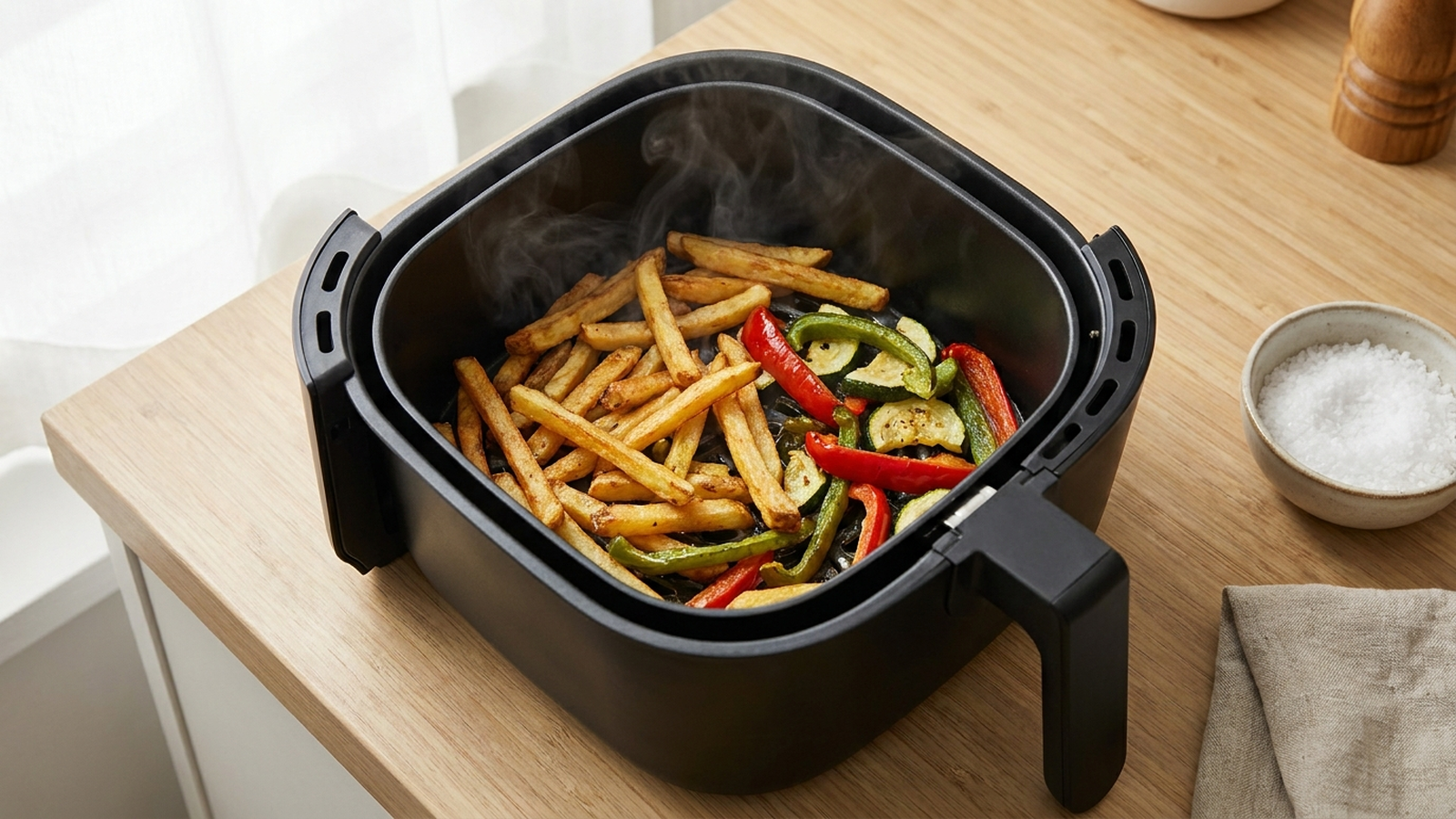
Roughly six in ten U.S. households now own an air fryer, and ownership has climbed by 27 percentage points since 2020, according to industry tracking cited by Statista’s market outlook. Most of that growth was sold on a health pitch: “up to 90% less acrylamide than deep frying.” Acrylamide — a chemical the International Agency for Research on Cancer (IARC) classifies as Group 2A, “probably carcinogenic to humans” — is the thing browning does to starchy food, and the air fryer aisle has built an entire marketing vocabulary around not making it.
So we went looking for the studies behind that number. What we found is messier than the box copy: some peer-reviewed comparisons back up a large reduction, at least one recent study found air-fried potatoes had more acrylamide than deep-fried, and the research that does exist agrees on one thing marketing rarely leads with — temperature and time, not the appliance, are what actually control acrylamide formation.
As an Amazon Associate, Arekore earns from qualifying purchases. The Amazon product links in this article may include our affiliate tracking ID and may earn us a commission if you buy through them, at no additional cost to you. See our Links Policy for details on how we select products and how commissions do not influence our recommendations.
TL;DR / Quick Verdict
- The “up to 90% less acrylamide” claim is real but cherry-picked. It comes from potato-chip-style studies with high surface-area exposure. For french fries, published reductions run closer to 30–78% depending on the study, cut, and temperature. For breaded chicken, a 2020 peer-reviewed study measured up to 6.19 µg/kg acrylamide in deep-fried samples versus up to 3.49 µg/kg in air-fried samples — roughly 40% lower at the top end.
- At least one 2023–2024 peer-reviewed study found the opposite for potatoes. Air-fried potatoes measured 12.19 µg/kg of acrylamide, versus 8.94 µg/kg for deep-fried and 7.43 µg/kg for oven-fried — though the researchers noted the difference was not statistically significant, given how much values swing by cut, cultivar, and cook time.
- The dose matters more than the headline chemical name. IARC’s 2A classification is based on animal studies at doses far above typical human dietary intake; human epidemiological studies on dietary acrylamide and cancer have been inconsistent, per the American Cancer Society and multiple systematic reviews.
- Temperature and time are the real levers, not the appliance. Acrylamide forms above roughly 120°C (250°F) and increases with cook time. The FDA’s own consumer guidance is device-agnostic: cook starchy foods to golden yellow, not dark brown, regardless of what’s generating the heat.
How We Reached These Conclusions (Methodology)
This is an editorial analysis, not a hands-on test; we did not personally test the products covered here. This guide synthesizes three kinds of public information: (a) peer-reviewed food-science research on acrylamide formation across cooking methods, including a 2023–2024 comparative study on air-fried, deep-fried, and oven-fried potatoes and a study on legume roasting, both indexed on PubMed/PMC; (b) regulatory and public-health guidance from the FDA’s Guidance for Industry on Acrylamide in Foods, the IARC carcinogen classification, and the Hong Kong Centre for Food Safety’s consumer bulletin on air fryers and acrylamide; and (c) aggregated amazon.com customer-review sentiment on best-selling air fryer listings, sampled in August 2026 — we did not track an exact review count for this synthesis and report sentiment qualitatively rather than as a precise percentage — plus manufacturer specifications. Manufacturer figures (wattage, capacity, claimed fat reduction) are labeled as manufacturer claims unless attributed to an independent test. Prices are amazon.com figures at the time of writing and fluctuate.
What Acrylamide Actually Is — and What the Cancer Link Really Says
Acrylamide isn’t added to food; it forms on its own through the Maillard reaction, the same browning chemistry that makes toast, fries, and roasted coffee taste the way they do. It shows up wherever starchy food (asparagine plus reducing sugars, specifically) hits heat above roughly 120°C (250°F) — in an oven, a deep fryer, a toaster, or an air fryer.
IARC classified acrylamide as Group 2A, “probably carcinogenic to humans,” back in 1994, based on sufficient evidence in animal studies but limited evidence in humans. That distinction matters: animal studies use doses far higher, relative to body weight, than a person eating air-fried potatoes ever encounters. When researchers look directly at human populations, the picture is inconsistent. The American Cancer Society notes that studies looking for a link between dietary acrylamide and cancer in people have not produced consistent results; a 2020 meta-analysis found a positive association between acrylamide intake and endometrial, ovarian, and premenopausal breast cancer risk, while a 2021 meta-analysis on the same cancers found no elevated risk. A 2023 review in the American Journal of Clinical Nutrition summarized two decades of this research with a headline that says it plainly: the human cancer question remains open even after 20 years of study.
None of that means acrylamide is harmless — it’s also documented as neurotoxic and genotoxic at high doses, which is why the FDA and international food-safety bodies recommend minimizing it as a matter of caution rather than treating the current dietary-cancer evidence as settled. But it does mean the leap from “IARC lists it as 2A” to “your air fryer is giving you cancer” — a framing that shows up regularly in social-media air fryer content — overstates evidence that even the FDA describes in terms of “reducing,” not “eliminating,” a probable-but-unproven risk.
The Marketing Number vs. the Published Studies
Here’s where the air fryer category’s core health claim gets complicated. “Up to 90% less acrylamide than deep frying” is a real number from real research — but it’s the best case, not the typical case, and it does not hold across every food.
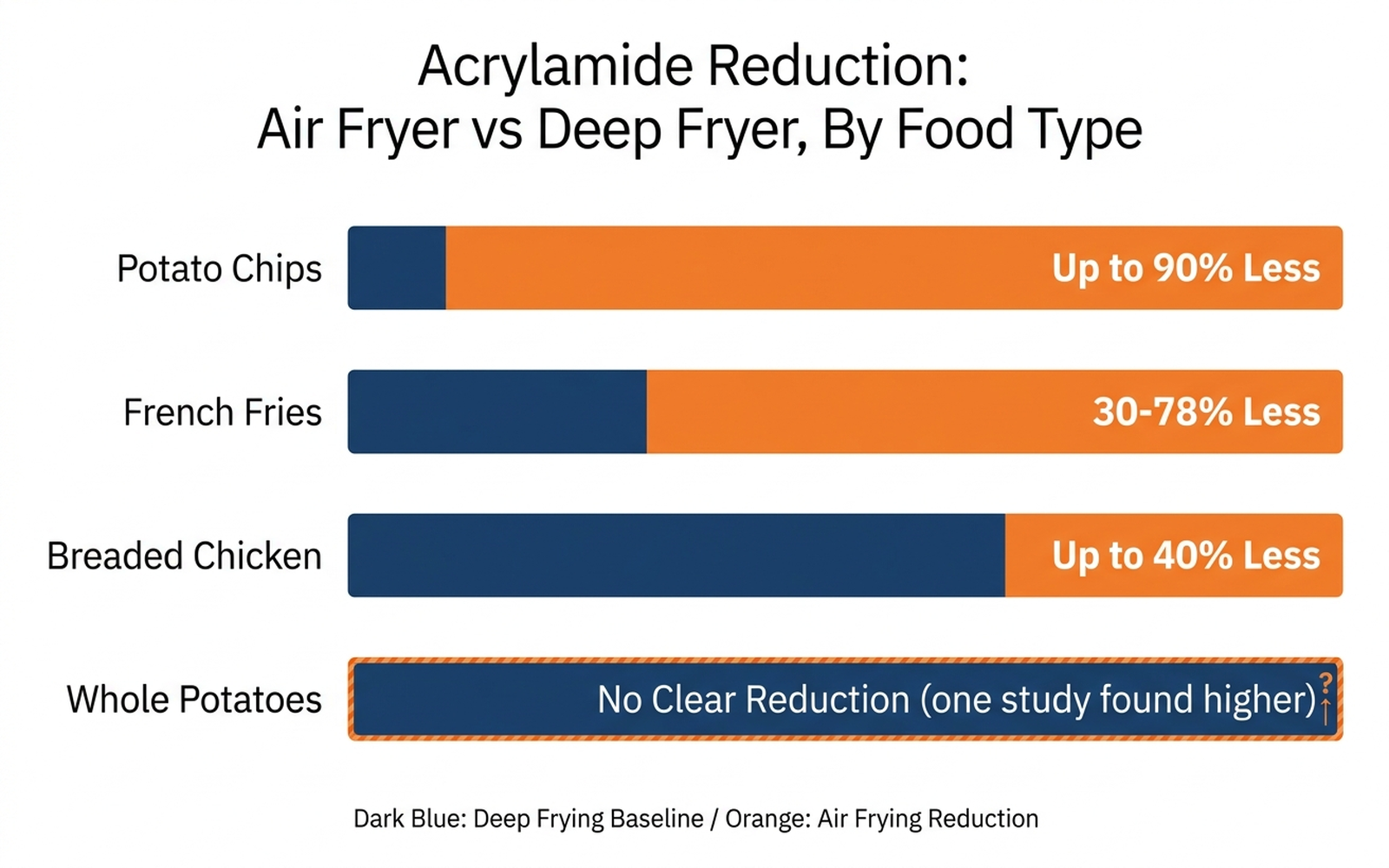
Breaking down the actual literature by food type:
- Potato chips (thin-cut, high surface area): reductions up to 90% are documented, which is likely where the blanket “90% less” marketing line originated — but this is the food type most favorable to air frying, not a representative average.
- French fries (thicker cut): results vary by study. Some report 30–40% reduction; a separate French-fry-specific study found a 59.2–78.7% reduction versus deep-fat frying depending on temperature and time settings tested.
- Breaded chicken: a 2020 peer-reviewed study (published in Foods) measured acrylamide up to 6.19 µg/kg in deep-fat-fried chicken breast, thigh, and wing samples, versus up to 3.49 µg/kg in air-fried samples of the same cuts — roughly 40% lower at the top end; the study also found the thawing method (microwave, refrigerator, or water immersion) made no significant difference.
- Whole or thick-cut potatoes: a 2023–2024 comparative study published in Frontiers in Nutrition and indexed on PubMed found the highest acrylamide levels in air-fried potatoes (12.19 ± 7.03 µg/kg), ahead of deep-fried (8.94 ± 9.21 µg/kg) and oven-fried (7.43 ± 3.75 µg/kg) — though the authors reported the differences were not statistically significant given the variance between samples.
- Roasted legumes (beans, chickpeas): a separate PMC-indexed study on air-fryer-roasted legumes found that roasting duration, not the air fryer itself, was the dominant driver — beans roasted longer accumulated significantly more acrylamide regardless of temperature setting.
The pattern across all five is consistent even where the headline numbers disagree: cook time and surface exposure explain more of the variance than the cooking method does. A thin potato chip loses moisture fast and browns before acrylamide has much time to accumulate; a thick-cut fry or a whole potato sits in the heat longer, which is the likely explanation for why some studies find air fryers offer little or no advantage on that specific food.
The Variable That Actually Controls Acrylamide: Temperature and Time
The FDA’s Guidance for Industry on Acrylamide in Foods and its consumer-facing advice are both device-agnostic — they talk about temperature, doneness, and ingredient prep, not about deep fryers versus ovens versus air fryers as categories. Four consumer-level interventions show up consistently across FDA and international guidance (the Hong Kong Centre for Food Safety published a specific bulletin on air fryers and acrylamide with matching advice):
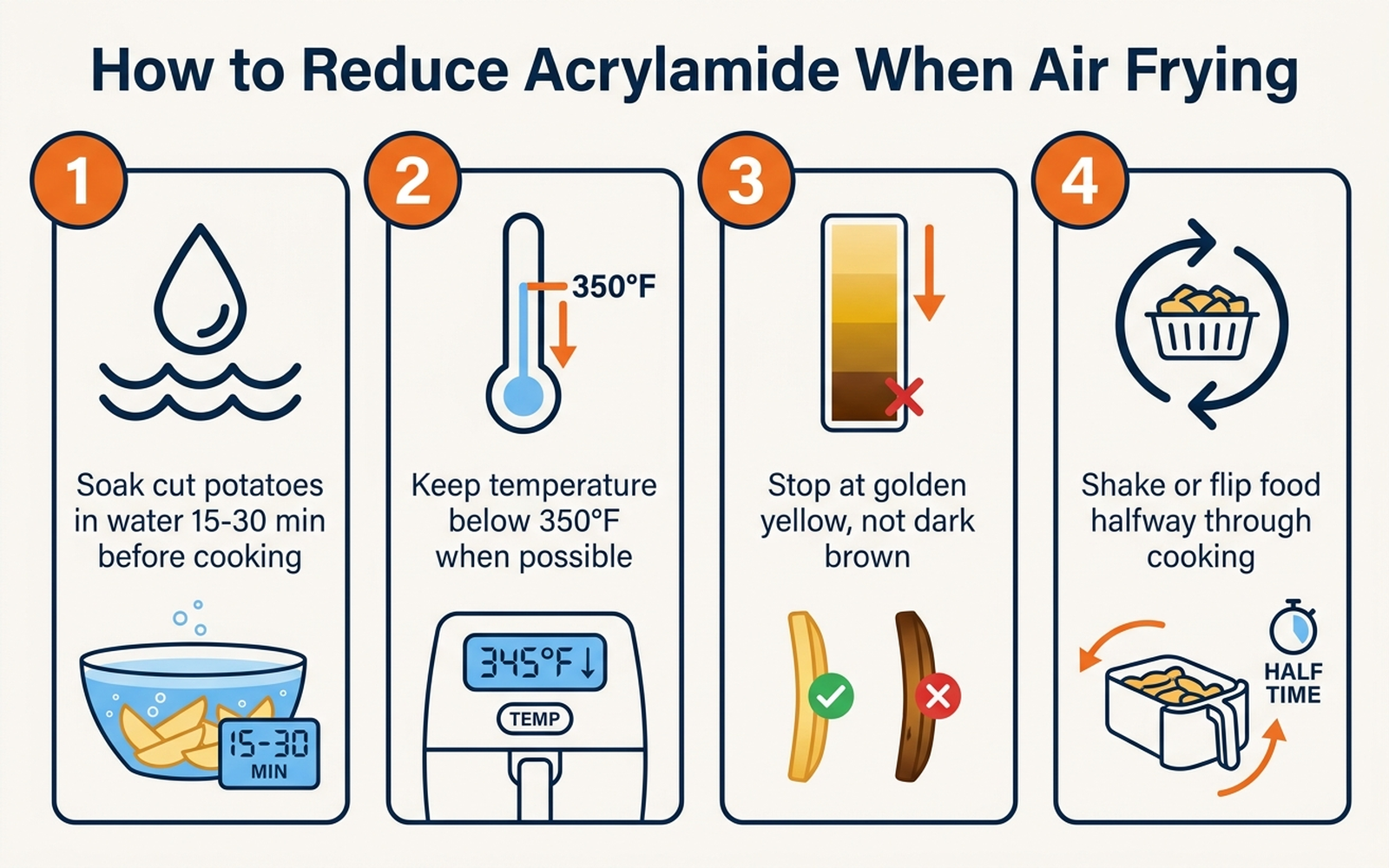
- Soak sliced or cut potatoes in water for 15–30 minutes before cooking. This leaches out some of the sugars that feed acrylamide formation and is one of the FDA’s specific, testable recommendations.
- Stop at golden yellow, not dark brown. This is the single clearest piece of guidance across every source we reviewed. Acrylamide formation accelerates disproportionately in the last stretch of browning — the difference between light-gold and deep-brown fries is large, not marginal.
- Favor lower temperatures where the recipe allows it. Acrylamide forms above roughly 120°C (250°F) and the rate increases with temperature; several air fryer models default to 400°F for crisping, which is well above that threshold. Dropping to around 350°F and adding a few extra minutes of cook time — rather than cooking hot and fast — is a reasonable middle ground endorsed by the same golden-not-brown logic.
- Shake or flip midway through cooking. Uneven heat concentration creates localized over-browning (the char spots reviewers photograph) even when the average doneness looks fine — this is also where an air fryer’s basket-shake reminder or built-in shake alert earns its keep as a feature, not a gimmick.
None of these four require a specific brand or model. They require a habit change, which is a less satisfying thing to put on a product box than “90% less” — and is likely why it rarely gets equal billing with the headline percentage.
Where an Air Fryer Still Wins — and What to Look For
The acrylamide case for air fryers specifically (versus, say, cooking the same food in a regular oven) is genuinely weaker than the marketing suggests, based on the mixed study results above. Where air fryers still have a real, well-documented edge is fat and calorie reduction — Philips’ own “up to 90% less fat” claim for its Rapid Air technology is a manufacturer figure, but the underlying mechanism (little to no added oil versus a fryer basket submerged in oil) isn’t controversial the way the acrylamide comparison is. If your primary goal is genuinely lowering acrylamide exposure, the FDA-aligned habits above matter more than which air fryer you buy. If your goal is less oil and easier cleanup, the category still delivers on that regardless of the acrylamide debate.
With that framing, three features are worth paying for if you’re air frying starchy foods regularly:
Ninja Air Fryer AF101 (4 Qt) — precise low-temperature control
A long-running best seller with an aggregated review base in the tens of thousands and a 105°F–400°F range, which matters here specifically because it lets you run well below the 400°F ceiling many recipes default to. Reviewers consistently note the basket’s visibility and even crisping at moderate settings; the main complaint in lower-starred reviews is capacity for families of four or more. About $90–$100 at the time of writing.
Check the Ninja Air Fryer AF101 on Amazon
COSORI 12-in-1 Air Fryer (5.8 Qt) — shake reminder built in
COSORI’s 12-in-1 line includes a shake reminder that alerts partway through cooking, which directly addresses the FDA’s “shake or flip midway” guidance without relying on the cook to remember. The larger 5.8-quart square basket also increases surface-area-to-food ratio versus smaller round baskets, reducing the crowding that leads to uneven browning. Aggregated sentiment is positive on even cooking and app-based recipe access; recurring critiques center on the touchscreen controls in humid kitchens. About $90–$110 at the time of writing.
Check the COSORI 12-in-1 Air Fryer on Amazon
Instant Vortex Plus 6 Qt with Odor Erase — family-size with a viewing window
A 6-quart capacity reduces the batch-crowding that pushes cook times up (and acrylamide with it) for larger households, and the ClearCook viewing window lets you check color without opening the basket and losing heat. The manufacturer’s Odor Erase filter is a separate, unrelated feature (odor, not acrylamide) worth noting so it isn’t mistaken for a health claim. About $100–$110 at the time of writing.
Check the Instant Vortex Plus 6 Qt Air Fryer on Amazon
Philips Premium Airfryer XXL — the fat-reduction specialist
Philips’ Rapid Air and Fat Removal Technology line is the closest thing this category has to an independently referenced original — Philips-funded research is frequently cited (including by third parties) as the basis for the broader “less fat, less acrylamide” air fryer pitch, though the fat-reduction figures remain manufacturer claims. At 7.7-quart capacity and a digital display with five presets, it’s positioned at the premium end. About $180–$230 at the time of writing.
Check the Philips Premium Airfryer XXL on Amazon
Comparison Table
Prices are approximate amazon.com figures at the time of writing (August 2026) and fluctuate. Acrylamide-relevant features refer to how each model supports the FDA-aligned habits above, not an independent acrylamide measurement of the appliance itself.
| Product | ASIN | Approx. price | Capacity | Acrylamide-relevant feature |
|---|---|---|---|---|
| Ninja Air Fryer AF101 | B07FDJMC9Q | ~$90–$100 | 4 Qt | Wide 105°F–400°F range for low-temp cooking |
| COSORI 12-in-1 Air Fryer | B085W3GN5J | ~$90–$110 | 5.8 Qt | Built-in shake reminder |
| Instant Vortex Plus, Odor Erase | B096N28SZP | ~$100–$110 | 6 Qt | Viewing window; larger basket reduces crowding |
| Philips Premium Airfryer XXL | B0CX6BL391 | ~$180–$230 | 7.7 Qt | Manufacturer-cited Rapid Air / Fat Removal research |
Does This Actually Change What You Should Do?
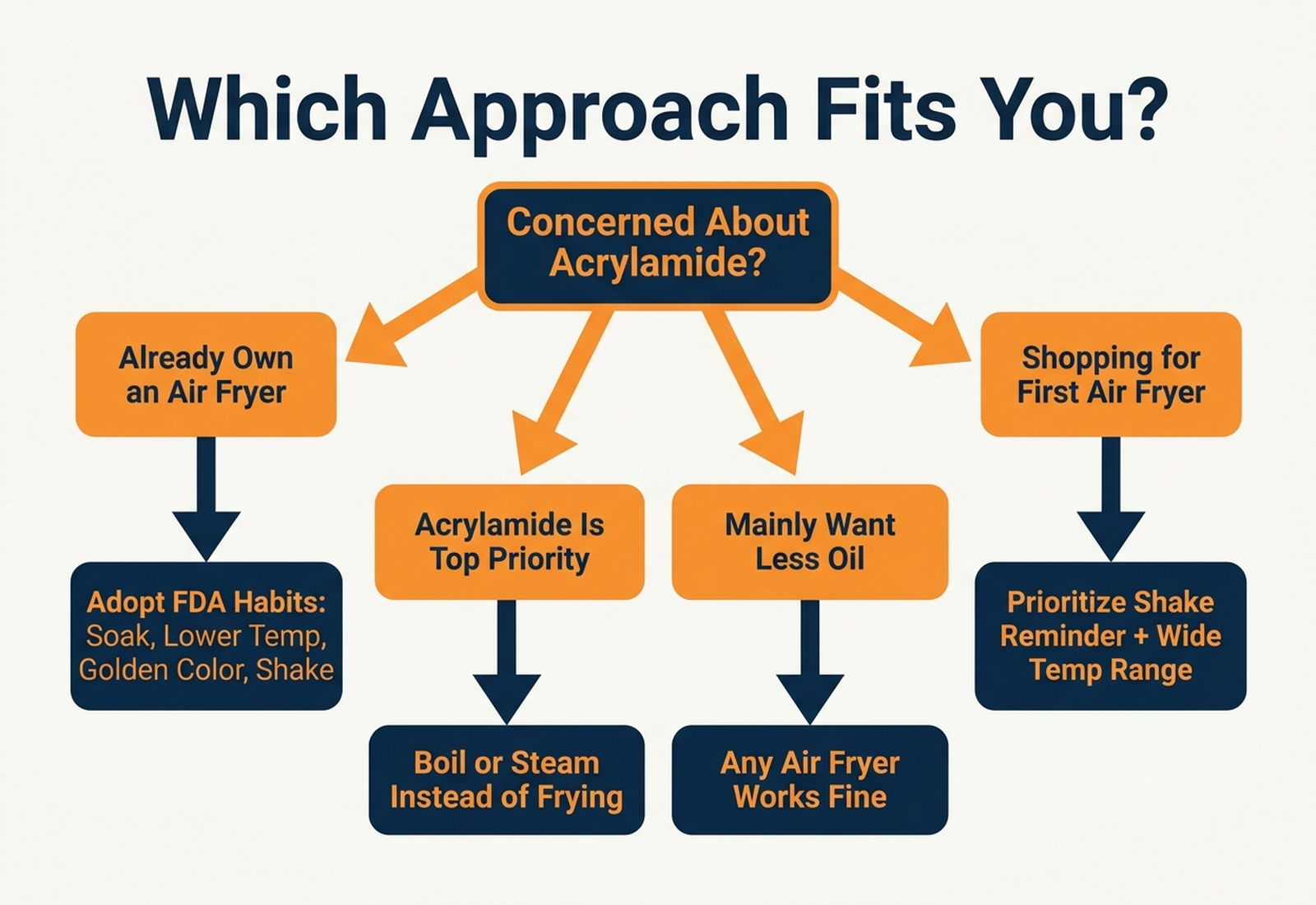
- You already own an air fryer: don’t panic-return it. Adopt the four FDA-aligned habits — soak, lower temp when possible, stop at golden, shake midway — and you’ll likely close most of the gap between the marketing number and the real one, regardless of which brand you own.
- You’re shopping for a first air fryer: prioritize a wide low-temperature range and a shake reminder over the ”% less acrylamide” number on the box, since that number is food-specific and not independently verified for most listings.
- Acrylamide reduction is genuinely your top priority: the data-supported move is boiling or steaming starchy foods instead of any dry-heat browning method, which is the FDA’s own top consumer recommendation — no air fryer, oven, or fryer beats a method that never gets hot enough to brown the food in the first place.
- You’re mainly after less oil and easier cleanup: that case for air fryers holds up regardless of the acrylamide debate, and any of the models above will deliver it.
Limitations
This analysis relies on publicly available peer-reviewed studies, regulatory guidance, and aggregated amazon.com reviews rather than our own instrumented testing or acrylamide lab measurement of any specific product. The comparative studies cited used specific cultivars, cuts, and cook settings that may not match how you actually cook; acrylamide levels are also known to vary meaningfully by potato variety, storage time, and even season, independent of cooking method. The 2023–2024 study finding higher levels in air-fried potatoes reported the difference as not statistically significant, which we have represented accurately rather than as a firm reversal of the marketing claim. Manufacturer fat-reduction and technology claims (Rapid Air, Fat Removal, Odor Erase) have not been independently verified except where a named third-party or peer-reviewed source is cited. Individual results will vary based on the specific food, cut, temperature, and cook time used.
Bottom Line
Do air fryers really cause acrylamide? They form the same acrylamide any dry, high-heat browning method forms — the “up to 90% less than deep frying” claim is real for some foods (thin potato chips especially) and weak-to-nonexistent for others (whole or thick-cut potatoes, per at least one recent study). The bigger finding in the research is that the appliance matters less than the habits: soaking, lower temperatures, stopping at golden rather than dark brown, and shaking midway through the cook move the needle more than which box the air fryer came in. If acrylamide is a genuine concern for you, those four habits — not a new appliance — are where the evidence says to start.
Before you buy, paste the product link into Arekore — our AI assistant checks review authenticity, surfaces what the one-star reviews actually complain about, and compares prices, free, in about five minutes.